“You dive deeper into Kenyan running philosophy, embrace the high-carb diet, and mingle with like-minded people.”
I’m standing in the midst of a pick somewhere on a dusty road in East Africa. Suddenly, a blur buzzes by my shoulder, kicking up red dirt in my face and disappearing ahead of me like the road runner in Looney Tunes.
No, I’m not risking my life among one of the Big Five. That was no wild animal that just zoomed past me. It was a person, and here I am, doing some serious damage to my ego and getting humbled on yet another run by the Kenyans.
Travelers have long been lured to East Africa for its legendary (and often luxurious) wildlife safaris. But in the likes of Kenya, Uganda, and Ethiopia, a new kind of tourism is growing in popularity: running camps.
Even among non-runners, it’s common knowledge that runners from this part of the world are usually at the front of the pack in any marathon or competitive distance running event.
There’s Ethiopia’s Kenenisa Bekele, a multi-gold medalist in the World Championships and Olympics. Kenya’s Eliud Kipchoge is widely considered the greatest marathoner of all time. And these are just a few names out of many.
From training in high-altitude, challenging environments that foster endurance and fortitude to living active lifestyles with high-carb diets, it’s a mix of cultural, environmental, and physical factors that have made this part of the world ground zero for producing running greatness. That’s why both amateur and elite runners, myself included, are flocking to the region, hoping to learn a thing or two from the masters.
Two years ago, I signed up for the Kenyan Experience in Iten to better understand why runners are spending months at a time training with the Kenyans (and to improve my own times, as decidedly non-elite as they may be). Organizations like the Kenyan Experience typically offer group dates, but private options can be arranged for the elites or for folks with an inflexible schedule. Although casual runners are welcome, serious runners are primarily drawn to Iten to book a running holiday. But more casual runners have plenty of options too.
Here’s what to know about some of East Africa’s top running camps so you can pick the right one for you.
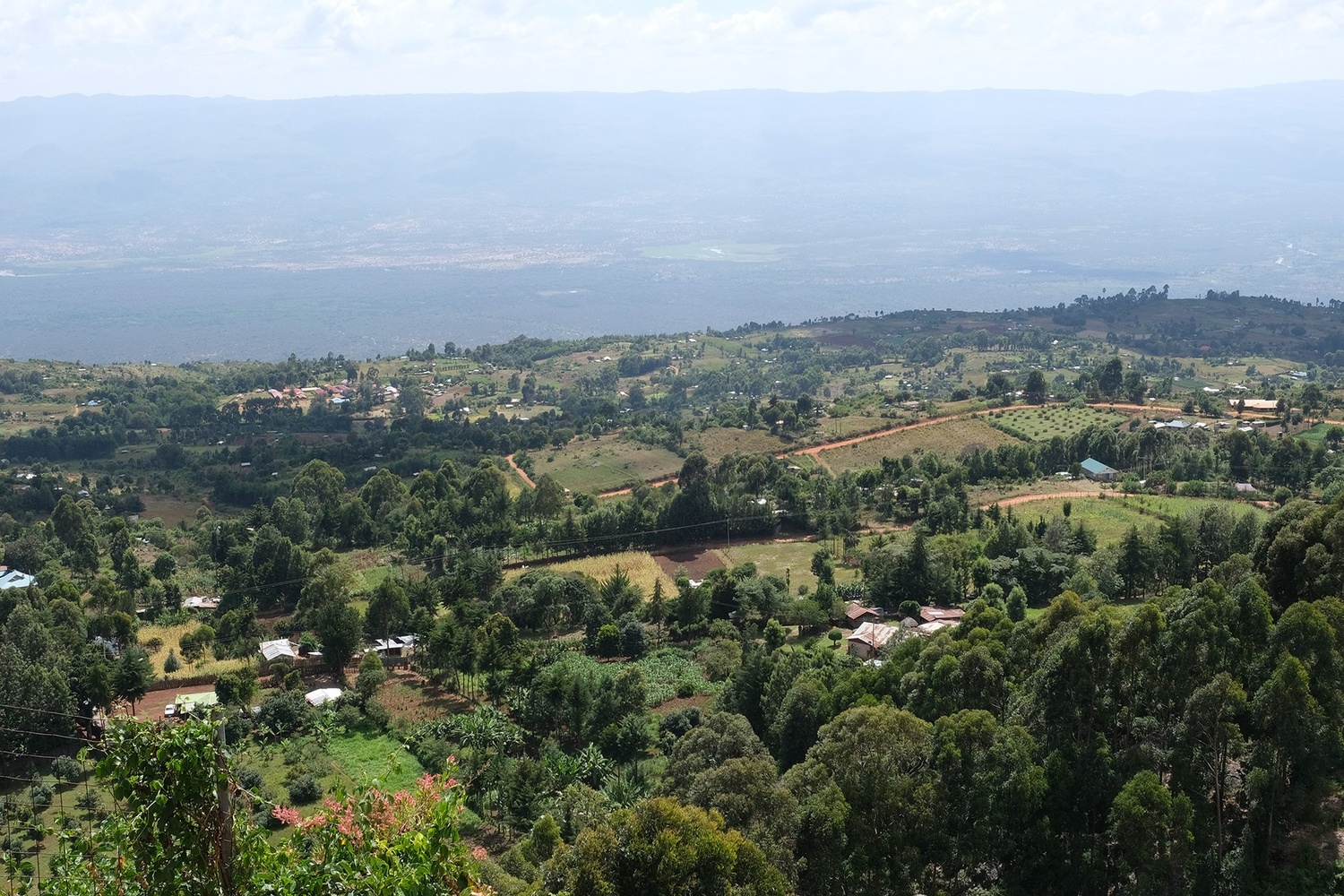
Views from a run. Courtesy of Joe Baur.
The Kenyan Experience
Where: Iten, Kenya
When: Year-round, one to two weeks
Inclusions: Accommodation, meals, coaching, guided runs, cultural programming and transfers from Eldoret airport.
Cost: Starts at $1,846
You arrive at this camp in the high-altitude town of Iten in western Kenya, an area famed in the running community for its prolific output, and are given a modest room with two twin beds, a dresser, and a desk. Then, you’ll have a briefing with your coach to go over your training schedule for however long you plan to be at camp.
For my wife and my week-long stay, we had two runs a day and two nearly hour-long core workouts. Mornings, before breakfast, would be the main run of the day; typically an easy outing, followed by an optional easy run in the afternoon.
This strategy and training regimen is key to the Kenyan running philosophy. Eighty percent of your runs should be so easy that you can have a conversation while running. Usually runs happen right out of camp, but we were able to hitch a ride for a run through nearby Singo’re Forest and to the meetup point of the weekly Fartlek. For speed sessions at the famous Kamariny Track, we’d simply warm up with an easy run to the track.
Throughout the week, you dive deeper into Kenyan running philosophy, embrace the high-carb diet of local runners with large lunches and dinners of pasta or ugali, and mingle with like-minded people, all the while trying to acclimate to the high altitude of nearly 7,900 feet.
If the journey to Iten has you dreaming of Kenya, don’t leave without exploring the Kenyan coast.
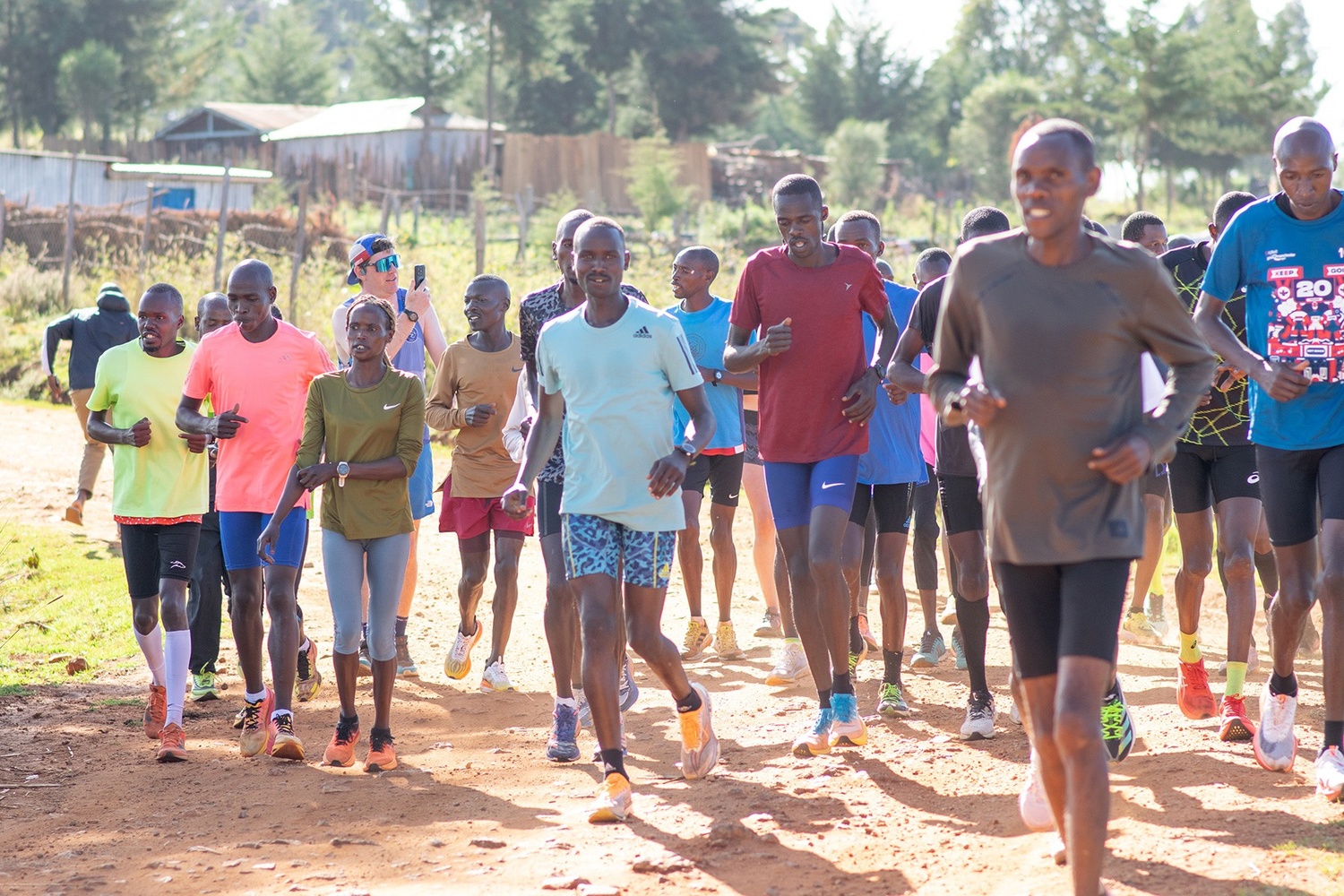
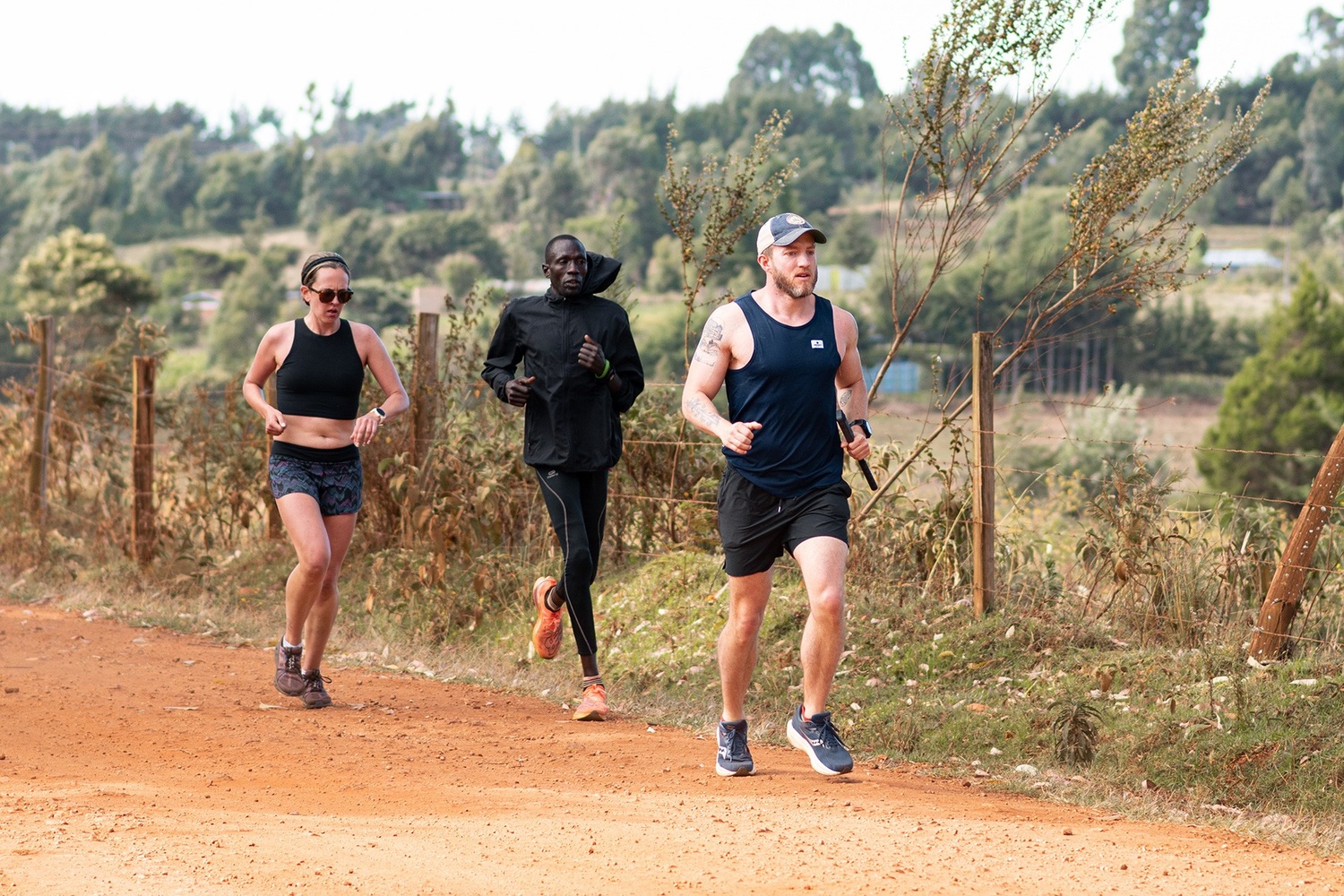
Runners in Kenya. Courtesy of Toni Hiram.
Run Kapchorwa & Home of Friends
Where: Kapchorwa, Uganda
When: Year-round, offering bespoke training camps and guided runs
Inclusions: Accommodation, a high-carb runner’s lunch and dinner, and fresh organic juice, with guided runs and cultural experiences bookable as extras
Cost: Starts at $58 per night for accommodations, activities start at $20
Sitting at around 6,500 feet in the foothills of Mount Elgon, Home of Friends — together with its female-led social enterprise Run Kapchorwa — operates less as a fixed camp and more as a flexible, immersive experience. Guests combine guided runs on the same dirt roads and mountain trails used by Kapchorwa’s elite athletes with track and fartlek (a training method that mixes light jogging and fast running) sessions, recovery and relaxation time, and optional cultural or hiking activities.
Signature experiences include cooking classes, trekking the Mosopisiek Trail through the Ugandan highlands, visits to local coffee farms for hands-on tours, and abseiling down a 300-foot waterfall in nearby Sipi — a reminder that the draw here isn’t just the training.
What stands out is the mix: you’re connecting with a local running community, not just logging miles at altitude. It’s a bit rawer and less polished than Iten, but that’s precisely what its guests tend to value.
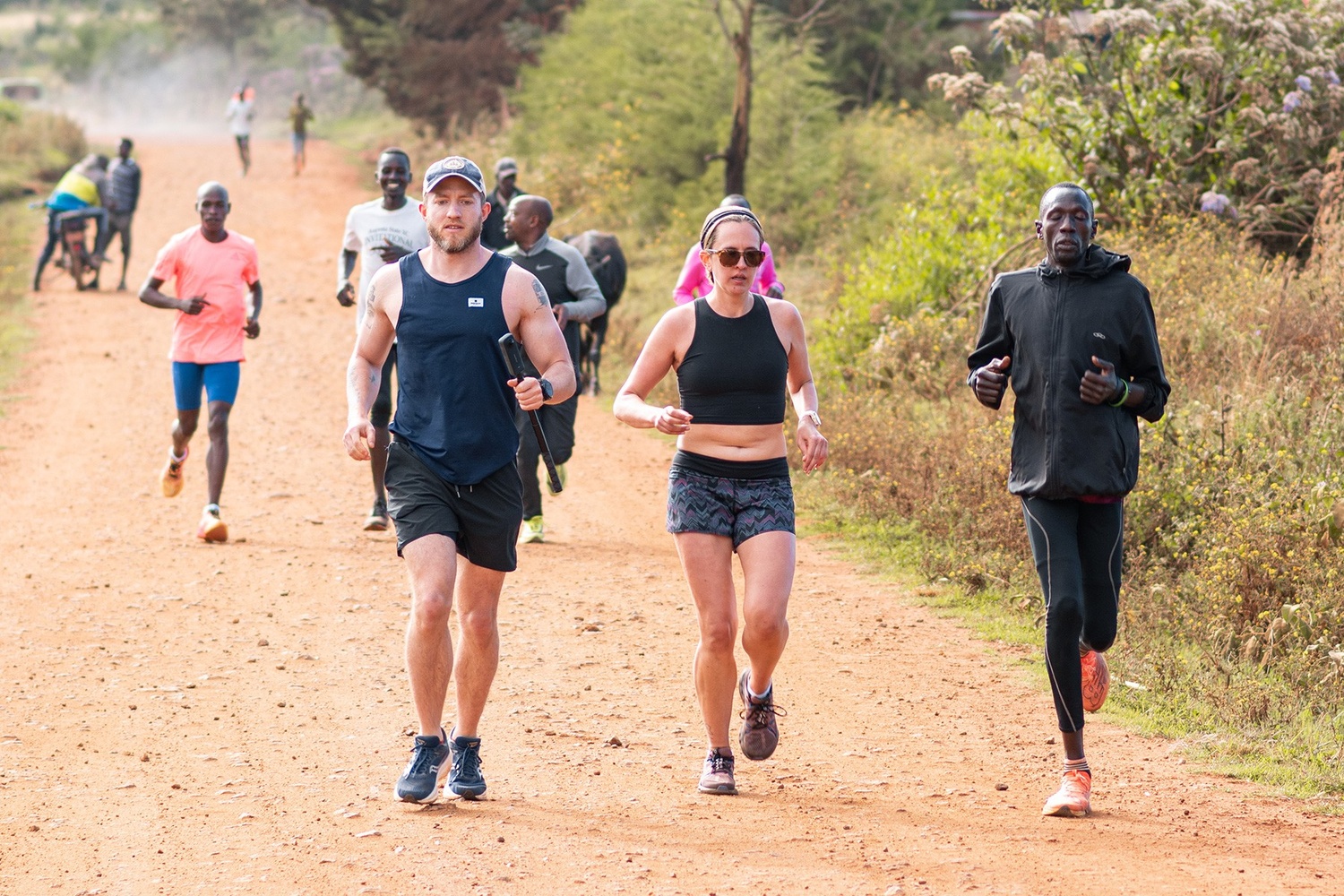
The author and his wife on a run in Kenya. Courtesy of Toni Hiram.
Yaya Village
Where: Addis Ababa, Ethiopia
When: Year-round
Inclusions: Accommodation and breakfast as standard, with full-board and guided runs available as upgrades
Cost: Starts at $72
Ethiopia’s running pedigree rivals Kenya’s, and outside Addis Ababa, Yaya Village makes that tradition accessible to visiting runners.
Co-founded by 27-time world record holder Haile Gebrselassie, the four-star resort sits at over 8,800 in Sululta, about seven miles north of the capital. On-site, guests have access to a gym, physiotherapy facilities, and a 0.6-mile dirt trail loop, with the surrounding forests and Kenenisa Bekele’s all-weather track just beyond the property.
Guide runners accompany guests on sessions, and on any given morning you’re likely to be sharing the trails with dozens of local elite and developing athletes. It’s the most resort-like option of the three — closer to the luxe end of the spectrum — while still delivering the altitude and the atmosphere that make East Africa such a compelling training destination.
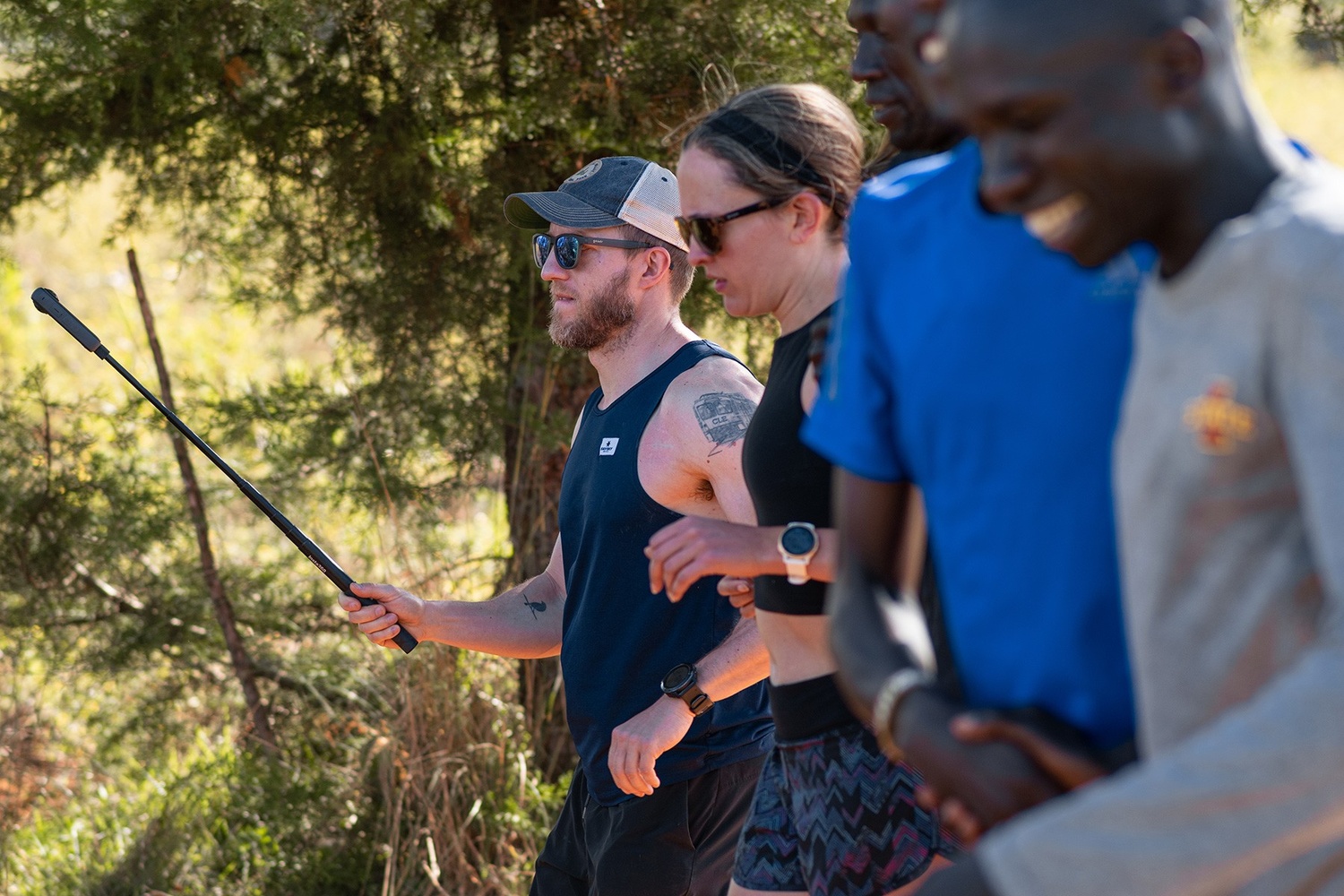
Running at the Kenya Experience. Courtesy of Toni Hiram.
How to Choose a Running Camp
Fitness level
All three camps welcome runners across the spectrum, but there are meaningful differences in emphasis. The Kenyan Experience skews toward serious runners; those training for a specific race or time goal will get the most from Iten’s structured coaching and fast-group environment.
Home of Friends is the most adaptable: beginners can join shorter, flatter runs and lean into the cultural programming, while advanced runners can train twice daily and push the altitude hard.
Yaya Village suits anyone comfortable self-directing their training, since coaching input is lighter there. You’ll have guide runners, but it functions more as a high-altitude base than a coached camp.
Cost
Reflecting its structured program, group logistics, and established international reputation, Iten is the priciest of the three. Expect all-inclusive camp packages in the range of several hundred dollars per week.
Home of Friends runs roughly $58–$88 per night for accommodation and full board (depending on single or shared occupancy), with guided runs and cultural activities priced separately at around $20–$40 per activity; most guests book a tailored package.
Yaya Village is the most affordable entry point, with rooms starting around $72 per night including breakfast, and flexible add-ons for meals and guided runs.
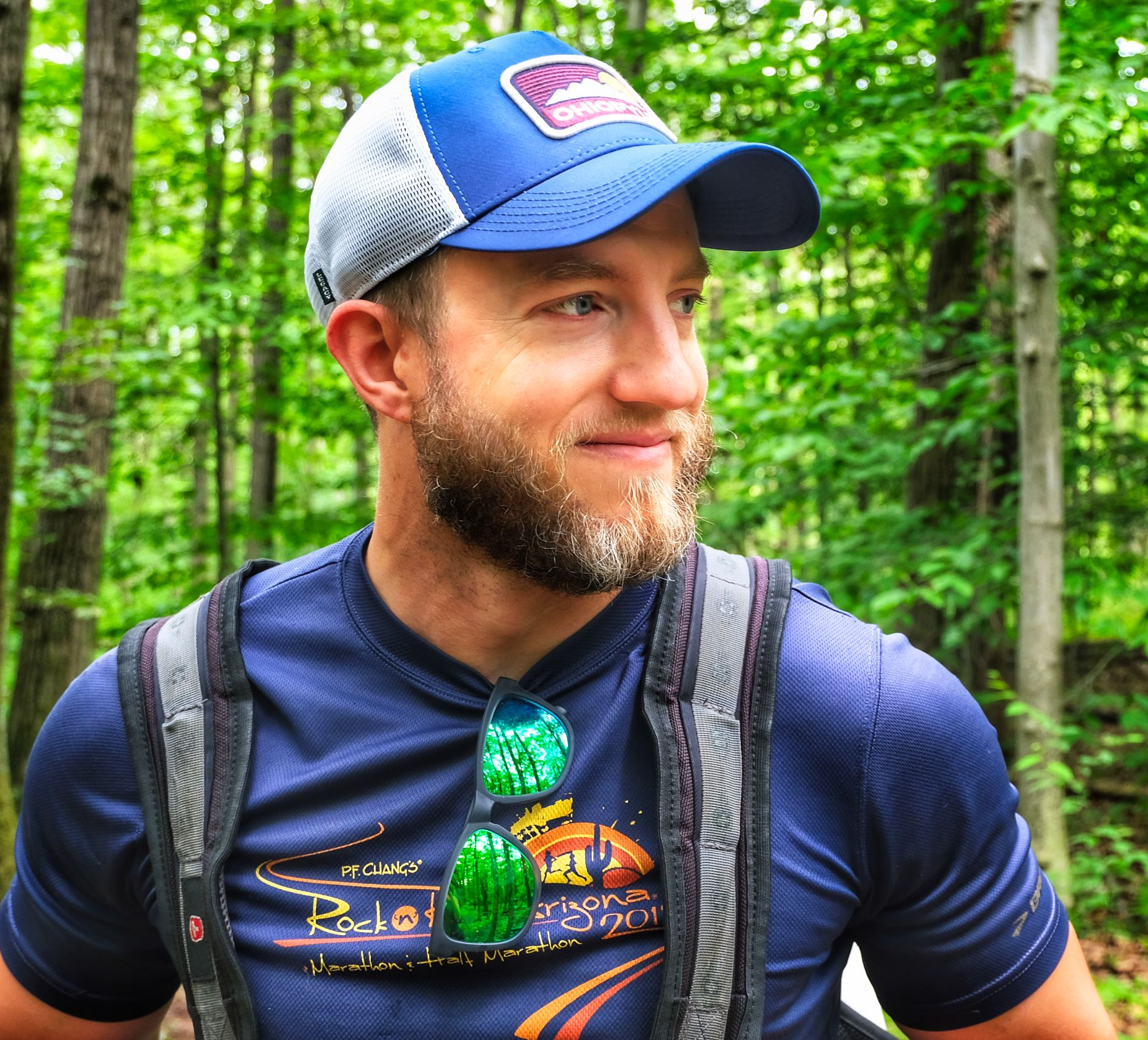
Joe Baur is a travel, food, and adventure writer/filmmaker born-and-raised just outside of Cleveland. These days he’s based in Berlin, hitting the trails across Europe and beyond as often as possible in search of stories and new ways to torture himself–all of which he documents on his YouTube channel. He can otherwise be found in Outside Magazine, BBC Travel, Saveur, National Geographic, and more. Find more of his work in his portfolio or follow Joe on IG @BaurJoe.
North Stars: Community Support, Diversity & Inclusion, Heritage Value