North Stars:

Production & Consumption

Heritage Value

Community Support
“Vinsanto will evolve into a ‘museum wine’ – a rare expression made only in tiny quantities.”
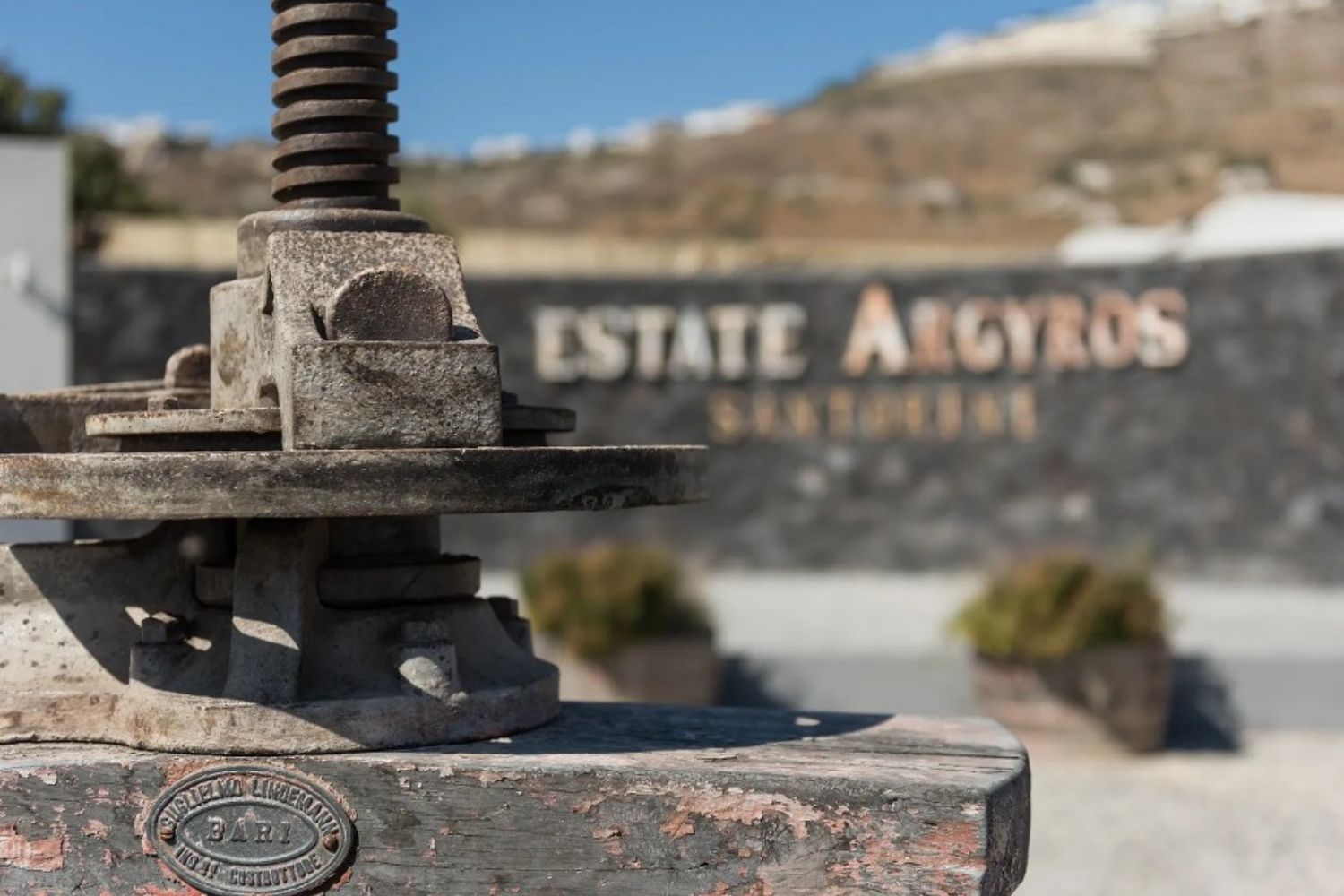
An old press in front of Estate Argyros. Courtesy of Estate Argyros.
Santorini makes some of Greece’s most age-worthy white wines, yet most bottles of Assyrtiko are still opened within a year or two of release. That habit is starting to look short-sighted. As vineyard area shrinks, drought intensifies, and prices climb, the chance to buy Assyrtiko for the cellar is narrowing faster than many drinkers realize.
Vineyard area has shrunk from an estimated 3,000–4,000 hectares (about 7,400–9,900 acres) in the mid-20th century to around 1,000 hectares (roughly 2,500 acres) today. The last three harvests brought extreme drought and heat; tourism continues to convert vineyard land into villas and hotels. Meanwhile, demand for serious Greek white wine has grown. Put simply: the case for buying and cellaring Santorini wines has never been stronger.
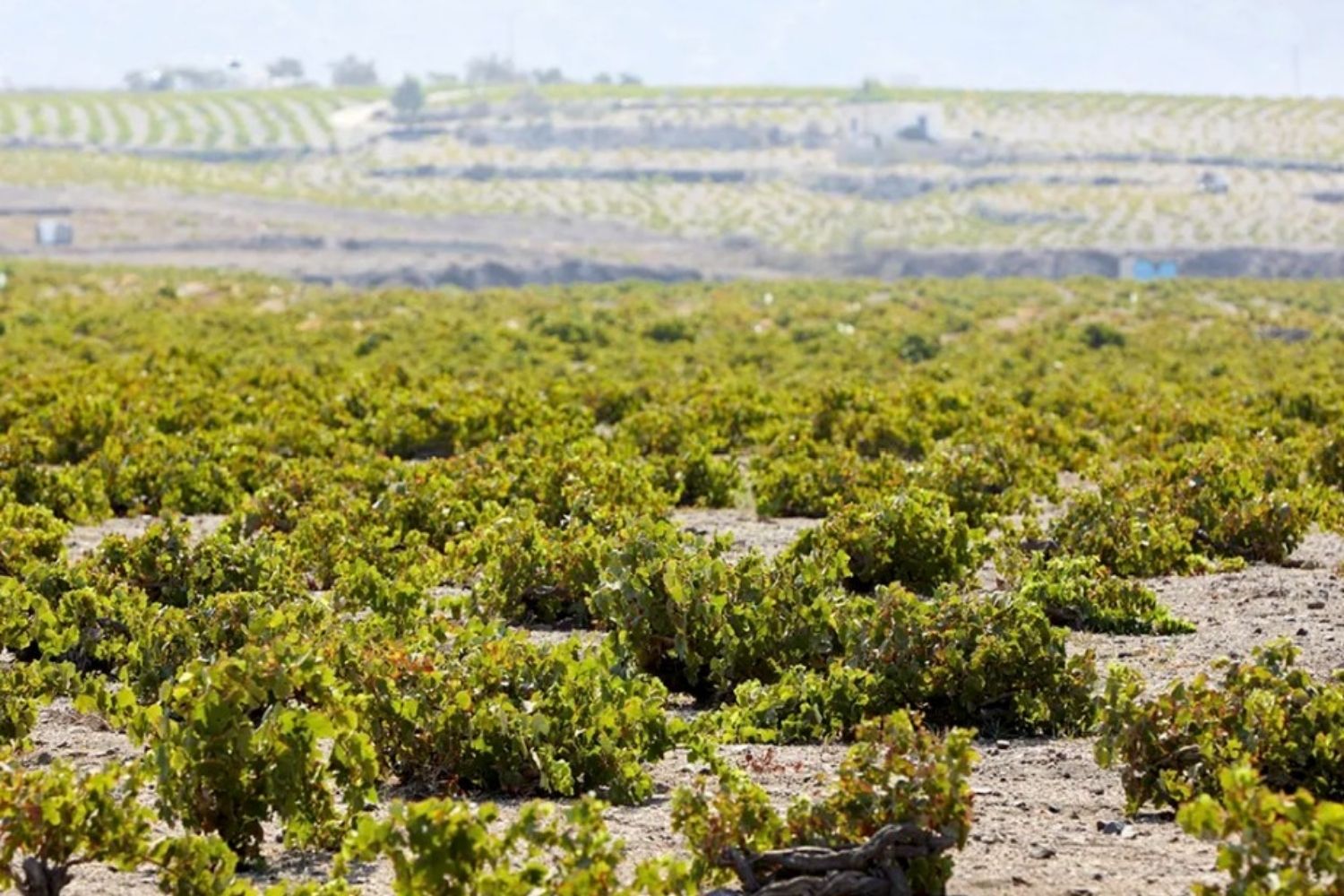
Vineyards of Estate Argyros. Courtesy of Estate Argyros.
Assyrtiko Is Built for the Long Haul
Santorini’s vineyards sit on volcanic sand and pumice, with many vines still on their own roots. Assyrtiko, the dominant grape, combines high natural acidity, low pH, and a savory, saline profile even at elevated alcohol levels. Old vines, often 60–70 years on average and in some cases over 200 years, add density without heaviness. Taken together, these factors give the best wines a natural affinity for long-term aging.
At Estate Argyros, owner and fourth-generation winemaker Matthaios Argyros picks out 2017, 2019, and 2022 as especially promising vintages for aging. His top bottlings are designed with time in mind.
Cuvée Monsignori, from very old vines, offers compact citrus and stone fruit with pumice-driven savor and a firm acid spine that can easily carry a decade in bottle.
Evdemon, from a higher, wind-exposed site farmed biodynamically, brings even more structure and salinity. The estate’s Vinsanto, made from sun-dried grapes and aged for years in large old casks, is one of Greece’s most long-lived sweet wines.
Domaine Sigalas, now under the leadership of Stelios Boutaris of Greek estate Kir-Yianni, leans on single-vineyard bottlings and time on spent yeast to build wines for the cellar. Kavalieros, an Assyrtiko plot in Imerovigli, remains on the lees for an extended period to give a creamy, textural palate to the wine’s naturally bright acidity.
Oenologist Sara Iakovidou describes 2022 as an “exceptional” vintage for structure and balance and sees Kavalieros as the estate’s most ageworthy wine. The “7 Villages” series, each from a different village, is less intense but still benefits from five to eight years in the cellar.
At Vassaltis, a newer winery founded by Yannis Valambous, all four Assyrtiko bottlings are considered age-worthy. The flagship Santorini and the single-vineyard Gramina show focused, mineral-driven profiles suited to mid-term cellaring. Alcyone sees a later release, with a second release after five years in bottle, underlining its long-term ambitions.
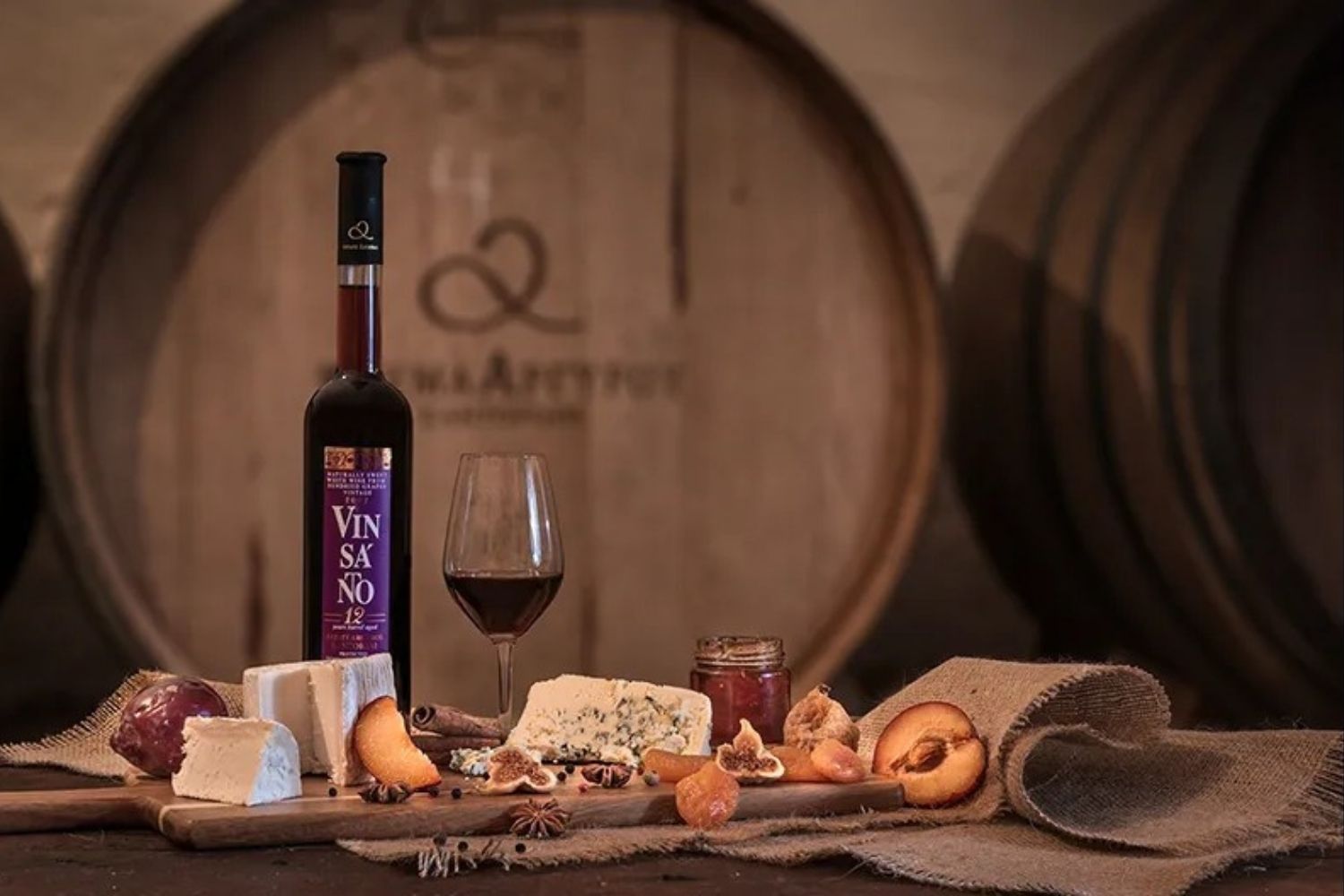
Vinsanto with a typical plate of greek cheese and honey. Courtesy of Estate Argyros.
Why Santorini Wines Are Becoming Scarce
The drop in production comes down to simple cause and effect: Santorini has grown hotter and drier due to climate change, while tourism development has boomed, reducing the land available to grow grapes. Wineries are paying the price.
The island has always been dry, relying on winter rain and small amounts of moisture to nourish vines. Recent seasons have delivered very little of either. At Estate Argyros, lack of rain has caused yields in some old-vine parcels to fall by as much as 60–80%, a problem made worse by decreasing humidity.
Visitor numbers now run into the millions each year, and development has followed: fields that once grew grapes have been subdivided for building, while many remaining plots belong to families who have shifted their income to tourism. The result is a patchwork of small vineyards, many of them neglected.
Domaine Sigalas estimates that the island-wide harvest in 2025 came in at around 450 tonnes of grapes – roughly 15% of what was picked in 2000. As yields shrink and vineyard land disappears, grape prices have skyrocketed to around €10 per kilo, says Boutaris, forcing some growers to abandon viticulture altogether.
The pressure is especially acute for Vinsanto. At Domaine Sigalas, the last vintage produced of this iconic wine was in 2020. “Under no circumstances do we wish to discontinue the production of this emblematic wine; however, given the current conditions, its production has become almost impossible,” says Boutaris. He believes Vinsanto will evolve into a “museum wine” – a rare expression made only in tiny quantities when conditions allow, valued as much for its cultural and historical significance as for its commercial role.
For consumers, that means production of Santorini Assyrtiko has dropped sharply, while prices continue to rise with no clear ceiling in sight.
The throughline is simple: Santorini Assyrtiko is not a fad. Its ageworthiness has always been a feature of the wine. What has changed is the security of the supply – the land, the water, the economics of production. If you want these wines in the future, whether on a list or in your own cellar, the sensible time to act is now, not after the next drought.
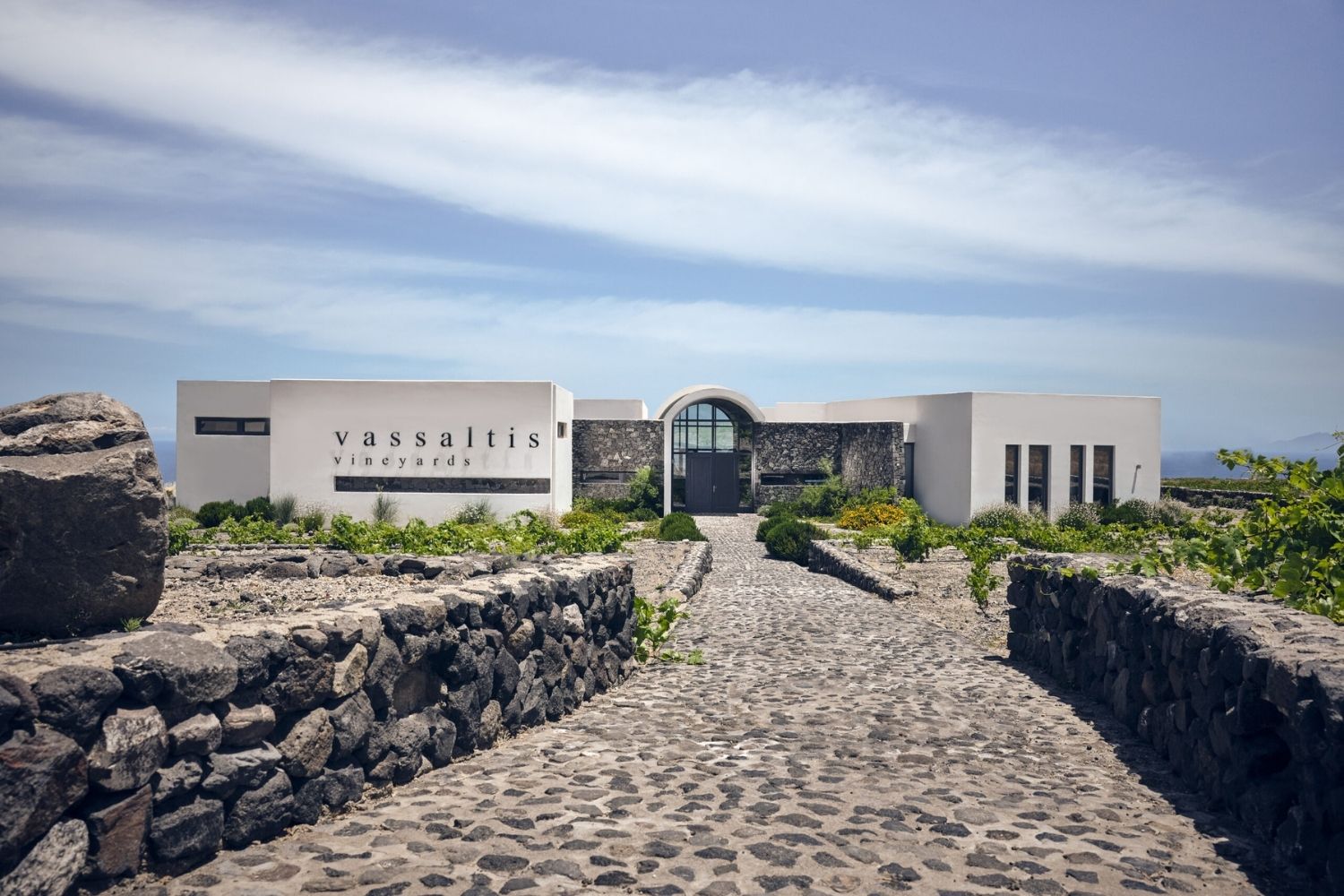
Vassaltis Winery. Courtesy of Vassaltis.
How to Buy Santorini Assyrtiko for the Cellar
If you want to build a meaningful Assyrtiko section in your cellar, focus on producers with a track record and wines that clearly have the stuffing to age: acidity, depth of flavor, and a sense of place. Below are my recommended bottles and vintages to find.
Estate Argyros Cuvée Monsignori, Santorini Assyrtiko (2019, 2022)
Aromas of lemon oil, pear skin, and white flowers over crushed pumice and fennel seed. The palate is concentrated yet controlled, with a creamy mid-palate from lees aging, brisk acidity, and a distinctly salty, stony finish. From very old vines; expect honey, beeswax, and flinty notes over 5–10+ years.
Estate Argyros Evdemon, Santorini Assyrtiko (2020)
Shows salted marmalade, preserved lemon, and a touch of caramel against crushed rock and dried herbs. Full-bodied and dense, with 15% alcohol carried by piercing acidity and a firm saline line. The high, wind-exposed site and long aging make this one of the island’s more powerful, cellar-worthy expressions.
Estate Argyros Vinsanto (current and back vintages)
Dried fig, date, rose caramel, and walnut, with citrus peel, cocoa, and amaro-like herbal notes in older bottles. Intensely sweet yet cut by Assyrtiko’s natural acidity and volcanic salinity, it finishes long and clean rather than cloying. In strong vintages it can evolve for decades.
Domaine Sigalas Kavalieros, Single-Vineyard Santorini Assyrtiko (2020, 2022, 2023)
Citrus zest, green apple skin, and sea spray on the nose, with hints of almond and wet stone. Concentrated but not heavy, shaped by extended lees contact: creamy texture, firm acid spine, and marked salinity. Youthful bottles can feel tightly wound; with time they gain nutty, savory, and lightly smoky complexity.
Domaine Sigalas “7 Villages”, Santorini Assyrtiko (notably 2022)
Lemon zest, pear, and chamomile with a subtle nutty edge. Medium to full-bodied, with a rounded mid-palate from lees aging, fresh acidity, and a clean, saline finish. Ideal for mid-term cellaring (around 5–8 years) and for exploring village character.
Domaine Sigalas Vinsanto (2004, 2016, 2020 where available)
Layers of raisined fruit, cocoa, coffee, spice, and dried citrus peel. Rich and unctuous, but lifted by acidity and salt. Mature vintages like 2004 show walnut, medicinal-herbal, and deep dried-fruit tones; younger releases will follow that path with patience.
Vassaltis Gramina, Single-Vineyard Santorini Assyrtiko (recent vintages)
Concentrated and full-bodied, with ripe citrus, stone fruit, and a firm mineral core. Structured and textural rather than showy, with marked salinity and a long, dry finish. A clearly site-driven wine and a solid 5–10-year cellar prospect.
Vassaltis Alcyone, Santorini Assyrtiko (late release)
More layered and full-bodied than the straight Assyrtiko, showing ripe orchard fruit, subtle spice, and a savory, smoky edge. Released after a year in bottle, with a portion held back for a second release after five years. Built to age, and likely to deepen in nuttiness and complexity with further time.
Vassaltis Plethora, Assyrtiko Aged in Ex-Vinsanto Barrels (2021 and future releases)
Marries Assyrtiko’s citrus and saline profile with subtle notes of dried fruit, spice, and caramel from time in old Vinsanto casks. Broad and layered on the palate, with brisk acidity keeping the finish neat. A more unconventional choice, but one that should evolve interestingly over 5–8 years.
North Stars: Certifications, Heritage Value, Wildlife Ecosystems
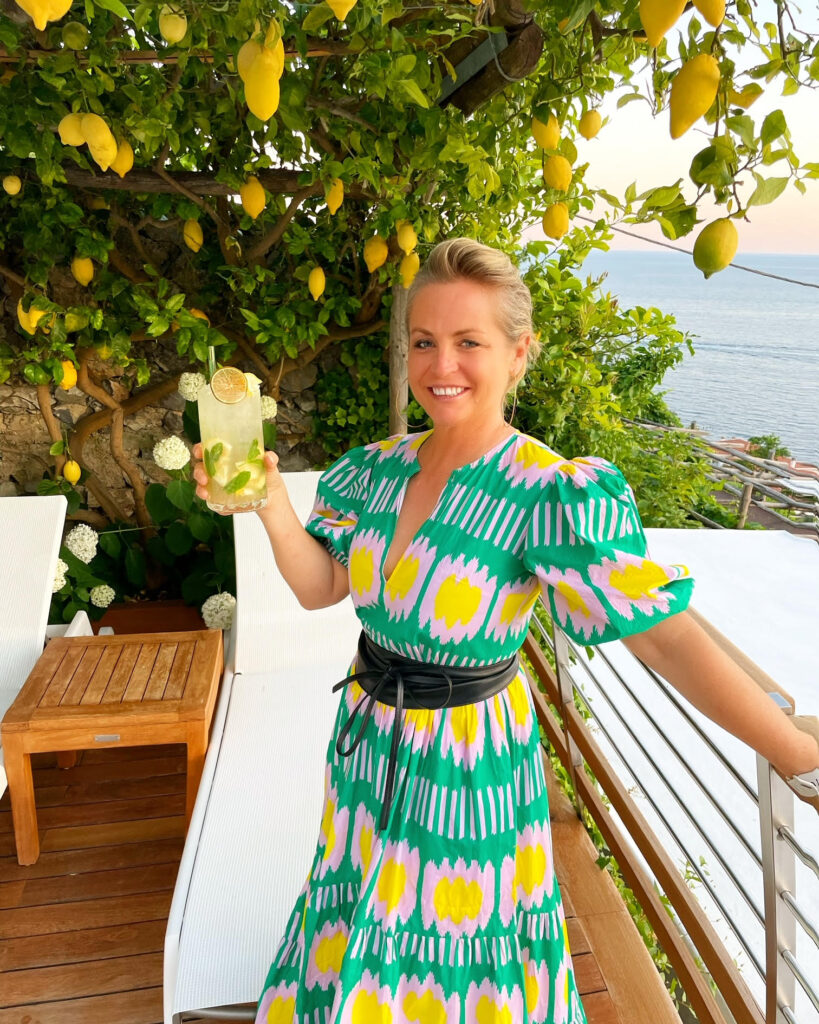
Founder and CEO of Azure Road, Lauren Mowery is a longtime wine, food, and travel writer. Mowery continues to serve on Decanter Magazine’s 12-strong US editorial team. Prior to joining Decanter, she spent five years as the travel editor at Wine Enthusiast. Mowery has earned accolades for her writing and photography, having contributed travel, drinks, food, and sustainability content to publications like Food & Wine, Forbes, Afar, The Independent, Saveur, Hemispheres, U.S. News & World Report, SCUBA Diving, Plate, Chef & Restaurant, Hotels Above Par, AAA, Fodors.com, Lonely Planet, USA Today, Men’s Journal, and Time Out, among others.
Pursuing her Master of Wine certification, she has also been a regular wine and spirits writer for Tasting Panel, Somm Journal, VinePair, Punch, and SevenFifty Daily. Mowery is a graduate of the University of Virginia and Fordham Law School, and she completed two wine harvests in South Africa.
Follow her on Instagram @AzureRoad and TikTok @AzureRoad