North Stars:

Production & Consumption

Gender Equality

Diversity & Inclusions
“Through an Oyster Recovery Partnership, the restaurant cleans and returns shells to the Chesapeake Bay.”
The Azure Road Take
At the end of Black History Month, I traveled to Baltimore, Maryland, on a trip to highlight Black-owned businesses and the city’s history. It was a sunny afternoon in the city, and blue skies stretched wide above a storefront decorated with white flowers that brightened up the sidewalk. I had arrived at The Urban Oyster, America’s first Black-owned oyster bar.
Located in the neighborhood of Hampden, the team, also majority Black, was bright, friendly, and full of laughter as I settled in for an oyster shucking masterclass. The tools, a chopping board, shucking knife, and gloves, were laid out before me. Inside, the decor — brown lightwood floors, light-gray colored seats, marble tables, and a scallop-patterned back bar — felt less like a restaurant and more like a beach house on Martha’s Vineyard; just indulgent enough to feel like a vacation.
Chef Jasmine Norton dropped three oysters onto my cutting board, and we got to work.
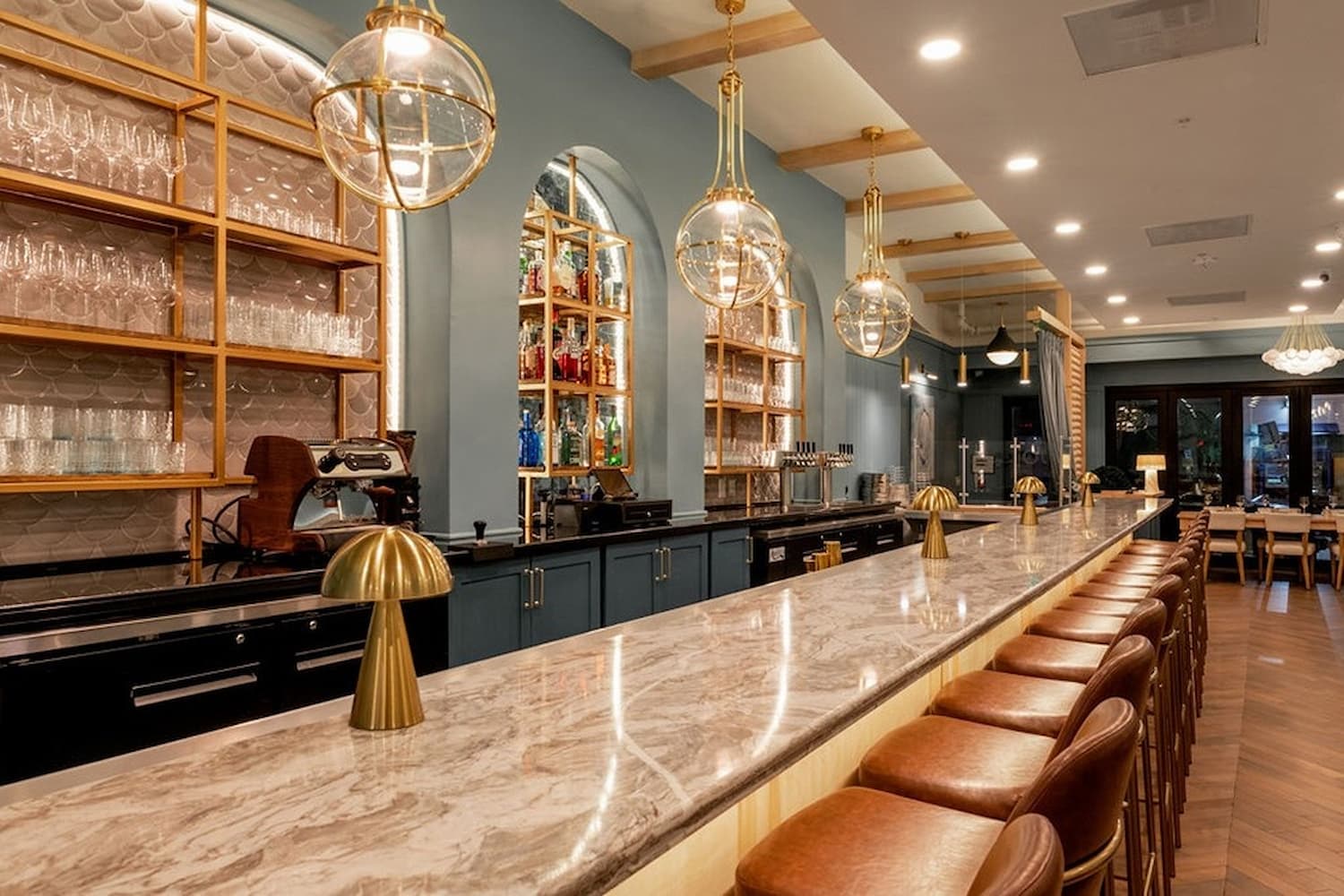
Interior of the Urban Oyster. Courtesy of Becca Maffett (Terragold Photos).
Sustainability Chops
Chef Norton’s goal is central to her business: introducing oysters to friends, family, and peers who may be apprehensive about trying raw seafood.
Through the Oyster Recovery Partnership, the restaurant cleans and returns used shells to the Chesapeake Bay. “Last year we collected 300,000 oyster shells,” Chef Norton recalls. Reintroduced shells help rebuild oyster reefs, natural filtration systems that can help clean the Bay over time. “What we contribute actually helps to clean the (Chesapeake) bay by 50 percent,” Chef Norton says. What’s enjoyed at the table eventually goes back to the water.
The oysters are sourced from regional waters, including Chincoteague and Kent Island, supporting local watermen and strengthening the regional seafood economy. The wine program also highlights Maryland producers, including Old Westminster Winery, a family-owned winery and vineyard in Carroll County.
When guests are ready for a sweet treat, the menu features ice cream from Black-owned Taharka Brothers Ice Cream, while confections come from Cane Collective, also a Black-owned business.
As a woman-owned restaurant, their view on sustainability is not only about the environment, but about strengthening local food systems and investing in small businesses.
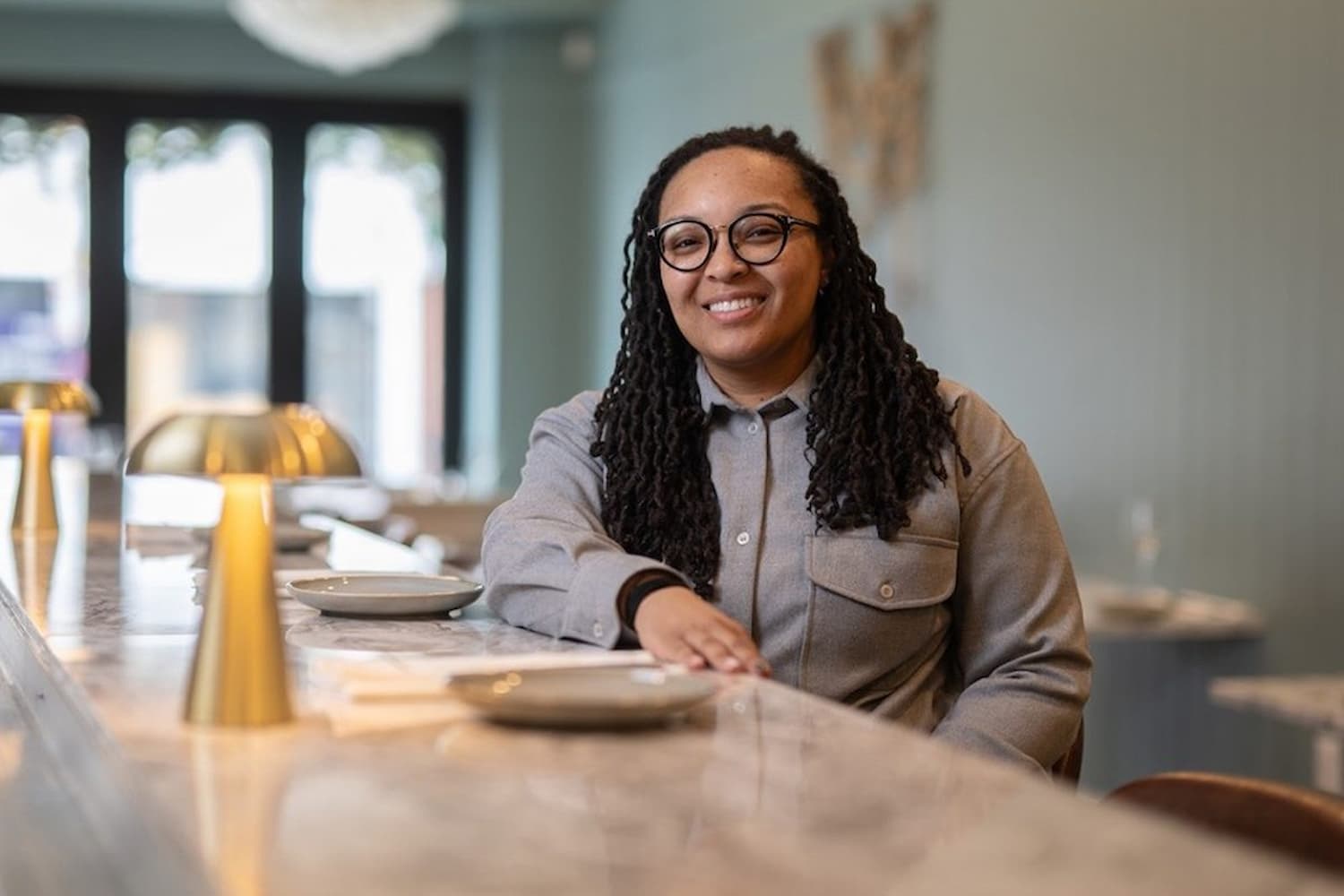
Chef Jasmine Norton. Courtesy of Becca Maffett (Terragold Photos).
The Bite
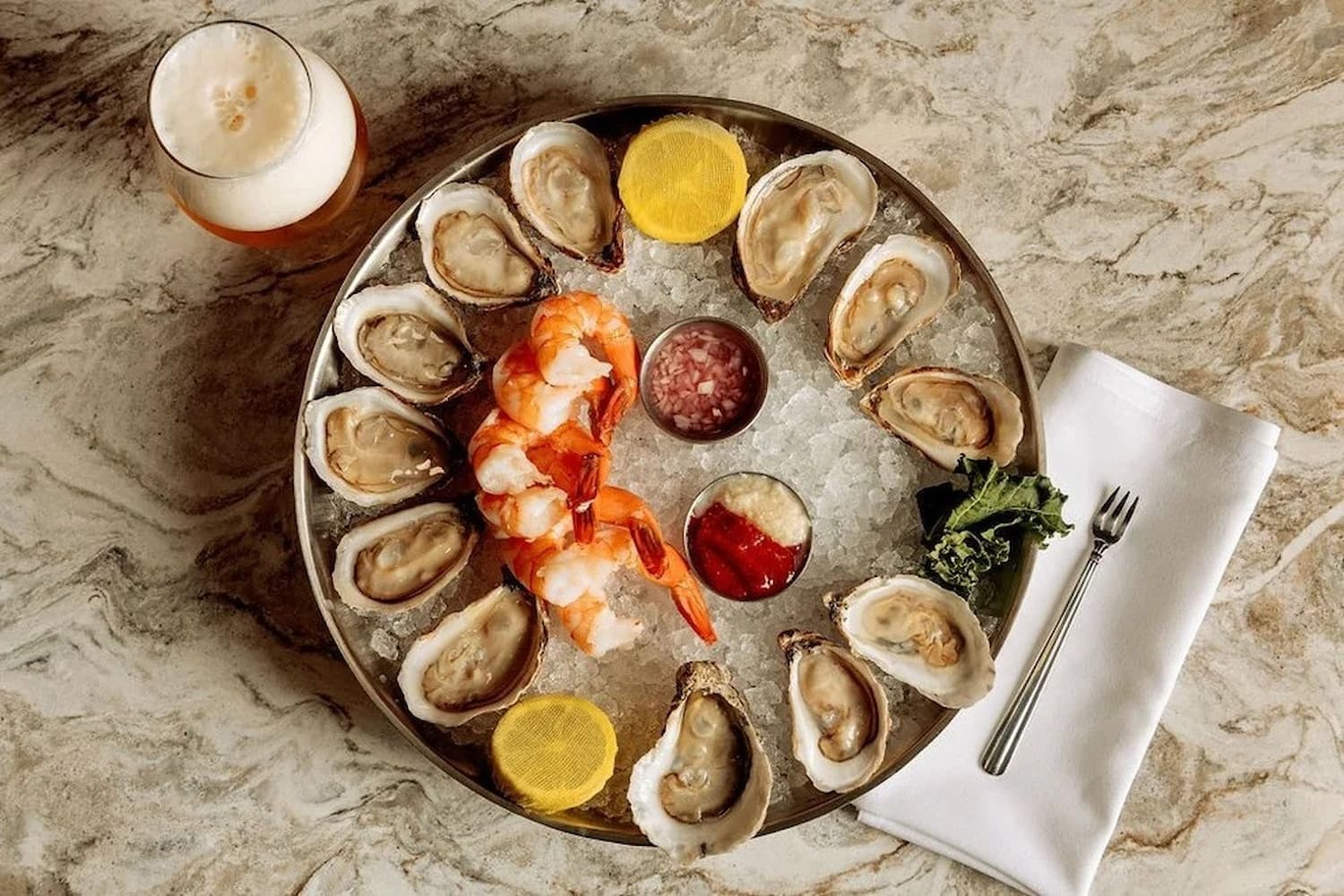
During my time at The Urban Oyster, Chef Norton presented a curated oyster tasting, pairing each variety with a glass of wine.
We began with oysters from New Brunswick, Canada, dubbed the “appetizer” oysters due to their smaller size, presented with a Spanish cava brut. They offered a medium-strong salinity balanced by subtle fruity, pear-like notes.
The second course featured oysters from Wellfleet Harbor in Cape Cod, Massachusetts, accompanied by a crisp Black Cottage Sauvignon Blanc from New Zealand. Larger in size, these delivered a bold brininess with a sweet seaweed finish shaped by the region’s strong tidal exchanges. We then moved on to the last oysters from Kent Island in Maryland’s Chesapeake Bay. Also large in size, these oysters had a creamy, sweet, and buttery flavor, followed by a distinctly salty brine finish, which sang alongside a glass of Salt natural white wine from Old Westminster Winery.
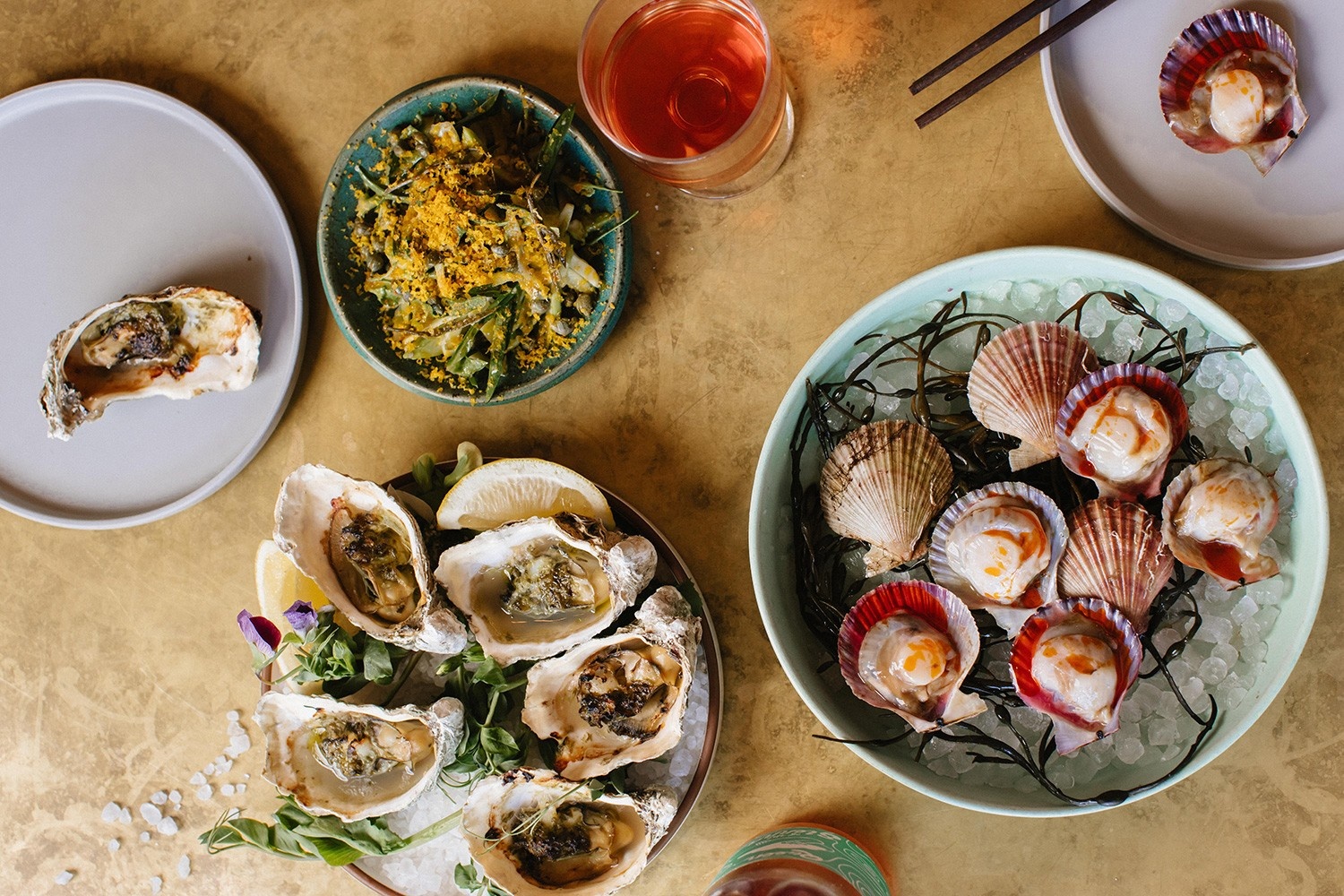
While the restaurant specializes in chargrilled oysters, the raw selection proves just as flavorful, and the overall menu leans into comfort. One standout is the seafood flatbread, layered with cream of crab, shrimp, lump crab, mozzarella, parmesan, and basil oil.
Origin Story
Chef Jasmine Norton grew up in Baltimore, where she found her love for seafood at seven years old thanks to her father bringing home oysters and shucking them at their kitchen table. “He would douse them in lemon or hot sauce, and I did come to enjoy them,” Chef Norton says.
In 2017, she was inspired by the energy of Smorgasburg-style food festivals and launched The Urban Oyster as a mobile concept over social media. In 2019, Baltimore Magazine dubbed it the Best Raw Bar in the area.
In 2024, during Black History Month, Urban Oyster transitioned from a pop-up concept to a brick-and-mortar restaurant, planting permanent roots and creating a space for the city to experience elevated dining in the heart of the community.

Kayla Brock is a Chicago-based journalist, photographer, and social media strategist. Her writing has appeared in Condé Nast Traveler, Essence, Business Insider, and Matador Network, more. Her photography has been featured in the San Francisco Chronicle. She has also spoken at conferences, including the National Association of Black Journalists and the Public Relations Society of America, as well as been a mentor in the Greater Palm Springs Meet the Mentors program. When she’s not working, Kayla enjoys heading to the beach and discovering the best matcha spots in every city she visits. Find her on Instagram at @kayla.n.brock