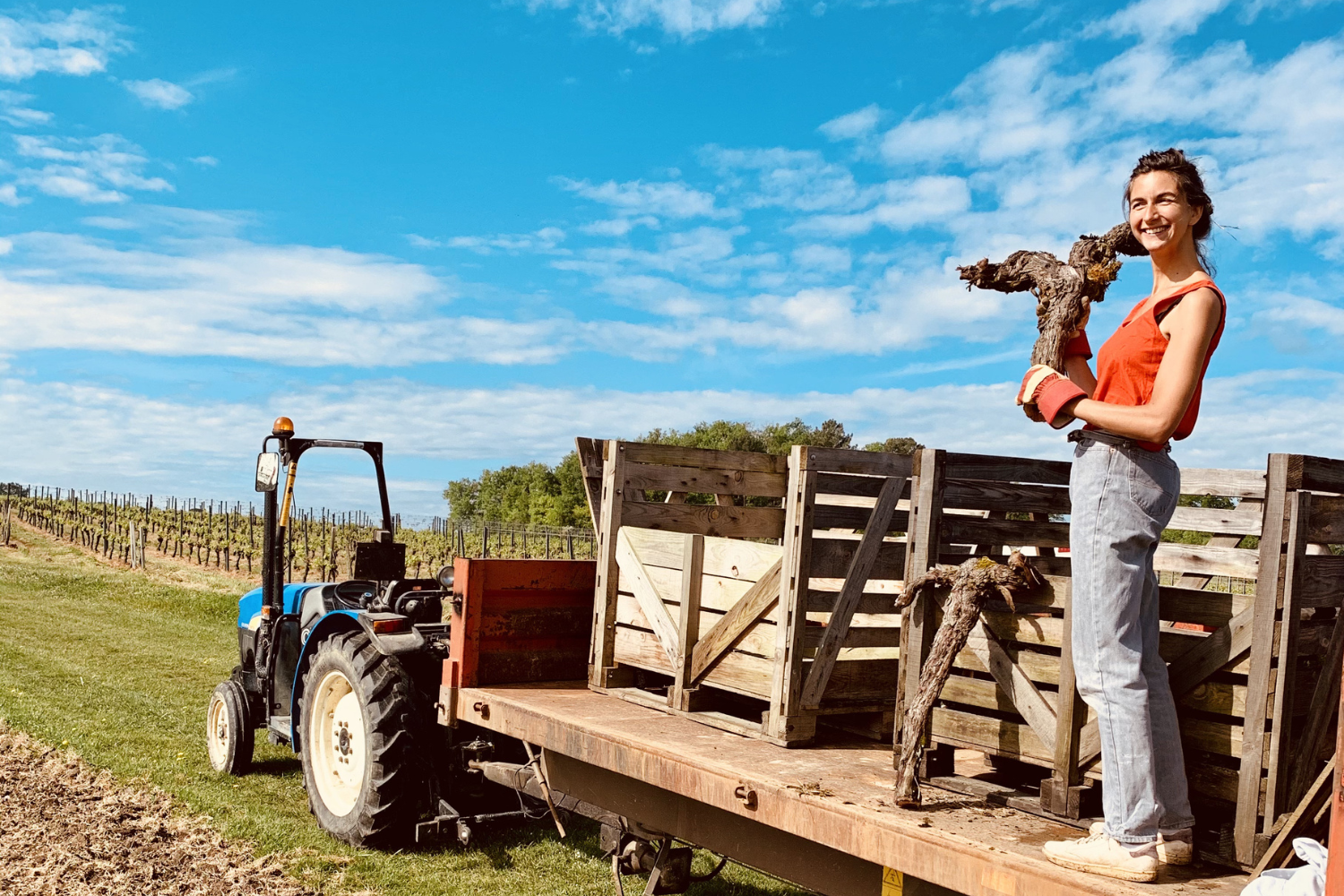
“You know your land much better after it’s spent years in your hands.“
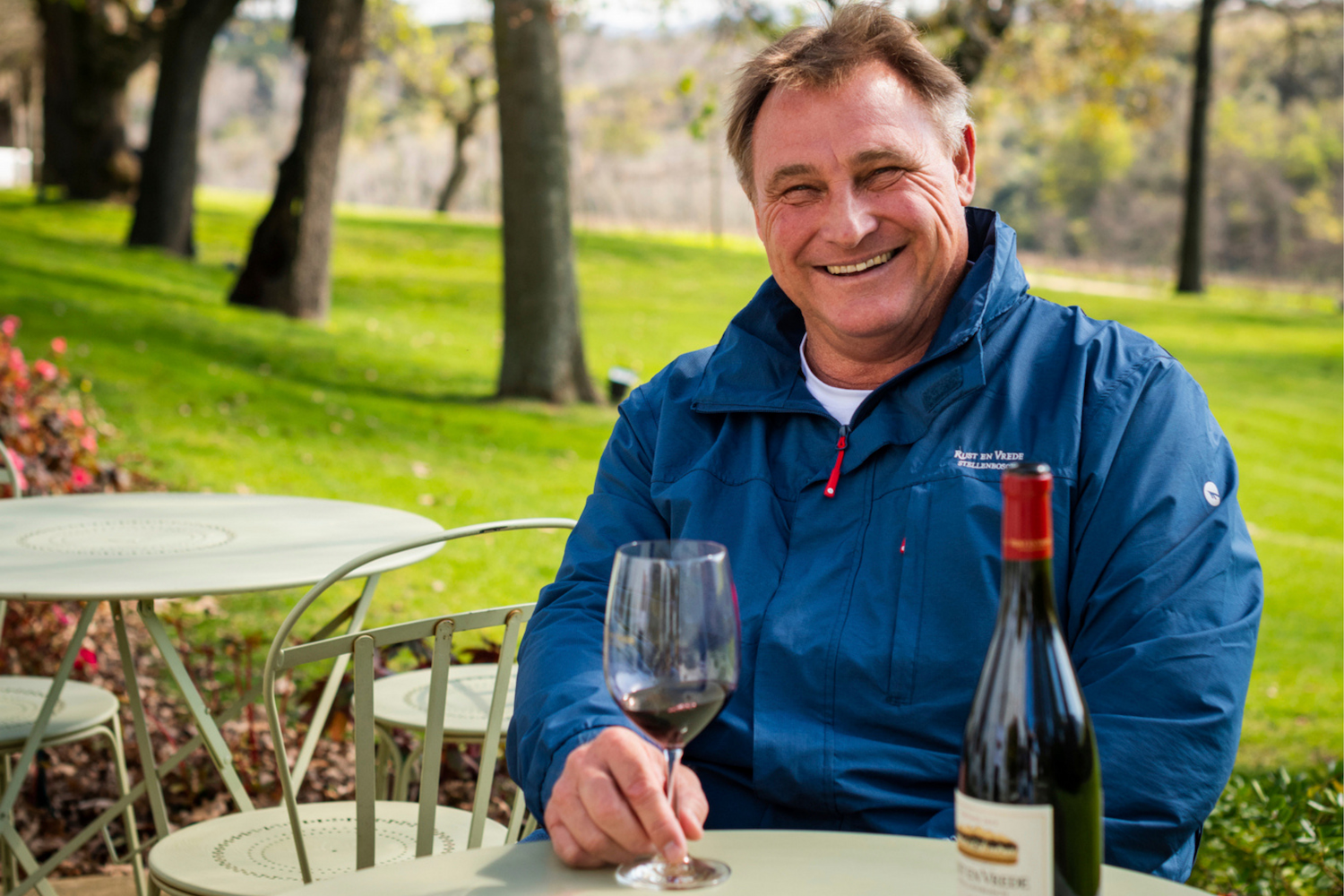
Rust en Vrede's Owner, Jean Engelbrecht. Courtesy of Rust en Vrede.
Partnership
On the shelves of Rust en Vrede‘s cellar, empty bottles lined the walls like trophies — not just the expected roll call of international names, but legends of South African wine, beloved enough that someone had thought to keep the glass. I’d arrived at Rust en Vrede for lunch with the estate’s owner, and a member of the team had offered a quick tour first, leading me past lively tables and down into the heart of a building that has been touched by wine since 1782.
I’d last visited nearly twelve years prior, after a few days on safari. Rust en Vrede would be of the best meals I had in South Africa. To find the place still full on a Wednesday afternoon felt like confirmation of something. They’d clearly been doing something right all this time.
Back outside, I walked past the small garden patio and through a gate half-hidden by bushes in the last green burst of summer. On the other side stood the Manor House, built in 1791, Cape Dutch in its bones, and home to Jean Engelbrecht for most of his life. He was waiting inside.
Jean Engelbrecht is a big presence, physically and otherwise. Gregarious and direct, the kind of man who sizes you up before deciding to like you and is entirely warm once he does. He grew up in this house, learning about vineyards and wine during school holidays, watching his father make decisions that would take decades to fully understand. He still lives here and has no apparent plans to leave.
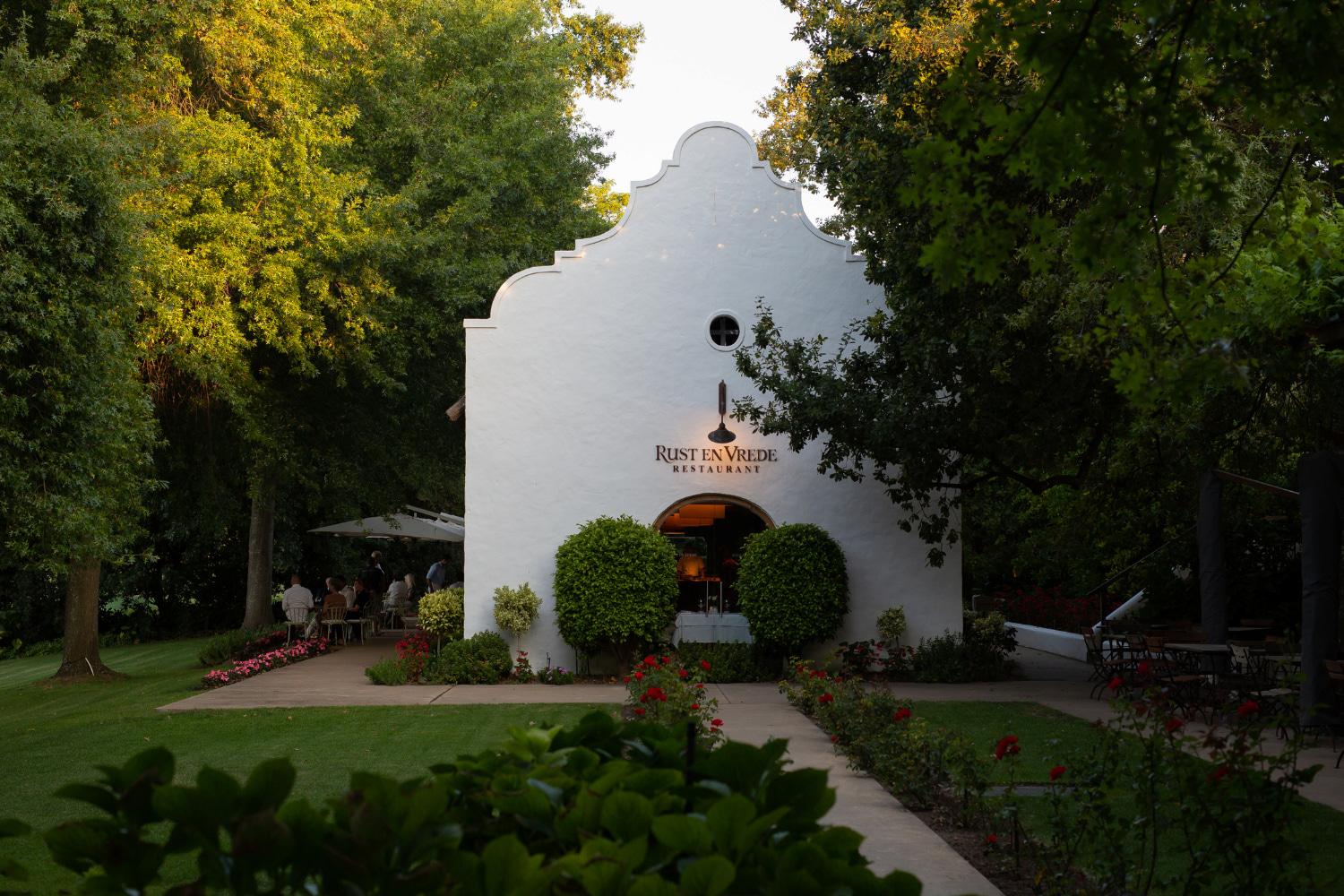
Rust en Vrede Restaurant. Courtesy of Rust en Vrede.
His father, Jannie, a former rugby star who purchased the estate in 1977, found it in a state of disrepair. South Africa’s wine industry, strangled by apartheid-era economic sanctions, had turned inward toward bulk production for domestic consumption. The country’s industry had been cut off from the international conversations about wine. Yet Jannie saw something worth recovering, and made a call that almost no one else in South Africa was making at the time: the estate would produce red wine exclusively, focusing on Cabernet Sauvignon, Syrah, and Merlot, all from fruit grown on the property.
Jean assumed leadership in 1998, four years after South Africa’s democratic transition, and continued his father’s legacy.
“You know your land much better after it’s spent years in your hands,” he told me over lunch, “how your vineyard blocks will react, whether to heat or to excessive rain.” His reach extended well beyond his own property, too — in 1999, he helped his boyhood friend, golfer Ernie Els, establish his own winery in Stellenbosch. It was a gesture that suggested Engelbrecht saw his peers not as competition but as part of the rising tide that lifts all boats.
It turned out to be the right call. In 1993, when Nelson Mandela accepted the Nobel Peace Prize in Oslo, he chose Rust en Vrede as the wine to be poured at the celebratory dinner. It was not a casual selection. At the time, South African wine was just beginning to re-enter the international stage, carrying the weight of everything the country tried to leave behind. A few years later, Rust en Vrede became the first South African red wine to appear in Wine Spectator’s annual Top 100, and held that position for four consecutive years.
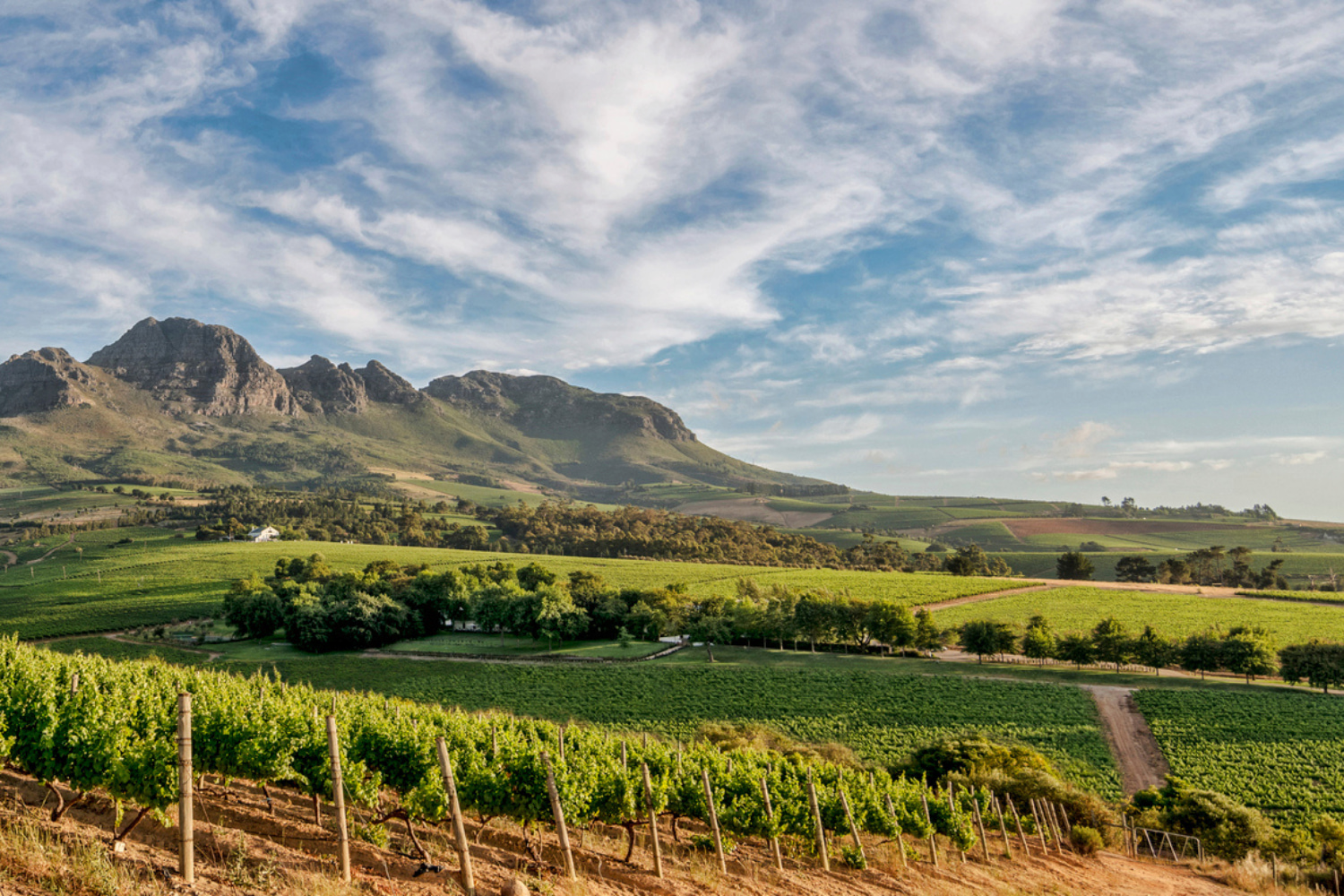
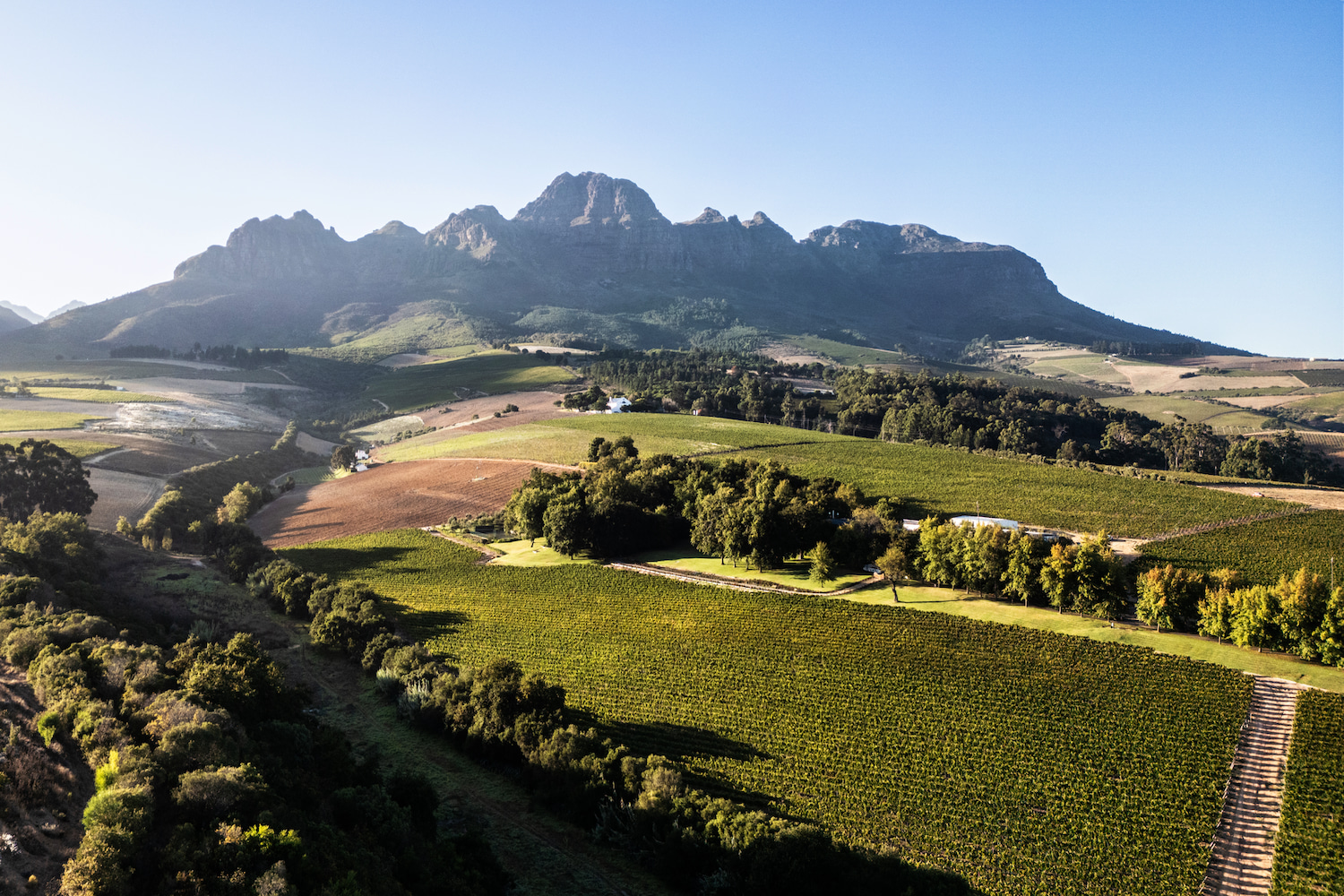
Helderberg Mountains. Courtesy of Rust en Vrede.
These credentials make Rust en Vrede a reference point for South African wine, not just a very good estate. A benchmark against which other producers measure themselves and what critics reach for when showcasing the potential of the region.
The estate sits on the lower slopes of the Helderberg Mountains, its north-facing vineyards planted in Tukulu soil derived from Helderberg granite and Table Mountain sandstone. The Mediterranean climate runs warm and dry through the growing season, which suits Cabernet and Syrah well.
What keeps the fruit from tipping into overripeness is geography: the Cape Doctor, a fierce southeasterly wind, extends the ripening season, while cold Antarctic currents from False Bay preserve the acidity. South African wine has always been seen as the middle child between the New World and the Old. Accessible but elegant. Fruity yet earthy. South Africa is the only wine-growing country in the world influenced by two major oceans, and at Rust en Vrede, both register in the glass.
Jean blends his wines at the end of their élevage, or “raising,” as it’s called in wine terms, wanting to see how each parcel develops before committing one to a blend. He likens the process to raising children. “It’s like kids growing up,” he told me, “they differ and change, and the ones you thought wouldn’t pass an exam end up at MIT.”
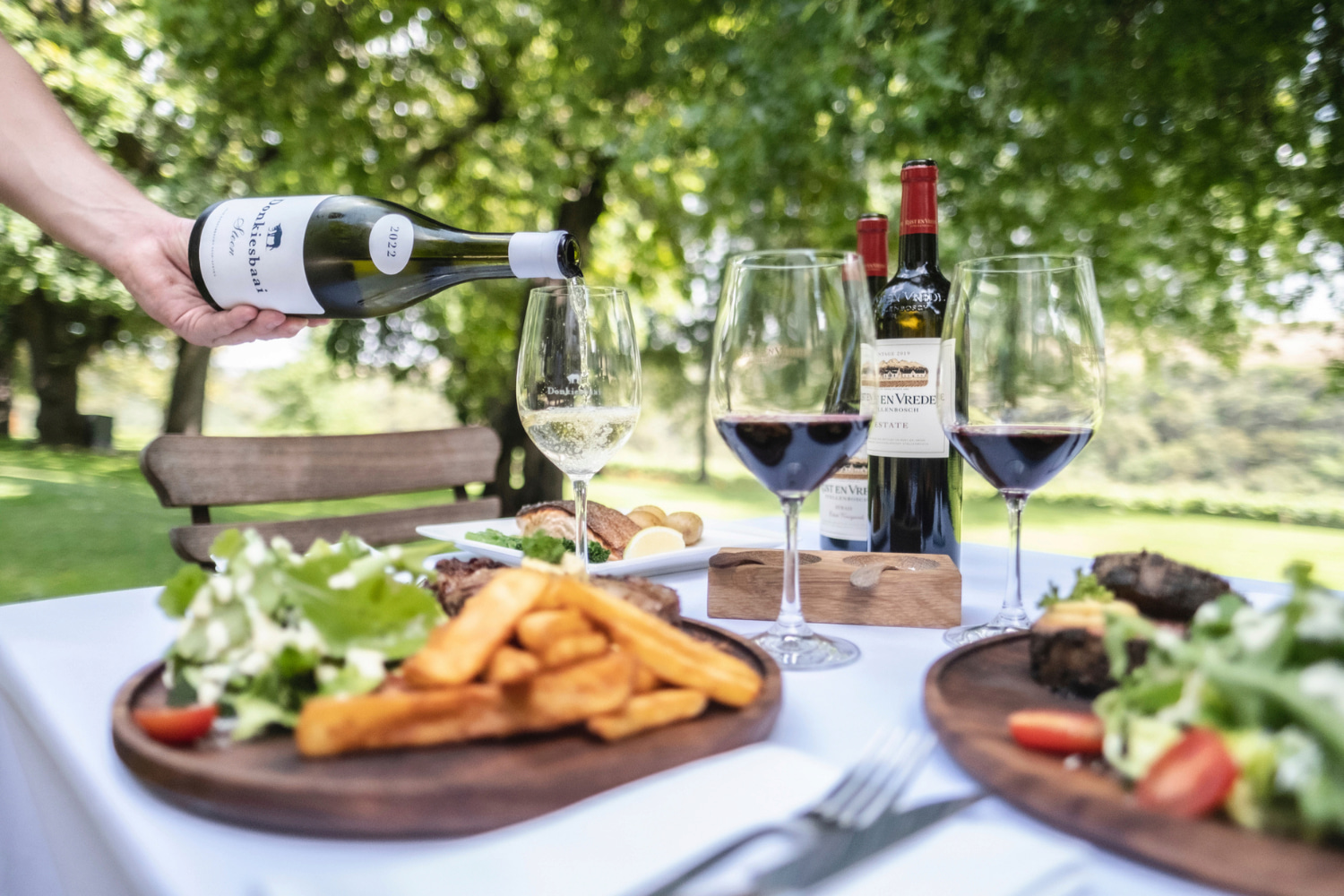
Rust en Vrede table setting. Courtesy of Rust en Vrede.
In 2022, Danielle le Roux became the fourth winemaker in the estate’s modern era. She grew up on a sheep and wheat farm in the Overberg and studied viticulture and oenology at Stellenbosch University. She spent her formative harvest years in Bergerac, Sonoma, and Tuscany before building her career across several Stellenbosch estates.
A Cape Wine Master, Le Roux was already familiar with the Rust en Vrede portfolio, having made the Guardian Peak and Donkiesbaai wines since 2018. The 2022 vintage is her first release of the flagship Estate blend.
“Working at Rust en Vrede has been both a privilege and a responsibility, given its strong heritage and identity,” le Roux says. “It’s never about one person. We stand on the shoulders of those who came before us and must honor that heritage.”
Her arrival coincides with a wider reckoning in South African winemaking styles, one that Jean himself acknowledged over lunch. “For a long time,” he said, “there was too much wood, too much fruit. Now the wines are more restrained.”
Le Roux describes her own approach as the search for “balance and restraint,” with a focus on “structure, elegance, and ageability.” Those conversations increasingly extend beyond style alone, particularly as consumers pay closer attention to how vineyards are farmed and certified. It’s a shift that suits Rust en Vrede well, an estate whose house style has always been built on structure and longevity rather than immediate impact.
Upon leaving, I glanced back over my shoulder — it had been too long, and I knew it. The estate has occupied this land for over three centuries, and while wine always seems to taste better in its place of origin, in this case, these wines would be well placed on the table at home.
Rust en Vrede, Annandale Rd, Stellenbosch, 7600, South Africa
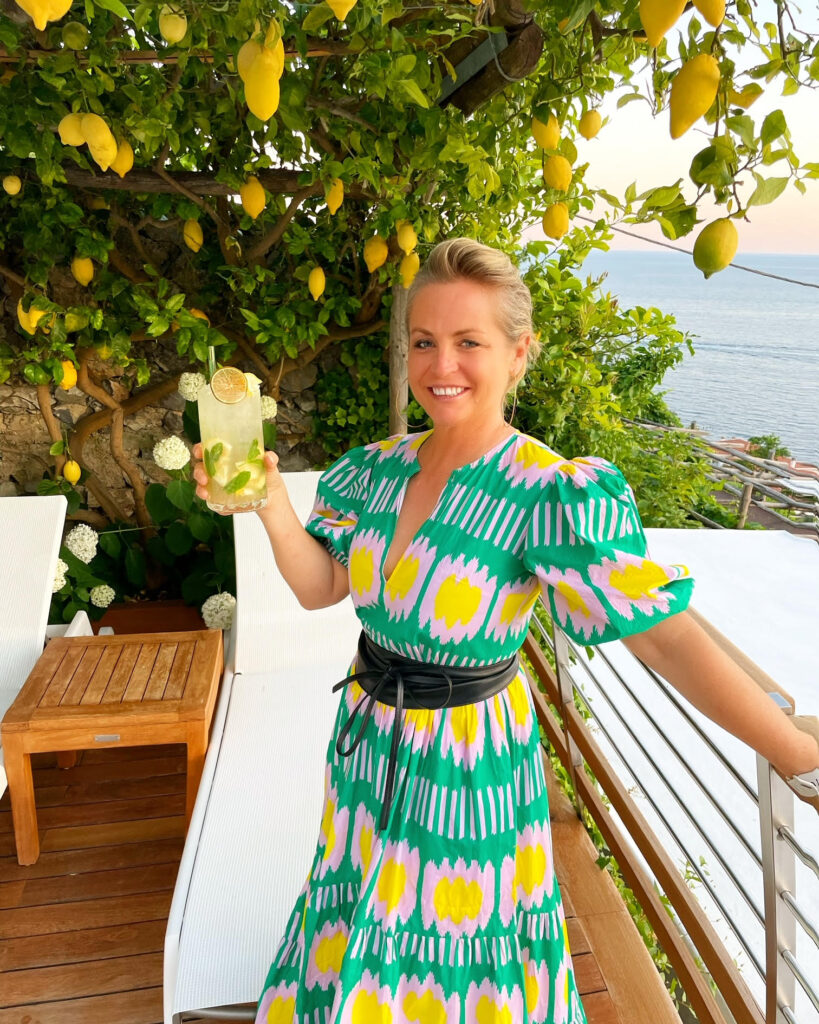
Founder and CEO of Azure Road, Lauren Mowery is a longtime wine, food, and travel writer. Mowery continues to serve on Decanter Magazine’s 12-strong US editorial team. Prior to joining Decanter, she spent five years as the travel editor at Wine Enthusiast. Mowery has earned accolades for her writing and photography, having contributed travel, drinks, food, and sustainability content to publications like Food & Wine, Forbes, Afar, The Independent, Saveur, Hemispheres, U.S. News & World Report, SCUBA Diving, Plate, Chef & Restaurant, Hotels Above Par, AAA, Fodors.com, Lonely Planet, USA Today, Men’s Journal, and Time Out, among others.
Pursuing her Master of Wine certification, she has also been a regular wine and spirits writer for Tasting Panel, Somm Journal, VinePair, Punch, and SevenFifty Daily. Mowery is a graduate of the University of Virginia and Fordham Law School, and she completed two wine harvests in South Africa.
Follow her on Instagram @AzureRoad and TikTok @AzureRoad
North Stars: Community Support, Heritage Value, Production & Consumption