North Stars:

Heritage Value

Gender Equality

Community Support
“If there was a better way to combat jet lag than wandering the alleys of Africa’s largest open-air market, I couldn’t think of one.”
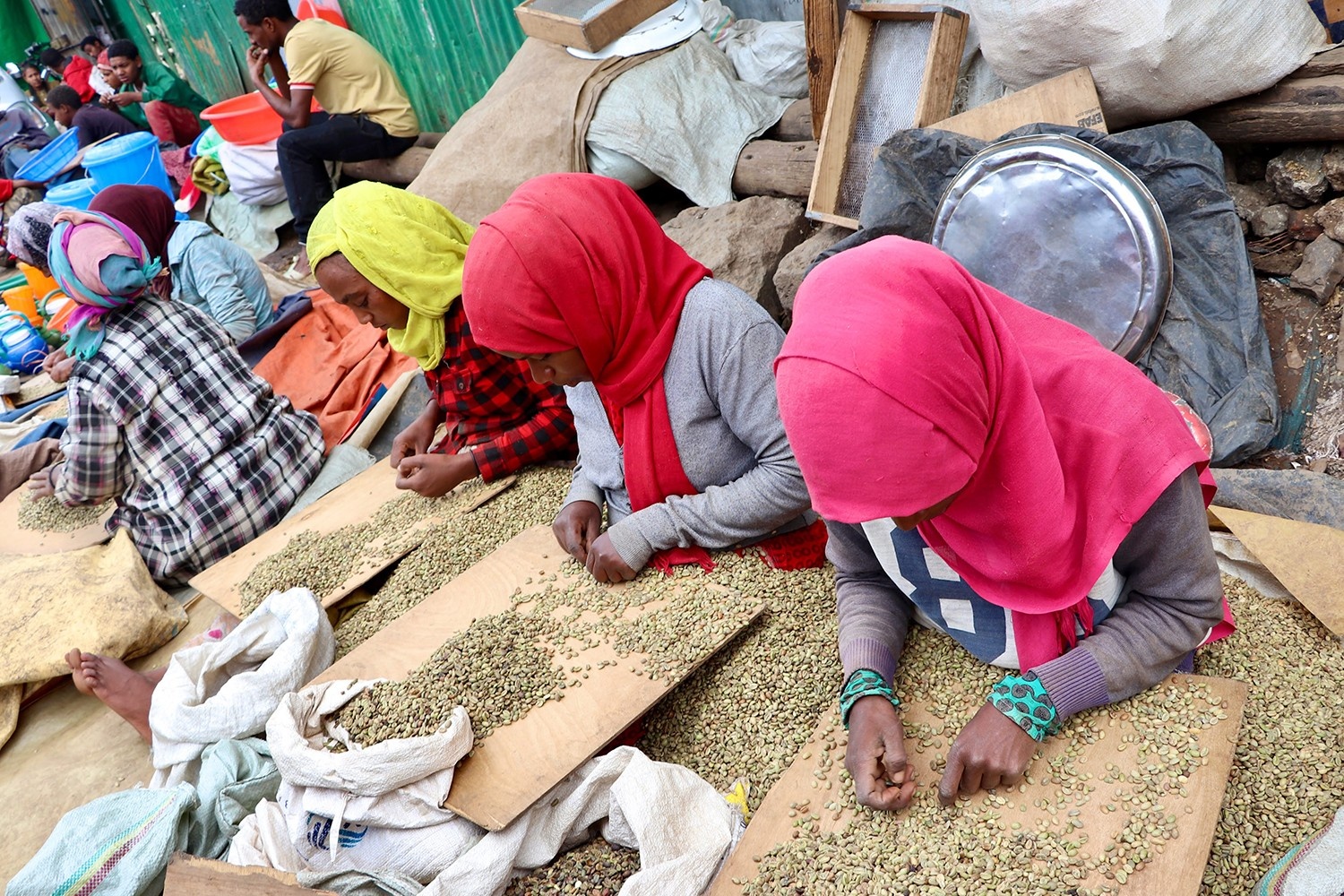
Sorting Coffee at the Mercato. Courtesy of Mike Harrington.
Donkeys trotted toward me as I navigated around a vendor hawking roasted corn to passersby. Sellers offered me samples of khat, a type of leaf that’s chewed for its stimulating effects. Technicolor woven baskets, incense, and haggling shoppers had my senses firing on all cylinders.
If there was a better way to combat jet lag than wandering the chaotic alleys of the Mercato, Africa’s largest open-air market, I couldn’t think of one.
For many travelers, Ethiopia’s capital city of Addis Ababa is a quick stop on the way to a safari in Tanzania or Kenya. For my husband and I, it was the start of a mission trip. For two weeks, we would be part of a team serving orphans and vulnerable families throughout Ethiopia. We came to Addis a few days early, hoping to learn something about the country.
Located in East Africa near the Red Sea, Ethiopia is a major diplomatic player on the continent; the African Union is headquartered in Addis Ababa. Located on a plateau in the middle of the country, the city’s 7,700-foot elevation makes it the highest capital city in Africa.
As we wove throughout the market, passing produce stands and hulking sacks of lentils, our guide, Fitsum Kibreab, filled us in on the history of Addis Ababa, which means “New Flower” in Amharic. It’s a fitting moniker for a city undergoing a massive urban renewal. From 2020 to 2022, the Tigray civil war killed and displaced millions of people across the country, causing a massive humanitarian crisis. Recovery has been slow but steady; while the city still struggles with unemployment and inflation, the government is moving forward with an ambitious plan to revitalize infrastructure. From freshly-laid promenades and cycling paths to urban parks, new projects keep popping up, part of a tourist agenda to attract more travelers as well.
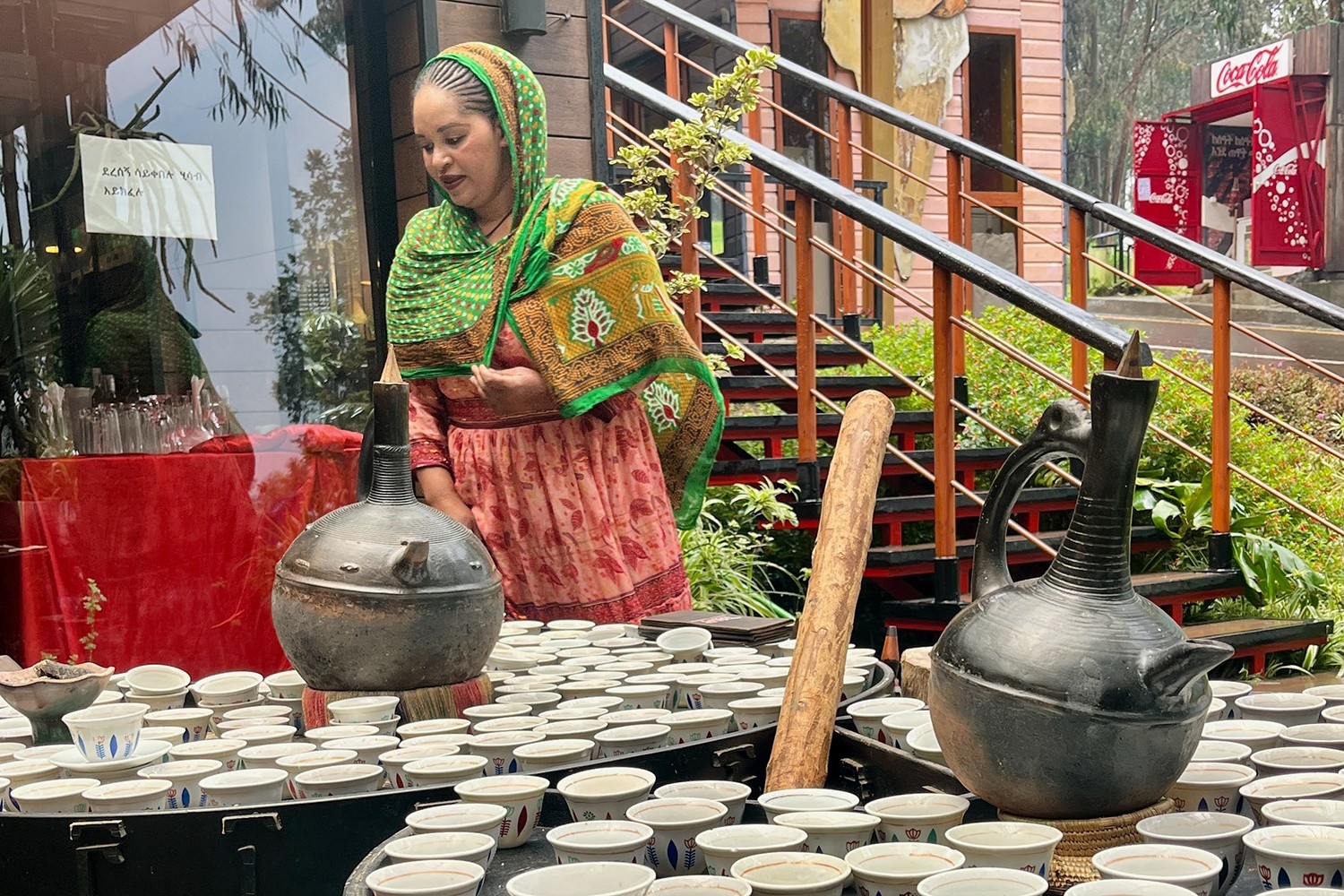
Coffee ceremony at Entoto Park. Courtesy of Kirsten Harrington.
Getting to Know Addis Ababa
“Ethiopia is the second-oldest Christian nation after Armenia,” Fitsum told us as we headed into the
Holy Trinity Cathedral, which was built in the 1940s to celebrate the country’s liberation from Italian occupation. Inside, worshippers prostrated themselves and kissed the building as a priest blessed us. Between welcoming the faithful, the stately design — from stained glass windows to ornate murals — and being the final resting place of many prominent Ethiopians, it’s one of Addis’ most-visited churches.
While Christianity is the country’s main religion, the capital is also home to a large Muslim contingent; roughly 30 percent of the city’s population. In a nod to peaceful coexistence, pedestrians in white headscarves, black chadors, and embroidered skull caps hustled down the street as we drove by.
Housed in Emperor Haile Selassie’s former palace, the Ethnological Museum takes visitors through Ethiopia’s turbulent past. As the country’s last emperor before being overthrown in a military coup in 1974, Selassie is a revered figure in modern Ethiopia, celebrated for modernization efforts like establishing a constitution and abolishing slavery, and for leading Ethiopian patriots and British troops in the 1941 defeat of the occupying fascist Italian regime. Exhibits range from tribal artifacts to preserved rooms from the building’s time as a royal residence. I was wowed by the displays of tribal artifacts, especially the supremely uncomfortable-looking wooden neck pillows.
Driving around the capital, the looming shape of Mount Entoto is a constant presence. Blanketed by a forest of fragrant but invasive eucalyptus trees, it’s sometimes called the green lung of Addis Ababa. This peak was the original site of the capital, chosen for its strategic location and mineral hot springs by Emperor Menelik II when he founded the city in the late 1800s. His palace still stands and is open for visits, as is the colorful, octagonal St. Maryam Church, but many come for the sweeping city views and to spend time in nature. The park offers hiking, zip lining, and camping, and pilgrims flock here seeking holy water from the natural springs. Some also use the park as a convenient source of firewood; as we sat and sipped coffee during our visit, we watched as elderly women, stooped under loads of firewood, marched down the mountain.
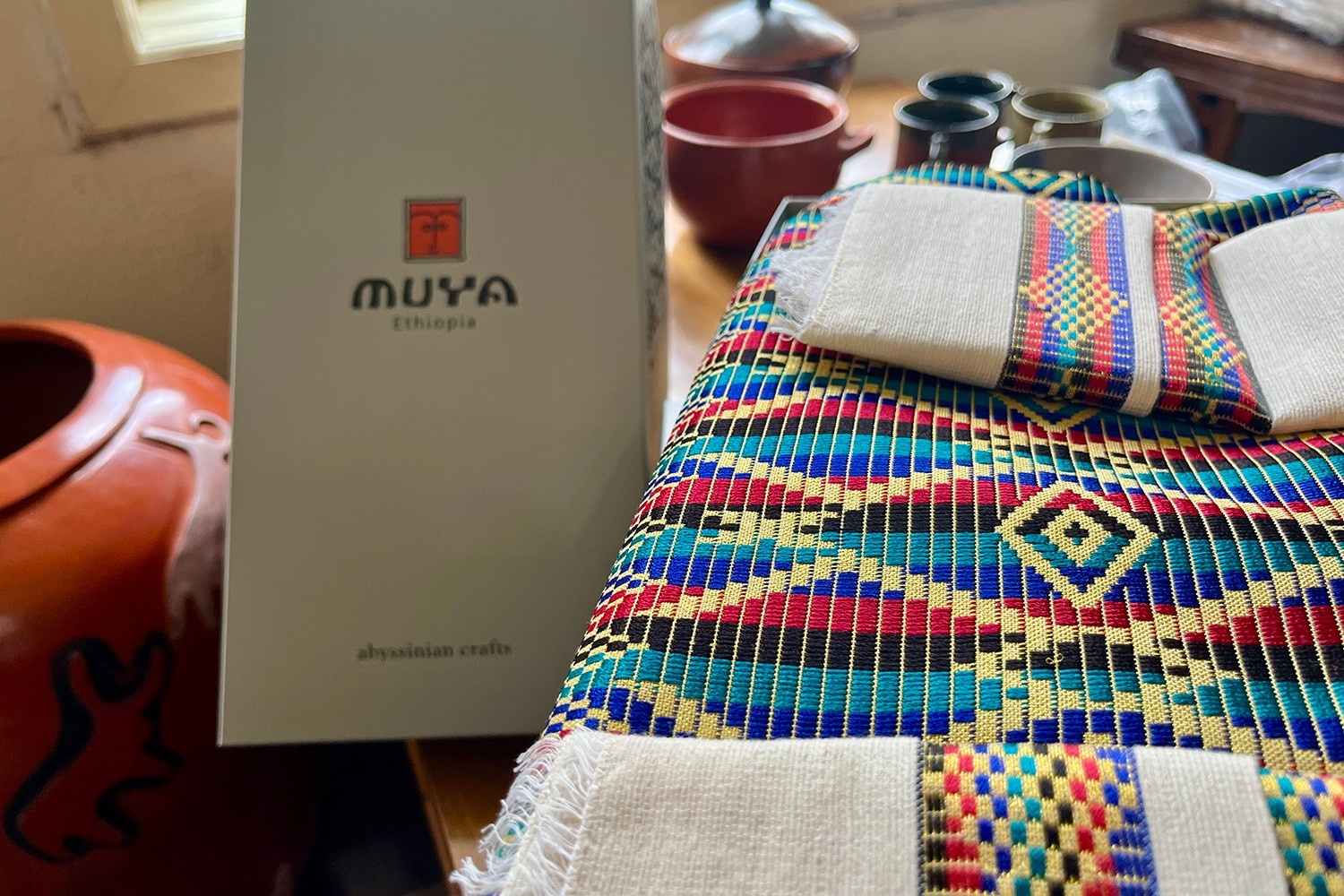
Textiles at Muya. Courtesy of Kirsten Harrington.
Addis Ababa Food and Drink
From the melting pot of Ethiopian ethnic groups to the influence of former occupying countries like Italy, Addis Ababa’s culinary scene is one of its most fascinating attributes. A great place to start with understanding local food culture is through coffee; Ethiopia is considered the birthplace of coffee, as the plant hails from the Kaffa region, and it’s one of the country’s biggest economic drivers and culinary traditions. Cafes dot the city, where visitors can experience a traditional coffee ceremony. A crucial part of local life and community bonding, the Ethiopian coffee ceremony is a three-part process, from roasting and grinding the beans to brewing to serving. Coffee houses and restaurants throughout the capital offer this ceremony, like the treehouse-esque Fresh Corner Kitchen, which sits nestled among the trees of Entoto Park; the restaurant’s specialty beef, served in sizzling ceramic pots, is also worth a try.
We got a sense for this coffee ritual after lunch at Akkoo Coffee, a cafe that also serves classic Ethiopian dishes. As rain hammered down on the covered patio, we shared a meal of beef tibs, stewed greens, and lentils. After eating, we moved closer to the ceremonial coffee circle, warmed by the charcoal fire that brews the Ethiopian elixir.
Even without the full ceremony, many restaurants, like Temsalet Kitchen, still make their own coffee in-house. A popular eatery among locals and expats, this inviting cafe follows the full ritual of roasting, grinding, and brewing its own coffee for guests. But the restaurant, which serves a mix of Ethiopian fare, pizzas, wraps, and other more Westernized dishes, is also worth a visit for its social enterprise work. Founded in 2016, the restaurant serves as a training ground for unemployed women, educating them in different hospitality skills.
“We offer a space where women can learn and move toward economic independence,” explained founder Samrawit Petros. “Some come as cleaners, leave as chefs. Some stay for years, while others move on, pursuing further education.”
Over 100 women have received a fresh start, being trained by more experienced employees. I recommend trying the shiro, a velvety chickpea dip seasoned with Temsalet’s own spice blend.
Another essential food stop is Marcus Addis from Ethiopian-born chef Marcus Samuelsson. A renowned figure in the food industry who’s best known for his Harlem restaurant Red Rooster, Samuelsson brings his blended Ethiopian and Swedish heritage to this splashy restaurant on the 47th floor of the Commercial Bank of Ethiopia, East Africa’s tallest building. The menu celebrates Samuelsson’s diverse culinary influences with dishes like miso-glazed Nile perch and berbere spice-cured salmon; the baked mac and cheese, made with spiced injera flatbread, is top-notch, too.
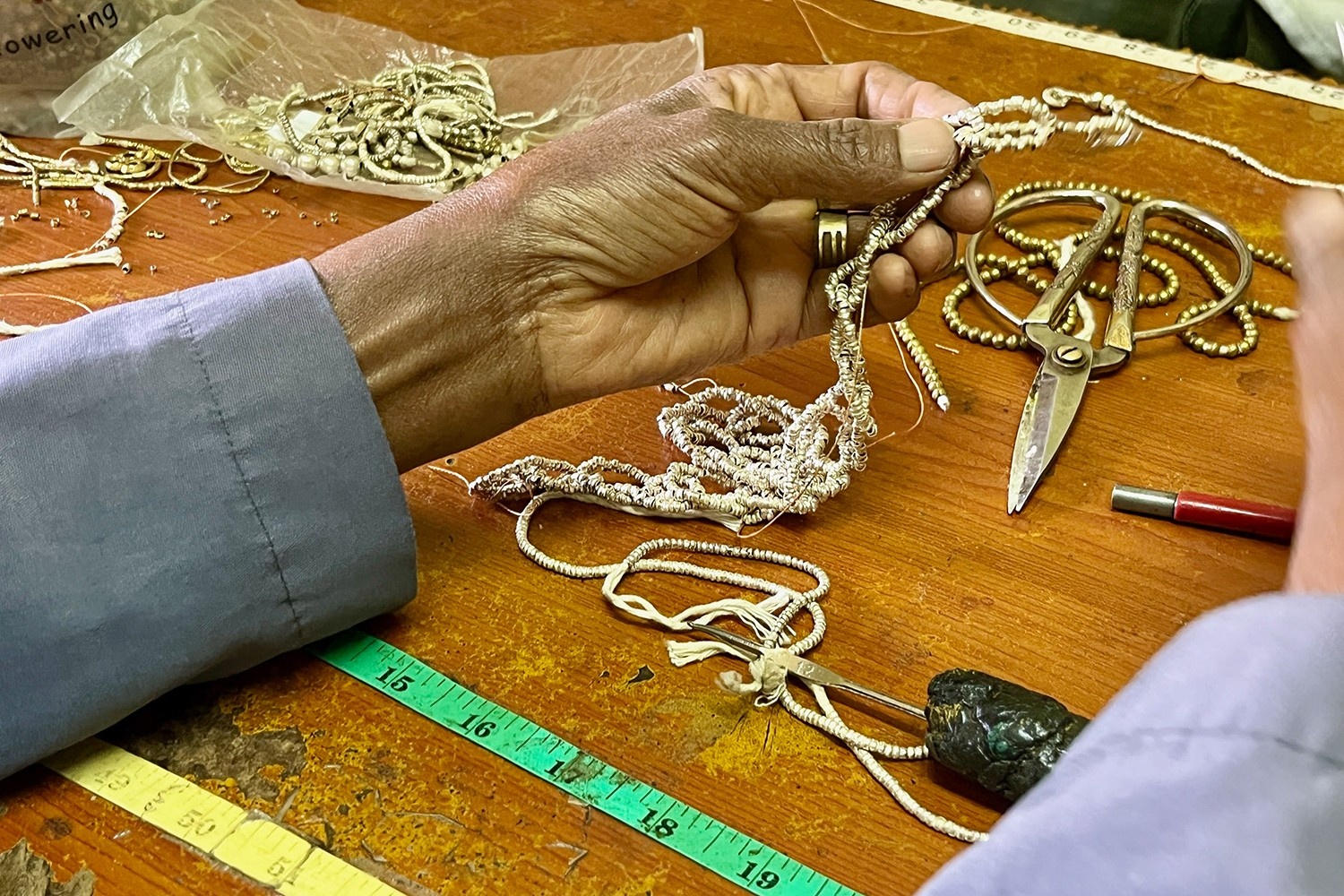
Making jewelry at Entoto Beth Artisan. Courtesy of Kirsten Harrington.
Shopping in Addis Ababa
As the home of the biggest open-air market on the continent, Addis Ababa is a shopper’s delight, with stores and stalls proffering everything from textiles and pottery to jewelry. Many shops double as social enterprise initiatives, providing employment for those who need it, paying fair wages, and imparting essential career-building skills.
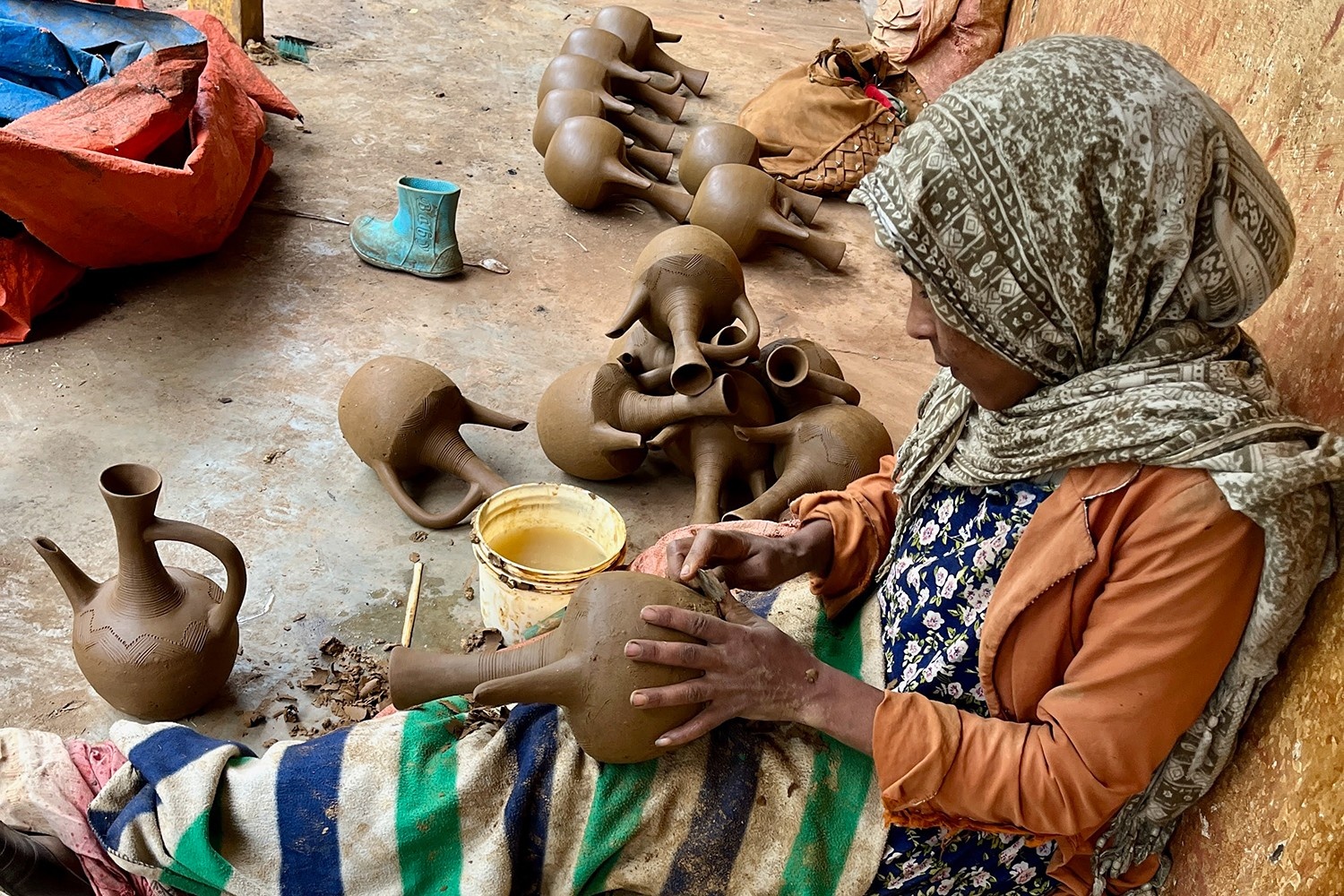
At Entoto Beth Artisan, a fair-trade workshop where HIV-positive women create jewelry from spent bullet casings and artillery shells left over from the war, I filled a shopping bag with hoop earrings and beaded bracelets. In Muya Abyssinian Crafts, where weavers receive generous wages and subsidized meals, I watched as their fingers flew across looms, creating exquisite textiles bound for shops in Paris and Tokyo. Ceramics enthusiasts can grab coffee cups and vases from Ensira Pottery Center, where hundreds of women craft pottery by hand, using skills passed down through generations. Operating at a co-op, it provides childcare, materials, and dung-fired kilns.
Another great district is Sarbet, where we stumbled on a collection of shops that fooled me into thinking we were in the hip fashion areas or artist hubs of Shanghai or New York. At ethically-minded Auradoro Cross-Cultural Fashion, Rome native and owner Cristina De Luca collaborates with Ethiopian artisans to create Italian-inspired clothing and accessories. “We don’t just produce garments, we preserve traditions,” said De Luca, who sources local cotton and provides fair wages to her workers. Neighboring Kirtas Packaging supports the city’s move away from plastic by creating gorgeous vases, bags, and art with recycled paper.
In addition to accessories and apparel, plan to pack home plenty of coffee as well, especially a few bags from Tomoca Coffee, the city’s oldest coffee roaster, which was established in 1953. As the staff grinds your beans, you can enjoy macchiatos and other coffee beverages.
At the end of our time there, Addis Ababa had captivated me with its ancient rituals, beauty, and hospitality. It was deeply satisfying to visit a country that’s actively seeking tourists rather than contributing to overtourism in other, more popular destinations. While you shouldn’t forego going on safari, be sure to add a few days in Addis to your itinerary.
Tips and Travel Safety
- For added security and deeper cultural connections, opt to hire a guide like Akuye Tour Company or Teddy Zion Tours.
- Credit cards work at larger establishments, but you should have Ethiopian birr on hand as cash for small shops. Guides prefer US Dollars.
- Wear a cross-body bag and keep your phone tucked away to avoid pickpockets.
- Avoid public transportation and take taxis instead, which can be arranged through your hotel.
- For hotels, the Golden Tulip has a free airport shuttle, spacious rooms, and friendly staff. Located near Meskel Square, the Hyatt Regency is within walking distance of shopping and dining and boasts an outdoor swimming pool. The Ethiopian Skylight Hotel is another nice choice, with proximity to the airport, an on-site spa, and numerous dining outlets.

Kirsten Harrington is an Orlando, Florida freelance food and travel writer. Her work has appeared in Outdoors, Travel Awaits, Edible Orlando, The Beijinger, World Footprints, Time Out, BahamasAir Up & Away, Cacique inflight magazine and numerous other print and digital publications. Follow Kirsten on IG @wintergardenfoodie.
North Stars: Community Support, Gender Equality, Heritage Value
More Stories
 CULINARY, DRINK
Get to Know the Producers Behind the J.P. Bourgeois Portfolio
 CULINARY, DRINK
Where to Taste Wine in Willamette Valley
 DRINK
DRINKMeet the Distillery Making Vodka From Fog
 DRINK
DRINKSake’s Next Step: How Japan’s Rice Wine Is Evolving
 DRINK, HOME
The Buzz on InFizz: Breville’s Carbonator Elevates Sparkling Water