“This was the greatest gift you could have given me, placing him into the grave with my own hands.”
A lush woodland filled with black-eyed Susans, wild grasses, and mushrooms probably isn’t what first comes to mind when thinking of a cemetery. But that’s what greets the eye at the Eloise Woods Natural Burial Park outside of Austin, Texas. The landscape looks more like a nature preserve than a human cemetery. That’s because this burial park takes a different approach to creating a final resting place for the deceased.
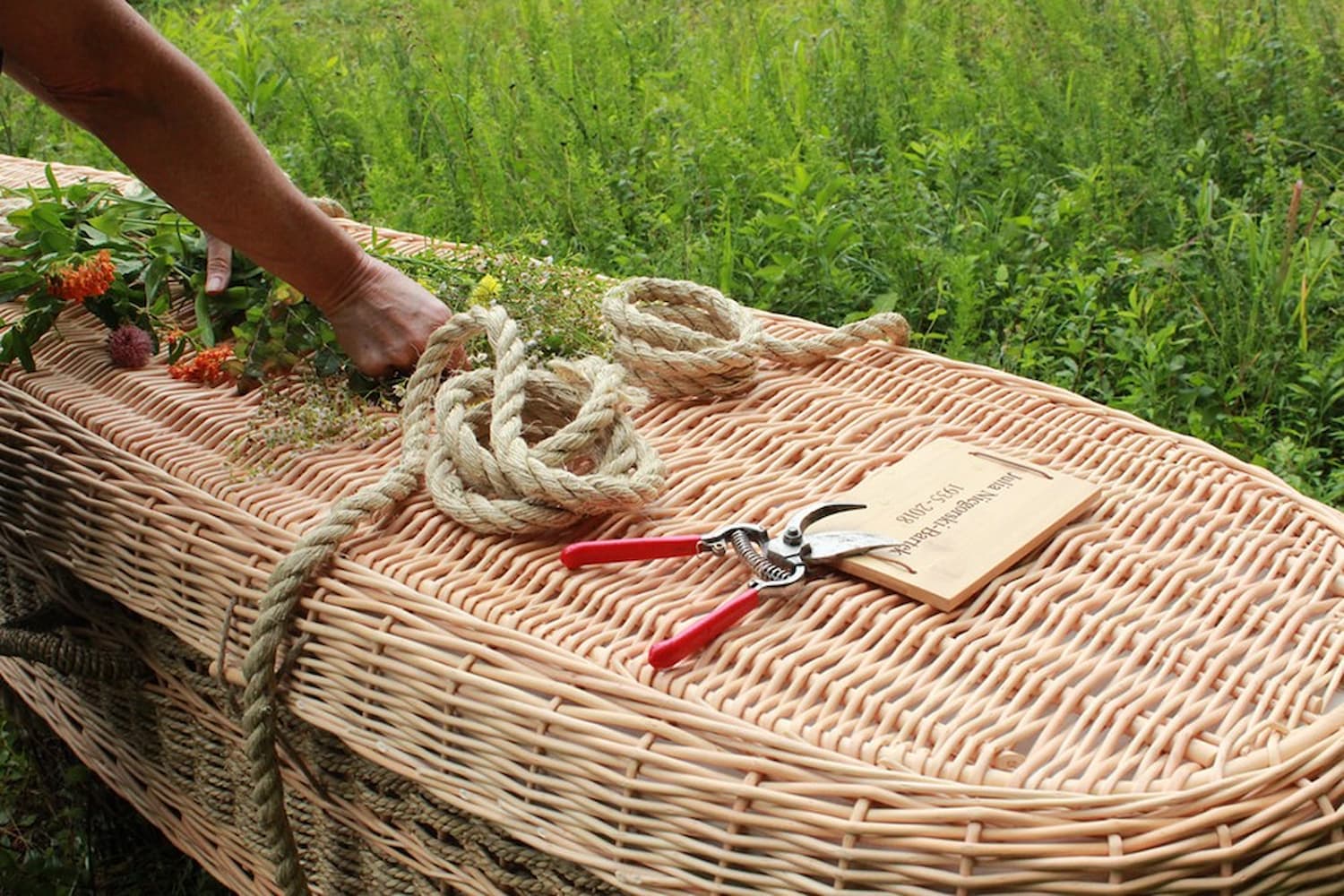
Back when it first opened in 2011, Eloise Woods Natural Burial Park was one of the first cemeteries in the state to offer green or natural burial options. Burials here look almost nothing like those in conventional cemeteries. There are no concrete burial vaults. Bodies are prepared without chemical preservatives or disinfectants. Coffins tend to be made from environmentally friendly materials such as cardboard or wicker that break down naturally. Instead of being preserved for eternity, bodies are allowed to return to the earth the all-natural way.
Nowadays, many people are acutely aware of how their daily lives impact the planet, from the type of food they eat to how much trash they produce. But that impact doesn’t stop after death. Modern funerary practices, especially in the West, continue to leave lasting impacts, from leaking embalming chemicals contaminating soil to the use of pesticides in cemetery landscaping.
As more Americans think about what happens to their bodies after death, green burials are emerging as a more mindful alternative.
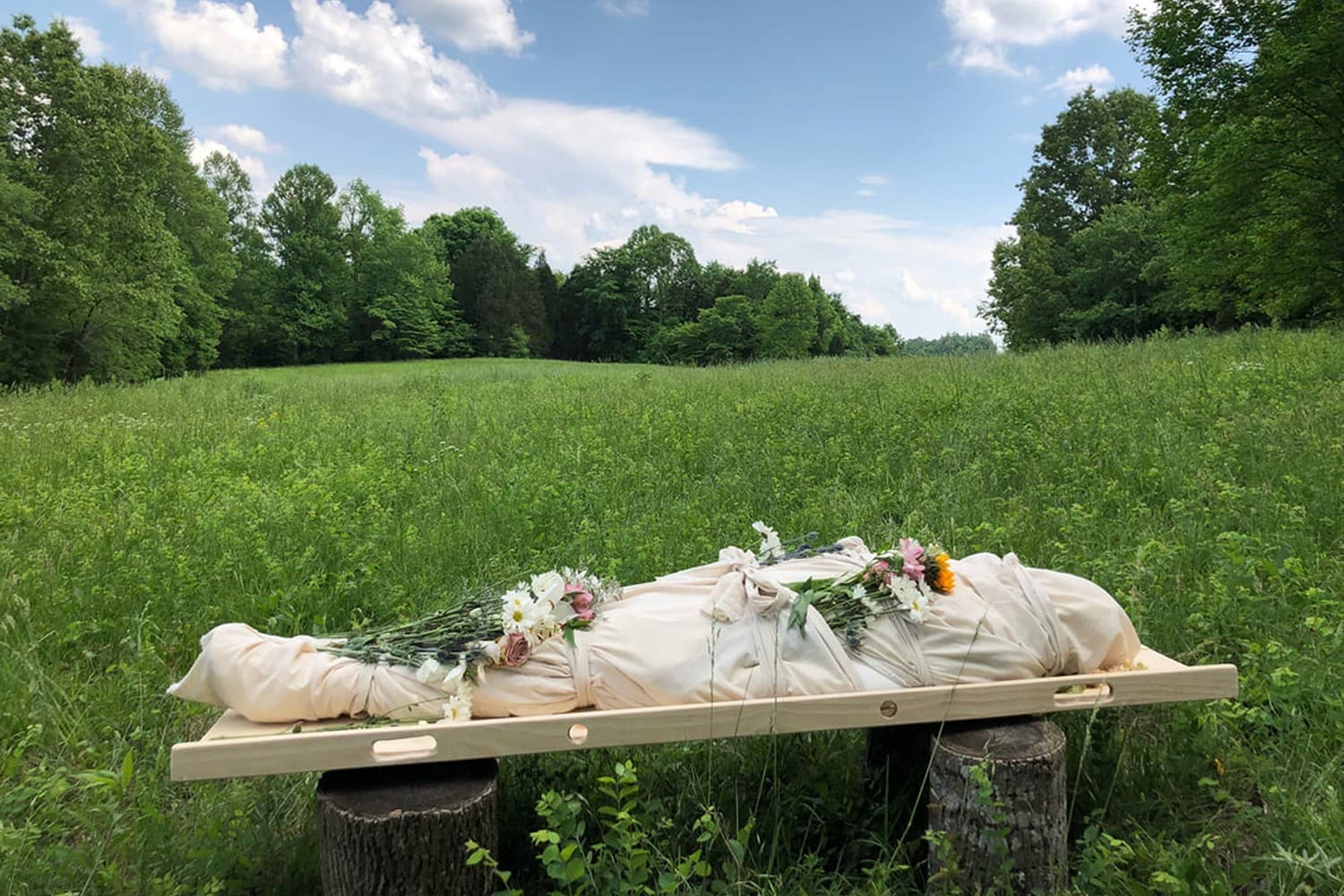
A body prepared for burial. Courtesy of the Green Burial Council
What Is a Green Burial?
According to the Green Burial Council, a green burial is an environmentally conscious approach to laying a body to rest. This applies not only to the environment by reducing waste and carbon emissions, but to the humans involved as well by protecting the health of cemetery workers and funeral home staff. For thousands of years, before modern funeral practices emerged, natural burials were not a niche but the norm, making green burials a return to the ways of the past.
Instead of embalming — delaying decomposition by chemically altering the body with toxic chemicals such as formaldehyde — bodies are prepared for burial through non-invasive methods by being cooled, washed, and shrouded. When some sort of embalming is needed, natural, plant-based, and non-toxic products are used. In lieu of traditional coffins or vaults, bodies are interred in biodegradable coffins, caskets, or shrouds. These are then buried in hybrid cemeteries or designated natural burial grounds like meadows and fields. Here, the landscape is largely left unchanged and unmanicured. Grasses grow wild, trees remain undisturbed, and the land shows barely any sign that humans have been there. Underground, the soil works its natural magic on the biodegradable containers and gradually, over time, decomposes the body.
Since they take place in natural environments, green burials often have a conservation component. Since natural burial sites are meant to be, well, natural, native species are allowed to flourish instead of being trimmed, restricted, and landscaped into submission. Pollinators, birds, and wildlife help the ecosystem thrive. Some natural burial sites add bee or butterfly gardens. Others add birdhouses. Some enact restoration projects like revitalizing wetlands. All of it is aided by the bodies below the ground, which help keep the landscape healthy and fertilized.
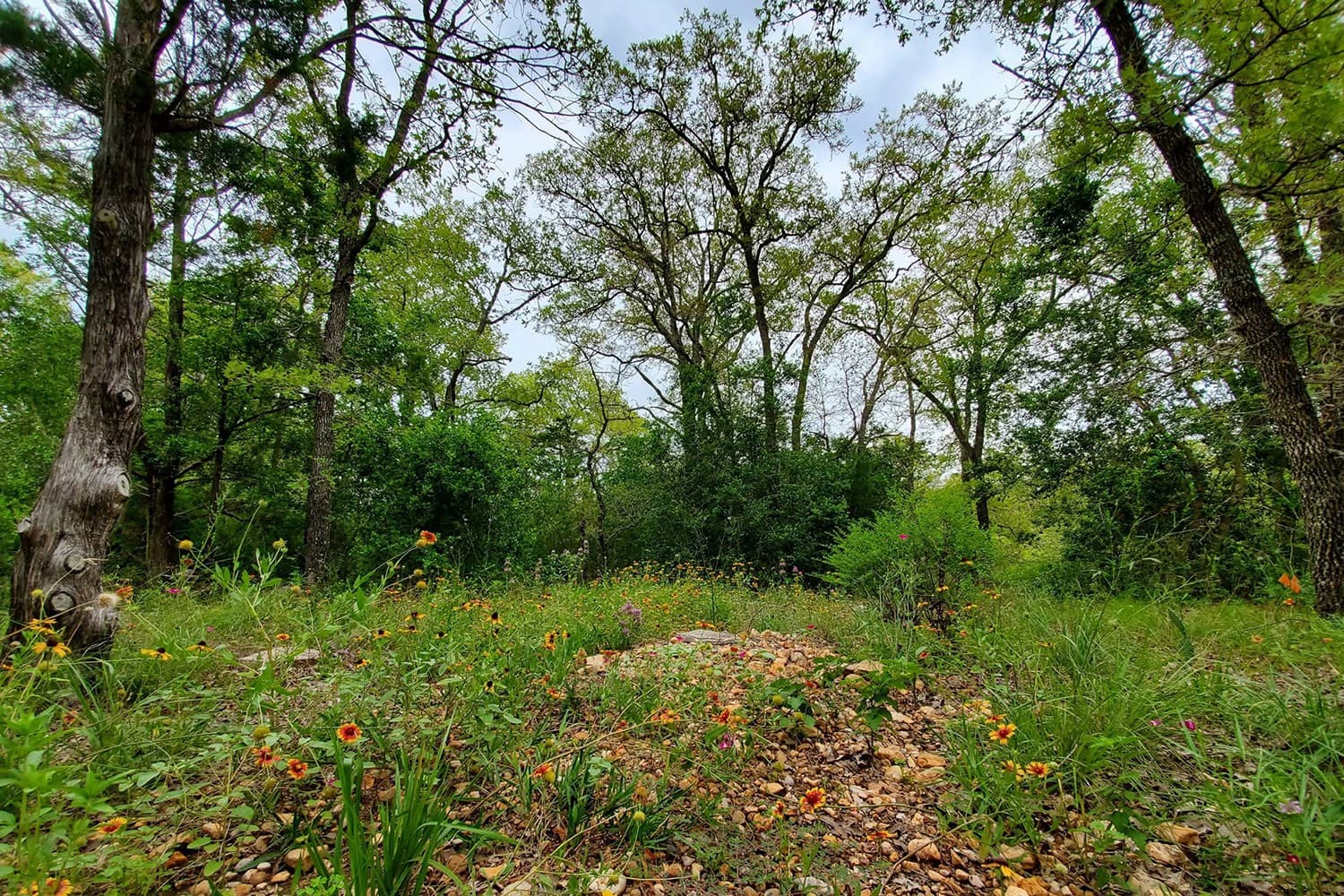
Natural resting places at Eloise Woods. Courtesy of Eloise Woods
Green Burials Are Growing
On the surface, green burials may sound like a fringe practice. But they’re far from obscure. According to a 2025 report from the National Funeral Directors Association, 61.4% of consumers said they’d be interested in exploring green funeral options — up from 55.7% in 2021.
“Consumers are driving the industry,” says Samuel Perry of the Green Burial Council.
There are many different factors driving the interest in green burials, and environmental awareness is one of them. In the U.S., the average cremation emits 459 pounds of carbon dioxide. Traditional burials are not much better, although emissions come more from indirect costs, such as the type of coffin or vault used. Economics is also a factor. Green burials can be significantly less expensive, considering there’s no embalming, vault, or metal casket.
Melissa Meadow, an end-of-life doula specializing in green burials, has seen interest in green burials explode on her social media accounts over the past few years.
“I get constant attention on green burials, especially shrouded bodies,” Meadow says.
Reconnecting With Death
In addition to the environmental and economic factors, she sees the appeal as a participatory one, too. Since bodies aren’t embalmed for green burials, much of the after-death care, like washing and dressing, that’s usually done behind the scenes by funeral homes can be done by the family. Instead of being removed from helping prepare a person for the grave, family and friends are more involved. Meadow has worked with families that have performed these rites and seen what an impact it has on processing grief and sharing final moments with a loved one. She recalls working with a family that wanted to do a home funeral in Austin, Texas.
“The grandson was hesitant at first, but the women in the family really wanted to do a home funeral, and he said whatever brings people peace,” she says. “Afterward, though, he said, ‘This was the greatest gift you could have given me, placing him into the grave with my own hands.’”
Green burials invite people to participate and be part of the process of interring a body, whereas with more traditional burials, every step is handed off to professionals. But that involvement, Meadow says, often becomes as meaningful for loved ones as the burial itself.
Clearing the Air on Green Burials
As green burials become a more prevalent and mainstream form of funerary practice, experts like Perry and Meadow often find themselves battling misconceptions. One of the biggest: green burials are not the same as human composting.
Much like food composting, human composting is meant to help create fertile soil. However, unlike with food composting, human composting tends to involve a lot of artificial parts in the process. It’s also not legal everywhere.
“Human composting is not green burial,” explains Meadow. “You’re in a box, in a warehouse with electricity and moisture to control the process. Plus there are PFAS, and microplastics in the body and if you’re turning it into mulch, those are then in the soil. There’s so much greenwashing around human composting and they’re not transparent about the process.”
Legality is another factor. Perry mentions that one of the biggest misconceptions is that embalming is required for public viewing. But it isn’t. For all the reluctance people sometimes assume they’d feel toward a less sanitized process, Meadow says the opposite tends to be true. The most common misconception she corrects isn’t about the environment; it’s the fear that an unembalmed body will smell. It doesn’t, she says, if kept properly.
Meadow also says she’s found more hesitation among her own professional peers than from the families she works with directly. Often, the lack of education or false assumptions come from the provider side.
Perry concurs: “There’s a disconnect between consumers having to teach providers or having to find a provider that seems knowledgeable about green burials and they’re comfortable with.”
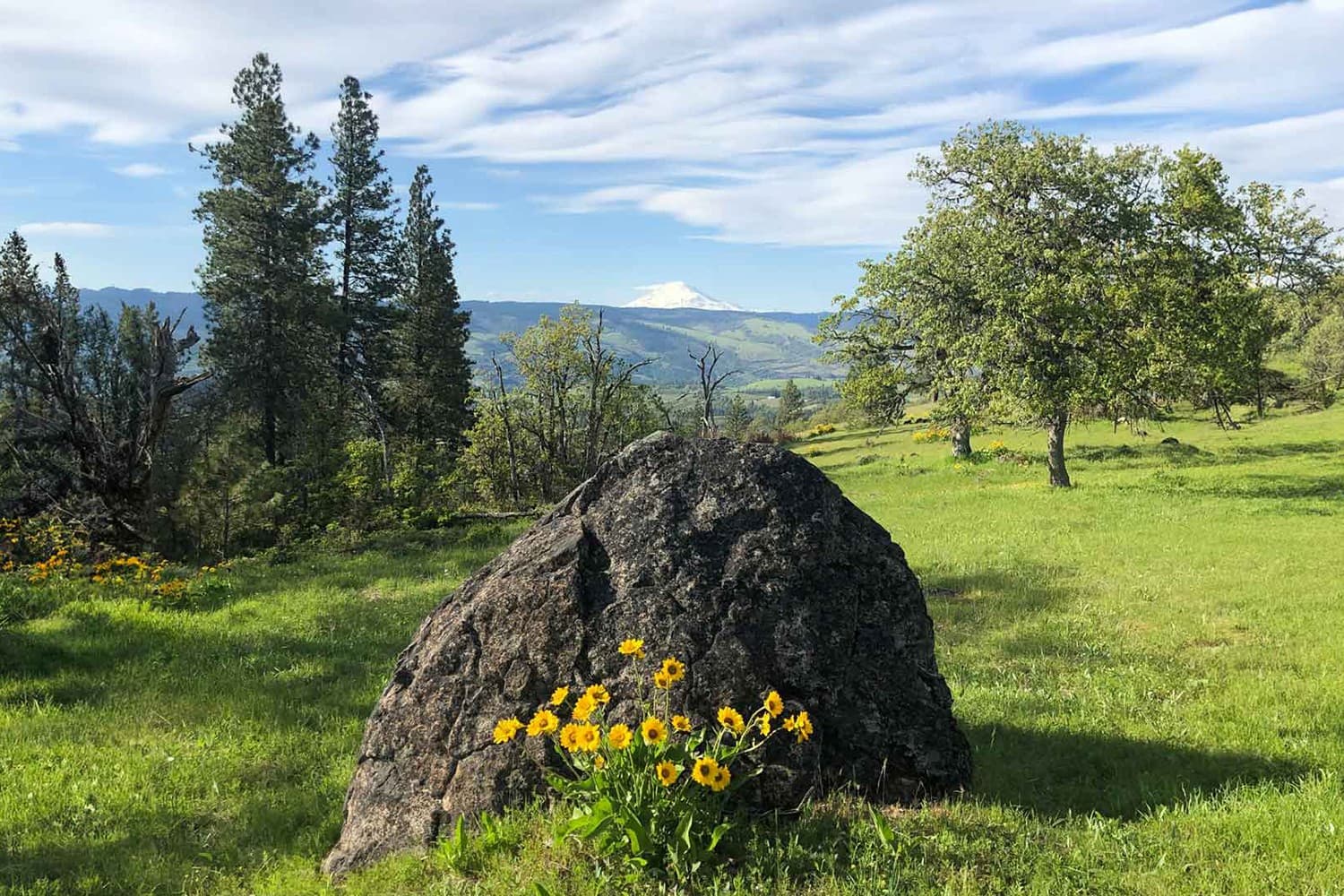
Landscape views from Great River Natural Burial. Courtesy of Great River Natural Burial
Ashes to Ashes, Dust to Dust
What was once a fringe practice is now truly widespread. Green burials are legal in all 50 states. Across the country, 185 funeral homes and 91 cemeteries are certified by the Green Burial Council to carry out this style of burial. Practitioners have 52 green burial-approved products, including formaldehyde-free embalming fluids, to choose from for the procedure. Certification courses are available for interested providers. Green cemeteries also often give the option to create living memorials, like planting trees or gardens that help the land flourish and carry on the memory of those who’ve passed.
And as for these natural burial grounds where families are laying loved ones to rest in nature? They could hardly be more serene or feel more attuned to the land. Near Mosier, Oregon, in the Columbia River Gorge, Great River Natural Burial’s 150 acres overlook forests, fields, and mountains from its grassy burial grounds. Outside Asheville, North Carolina, Carolina Memorial Sanctuary lays loved ones to rest among the woodlands, wildflower meadows, and creeks of the Blue Ridge Mountains. And back at Eloise Woods, the black-eyed Susans keep coming up every summer: a natural, native, and non-invasive memorial to the bodies buried there.
Bridget Shirvell is an independent journalist based in Connecticut. Her food, parenting, and environmental reporting has appeared in publications including The New York Times, The Washington Post, Martha Stewart Living, Good Housekeeping, and more. An environmentalist for as long as she can remember, her climate solutions work took on new urgency after becoming a parent. Bridget lives in an old house in Mystic, Connecticut, with her daughter and dog. She can be found online at breeshirvell.com. Follow Bridget on IG @breeshirvell.
North Stars: Climate Action, Diversity and Inclusion, Wildlife and Ecosystems