“They provide a place for people to focus their grief and their love.”
Theresa Lee can’t walk around the New England Botanic Garden at Tower Hill in Boylston, Massachusetts, without thinking about the dead. “Oh, that’s Maryanne, I’ll think, or that’s so-and-so,” says Lee.
It’s not because the botanical garden is haunted. It’s because of the garden’s living memorial program.
For many years, Lee, who oversees the program, has helped walk families through the process of creating living memorials: trees, bushes, and other parts of the garden dedicated to the dearly departed as a way to celebrate and remember their lives. Throughout the garden’s history, more than 300 items have become part of this tradition. The different sites span the grounds, marked by subtle plaques and signs adorned with names, poems, or phrases. Some of the stories behind these memorials span decades.
It’s a practice this particular garden has taken part in since the 1990s. But more places like it have been embracing it as well, as living memorials become an increasingly popular way to remember the dead.
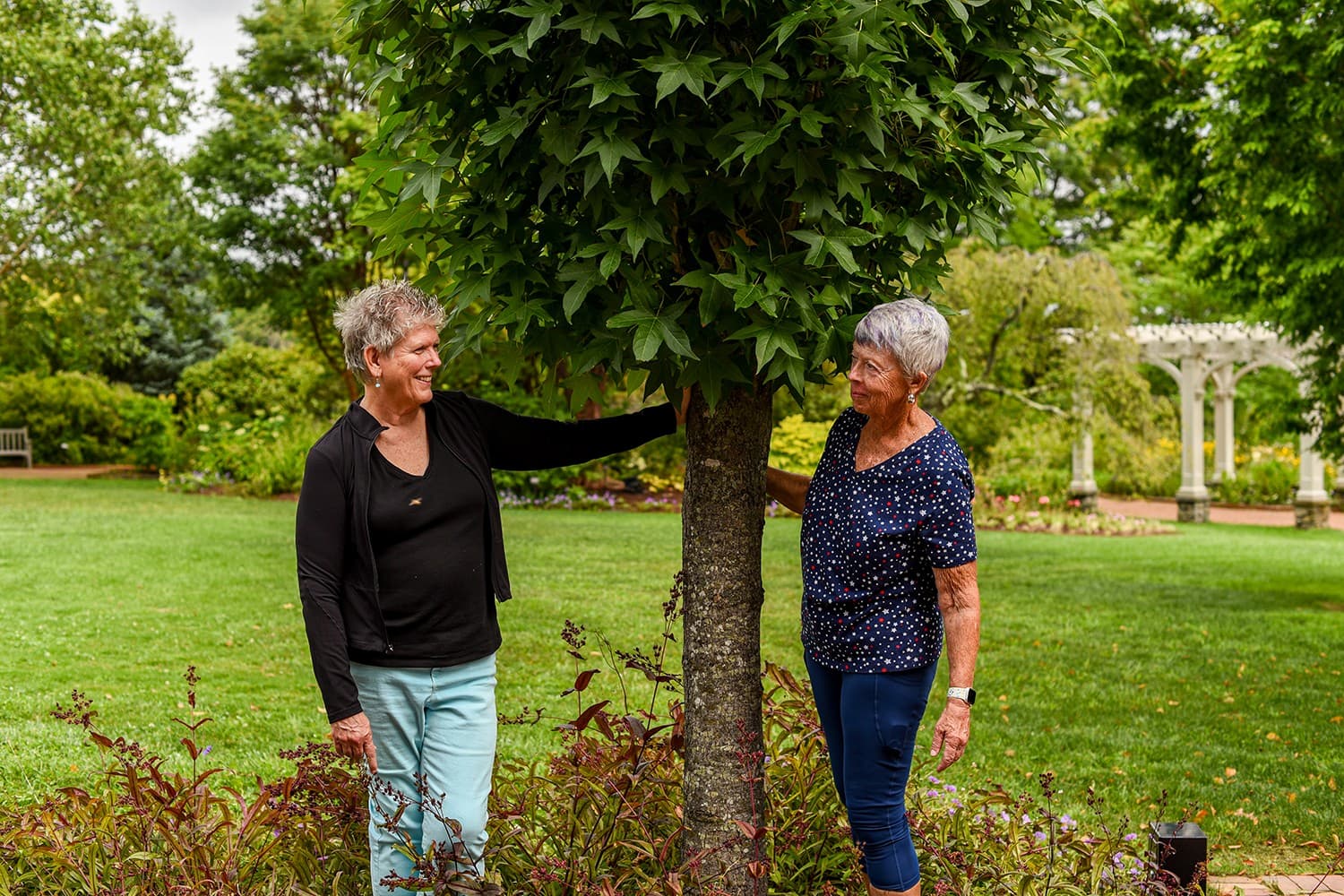
A memorial tree at the New England Botanic Garden. Courtesy of Megan Stouffer for New England Botanic Garden
What Is a Living Memorial?
In relation to funerals and death, memorials typically fall into two camps. One could be a headstone, plaque, or monument; something commemorative and concrete. There are also memorial services: gatherings where friends and family members can reflect on the life of their loved one.
A living memorial isn’t quite as static as a headstone or a one-off event like a service. A living memorial is a living entity, like a tree, bush, or a seasonal garden bed, that’s dedicated to the memory of someone. Similar to an actual burial site, it’s a place where people can visit and feel close to the spirit of the departed. While the person may no longer be alive, the memorial continues growing, changing with the seasons. In essence, it lives on in their stead. The dedications aren’t always tied to death, either. Sometimes they mark an anniversary, a birthday, or another milestone. They commemorate an event, a location, or a pet. Sometimes the memorials aren’t even living. They can be walking paths through a peaceful forest, or a bench facing a calming view.
“Living memorials are about creating remembrance, whether a garden or tree,” says Julie Raymond-Yakoubian, lead instructor of the University of Vermont’s End-of-Life Doula program. “They provide a place for people to focus their grief and their love.”
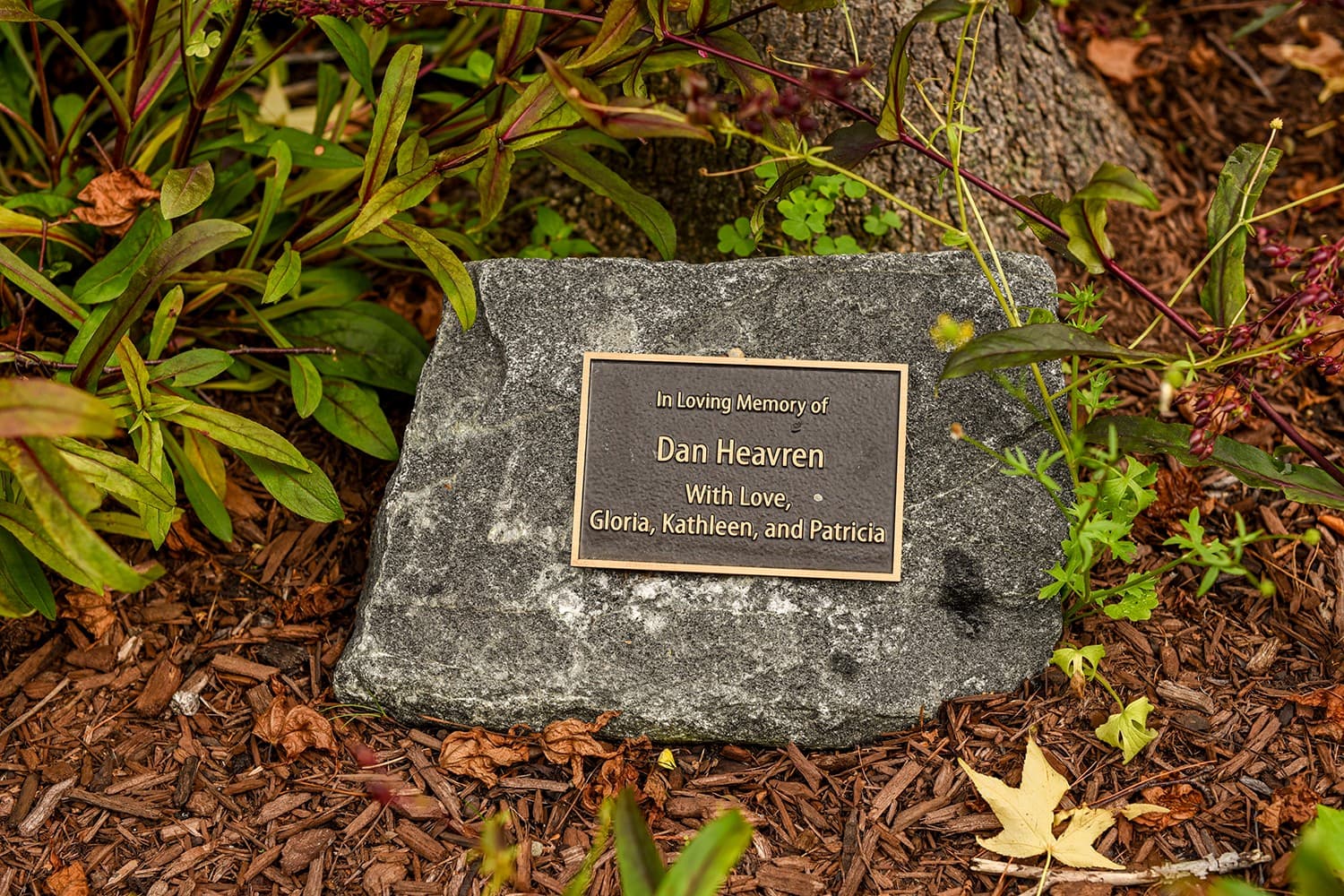
One of the plaques marking a living memorial. Courtesy of Megan Stouffer for New England Botanic Garden
Choosing Living Memorials Over Tradition
Living memorials are not a new concept. While the exact history is hard to trace, many ancient cultures, such as the Celts in Europe, regarded forests or tree groves as sacred spaces for remembering the dead. Some planted trees as acts of remembrance after a death.
Among mainstream U.S. audiences, however, the idea of living memorials gained popularity following World War I and again after World War II. During this era of mass death and loss, debates emerged over how to honor the dead and whether memorials should be functional monuments for future generations to enjoy or traditional places to mourn.
Now, the practice is reemerging. Increasingly, people are looking for alternatives to traditional cemeteries. During her time running the New England Botanic Garden’s memorial program over the past five and a half years, Lee has noticed the shift.
“They talk about the beauty of the garden, how much their loved one loved it here, and how much more excited they are to visit them somewhere like this,” Lee says of people who choose the garden for a living memorial. She adds that those conversations almost always circle back to a person’s own connection to gardening, or to the garden itself, if they’d been a member.
While Raymond-Yakoubian can’t say exactly what she thinks is driving the new interest, she has noticed that many families want an evolving, ongoing approach to grieving. “It’s active and intentional and can help people process,” she says.
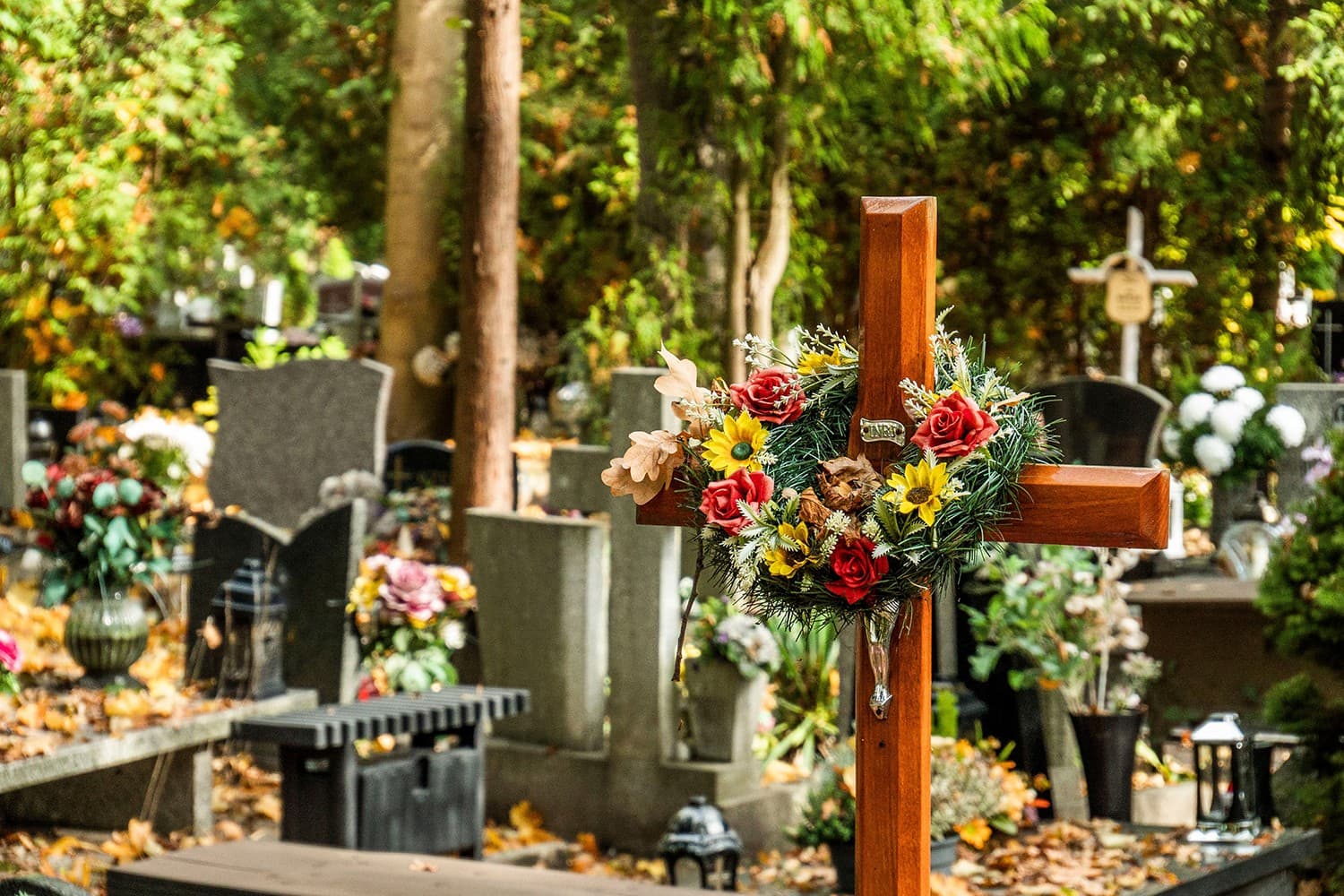
While difficult to confront, modern end-of-life practices have a big eco-footprint. Courtesy of Pexels
End of Life’s Eco-impacts
Along with offering people a longer-lasting way to grieve, Raymond-Yakoubian says that environmental awareness and stewardship seem to be playing a role in more people pursuing living memorials.
In Western cultures, rituals associated with death often include purchasing a coffin and a burial plot and sending flowers for the memorial service. But these rituals also produce a significant amount of waste. Funeral flowers, for instance, require a lot of single-use plastics, from green floral foam, which is not biodegradable, to plastic wrapping. Fresh flowers are often flown to the United States from other countries, generating huge carbon footprints. Cemeteries occupy great tracts of land and require extensive landscaping. Even after death, human bodies continue to impact the environment based on their disposal.
With living memorials, at least some of the impacts can be offset. Planted trees can help with air purification, urban cooling, and carbon removal. Instead of single-use flowers, flower beds grow, die, and regrow each year. Gardens flourish, supporting pollinators and birds. Living memorials help the environment, rather than detracting from it.
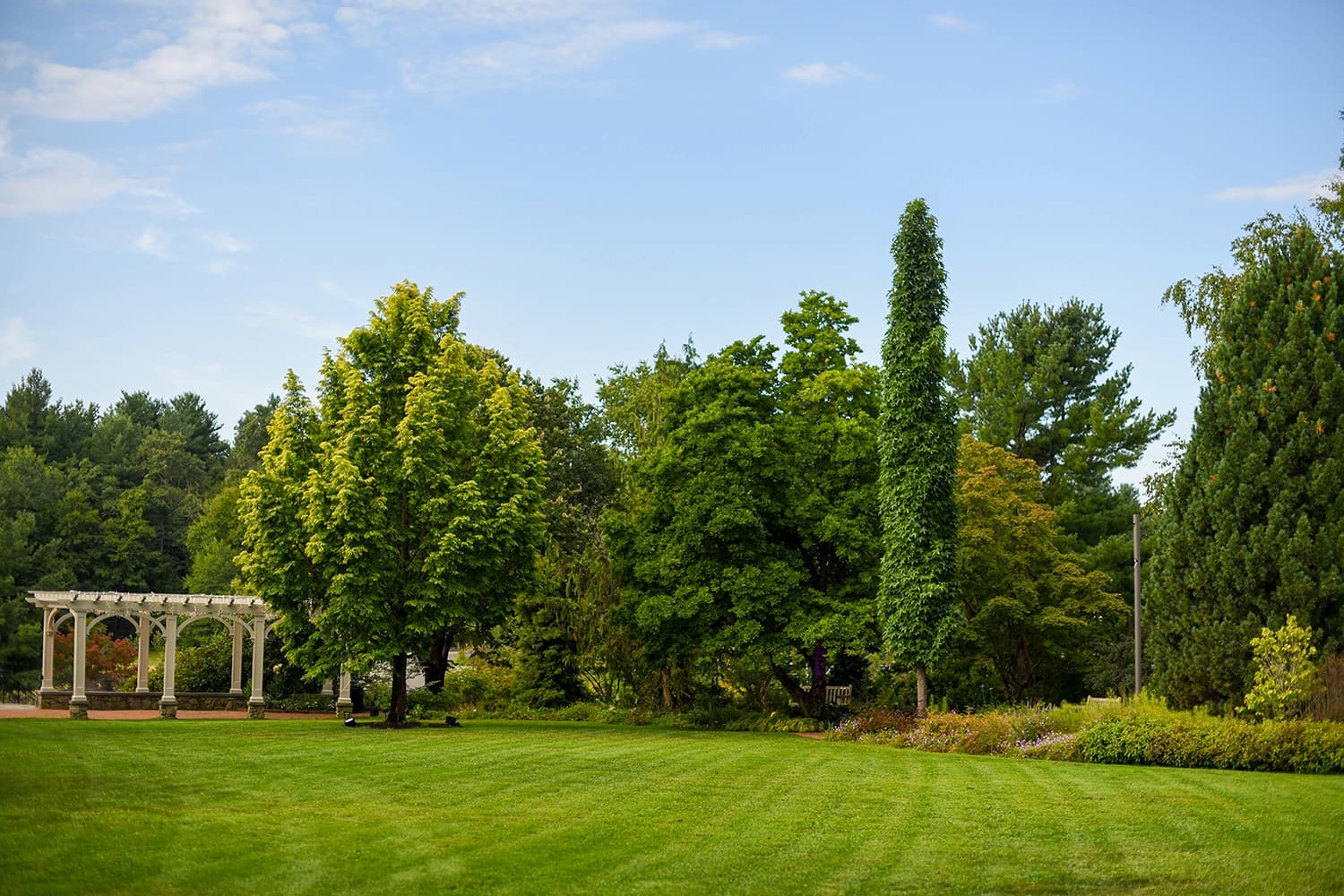
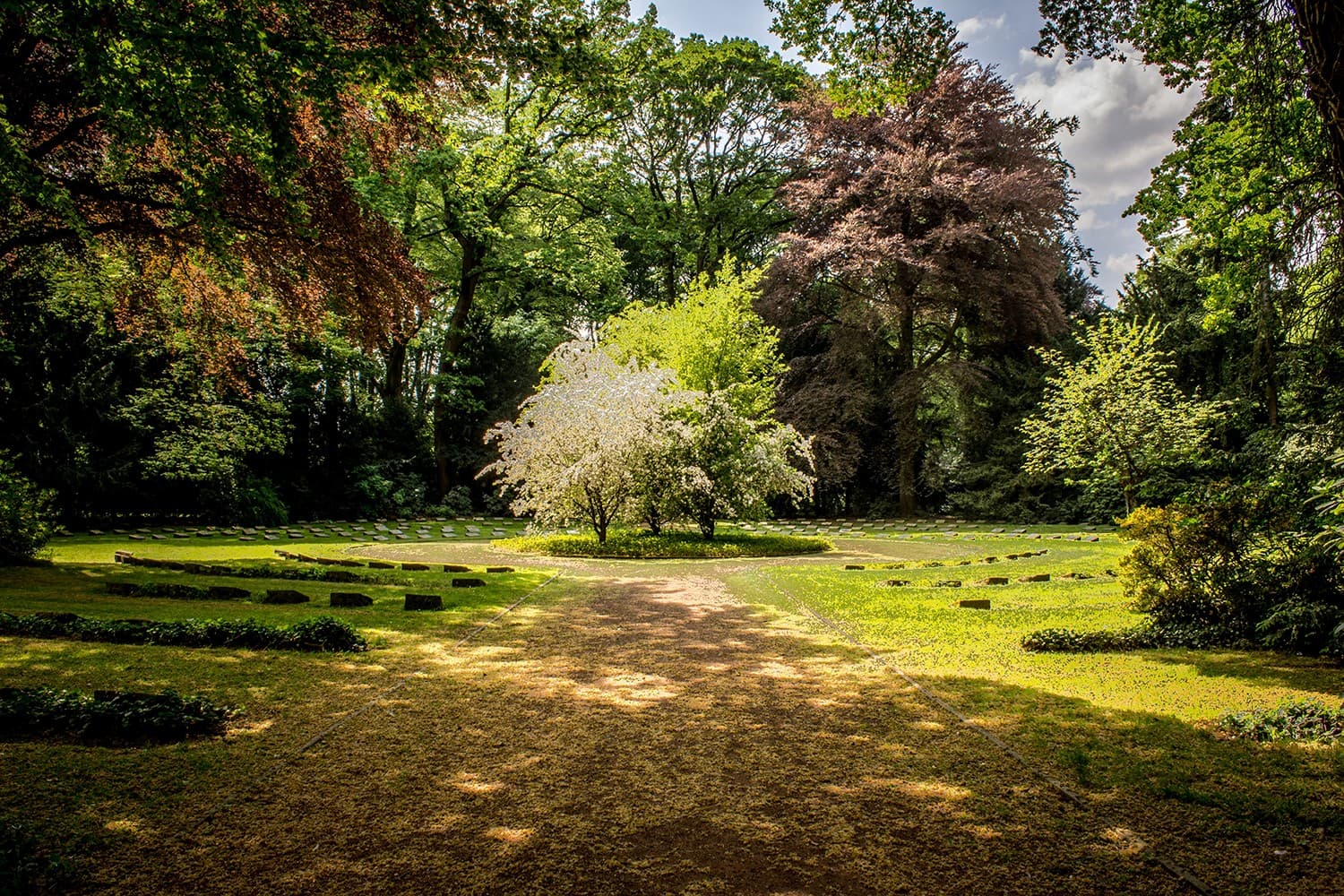
One of the New England Botanic Garden's serene landscapes. Courtesy of Megan Stouffer for New England Botanic Garden
The Different Types of Living Memorials
Since they’re not necessarily tied to an individual’s place of burial, living memorials can be located anywhere, from backyards to gardens to parks. Sometimes sites are chosen because they were important to the departed, like a favorite bench in a park or a beloved tree. In other cases, it’s about reimagining a landscape that already serves as a resting place. For instance, in Texas, the Constellation of Living Memorials restores old, forgotten cemeteries as healthy living memorial ecosystems.
In the case of the New England Botanic Garden, where living memorials can be arranged through contribution donations, families can either dedicate already-established trees or pre-order trees for the occasion. The organization guarantees the health of the existing tree for a set period, typically 20 years.
But living memorials can also be part of something bigger, like aiding in reforestation. In recent decades, nonprofits such as the Arbor Day Foundation and forest agencies have offered tree plantings as a form of remembrance while helping restore certain areas. Over the past 50 years, Batesville’s Living Memorial Program has planted over 14.5 million trees dedicated in memory of loved ones, partnering with forestry organizations to help reestablish areas impacted by blight or fires. A planting location list lets friends and family members know where their loved one’s tree has been planted and how it’s aiding in recovery. Living memorials can also assist in restoring ocean ecosystems, as is the case with Eternal Reefs’ artificial underwater environments.
Now, there’s also the option to actually turn the deceased into a living memorial. Ashes can be turned into biodegradable urns. Human composting transforms bodies into soil for tending gardens or supporting conservation projects.
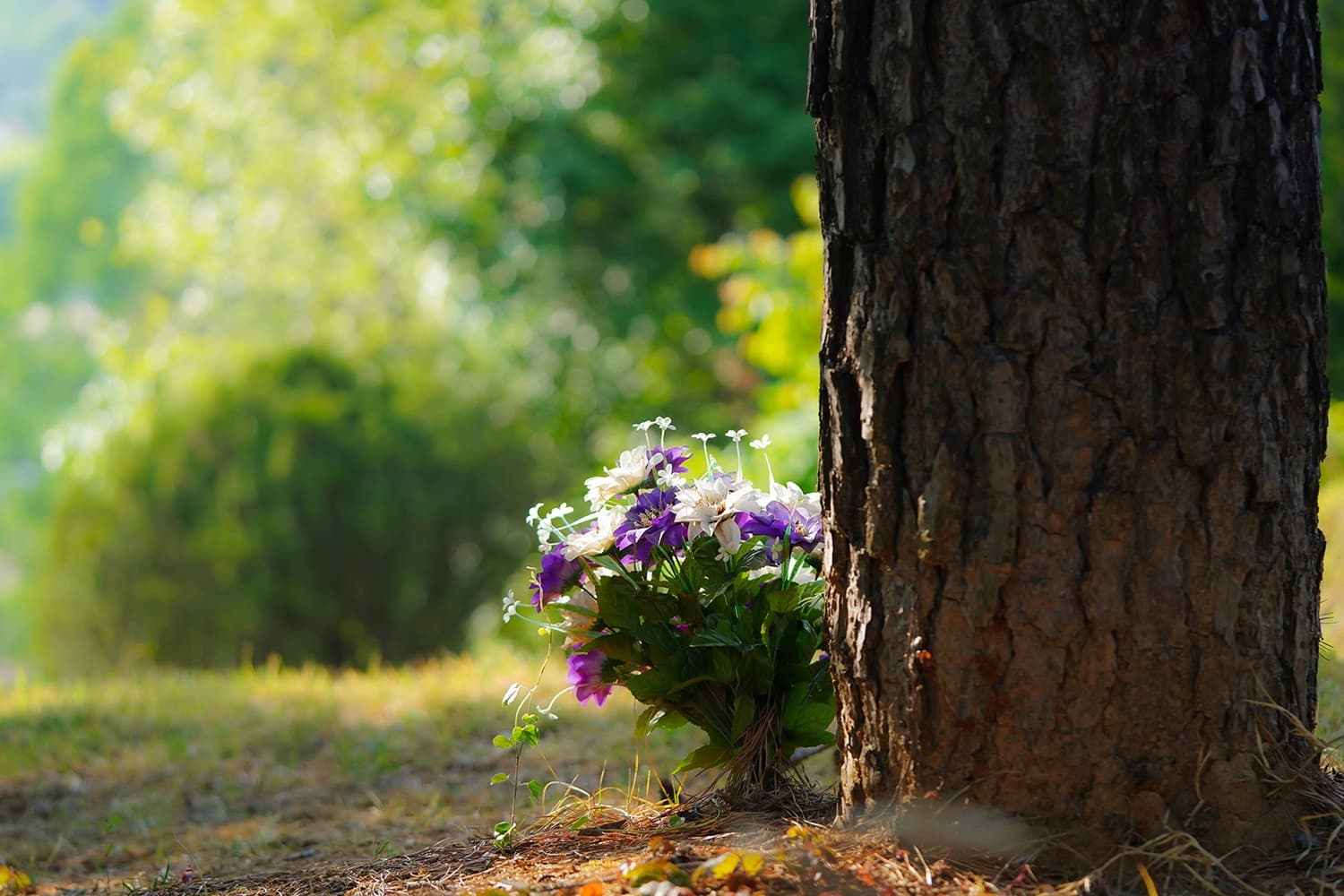
A remembrance left against a memorial tree. Courtesy of Pexels
A Living Record
However, the sad reality of living memorials is that even they can’t go on forever. Plants die as well. At the New England Botanical Garden, when something happens to an old tree, Lee tracks down surviving family members to ask whether they’d like to rededicate it to a new one. If no relatives can be found, the garden quietly retires the dedication. But a new one can take its place. And, even if a physical or monetary dedication no longer exists, that tree, bench, or bit of garden can still summon memories and serve as a place of comfort.
In contemplating the cycle of life and watching it play out in nature, living memorials help grieving people process loss and move forward. Trees keep growing. Leaves fall each autumn, then regrow in the spring. Gardens bloom. Each of these living, thriving plants, part of a much bigger web of life and death, offers answers and gives grief somewhere to go.
“I’ve done it myself [planted a living memorial] and being able to look right aside, it provides comfort to see something alive and living,” says Raymond-Yakoubian.

Bridget Shirvell is an independent journalist based in Connecticut. Her food, parenting, and environmental reporting has appeared in publications including The New York Times, The Washington Post, Martha Stewart Living, Good Housekeeping, and more. An environmentalist for as long as she can remember, her climate solutions work took on new urgency after becoming a parent. Bridget lives in an old house in Mystic, Connecticut, with her daughter and dog. She can be found online at breeshirvell.com. Follow Bridget on IG @breeshirvell.
North Stars: Community Support, Heritage Value, Wildlife and Ecosystems