“We should still take action to reduce greenhouse gas emissions, which is the root cause.”
As climate change accelerates around the world, homeowners are becoming increasingly aware of how fragile their sanctuaries can be against Mother Nature’s worst. Since escape is not always an option, the climate-ready home — a building purpose-built or upgraded to weather wild storms and adapt to environmental needs — has started to get more traction.
Since climate change looks different across the globe, there is no one-size-fits-all standard for a climate-ready home. Arid areas will have to contend with longer and hotter heatwaves. Riverfronts and coastal stretches face flooding and erosion. More frequent or forceful wildfires loom over woodlands. And then there’s the inverse. With climates shifting, abnormal weather patterns and storms may hit ill-prepared areas: brutal cold fronts in normally hot areas or drought-ridden deserts overflowing during torrential downpours.
A climate-ready home is meant to protect against at least some of climate change’s worst furies, safeguarding investment, lifestyle, and loved ones.
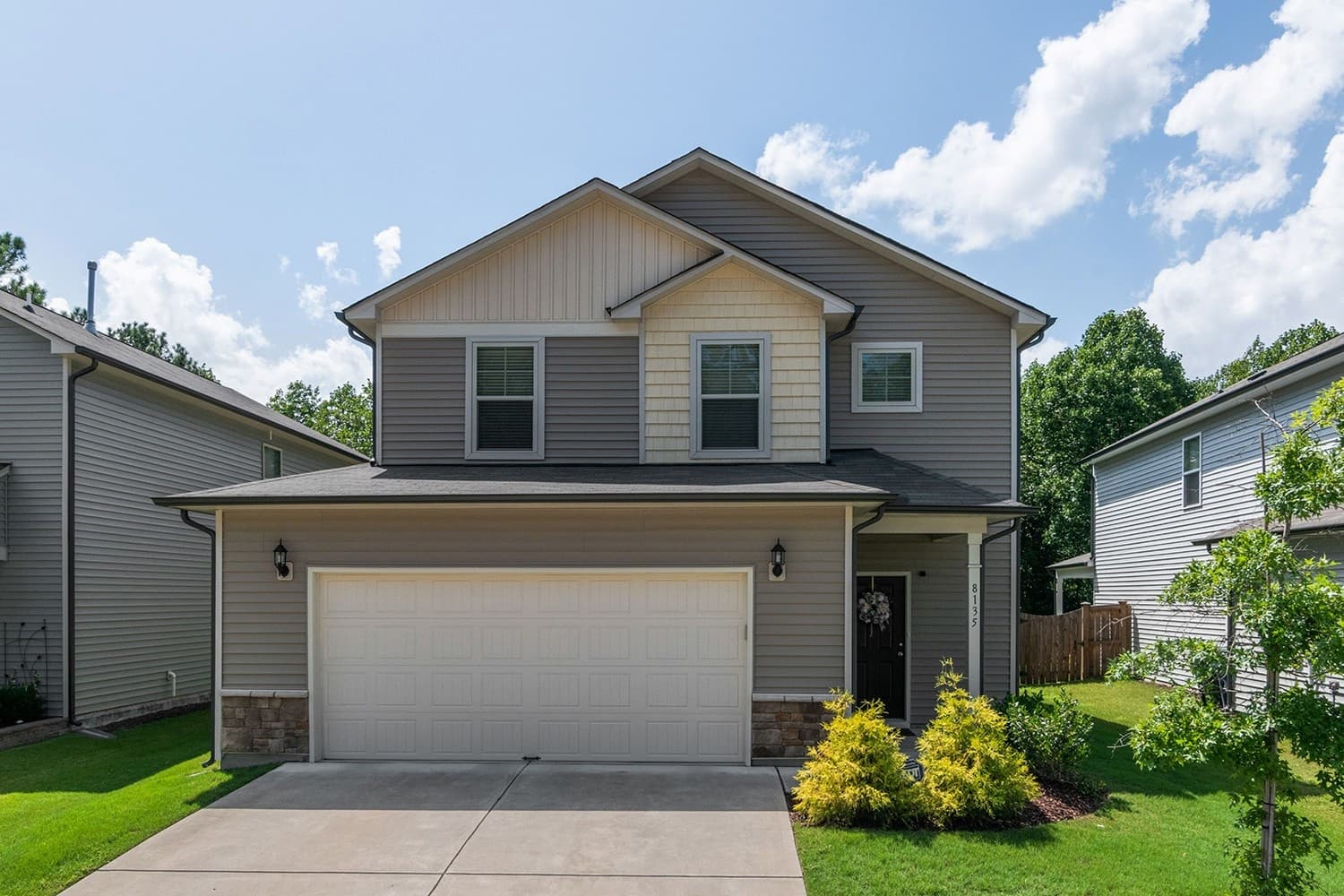
House exterior. Courtesy of Pexels
What Is a Climate-ready Home?
Calling a house climate-ready will mean different things to different people, depending on location. But in essence, a climate-ready, or climate-proof home, is exactly what it sounds like: a building designed to withstand the challenges of a changing climate.
This can range from protection against flooding or fire to using features like insulation or glazed windows to help with temperature fluctuations. Filtration systems and ventilation aid with air quality in wildfire-prone areas, and proper construction with the right materials can help keep houses cool in heatwaves or warm in winter. Garden design and water management help protect against fires and floods as well.
With climate change posing a significant threat to electrical grids, climate-ready homes ideally have their own energy source, like solar panels. This enables residents to be energy-independent and carry on their activities even if the power goes out. Not only do these methods create a more resilient dwelling, but they also reduce the occupants’ carbon footprints through means like using renewable energy and saving electricity.
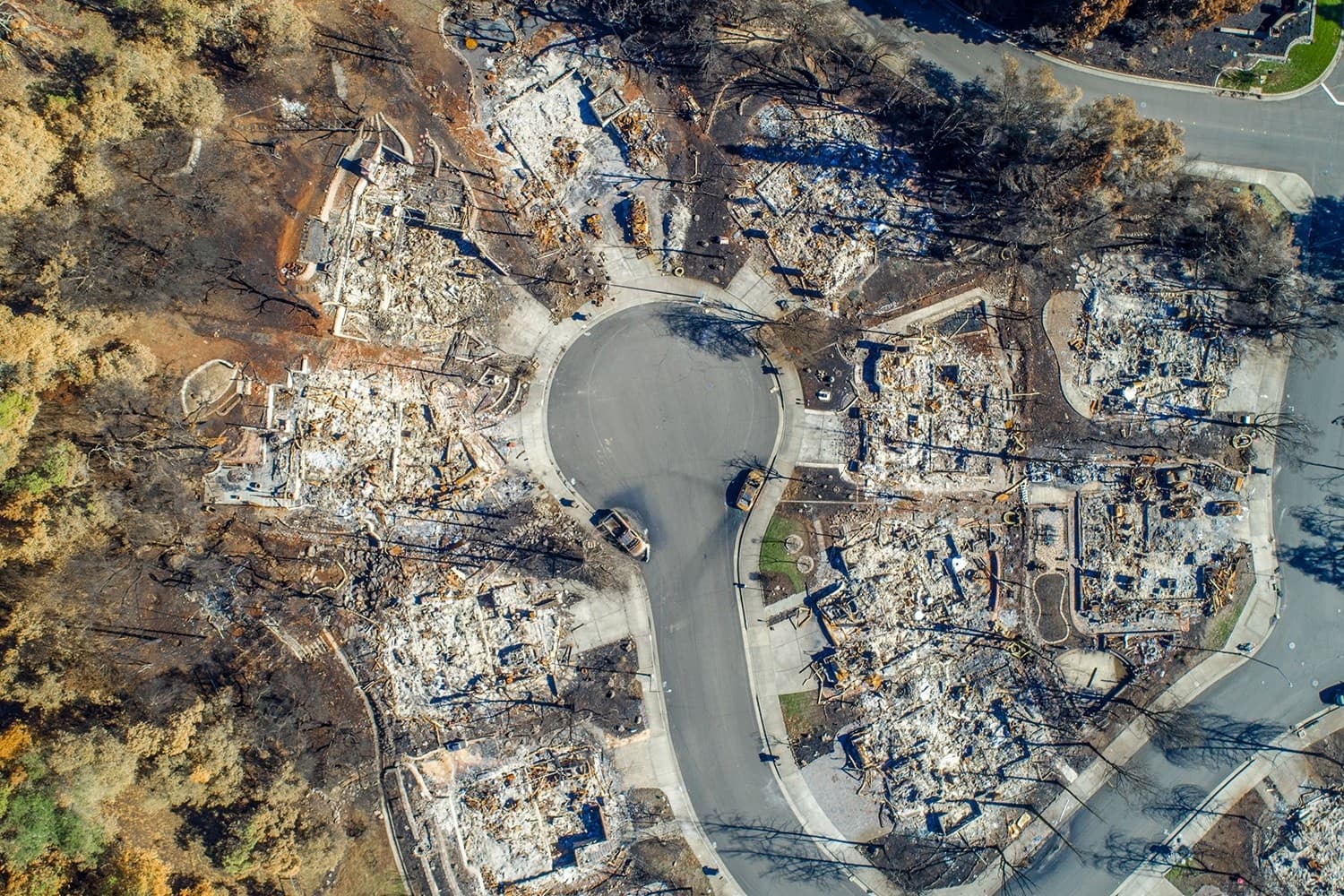
A burned neighborhood after a wildfire. Courtesy of Pexels
Why Are Climate-ready Homes Important?
When speaking to experts about what “climate ready” actually means for homeowners today, their answers surprised me. As someone hailing from Ohio, I was alarmed to learn from Leslie Chapman, president and CEO of the Federal Alliance for Safe Homes (FLASH), that the majority of insured catastrophe losses in the U.S. come from severe storms in the Midwest.
According to the Insurance Information Institute, tornadoes, hail, straight-line winds, and thunderstorms caused $51 billion in U.S. insured losses in 2025, more than any other catastrophic weather event. In January 2026, Aon reported that severe storms have overtaken tropical cyclones as the costliest insured peril of the 21st century.
Flooding is the other threat most people misjudge. Recent modeling by risk analytics firm First Street puts 14.6 million U.S. properties at substantial flood risk. This is roughly 70% more than FEMA’s maps show. According to Ed Barsley, founder of UK-based The Environmental Design Studio and author of Retrofitting for Flood Resilience, people often downplay their risk with an “it’s just a bit of water” mentality.
“Water doesn’t have to move at a very high velocity to be able to knock you off your feet and be very, very difficult to walk through,” he notes. “Not to mention all the toxic fluids, as well as cars and trees and other dangerous material that can be picked up and dragged in it.” And the volume doesn’t need to be biblical to cause major damage. “With the majority of flooding events, whether you keep or lose your home is a game of inches,” Chapman says.
If you live in the U.S. and expect the government will protect you if catastrophe strikes, don’t hold your breath. In April of last year, the administration slashed FEMA’s largest pre-disaster mitigation program, Building Resilient Infrastructure and Communities (BRIC), and canceled all 2025 Flood Mitigation Assistance funding. Since January 2025, the agency has also lost roughly a third of its full-time workforce.
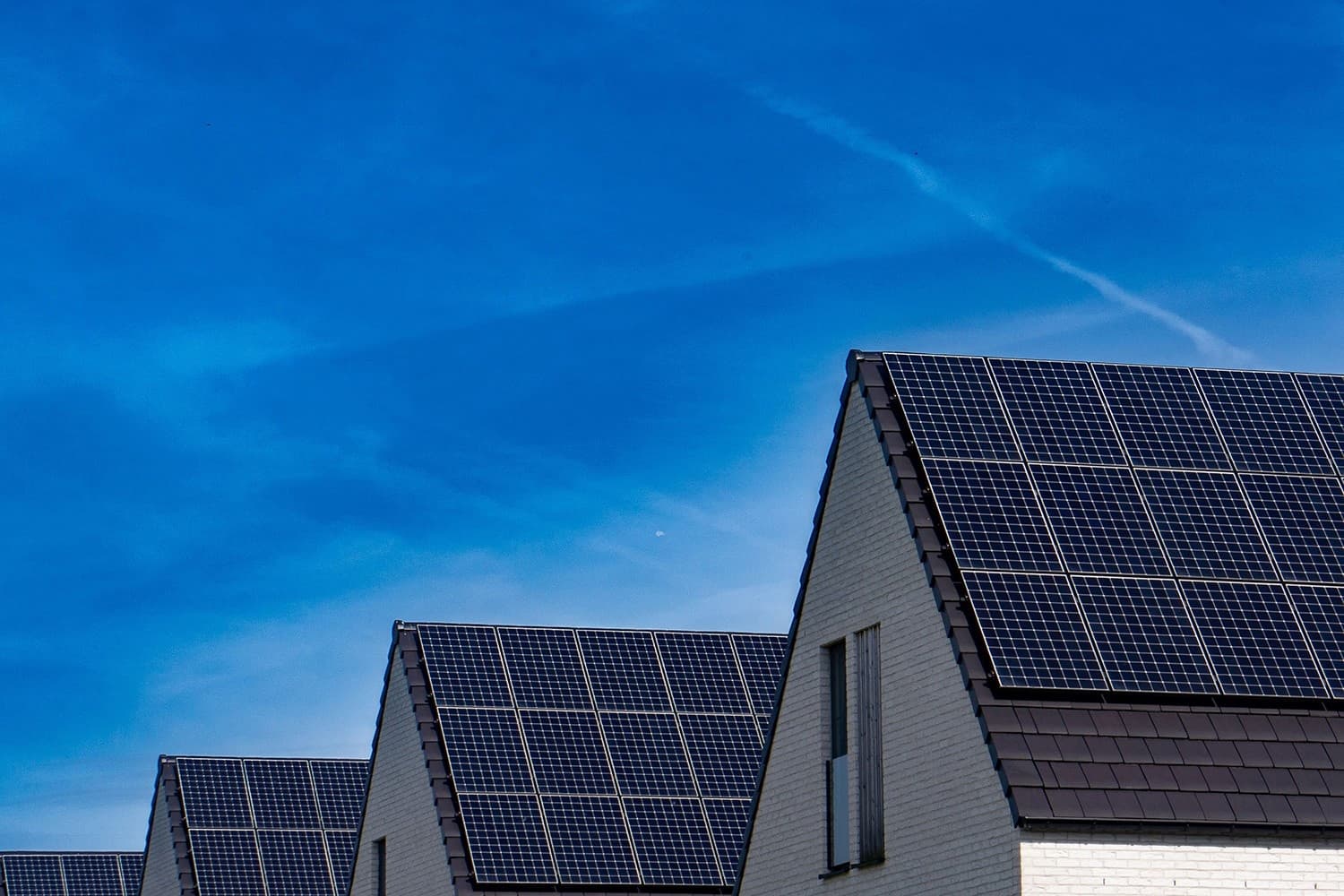
Solar panel-equipped roofs. Courtesy of Pexels
How to Climate-proof Your Home
The threat is only getting worse. So what can you do about it? And where do you start? These five expert-backed steps to make your house more climate-resilient are a good beginning. As a bonus, they also don’t cost as much as you’d think.
1. Start With an Assessment
Several free, online tools can help homeowners assess which climate-related hazards are most likely to impact their homes. FLASH’s free, address-based Strong Home Scale tells users what their house should already have, based on local building codes, and what to add over time. Climate Central’s Risk Mapping tool lets you pull up records showing which disasters have historically hit your county.
Once you know the threats, get specific about how they might translate into damage before you decide on a costly renovation. Barsley notes that a storm surge rushing in from the coast behaves nothing like groundwater flooding. “You might have a suspended timber floor and put a flood barrier on the front door, and then water just comes up from underneath the house,” he says.
2. Upgrade the Garage Door
Your garage could be the key to saving your roof, and thus, your home. FLASH found that about 60% of roofs collapsed when the garage door was damaged. When the garage held, that number went down to fewer than 10%.
“Your garage is basically a big hole in your house,” Chapman explains. It’s the largest, weakest opening you own. Wind forces the door in, pressure builds like a balloon, and the roof lifts off your home from the inside out.
A garage upgrade is good advice anywhere, not just hurricane country. Tornadoes touch down across more than three-quarters of the U.S., and a wind-rated garage door would cover nearly every tornado you’re likely to face. It adds only around $225 to an upgrade, may lower your insurance bill, and is easier than replacing an entire roof.
3. Rethink the Yard
Your yard can either send water away from your house, or straight to it. As a first step, horticulture specialist John Murgel recommends ensuring your downspout, the pipe that carries rainwater from roof to ground, directs water away from your foundations. From there, strategic landscaping with soil mounds, channels, and contours can “make water take a slower, more circuitous route to leave the yard” and “provide more time for more water to infiltrate back into the soil.”
None of this has to look grim, as Barsley proved with the award-winning Flood Resilient Garden he co-designed for the 2024 Chelsea Flower Show. Sculpted to hold around a hundred bathtubs’ worth of rainwater, it also presented a lovely, and naturally cooler, outdoor space.
Fire mitigation, of course, asks the opposite: keeping water close rather than directing it away. “Few things are as fire resistant as a well watered lawn,” says Murgel. Succulents are also great for drought and fire-prone areas, as their leaves and stems are full of water and thus don’t burn easily.
But the best thing you can do, according to Steve Hawks of the Insurance Institute for Business & Home Safety, is keep the first five feet around your house clear of anything that burns. That includes wood mulch, shrubs, and wood fences. Beyond that, spread plants apart and clear out dead leaves, especially in the dry months.
4. Organize With Neighbors
Of course, individual landscaping won’t count for much if your neighbors haven’t done the same. As Hawks points out, a fire-hardened house on an unhardened street is still very much exposed.
Working collaboratively with your community closes risk gaps that individuals simply can’t. In addition to more peace of mind, community-level upgrades have other benefits. For instance, Barsley describes how greening a street to slow stormwater also creates more shade, “and that reduces the energy demand for cooling, which helps with energy shortages.”
A great starting point for community organizing is Firewise USA, a program from the National Fire Protection Association. To participate, any group of eight or more households can join. Neighbors form a committee, get a wildfire risk assessment for their area, and build an action plan from it.
Another source of inspiration is the Map Your Neighborhood program, originally developed by Washington state’s emergency management division and endorsed by the American Red Cross. It brings 15 to 25 households together to learn the nine essential steps to take right after a disaster. These include figuring out who owns vital equipment like generators or chainsaws and identifying which neighbors will need the most help. Down south, the Together New Orleans coalition shows how installing solar panels and batteries in churches and community centers creates essential “Community Lighthouses” that stay powered even when the grid fails.
5. Prepare for Grid Failure
According to Climate Central, 80% of major U.S. power outages between 2000 and 2023 were weather-related. Since 2014, they also happen roughly twice as often as they did in the early 2000s. It’s not just storms that cause them. “A heat wave makes it more likely the power goes out, or the price of electricity spikes,” says Graham Wright, chief building scientist at the Passive House Institute U.S. (Phius), a nonprofit dedicated to boosting the construction of passive homes in the U.S. And the same can be true for extreme cold.
What keeps a house livable with no power is the shell around it. Insulation and tight sealing let a home hold a safe temperature far longer with nothing running. Wright points to a package from the U.S. Department of Energy that a homeowner can tackle in stages: storm windows, attic insulation, air sealing, and one inch of insulation added to the outside walls.
A solid house changes how a blackout feels. “There’s less desperation about heat and cold, pipes freezing and such, so you focus more on things like water, food and transportation,” Wright says.
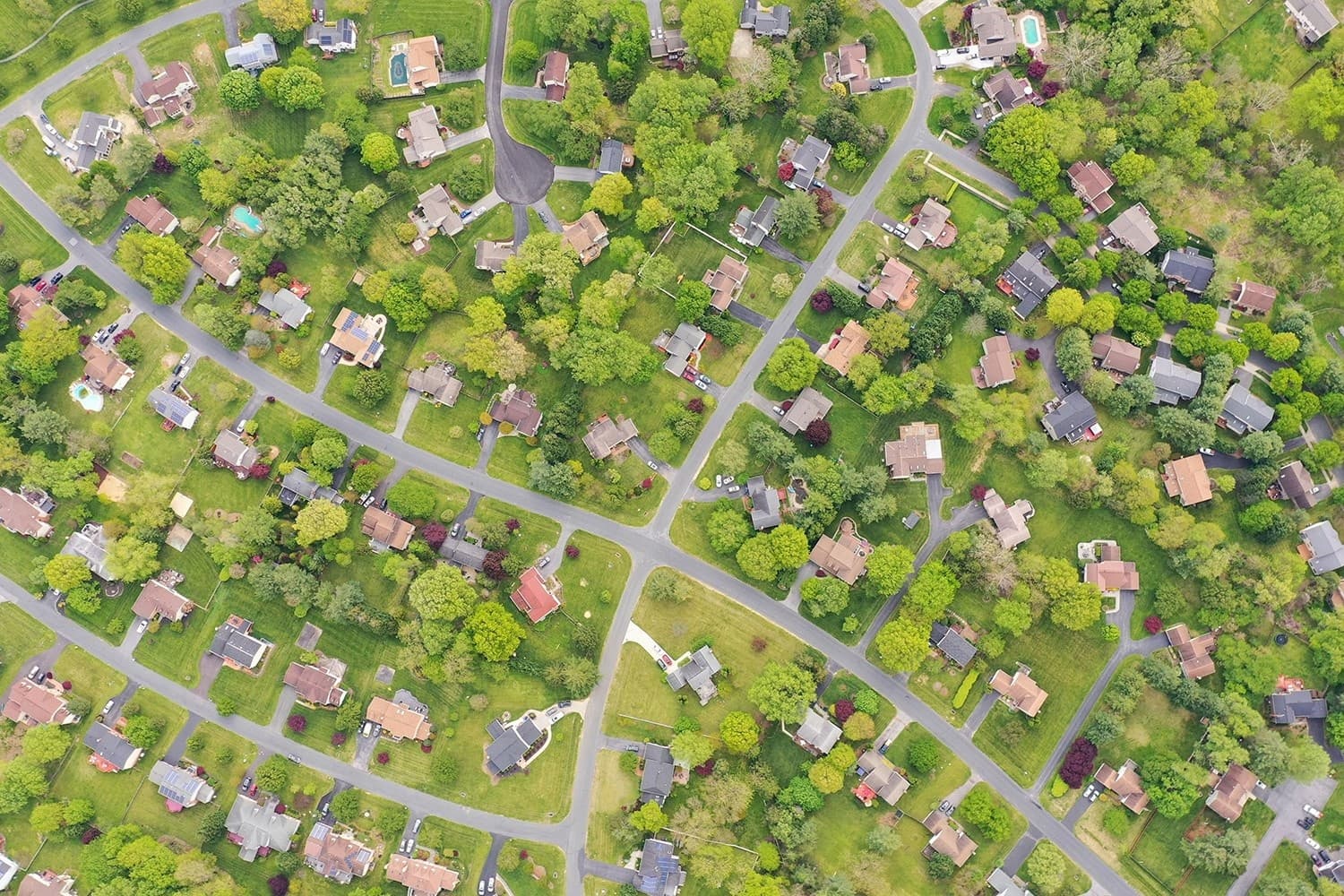
Aerial view of a neighborhood. Courtesy of Pexels
Resilience With Everyday Benefits
Just about every upgrade we make toward more resilient homes and communities pays off in more ways than one. A well-insulated home with solar and storage takes some of the load off a strained grid. In an outage, “your home might become the refuge for relatives or friends who are in a tougher spot,” Wright points out. It also minimizes your everyday carbon footprint and can completely remove the emissions from restoring damage post-catastrophe.
“You could live a low carbon lifestyle for decades, but if your property floods, the emissions to repair it would completely undermine all those years of effort,” says Barsley. Wright also emphasizes the carbon-reduction benefit. “Remember that animals, nature, and infrastructure can’t retreat indoors to AC, so we should still take action to reduce greenhouse gas emissions, which is the root cause.”
Bottom line? Start with your garage door, but don’t stop at the property line.

Bonnie is a Bali-based freelance writer specializing in a more eco-conscious brand of luxury travel, design, style and wellbeing. Her bylines to-date include Azure Road, Elle UK, BBC Travel, Artful Living, Upscale Living, BLLNR, Well + Good, The New Zealand Herald and many others. For more from Bonnie, you can subscribe to her Substack or follow Bonnie on IG @eco.luxury.bon.
North Stars: Community Support, Energy Efficiency, Water Management
More Stories
 CULINARY, DRINK
Get to Know the Producers Behind the J.P. Bourgeois Portfolio
 CULINARY, DRINK
Where to Taste Wine in Willamette Valley
 DRINK
DRINKMeet the Distillery Making Vodka From Fog
 DRINK
DRINKSake’s Next Step: How Japan’s Rice Wine Is Evolving
 DRINK, HOME
The Buzz on InFizz: Breville’s Carbonator Elevates Sparkling Water