“What do you want your neighborhood to look like in 50 years or 100 years?.”
As America approaches its 250th anniversary, interest in the nation’s history feels stronger than ever. With HBO’s The Gilded Age reigniting fascination with America’s grand estates, travelers are flocking to Newport, Rhode Island, where opulent 1800s mansions rise above the Atlantic and colonial homes fill the city center. But while visitors come to experience the past, preservationists are increasingly focused on the future.
Home to 18 National Historic Landmarks and hundreds of colonial-era structures, Newport’s architecture has long been safeguarded and carefully preserved for its historic relevance. But the impacts of climate change — from rising seas and stronger storms to coastal erosion and flooding — are increasingly threatening these seaside estates. For the caretakers of these historic properties, the question is no longer how to preserve them as they were, but how to help them survive what comes next.
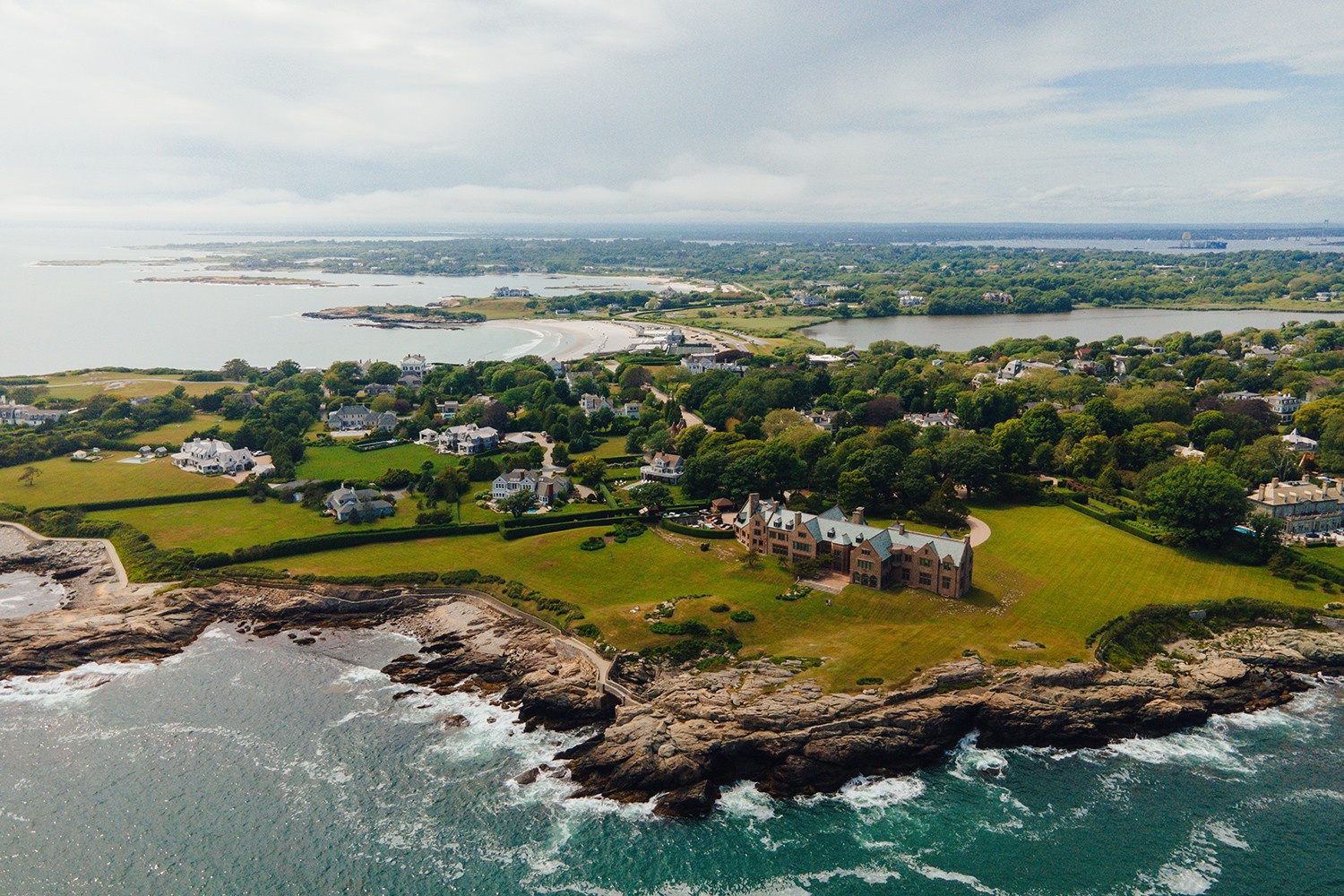
Newport's historic Cliff Walk. Courtesy of Discover Newport.
Keeping History Above Water
One of these caretakers is the Newport Restoration Foundation, a nonprofit organization founded by tobacco heiress and socialite Doris Duke in 1968. Currently, the foundation stewards more than 80 properties across the city, including Duke’s own estate, Rough Point. But preserving Newport’s design heritage looks very different from when the organization launched.
A decade ago, the foundation debuted Keeping History Above Water, an initiative exploring cultural heritage and climate change long before it became a mainstream concern. What began in Newport has since evolved into a national conversation, bringing together preservationists, policymakers, architects, and community leaders to discuss how historic places can adapt to a stormy future.
The need is particularly urgent in Newport, where sea levels have risen roughly six inches over the past 50 years and more than 40 percent of the foundation’s properties are at risk. With NOAA estimating continued sea level rises of 10-12 inches in the next 30 years, the clock is ticking.
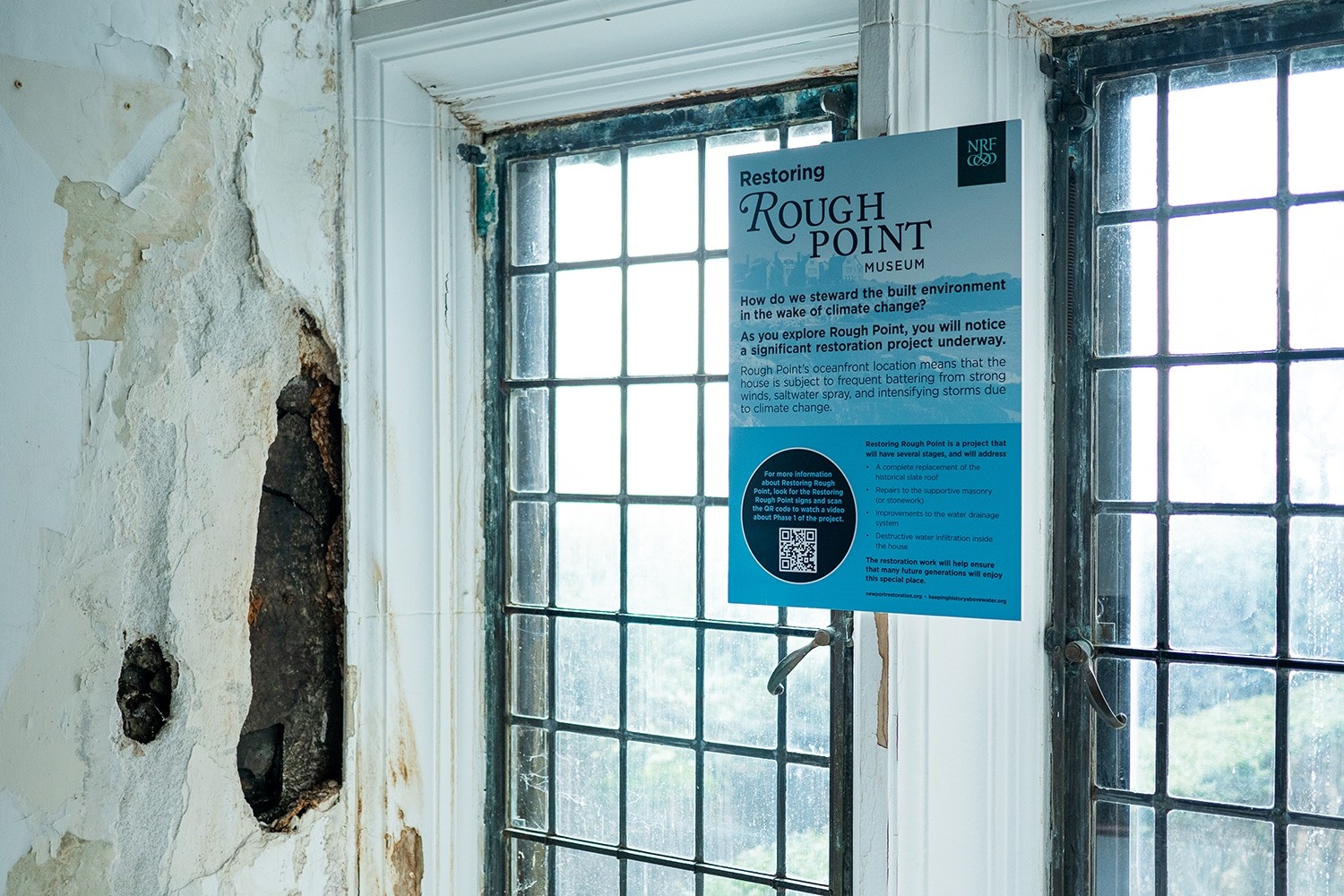
A sign highlights ongoing work at Rough Point. Courtesy of Newport Restoration Foundation.
“We see this as a really critical threat to not just our work, but our communities around us,” says Gina Tangorra, Director of Engagement at the Newport Restoration Foundation.
Rough Point occupies one of the city’s most spectacular — and exposed — sites. It sits directly at the edge of the Cliff Walk, a famous 3.5-mile trail along the coast that passes a number of Gilded Age mansions.
Inside the estate’s sunlit solarium, original 1920s windows frame sweeping Atlantic views. They also reveal the realities of preserving an oceanfront landmark in a warming world. Water infiltration has damaged plasterwork, while stronger storms and salt-laden winds accelerate wear on the building’s historic fabric.
The response has required preservationists to think beyond traditional restoration. During a recent roofing project, the foundation incorporated climate projections into its planning. Gutters were enlarged, drainage systems redesigned, and materials chosen for their ability to withstand increased exposure to salt, wind, and moisture. The team has also become more selective about the wood it mills, favoring species less susceptible to rot as warmer, wetter conditions accelerate decay. Those same conditions have contributed to an increase in destructive pests such as termites, prompting staff to undergo additional training to identify infestations before they threaten historic structures.
Yet for Tangorra, the conversation extends far beyond any single building. “People think that historic preservation deals with the past,” she says. “That’s not really true. We’re part of living, breathing communities.”
When tourists visit Rough Point today, the foundation intentionally highlights the impacts climate change is already having on the property — not to alarm people, but to encourage them to think about their own communities and what they hope to preserve for future generations.
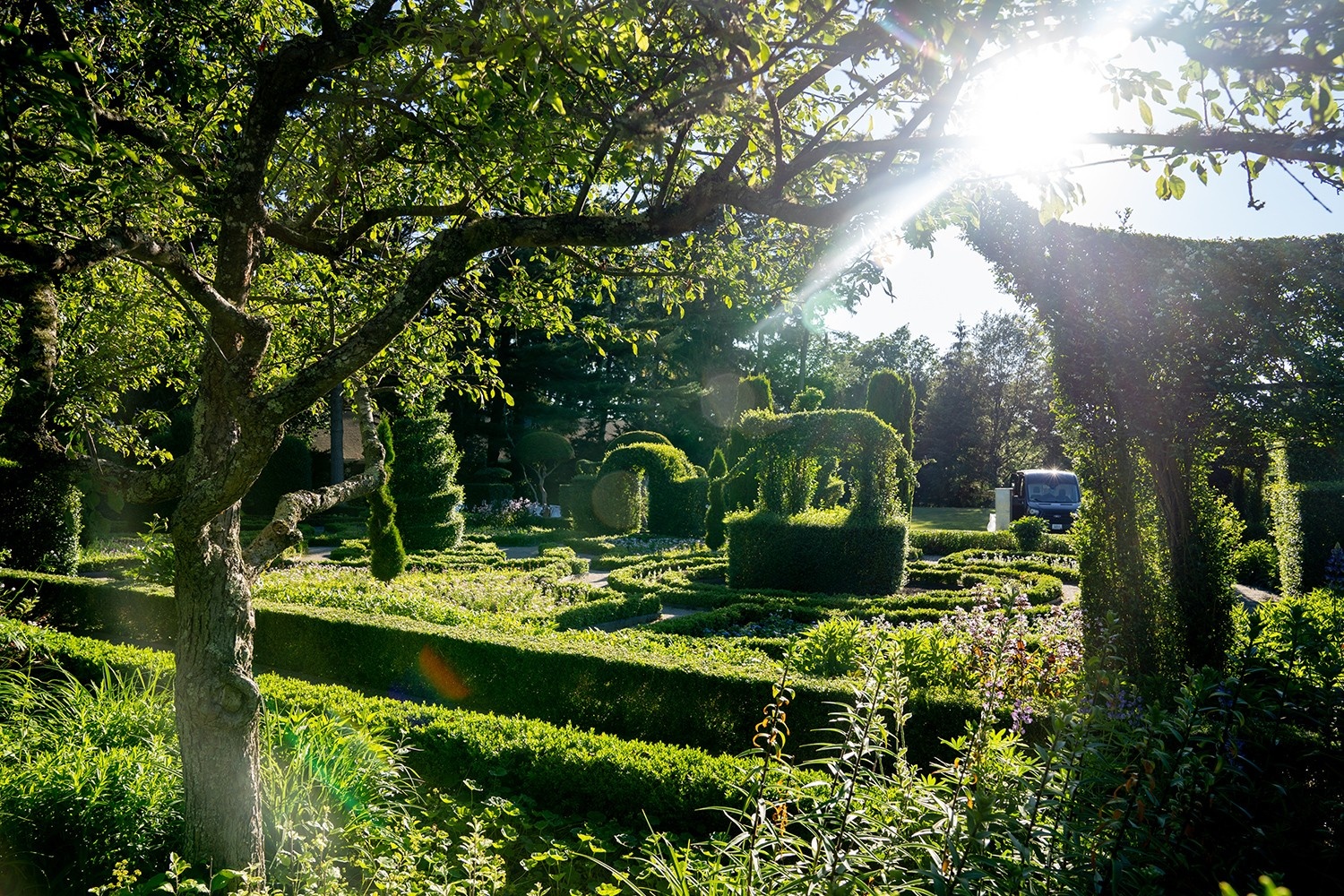
Newport's gardens are vulnerable to climate change. Courtesy of Discover Newport.
Protecting the Natural and Manmade
In Newport’s Point neighborhood, where many historic homes sit just above sea level and high tides can leave several feet of water in the streets, flooding has already begun reshaping preservation practices.
At two historic houses on Bridge Street, the flooding has become so severe that portions of the basements have effectively been abandoned. Boilers and mechanical systems have been relocated to higher floors, foundations reinforced, and structural supports added to withstand future inundation. The foundation is now exploring plans to elevate one of its historic buildings entirely, lifting entire structures onto new foundations designed to withstand future flooding.
But at Rough Point, the conversation extends beyond buildings. The estate’s ornate gardens and trees are as much a part of its history as the house itself. Earlier this year, a winter blizzard brought down one of the property’s trees. Along the nearby Cliff Walk, erosion remains an ongoing concern. A major collapse along a section of the trail several years ago triggered a multimillion-dollar restoration effort and raised broader questions about the future of the Walk, one of Newport’s most beloved public spaces.
This has led the foundation to take a more holistic approach to stewardship. New plantings are selected not only for their historical significance, but also for their ability to withstand changing conditions and benefit the broader coastal ecosystem.
“At Rough Point, we have started encouraging a wildflower meadow that attracts pollinators and migratory birds and reduces the amount of grass lawn,” explains Tangorra. “The plan is to continue soil testing in order to plot out resilient plants that will help slow erosion.”
The foundation also prioritizes permeable hardscaping materials that improve on-site drainage and help protect historic foundations, while favoring native, salt-tolerant plant species better equipped to thrive in a changing coastal environment.
Preparing Newport’s Past for the Future
For visitors today, Newport can feel remarkably unchanged from its 1800s heyday, with sailboats cruising around Narragansett Bay and mansions lining the shore. It’s a scene that didn’t happen by accident.
“People don’t realize the way Newport looks today is really due to the impact of lots of people,” Tangorra says. “It’s easy to take for granted that this is the way it’s always been and the way it’s always going to be.”
The challenge facing preservationists now is deciding how those places should evolve in order to survive.
“Our work is really important to not only honor and preserve the past, but advance it into the future.”
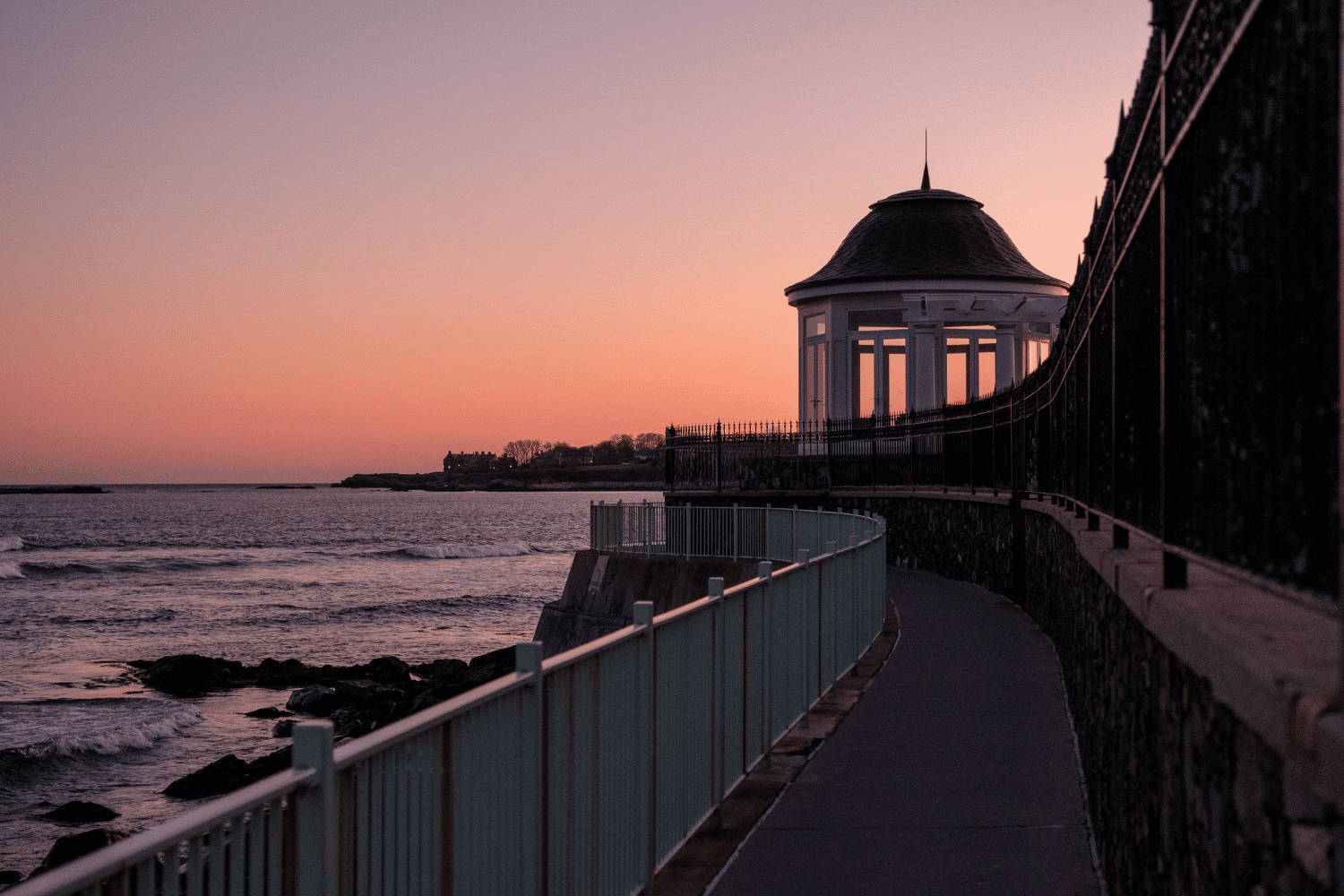
Newport, Rhode Island at Sunset. Courtesy of Pexels.
Learn More About Newport, Rhode Island
Throughout the year, the Newport Restoration Foundation offers tours and events that include behind-the-scenes guided visits to historic properties as well as showcases of the foundation’s restoration and climate work. The recurring “Neighborhood Walk: From Revolution to Resiliency” tour takes visitors around the Point neighborhood to share stories of its history and highlight climate adaptations.
Later this year in October, the Keeping History Above Water initiative marks its 10-year anniversary with a special symposium on the work being done.

Angelika Pokovba is a writer living between New York City and the Mexican jungle, where she writes about travel, design, culture, hospitality, and the rituals that shape the way we live. Drawn to ancestral traditions, sustainability, and destinations with a strong sense of place, her work explores the nature, identity, craftsmanship, and modern life through an immersive and oftentimes personal lens. She speaks six languages, loves getting lost in local markets and cooking elaborate meals from whatever she picks up along the way, and feels most at peace at 10,000 feet. Follow along on @wordsbyangelika.
North Stars: Community Support, Heritage Value, Wildlife Ecosystems
More Stories
 CULINARY, DRINK
Get to Know the Producers Behind the J.P. Bourgeois Portfolio
 CULINARY, DRINK
Where to Taste Wine in Willamette Valley
 DRINK
DRINKMeet the Distillery Making Vodka From Fog
 DRINK
DRINKSake’s Next Step: How Japan’s Rice Wine Is Evolving
 DRINK, HOME
The Buzz on InFizz: Breville’s Carbonator Elevates Sparkling Water