North Stars:

Heritage Value

Wildlife Ecosystems

Community Support
“The watershed is so vast, each trip reveals something new — wolf prints on beaches, a hawk above the canopy.”
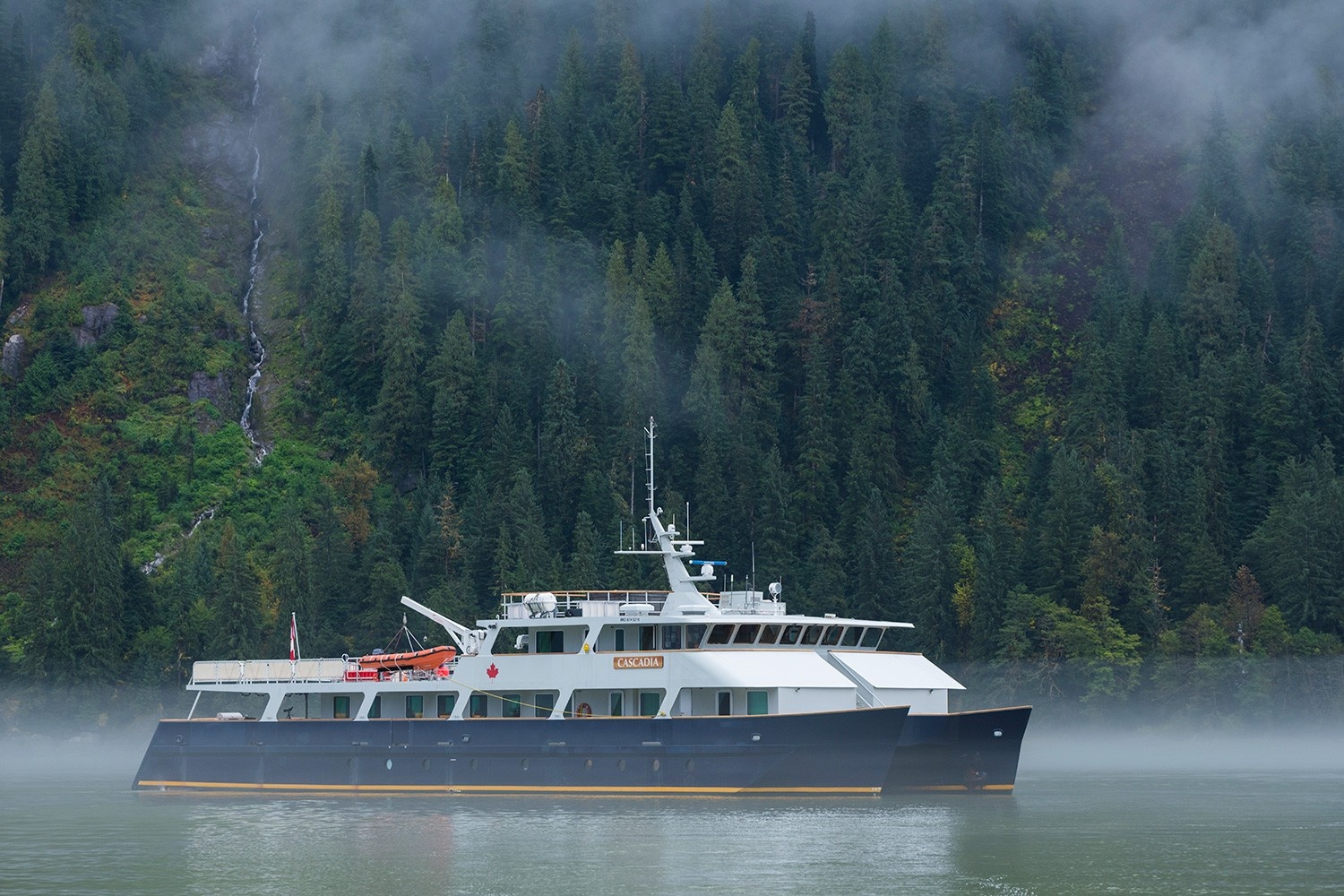
The ship Cascadia. Courtesy of Jeff Reynolds.
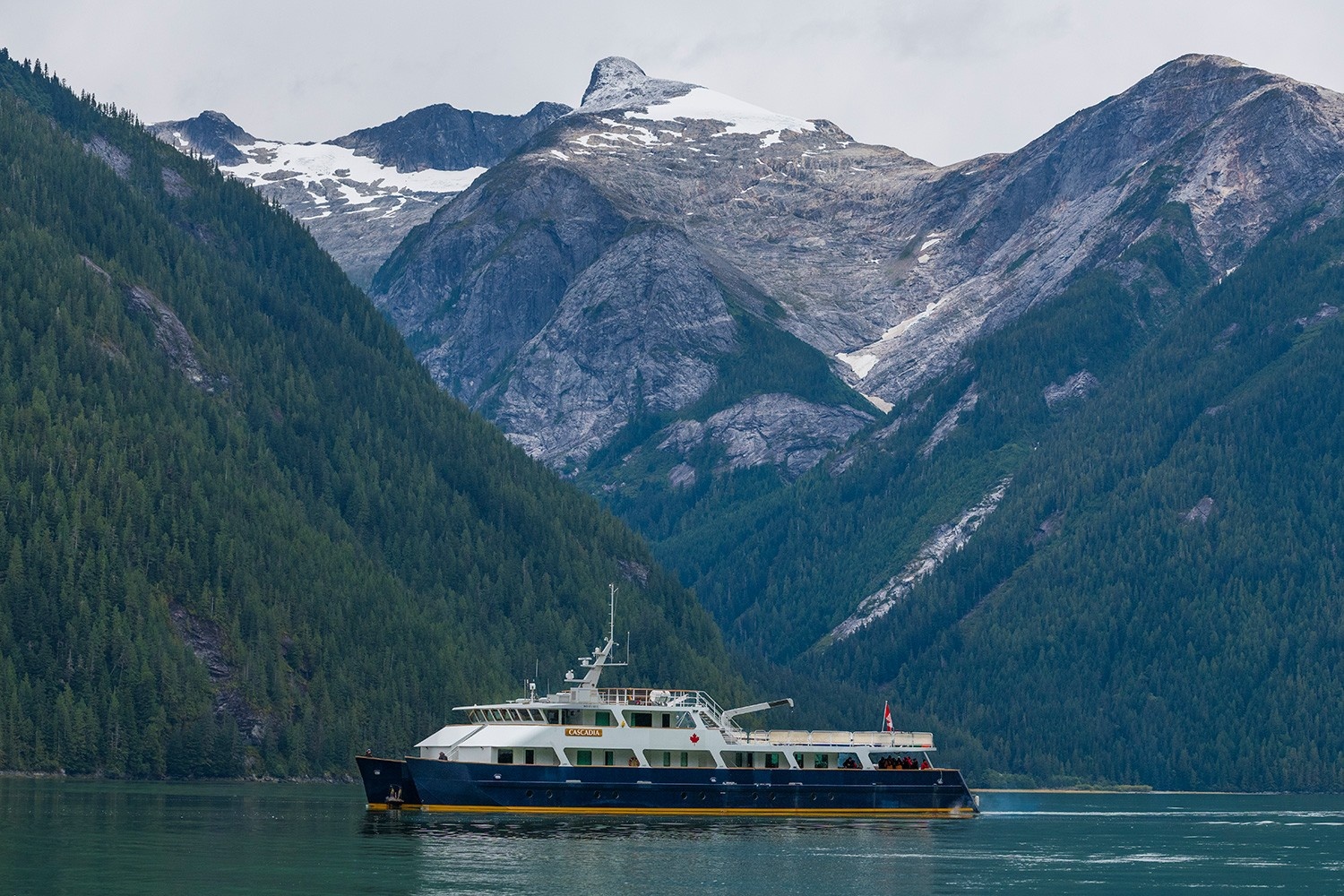
The sound carries across the water, a haunting chorus that seems to rise from the rocks themselves. Standing at the bow of Maple Leaf Adventures’ newest vessel Cascadia as we drift through the jade waters of a forest-fringed waterway, I feel my skin prickle as the howls of wolves rise through the mist that clings to ancient Sitka spruce and western red cedar.
These are not the wolves of Yellowstone or Denali, heard from a tour bus or visitor center. These are coastal wolves — genetically distinct from their inland cousins — whose stories span salmon runs and tide pools, territories that blur land and sea. The silence after their song feels electric. In that quiet, you understand why Kevin Smith, founder of Maple Leaf Adventures, has spent decades bringing people to this remote corner of Canada’s west coast: not to see wilderness as spectacle, but to witness what happens when conservation becomes a way of life and more than an idea on paper.
The Handshake That Changed Everything
Smith didn’t set out to become a conservation hero. Raised with “boats in his blood” on British Columbia’s coast, he drifted into environmental work almost by chance through geography studies at the University of Victoria and a stint as a backcountry park ranger.
But his perspective shifted during a five-year land-use planning process for what was then called the Mid Coast Timber Supply Area. Traveling these waterways, he saw how quickly logging roads were pushing into valleys where old-growth forests had stood untouched for millennia. From the deck of a small boat, he began to imagine another kind of economy — one built not on cutting down forests but on keeping them standing.
The idea seemed improbable. Convince logging companies to relinquish rights to an area the size of Ireland? Unite First Nations, environmentalists, academics, and tourism operators around a single vision? The task bordered on impossible.
Yet in 2001, aboard the wooden schooner SV Maple Leaf, Smith brought a group of funders into those contested valleys. Midway through the trip, a crackling call on a satellite phone secured the Hewlett Foundation’s first $10 million pledge toward what would become a $120 million conservation fund. That commitment, born of a conversation that stretched from a boat in British Columbia to a boardroom in San Francisco, became the catalyst for the Great Bear Rainforest agreements, one of the most significant conservation victories in North America.
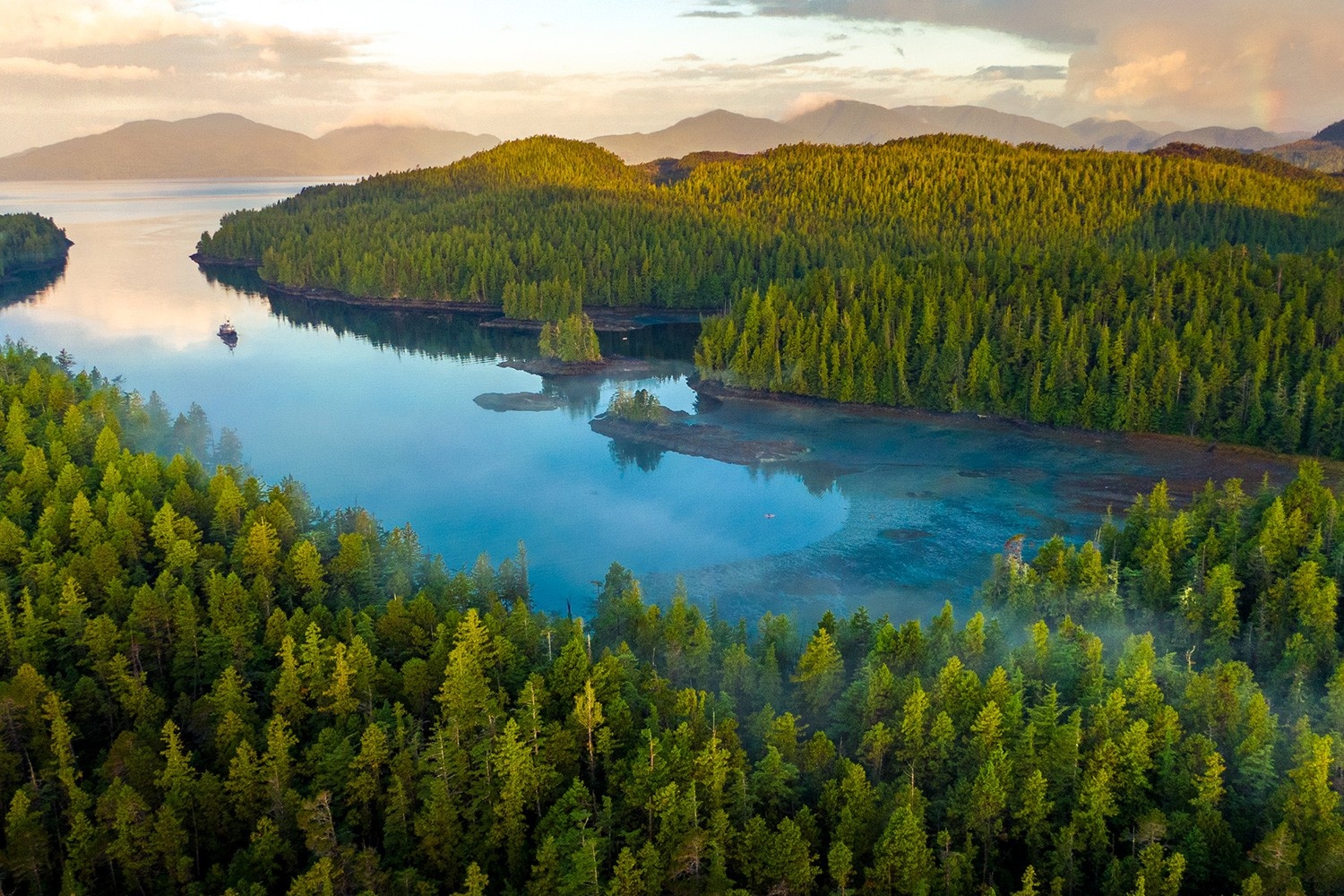
View of the Great Bear Rainforest. Courtesy of Simon Ager.
Where Ancient Forests Meet Modern Science
Today, the Great Bear Rainforest protects 6.4 million hectares of coastal temperate rainforest — an ecosystem so rare that less than one percent remains intact worldwide. Numbers, though, can’t capture the sight of humpbacks bubble-net feeding beside your boat or orcas slicing past thousand-year-old trees mirrored in still water.
Biodiversity here operates on a scale that challenges observation.
As expedition leader Ethan Browne explains: “The watershed is so vast that each trip reveals something different — you might find wolf prints on a beach, glimpse a hawk above the canopy, or see moose tracks in places they shouldn’t be.”
That unpredictability is the point. Every voyage becomes a form of citizen science, supporting research and creating revenue for First Nations communities that chose conservation over clear-cutting.
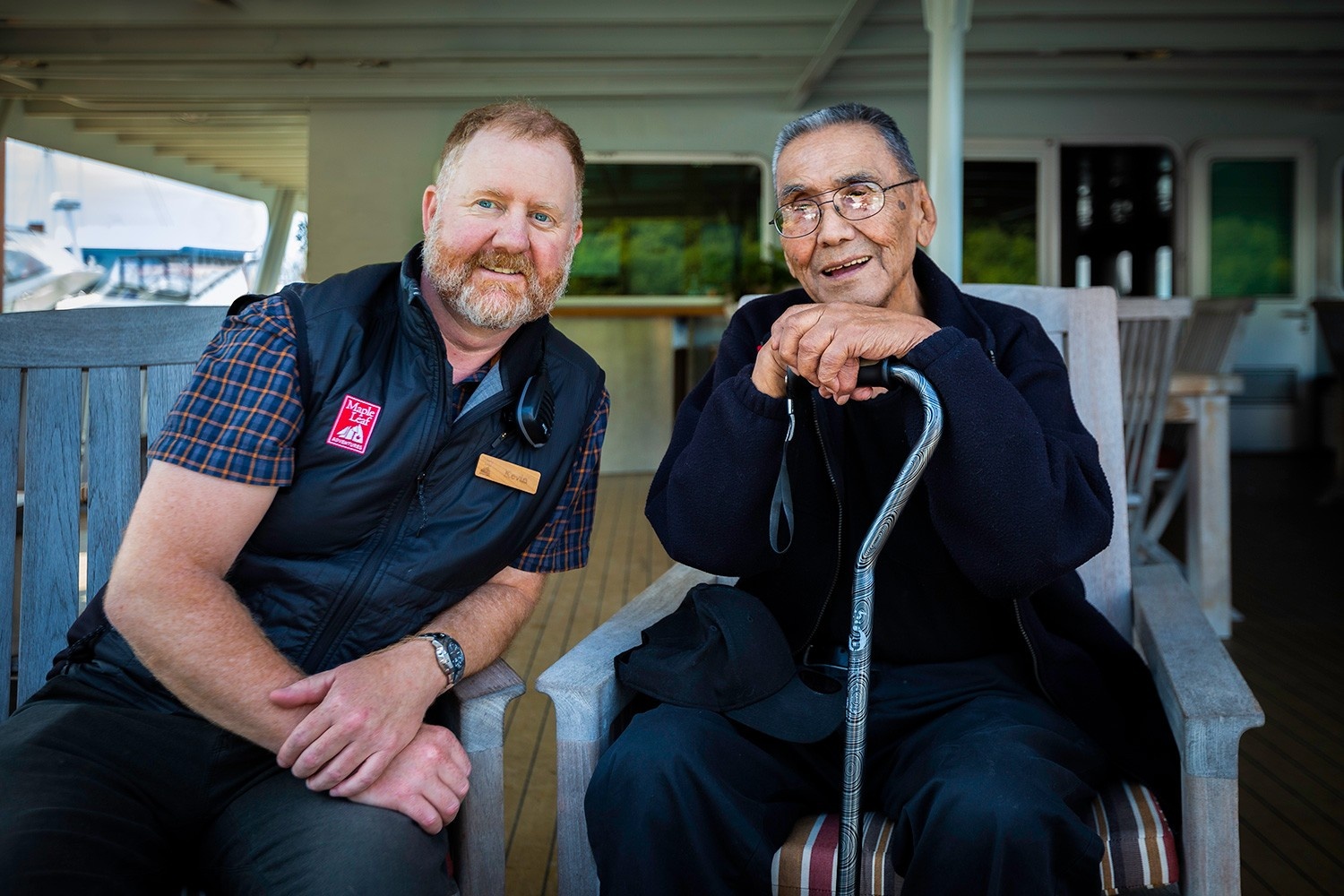
Kevin and Cecil. Courtesy of Simon Ager.
Cecil’s Vision Realized
The Great Bear Rainforest stretches from northern Vancouver Island to the north coast of British Columbia. Within this vast area lies the Kitlope Heritage Conservancy, where thousand-year-old Sitka spruce and western red cedar have never felt the bite of an industrial saw.
The Kitlope River valley was the traditional territory of the Hanaaksiala people, whose name means “people who die slowly,” a reference to their renowned longevity. They called this place Huchsduwachsdu Nuyem Jees — “source of the milky blue waters” — for the glacial till that flows down from three major watersheds into Gardner Canal.
It was here that Cecil Paul, a Haisla elder born in the valley in 1931, launched a conservation campaign that became central to the Great Bear Rainforest story. After dreaming of his grandmother Annie Paul, he returned to the Kitlope seeking to heal in the waters of his birth. Instead, he found flagging tape tied to trees, the first step toward clear-cutting. His response wasn’t protest or litigation, but dialogue with West Fraser Timber, government officials, and the Haisla Nation. Against all odds, the company agreed to relinquish its rights.
Cecil called his effort the “magic canoe,” the idea that he was paddling alone until others joined him. And join they did: David Suzuki, Yvon Chouinard of Patagonia, Spencer Beebe of Ecotrust Canada, and many more. Together they secured protection of 780,000 acres of temperate rainforest—the largest unlogged contiguous tract of its kind in the world.
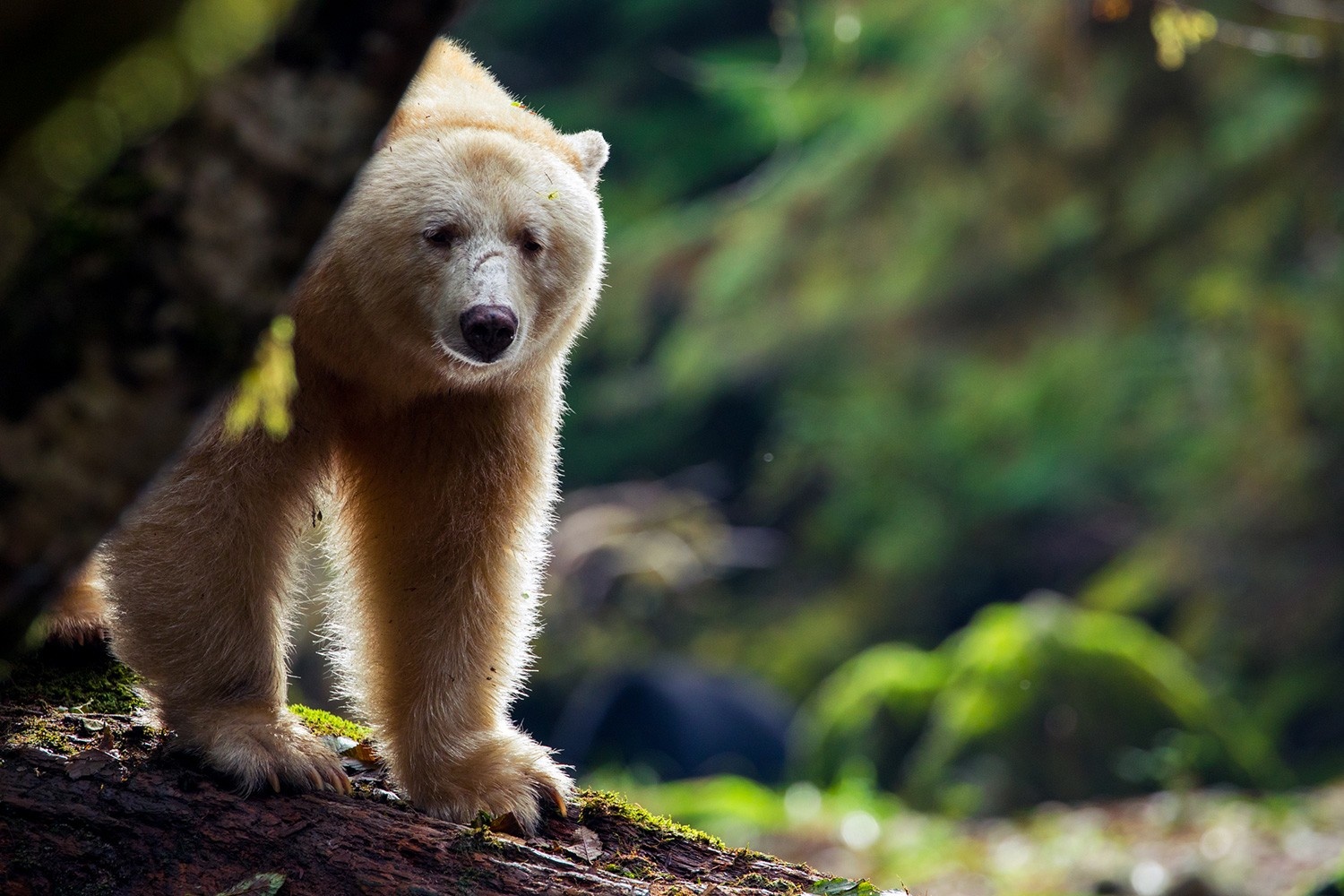
A remarkable encounter in the Great Bear Rainforest. Courtesy of Simon Ager
Experiencing the Wild Coast
Today, Maple Leaf Adventures is the only operator running regular expeditions to Cecil Paul’s birthplace. Standing where he once found flagging tape, surrounded by spruce and cedar that have stood for centuries, you feel the weight of what was preserved: 780,000 acres of rainforest where the Henaaksiala lived for thousands of years without industrial intrusion.
Each day aboard Cascadia unfolded like a chapter of discovery. We hiked through ancient forests where fresh bear prints pressed into the mud, kayaked at dawn through glassy bays, and explored estuaries where grizzlies grazed on sedge grass. Afternoons brought rides up glacial tributaries, searching for the source of the milky-blue waters.
We visited a remote whale research station, listened to scientists describe humpback recovery, and watched orcas and humpbacks surface just meters from our vessel. Evenings ended with fresh seafood and wine under vast, unpolluted stars.
The journey’s heart lay in the Kitlope River estuary itself, where we learned the story of the G’psgolox pole and stood in Cecil Paul’s birthplace, surrounded by trees that have witnessed centuries of Indigenous stewardship. Between these moments, we combed tide pools alive with intertidal creatures and hiked to viewpoints that made the coast feel infinite and untouched.
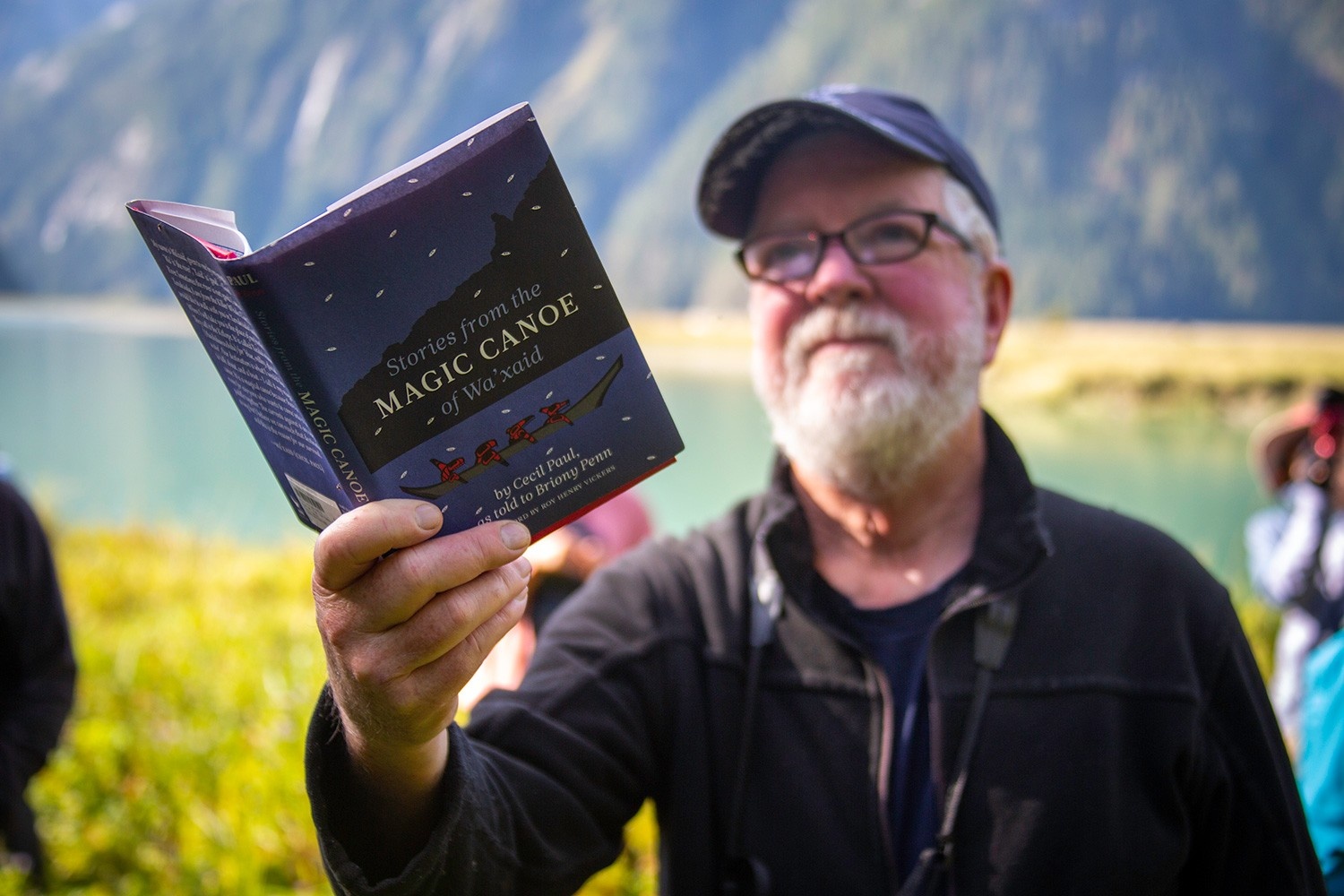
Andy MacKinnon shares stories. Courtesy of Simon Ager.
New Threats and Continued Protections
New threats remind us this story is unfinished. Increased oil tanker traffic now cuts through waters where recovering humpbacks feed, forcing them into shipping lanes that didn’t exist when protections were signed.
Smith and his team know how to adapt. When COVID-19 halted tourism in 2020, they organized marine debris cleanups that removed the largest volume of waste ever collected on the coast. It proved that conservation tourism could pivot to direct action when needed.
Maple Leaf Adventures now operates three vessels: the eight-passenger Maple Leaf, the 12-passenger tug Swell, and the 24-passenger Cascadia. “We’re not Princess cruise lines at a Hyatt Hotel,” Smith said. “People need to learn about who we are and how we can look after them… And if they’re the kind of people that are better off in Disneyland, we’ll tell them that they’re better off going to Disney.”
Midway through every voyage, he leads guests beneath the canopy of an ancient forest. “After a few days, because I have to get the city out of the people, I invite all my guests to come into a deep forest with me,” he said. “Usually, people will lean up against a nice, big old tree, you know, a couple of thousand years old. And I always just invite people just to be completely quiet and just to breathe in the space and to listen.”
In those silences, visitors discover what Cecil Paul understood from the beginning: some places are worth more standing. Echoing Jacques Cousteau, Smith said, “People protect what they love, and you can’t love something if you’ve only seen a photo of it.”
In 2026, as the Great Bear Rainforest reaches its 25th anniversary and Maple Leaf Adventures marks four decades of voyages, that principle remains their foundation. The wolves still call across waters where ancient forests meet the tide. The question isn’t whether such places can survive, but whether enough people will climb into Cecil’s magic canoe to ensure they do.
Maple Leaf Adventures offers expeditions to the Great Bear Rainforest and Kitlope River from May through September. The 2026 season will feature special anniversary programming aboard all three vessels.

Heide Brandes is an award-winning journalist whose’ work appeared in National Geographic Traveler, The Wall Street Journal, The Smithsonian, Cowboys & Indians, Southern Living, Fodors, BBC Travel, ROVA, Outdoor x 4 Magazine and The Washington Post, and others. When not traveling and writing, Heide is an avid hiker, a medieval recreation enthusiast, a professional belly dancer and kind of a quirky chick from Oklahoma. Follow Heide on IG @heidewrite.
North Stars: Community Support, Heritage Value, Wildlife and Ecosystems