North Stars:

Water Management

Gender Equality

Heritage Value
“You know your land much better after it’s spent years in your hands.”
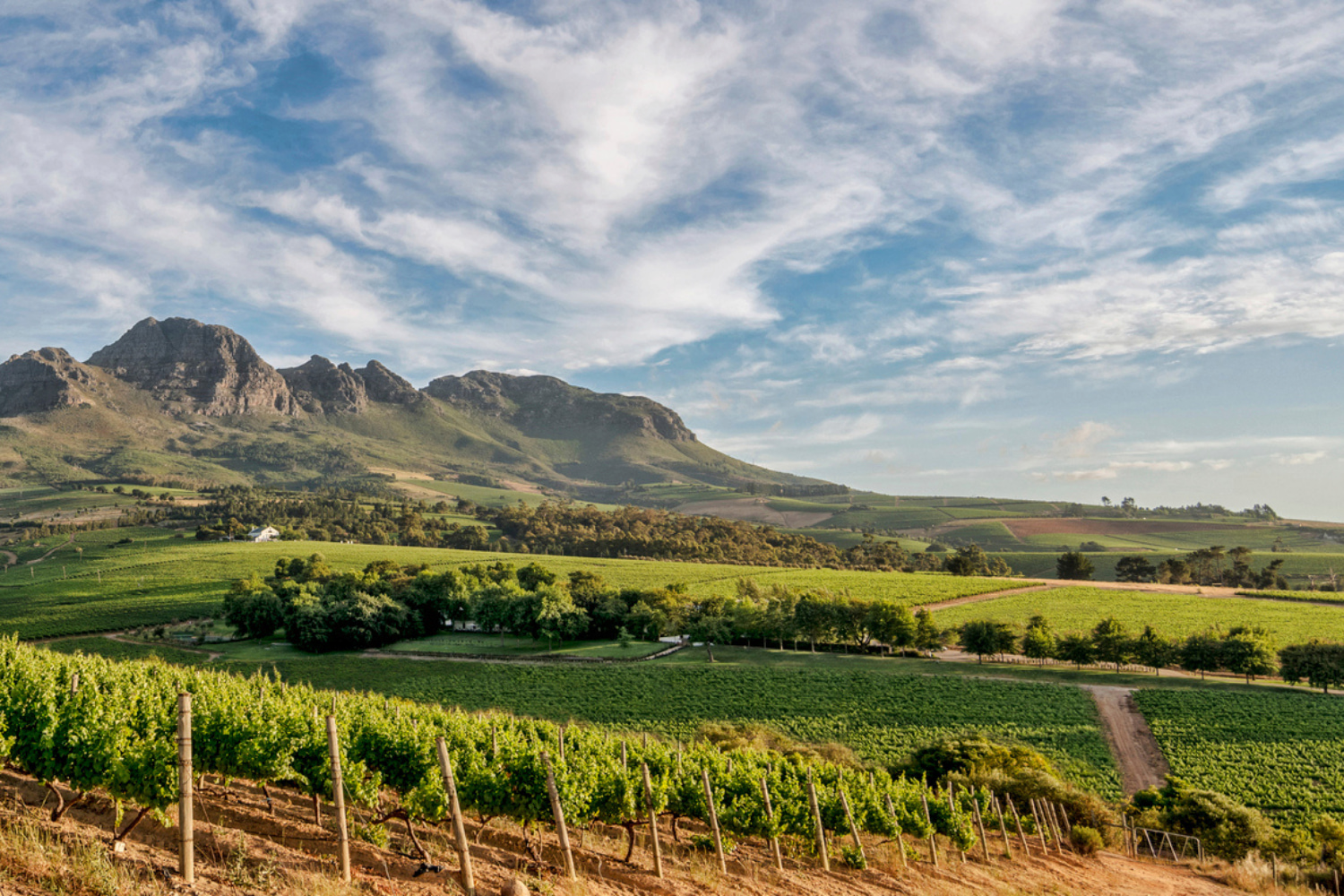
Vista of the vineyards from the winery. Courtesy of Rust en Vrede.
The Azure Road Take
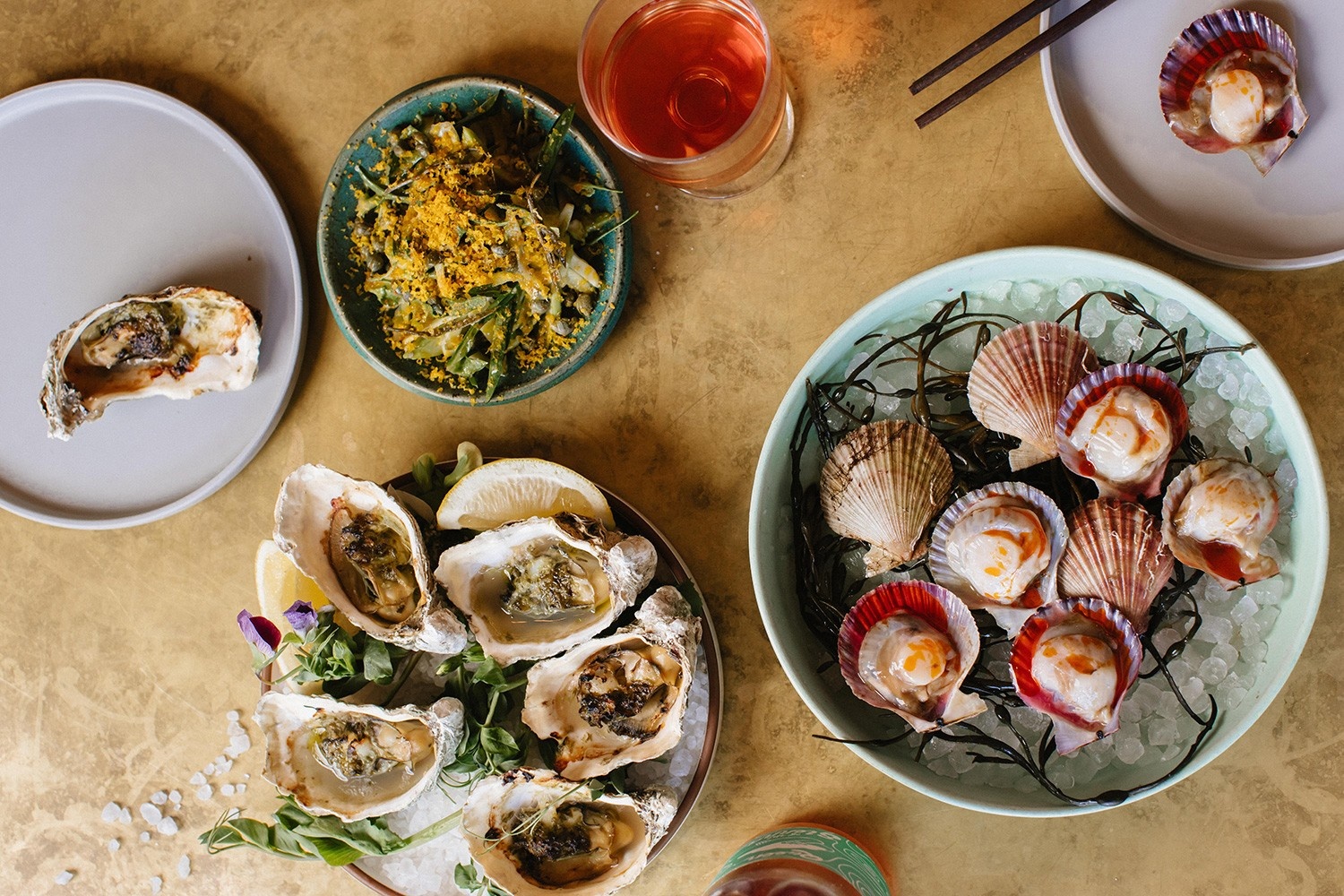
Rust en Vrede means “rest and peace” in Afrikaans, a name that fits the unhurried pace of the Helderberg slopes, where the Cape Dutch buildings have stood since the 1780s. It is also, somewhat ironically, home to one of Stellenbosch’s busiest restaurants, a place that has stayed full for years because its owners have perfected the art of hospitality and good wine.
In the depths of the restaurant, cellar walls hold bottles from the winemaker’s favored tastings. Empties, lined up like an archive of South African and global classics, kept as mementos of good taste and aspiration.
Rust en Vrede’s owner, Jean Engelbrecht, grew up in the Cape Dutch Manor House on the property, watching his father make decisions that would take decades to fully understand. His father, Jannie, purchased the estate in 1977 and made a business decision almost no one else in South Africa dare make at the time: the estate would produce red wine exclusively from fruit grown on the property. And it would focus on Cabernet Sauvignon and Syrah. Jean assumed leadership in 1998 and has continued that commitment ever since.
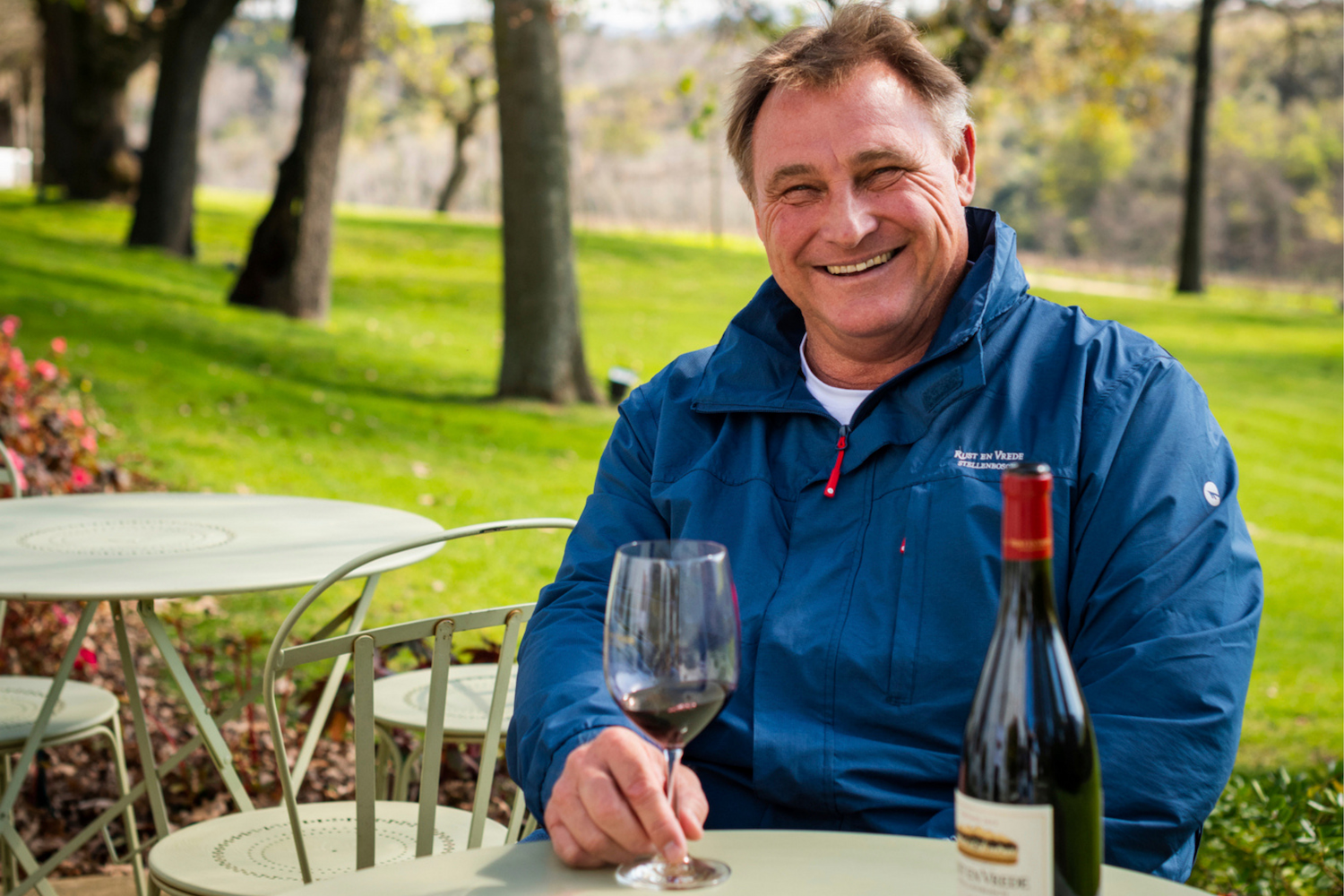
Rust en Vrede's Owner, Jean Engelbrecht. Courtesy of Rust en Vrede.
Sustainability Chops
Rust en Vrede’s sustainability story runs not just through the land and its history but also through the people who work it. The estate uses low-intervention viticulture practices on its 30 hectares of vines, with water management a central concern given the Western Cape’s recurring drought pressures. Winemaker Danielle le Roux has continued building on that foundation since taking over in 2022.
Le Roux’s arrival also marked a shift in the estate’s representation. As only the fourth winemaker in Rust en Vrede’s modern era, she brings a perspective shaped by harvests in Bergerac, Sonoma, and Tuscany, and years spent in Stellenbosch cellars before taking the lead. In a region still working toward greater gender parity in winemaking leadership, her role carries weight beyond the wines she makes.
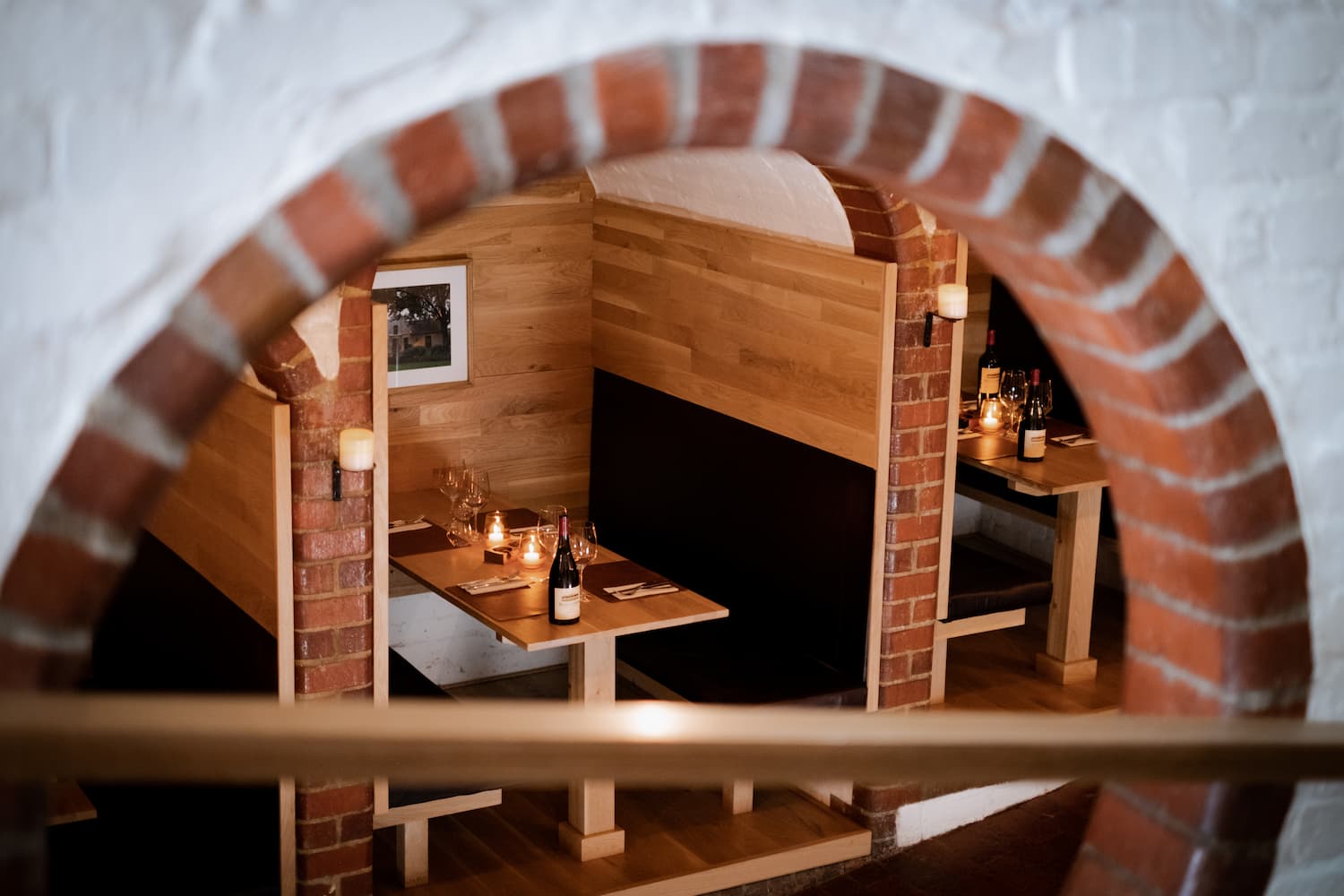
Restaurant seating in winery cellar. Courtesy of Rust en Vrede.
The Sip
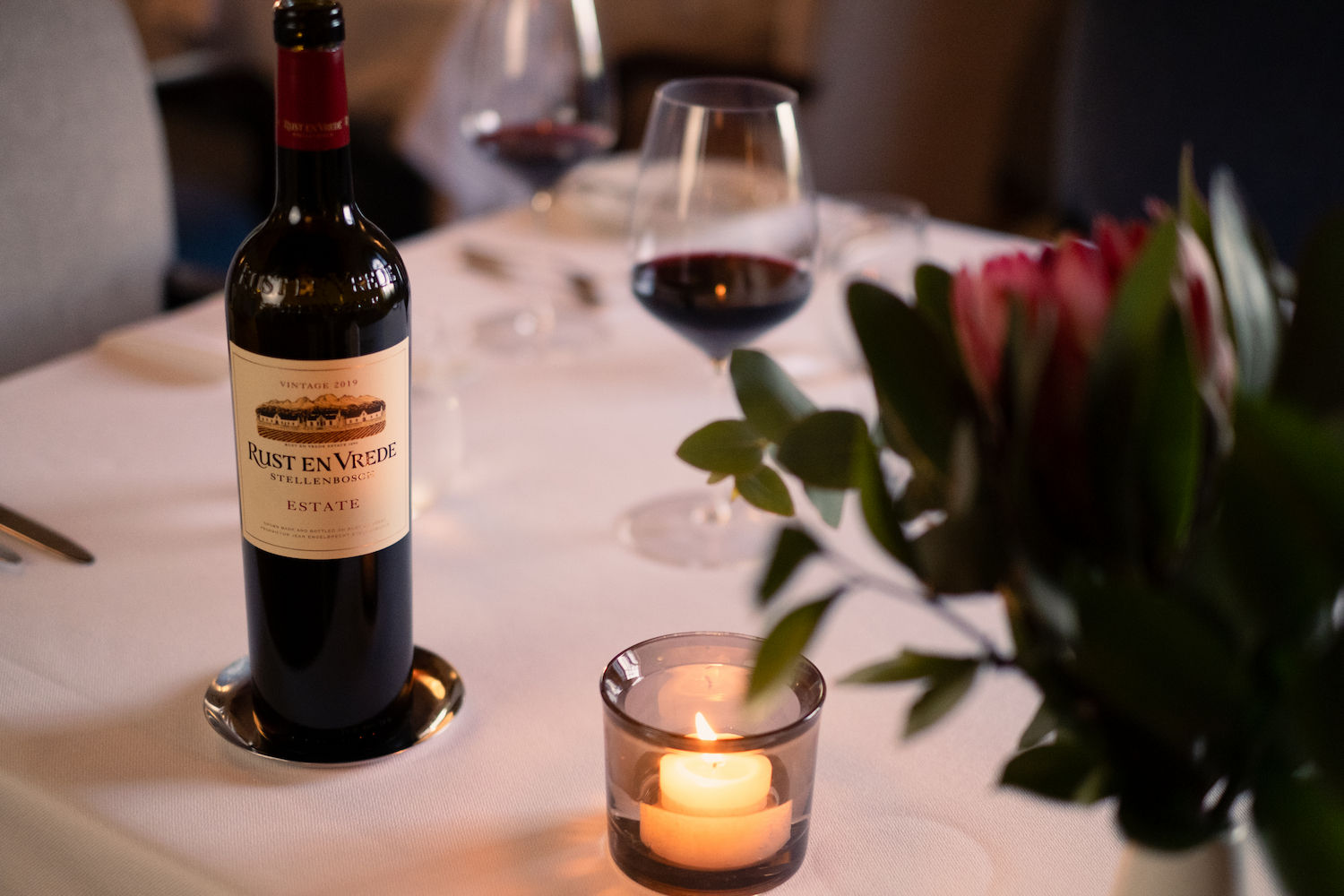
Grown in a Mediterranean climate, the grapes for the Rust en Vrede Estate 2020 are a blend of 64% Cabernet Sauvignon, 28% Syrah, and 8% Merlot, proportioned to mirror the planting on the property. All fruit is estate-grown, hand-picked, and vinified separately by parcel before blending. It spends 22 months in 300-liter French oak barrels, with 20% new wood; enough to add structure without overwhelming the fruit.
Ruby-hued in the glass, the Estate red blend takes a few minutes to open up. While decanting isn’t necessary, the process of aerating it in a glass carafe would gently shake the wine awake. The 2020 reflects a near-optimal growing season, with its ripe, structured tannins creating the scaffolding for red and black fruits, graphite, grilled meat, and dried herbs of thyme and fynbos, the South African version of French garrigue, thanks to the country’s unique floral kingdom.
In the mouth, the wine complicates the easy New World-meets-Old World profile often applied to South Africa. Wine grapes have been grown here since 1655, even if Cabernet, Syrah, and Merlot arrived by ship rather than by origin. More savory than fruit-driven, tasted blind, one might land somewhere in southern France for the Syrah, only to be pulled back to the Cape by the sense of place that comes with tasting South African wines for a decade.
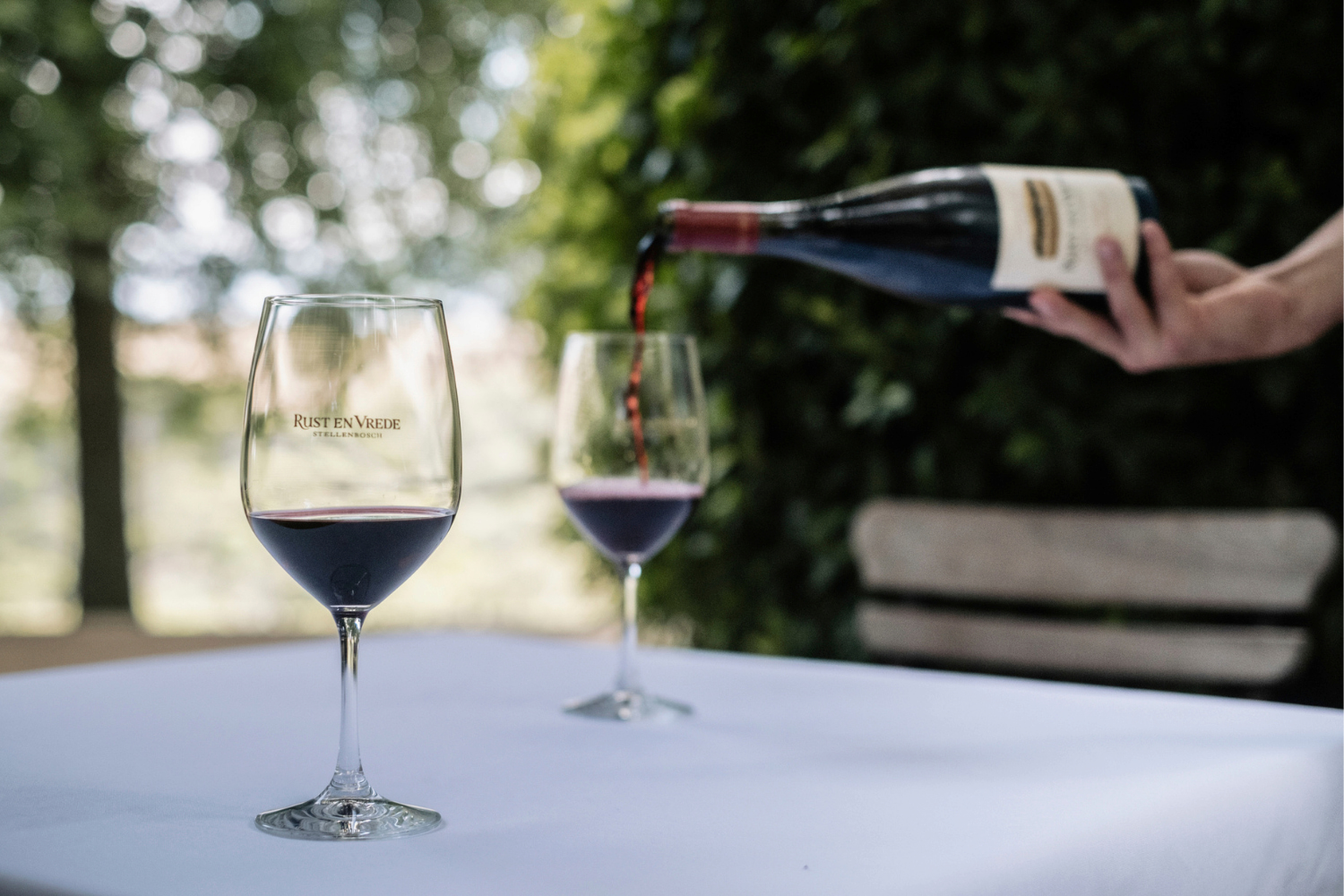
Rust en Vrede table setting. Courtesy of Rust en Vrede.
Origin Story
Established by land grant in 1694, Rust en Vrede is part of a three-hundred-year-old wine tradition, one of the oldest continuously held properties in the Cape winelands. Since 1977, the Engelbrecht family has specialized in estate red wines, restoring the property and producing their first vintage in 1978.
By 1993, the estate’s reputation had grown enough that Nelson Mandela chose Rust en Vrede as the wine served at the dinner celebrating his Nobel Peace Prize in Oslo. It was not a casual selection. South African wine was just beginning to re-enter the international stage, and the choice carried the weight of a nation seeking peace after years of turmoil, a meaning not lost on a winery called “rest and peace.”
A few years later, Rust en Vrede became the first South African red wine to appear in Wine Spectator’s annual Top 100, a position it held for four consecutive years. In 2007, the estate opened its restaurant in the original cellar building, adding another reason to make the drive to Helderberg.
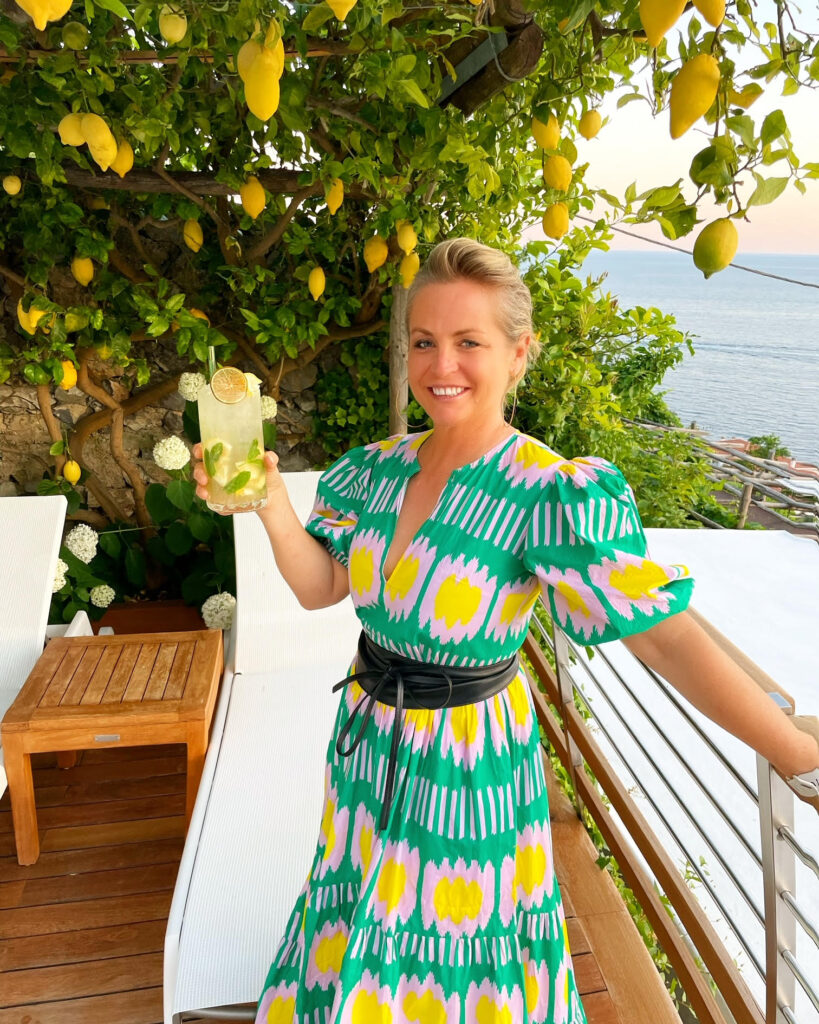
Founder and CEO of Azure Road, Lauren Mowery is a longtime wine, food, and travel writer. Mowery continues to serve on Decanter Magazine’s 12-strong US editorial team. Prior to joining Decanter, she spent five years as the travel editor at Wine Enthusiast. Mowery has earned accolades for her writing and photography, having contributed travel, drinks, food, and sustainability content to publications like Food & Wine, Forbes, Afar, The Independent, Saveur, Hemispheres, U.S. News & World Report, SCUBA Diving, Plate, Chef & Restaurant, Hotels Above Par, AAA, Fodors.com, Lonely Planet, USA Today, Men’s Journal, and Time Out, among others.
Pursuing her Master of Wine certification, she has also been a regular wine and spirits writer for Tasting Panel, Somm Journal, VinePair, Punch, and SevenFifty Daily. Mowery is a graduate of the University of Virginia and Fordham Law School, and she completed two wine harvests in South Africa.
Follow her on Instagram @AzureRoad and TikTok @AzureRoad
North Stars: Community Support, Heritage Value, Water Management