“We don’t abandon a winery because they had a difficult vintage.“
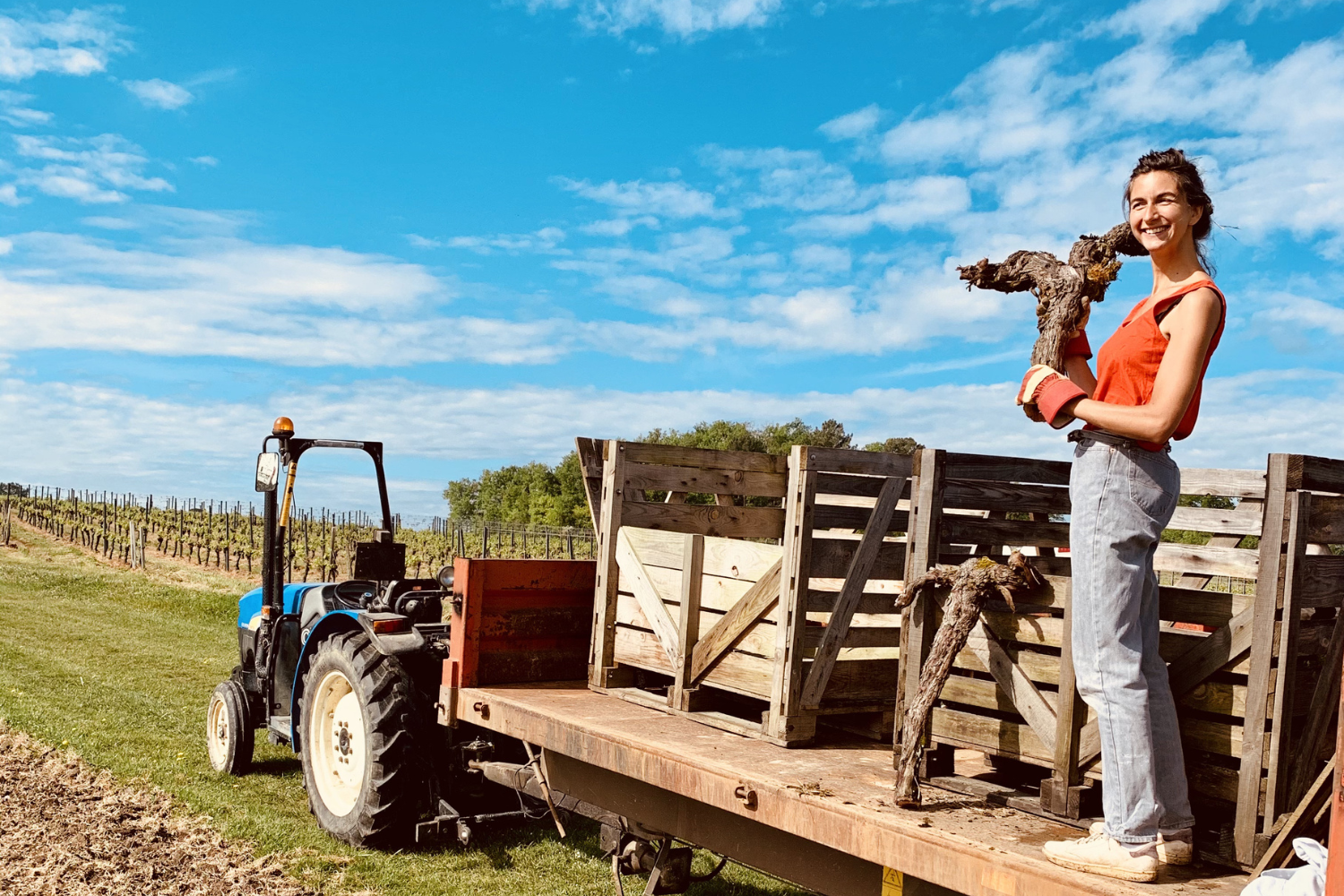
Esther Hermouet at Roc Meynard. Courtesy of JP Bourgeois
Partnership
A bottle of Sancerre leaves a small cellar in France’s Loire Valley and travels four thousand miles to a shelf in Asheville, North Carolina. Loaded onto pallets, a truck transfers it to a port, and a shipper hauls it across the Atlantic. After applying tariffs, importers sell it to distributors who sell it to retailers, where the bottle price reflects every hand that touched it. Does the price a wine drinker pays for that Sancerre reflect the honest cost of doing business, or has it been inflated along the way?
Jean-Philippe Bourgeois of JP Bourgeois Imports in Asheville, North Carolina, often thinks about sustainability in the wine industry, though not only from the perspective of farming but also across sourcing, logistics, and supply chains.
What does a more sustainable wine industry look like? “It comes down to two things,” says Bourgeois. “Growers as stewards of the land versus owners of the land, and removing greed from the system. Everything else follows from there, supporting your community, your environment.”
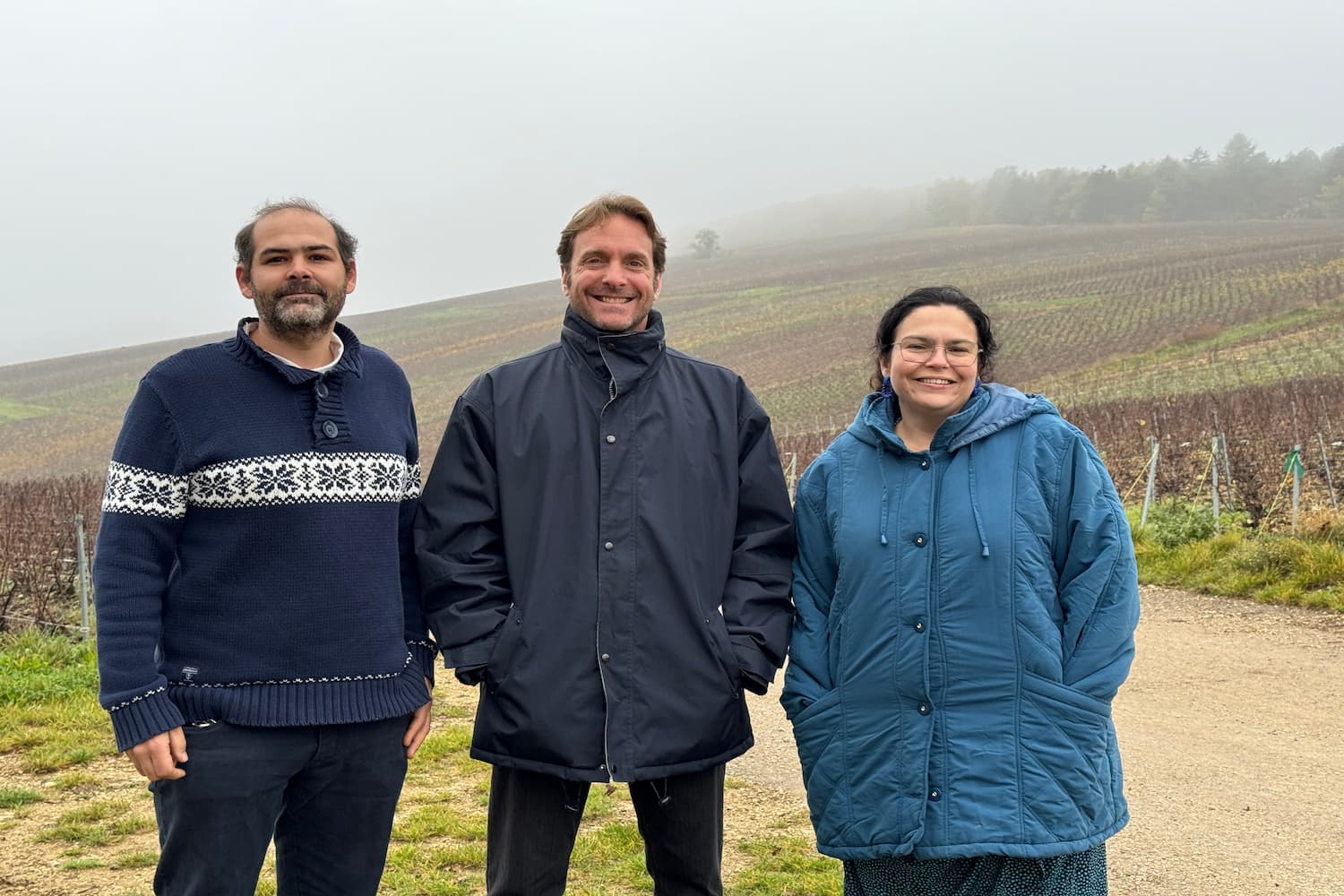
Jean-Philippe Bourgeois with Salome Fontaine and husband Louis-Antoine Garcia. Courtesy of JP Bourgeois.
Indeed, the goals of a sustainable business model would weight equally the 3 Ps: People, Place, and Profit. Taking care of the community and employees, preserving the environment for future generations, allowing a business to survive, even profit, comfortably rather than excessively.
Bourgeois points to ways the current model undercuts this goal, which he believes is harming the industry. Across the board, every player in the wine business is suffering from a global turndown. Softening consumption, blamed on everything from younger drinkers choosing healthier lifestyles, older generations turning to GLP-1 drugs and cannabis, to the lack of quality, character, and value of wines that make it to the market.
To that latter point, Bourgeois tries to run his business differently. He wants to encourage a healthier ecosystem between his suppliers and his clients, a model that ultimately benefits consumers with more interesting, better-priced wines. And it starts with his growers. While he’s no longer aggressively building his portfolio, when he did, it meant visiting winemakers in person. Meeting their families, tasting in their cellars, and getting a firsthand look at their lives, farming practices, and values.
Today, he sources mostly from the same family producers with whom he’s developed yearslong personal relationships. “Having that rapport with winemakers means they’re always going to give me their absolute best price from the start. We don’t negotiate and I never ask for a lower price because I know they’re doing their best and the value in our portfolio shows that,” he says.
He also supports his suppliers during challenging harvests, a practice that benefits both parties. “We don’t abandon a winery because they had a difficult vintage. We call each other up, figure out what makes sense, but we always buy.” That consistency creates the foundation for real relationships and results in the winery extending flexibility to Bourgeois in kind when needed.
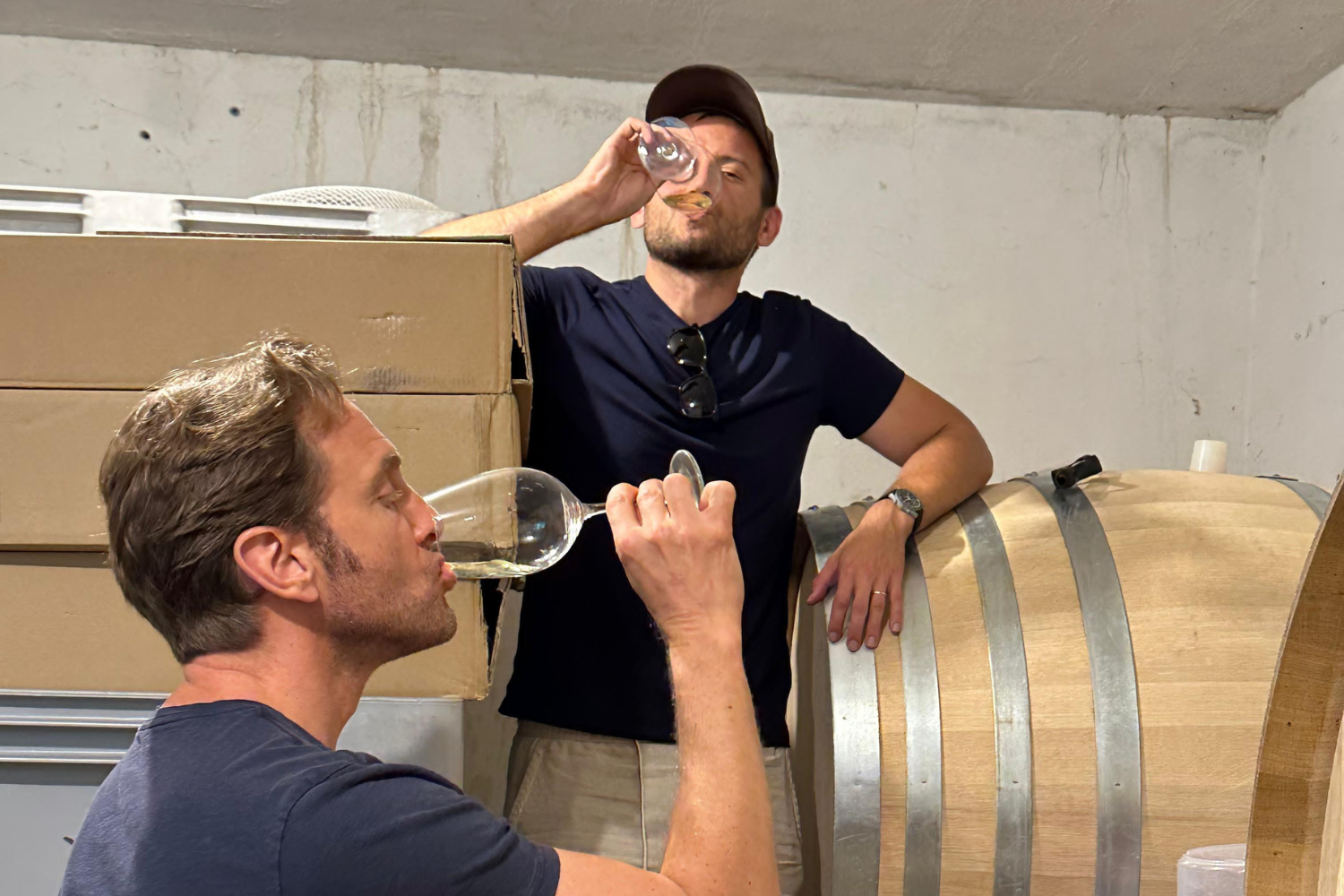
Jean-Philippe Bourgeois tasting wine with Peter Gonc. Courtesy of JP Bourgeois.
A capitalist system rarely rewards values in business, but Bourgeois tries to stick to his ethos, even if it diminishes his financial outcome, like cutting established producers loose.
“It’s happened when a winery’s situation changes,” he explains. “With one brand, as their volume grew, they started cutting corners on production. Changed their farming practices to get more output,” he says, noting they moved away from the sustainable farming practices his portfolio champions. “Even though I loved the wine, the market loved the wine, and it was selling easily, I fired them,” he says. Lost market share meant having to rebuild that part of his portfolio back from scratch.
“It’s hard. It’s genuinely hard,” he says, “but at some point you look in the mirror and say ‘yeah, but no.’”
While it may sound like Bourgeois’s challenges are self-inflicted, they reflect his larger outlook on creating a more interesting wine market, one that rewards everyone with greater consumer interest.
He keeps his margins reasonable when others see an opportunity to raise them. Sancerre remains one of America’s most popular white wines. When production in the appellation was down in 2024, Bourgeois kept his margins low. “I could have put a fat margin on it because of pressure on the appellation, but I didn’t,” he says. “Sancerre is one of the lowest margins in my book because I don’t want the wine sitting above what I think it should cost at retail. I don’t want the consumer paying more than what’s reasonable for that wine, regardless of the market squeeze,” he says.
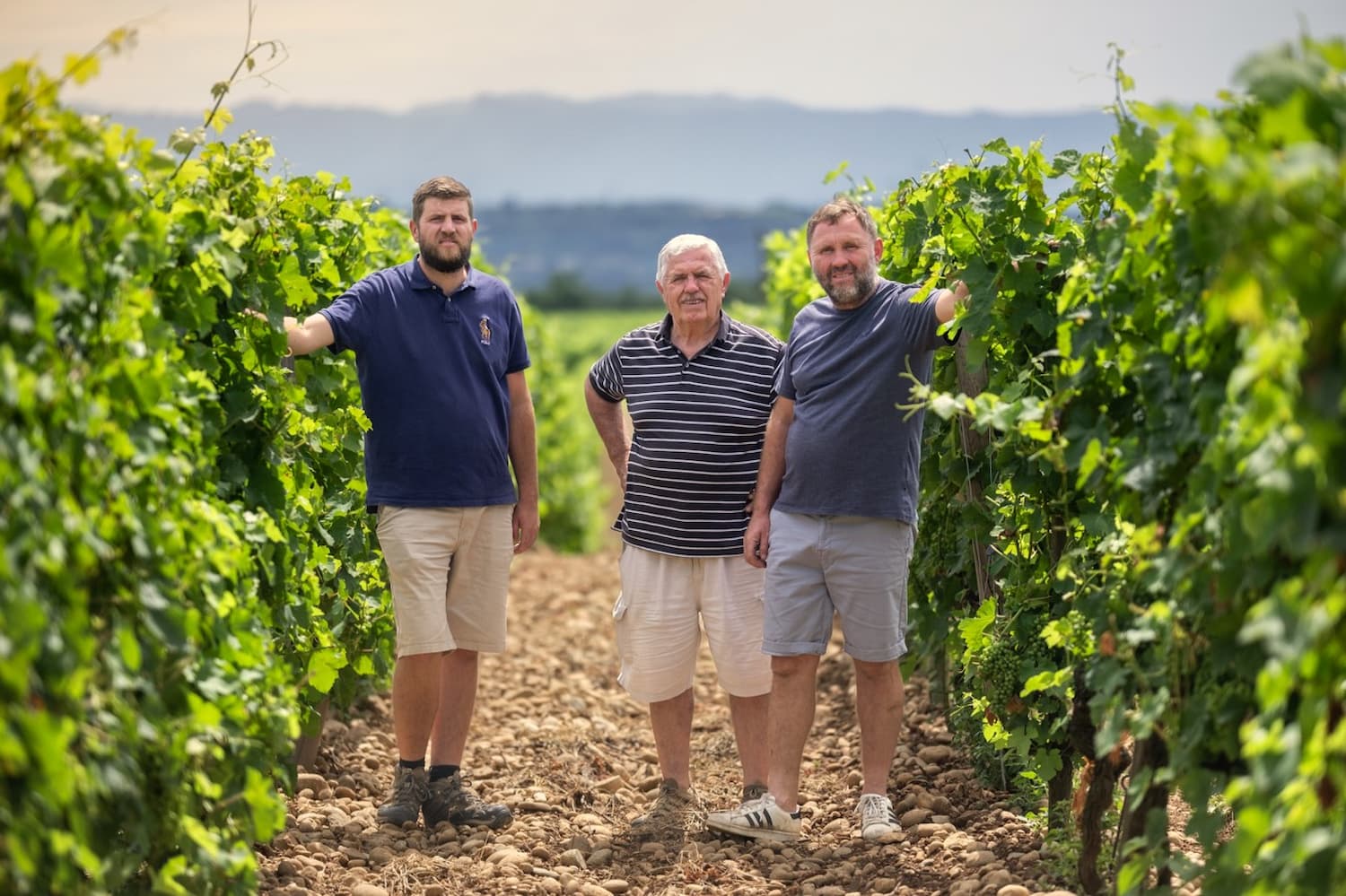
The Chene Vert team in the vineyard. Courtesy of JP Bourgeois.
Bourgeois treats his Burgundy portfolio with similar financial care. “Burgundy is already so expensive, I feel terrible charging that much for it,” he says. “I want people to be able to enjoy those wines as much as I enjoy them. I have a small amount compared to the rest of the portfolio, so I can make that choice,” he says.
Being fiscally conservative about his business helps him make those hard choices while remaining aligned with his values. “I don’t drive an expensive car. I don’t take an enormous salary, I take what I need. I work extra hours instead of hiring two more people, which means more goes to the staff I have. I give back, donate, and support people,” he says.
Of course, a wine alighting in the U.S. market only matters if someone buys and pours it. Most of the sustainable family estates Bourgeois imports require hand-selling, whether through explanations to the customer in a retail shop or at the distributor end, with associates working restaurant accounts and talking to sommeliers. He relies on partners who want to spark customer curiosity, not just move cases.
To that end, when a retailer or a buyer wants to know a producer better, Bourgeois connects them directly and gets out of the way. “Go to the winery, have a great time, talk to the winemaker,” he says. The trip costs the buyer nothing, and the relationship that forms doesn’t depend on Bourgeois to survive. For a drinker standing at a row of bottles on a shelf, the payoff comes when the salesperson can explain exactly why a bottle is worth its price.
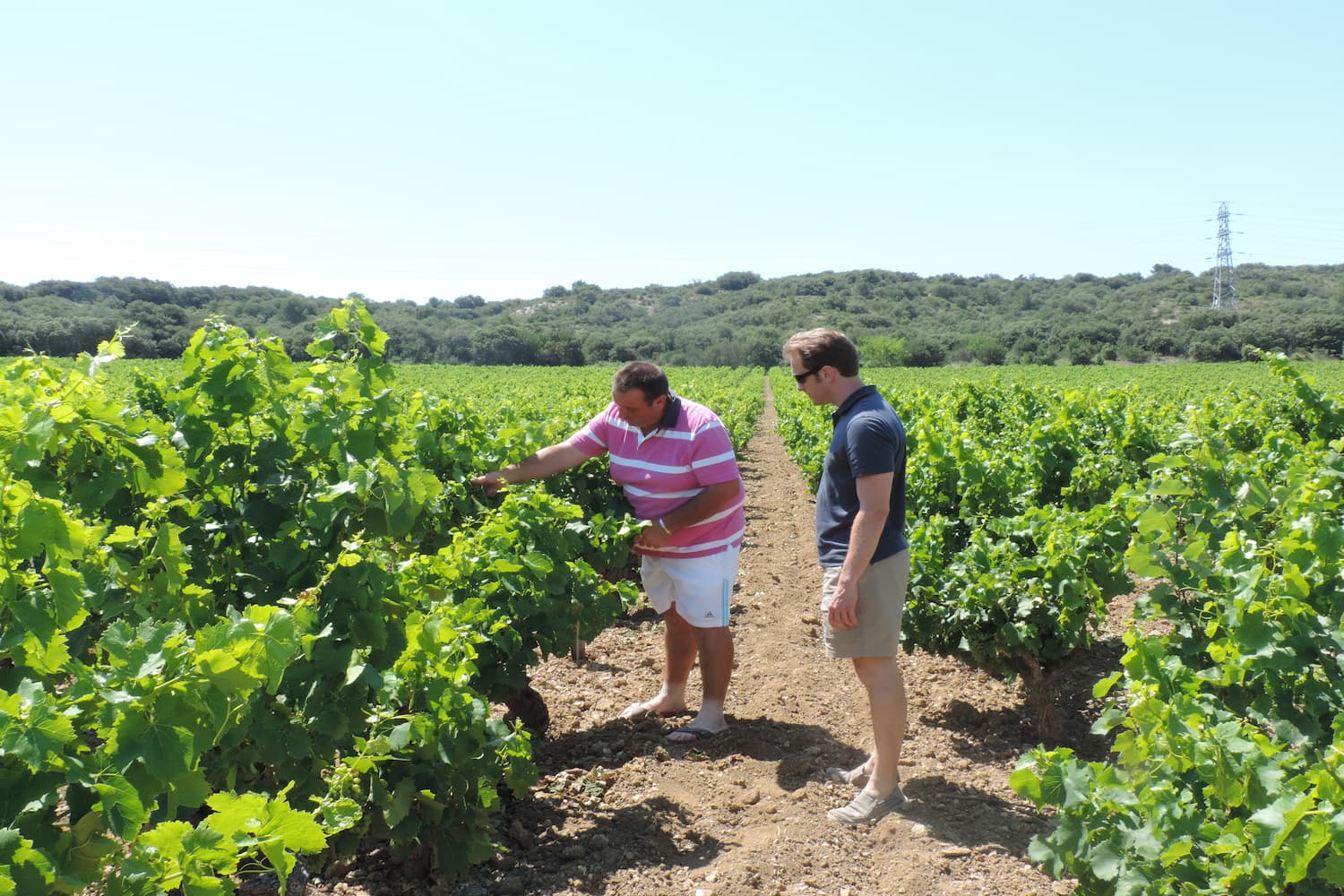
Frédéric Souret and Jean-Philippe Bourgeois at Chateaumar. Courtesy of JP Bourgeois.
When asked what industry changes would create a more sustainable wine industry, he’s blunt. “Buy healthy wines. Stop the quotas.”
“I don’t want to tell other importers what to do, everybody has a different business model and they do what works for them. But I think a little less crappy wine and a bit more healthy wine would give consumers an incentive to drink more wine,” he says.
By “healthy,” Bourgeois means wines made through better farming practices, with fewer inputs. “If people trust the product, they drink more of it,” he adds.
The quotas are the second half of his complaint. To get an allocation of a scarce, in-demand wine, a buyer often has to take cases of other wines they didn’t want, which pushes mediocre bottles onto shelves. “It distorts everything. It punishes the wines that require more thought to sell and rewards wines that shouldn’t be taking up shelf space. Cut some of that out and there’s more room for everything that deserves to be there,” he says.
What Bourgeois describes as success has little to do with the volume of cases sold. “Wine at its best brings people together, around a table, with friends and family,” he says. “Success would look like a wine world that reflects that. Less competition for its own sake. More fraternity.”
He casts his own part in it modestly, as a vessel that carries a bottle from the winery to a table, and the story of where it came from along with it. Take the greed out, he believes, and the rest follows. “Nothing more than that, and that’s plenty.”
For more about the wine portfolio, visit JP Bourgeois Wine Imports
Founder and CEO of Azure Road, Lauren Mowery is a longtime wine, food, and travel writer. Mowery continues to serve on Decanter Magazine’s 12-strong US editorial team. Prior to joining Decanter, she spent five years as the travel editor at Wine Enthusiast. Mowery has earned accolades for her writing and photography, having contributed travel, drinks, food, and sustainability content to publications like Food & Wine, Forbes, Afar, The Independent, Saveur, Hemispheres, U.S. News & World Report, SCUBA Diving, Plate, Chef & Restaurant, Hotels Above Par, AAA, Fodors.com, Lonely Planet, USA Today, Men’s Journal, and Time Out, among others.
Pursuing her Master of Wine certification, she has also been a regular wine and spirits writer for Tasting Panel, Somm Journal, VinePair, Punch, and SevenFifty Daily. Mowery is a graduate of the University of Virginia and Fordham Law School, and she completed two wine harvests in South Africa.
Follow her on Instagram @AzureRoad and TikTok @AzureRoad
North Stars: Community Support, Heritage Value, Production & Consumption