North Stars:

Community Support

Heritage Value

Wildlife Ecosystems
“What if we reimagine these places? What if we put conservation and recreation ahead of development.”
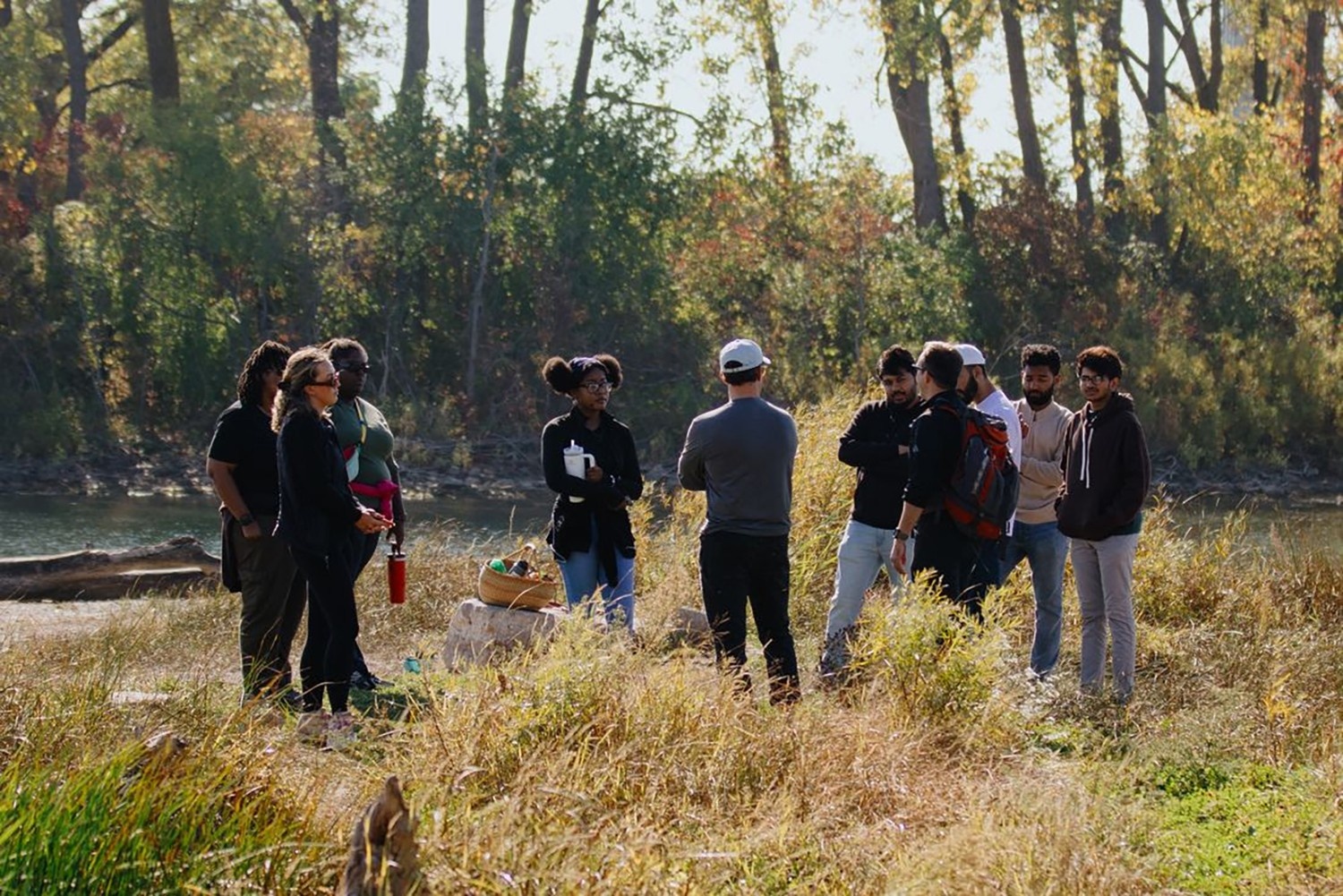
The September morning air carries a hint of chill as we step onto the rustic green trail at Humbug Marsh, the last undeveloped mile of Detroit River shoreline. The gray skies frame the forest of cattails on the banks of the river, and on the other shore, Ontario looks green and wooded. Along the dirt trail, white oak, black willow, red maple, silver maple, American beech, and American elm all compete for which can look the most impressive as their fall leaves change.
Dan Cooke moves ahead with the easy stride of someone equally comfortable in a courtroom or on a wilderness trail. Fit and energetic, the lawyer-turned-outdoor-entrepreneur gestures toward the massive oak trees towering overhead as great blue herons lift off from cattails.
“People see factories,” he says. “They don’t see that you can get 2,000 feet of elevation gain on a 10-mile trail run here.”
He gazes up at the massive trees lining the hiking trail.
“These are over 300 years old,” Cooke says, his enthusiasm evident. “When you’re out here, you can imagine what southeast Michigan was like before it was colonized, before the automotive boom.”
It’s an unexpected scene for a region long defined by concrete, steel, and the hum of industry. Yet this marsh, now protected within the Detroit River International Wildlife Refuge, represents everything Cooke believes about his hometown region. Detroit isn’t just Motor City anymore. It’s becoming an outdoor adventure destination, and Cooke has made it his mission to prove it.
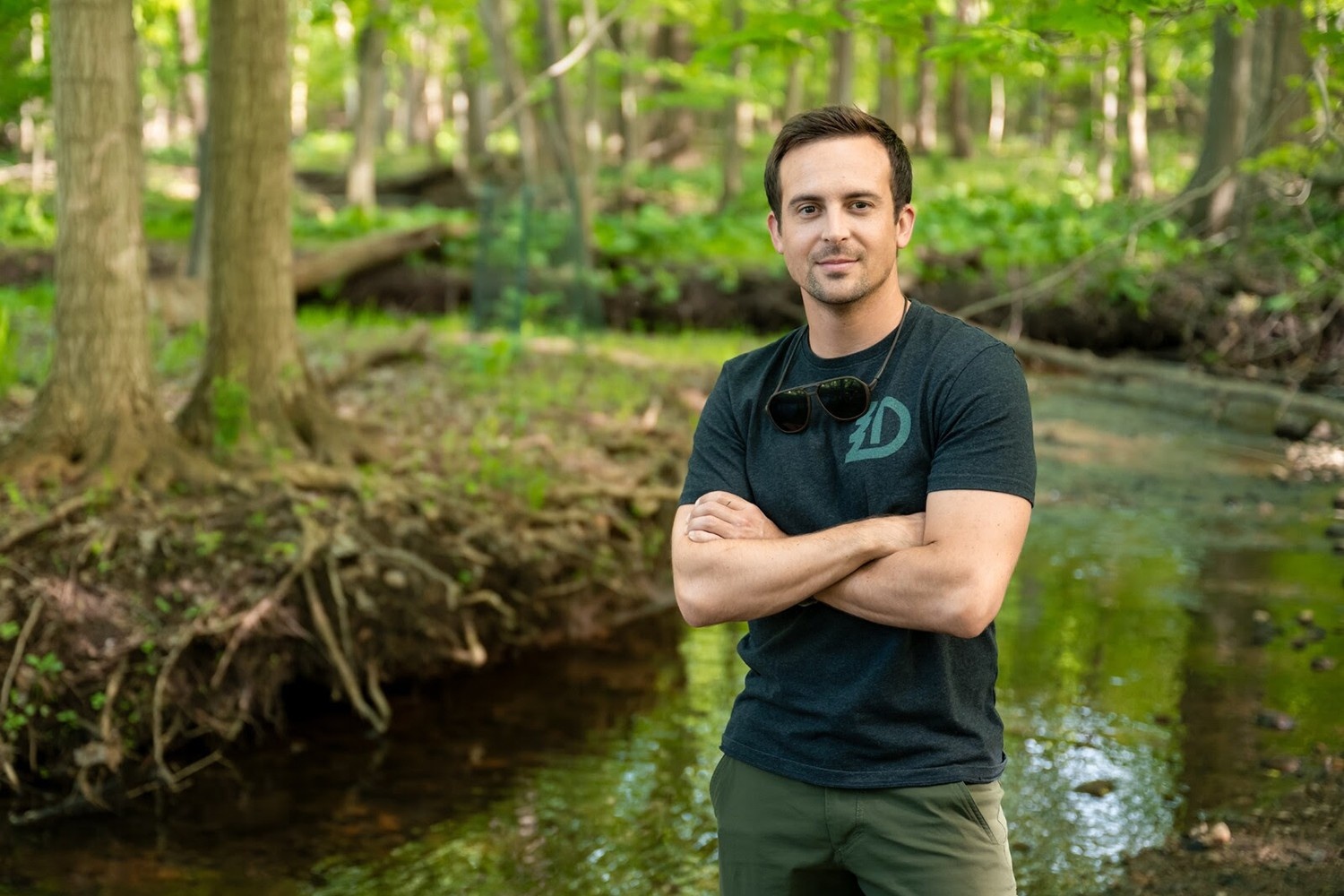
Dan Cooke. Courtesy of Heide Brandes.
From Automobiles to Outdoors
Cooke founded Expedition Detroit in 2020, creating what he describes as both an adventure media marketing company and the largest outfitter providing guided hiking tours in the entire Michigan state park system. The business operates exclusively in Metro Detroit, offering guided hikes, backpacking trips, and trail running experiences across 11 state parks within an hour of downtown.
Cook founded Expedition Detroit to shatter perceptions about the Motor City’s potential for outdoor recreation. He poses the radical question of “What if Detroit’s greatest untapped resource isn’t automotive innovation, but its proximity to some of the Midwest’s most biodiverse ecosystems?”
On any given weekend, Cooke may lead adventurers through the rugged moraines at Pinckney Recreation Area, where 10 miles of trail can yield 2,000 feet of elevation gain, or guide backpackers along the 40-mile Waterloo-Pinckney Trail, Michigan’s premier multi-day hiking route.
The experiences range from beginner-friendly nature walks on Belle Isle to challenging overnight backpacking trips. Cooke designs each outing to showcase the unexpected diversity of southeast Michigan’s landscapes, from the glacially carved hills and kettle lakes to the river marshes teeming with migrating birds. Along the way, he weaves in the geological and cultural history that shaped these spaces, the same stories he’s sharing with me today at Humbug Marsh.
Beyond the guided adventures, Expedition Detroit serves as a content hub celebrating the region’s outdoor opportunities. The company’s blog highlights hidden gems and seasonal experiences, partners with local retailers to connect adventurers with quality gear, and amplifies voices within the recreational community. It’s all part of Cooke’s larger mission to build what he calls “a better outdoor ecosystem for Detroit.”
“There’s a constant story throughout history,” Cooke says as we pause near a viewing deck overlooking the marsh. “From the moment the glaciers melted 15,000 years ago until the height of the automotive boom, the narrative consistently revolved around leveraging these natural resources for economic output.” That focus became more and more refined toward industrialization.”
The result nearly destroyed the region’s natural spaces. By the mid-20th century, over-industrialization had degraded the Detroit River and surrounding ecosystems to the point where many locals viewed the area as industrial wasteland, not worth preserving. The turning point came in the 1990s when grassroots activists fought to save Humbug Marsh from developers who wanted to build a golf course and condos.
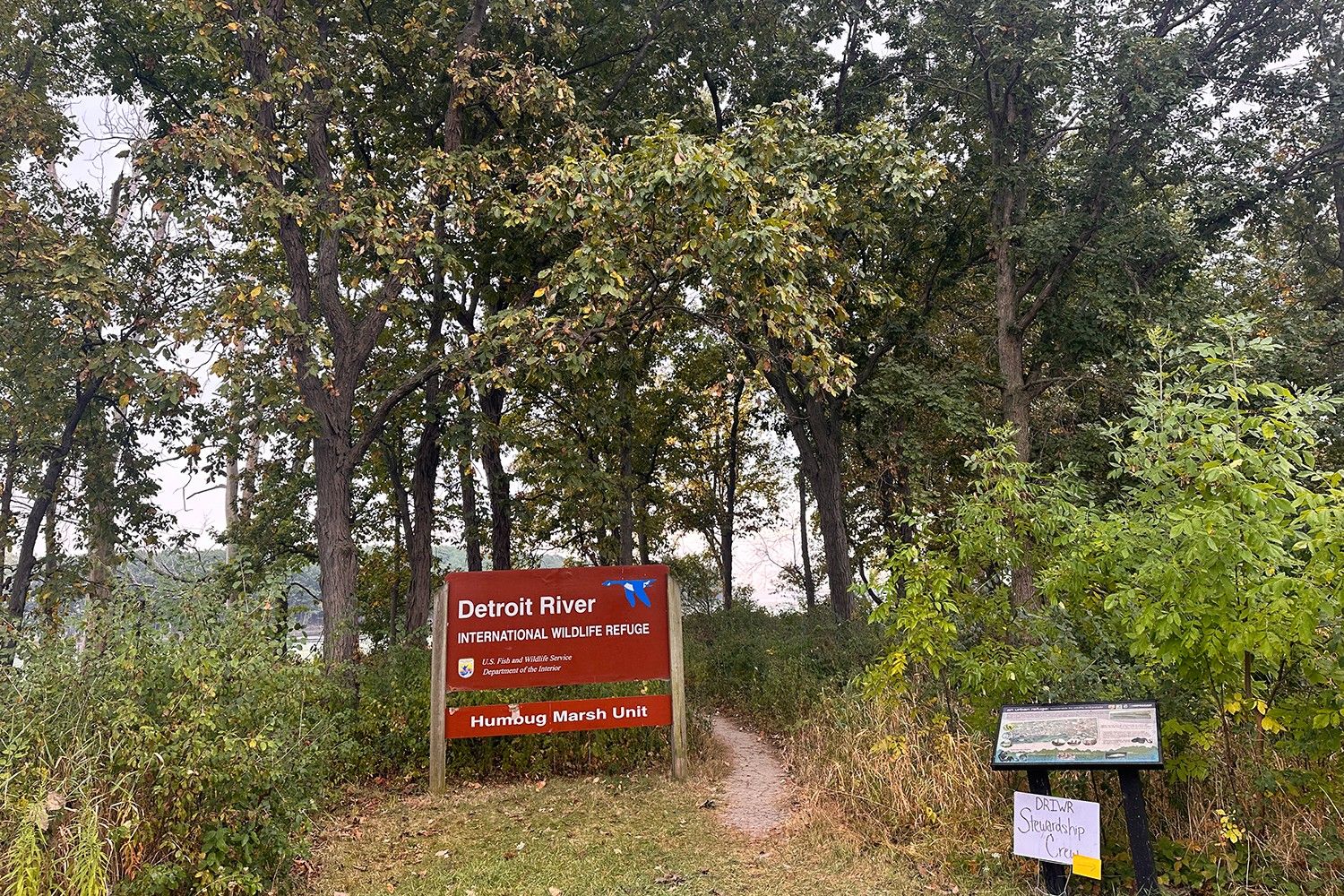
Exploring the wildlife refuge. Courtesy of Heide Brandes.
A New Era of Ecological Recovery
That victory sparked a conservation movement that continues gaining momentum today. In 2001, the Detroit River International Wildlife Refuge was established along the border of Michigan and Ontario, becoming the only international wildlife refuge in North America.
The refuge now encompasses more than 6,200 acres of protected lands along 48 miles of Detroit River and western Lake Erie shoreline.
Recent conservation successes are evident in the region’s ecological recovery. In November 2024, the refuge’s 32-acre old-growth forest within Humbug Marsh was inducted into the Old Growth Forest Network, joining a national initiative to protect and promote ancient forests.
Park Ranger Alex Gilford calls it “a special place where the public can get up close and personal with ancient trees.”
The refuge has also completed major restoration projects, including Sugar Island in Grosse Ile Township. Purchased in 2012 using Great Lakes Restoration Initiative funds, the 26-acre coastal wetland restoration installed more than 120 habitat structures.
Post-restoration monitoring revealed the return of five species of herpetofauna, including the eastern American toad and northern water snake, species that hadn’t been seen in significant numbers before.
The refuge supports 300 species of birds, including 30 species of waterfowl, 23 species of raptors, and 31 species of shorebirds. Its location at the intersection of the Atlantic and Mississippi flyways makes it crucial for bird migration.
“We have lots of migration coming through, and stopover sites for migrating birds are so important for them to be able to stop and eat,” said Nicole LaFleur, executive director of International Wildlife Refuge Alliance (IWRA Staff).
Refuges are unique, she said, not only for the biology, but also for connecting people to nature.
“It’s not just to protect the wildlife. It’s to get the people to care about the wildlife and make them feel comfortable and safe in nature, and want to protect these areas,” she said.
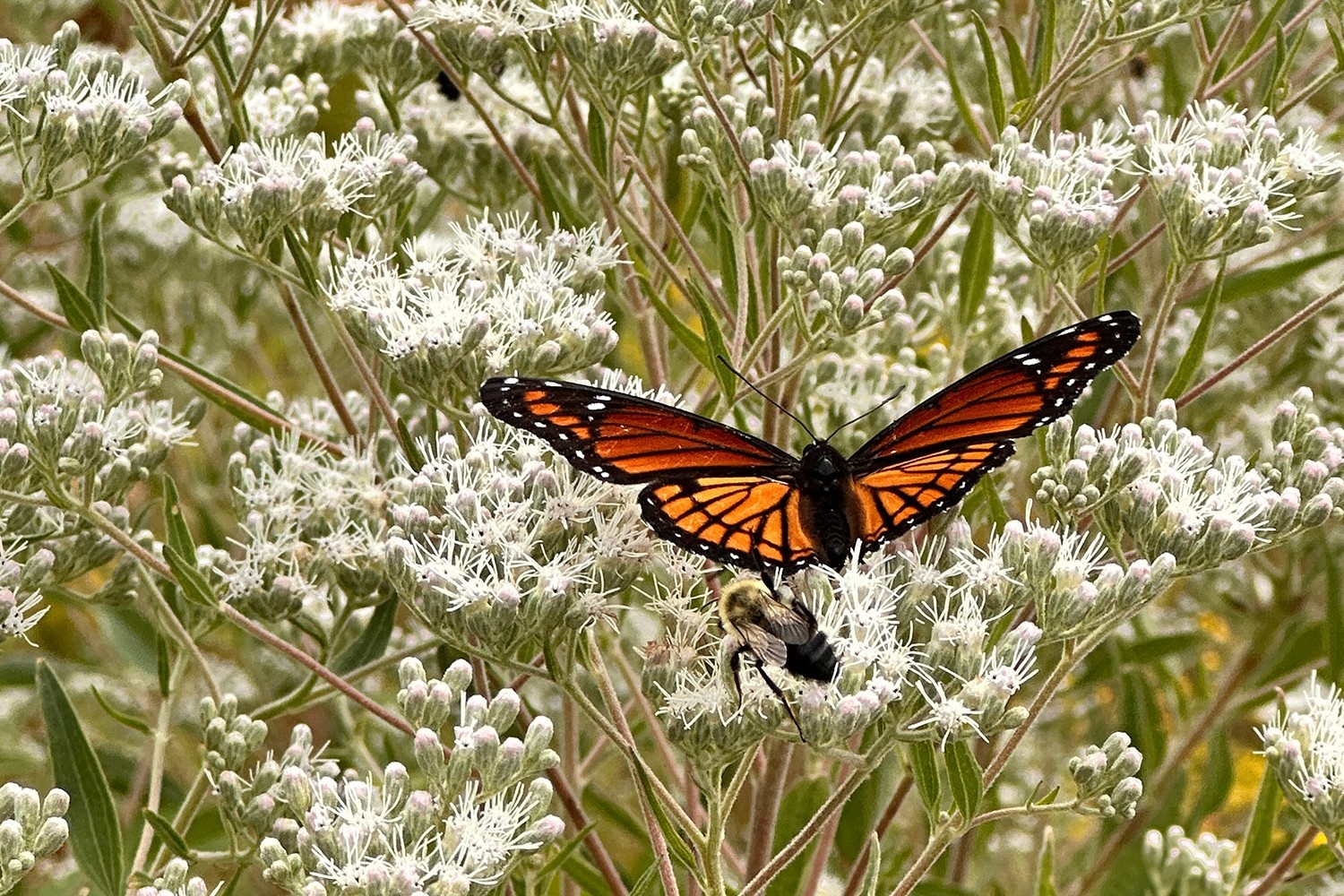
A monarch butterfly amid blooms. Courtesy of Heide Brandes.
Building Detroit’s Future on Outdoor Adventure
This ecological renaissance creates the foundation for Cooke’s vision. He views outdoor recreation not only as a way to showcase Detroit’s natural beauty but also as a catalyst for economic growth and a strategy to retain residents.
“Studies have shown, especially coming out of COVID, young people want to live and work in places with outdoor amenities,” Cooke says. “Look at Fort Collins, Denver, Salt Lake City, Seattle, and Chicago. These have networks where young people feel like they can get out of work, hop on their bike, and have lunch in a park without relying on a car.”
Michigan’s outdoor economy already produces $15 billion annually in hunting alone, with hunting and fishing license sales accounting for $65 million. The state boasts 13.6 million acres of public land, 103 state parks, and 5,292 miles of state-designated hiking trails. Only New York has more hiking trails than Michigan.
Detroit’s transformation extends beyond wilderness areas. The city is investing heavily in urban trail connectivity, most notably through the Joe Louis Greenway. Named after legendary boxer and proud Detroiter Joe Louis, the 27.5-mile trail network will connect 23 Detroit neighborhoods plus Highland Park, Hamtramck, and Dearborn, creating safe multi-use paths for cycling, walking, and running. Six miles of the greenway are now complete, with another six expected by the end of 2026.
“When we found out the Joe Louis Greenway was coming through the neighborhoods, we were very excited,” said Lamanda Matthews, member of the Joe Louis Greenway Heritage Conservancy. “When we made the conservancy, we made sure that the neighbors knew and threw community events. You can feel the love of the community.”
Once complete, the Joe Louis Greenway will link to existing routes and infrastructure including the 2,000-mile Iron Belle Trail, Belle Isle, and the Detroit Riverwalk, voted the best riverwalk in the country for three consecutive years by USAToday 10Best.
A New Identity for the Motor City
For Cooke, this infrastructure investment validates his belief that outdoor recreation can reshape Detroit’s identity and economy. Expedition Detroit partners with retailers, manufacturers, and advocacy organizations to build what he calls “a better outdoor ecosystem for Detroit.”
“The narrative has certainly changed,” Cooke says as we complete our loop around Humbug Marsh. “What if we reimagine these places? What if we put conservation and recreation ahead of development? That shift has mobilized resources from small businesses to the federal government, from Michigan to the Canadian government.”
The numbers support his optimism. More than 200 community, governmental, nonprofit, and business partners collaborate on Detroit River conservation efforts. The binational goal aims to conserve 25,000 acres devoted to conservation and outdoor recreation by 2025.
Walking back toward the visitor center, Cooke points out volunteer crews cutting invasive species along the trail.
“This is how it happens,” he says. “People fall in love with these places, and then they want to protect them.”
How to Experience Detroit’s Great Outdoors
Quick runs close to downtown
-
Detroit RiverWalk + Dequindre Cut: Easy miles, simple navigation, good for a tempo or long out-and-back.
-
Belle Isle: Low-stress loops with river views when you want something straightforward.
Trail running when you want dirt
-
Humbug Marsh: Flat, quiet paths through wetlands and hardwoods.
-
Pinckney Recreation Area: Rolling terrain that delivers real elevation gain on longer trail loops.
-
Waterloo–Pinckney Trail: The area’s marquee long-route option if you want to go bigger.
When to go
-
Fall is the sweet spot for cooler temps and color.
-
Spring can be muddy on singletrack.
-
Winter is runnable with traction, or better yet, snowshoe-ready.
Guided option
-
Expedition Detroit runs year-round excursions in metro Detroit and nearby state parks, including hiking, backpacking, snowshoeing, and trail running.

Heide Brandes is an award-winning journalist whose’ work appeared in National Geographic Traveler, The Wall Street Journal, The Smithsonian, Cowboys & Indians, Southern Living, Fodors, BBC Travel, ROVA, Outdoor x 4 Magazine and The Washington Post, and others. When not traveling and writing, Heide is an avid hiker, a medieval recreation enthusiast, a professional belly dancer and kind of a quirky chick from Oklahoma. Follow Heide on IG @heidewrite.
North Stars: Community Support, Heritage Value, Wildlife and Ecosystems
More Stories
 DRINK
DRINKExploring Penedès, Spain’s Sparkling Wine Paradise
 DRINK
DRINKAzure Road Impact Award Drinks Finalists
 DRINK
DRINKWhy Now Is the Time to Cellar Santorini Assyrtiko
 DRINK, PARTNERSHIP
Ambar Estate Is Farming for Tomorrow in Oregon’s Willamette Valley
 DRINK, PARTNERSHIP
Crafting Alto Adige’s Future: The Evolution of Cantina Colterenzio