North Stars:

Community Support

Waste Management

Wildlife Ecosystems
“Visitors join locally led experiences that center on living culture, history, everyday customs, and the surrounding ecosystems.”
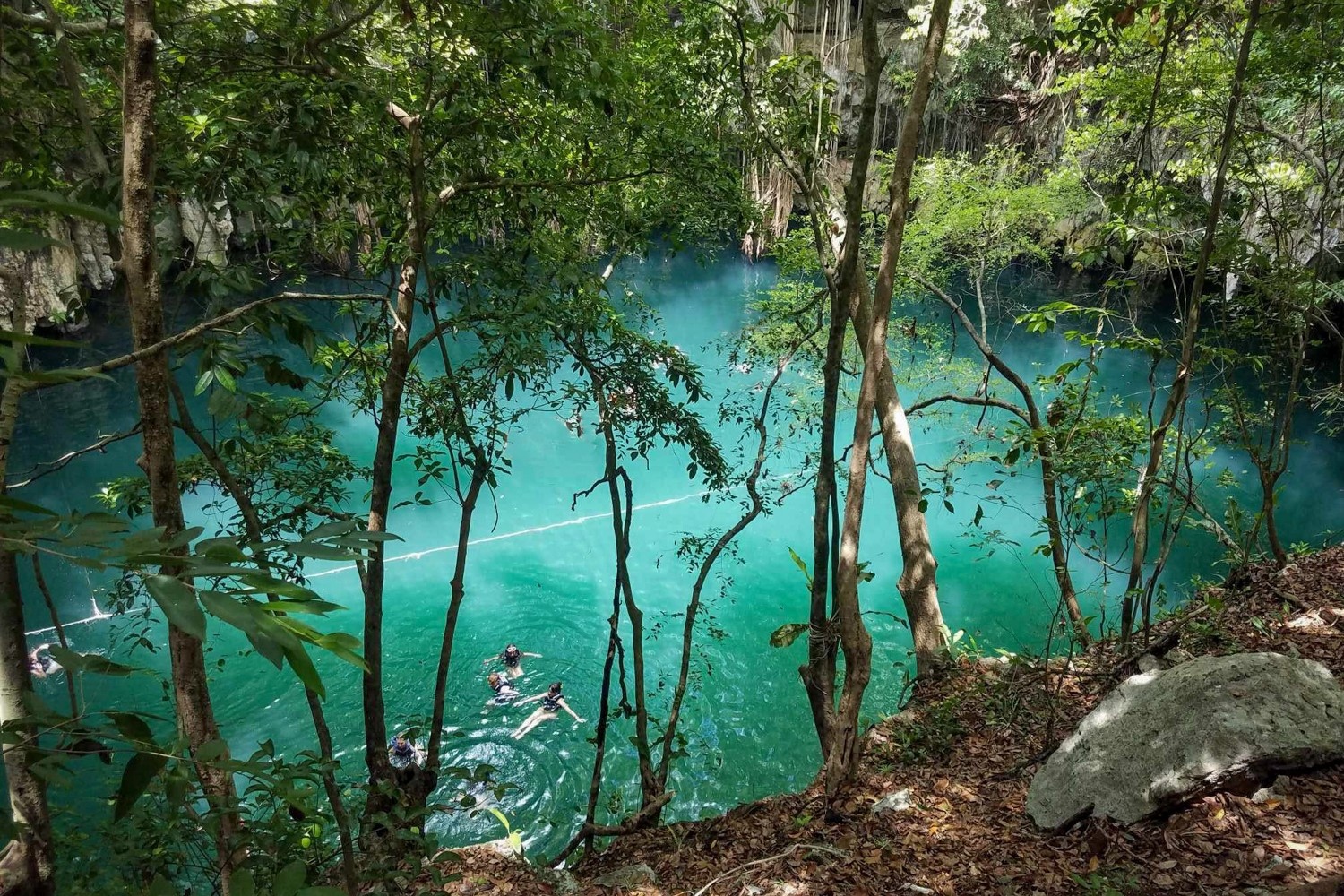
Visitors enjoying the Yokdzonot cenote. Courtersy of the Zaaz Koolen Haá co-op.
Back in 2005, a group of women in the remote community of Yokdzonot, Yucatan, came together to create a sustainable source of income for their families. Aware of the popularity of cenotes among tourists in the region, they saw their town’s neglected sinkhole as an opportunity for collective growth.
This realization led to the formation of the Zaaz Koolen Haá co-op. Over the course of two years, the group worked tirelessly to clean up the cenote, creating gardens, wooden steps, and trails for better accessibility. Finally, in 2007, their project opened to the public as Cenote Yokdzonot.
Community-Based Tourism in Yucatán
Home to mega-popular beach towns like Cancun and Playa de Carmen, the Yucatan Peninsula is one of Mexico’s most-frequented tourist destinations. Travelers are drawn by balmy beaches, Mayan ruins, swimmable cenotes, and exploring lush jungles and pristine offshore reefs.
It’s also a major all-inclusive retreat, meaning many travelers take part in tours and trips run by large-scale and often not-local operators, leaving native communities out of the loop. That’s where co-ops like Zazz Koolen Haá in Yokdzonot come in.
Yokdzonot is one of dozens of Yucatan communities that have realized the power in their natural heritage and ancestral traditions, choosing to change the narrative sold to tourists by telling their stories themselves.
Twelve Indigenous communities formed Co’ox Mayab, a collective of Yucatán cooperatives practicing community-based tourism and offering an alternative to the peninsula’s all-inclusive resorts. Visitors join locally led experiences that center on living culture, history, everyday customs, and the surrounding ecosystems, and are encouraged to avoid environmentally harmful excursions and staged cultural shows promoted by large travel companies.

Biosphere reserve boat trip in Rio Lagartos. Courtesy of Secretaria de Fomento Turistico de Yucatan.
Co’ox Mayab’s Ethical Tourism Initiatives
Because Co’ox Mayab’s cooperatives sit across the peninsula, what they offer shifts from place to place, from cenote swims and mangrove and lagoon boat tours to hands-on food, craft, and agro-ecology experiences. In every community, local residents design and lead the activities, draw on their knowledge of land and culture, and structure them so income stays in the community.
So, what can travelers see and do at each of them? Here are some of the highlights.
Beach Expeditions and Fishing Trips
Water sports like snorkeling, fishing charters, and scuba diving rank among the Yucatán Peninsula’s biggest draws. Coastal communities in the network answer that demand with small-boat fishing and wildlife-watching trips.
Amid a recent wave of vacation rental projects along the Yucatán coastline, the peaceful beach town of San Felipe has managed to keep its low-key character. Local fishermen formed the Sociedad Cooperativa San Felipe y Naturaleza, leading trips that use both modern and artisanal techniques, along with mangrove tours that stop at Isla Cerritos and Punta Nichili.
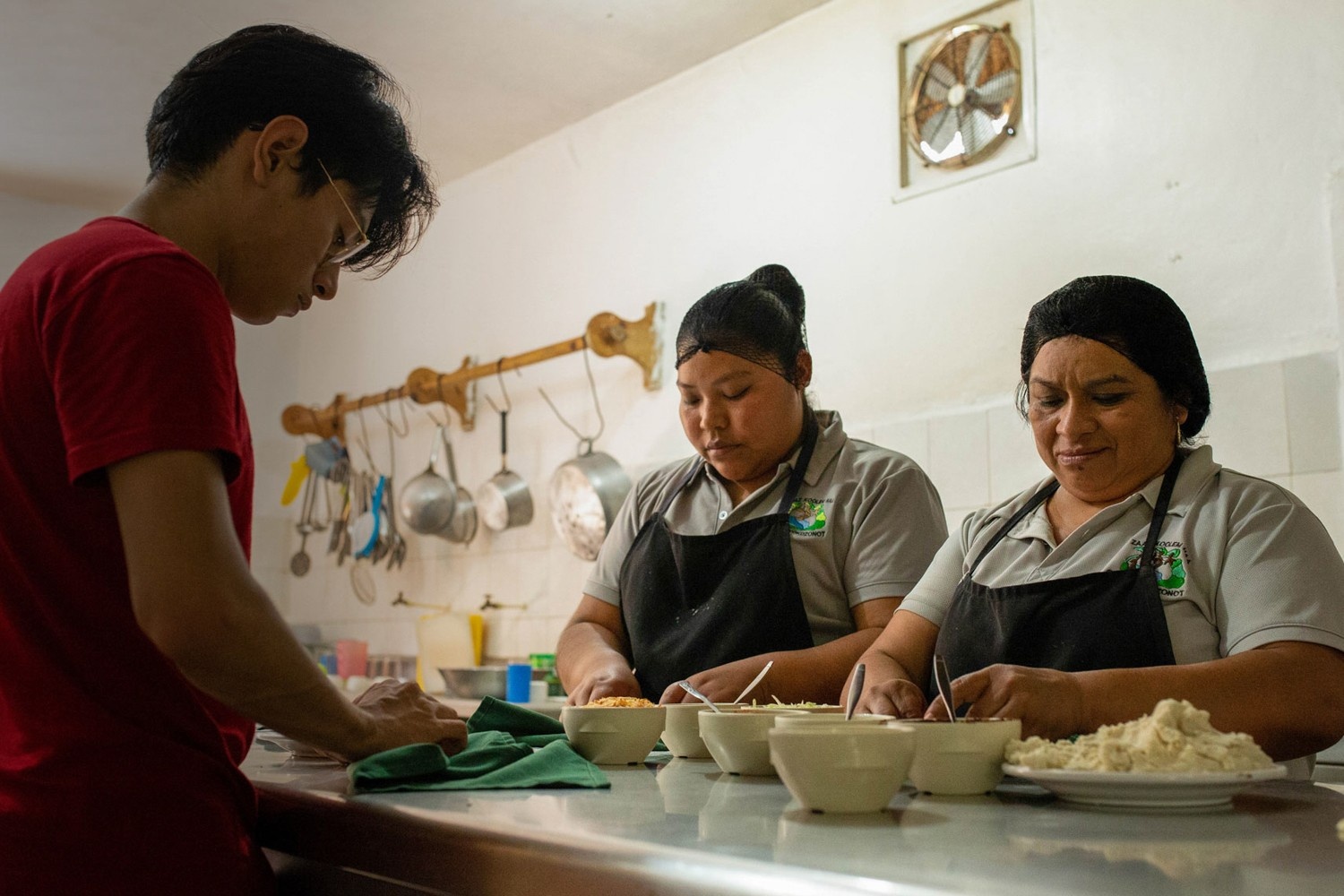
A cooking class at the Zaaz Koolen Haa co-op. Courtesy of Secretaria de Fomento Turistico de Yucatan.
A few miles farther east, in the town of Río Lagartos inside the Ría Lagartos Biosphere Reserve, the Xplore family co-op runs boat tours built around the area’s famous flamingos. Guests slip through the reserve watching for crocodiles and bright pink flocks, then head to the surreal Las Coloradas pink lagoon to learn what gives it its neon hue. Along the way, one can opt for a traditional Mayan mud bath.
For a closer look at the coastal ecosystem, head to San Crisanto. Local organizations work with research institutions to protect the mangroves and monitor native species like crocodiles and tropical birds. Residents share that knowledge on small-boat outings and guided walks through salt flats and coconut groves. Along the way, they explain how these landscapes support local, small-scale industries.
Cenote Escapades
Cenotes, freshwater sinkholes formed from collapsed caves and sacred in Mayan culture, dot the peninsula and have become popular swimming spots. Many are overcrowded, which makes quieter cenotes like Yokdzonot feel special. In addition to swimming in clear water, visitors can zipline or rappel over the cenote, eat regional dishes at the on-site restaurant, and spend the night at the simple campsite.
Another standout cenote destination is Cenotillo, a tiny town deep in the jungle at the peninsula’s northern tip. The main draw is Cenote Xooch, cared for by a group of young locals. Its appeal lies in its remoteness. The pool stays uncrowded because reaching it means walking or cycling four kilometers through the jungle. Stalactites frame the cave and vines spill down through the opening, making it feel like a secret in the jungle.
Visitors who want to stay the night can camp near the cenote or book cabins near town. They can also join an artisan-led workshop to learn the craft of traditional wooden toy making.
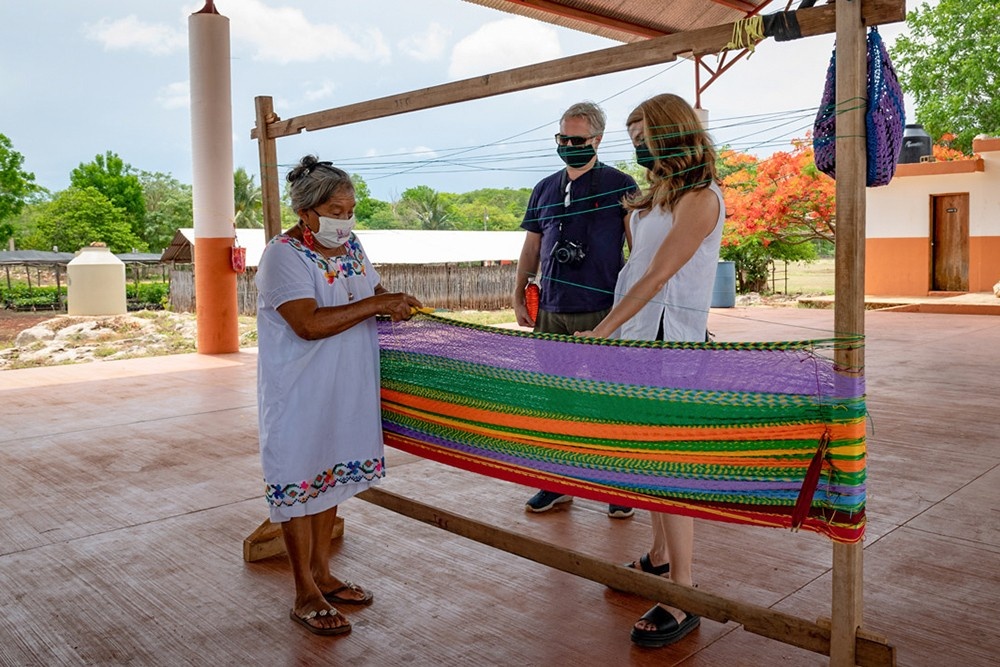
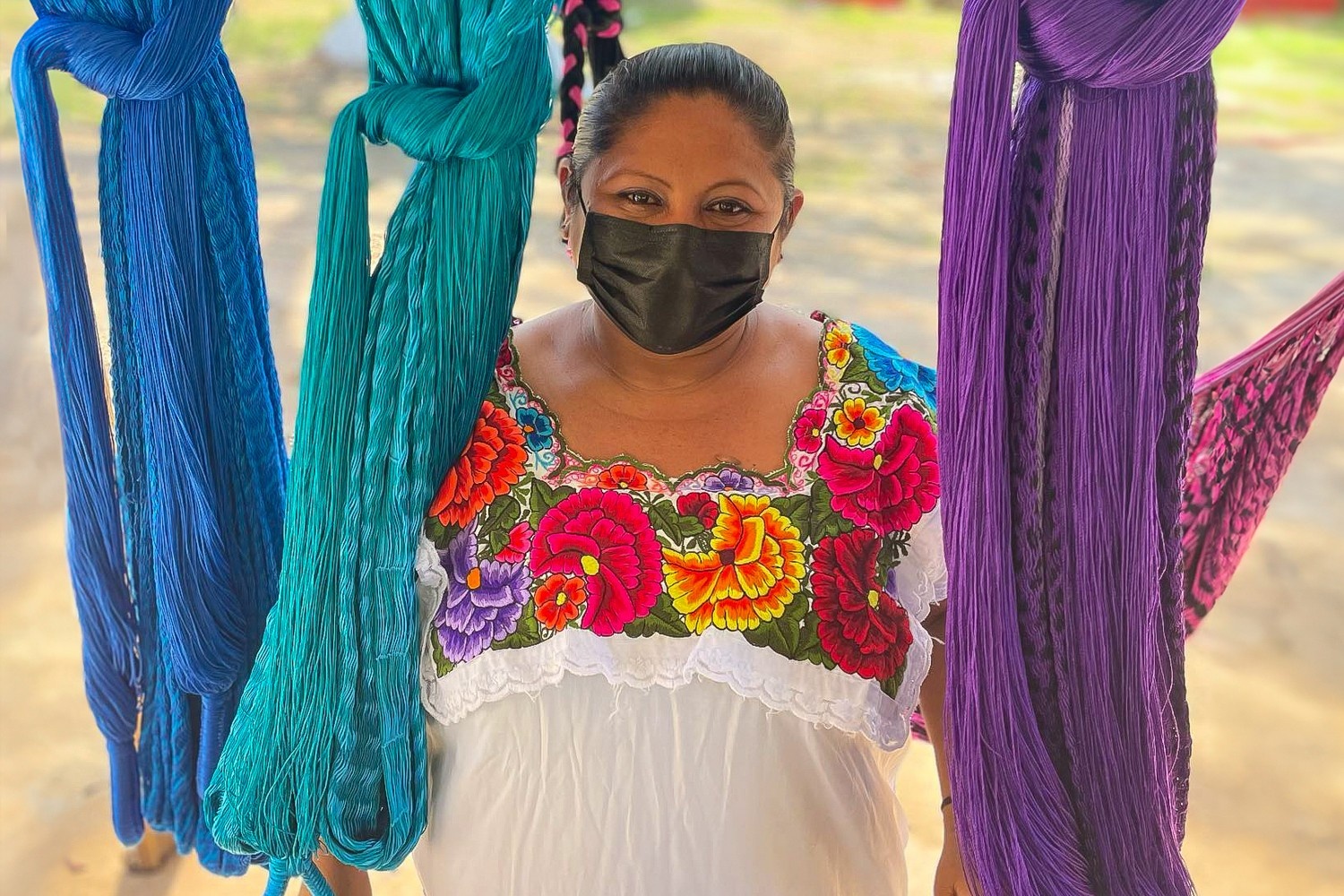
Hammock weaving demo in San Agustin. Courtesy of Secretaria de Fomento Turistico de Yucatan.
Diverse Cultural Practices
Defensive walls, an acropolis, a palace, and other ruins make the Yucatec-Maya archaeological site of Ek’ Balam one of the peninsula’s major stops. Instead of squeezing it into a quick day trip, travelers can go deeper with the Unajil Ek Balam community co-op. Guests sleep in simple, comfortable cabins, tour the surrounding milpa agroecosystem, and join guided town walks to learn skills like tortilla making, hammock weaving, and traditional embroidery.
In Kaua, on the outskirts of the Chichén Itzá complex, community members rebuilt a traditional Mayan house and town layout through the Pujulá Aldea Maya Viva project. Visitors watch palapa construction up close, learn about henequen and rattan products from Kaua artisans, and see traditional irrigation systems still at work. Because most of Chichén Itzá’s monuments can only be viewed from a distance, this hands-on experience gives a more grounded sense of everyday Mayan life.
In San Agustín, the Aktun Chen Ku co-op offers another window into Yucatán agrotourism. Community guides walk guests through agricultural and craft practices such as woodworking, crop harvesting, hipil embroidery, and medicinal plant production. Jungle bike tours introduce regional plant and animal life, while forest management outings show how residents care for and use native tree species.
How to Book
The easiest way to find out more about any of these destinations, or to book an activity, is directly via the Co’ox Mayab website.
Their WhatsApp number is another great way to get in touch, discuss possible tour options, and request custom activities. Reach them at 999 447 8395.
If you fly through Mexico City (MEX), you can connect to Cancun (CUN) or Merida (MID) on Aeromexico, Volaris, and Viva Aerobus.
All destinations are just a stone’s throw away from the capital city of Merida, making them ideal for a day trip.

Regina is a travel content writer and editor with a strong interest in art and photography. A firm believer in community-based, ethical tourism, her writing is a love letter to her home state of Yucatan and the awe-inspiring destinations she’s had the opportunity to visit. She’s passionate about exploring different cultures and relishes the freedom that comes with solo traveling. Her spare time is usually spent by the ocean, trying new food, or plotting her next adventure. Follow her work on LinkedIn.
North Stars: Community Support, Heritage Value, Wildlife and Ecosystems