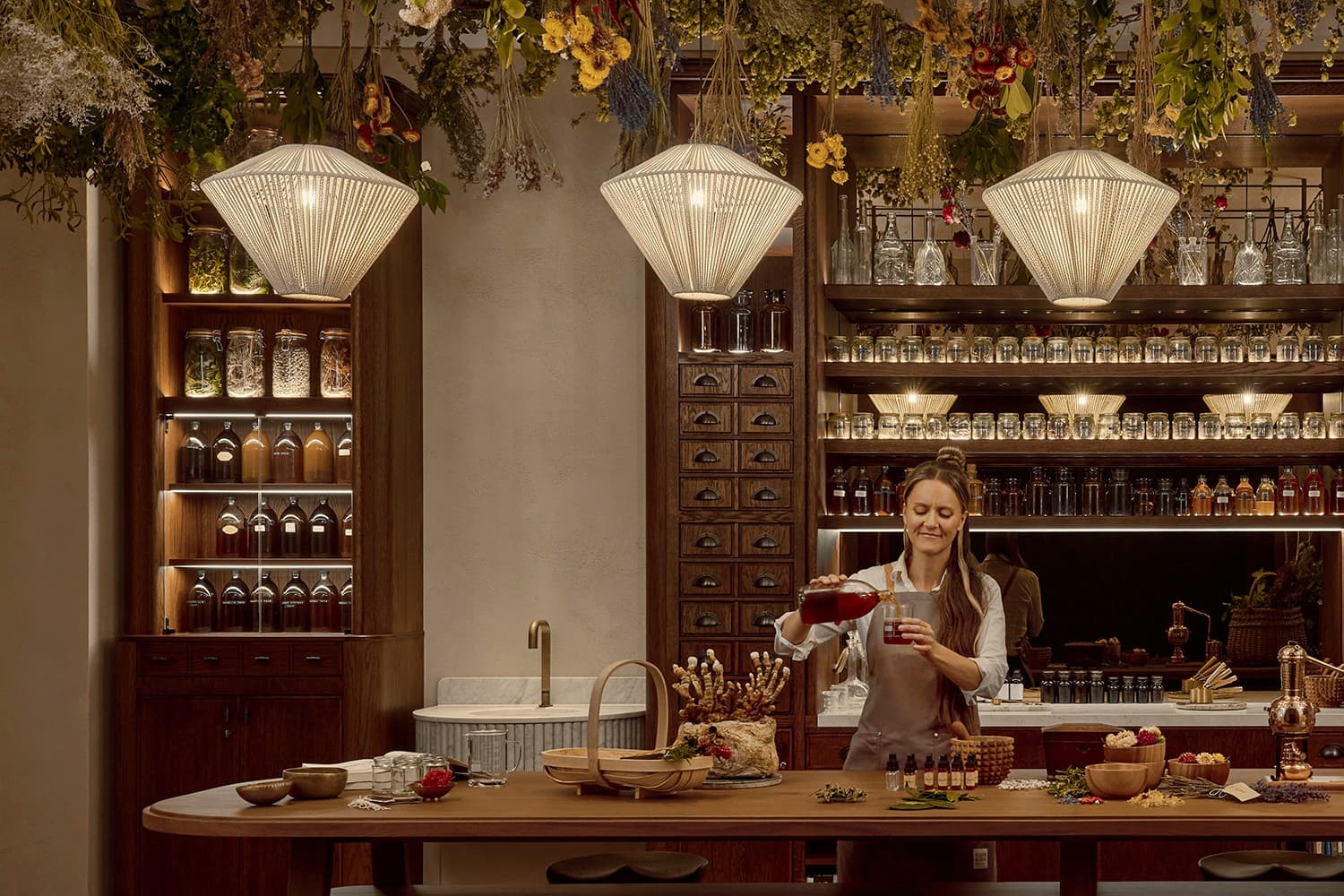
“Guests have moved well beyond the standard spa menu and are looking for something more intentional, more rooted.”
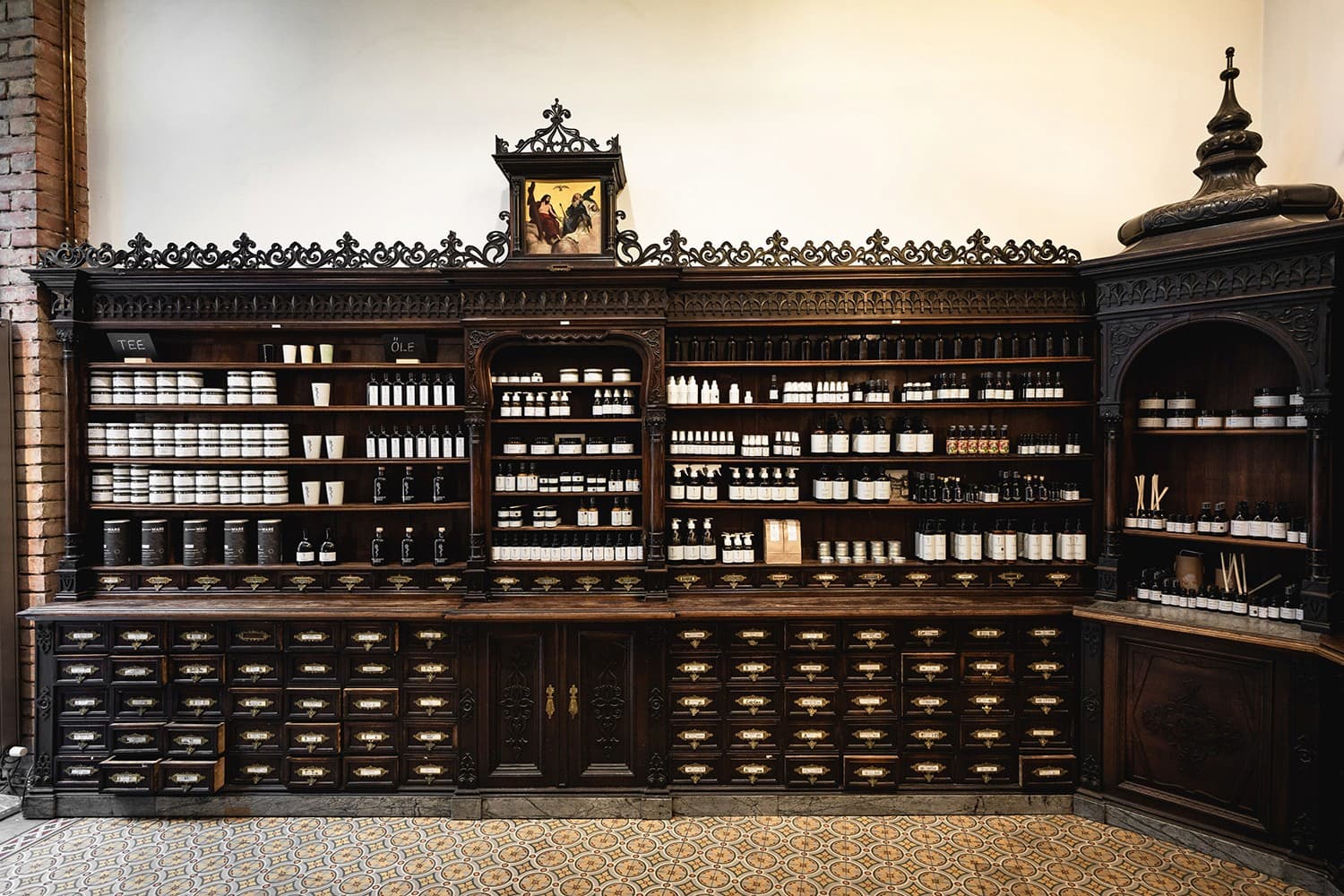
Inside the Saint Charles Apothecary. Courtesy of Botanic Sanctuary Antwerp
It’s a sweltering summer day in Antwerp. Yet, inside the Botanic Sanctuary Antwerp hotel, the Saint Charles Apothecary offers instant reprieve. The hexagonally tiled floor emanates coolness, and neat shelves line the walls, arrayed with rows of meticulously labeled bottles. Protected as a heritage feature, these cabinets have not changed since the hotel’s days as a monastic hospital. Their function remains the same: displaying ointments and treatments used for all manner of ailments and maladies.
From the depths of history, the humble apothecary has returned. Amid the wellness boom, the apothecary — a place or person dispensing herbal remedies — has found a fresh, modern market in consumers seeking natural, healthy products. And luxury hotels catering to wellness-seeking travelers have caught on. Now, a growing number of high-end properties have resident herbalists on staff for guests. These trained professionals prescribe bespoke natural treatments, administered through face-to-face consultations or guided experiences. By the end, patrons leave with personalized solutions and advice for general health or cosmetic concerns.
“Guests have moved well beyond the standard spa menu and are looking for something more intentional, more rooted,” says Gregory Unrein, a pharmacist-herbalist at the Hôtel du Couvent. “The apothecary is having a remarkable moment in luxury hospitality — and frankly, it’s long overdue.”
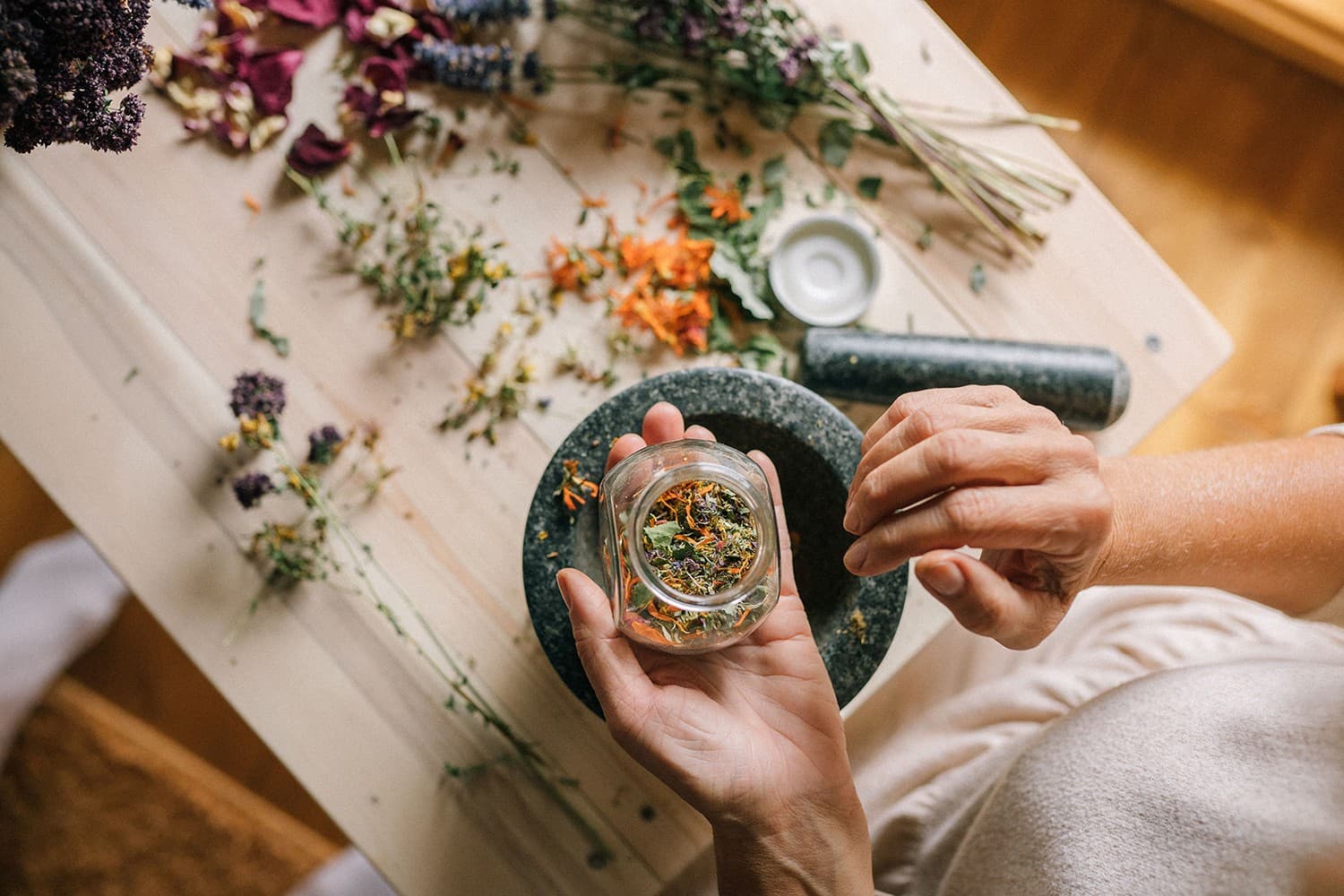
Herbalists use natural ingredients to create health products. Courtesy of Pexels
Why Demand for Herbalists Is Growing
The rise of resident herbalists at luxury properties is the perfect amalgamation of multiple trends, from demand for ultra-personalized experiences to consumers gravitating toward natural products. As many hotels now have on-site gardens and greenhouses, herbs and plants can come right from the property as well.
Many of the biggest names in luxury hospitality have gotten on board, including Six Senses. At the Alchemy Bar at Six Senses London, alchemist and medical herbalist Rebecca Collison-Walker draws inspiration from regional herbalism practices to create bespoke products like tinctures for patrons.
“A lot of people are looking to support their health holistically and this is where herbal medicine can be really beneficial,” she explains. The Six Senses belief that nature holds the answers to living well dovetails nicely with herbalism’s earthy roots. “Rather than simply treating individual symptoms, we aim to understand and address the root cause of an imbalance, creating herbal prescriptions tailored to each guest following a comprehensive consultation.”
Alchemy Bar prioritizes organic, biodynamic, and traceable herbs for its treatments — “celebrating the connection between people, place, and seasonality.” Plants come from specialist suppliers like gardeners and foragers, and featured herbs also change throughout the year, reflecting what’s fresh and available.
“Offering herbalist services is a natural extension of our integrated wellness philosophy, reconnecting guests with time honored healing traditions while providing personalized, preventative approaches to wellbeing,” adds Mark Sands, the brand’s Vice President of Wellness. Different versions of the Alchemy Bar experience can be found across the Six Senses portfolio, often as staff-guided session experiences.
Hotel Herbalists Around the Globe
Another lauded property to offer resident herbalist services is the Hôtel du Couvent in Nice, France. A former convent dating back to the 17th century, it’s now a Michelin Key and World’s 50 Best retreat. Here, in an on-site garden, Gregory Unrein follows in the footsteps of monks and nuns, cultivating medicinal herbs for the hotel’s high-end clientele.
“Guests come to me not to look at jars on shelves as if visiting a museum, but because they have a real need,” he says. Referencing a crisis of trust and increasing wariness of pharmaceutical solutions, Unrein notes that guests have “a genuine desire to understand what they’re putting into their bodies.” His sessions function as private one-to-one consultations, often paired with a guided botanical walk through the herb garden. Unrein has found that many guests return the following morning to talk further, and request their personalized blend be shipped home afterward.
And examples of the trend can be found elsewhere around the globe. In the English countryside of Hampshire, Heckfield Place leans on herbalism for naturopathic treatments. At The Beach Samui in Thailand, herbalist pharmacists help recommend and curate plant-based health regimens. Austria’s Hotel Der Brandstetterhof has its own herbal teacher to instruct guests in the benefits of Tyrolean herbs.
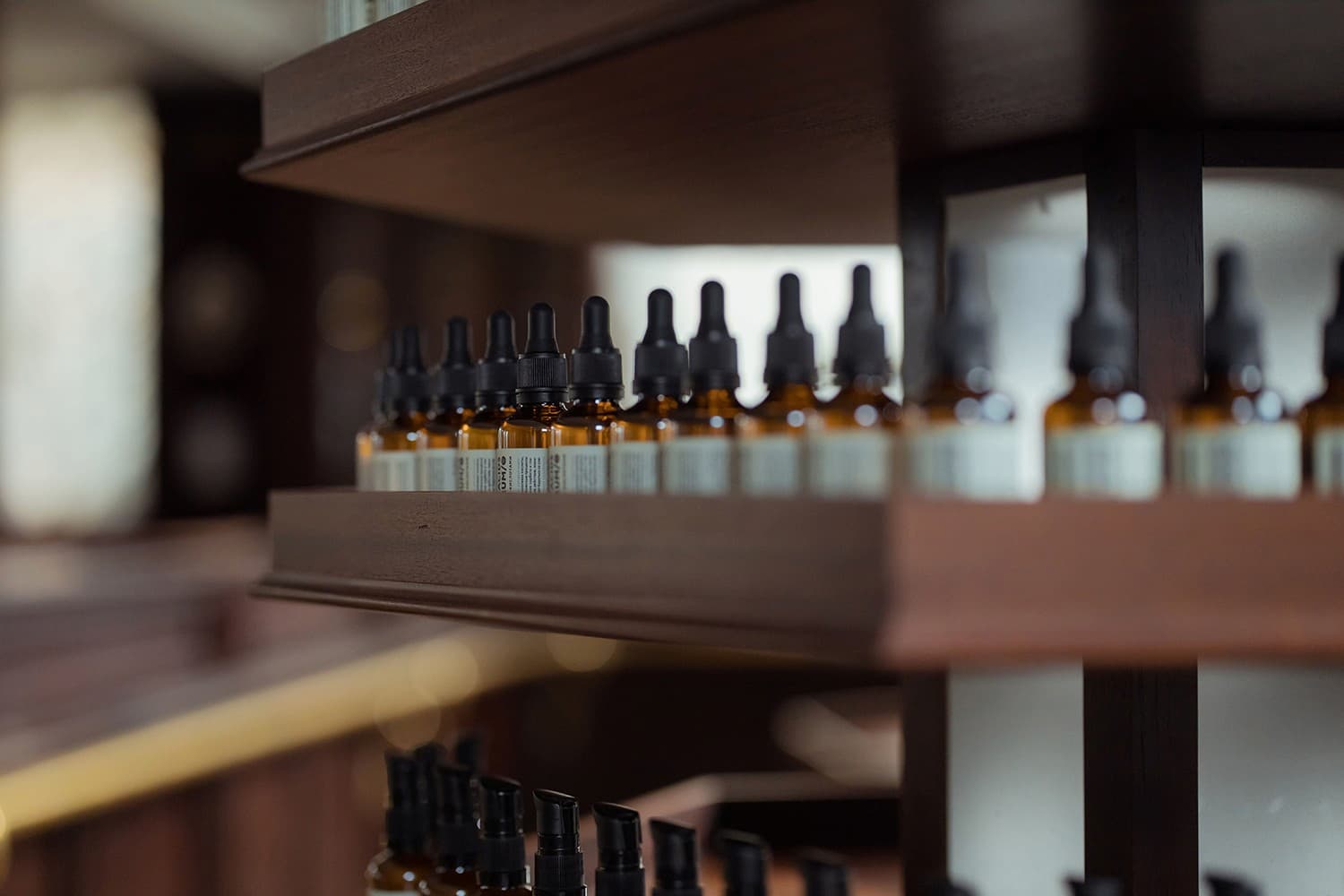
Herbal cures come in a variety of forms. Courtesy of Pexels
The Science Behind Herbalism
Beyond wellness and luxury experiences, the “resident herbalist” movement also encourages guests to reclaim intergenerational plant knowledge.
Herbalism, also known as phytotherapy, is an alternative medical practice that combines ancient and modern plant knowledge. Active compounds in plants bind to receptors in the human body, and for non-life-threatening ailments, research suggests these herbal medicines can provide natural relief. Different herbs offer different benefits. For instance, lemon balm promotes calm, mugwort stimulates digestion, and hawthorn is said to support cardiovascular and circulatory health. These herbs can be prepared in a variety of ways, from tinctures to teas to topical treatments like lotions.
While the practice is alternative, the implementation is by-the-book. Trust and safety are key, so hotels turn to trained, licensed practitioners with verified credentials like Collison-Walker and Unrein. Collison-Walker graduated from one of the only colleges in the United Kingdom that offers accreditation in the field. She’s also a member of the National Institute of Medical Herbalists. Unrein previously worked as a pharmacist.
“We are not gurus. We are not shamans,” asserts Unrein. “My background is as a Doctor of Pharmacy — I bring a rigorous, rational, scientific framework to everything we do. When I recommend a plant, it is because the evidence supports it, whether that evidence comes from clinical research or from centuries of documented traditional use.”
Helpful Herbs and Humans
For hotel herbalists, helping guests identify an issue and improve their quality of life is one of the job’s biggest joys. And it’s not solely about herbal expertise. In hospitality, warm and genuine customer service sets the experience apart.
“A guest had booked in for a consultation to address feelings of stress and anxiety which were impacting their ability to function on a daily basis,” Collison-Walker recalls of one memorable encounter. The patient left with a bespoke herbal mix and some dietary and lifestyle advice. A month later, they reported a noticeable increase in mood, energy, and digestion. “They said the herbs had enabled them to feel confident going about their daily life and made a profound impact on them.”
Still, the biggest takeaway wasn’t actually physical. “The patient said one of the most valuable parts of the experience was feeling heard and the depth of understanding of how different pieces of their health fitted together,” Collison-Walker shares. There is something inherently luxurious about feeling understood. This is just one of the reasons herbalists have found a natural niche in the luxury hospitality world and are thriving.

Eibhlis Gale-Coleman is a freelance travel writer from the UK. She has followed stories across Arctic tundra and Namibian deserts, and her work has appeared in major publications such as National Geographic, Condé Nast Traveller, and BBC Travel. Join her at eibhlisgalecoleman.uk
North Stars: Heritage Value, Production and Consumption, Wildlife and Ecosystems
More Stories
 CULINARY, DRINK
Get to Know the Producers Behind the J.P. Bourgeois Portfolio
 CULINARY, DRINK
Where to Taste Wine in Willamette Valley
 DRINK
DRINKMeet the Distillery Making Vodka From Fog
 DRINK
DRINKSake’s Next Step: How Japan’s Rice Wine Is Evolving
 DRINK, HOME
The Buzz on InFizz: Breville’s Carbonator Elevates Sparkling Water