“Not all fish are equal.”
Sitting on the beach of our island home in Southeast Asia, the ocean before me always performs a convincing impression of perfect health. Intellectually, I may understand that the ecosystems beneath its surface are imperiled. But at the same time, so much of that peril happens at depths and distances that render it abstract.
When forests get mowed down, we see the scars from space. As rhinos and orangutans dwindle, we diligently track their number. But no one can count the fish in the sea. Few ever witness the daily damage done by trawlers way offshore. How can those of us on land act on something so far beyond our sight? It starts with what’s on our plates, and understanding exactly what sustainable seafood really means.
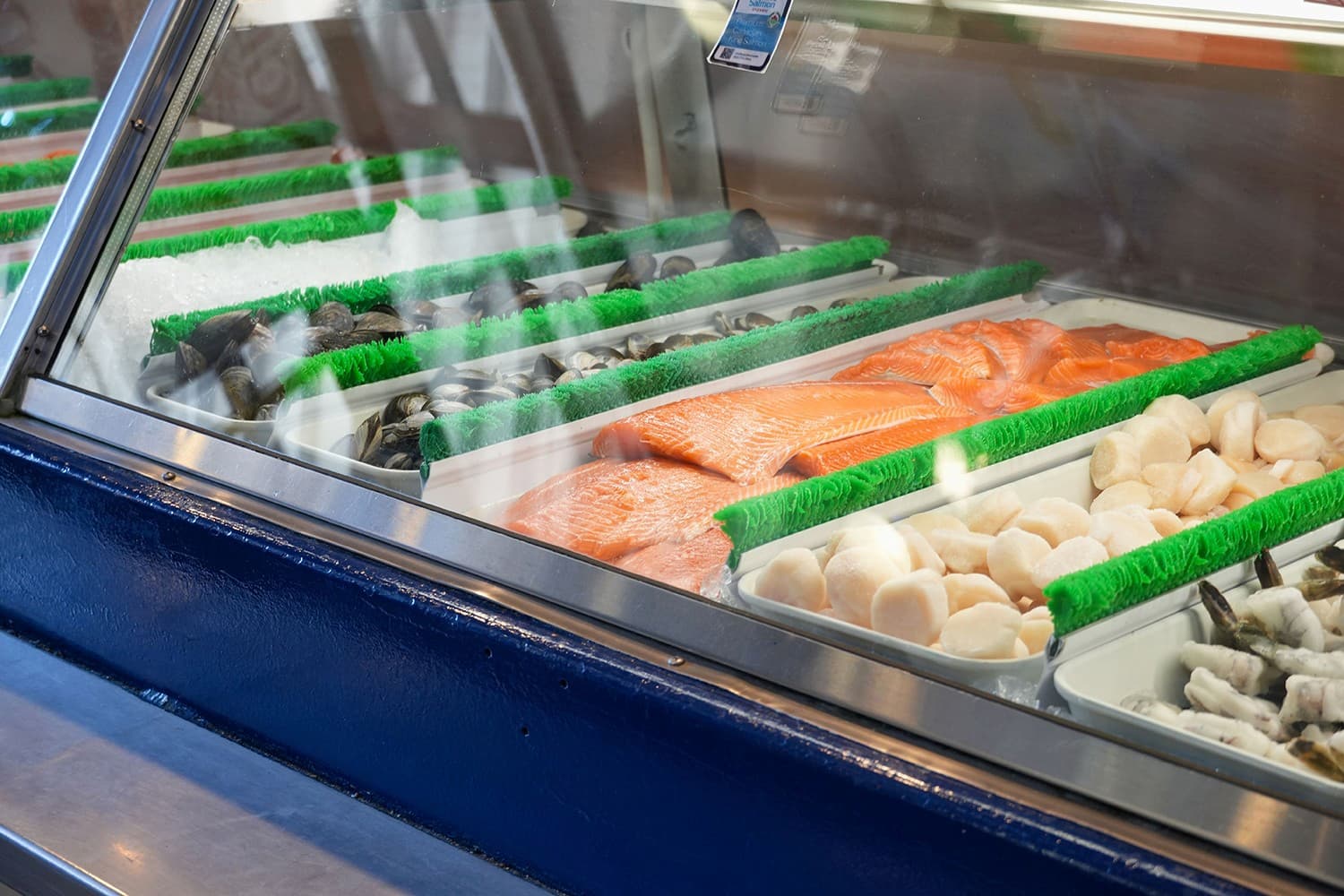
When it comes to sustainable seafood, buying local is best. Courtesy of Pexels
What Does Sustainable Seafood Even Mean?
As it turns out, that might start by ditching the word sustainable altogether.
“It carries no weight,” says Ryan Nienaber, founder of Greenfish in Cape Town. “If I said, let’s go sustainable poaching for shark fins tonight, just because I put the word sustainable in front of the action, doesn’t make it right.” He encourages us instead to think about seafood choices in terms of impact. “I know we [at Greenfish] have an impact on the ocean, I can’t avoid that, but we’re having a much smaller impact.”
How we define that impact depends on which slice of the industry we’re discussing. Sustainable farming is different for a cattle ranch and a rice field, and seafood is no exception: wild fish and farmed, oyster beds and tuna schools, an Arctic fjord and an island reef. Each comes with its own waters, labor concerns, and geopolitical pressures. In other words, it’s complicated.
The stakes, however, are not. More than three billion people rely on fish and other marine species as a significant source of protein, according to the UN Food and Agriculture Organization. The same agency reported in June that the share of sustainably fished marine stocks has now fallen to 62.4%, a new low. Additionally, the International Labour Organization estimated that more than 128,000 fishermen were trapped in forced labor aboard fishing vessels in 2021, a likely understated figure.
So for shoppers standing in the seafood aisle wondering how to make better choices, here’s the simplest breakdown, with help from people working to improve the industry from within.
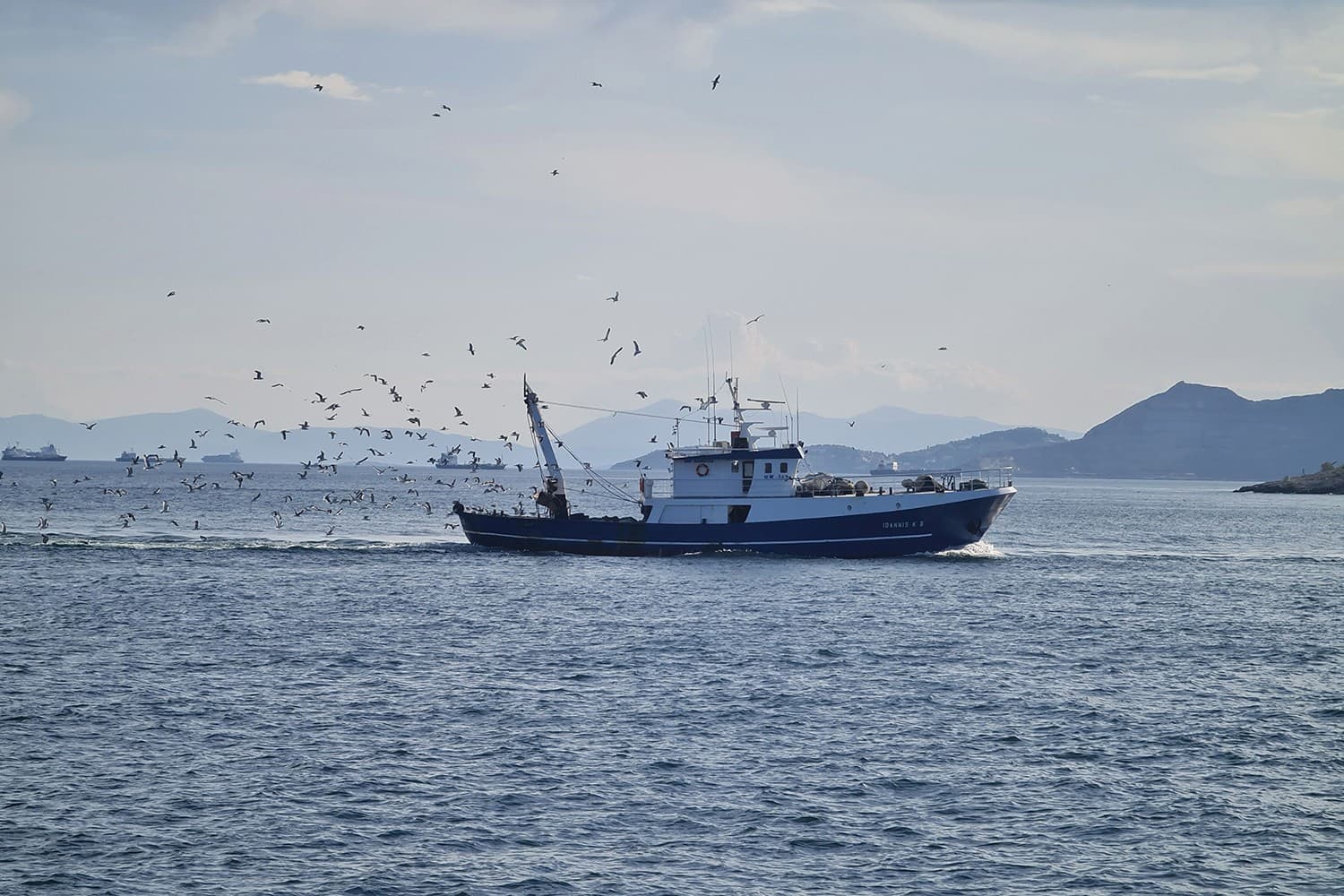
Human rights violations are a persistent issue in the seafood industry. Courtesy of Pexels
Is There Seafood to Avoid Entirely?
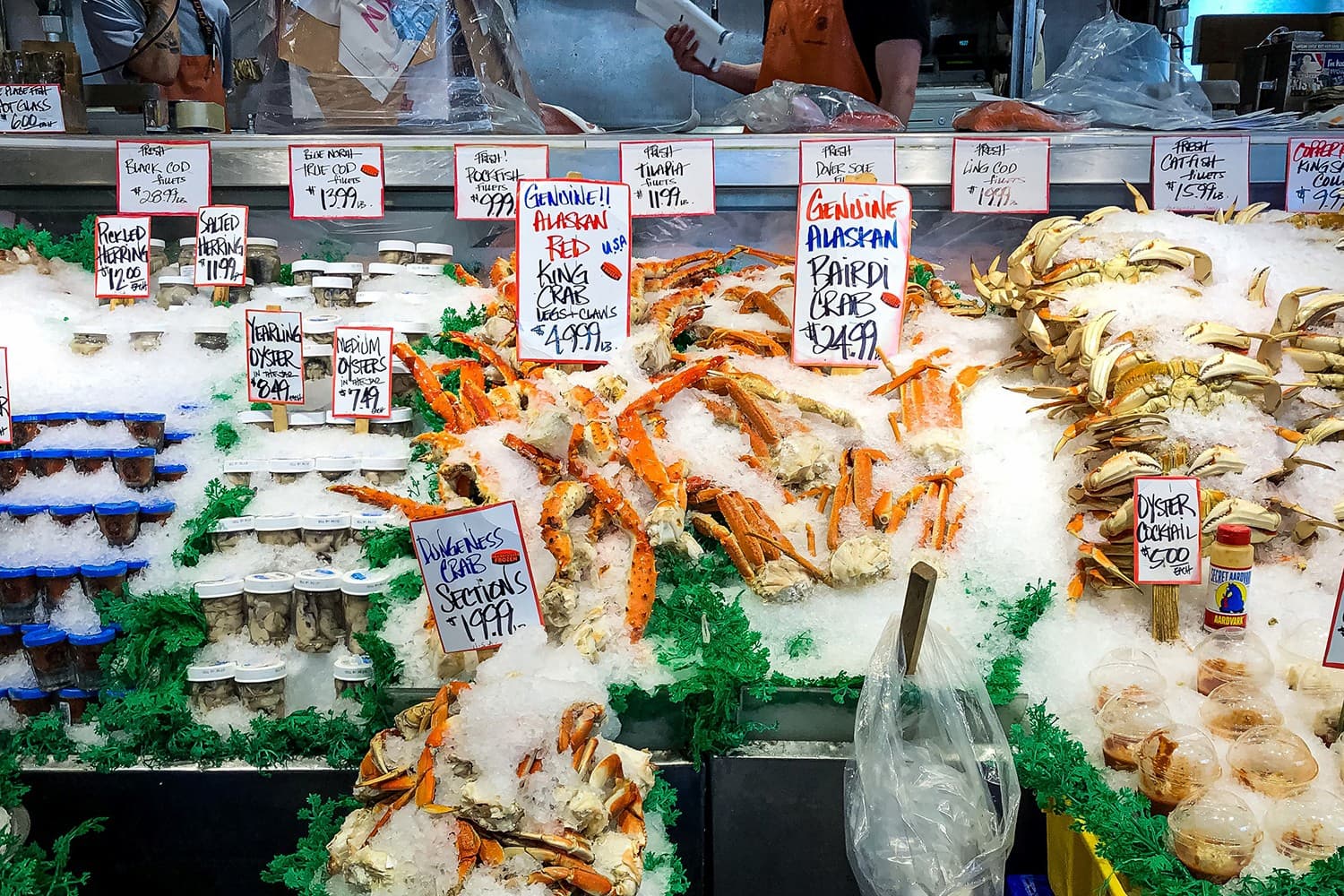
Short answer, yes: the cheapest ones. A rock-bottom price means costs were cut somewhere. On the water, the corner most often cut is the crew. Shannon Hardisty, sustainable seafood consultant and former social responsibility director for the International Pole and Line Foundation, has one hard no: squid.
Squid vessels fish at night under blinding lights, and crews work in dangerous conditions. “Various organisations have told me, anecdotally, that at least one fisher dies per month on these vessels in parts of Indonesia,” she says. “I can’t get that statistic out of my head.”
Her qualms are well-founded. According to a 2024 report from the U.S. Department of Labor, forced manpower is widely used in China’s distant-water fishing fleet catching squid. Aboard these vessels, fishers typically spend one to three years at sea with limited outside communication.
Tuna caught by distant-water longliners carries similar warnings, as the recent Bumble Bee lawsuit attests. And a series of investigations has documented harsh labor conditions in India’s shrimp farming sector.
Farmed Versus Wild
Then there’s farmed seafood, an industry much maligned for its environmental impact. Shrimp farming is likely the worst offender on habitat, widely cited as driving roughly a third of global mangrove loss. Carnivorous farmed fish, like salmon, often gets fed fish oil rendered from wild-caught fish. This shifts the pressure onto wild fish stocks. Crowded pens also breed disease, requiring heavy use of antibiotics, traces of which remain detectable on the ocean floor near farming operations.
Across both wild and farmed, the cheapest and least traceable products carry the most risk. Attempting a blanket boycott of one fish, however, could have unintended consequences, warns Jamie Padilla. As the Director of Strategic Engagement at FishChoice, Padilla spent 12 years organizing with the United Farm Workers before moving into seafood. Blacklists rarely consider the workers they claim to protect. “Supply chains are too varied,” Padilla explains. “Vote with your dollar where there is a meaningful opportunity,” is her advice. “But do not confuse consumer choice with the primary mechanism of change.”
Spotting those meaningful opportunities, though, means knowing how to read the package.
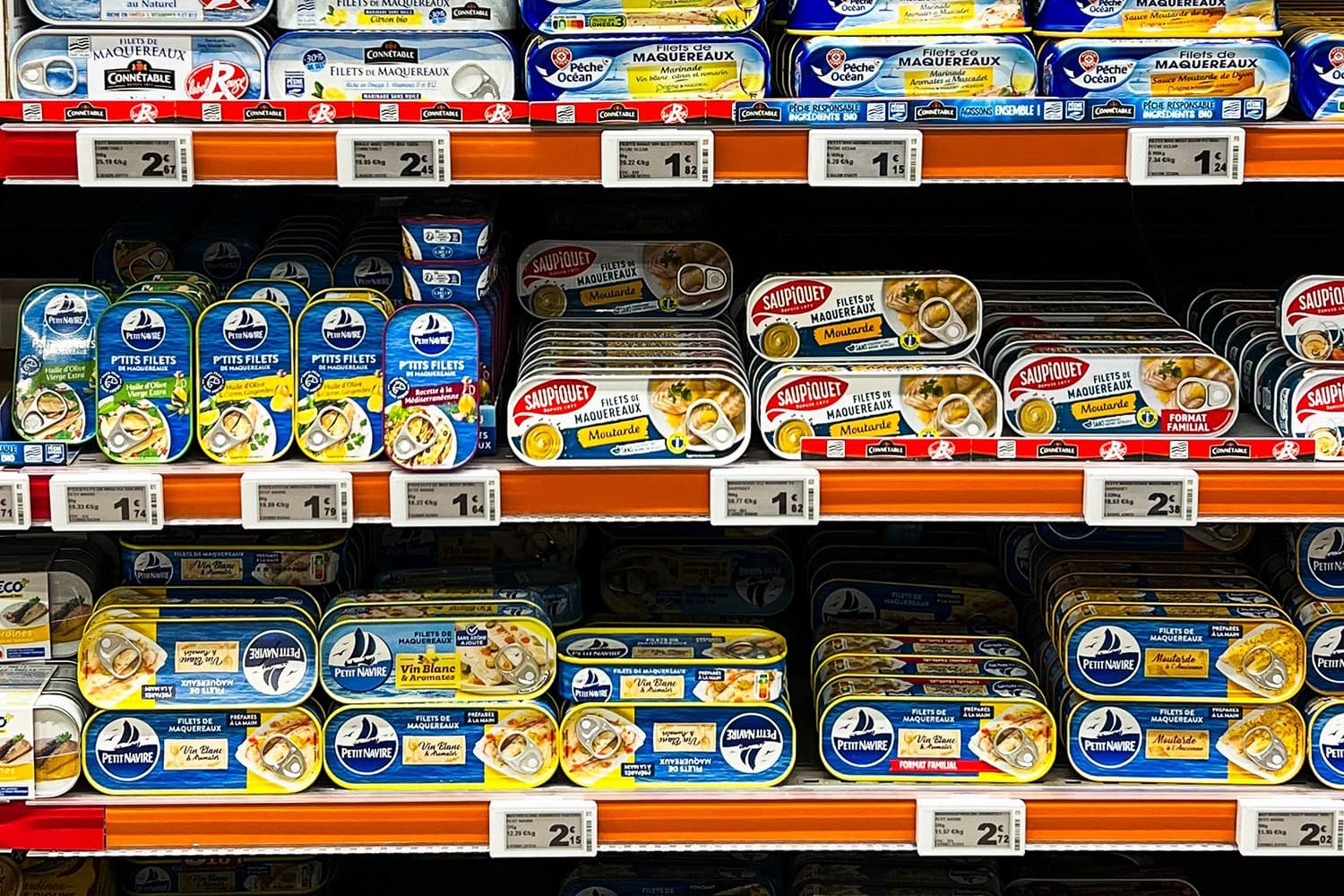
Labels and certifications only tell part of the story. Courtesy of Pexels
The Problem With Labels
Labels are where most shoppers put their trust, but it’s also where language can get slippery. Words like “natural” and “line caught” sound very eco, very artisanal. Yet Hardisty avoids them. The former means next to nothing, while the latter is intentionally deceptive. “The phrase ‘line caught’ can also mean it was caught by a long line vessel,” she explains, referring to an industrial method deploying thousands of hooks across dozens of kilometers.
Certifications carry another problem: scope. One might focus on ecosystems, another on labor abuse. As an example, the highly recognizable blue tick from the Marine Stewardship Council assesses fish stocks, ecosystems, and management. It makes no claim about crew conditions, and last December MSC removed third-party labor audits from its pre-entry requirements. It did this citing doubts about whether audits reliably detect forced labor. Padilla, who once worked at Fair Trade, reads that as honesty about limits. “The problem is not that the MSC label tells us nothing. The problem is that people often expect it to tell us everything.”
Farmed seafood has its own set of labels. The Aquaculture Stewardship Council’s green tick and the Global Seafood Alliance’s Best Aquaculture Practices are the two you’ll see most often on shrimp and salmon packaging. Both are more rigorous than no label at all. But a standard built around water quality and disease management is not making a claim about the mangrove that used to be there, or about who works the ponds. Rather than parsing the difference in the aisle, use Monterey Bay Aquarium’s Seafood Watch. This tool rates specific farmed products by species and country of origin and tells you in one search whether the shrimp in front of you is a green, yellow, or red choice.
Padilla’s rule of thumb is that certified is generally better. A credible label means defined expectations and at least some accountability. Hardisty rates Fair Trade USA’s seafood program highest for covering ecological and social impact together. And if a package mentions a FIP, or fishery improvement project, Padilla translates: “A FIP is therefore a pathway, not an endpoint.”
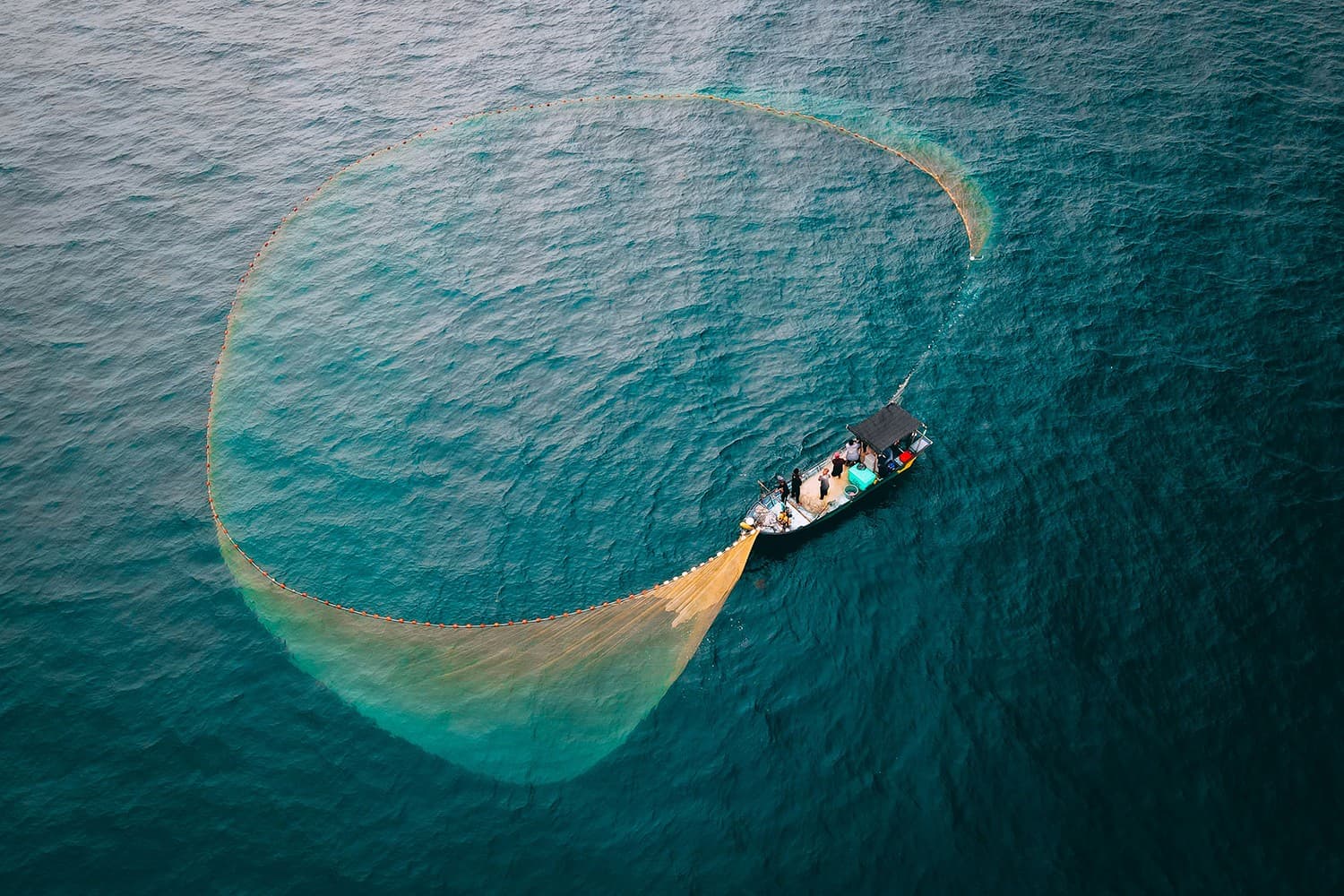
The means of harvesting is one factor to consider when buying seafood. Courtesy of Pexels
Who Caught It?
While some certifications tell how fishers are treated, the strongest guarantee in sustainable seafood remains simply knowing who caught the fish. The upside is, at that scale, the flavor is often far superior.
With Greenfish, Nienaber catches, on a very good day, around 20 tuna. Each is carefully handled, wrapped and, in his words, “babied all the way to shore.” Compare that to a fish crushed among thousands in a net, flesh flooded with lactic acid from stress.
The difference, of course, goes well beyond quality. Greenfish buys from small-scale fishers in communities up and down South Africa’s coast. Here, fishing is often the main source of income. That money stays in the micro economy. Nienaber explains how the money he gives to a fisherman might then be spent on a loaf of bread at a local cafe, and how “that cafe owner goes and spends it on ballet lessons for their daughter at the school down the road, and so on, and so on.” Industrial fleets intercept and sometimes reverse that flow, shipping earnings overseas. One fish feeds a neighborhood; the other feeds a balance sheet.
“Not all fish are equal,” Nienaber says, and gear is the reason. One-by-one methods, including pole-and-line and handline, use a single hook on a single line. Anything unintended goes back into the water alive. An industrial purse seine, by contrast, is a net up to two kilometers (over a mile) long that quickly closes around an entire school. A longline, as mentioned, trails thousands of baited hooks. By the time a catch is hauled aboard a vessel, it has usually been crushed or drowned.
Beyond the devastating impact on wildlife, lost industrial fishing gear also makes up a significant portion of ocean plastic, usually in the hardest-to-clean patches of sea.
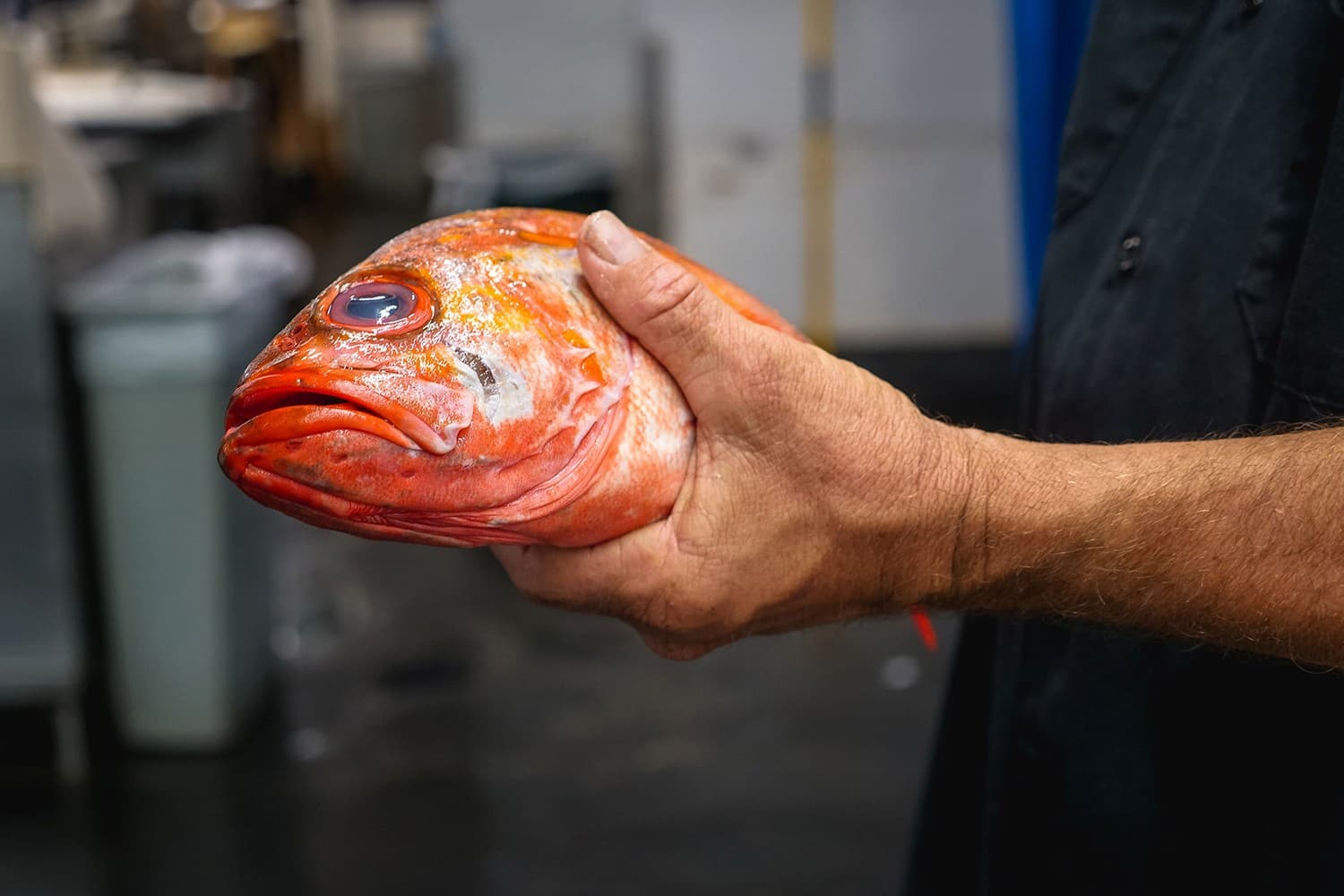
If you have questions about sustainable seafood, ask your local fishmonger. Courtesy of Pexels
Every Choice Sends a Signal
In the grocery aisle, look for three phrases: “pole and line,” “handline,” or “rod and reel.” Treat “line caught” with suspicion. Seek out Fair Trade USA-certified seafood where available. Then push the work upstream with Padilla’s single question for grocers and buyers: “Do you have a public responsible-seafood sourcing policy, and does it address both environmental sustainability and labor and human rights?”
At restaurants, borrow Ryan’s script: “Where is this fish coming from? How was it caught? Where was it caught? Who caught it?” Hardisty recommends asking the chef directly, because “any responsible chef will be able to answer that question.” If a menu says sustainable and the staff can’t explain it, she assumes “the word has been used to appease diners rather than as part of the establishment’s ethos.”
Finally, think about where your fish is from. Salmon on a menu in the tropics traveled thousands of miles to reach your plate, while something local and wild likely came in that morning. Then think about when. Fisheries close during spawning season so fish can reproduce before they’re caught. This is why the Marine Conservation Society advises checking that local, fresh-caught seafood wasn’t landed during its spawning window. Farmed seafood has no season. So if a species is there every week at the same price, it’s generally farmed or frozen instead of fresh.
Hardisty compresses the whole practice into six words: “Go local. Go one by one.”
Bottom line? Ask how it was caught. If nobody can answer, that’s the answer.
Bonnie is a Bali-based freelance writer specializing in a more eco-conscious brand of luxury travel, design, style and wellbeing. Her bylines to-date include Azure Road, Elle UK, BBC Travel, Artful Living, Upscale Living, BLLNR, Well + Good, The New Zealand Herald and many others. For more from Bonnie, you can subscribe to her Substack or follow Bonnie on IG @eco.luxury.bon.
North Stars: Certifications, Production and Consumption, Wildlife and Ecosystems