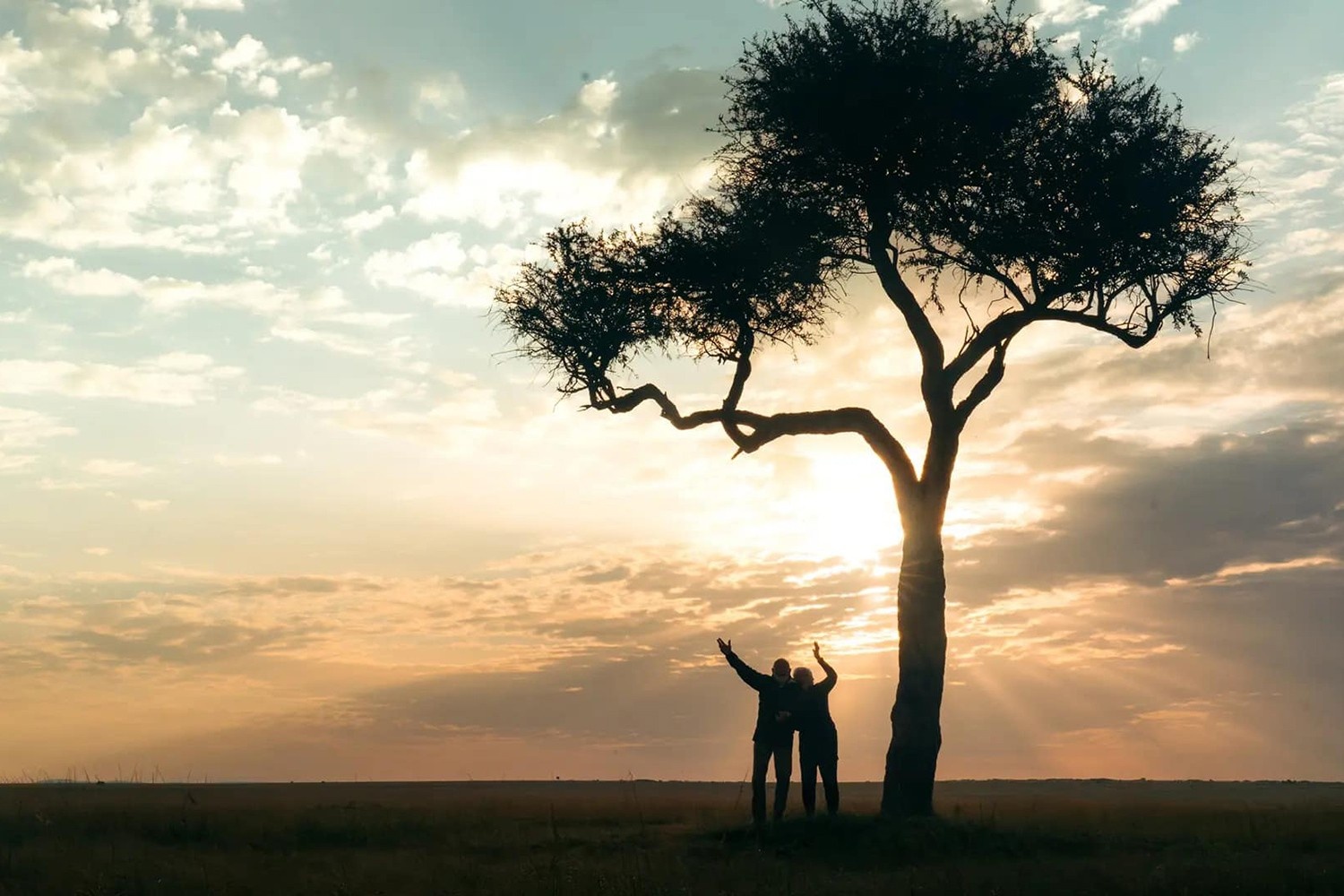
“Is my money supporting local communities? Is my presence a burden on the ecosystems and wildlife?”
Going on safari in Africa is the kind of trip that reorders how you see the world. But as travelers pay closer attention to the mark they leave, the questions get harder. Is my money reaching local communities or a multinational hotel chain? Is my presence a burden on the wildlife and the land? Does the lodge itself do harm? These are the right questions to ask, especially in fragile, often-exploited places now strained by overtourism. The good news is that a growing number of camps and operators are built for the eco-conscious safari-goer, and each one here is measured against the sustainability framework behind every Azure Road story.
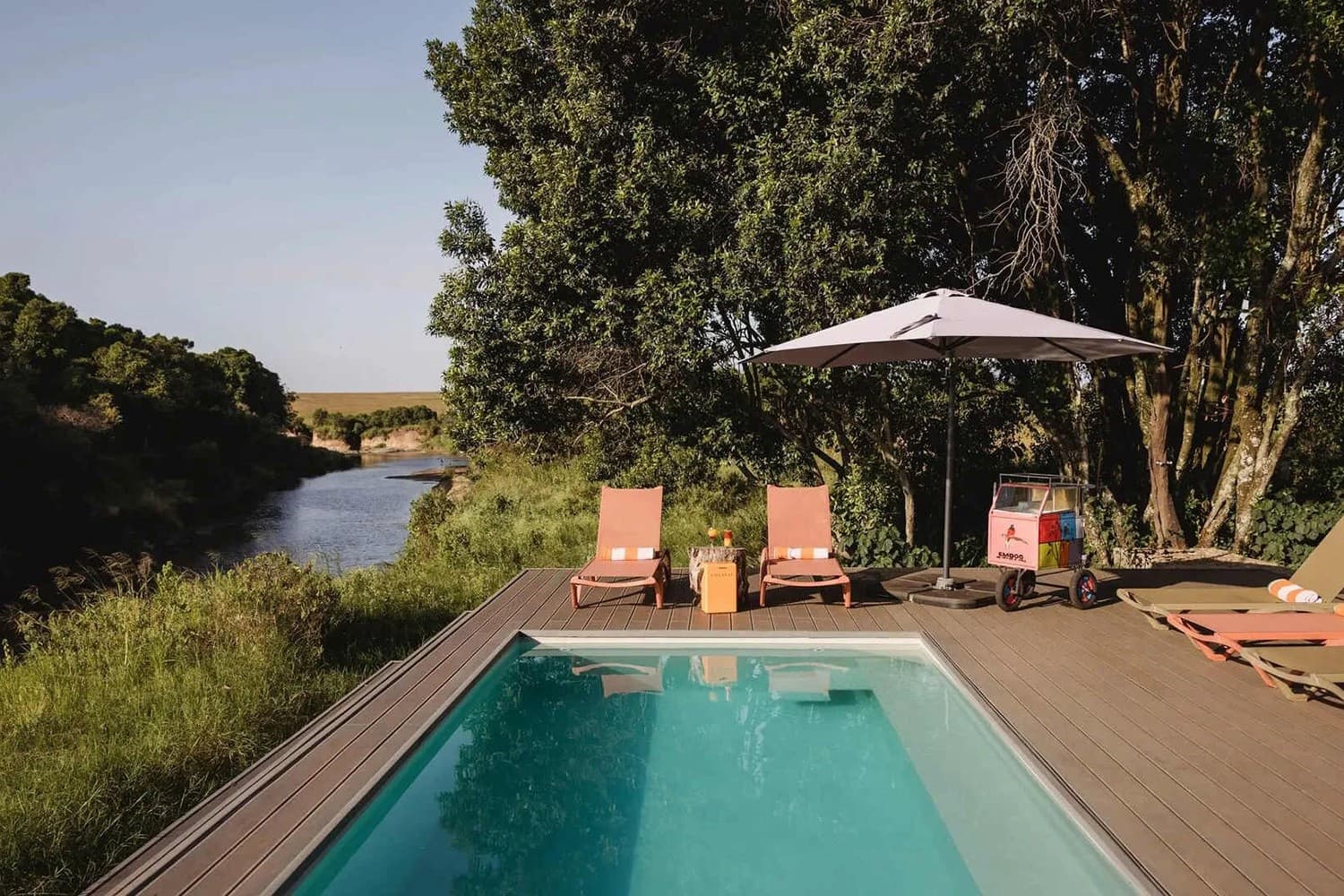
Relaxing by the river. Courtesy of Emboo River Camp Image.
Emboo River Camp
Best for: Community-owned, low-impact safari camp in Kenya
North Stars:



Tucked into a quiet, forested bend of the Talek River in the Maasai Mara, Emboo River Camp was Kenya’s first to run a full fleet of electric safari vehicles. The drives are whisper-quiet, which lets you get close to wildlife without the engine noise. Tents sit on raised wooden decks among the riverbank trees, with canvas sides that roll all the way up for floor-to-ceiling river views. The interior palette echoes the colors of the lilac-breasted roller, with handmade furniture from local artisans. Ensuite rain showers run on solar-heated water. More than 100 bird and wildlife species turn up around camp, and hippos sometimes graze just past the tents after dark. Days end with a massage in the bush spa or cooling off in a natural swimming pool near a bend where animals come to drink.
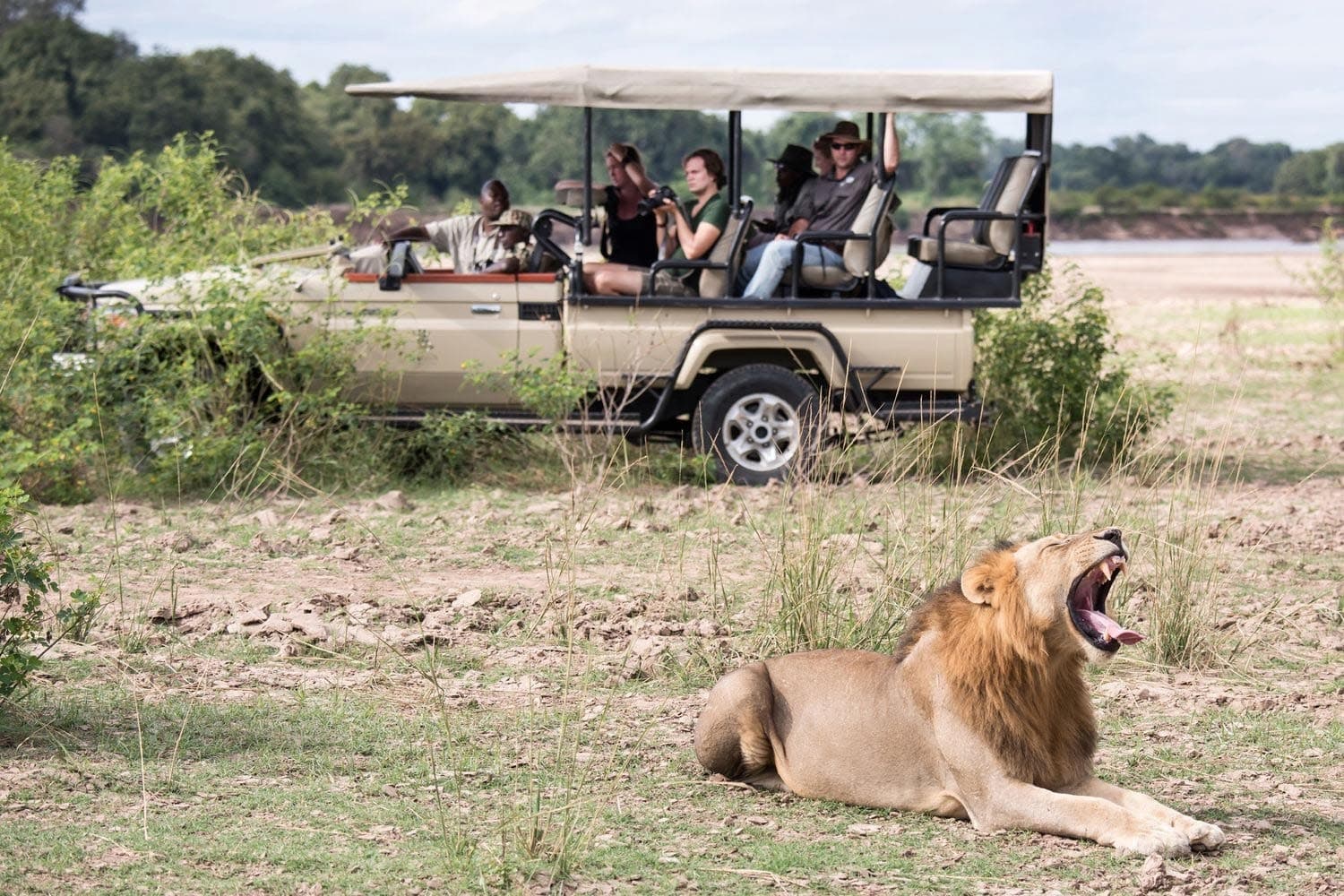
Spotting lions on safari. Courtesy of Green Safaris Image.
Green Safaris
Best for: Renewable-powered safari camps in southern Africa
North Stars:

Green Safaris runs a collection of lodges across Zambia’s major parks plus a beach camp on Lake Malawi’s Likoma Island, which makes a bush-and-beach trip easy to string together. The signature here is the silent safari: game drives in solar-powered electric Land Rovers, plus electric boats and mountain bikes, so you pass through the bush noise-free. On the Zambezi at Tongabezi, the company launched the world’s first electric dhow for quiet river cruising. Each lodge has its own character: Chisa Busanga, in the Busanga Plains, puts guests in woven nest-like pods elevated above the floodplain. All run on solar power and use local materials and native building techniques. The company also funds reforestation on Likoma Island, education programs for children, and support for area artisans.
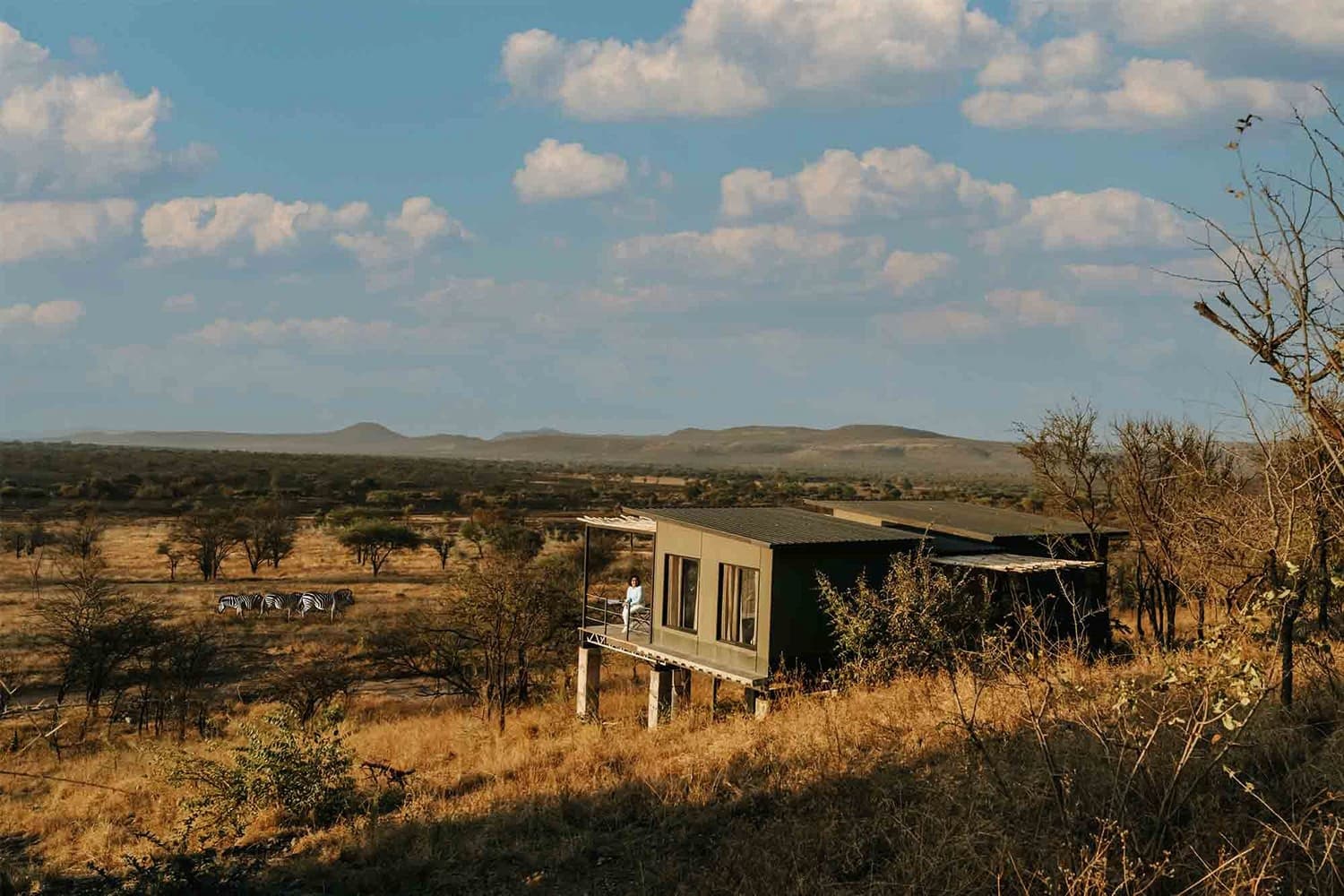
Wildlife-watching from one of Nimali's camps. Courtesy of Nimali Africa Image.
Nimali Africa
Best for: Conservation-led safari camps supporting wildlife recovery
North Stars:
Nimali Africa runs a three-camp circuit through Tanzania‘s north, in Tarangire, the Serengeti, and the Mara, each deliberately small so safaris feel personal. The camps run on solar power, have strict no-plastics policies, and source produce from nearby farms. At dinner under the stars, staff light lamps that hang from the limbs of baobab trees. The lodges make the lamps from their own wine bottles, sending the empties to SANAA, a workshop in Arusha where artisans who have disabilities cut and polish the glass by hand. Staff rotate across all three camps, so the same standards and familiarity follow you through the circuit.
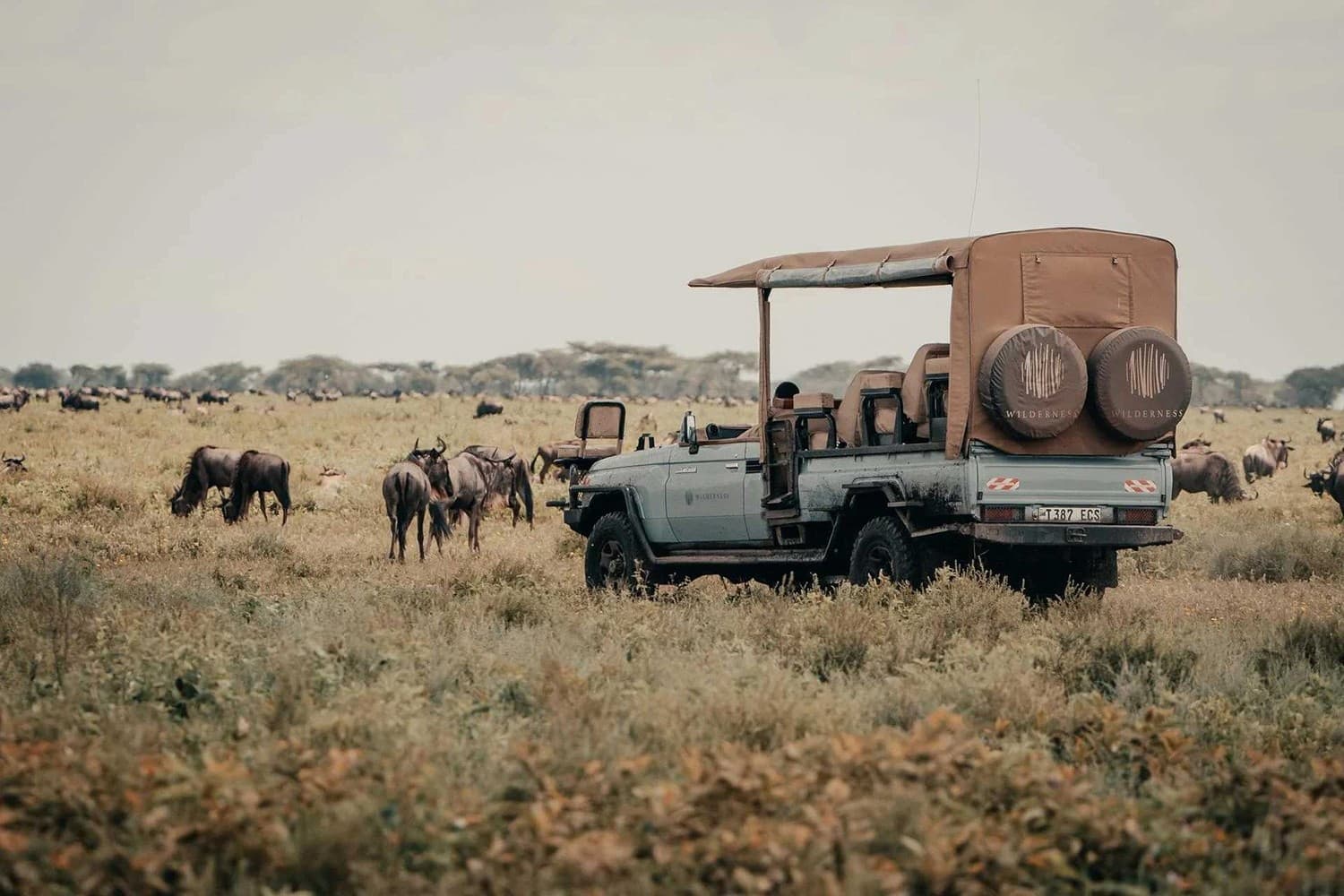
Exploring with Wilderness Safaris. Courtesy of Wilderness Safari Image.
Wilderness
Best for: Large-scale conservation safaris protecting wild landscapes
North Stars:
Founded in 1983 by two Botswana guides, Wilderness was created to keep safari revenue in the communities it serves. The company runs more than 60 camps across eight African countries and helps protect millions of acres of private concessions, with a goal of doubling that by 2030. Staying at a Wilderness camp in the Okavango Delta or the Namib means rooms opening onto vast private wilderness rather than crowded parks. Camp designs don’t follow a template; each takes its character from the region it operates in. Come evening, guests share meals while swapping stories of the day’s sightings. Beyond safaris, the collection now runs gorilla trekking in Rwanda, boating, and stargazing.
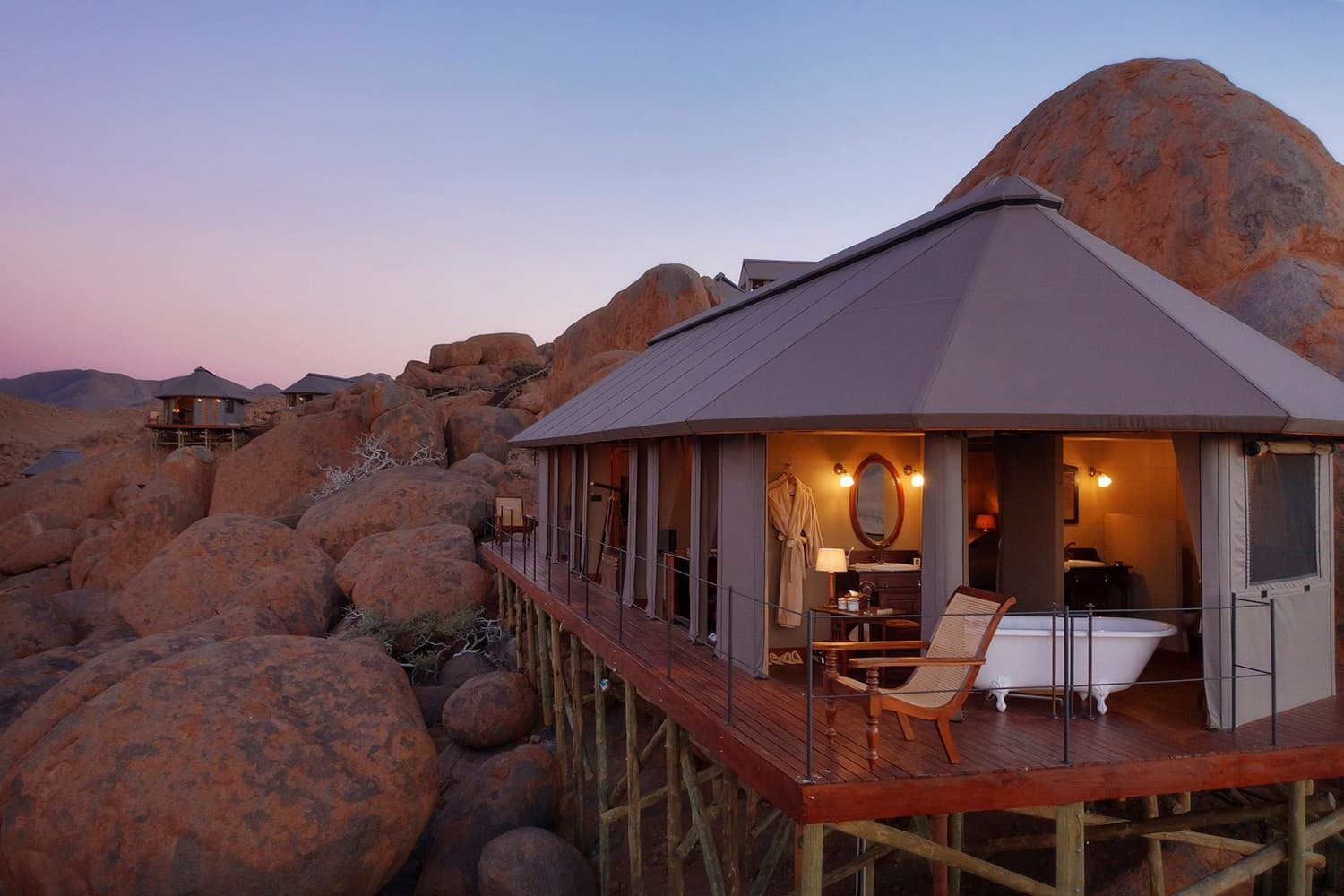
Staying at Zannier Sonnop. Courtesy of Zannier Image.
Zannier Lodges
Best for: Design-forward lodges adapted to fragile landscapes
North Stars:

Zannier runs a small collection of properties around the world, from Cambodia to the French Alps, but its Namibia desert lodge, Sonop, is a standout. Ten tents sit atop a cluster of granite boulders at the edge of the Namib, reached by a climb that opens onto vast desert views. The decor goes full 1920s expedition fantasy, with more than 550 antiques (gramophones, old maps, walking sticks, pith helmets) furnishing the tents. When needed, new pieces come from Namibian artisans. During the day, guests horseback ride, take guided drives, relax with yoga, or lounge about the infinity pool. Come evening, the deck turns into an open-air cinema. Dinners are five-course affairs at a communal table. The draw here is the desert and a sense of emptiness with only the oryx, leopard, and brown hyena to spot, or constellations after dark.
Founder and CEO of Azure Road, Lauren Mowery is a longtime wine, food, and travel writer. Mowery continues to serve on Decanter Magazine’s 12-strong US editorial team. Prior to joining Decanter, she spent five years as the travel editor at Wine Enthusiast. Mowery has earned accolades for her writing and photography, having contributed travel, drinks, food, and sustainability content to publications like Food & Wine, Forbes, Afar, The Independent, Saveur, Hemispheres, U.S. News & World Report, SCUBA Diving, Plate, Chef & Restaurant, Hotels Above Par, AAA, Fodors.com, Lonely Planet, USA Today, Men’s Journal, and Time Out, among others.
Pursuing her Master of Wine certification, she has also been a regular wine and spirits writer for Tasting Panel, Somm Journal, VinePair, Punch, and SevenFifty Daily. Mowery is a graduate of the University of Virginia and Fordham Law School, and she completed two wine harvests in South Africa.
Follow her on Instagram @AzureRoad and TikTok @AzureRoad
North Stars: Carbon Footprint, Energy Efficiency, Waste Management