North Stars:

Waste Management

Production & Consumption

Community Support
“Chefs and servers travel out to those plots to learn ancestral techniques and harvest what they will later prep in the kitchen.”
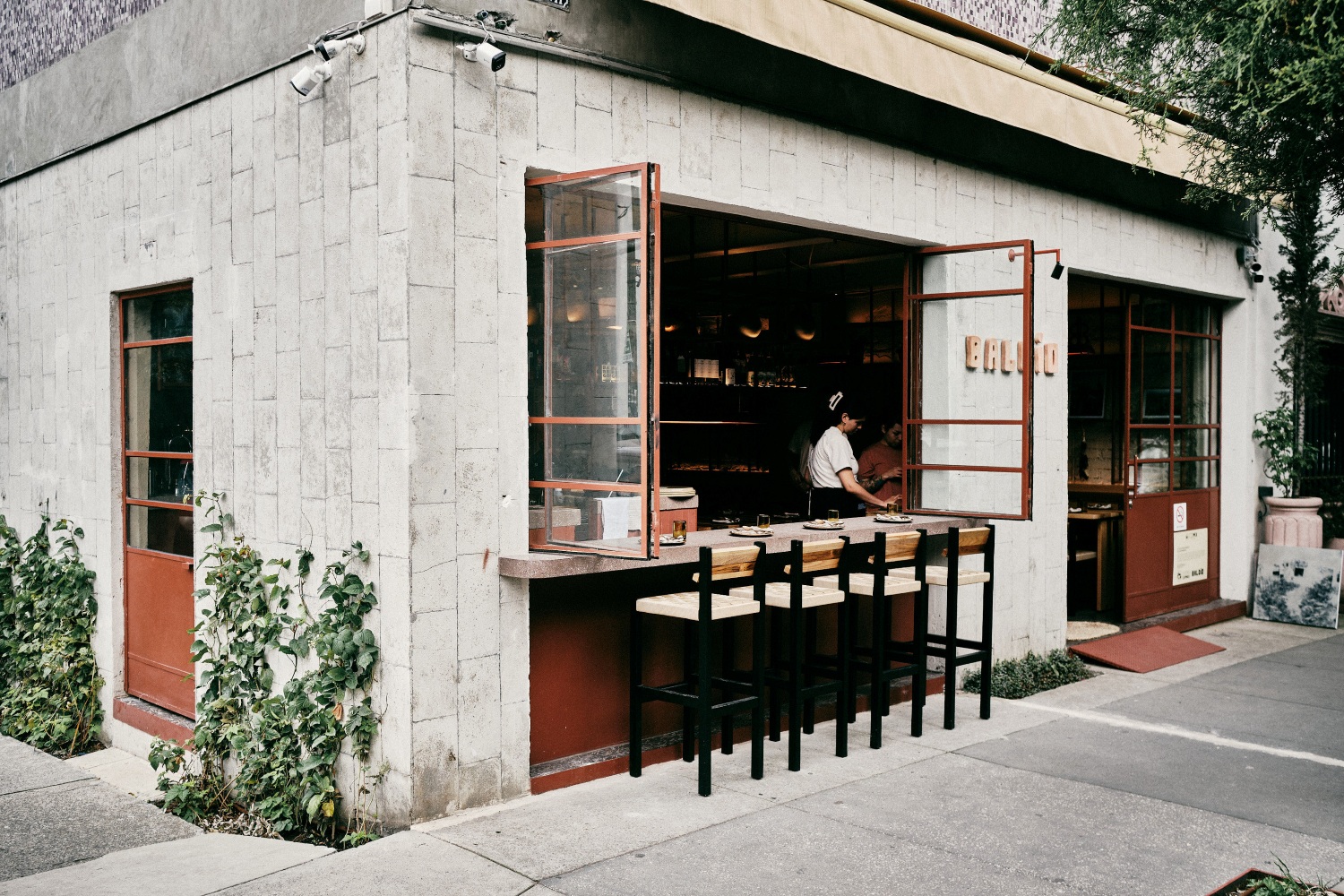
The exterior of Baldío. Courtesy of Baldío.
The Azure Road Take
On a breezy November afternoon, I went to Baldío in Mexico City for an afternoon repast. It was the kind of slow midday meal that seems possible only in certain parts of the world. Definitely not a New York power lunch. From the sidewalk, the restaurant looks almost shy: open windows, a slim bar, green glass demijohns lining the shelves. Inside, there’s no hint that this is one of the most ambitious zero-waste projects in Latin America. No slogans or big declarations. Just a relaxed dining room and a team clearly having fun.
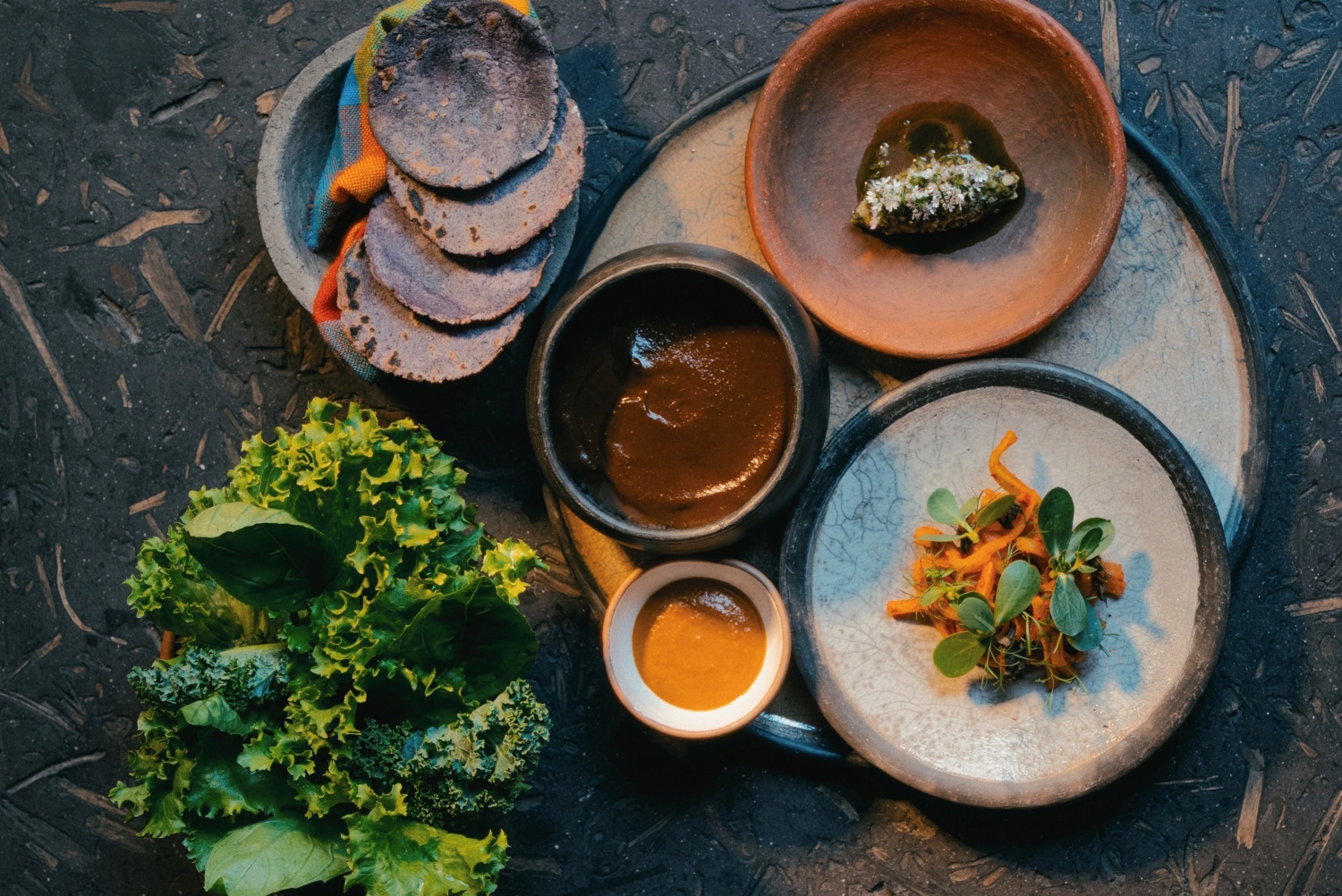
The menu reads fairly straightforward. A line called grassfed pork with tamarind mole, lettuce leaves, kimchi, chimichurri, and Baldío hot sauce sounded like a generous plate of tacos, not a case study in running a circular restaurant.
Baldío calls itself “nature’s favorite restaurant,” a collaboration between Arca Tierra and Silo London. Arca Tierra, founded by brothers Lucio and Pablo Usobiaga, brings fourteen years of agroecological regenerative farming through a network of chinampa growers in Xochimilco. Silo contributes its radical no-trash-bin philosophy, honed in London and recognized with a Michelin Green Star.
The result is a restaurant where the sourcing and waste systems are as considered as the plating, but the experience still feels like what you want from lunch in Mexico City: good music, strong drinks, and plates you want to sop flavor up with a tortilla.
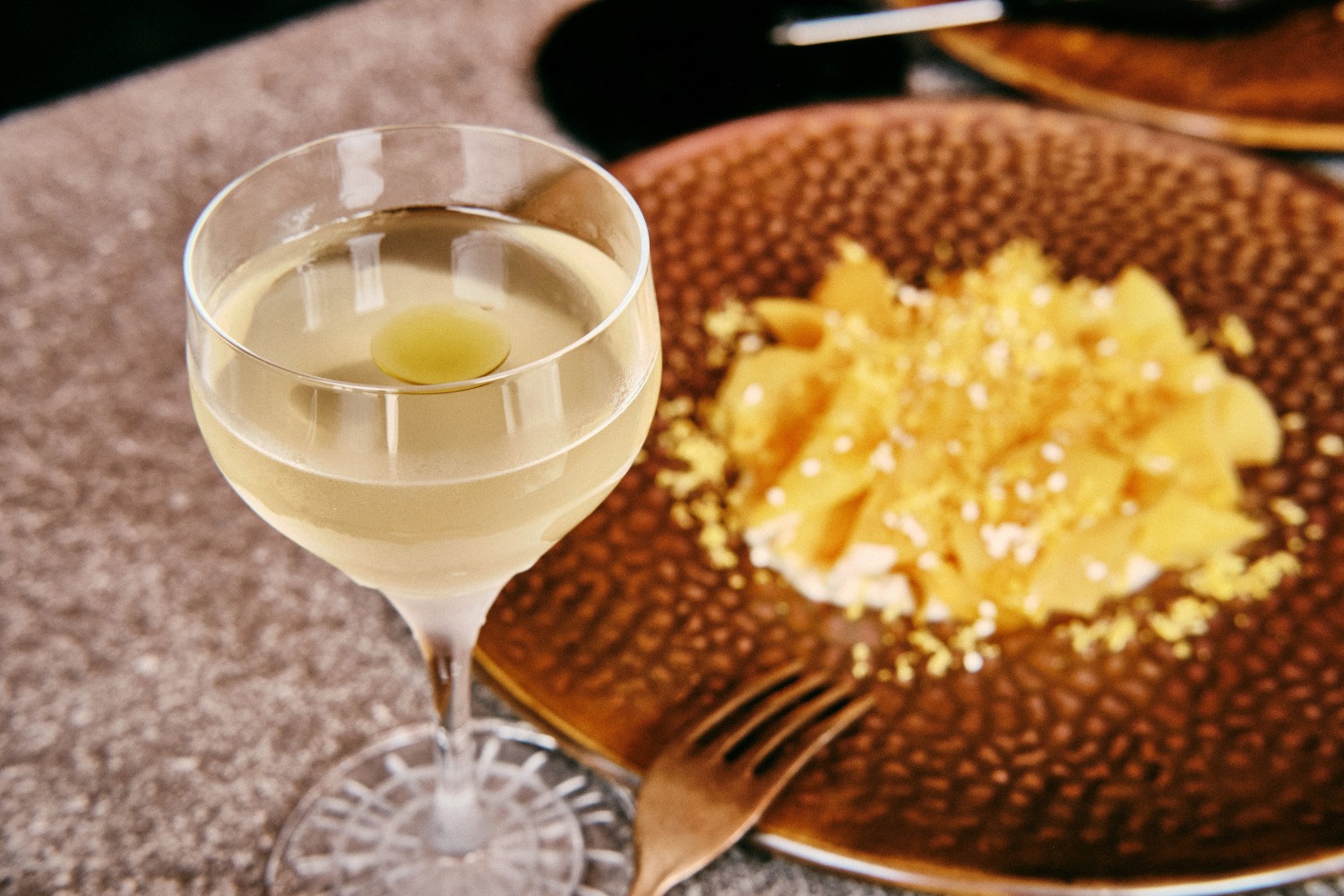
The zero waste philosophy runs through the cocktail program. Courtesy of Baldío.
Sustainability Chops
Baldío’s big claim is simple: zero waste and full traceability. The restaurant is built as a closed loop, not a conventional kitchen with a recycling program tacked on at the end. Almost everything that comes through the door has a clear origin, a plan for how it will be used, and, crucially, a plan for how it will not be wasted.
Instead of juggling vendors, Baldío works almost entirely with Arca Tierra which effectively function as the restaurant’s garden. Chefs and servers travel out to those plots to learn ancestral techniques and harvest what they will later prep in the kitchen. The chinampas, a UNESCO-listed wetland farming system, aren’t treated as a marketing hook, but as the backbone of the restaurant’s operations.
Internally, the team measures success by what stays out of the trash. They aim to cut the industry-standard of 30 percent food waste down to roughly 3 percent, using whole-ingredient cooking, long-term research and development, and a web of ferments and preserves that let one product appear across multiple dishes.
The same standards apply at the bar. Beverage directors Karen Villagomez and Ari Called have built a drinks program that treats each fruit or herb with a ‘leaf-to-root’ philosophy, the plant-world equivalent of nose-to-tail butchery.
For example, a papaya cocktail might incorporate skins for aroma, seeds as an acid base, and pulp for texture. Then staff batch the drink in a keg for efficiency, consistency, and to reduce use of ice. The wine list follows the same thread of minimal intervention, often natural and organic or biodynamic.
Behind all of this is a multinational team sharing one stubborn idea: that a restaurant can operate within the limits of its landscape and still feel generous.
“I definitely think there’s a wave coming of young chefs that want to showcase Mexico’s diversity, culture and identity. By doing that, they’re going to start buying local, thinking local and ultimately create something that’s really ours; not trends that come from Europe but food that represents us as a country,” says Pablo.

Doug McMaster of Silo played a big role in the development of Baldío.Courtesy of Noel Higareda.
The Bite
On the table, the dish looks deceptively simple: a mound of shredded pork resting in a dark tamarind mole, a stack of warm tortillas, a line of sauces, and a tangle of crisp lettuce and sorrel leaves from the chinampas. It eats like a build-your-own taco spread, yet almost every element has a second life in the restaurant’s circular system.
The pork comes from cerdo pelón mexicano, a heritage black pig raised in Veracruz by producer David of Proyecto Risueño. The animals live on more than a hundred local herbs and plants, which gives the meat a deep, almost wild flavor. Baldío buys the head rather than just the prime cuts, then simmers it to remove impurities, bakes it overnight until the meat falls apart, and seasons and crisps it so that what lands on the plate is a pile of savory shreds rather than a showpiece cut.
That generosity carries through the rest of the dish. The tamarind mole is built on fermented tamarind pulp that has already done time as a glaze for pork loin and as a base for tepache. By the time it reaches this sauce, the same fruit has worked three shifts. Folded with onions, garlic, several kinds of chile, and a house corn miso, the mole tastes tangy and rounded, more like something a patient home cook might make than a technical exercise.
Tortillas are made from native corn from Xochimilco, nixtamalized for flavor and nutrients the old-fashioned way and pressed fresh in-house.
The condiments help close the loop. A bright chimichurri folds in jicama and the stems of cilantro and parsley saved from other plates. The kimchi ferments stems from vegetables such as broccoli, along with a pork garum that coaxes out more flavor from the animal. Baldío’s house hot sauce, a kind of “mexiracha,” blends tomatoes, chiles, lacto-fermented onions, and homemade maize vinegar into something sharp and addictive.

Staff prepping in the kitchen. Courtesy of David Alvardo.
Origin Story
Baldío is the Usobiaga brothers’ first attempt at a restaurant, stemming from their farming project. Lucio, who studied philosophy, and Pablo, a former financial lawyer, first turned their attention to the chinampas of Xochimilco, working with farmers to revive plots that had slipped out of production and build what would become Arca Tierra, a bridge between those fields and the city’s tables.
“We started Baldío because we feel a restaurant can be a vehicle for transformation. Restaurants get a lot of attention and have the ability to have an impact on what people eat, on the importance people give to food,” says Pablo.
When the brothers crossed paths with Doug McMaster, the mastermind behind Silo London, the conversation shifted from how to grow and sell food regeneratively to how to serve it. Designing Baldío around the farm and the waste stream from day one, rather than retrofitting good intentions later, was the logical next step.
“We wanted to show there is a different way of running a restaurant that’s closer to the cycles of nature and that it can be done in a way that’s good for business. You don’t have to sacrifice quality, money or flavor. In fact, it’s exactly the opposite,” he says.
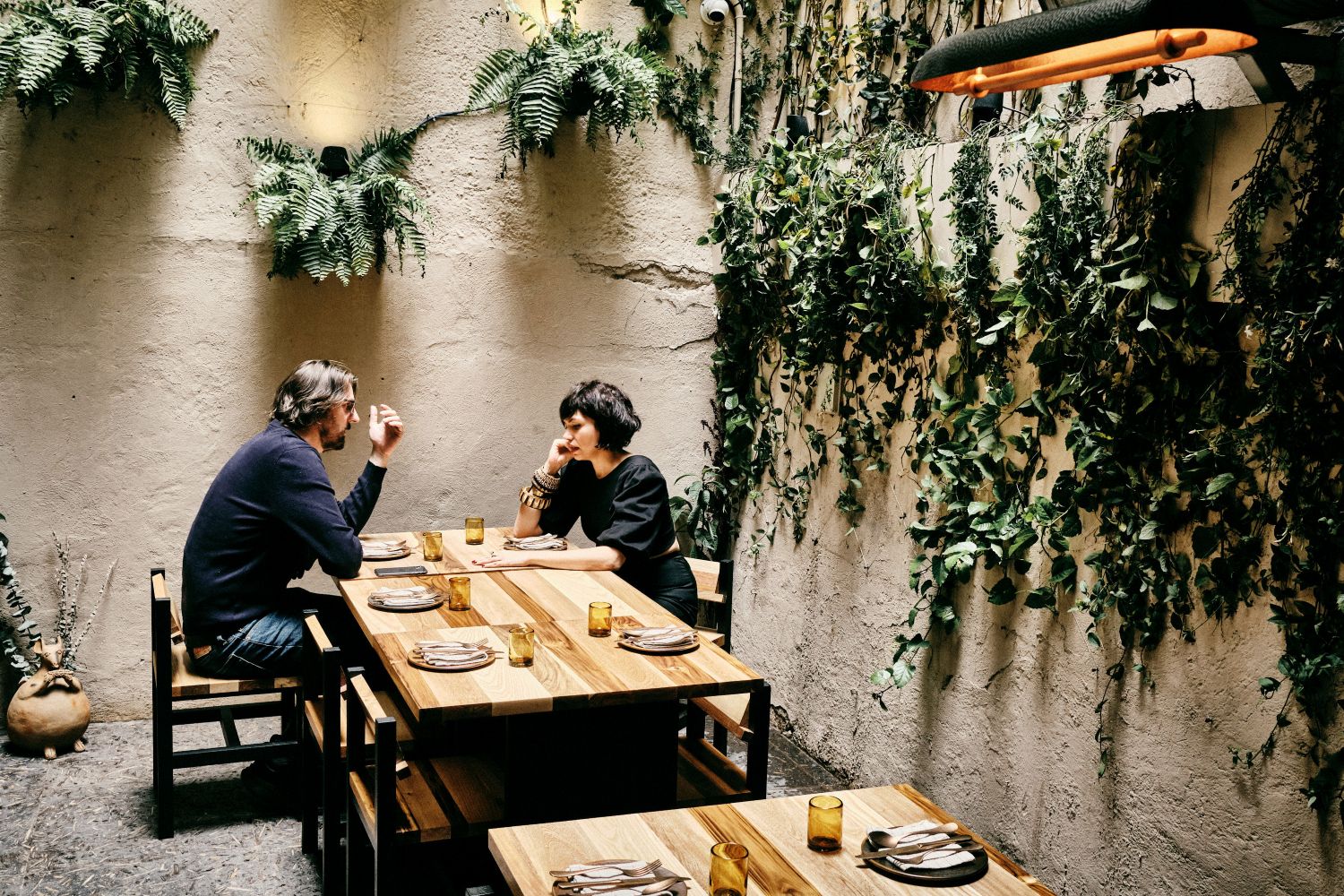
The interior of Baldío. Courtesy of Noel Higareda.
Restaurant Vibe
Baldío sits on a quiet corner of Antonio Solá in Condesa, its facade tiled and pale, its bar stools lined up along a window that swings fully open to the street. The restaurant occupies the ground floor of Casa JuliAna Pensión, a property reimagined by Annex, the group behind design-driven hospitality projects in Mexico, the U.S., and South Korea.
Inside, the room is warm and unfussy, in hues of terracotta and sandstone, with elements of wood, metal, and stone, shelves of jars and demijohns hinting at the fermentation experiments. The staff talks about farmers and ferments the way other places talk about natural wine: casually, with enthusiasm, never performative.
“One of the biggest challenges in Mexico City is that the term zero-waste is practically unknown, it’s even intimidating. We learned quickly that we don’t have to ‘show off’ we’re zero waste, we just have to serve amazing, complex and delicious food that represents Mexican landscapes and culture,” says Pablo
Baldío has proven to be the rare “concept” restaurant where you can forget the ethos for a moment, focus on the food and drink in front of you, only to realize later how much work went into making sure your taco plate would be handed back empty.
Founder and CEO of Azure Road, Lauren Mowery is a longtime wine, food, and travel writer. Mowery continues to serve on Decanter Magazine’s 12-strong US editorial team. Prior to joining Decanter, she spent five years as the travel editor at Wine Enthusiast. Mowery has earned accolades for her writing and photography, having contributed travel, drinks, food, and sustainability content to publications like Food & Wine, Forbes, Afar, The Independent, Saveur, Hemispheres, U.S. News & World Report, SCUBA Diving, Plate, Chef & Restaurant, Hotels Above Par, AAA, Fodors.com, Lonely Planet, USA Today, Men’s Journal, and Time Out, among others.
Pursuing her Master of Wine certification, she has also been a regular wine and spirits writer for Tasting Panel, Somm Journal, VinePair, Punch, and SevenFifty Daily. Mowery is a graduate of the University of Virginia and Fordham Law School, and she completed two wine harvests in South Africa.
Follow her on Instagram @AzureRoad and TikTok @AzureRoad
More Stories
 DRINK
DRINKSake’s Next Step: How Japan’s Rice Wine Is Evolving
 CULINARY, PARTNERSHIP
How to Build a Wine Industry That Works for Everyone
 FOOD
FOODL.A.’s Top Sustainable Seafood Spots
 CULINARY, The Sip
The Sip: Rust en Vrede Estate Red, Stellenbosch, South Africa
 DRINK, HOME
The Buzz on InFizz: Breville’s Carbonator Elevates Sparkling Water