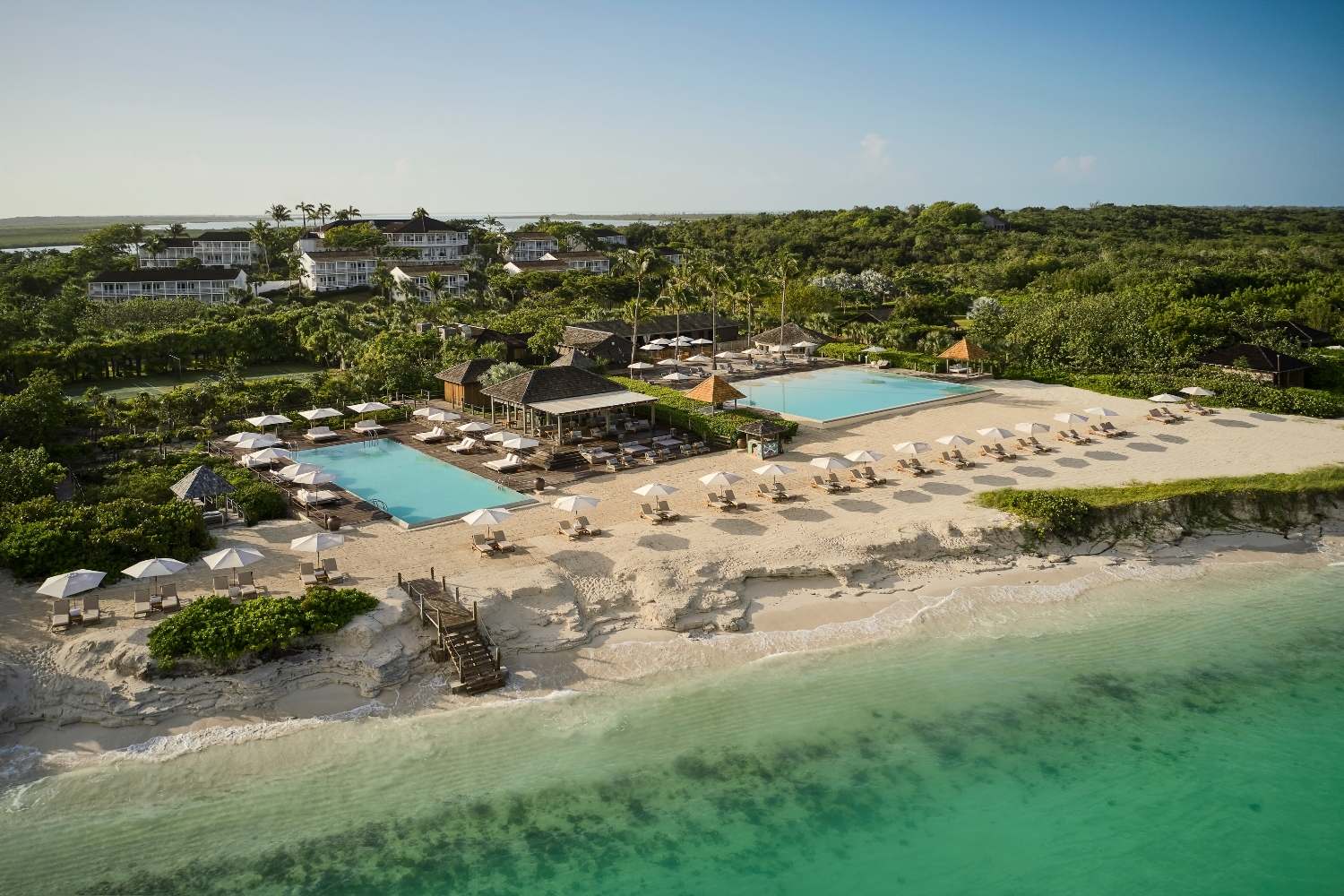
“It’s no wonder that fashion icon Donna Karan made a home among the resort’s villas.”
For much of the 20th century, Turks and Caicos was a quiet corner of the Caribbean, known for bonefishing flats and small villages rather than resorts. Tourism picked up in the late 1980s and 1990s, when Grace Bay Beach became the center of development. Grace Bay Club and Seven Stars Resort and Spa opened in succession, and Providenciales went from an undiscovered island to a household name. Grace Bay’s long stretch of white sand and clear water topped lists of on best beach in the world year after year, and for most of that time,Tucks and Caicos stood as synonymous with Grace Bay.
By 1998, a different model of luxury started to take shape. COMO Parrot Cay opened on its own private island, a short boat ride from Provo. Some travelers, it turned out, wanted more than a white crescent of sand. They wanted distance from other guests, wellness programming, and to generally be left alone. Parrot Cay’s private-island setting and spa culture broke from the dense block of hotels rising along Grace Bay.
The next two decades cemented the island’s reputation as an upscale destination within easy reach from the Americas. The compact island of Providenciales had built good infrastructure that supported the influx of villa developments, which in turn, appealed to families and couples. As the island’s popularity grew, Grace Bay’s limitations became more obvious: its famous beach became busier and the surrounding downtown zone grew increasingly commercialized.
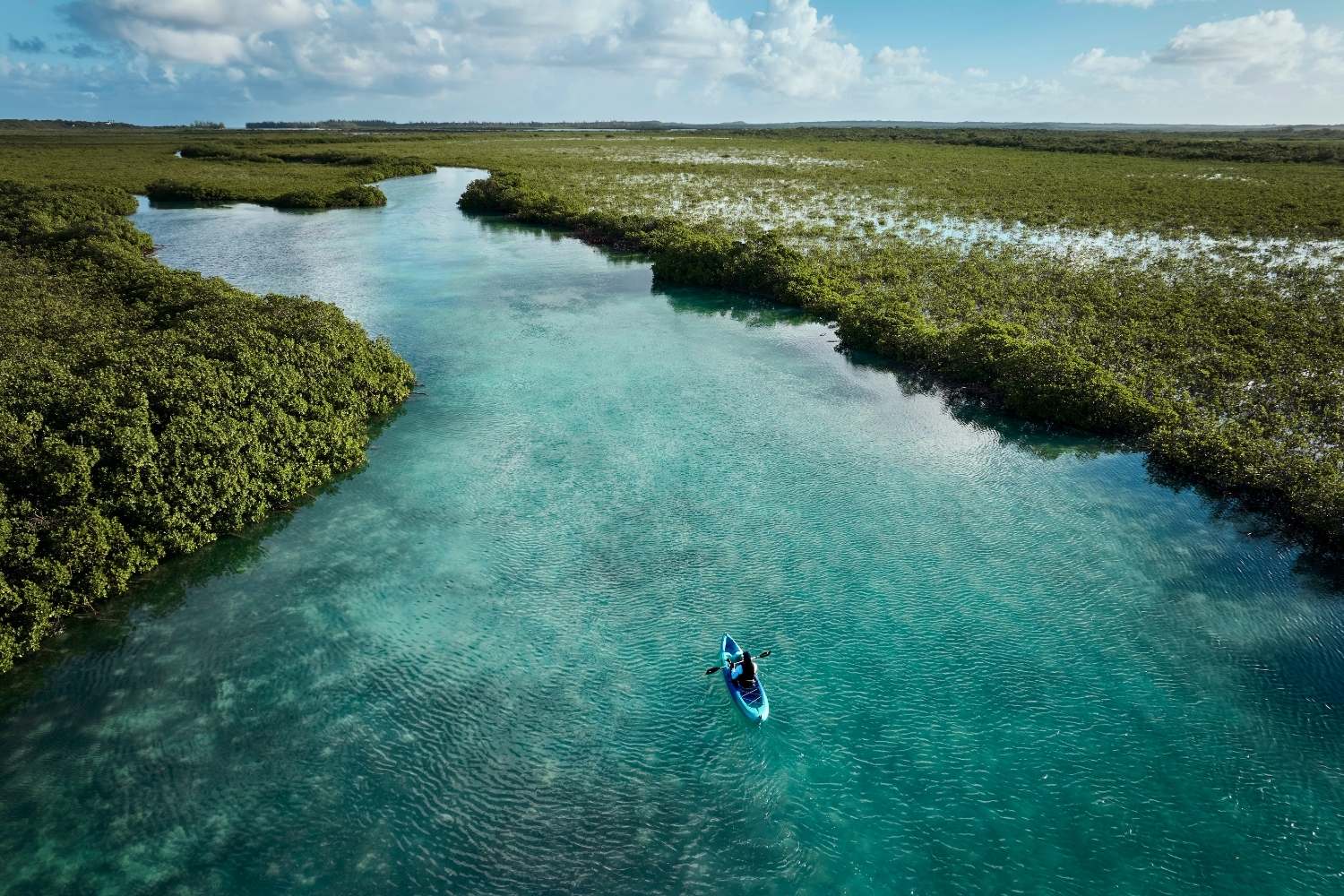
Kayaking in the mangroves. Courtesy of COMO Parrot Cay
That growth creates invisible pressures on the island beyond the visible bodies on the beach. Turks and Caicos is a small island country, and the supply chains servicing its residents and tourism industry are short. For example, fresh water often requires desalination or worse, be trucked in, while energy largely runs on imported fuel, despite the abundance of sunshine. To keep pace with development, building materials require a large importation footprint, as does much of the food needed to stock resort kitchens. The same beaches, wetlands, and reefs that draw visitors are the ecosystems most exposed to overtourism.
Three hotels beyond Grace Bay show how the island’s luxury market has responded to that pressure. COMO Parrot Cay developed first, building privacy around an entire island that has remained largely undeveloped. The Strand, which opened to guests in late 2024, introduced solar power and native plantings into a new residential resort at Cooper Jack Bay. Rock House, set into the limestone cliffs of Provo’s north shore, built a boutique hotel that draws its drama from the land instead of from volume and scale. Together they suggest a newer measure of luxury: how to build sympathetically with the landscape.
Separate from environmental concerns, travelers planning a trip have practical reasons for skipping the high season and opting for summer itineraries. During winter, rates and crowds spike. Late June through early November offers the cheapest and quietest period, with some resorts adding extra-night promotions during those months. The tradeoff is hurricane season, so it makes sense to book flexible rates and carry travel insurance.
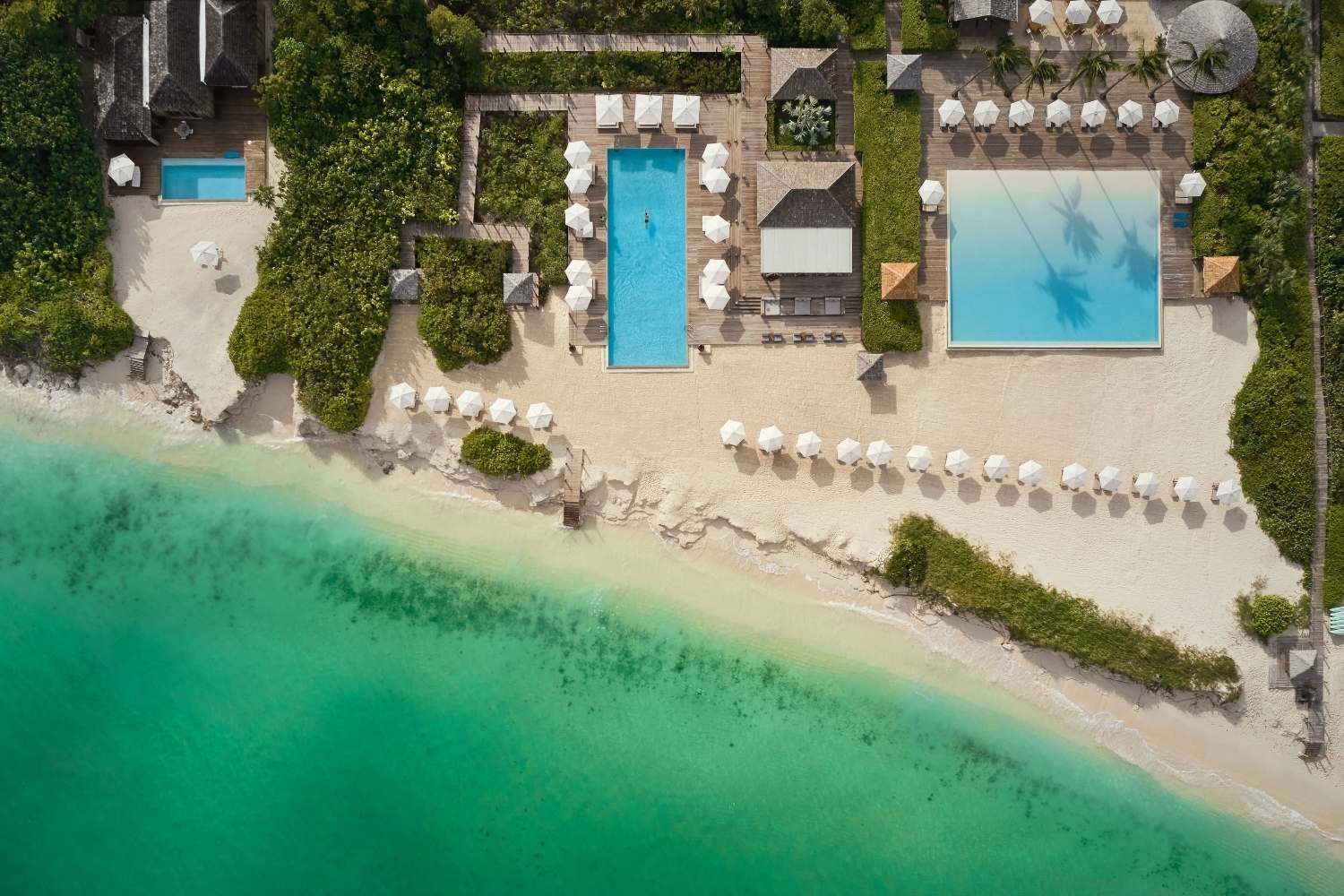
Aerial View of COMO Parrot Cay. Courtesy of COMO Parrot Cay
COMO Parrot Cay
North Stars:


COMO Parrot Cay just may be the ultimate holiday indulgence: a private island retreat with over a mile of soft white sand, lush coconut and banana groves, and preserved mangrove wetlands. The journey to the island sets the tone – guests are transferred by private boat and welcomed with a glass of champagne before setting off across turquoise waters.
COMO Parrot Cay stands as one of the Caribbean’s most exclusive addresses and it’s no wonder that fashion icon Donna Karan has made a home here among the resort’s villas. The intimate, quiet, and private setting, paired with thoughtful design and beautiful structures, makes it the perfect creative and restorative hideaway.
Accommodations range from rooms and suites to beach houses, villas, and sprawling estates – many with private pools. The COMO Shambhala Retreat is a destination in itself, offering yoga, Pilates, outdoor treatment pavilions, and a serene spa recognized among the best in the Caribbean. Guests also have access to a modern fitness center, bikes to explore the island, and wellness programming that blends seamlessly into daily life.
Dining is refined but unpretentious: Lotus serves Southeast Asian-inspired dishes by the pool, Terrace leans Italian-Mediterranean, and the Beach Club offers fresh, healthy island fare.
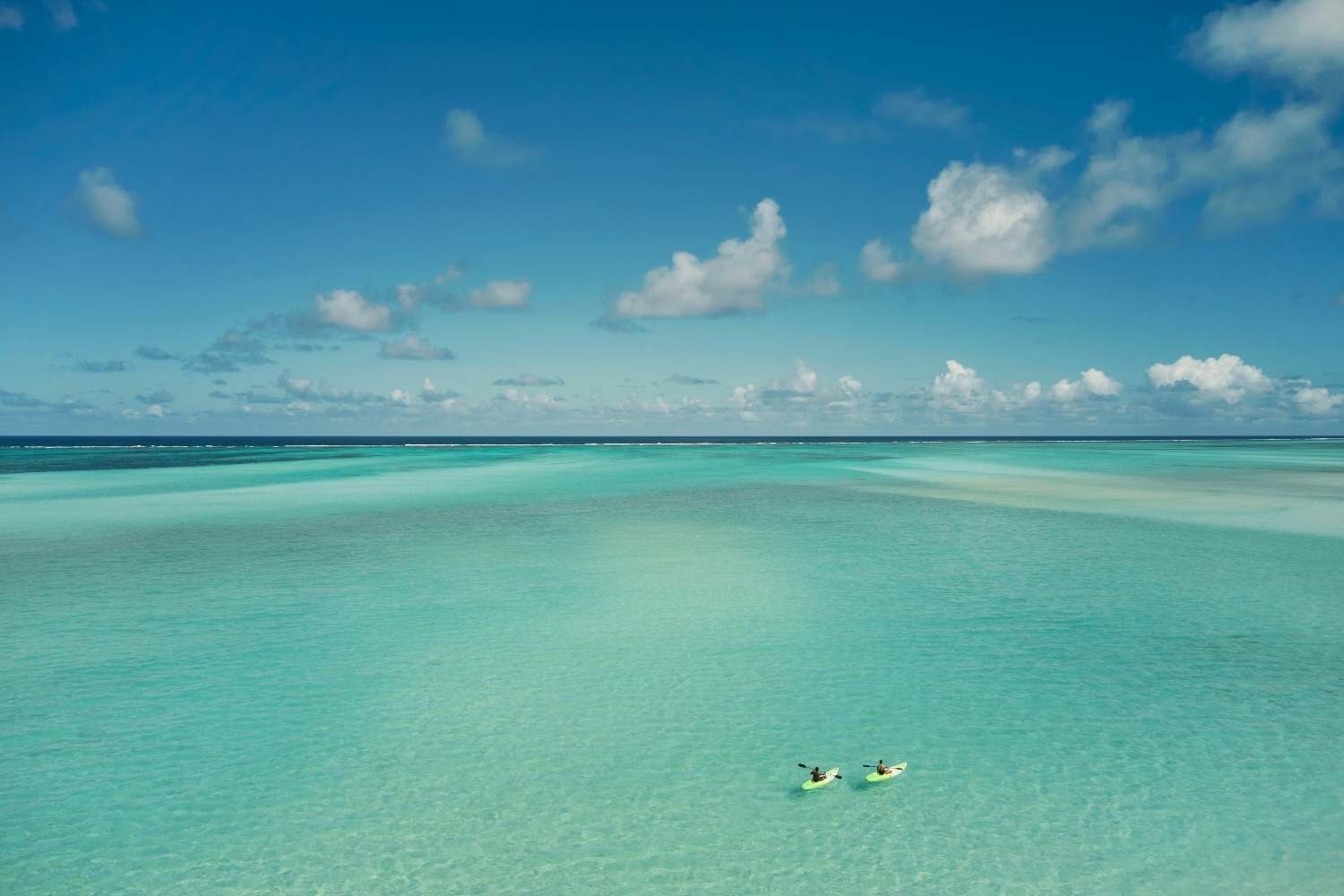
Kayaking in the ocean. Courtesy of COMO Parrot Cay
Sustainability is built into island life. In 2024, COMO Parrot Cay collected more than 16,500 kilograms of food waste from its restaurants, along with its staff canteen. A compost machine converted roughly 4,000 kilograms of that into mulch, which was combined with landscaping clippings to produce about 15 tons of compost for the island’s farms and gardens, feeding kitchen gardens that supply produce back to Lotus, Terrace, and the staff canteen. On a private island, that loop has practical value. Given the cost to import food, export trash, and maintain landscaping, composting seems the obvious choice.
Other efforts include the reuse of crushed glass in paths and construction, and a marine conservation program led by an actual scientist. Dr. Ed Butler, the property’s Director of Marine Science and Sustainability, who tracks local ocean fauna, previously led a UK-funded project on small-scale fisheries management in Turks and Caicos. His current work includes a partnership with Roots2Reef, a new NGO that tags and tracks local fauna like whitespotted eagle rays, oceanic whitetip sharks, and southern stingrays.
The resort has also partnered with the Turks and Caicos Reef Fund to sink 12 artificial reef frames off its two docks as coral restoration projects around the region continue.
COMO Parrot Cay produces its own power and water and processes waste on-site; in 2025, it recycled more than 200 tons of material, with 99 percent of that handled without leaving the island. A reusable bottle program launched in October 2025, sanitizing up to 18,000 glass and aluminum bottles a month and cutting an estimated 80,000 single-use bottles from circulation within its first few months. Guests can leave their own mark on the island, too, sponsoring or planting a coconut tree during a stay.
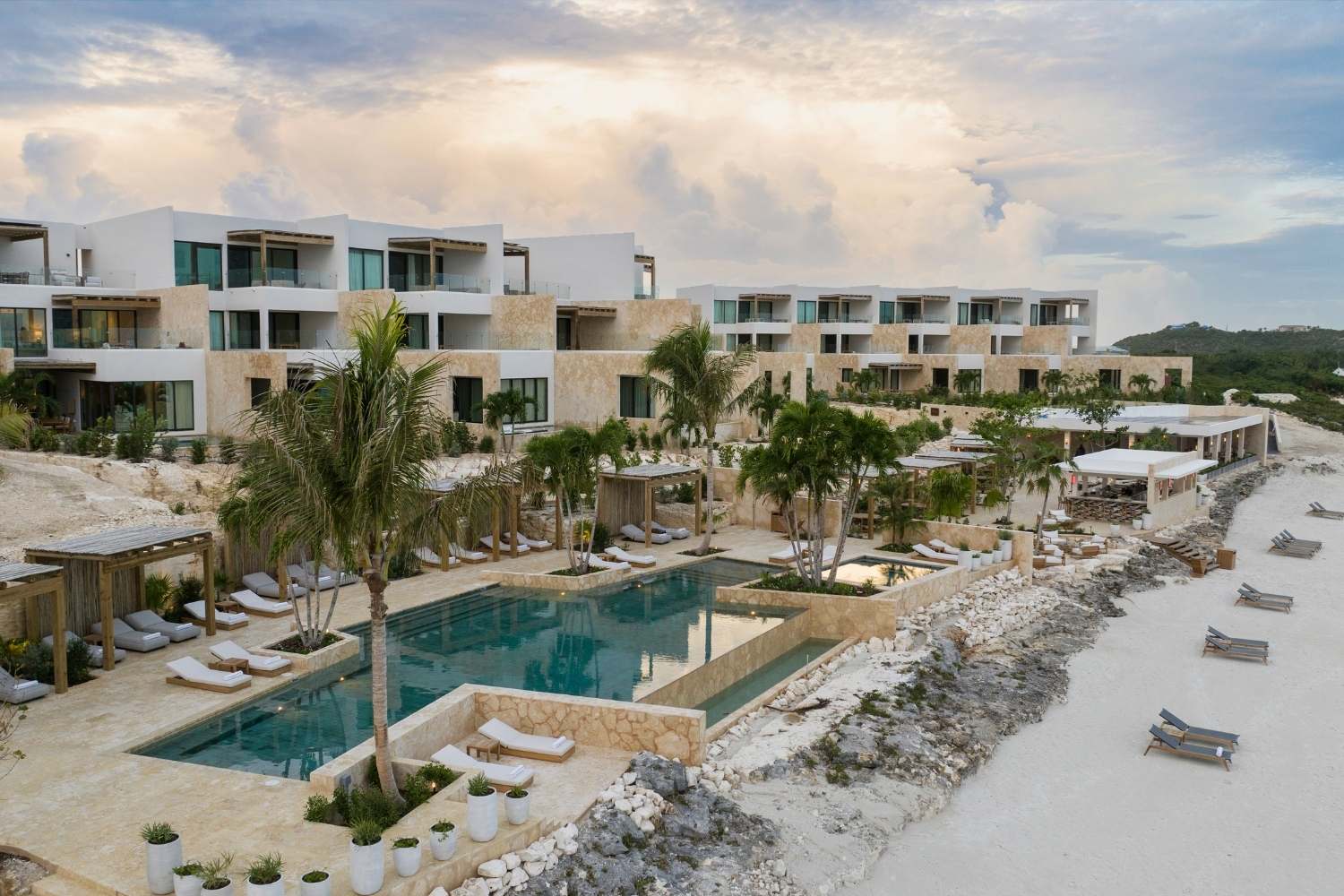
The Strand Hotel Complex. Courtesy of The Strand
The Strand Turks & Caicos
North Stars:


On Cooper Jack Bay, far from the bustle of Grace Bay, The Strand Turks & Caicos offers a different perspective on the island. Part of the Leading Hotels of the World collection, its private stretch of beach glows with a milky-blue hue thanks to limestone particles from the sand. Villas and residences, maximizing ocean views with glass walls, terraces, and seamless indoor-outdoor living, hug the beach.
Anchored by its beach club , with a pool, cabanas, and The DelMar restaurant, The Strand delivers more than just views. The hillside kitchen, shaded by a living green roof, serves wood-fire grilled seafood and prime steaks accented with global flavors. In fact, the food here has quickly earned a reputation as outstanding, in part because it’s often locally sourced.
For example, the chef buys conch right off the beach from fishermen and serves it that same day. Thanks to this hyper-fresh approach, The Strand has become a destination dining spot in its own right, especially with the recent launch of an elevated, Latin-inspired tasting menu.
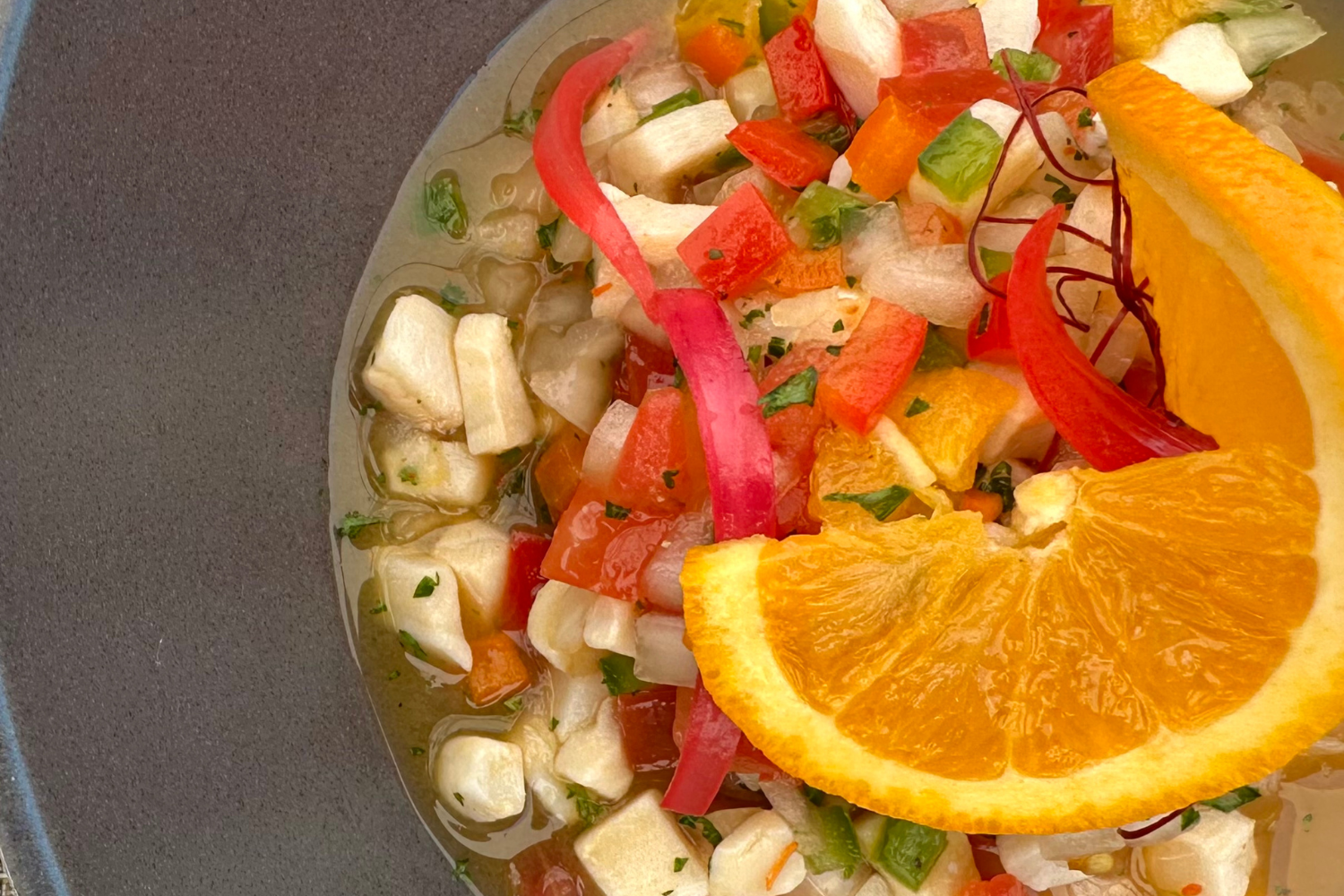
Conch dish. Courtesy of Lauren Mowery/
As for amenities, guests have access to tennis and pickleball courts, water sports, and a private marina with captained boats, alongside pools and spa services that keep it firmly in luxury territory.
The Strand planned its landscaping around more than curb appeal. The resort hired Landscaping by EA to guide construction across five phases, following recommendations to limit disruption from shoreline development to existing habitat. The resort preserved natural vegetation and added native plant species instead of the thirsty, ubiquitous ornamentals typical of most luxury hotels. That work paid off in June 2026, when Butterfly Pavilion, a Colorado-based nonprofit, named The Strand its first international Certified Pollinator Sanctuary.
The property considered its energy needs and footprint from day one. Solar power supplies more than 60 percent of electricity demand, a meaningful figure in a destination where diesel generators are one of the less visible and expensive costs behind a luxury stay. Tesla Powerwalls store that power for use after dark, and save more energy when paired with the smart-home technology installed in the villas. Transport uses electricity too, with golf carts charging daylong throughout the property, ferrying guests from pool to villa as needed. Developers also gave consideration to water management, employing rainwater capture and greywater recycling to limit reliance on scarce fresh water resources.
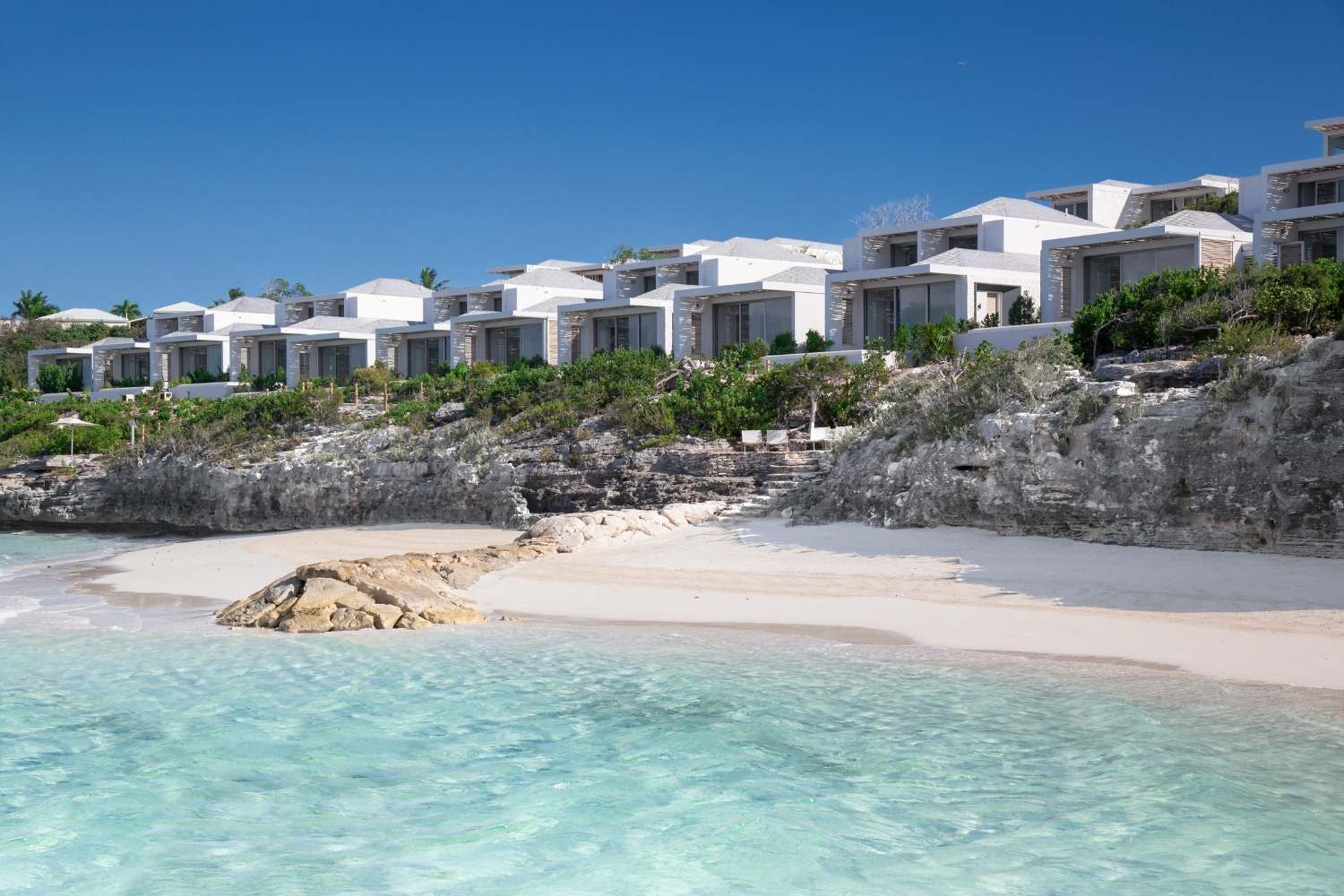
Rock House built into rocks. Courtesy of Rock House.
Rock House
North Stars:
Rock House, a member of Leading Hotels of the World, unfurls across 14 acres of the island’s north shore and fronts a private, tucked-away beach and jetty. Elevated as much as 95 feet above sea level, the property feels like a Mediterranean hillside escape while still being close to Providenciales’ top attractions.
The views here are cinematic, featuring infinity-edge perspectives that replace the crowds of Grace Bay with the tranquility of the horizon. In fact, Rock House purposefully channels the Amalfi Coast, from its cliffside setting and terraced design to the coastal Italian flavors and presentation of its food. Even colorful, hand-painted ceramic dinner plates offer a nod to Southern Italy, completing the transportive effect.
The resort offers 46 suites and villas, ranging from studios to multi-bedroom oceanfront homes, each with private terraces or plunge pools facing the ocean. Dining is a highlight: head to Vita Restaurant for elevated Italian-leaning flavors from pastas to grilled lobster, or nibble on small bites at the Cave Bar or Sunset Bar, both popular spots with locals and other travelers. A cliff-top infinity pool, cabanas, water sports gear, and fitness facilities complete the boutique-style amenities, with a newly debuted spa.
Sustainability intiatives run throughout Rock House. The designers incorporated native Turks & Caicos stone-clad facades and indigenous landscaping, either preserved or replanted, across the grounds, keeping the property sympathetic to the landscape. On-site, a native plant nursery supports local biodiversity, and herb gardens supply the kitchen.
Rock House holds Green Key certification, an internationally recognized standard for sustainable tourism. Rainwater and greywater systems irrigate the gardens and cut down on water waste, while hot water on demand minimizes energy use. The resort’s Refill, No Landfill program has eliminated single-use plastics, offering guests complimentary reusable water bottles and filtered water stations throughout the property.
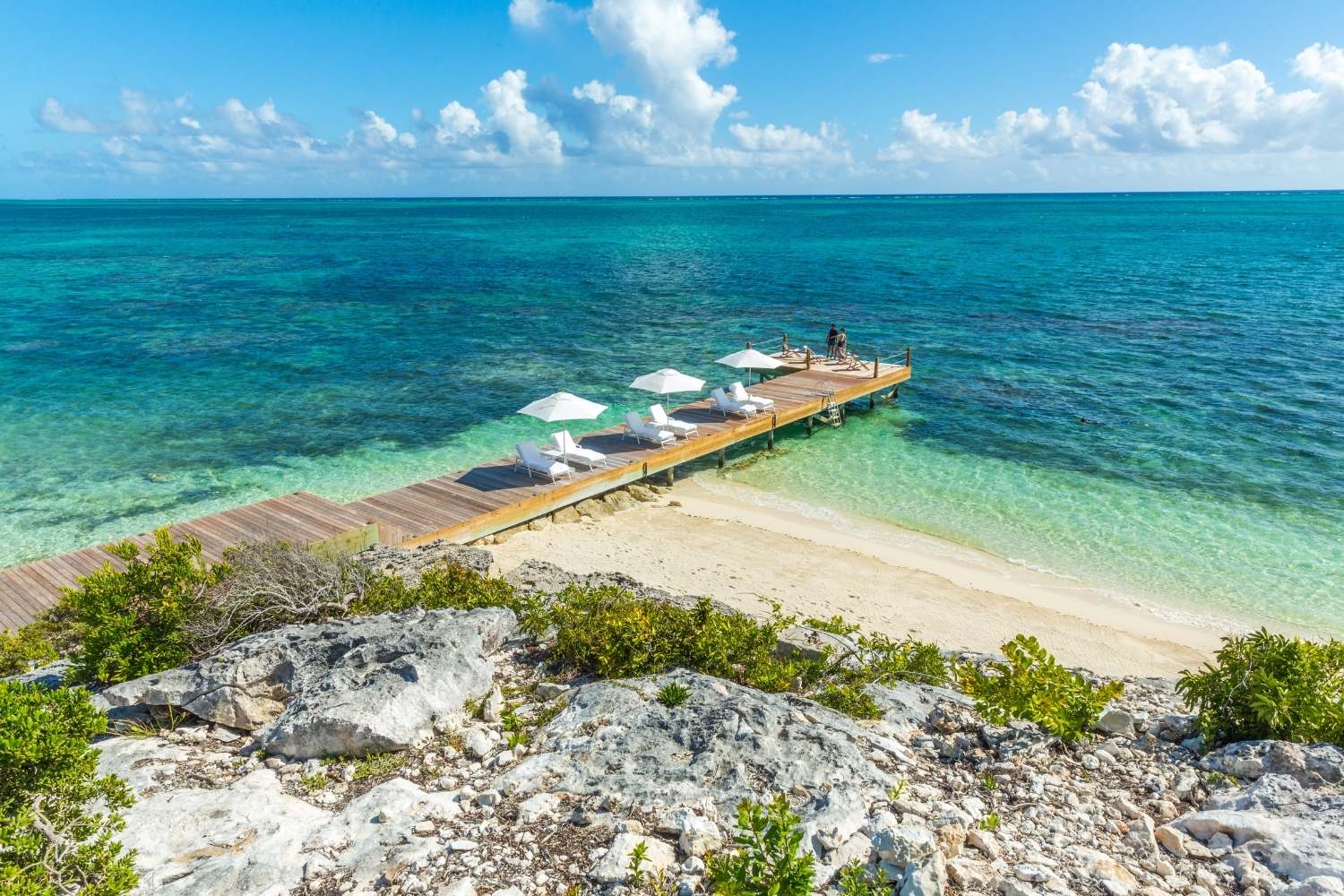
Rock House Pier. Courtesy of Rock House
Planning Your Trip To Turks & Caicos
Founder and CEO of Azure Road, Lauren Mowery is a longtime wine, food, and travel writer. Mowery continues to serve on Decanter Magazine’s 12-strong US editorial team. Prior to joining Decanter, she spent five years as the travel editor at Wine Enthusiast. Mowery has earned accolades for her writing and photography, having contributed travel, drinks, food, and sustainability content to publications like Food & Wine, Forbes, Afar, The Independent, Saveur, Hemispheres, U.S. News & World Report, SCUBA Diving, Plate, Chef & Restaurant, Hotels Above Par, AAA, Fodors.com, Lonely Planet, USA Today, Men’s Journal, and Time Out, among others.
Pursuing her Master of Wine certification, she has also been a regular wine and spirits writer for Tasting Panel, Somm Journal, VinePair, Punch, and SevenFifty Daily. Mowery is a graduate of the University of Virginia and Fordham Law School, and she completed two wine harvests in South Africa.
Follow her on Instagram @AzureRoad and TikTok @AzureRoad
North Stars: Energy Efficiency, Production and Consumption, Water Management
More Stories
 CULINARY, DRINK
Get to Know the Producers Behind the J.P. Bourgeois Portfolio
 CULINARY, DRINK
Where to Taste Wine in Willamette Valley
 DRINK
DRINKMeet the Distillery Making Vodka From Fog
 DRINK
DRINKSake’s Next Step: How Japan’s Rice Wine Is Evolving
 DRINK, HOME
The Buzz on InFizz: Breville’s Carbonator Elevates Sparkling Water