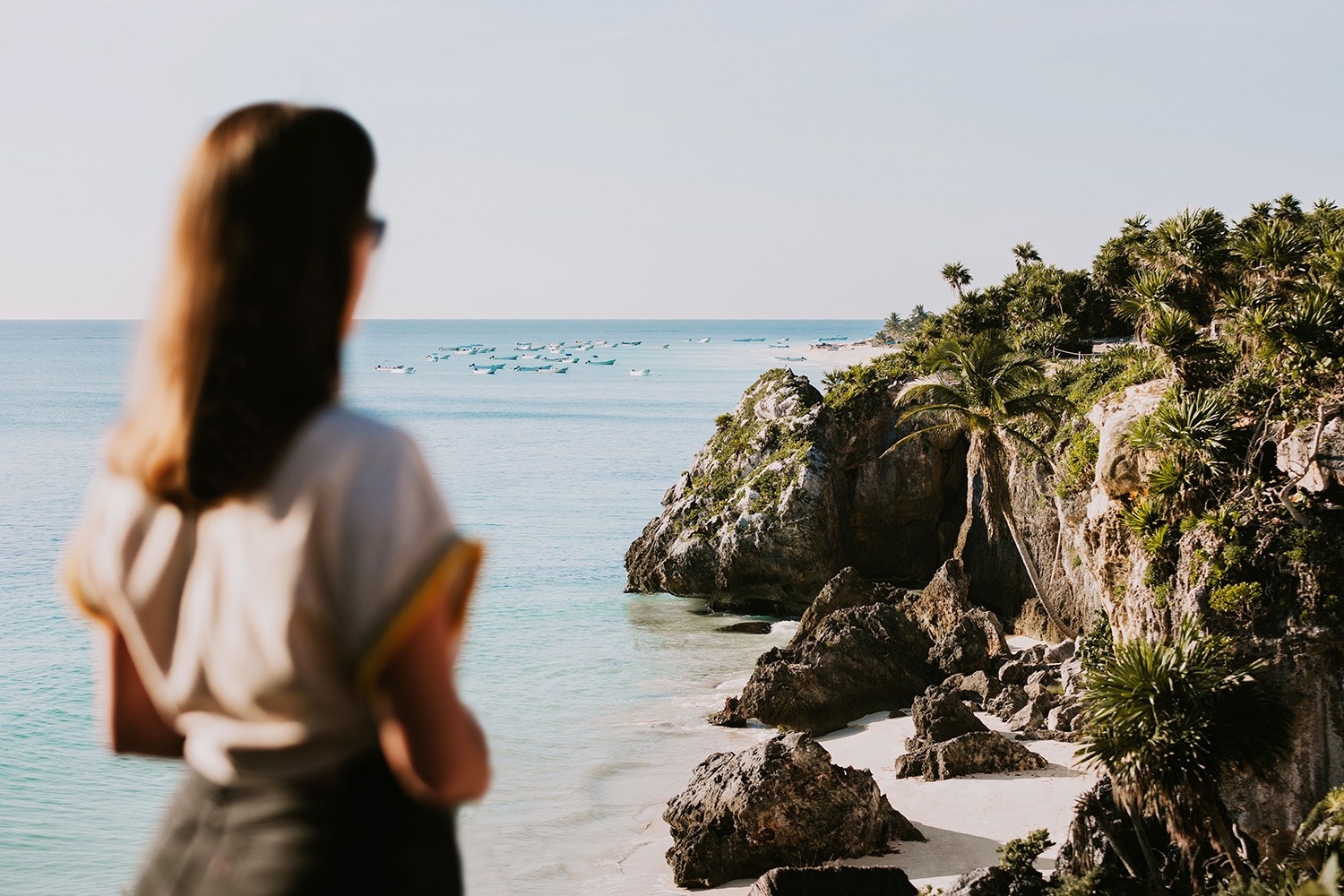
“The beach itself is still public,” says longtime Tulum resident Emiliano Zarazúa. “The access has been privatized.”
Tulum still exists in the global imagination as a kind of barefoot Caribbean El Dorado: turquoise water, palm trees bending towards the sea, jungle hotels, yoga at sunrise, mezcal at sunset. For years, it sold the fantasy of freedom. But today, one of the most common frustrations among visitors and locals alike is surprisingly simple: getting to the beach.
What was once perceived as an open coastline has slowly become a maze of hotel entrances, security checkpoints, traffic, beach clubs, and unclear public access points. The beaches themselves remain legally public under Mexican law, but in practice, access often feels anything but.
“The beach itself is still public,” says longtime Tulum resident Emiliano Zarazúa, a nature Yucatan Outdoors guide and environmental educator with Movida Maya. “But the access has been privatized.” It is perhaps the clearest explanation of Tulum’s biggest contradiction.

AZULIK resort. Courtesy of AZULIK.
A Beach Everyone Can Use — In Theory
To understand the issue, you first have to understand Tulum’s geography. The town itself sits inland, while the coastline stretches along the now-famous beach road and “hotel zone,” where many recognizable hotels occupy prime beachfront real estate. On one side: the Caribbean Sea. On the other: jungle, boutiques, restaurants, and increasingly dense development.
Over time, much of the coastline became absorbed into hospitality spaces where access often comes attached to valet stands, reservations, or the unspoken barrier of walking through private property to reach what is technically public land.
Visitors unfamiliar with the area usually arrive expecting free-flowing beach access. Instead, they discover they must take a taxi (or rent a car/scooter), pass through hotels, consume food and beverages at beach clubs, or navigate unclear entrances hidden between developments. The result is less outright privatization than a kind of soft exclusion.
For local activist Andrés Garibay Reyes, who has participated in and organized demonstrations around public beach access, the issue reflects a broader global trend in which coastlines slowly become commercialized.
“Access to the beach has become a privilege conditioned by payments, consumption, or special permissions,” says Garibay Reyes. “For the community that lives in Tulum, the sea and the beach, which should be common heritage, have become limited spaces where economic and tourism interests prevail over the historical and cultural rights of residents.”
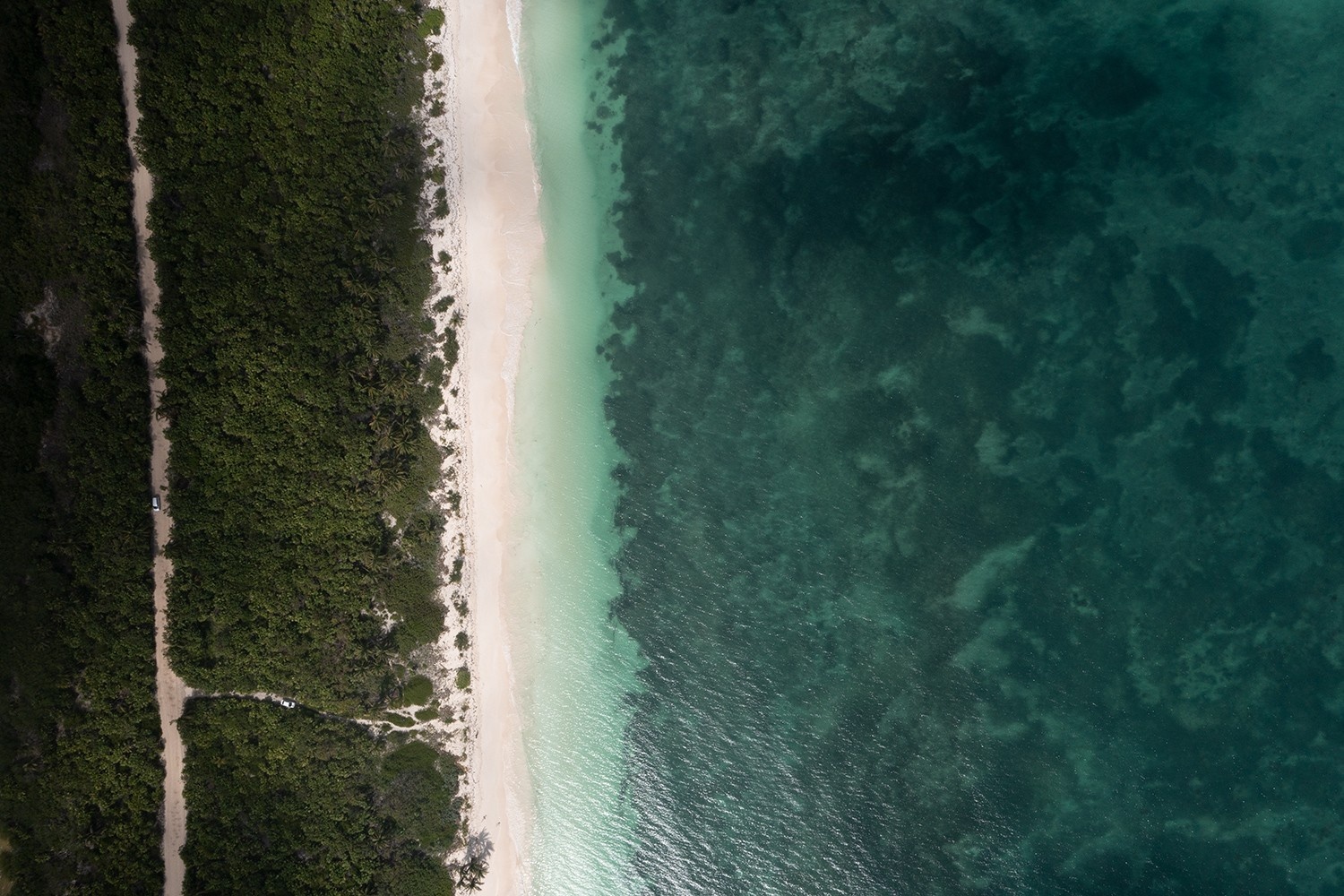
Tulum Beach. Courtesy of Manuel Ibarra.
The Problem With Romanticizing “Old Tulum”
Like many destinations transformed by tourism, Tulum now lives inside its own nostalgia cycle. But according to many residents, that freedom also came with real environmental and social consequences. Zarazúa, who first arrived in Tulum 10 years ago as a volunteer sea turtle conservationist at Flora Fauna y Cultura de México, remembers easier access but also remembers what came with the lack of regulation. “There was a lot of trash,” he says. “Fights, harassment toward women, robberies, drug sales. People would leave everything behind after spending the day there.”
For years, one of the easiest public access points to the beach was through the area surrounding the Tulum Archaeological Zone. But that changed with its transformation into Parque del Jaguar, a federally managed ecological and archaeological park. While the area itself was officially designated a national park in 1986, Parque del Jaguar is a newer federal initiative developed in 2023, aimed at organizing tourism more sustainably while also generating revenue for the region.
Today, entry into the park comes with new layers of regulation. Residents and visitors entering on foot can access the park freely, while those arriving by car, scooter, or wishing to use certain park amenities must pay an entrance fee. Admission currently costs 120 pesos for international visitors and 60 pesos for Mexican nationals, a newer reform after the original tourist entry price exceeded 400 pesos, or roughly $20 USD per person. Plastics, pets, speakers, and certain recreational activities are also prohibited in an effort to preserve the fragile ecosystem.
Officials argue that “public” does not necessarily mean “free,” particularly when environmental conservation and infrastructure maintenance are involved. And to many visitors, the park is undeniably improved. There are organized pathways, transportation systems, ecological protections, and better-managed public areas in a region long strained by unchecked tourism growth. Yet the transformation also reflects a broader shift happening across Tulum: access to nature increasingly exists through systems of payment, reservation, regulation, and control. “There had to be some kind of regulation,” Zarazúa says. “The problem is finding the balance.”
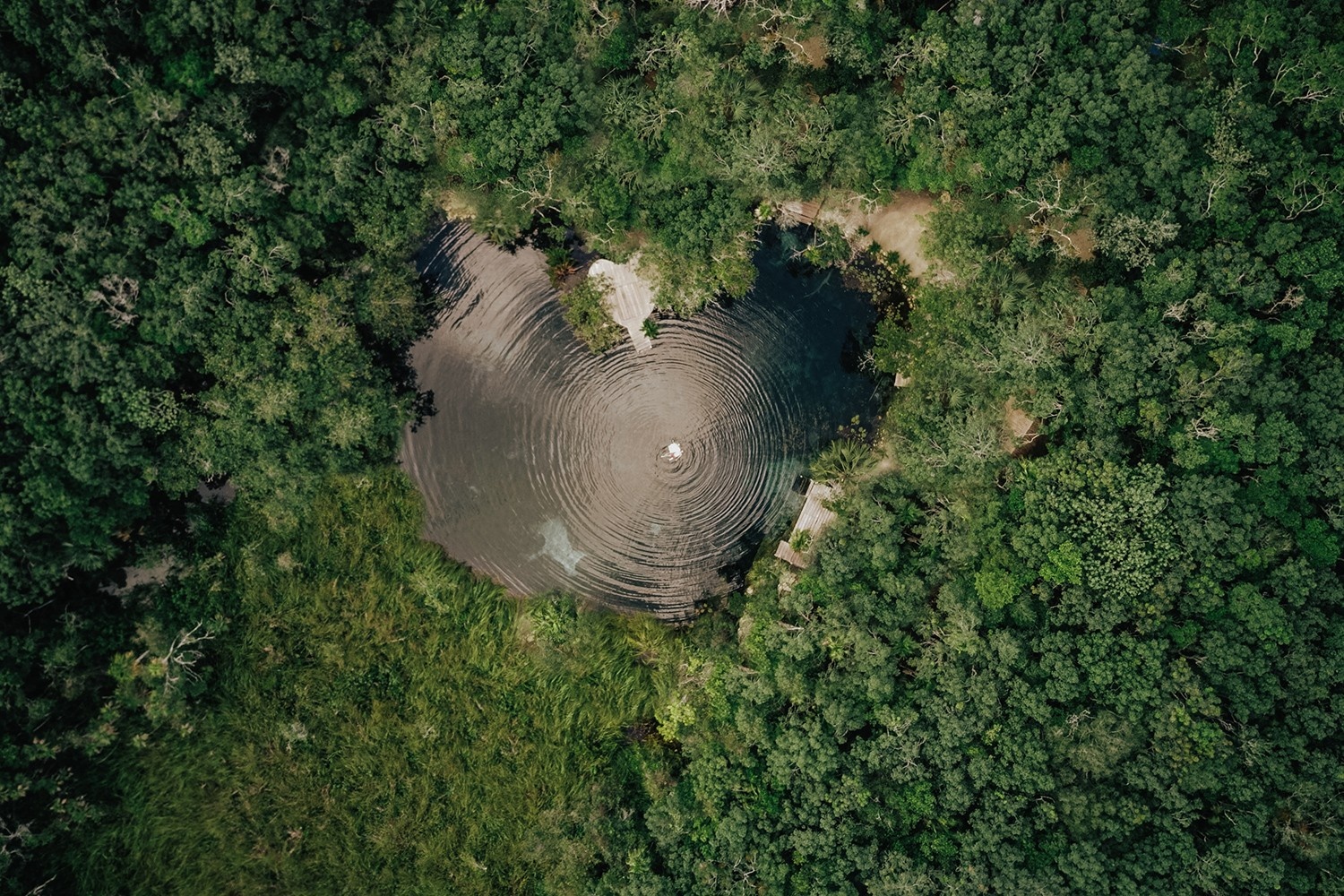
Cenote Corazon. Courtesy of Manuel Ibarra.
Paradise Built on Conflict
Part of what makes Tulum especially complicated lies beneath the surface, literally in the land itself. Much of the hotel zone sits on ejido land, a communal land ownership system that has generated decades of legal disputes, unclear ownership claims, and territorial conflicts. During Tulum’s rapid development years, these disputes occasionally erupted publicly through evictions, confrontations, and allegations of corruption.
César Ortiz, who has lived in Tulum for more than 16 years and is known locally for his outspoken commentary on environmental degradation and his local-favorite beach properties like Playa Pública and La Eufemia, remembers the hotel zone’s early years as improvised and unstable.
“In the beginning, places closed themselves off not out of bad intentions, but because everybody was protecting land from invasions and ownership disputes,” Ortiz says. “And honestly, that also protected Tulum from becoming full of giant hotel chains like the rest of the Riviera Maya.” Still, he resists purely blaming hotels themselves. He points out that much of the hotel zone has functioned semi-privately for decades. The deeper issue, in his eyes, is the disappearance of genuinely communal spaces where different kinds of people once mixed freely.
“The places that are really worthwhile are the ones where all kinds of people mix together,” he says. “It doesn’t matter if someone is wealthy or just starting out. Everyone matters.” That philosophy partially inspired his projects, which he says were intentionally created around accessibility and affordability.
“We created it knowing there weren’t enough public access points,” he says. “Affordable food, affordable drinks, a place for everyone.” Ortiz is also quick to point out that the people most often excluded from Tulum’s evolution are not foreign tourists or newer residents, but Maya families who lived in the region long before Tulum became a global brand. “The real locals are the people born here who speak Maya,” he says. “Those are the people nobody talks about.”
Last year, Tulum went through a wave of negative attention across Mexican social media, showing “empty” beaches and abandoned businesses, much of it filmed during low season, when the town has always been quieter. Much of the content was taken out of context, filmed at odd hours, and sensationalized.
In the months that followed, several new beach access points were opened, including Punta Piedra, an off-road entrance that has long existed but offers limited beachfront and a rocky entry, as well as Playa del Pueblo, which introduced discounted parking and a formal paso de servidumbre, or public right-of-way access. The Mexican beer brand Tecate also opened two additional beach access points, while a coalition of hotels and beach clubs moved toward allowing visitors to pass through their properties. (However, they do not guarantee free parking.) This included Ortiz’s properties, along with places like Dos Ceibas and Ahau Tulum.
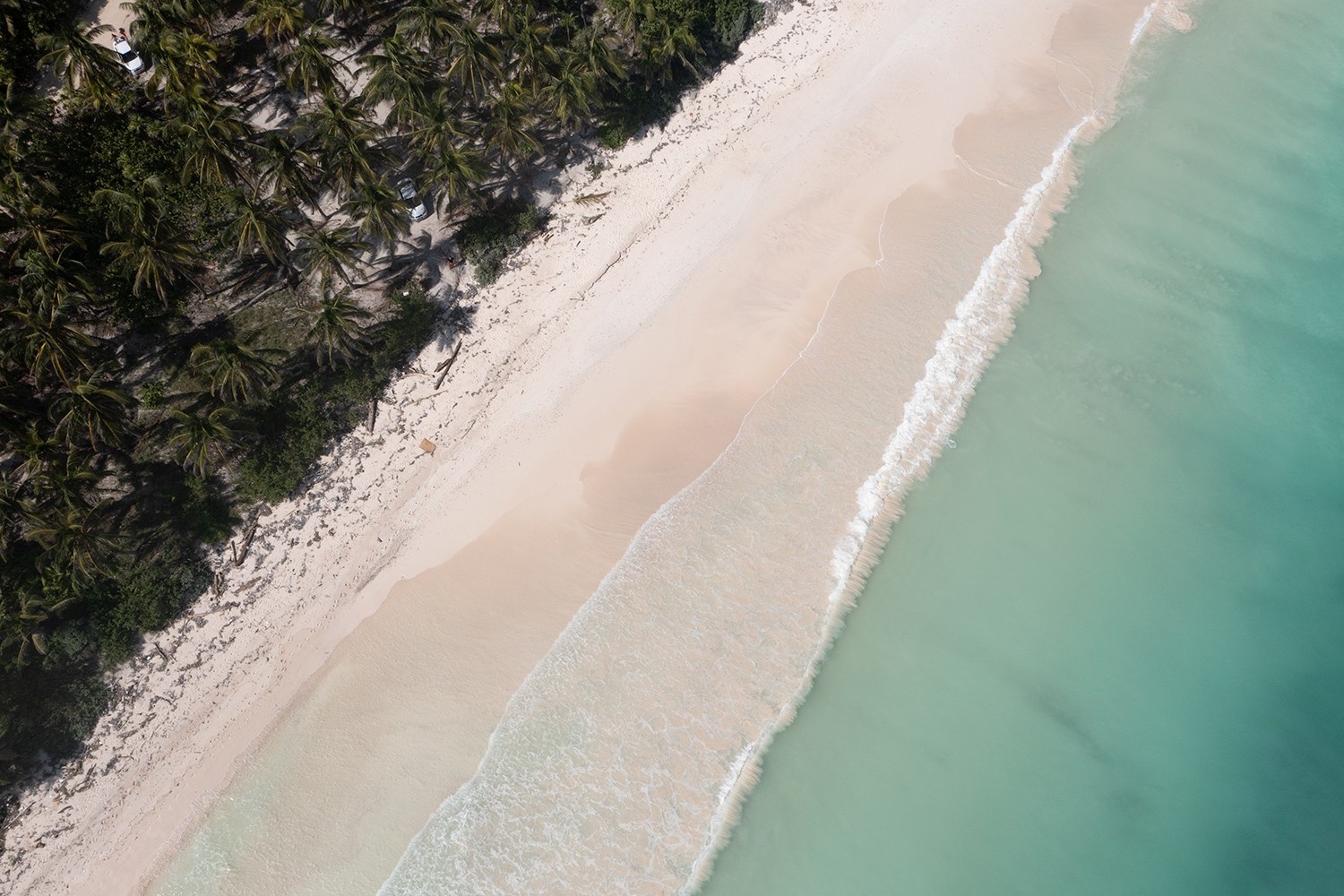
Sian Ka'an Biosphere Reserve. Courtesy of Manuel Ibarra.
Conservation, Sargassum, and the Cost of Growth
The contradiction becomes even more visible further south in Sian Ka’an Biosphere Reserve, the UNESCO-protected reserve that begins at the edge of the hotel zone. Here, Tulum still resembles the fantasy that travelers originally came searching for: undeveloped beaches, mangroves, wildlife, and long stretches of untouched coastline.
But access, again, comes with similar hurdles plus regulated routes designed to protect the ecologically sensitive region. Many of Zarazúa’s excursions begin in this area, guiding visitors through its birdlife, wildlife, and quieter natural landscapes.
Tulum’s explosive growth has placed enormous pressure on its ecosystems, from coral reef degradation and water contamination to worsening sargassum blooms that blanket the shoreline each summer. Conservation is no longer optional.
Ortiz has become particularly vocal about the environmental side of the crisis. “The sea has become like hydroponics,” he says. “The ocean is full of contamination, and the algae reproduce faster.”
He also argues that Tulum’s recent tourism slowdown reflects a broader correction happening within the destination itself. “If you don’t give to Tulum, Tulum doesn’t give back,” Ortiz says. “People thought the destination worked by itself. Now they realize it doesn’t. You need people who genuinely care for the place.”
After years dominated by nightlife and party tourism, Ortiz believes the town is shifting again — this time toward families, slower travel, and operators more invested in the long-term future of the destination. “We don’t want the party market anymore because we already saw that it doesn’t work,” he says.
The Price of Paradise
And still, despite the frustrations, Tulum continues to hold onto the magic that made people fall in love with it in the first place. Beyond the beach itself, the region remains filled with cenotes, lagoons, jungle reserves, and archaeological sites. Perhaps the reality today is less about Tulum as an untouched paradise and more about balancing access, conservation, community, and growth in a place the world arrived to all at once.

Angelika Pokovba is a writer living between New York City and the Mexican jungle, where she writes about travel, design, culture, hospitality, and the rituals that shape the way we live. Drawn to ancestral traditions, sustainability, and destinations with a strong sense of place, her work explores the nature, identity, craftsmanship, and modern life through an immersive and oftentimes personal lens. She speaks six languages, loves getting lost in local markets and cooking elaborate meals from whatever she picks up along the way, and feels most at peace at 10,000 feet. Follow along on @wordsbyangelika.
North Stars: Diversity & Inclusion, Heritage Value, Wildlife Ecosystems
More Stories
 CULINARY, DRINK
Get to Know the Producers Behind the J.P. Bourgeois Portfolio
 CULINARY, DRINK
Where to Taste Wine in Willamette Valley
 DRINK
DRINKMeet the Distillery Making Vodka From Fog
 DRINK
DRINKSake’s Next Step: How Japan’s Rice Wine Is Evolving
 DRINK, HOME
The Buzz on InFizz: Breville’s Carbonator Elevates Sparkling Water