North Stars:

Production & Consumption

Certifications

Waste Management
“Should you feel okay ordering an endangered fish at a five-star hotel?”
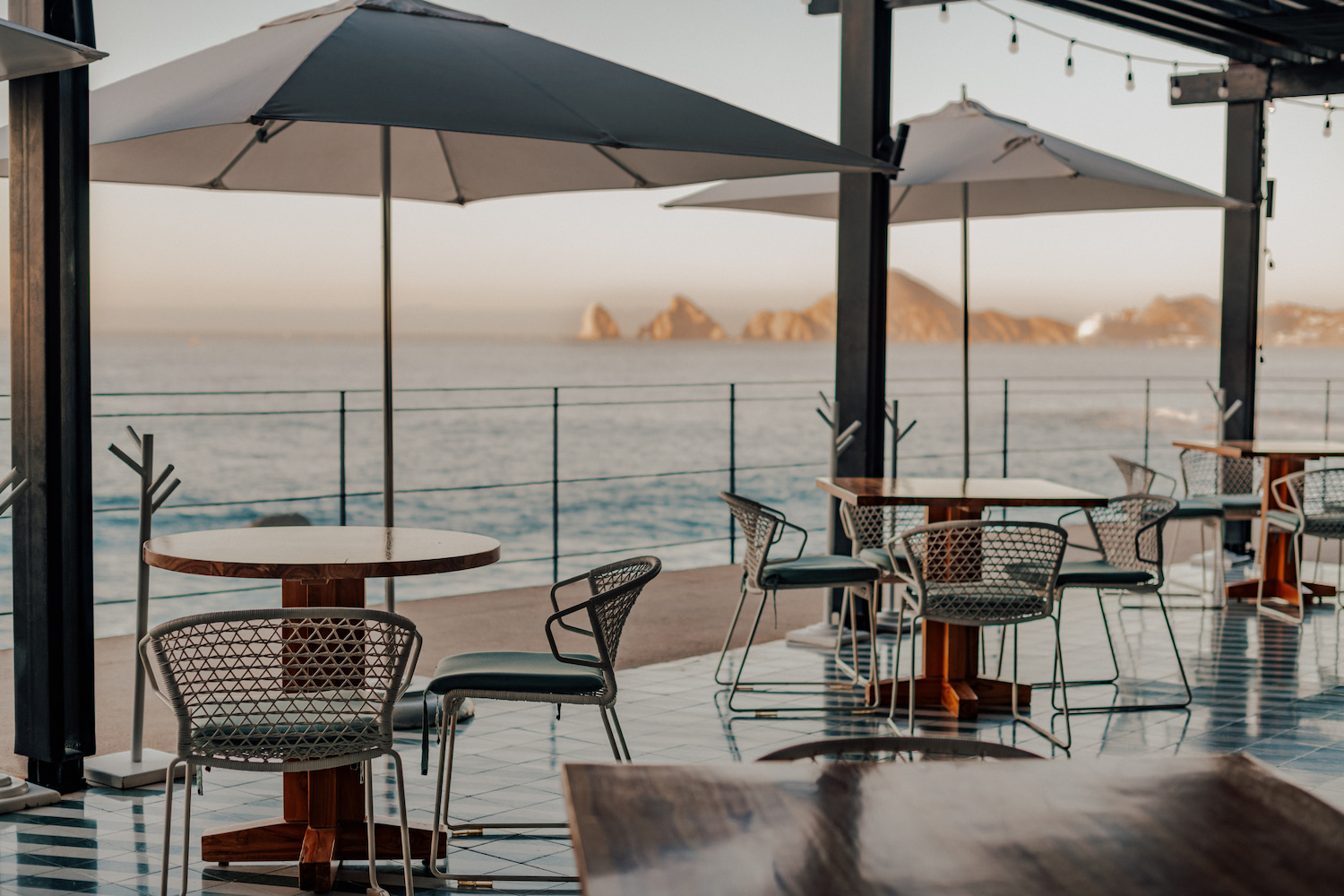
The Ledge Outdoor Terrace, The Cape.
The Azure Road Take
From the balcony at The Cape, a Thompson Hotel, you get the classic Cabo frame: Monuments surf break below, the Arch in the distance, and the infinity pool in between. It is a place built for sunsets, mezcal, and stylish design. Education about an endangered fish species doesn’t exactly show up in the brochure.
Which is why the presence of totoaba, a flaky white fish, on the resort’s menu feels like a plot twist. An endangered native species of the Gulf of California, the totoaba’s decline has been linked to overfishing, illegal trafficking, and the decline of the vaquita porpoise. Now the fish is being bred in hatcheries, raised in sea pens up the coast, and then sent to resort kitchens like The Ledge as part of a cautious recovery effort.
A luxury hotel is not the first place you expect that story to be handled with care. Yet at The Cape, Executive Chef Ari Reyes and his team have made responsible seafood sourcing integral to the menu, paying attention to what is in season and which local suppliers they trust. The result is a dish that raises a question before you lift your fork: Should you feel okay ordering an endangered fish at a five-star hotel?
Sustainability Chops
The answer, in this case, depends on the difference between wild totoaba and farmed totoaba, which is the difference between black market goods and a regulated supply chain. Mexico permanently closed the legal totoaba fishery in 1975, and international commercial trade in wild totoaba and its parts remains restricted under CITES Appendix I, reserved for species threatened with extinction. The species is also protected under the U.S. Endangered Species Act.
At The Cape, Reyes sources farmed totoaba – and other sustainable seafood and shellfish – through Baja Sustainable, a seafood line from the Baja California Sur marketer Nueve Palmas.
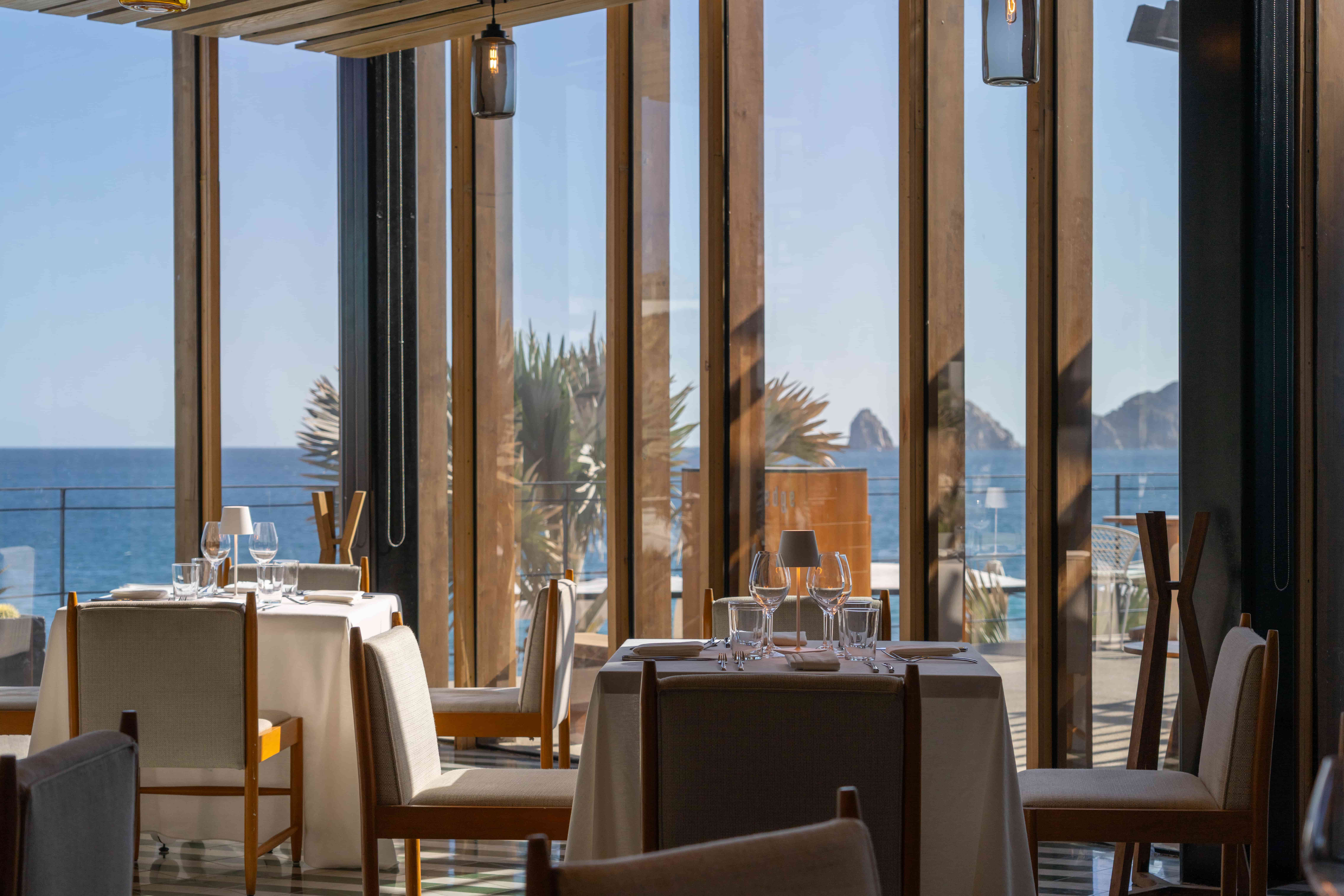
The Ledge Dining Room, The Cape.
In 2025, Seafood Ninja verified that 100% of Baja Sustainable’s products carried some form of environmental guarantee, whether through certifications, fishery improvement projects, or favorable Seafood Watch ratings.
In essence, what reaches the kitchen comes from aquaculture. In Baja California Sur, companies such as Santomar raise totoaba, alongside oysters and red snapper, in offshore sea pens, describing their work as regenerative aquaculture.
The broader recovery effort for totoaba, however, is still very much in progress. Mexico has continued releasing hatchery-raised juvenile totoaba into the Gulf of California through joint conservation efforts, including a 2025 release of 40,000 fish in Baja California Sur.
Roughly 270,000 totoaba had been reintroduced over the previous decade. That does not mean the species has been saved. Illegal fishing continues, driven largely by demand for the fish’s swim bladder, or fish maw, which is sold illegally in Chinese and other East Asian markets and prized for its perceived medicinal and collagen-related value. Gillnets set for totoaba remain one of the central threats to the vaquita porpoise, a critically endangered marine mammal found only in the upper Gulf of California.
Whether farmed totoaba truly helps conserve the species is still debated. Some conservation groups argue that legal trade can blur the line between farmed and wild products, making enforcement harder. Recent academic research points the other way, suggesting regulated aquaculture could reduce poaching if legal supply stays competitive with illegal supply and does not drive up demand. Further, fishermen and communities previously employed in wild fishing now have job opportunities in aquaculture. So the story here is not a clean redemption arc but a live experiment.
There is also a simpler argument, the one that starts with geography. A farmed totoaba raised in Baja California Sur and served in Cabo lowers the carbon footprint of the kitchen. It does not need to be flown in from farther north like many halibut and salmon programs do. In a place that talks seriously about local sourcing, that distinction counts.
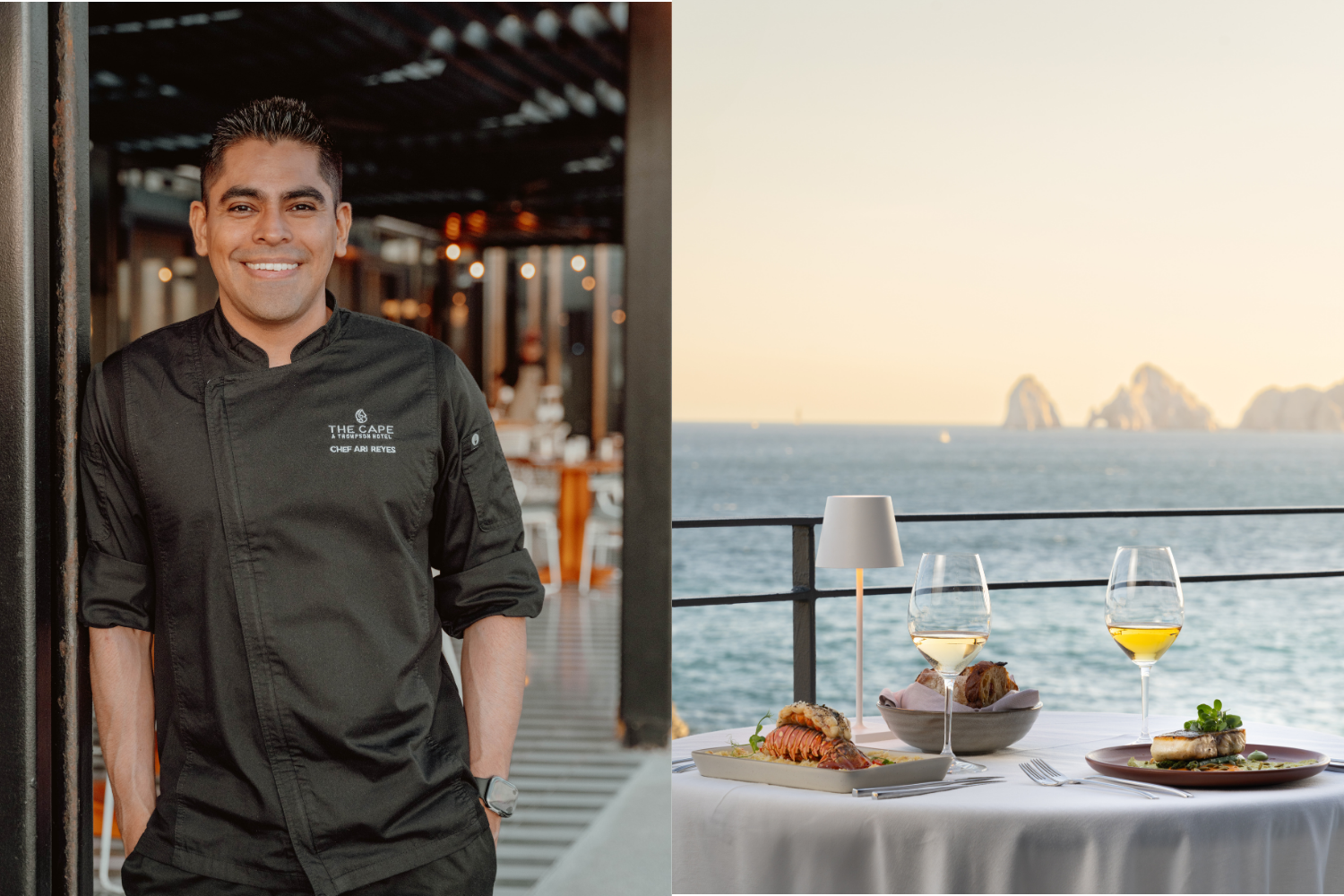
Chef Ari Reyes at The Cape, Baja California.
The Bite
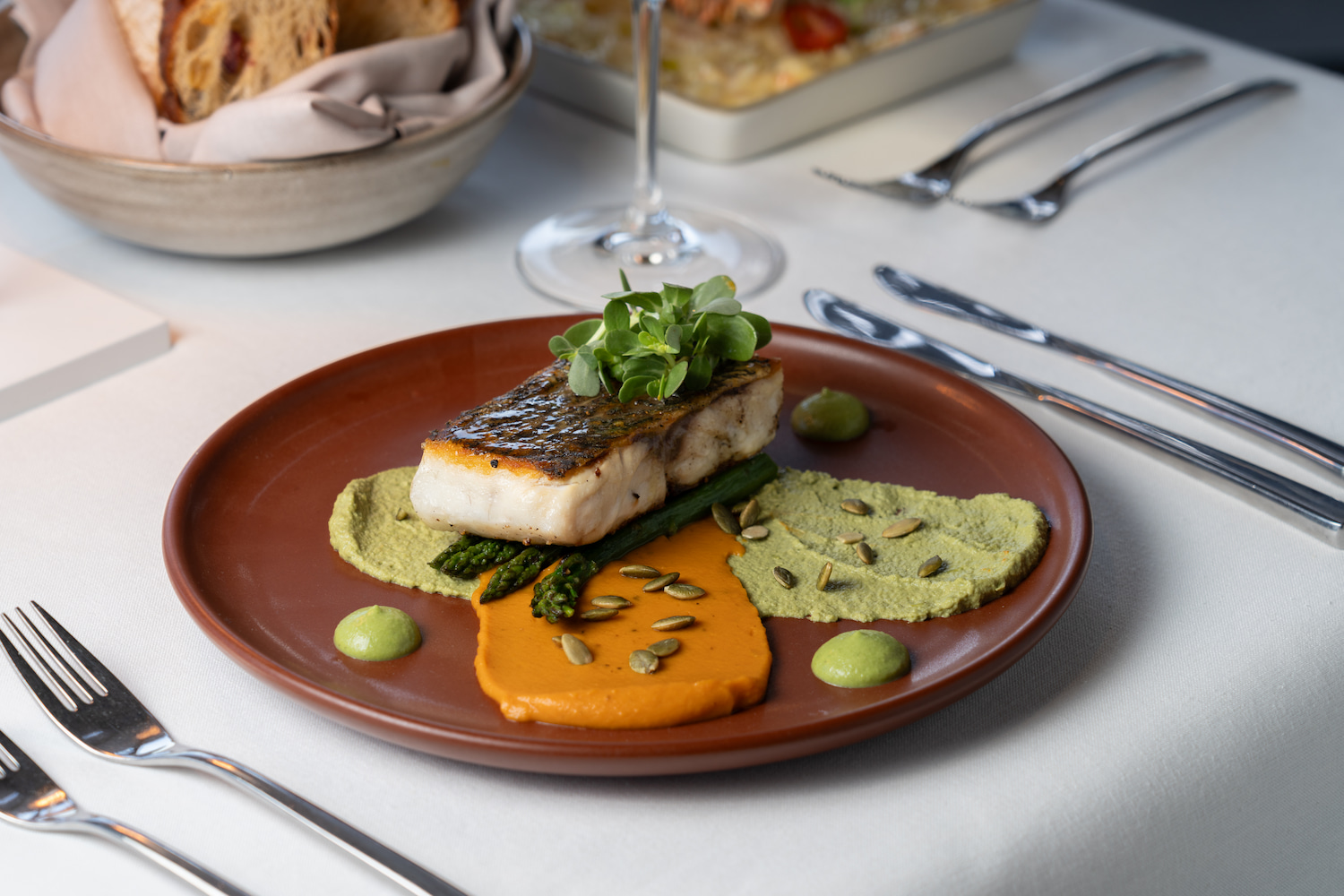
At The Ledge, totoaba is served as a seared filet with pipián. Topped with microgreens and kept otherwise simple, the preparation lets the fish speak for itself.
Pipián is a traditional Mexican sauce made from ground seeds, often pepitas, and here it brings a nutty richness to the plate that works as a subtle accent to the totoaba.
The filet flakes easily under a fork, with a firm but tender texture that recalls halibut. For fish eaters who prefer a mild flavor, totoaba should appeal with its slightly buttery taste reminiscent of sea bass.
The Ledge serves totoaba as a straightforward dish, which is part of the appeal. The fish is good, the sauce speaks of regional place, and the plate testifies to why totoaba earns its place on menus in Baja.
Origin Story
Totoaba is a large drum fish found only in the Gulf of California, which makes it both biologically distinctive and deeply tied to northwestern Mexico. It can grow to a remarkable size, more than six feet long in some cases, and for generations it was valued for both its meat and its swim bladder.
For much of the twentieth century, it was an important commercial species in the upper Gulf, until overfishing, habitat disruption, and the illegal trade in its bladder pushed it toward collapse. Today, its presence on a plate in Cabo tells a story not just about conservation, but about a fish that has long belonged to this region.
Restaurant Vibe
The Ledge opens straight to the water, with white tablecloths inside, a tiled terrace outside, and the Arch hovering in the distance. It feels airy and polished, but not stiff. The room is part of The Cape’s larger design language, where concrete towers, lush plantings, and open sightlines soften the architecture and pull the coastline into view.
Across the property, the effect feels detail-oriented rather than flashy. From the decorative touches in the rooms to the textiles, furnishings, and materials, everything feels carefully chosen. The Cape is clearly designed for urban travelers who want a coastal setting without giving up contemporary taste. That mix of curated ease carries into The Ledge, which feels relaxed enough for a long lunch and considered enough for a plated fish dish at dinner.
Founder and CEO of Azure Road, Lauren Mowery is a longtime wine, food, and travel writer. Mowery continues to serve on Decanter Magazine’s 12-strong US editorial team. Prior to joining Decanter, she spent five years as the travel editor at Wine Enthusiast. Mowery has earned accolades for her writing and photography, having contributed travel, drinks, food, and sustainability content to publications like Food & Wine, Forbes, Afar, The Independent, Saveur, Hemispheres, U.S. News & World Report, SCUBA Diving, Plate, Chef & Restaurant, Hotels Above Par, AAA, Fodors.com, Lonely Planet, USA Today, Men’s Journal, and Time Out, among others.
Pursuing her Master of Wine certification, she has also been a regular wine and spirits writer for Tasting Panel, Somm Journal, VinePair, Punch, and SevenFifty Daily. Mowery is a graduate of the University of Virginia and Fordham Law School, and she completed two wine harvests in South Africa.
Follow her on Instagram @AzureRoad and TikTok @AzureRoad