North Stars:

Carbon Footprint

Climate Actions

Energy Efficiency
“Night trains are incredibly popular with tourists looking for a low-carbon experience.”
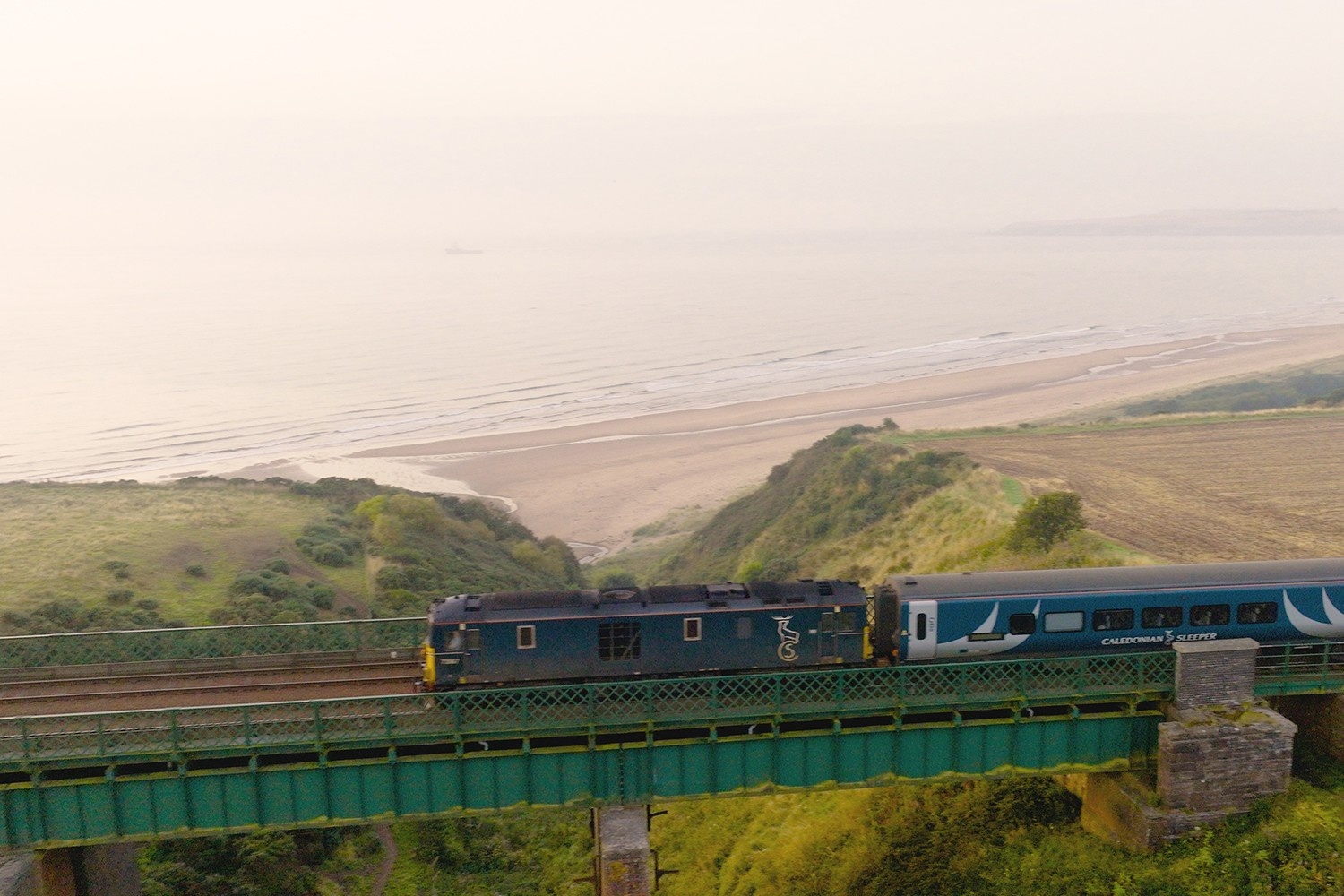
The Caledonian Sleeper running along the coast. Courtesy of Caledonian Sleeper.
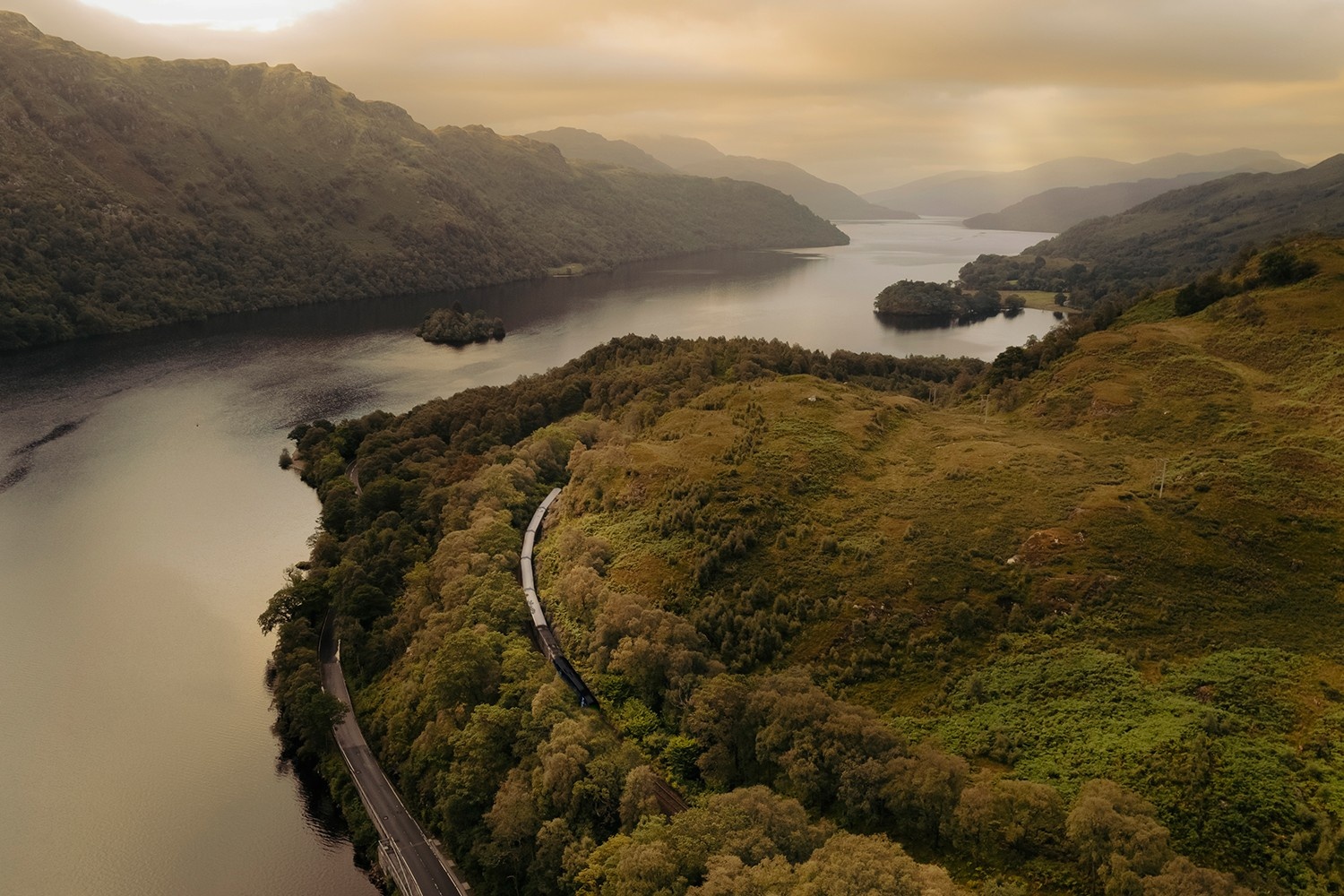
As Britain marks two centuries of rail travel and rail journeys become a more popular means of transport and seeing the world, it seems fitting that one of its most enduring symbols, the night train, is quietly chugging back into relevance. Once dismissed as outdated, sleeper trains are re-emerging as symbols of the future: low-carbon, slow, and deeply human.
Sleeping cars have been around since the 1830s, but the first one, the Pullman sleeper, was introduced for comfortable nighttime travel in 1867. Nearly two centuries later, their appeal feels newly urgent. According to the European Environment Agency, rail remains the most climate-friendly form of motorised transport — second only to walking or cycling.
A study comparing the London–Edinburgh route found that a train journey emits around 12.5 kg of CO₂ per passenger, compared to 136.4 kg by car and 165.1 kg by plane. Another study revealed that across Europe, the average night train has a climate impact 28 times lower than an equivalent flight.
For a generation recalibrating how they move through the world, sleeper trains embody what sustainability should feel like: not deprivation, but balance; a quieter, slower, more meaningful way to travel.
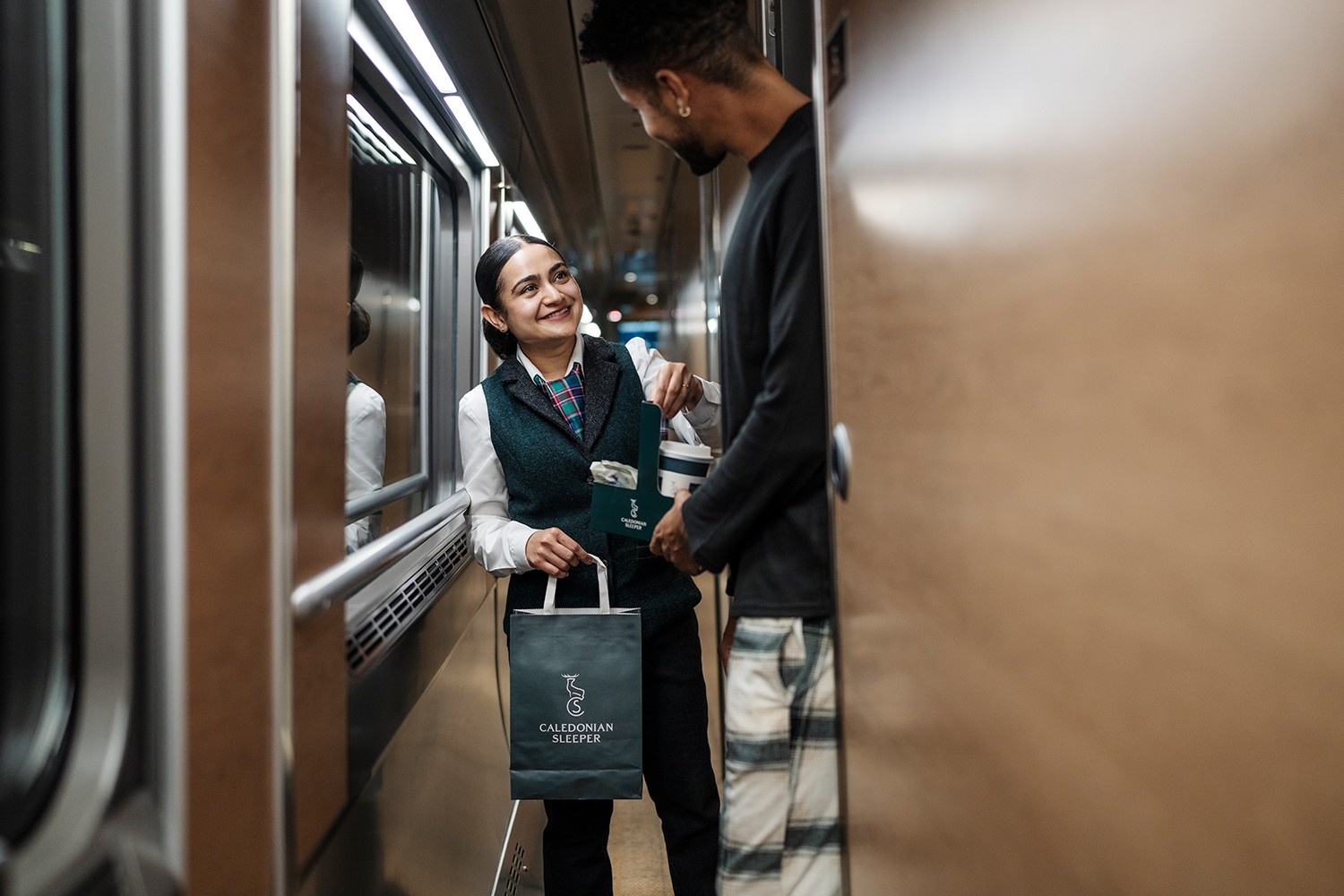
Warm hospitality is part of the sleeper train experience. Courtesy of Caledonian Sleeper.
Journeys Out of the Darkness
Few people know this better than Mark Smith, founder of The Man in Seat 61, who has spent decades helping travelers rediscover the romance of rail.
“When I started Seat 61,” he says, “people took the train because they had a flying phobia or just liked trains. Now they say two things: they want to cut their carbon footprint, and they want to avoid the stressful experience air travel has become.”
Smith calls this shift a “change in the graph.” Before 9/11, rail could only compete with flights up to three hours. Now, travelers happily choose trains lasting five, six, even seven hours — and rediscover what 19th-century passengers once knew: “A 12-hour overnight journey from 8 pm to 8 am is faster than a seven-hour daytime one.”
That’s the quiet magic of the sleeper train: time regained rather than lost. Falling asleep in one city and waking up in another is to move in harmony with the world, not against it.
In Moonlight Express: Around the World by Night Train, British writer Monisha Rajesh captures this revival through stories rather than statistics. She observes that many people were hesitant to fly after the pandemic, opting instead for private compartments and shorter journeys. “In 2022, Interrail had a record year of sales — one line at a time, sleeper trains inching back out of the darkness,” she notes.
Her journeys trace the rebirth of overnight travel through lived examples: new routes across Austria, cooperative ventures linking Brussels to Berlin and Prague, and Scandinavia’s renewed faith in its north-bound night lines. For Rajesh, the revival is as emotional as it is environmental; a movement built on nostalgia, connection, and care.
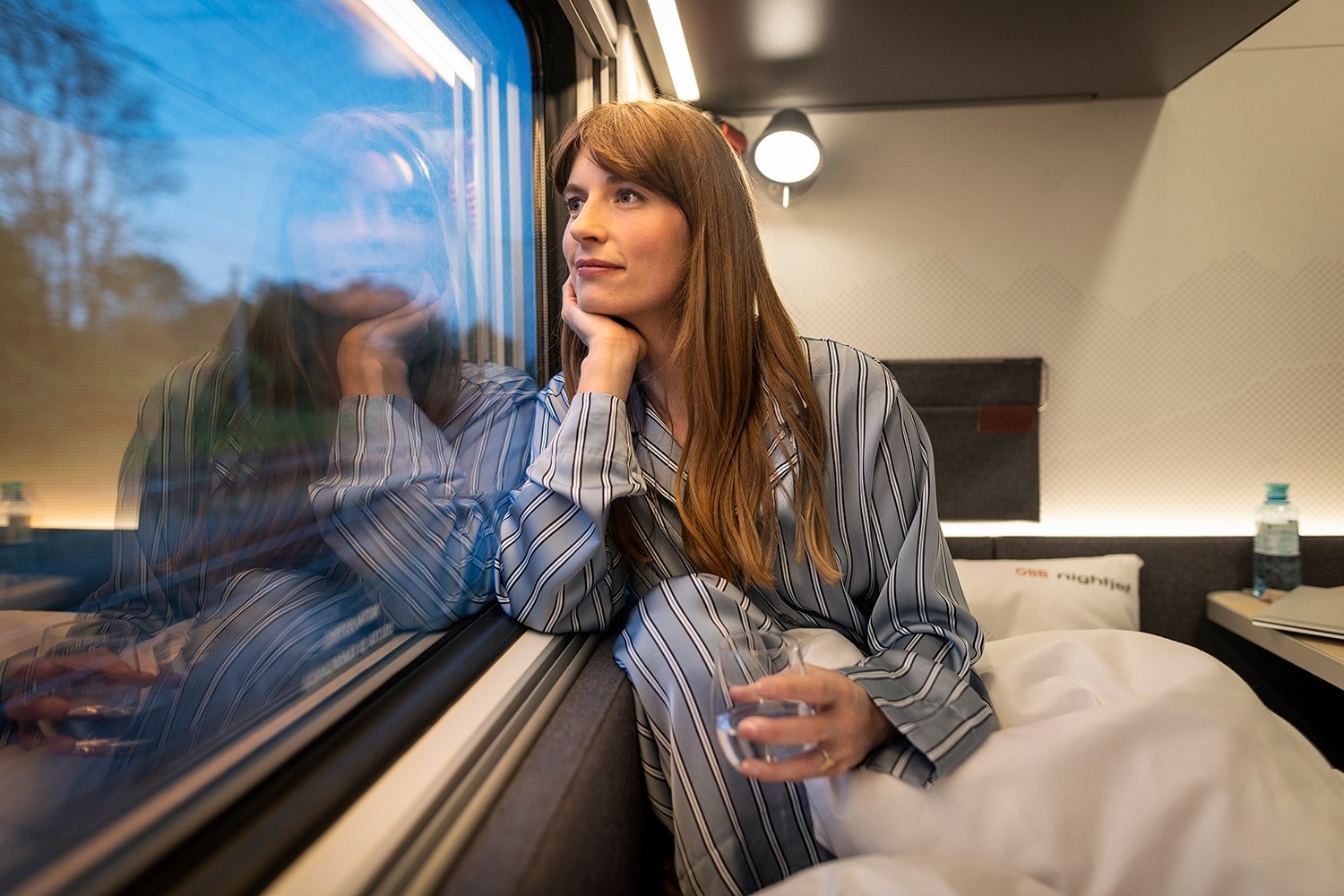
Traveling aboard Nightjet. Courtesy of OBB Nightjet.
Europe’s Nightjet and Beyond
Austria’s national rail operator, ÖBB, has become the face of this renaissance. Its Nightjet service now connects major European cities — Vienna, Berlin, Zurich, and Paris — on sleek new trains that pair conscience with comfort.
“In recent years, a strong movement towards environmentally friendly travel has emerged,” says ÖBB spokesperson Bernhard Rieder. “Passengers now want both comfort and climate awareness; they no longer see those as opposites.”
Inside the new carriages, energy-efficient design meets old-world luxury: compartments that convert from sofas to beds, with private showers and recycled materials throughout. Rieder calls it an effort to make rail travel “aspirational again”.
Not far, the Caledonian Sleeper linking Scotland and London remains one of the world’s most memorable rail journeys.
“Our service has an iconic status and is part of a unique club,” says Steven Marshall, Head of Sales & Marketing. “Imagine a journey that links the romance of the Scottish Highlands to the buzz of London. It’s incredibly popular with tourists looking for a low-carbon experience that lets them dream their way overnight to wake up refreshed in another destination.”
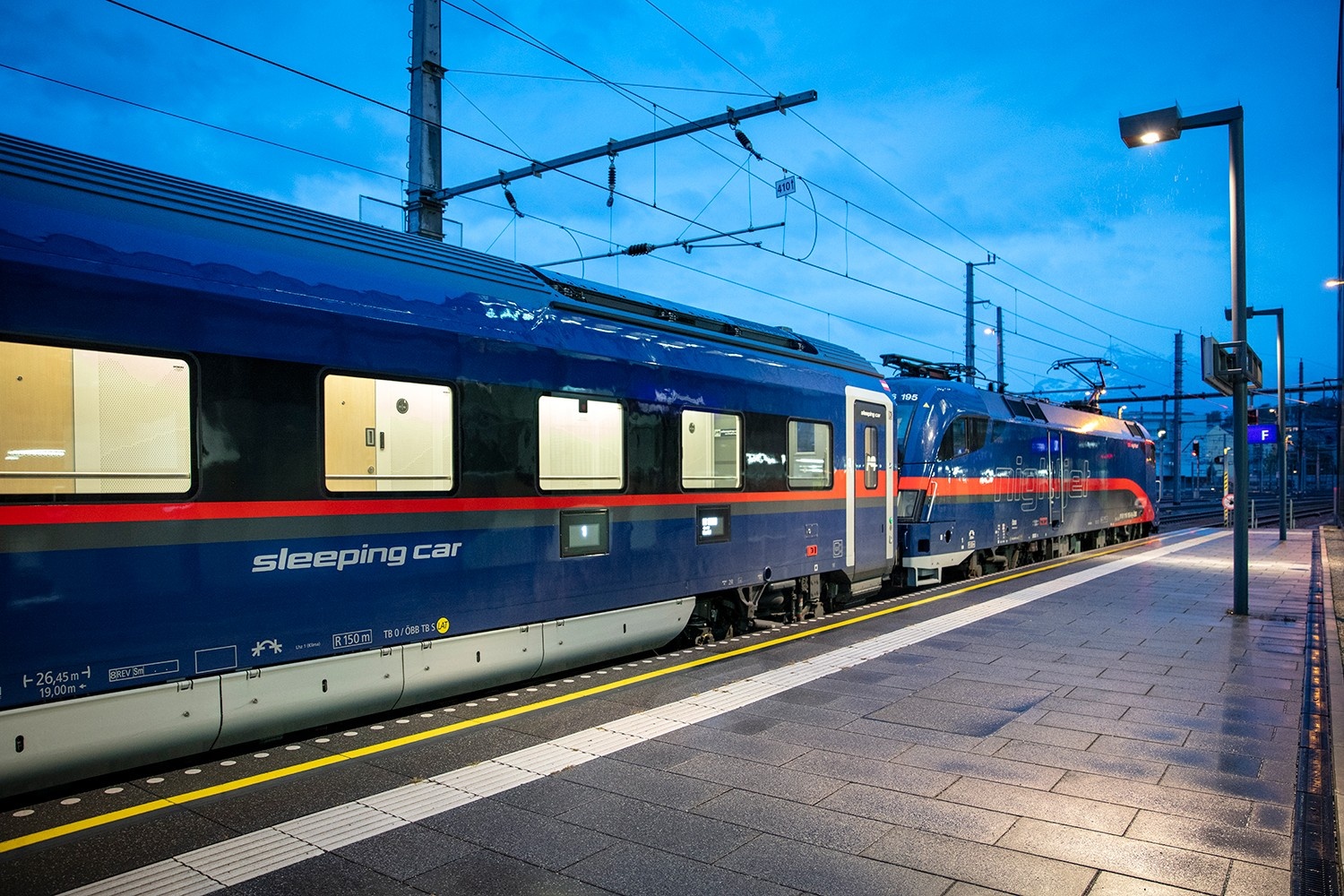
Sleeping cars on Nightjet. Courtesy of OBB Nightjet.
The Slow Travel Mindset
The blend of romance and practicality explains why sleeper trains have once again captured travelers’ imaginations. Traveling by sleeper is to practice slow travel in its truest sense.
“There’s the ritual of settling into your cabin, watching the city dissolve into countryside; the soft rattling of wheels on steel. And there’s that moment before sleep, when you’re between departure and arrival, which is part of the appeal,” says Janavi Iyer, programming director at a Mumbai-based radio station.
In an age of instant gratification, the sleeper train restores a kind of grace. Still, the Renaissance faces real obstacles. Sleeper trains are expensive to operate: they require more staff, specialist rolling stock, and make just one loaded trip per day. Infrastructure bottlenecks and high access fees don’t help. “Airlines pay no fuel tax and no VAT on tickets,” Smith notes, “while rail operators sometimes do. It’s almost as if the system wants you to fly.”
Yet support is growing. Countries like Belgium have begun reducing track fees, and startups such as European Sleeper are connecting new city pairs, proof that the model can thrive with the right policies and design. And it isn’t just Europe; other countries around the world are joining the sleeper renaissance, from Japan’s Train Suite Shiki-shima, which offers routes throughout the country, to India’s Maharajas Express.

Teja Lele trained as an architect, only to find her love for words outweighed that for architectural drawings. An editor and writer based in India, she writes about travel, architecture, food, and lifestyle, with bylines in publications such as BBC Travel, Mint Lounge, South China Morning Post, Nikkei Asia, and The New Indian Express. Connect with her on Instagram @tejalele.
North Stars: Carbon Footprint, Climate Action, Energy Efficiency
More Stories
 DRINK, PARTNERSHIP
Crafting Alto Adige’s Future: The Evolution of Cantina Colterenzio
 DRINK
DRINKSeven “Slow” Sparkling Wines for the Holidays
 DRINK, PARTNERSHIP
Why Loveblock Founder Erica Crawford Leads with Organic, Not Origin
 DRINK
DRINKOne Winery’s Answer to Napa’s Changing Wine Market
 DRINK, PARTNERSHIP
What Happens When the Same Team Makes Wine for 20 Years? Wairau River