North Stars:

Production & Consumption

Certifications

Wildlife Ecosystems
“Organics was still considered very fringe, like hippies and granola bars, not something that mainstream wine drinkers would take seriously.”
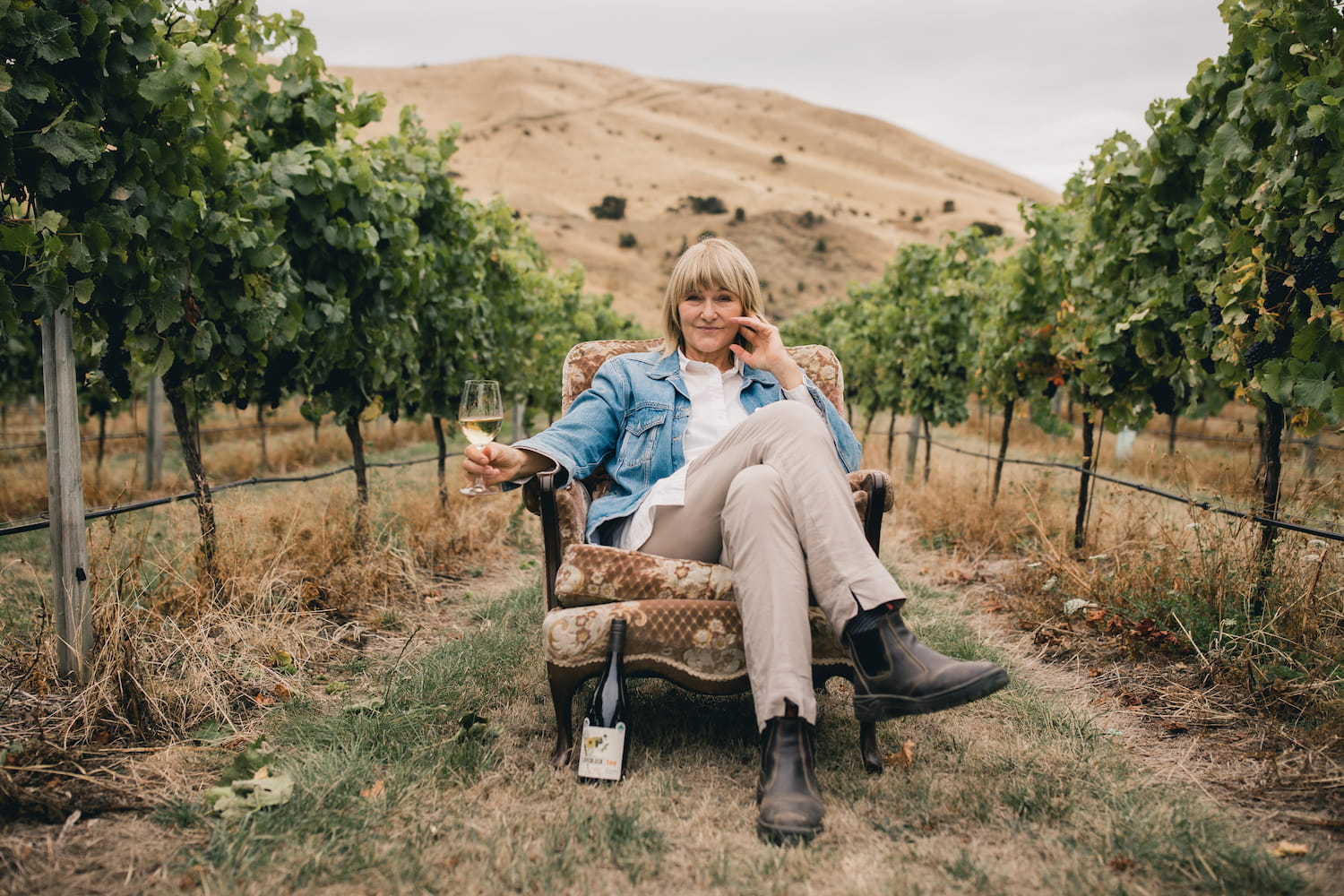
Erica Crawford, CEO of Loveblock. Courtesy of Loveblock.
Partnership
When Erica Crawford first stepped onto the windswept hills of Marlborough’s Awatere Valley, she knew she had found something special. The parcel was rugged and remote, but it spoke to her. This was it. This block of land would become Loveblock.
Crawford first gained acclaim for building one of the most successful wineries out of New Zealand with her husband, Kim Crawford. After selling it in the mid-aughts, however, they began hunting for their next project. One that would allow her to fulfill her vision of an organic, terroir-driven wine.
“Going organic is a choice, and for us feels like the right thing to do,” she says. “Our intention is to nurture the ecosystem of the soil and vines and give back to its roots as naturally as possible. Ultimately, I believe the resulting wine is better and ‘truer’ to its terroir,” she says.
That belief didn’t come from chasing trends or researching markets—it came from lived experience. For Crawford, the pursuit was deeply personal, born from the pressures of career, family, health, and a science-driven mind.

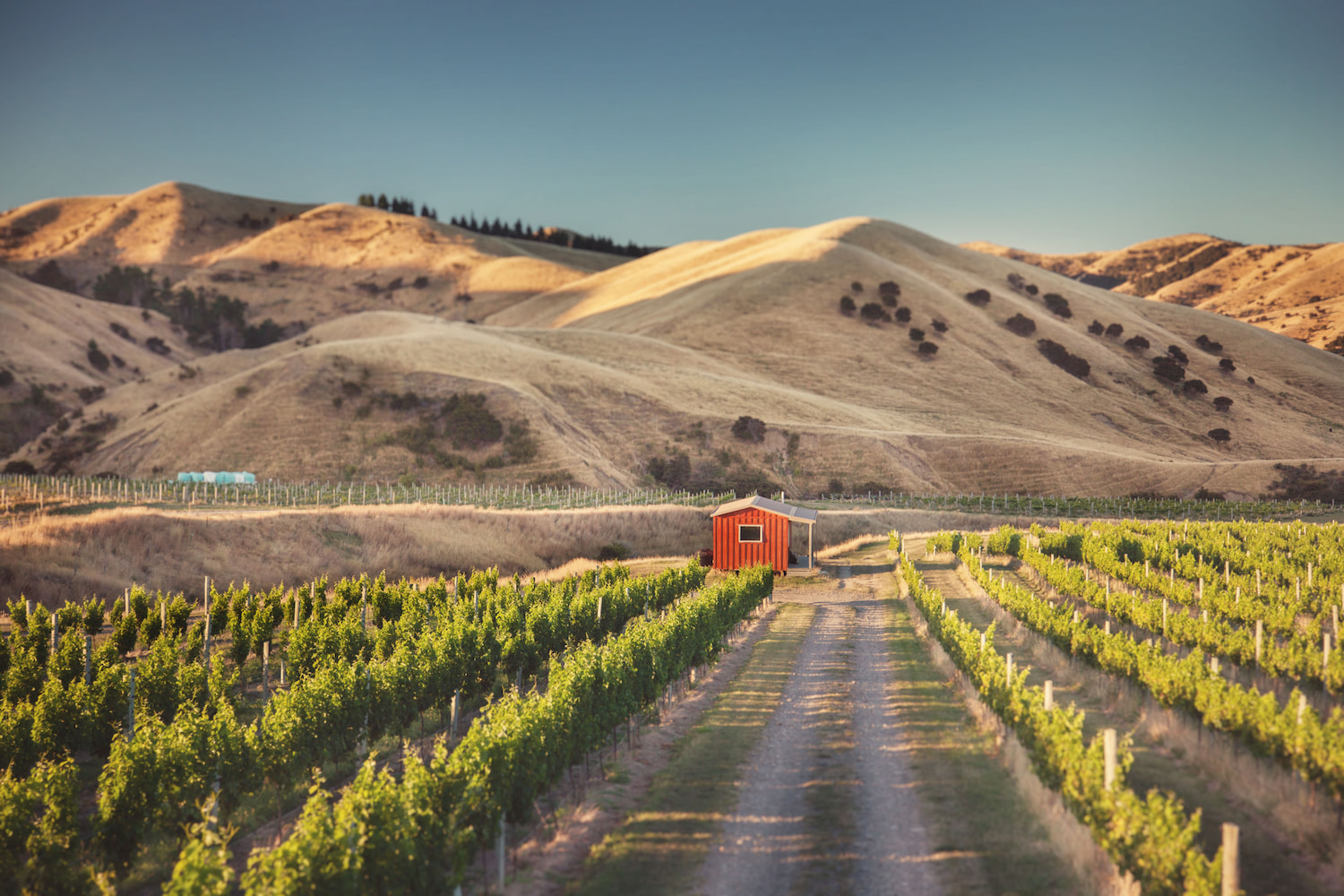
Loveblock's vineyards view. Courtesy of Loveblock.
From Science, Sales to Viticulture
Crawford began her professional life in South Africa as a research scientist in cardiac medicine. She was on track for an academic career, but her heart wasn’t in the publications pipeline. “I was never going to be a highly published scientist,” she recalls. “I loved people too much.”
So she pivoted. A chance conversation with a pharmaceutical rep led to her first sales job. She traded the microscope for a business suit but carried her scientific training with her. That background in systems and analysis became the foundation for the way she approached business later on: logical, experimental, always testing hypotheses.
It was during this time that she met Kim Crawford, a young winemaker, at a South African wine festival. Their relationship blossomed across continents, and by 1990 she had moved to New Zealand. There she continued working in diagnostics, gaining what she now calls her “business apprenticeship”—inventory, cash flow, profit and loss, the fundamentals that would serve her well as an entrepreneur.
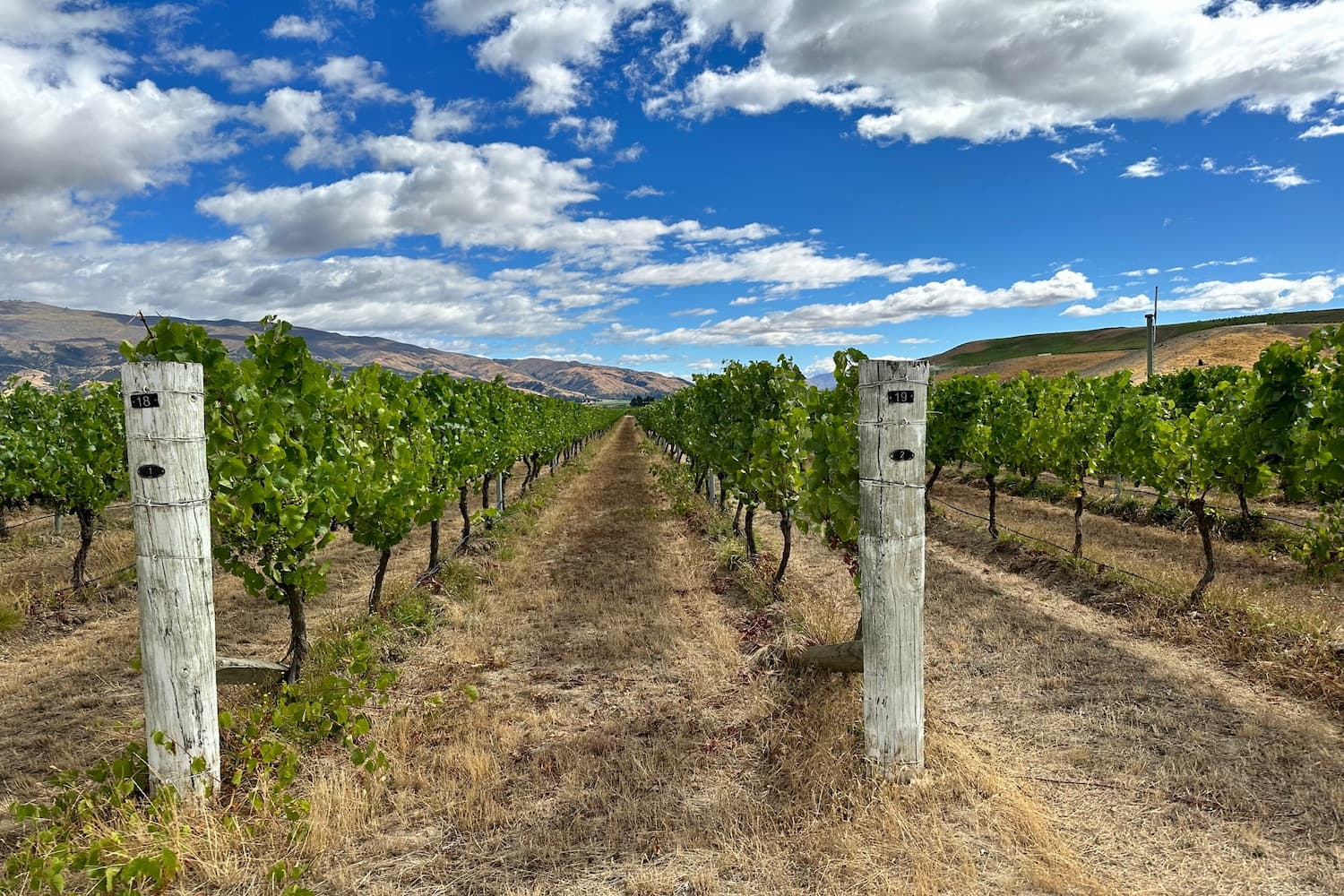
Someone's Darling Vineyard. Courtesy of Loveblock.
Building a Benchmark Brand
By the mid-1990s, Crawford was a new mother with two young babies. Returning to corporate life wasn’t on the cards, but the New Zealand wine industry was buzzing. In 1996, she and Kim launched Kim Crawford Wines from their kitchen table.
They didn’t own land or facilities, relying instead on contract growers and winemaking partners. “What we owned was just the wine and the brand,” Crawford explains. Eventually, they built the brand into an American household name, ultimately selling to Constellation Brands in 2006. They didn’t know it at the time, but Kim would go on to become Loveblock’s winemaker.
A Personal Inflection Point
Success came with a cost. The pressures of scaling a brand while raising children took a toll. Crawford recalls the breaking point vividly: “I literally drove into a lamppost one day.” Her father had recently passed away, she was juggling two toddlers, and her health was fraying. A doctor urged her to slow down.
That moment marked a pivot in her personal philosophy. She began cutting chemicals from her life—first Diet Coke, then certain skincare products, then household cleaning agents. It was a small but profound shift: if she could choose cleaner alternatives for herself and her family, why not for the land and the wine they produced?
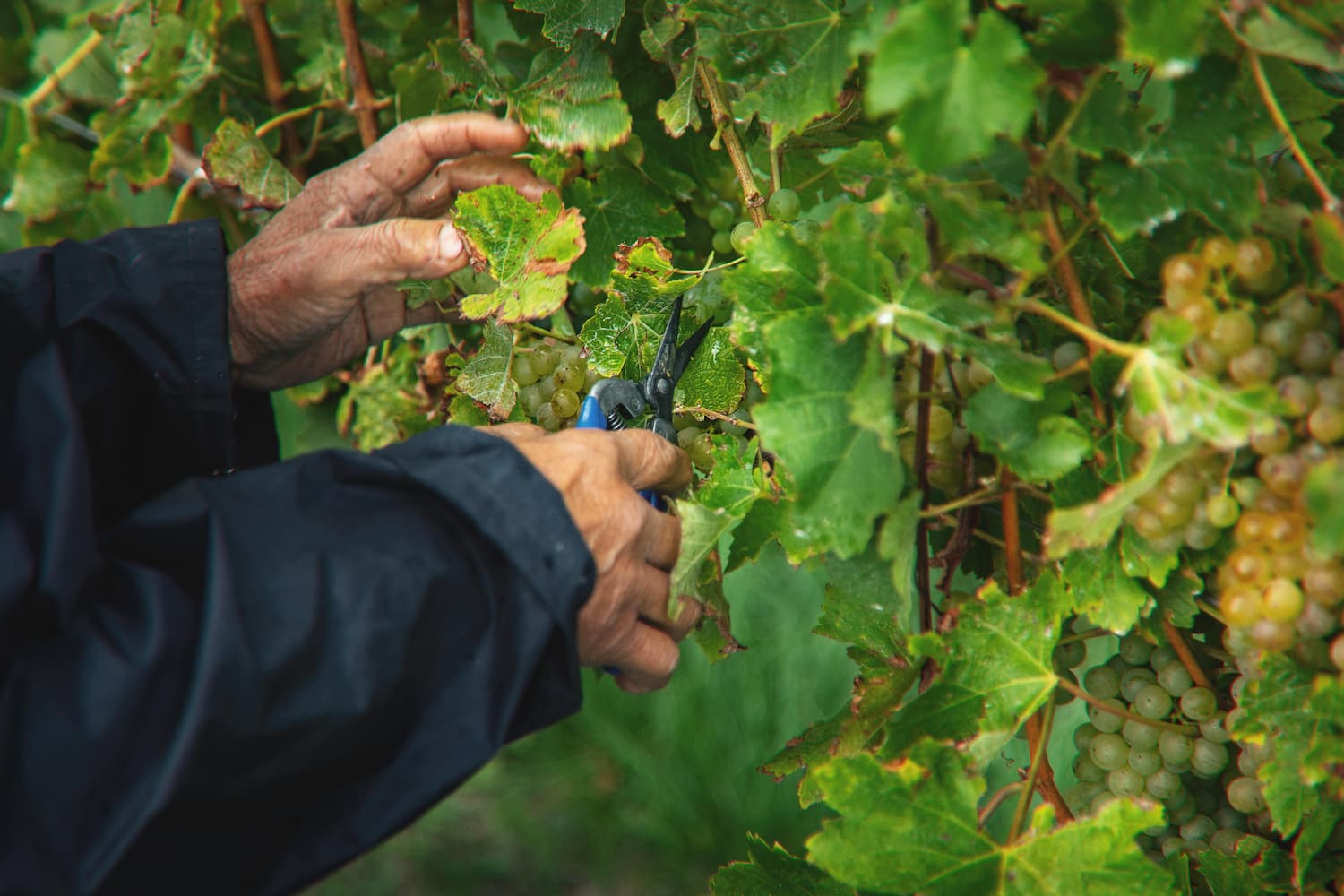
Loveblock Sauvignon Blanc Vines. Courtesy of Loveblock.
“At that time, organics was still considered very fringe, like hippies and granola bars, not something that mainstream wine drinkers would take seriously,” she says.
And yet, when the Crawfords found themselves in possession of new land for a vineyard, they decided to go all in with the idea. “With organic wine, it’s what you don’t put in that matters: no chemical pesticides or herbicides, less winery inputs and a lot of blood, sweat and love,” she says.
Loveblock launched in 2013 with 200 acres in the Awatere Valley. The property would become a living experiment in both organic and regenerative farming: the duo added chickens and cattle into the vineyard system, sowed cover crops and enriched the soil with compost made from prunings, mussel shells, and seaweed. “Our intention is to nurture the ecosystem of the soil and vines and give back to its roots as naturally as possible,” Crawford emphasizes
The wines themselves reflect her belief in minimal intervention. All Loveblock wines are vegan, inspired by her daughter Pia’s decision to switch to a plant-based diet. They limit additives, sulfur, and commercial yeast. And in one of their most innovative moves, the team began replacing sulfur with green tea tannin extract as a natural antioxidant.
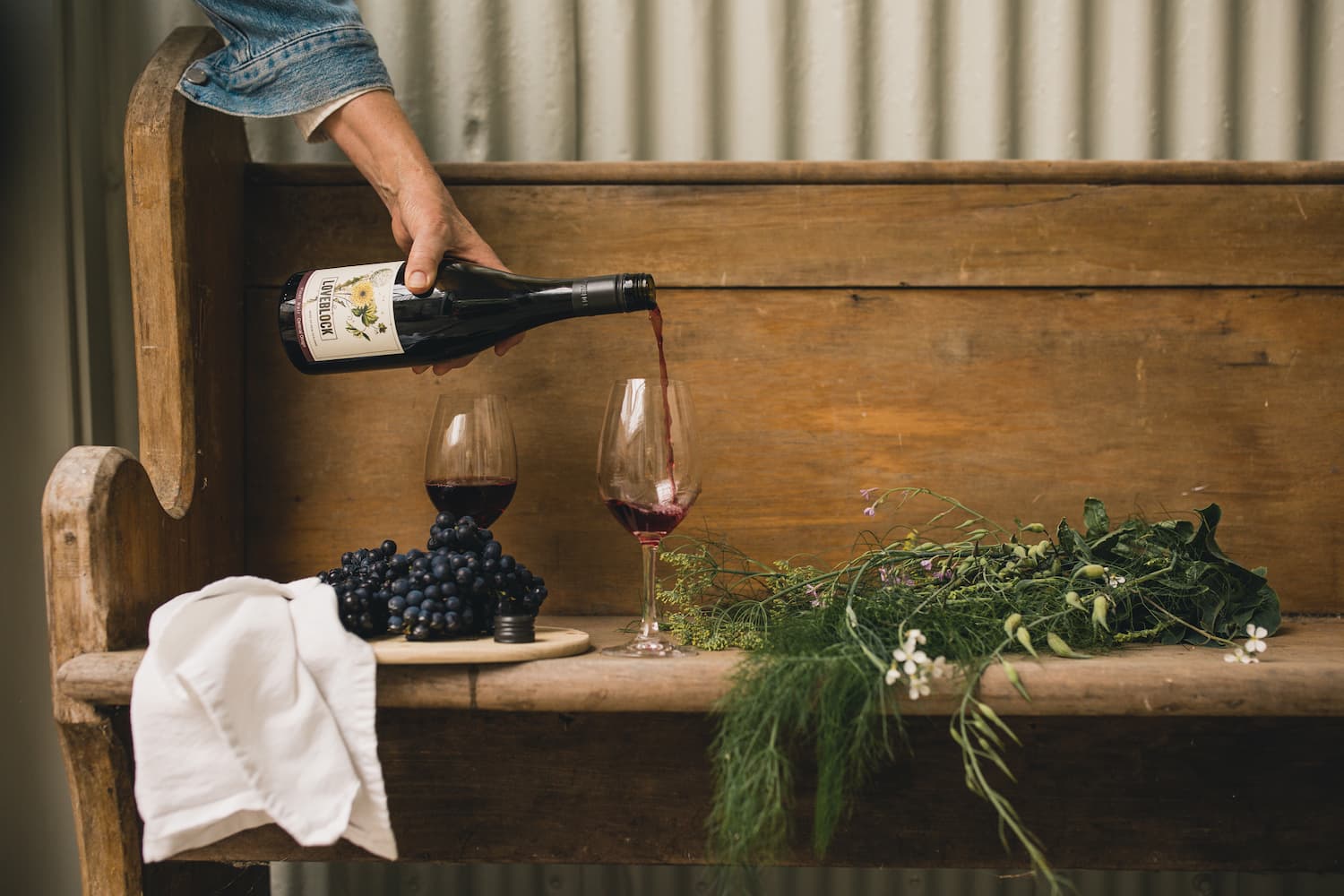
Loveblock Pinot Noir Lifestyle shot. Courtesy of Loveblock.
The TEE Experiment
Crawford earned a degree in viticulture in 2019. Perhaps the most radical example of her tinkering spirit, merged from her background in science and wine farming, is Loveblock TEE Sauvignon Blanc. The name is both a nod to her South African roots—tee means “tea” in Afrikaans—and to the green tea tannin extract that replaces sulfur dioxide.
Sulfur has long been the industry’s preservative of choice, used to stabilize wine against oxidation and spoilage. It’s also used in other food industries to preserve dried fruits like apricots, raisins, and figs, and to stop the browning of French fries and hash browns after peeling.
The average wine in New Zealand has 160 mg/L of sulfur. Loveblock’s organic wines average 50–60 mg/L, while the TEE line contains only 15–25 mg/L of naturally occurring sulfites. By adding green tea tannin at each stage where the wine encounters oxygen—harvest, crush, fermentation, bottling—Crawford created a wine with no added sulfites.
“Wine is inherently unstable and typically requires sulfur to prevent oxidation,” Crawford explains. “At Loveblock, we wanted to see if we could do it differently. With green tea tannin, we can protect the wine naturally and still showcase the land,” she says.
The result is striking: the nose on the TEE Sauvignon Blanc is subtler, the palate softer and more textured, with a delicate lift that reflects both the vineyard and the process.
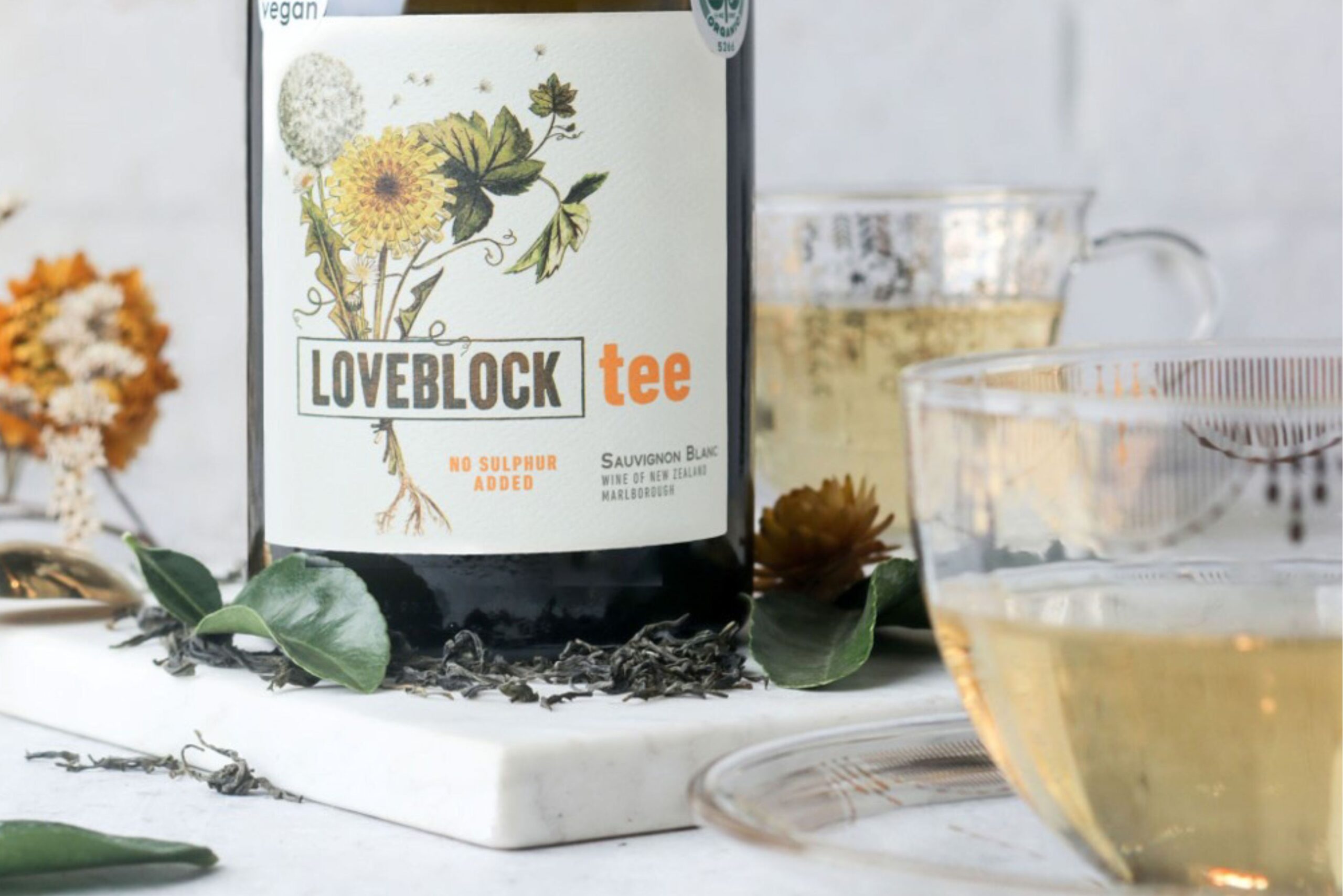
Loveblock Sauvignon Blanc TEE Lifestyle shot. Courtesy of Loveblock.
Climate Change and the Future of Wine
While Crawford doesn’t speak in headlines about climate change, her philosophy is shaped by it. She has seen firsthand how organic systems build resilience: open canopies, lower yields, and healthier soils that help vines withstand stress. “Organics and sustainability is at the heart of our wine and brand,” she says. “In our view, organic and ethical winegrowing is the way of the future,” she says.
She points to the numbers: packaging and freight account for much of wine’s carbon footprint, but vineyard practices matter too. At Loveblock, bottles are made with 62–68% recycled glass and are 140 grams lighter than before, cutting carbon emissions by more than 15%. The winery pumps water with solar energy, and the team have rehabilitated wetlands and planted trees to support biodiversity and sequester carbon. Loveblock is also working toward its carbon-neutral certification.
To Crawford, these aren’t side projects. The next generation of winemakers will face hotter summers, wilder weather, and increasing consumer scrutiny over sustainability. Organic and regenerative practices are practical, adaptive responses to a changing climate. By focusing on soil health, biodiversity, and low-input farming, Crawford has built vineyards that can thrive under pressure.
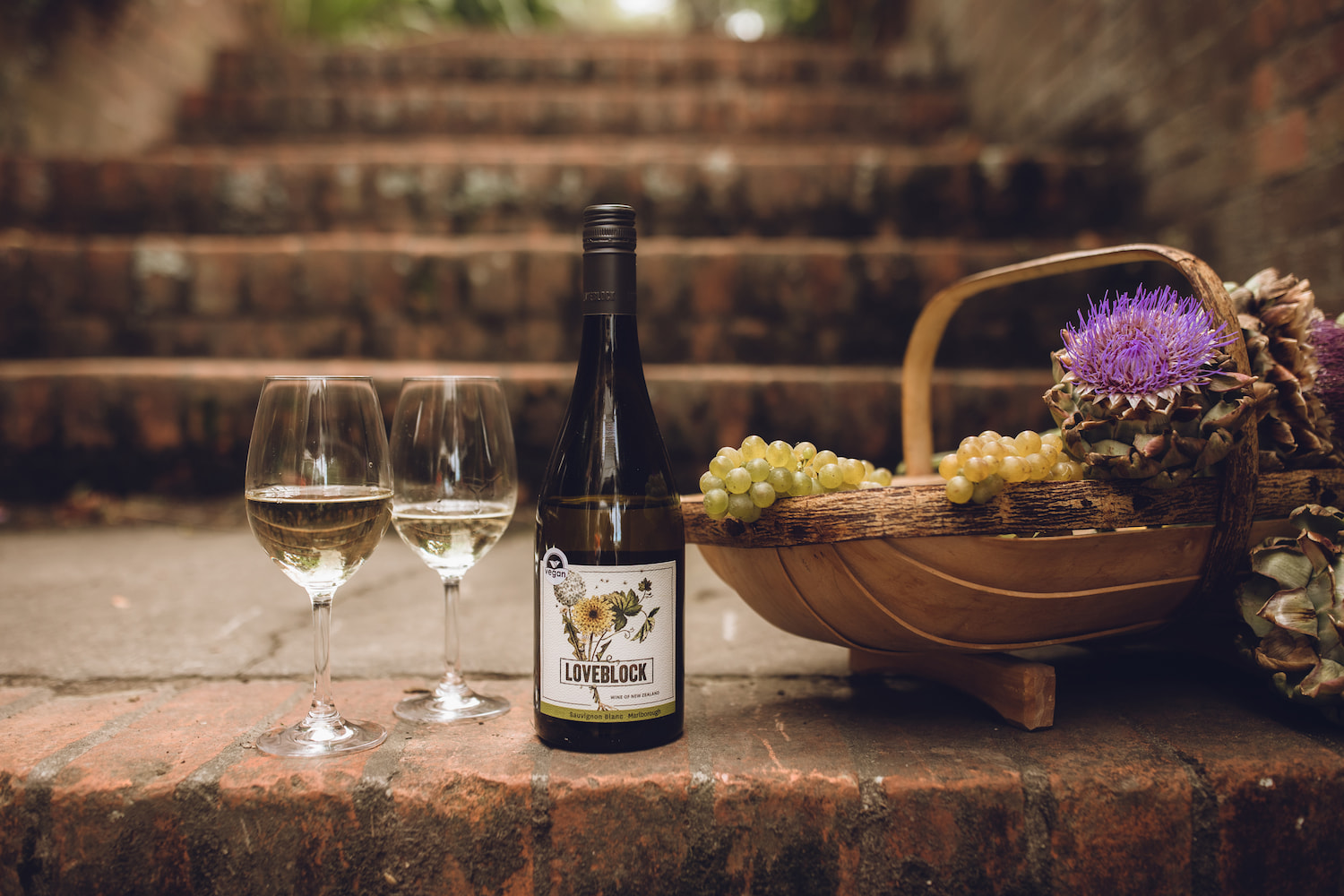
Sauvignon Blanc Glasses & Basket shot. Courtesy of Loveblock.
Leading with Organic, Not Origin
In an industry often obsessed with grape variety and provenance, Crawford has shifted the focus. Loveblock is, of course, unmistakably New Zealand in its Sauvignon Blanc and Pinot Noir expression. But for her, the most important story is how the wine is farmed, not just where it comes from.
By leading with organic practices, Crawford has set Loveblock apart from the sea of Marlborough Sauvignon Blancs. The wines taste truer to the site, but they also embody her personal philosophy: health, sustainability, and longevity.
“Organics is a choice,” Crawford says simply. And for her, it is the only choice that makes sense.
North Stars: Certifications, Production & Consumption, Wildlife Ecosystems