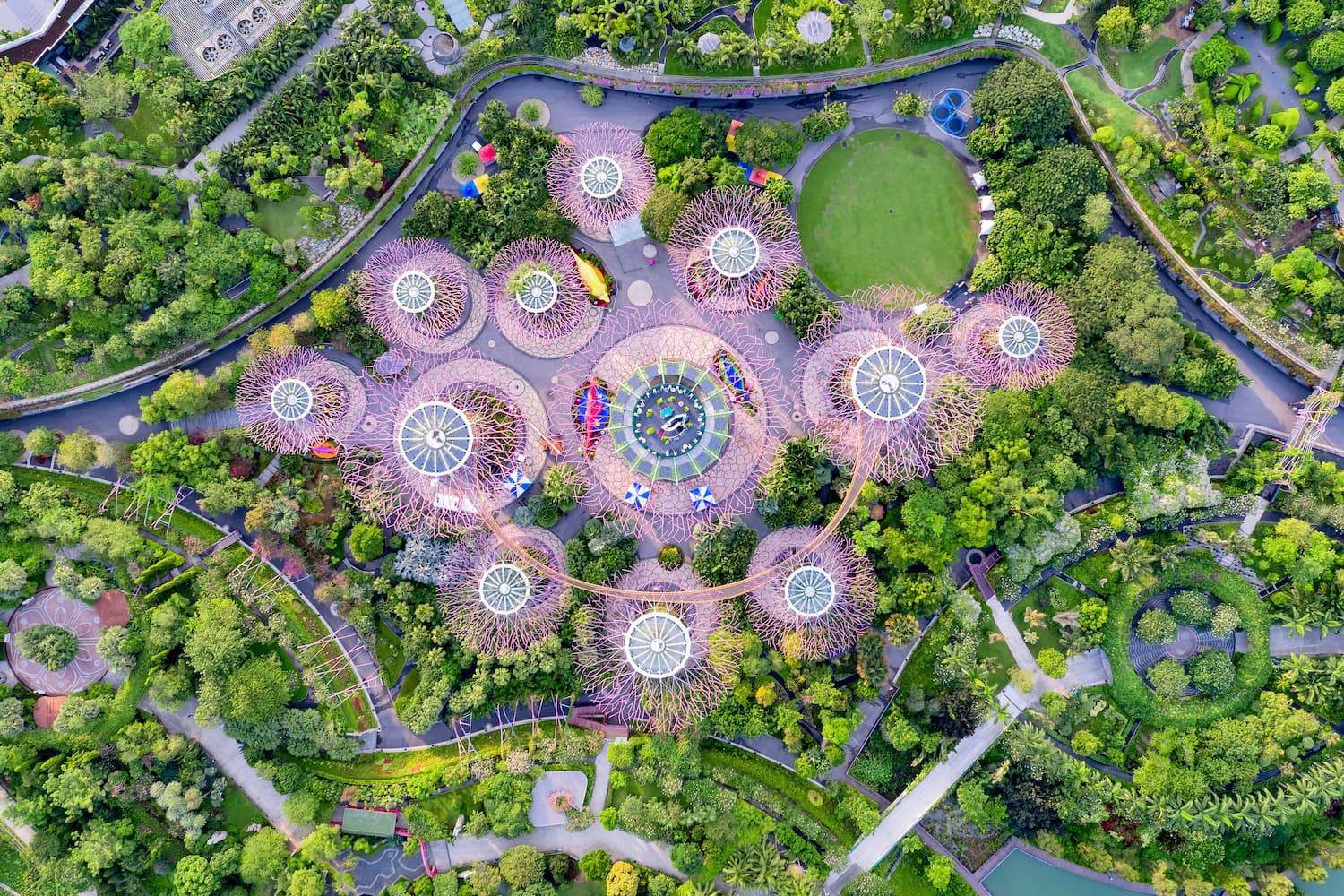
“Singapore is often held up as a model city, but that framing can oversimplify the story. The truth is more complicated.“
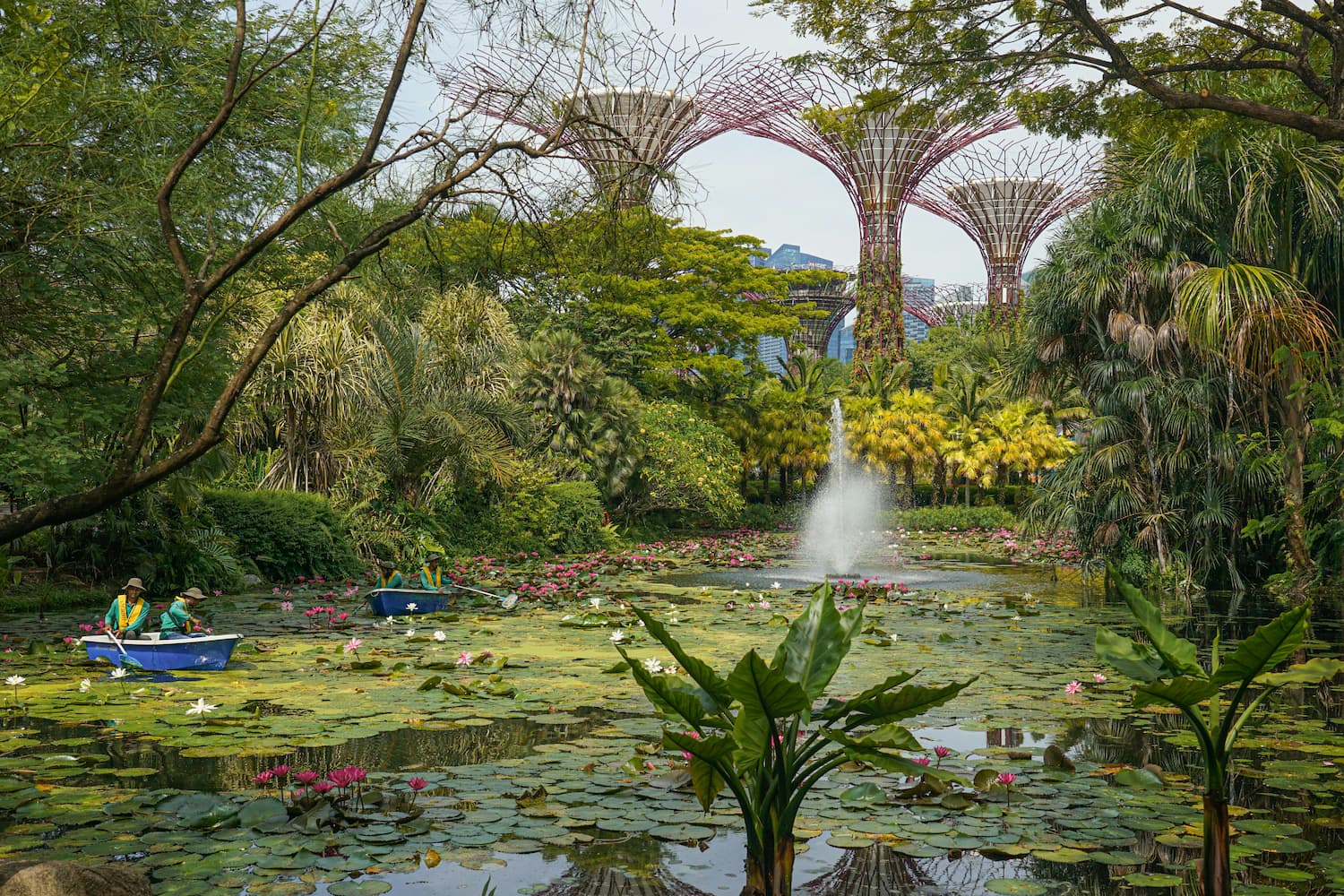
Serene Garden View at Supertree Grove, Singapore. Courtesy of Wang Qihang, Pexels.
From the air, Singapore looks engineered. High-rises crowd the coastline, ports and shipping lanes wrap around the island, and the city ends where the sea begins. With no hinterland to expand into, the city has grown vertically and deliberately, turning restriction into its defining condition.
That physical reality explains how the city approaches sustainability. It doesn’t treat it as a trend or a talking point, and that is why Singapore earned an Azure Road Sustainable City guide.
A City Shaped by Constraint
Singapore’s environmental story didn’t begin with climate pledges or glossy campaigns. It began with survival. With no natural freshwater sources, the city had to learn how to capture rain, recycle wastewater, and manage demand early on. With limited land, it had to create a dense urban city while linking housing to transit, schools, markets, and clinics long before “15-minute cities” entered mainstream conversations.
These systems still define the city today. Reservoirs double as jogging paths and sailing lakes. Former rail lines now cut green corridors across the island. Parks aren’t decorative pauses between buildings but form part of Singapore’s flood control, heat management, and water storage efforts.
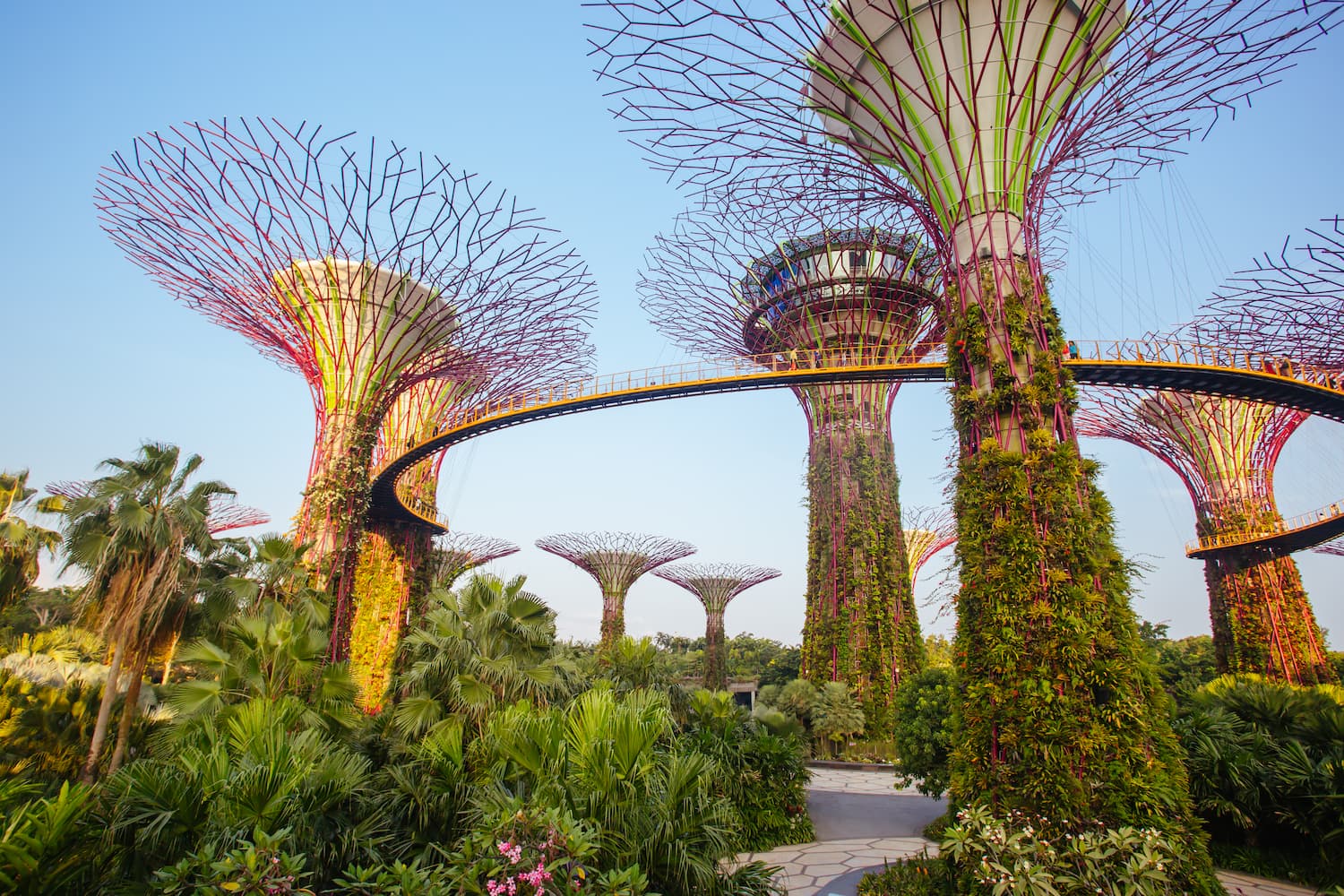
Gardens by the Bay. Courtesy of Singapore Tourism Board.
The Green Plan, in Practice
Singapore’s current sustainability work is organized under the Green Plan 2030, a roadmap anchored by five pillars: City in Nature, Energy Reset, Sustainable Living, Green Economy, and Resilient Future. On paper, it reads like many national climate strategies. On the ground, it translates into very specific actions.
The government has committed to planting one million more trees, expanding its solar capacity, reducing landfill waste, and transitioning public transport toward cleaner energy. Grants, education programs, and neighborhood-level initiatives engage communities in the effort.
One of the most visible shifts towards sustainability will soon arrive on the streets. From the end of 2026 on, Singapore will roll out 660 new electric public buses, including its first large-scale fleet of electric double-deckers. These will replace aging diesel buses as part of a multi-hundred-million-dollar push to decarbonize land transport. By 2030, electric buses are expected to make up half of the public fleet.
While Singapore already makes it easy to live car-free, cleaner, quieter buses reinforce that choice, making public transport feel like the obvious default rather than a compromise.
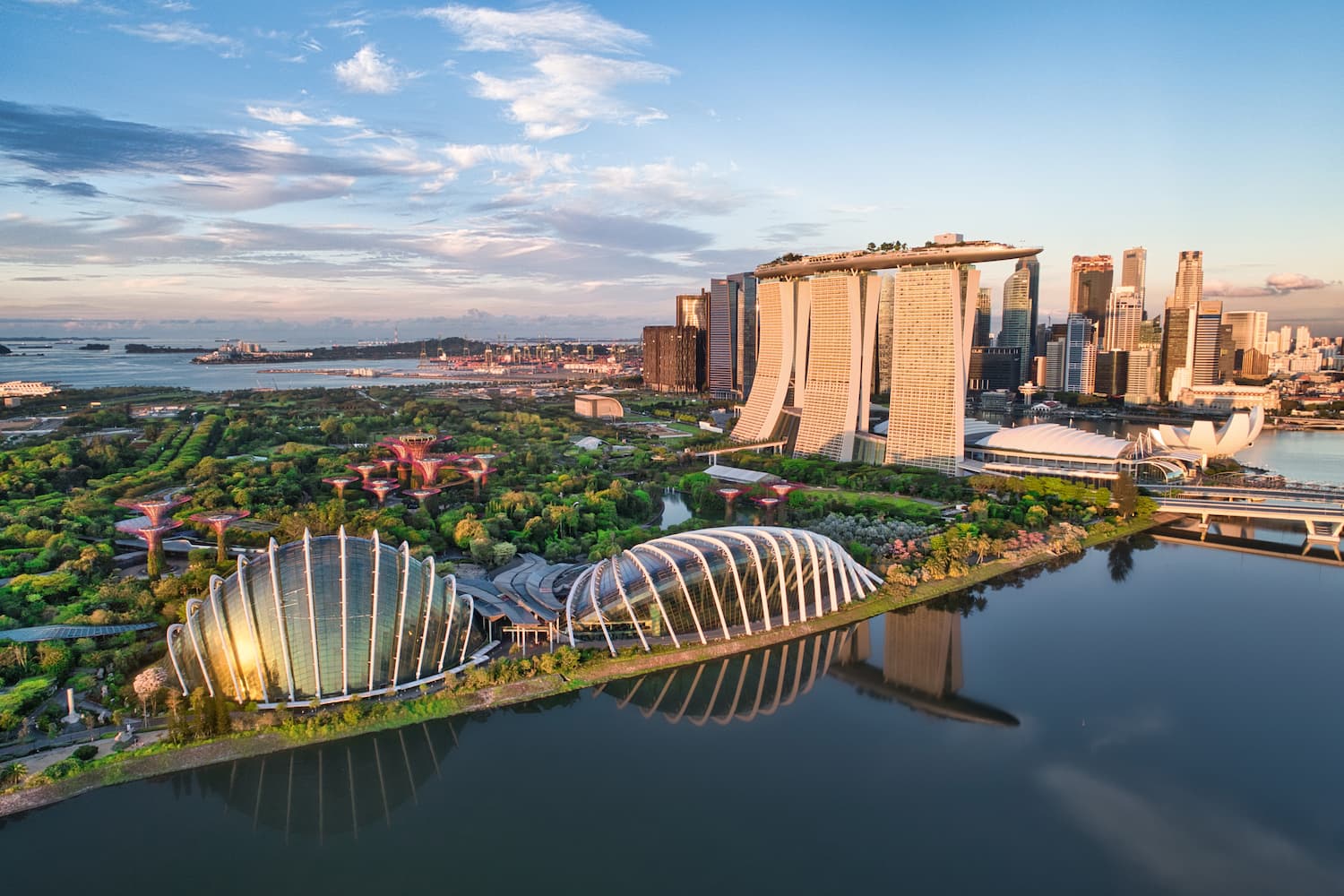
Scenic view. Courtesy of Henderson Waves.
Where Ambition Meets Reality
Singapore is often held up as a model city, but that framing can oversimplify the story. The truth is more complicated.
The island still burns most of its waste, sending ash to an offshore landfill. Electricity remains largely powered by imported natural gas. Air-conditioning is unavoidable, and energy demand continues to rise as the climate warms. Earlier ambitions around food self-sufficiency have been scaled back, acknowledging the limits of land and cost.
What sets the city apart, however, is how openly those trade-offs are publicly addressed. Instead of pretending incineration is ideal or, worse, doesn’t exist, Singapore has invested in integrated waste and water facilities designed to extract more value from its trash. Instead of framing food security as total self-reliance, it focuses on resilience through diversified supply chains, targeted local production, and reduced waste.
This willingness to revise goals, rather than quietly abandon them, is part of what makes Singapore a credible city blueprint.

Signature Marina Bay Room view. Courtesy of PARKROYAL COLLECTION Marina Bay, Singapore.
Architecture as Climate Response
Nowhere is Singapore’s vision more visible than in its buildings.
In recent years, new developments have been required to incorporate vertical greenery and meet stricter energy-efficiency standards. Sky terraces, shaded walkways, and open-air circulation are no longer novelties; they are baseline expectations for building in the tropics.
Hotels have proven to be a useful testing ground for these ideas. Across the city, restored warehouses, shophouses, and slim urban towers are softened by trees and dense foliage. Filtered tap water has replaced plastic bottles in most properties, a basic standard at this point, while others integrate food-waste systems, solar panels, or passive cooling strategies through new construction and retrofits.
Given their scale, it would be easy to assume these buildings couldn’t meaningfully reduce their environmental impact. These aren’t off-grid retreats; many are enormous urban hotels. And yet, they show how environmental responsibility can coexist with scale and expansion.
That same thinking applies to public spaces designed to both absorb and entertain crowds. At Jewel Changi Airport, the indoor forest and HSBC Rain Vortex do more than dazzle visitors visually: rainwater is captured and recirculated to cool the space, while thousands of trees help regulate temperature and humidity inside one of the world’s busiest airports.
Gardens by the Bay operates at the city scale, where more than a million plants, solar-generating Supertrees, and rainwater collection systems turn a waterfront park into working infrastructure. At the ArtScience Museum, the lotus-shaped roof funnels rain into the Rain Oculus, recycling more than 1,400 tonnes of water a year.
Get the Singapore City Guide.

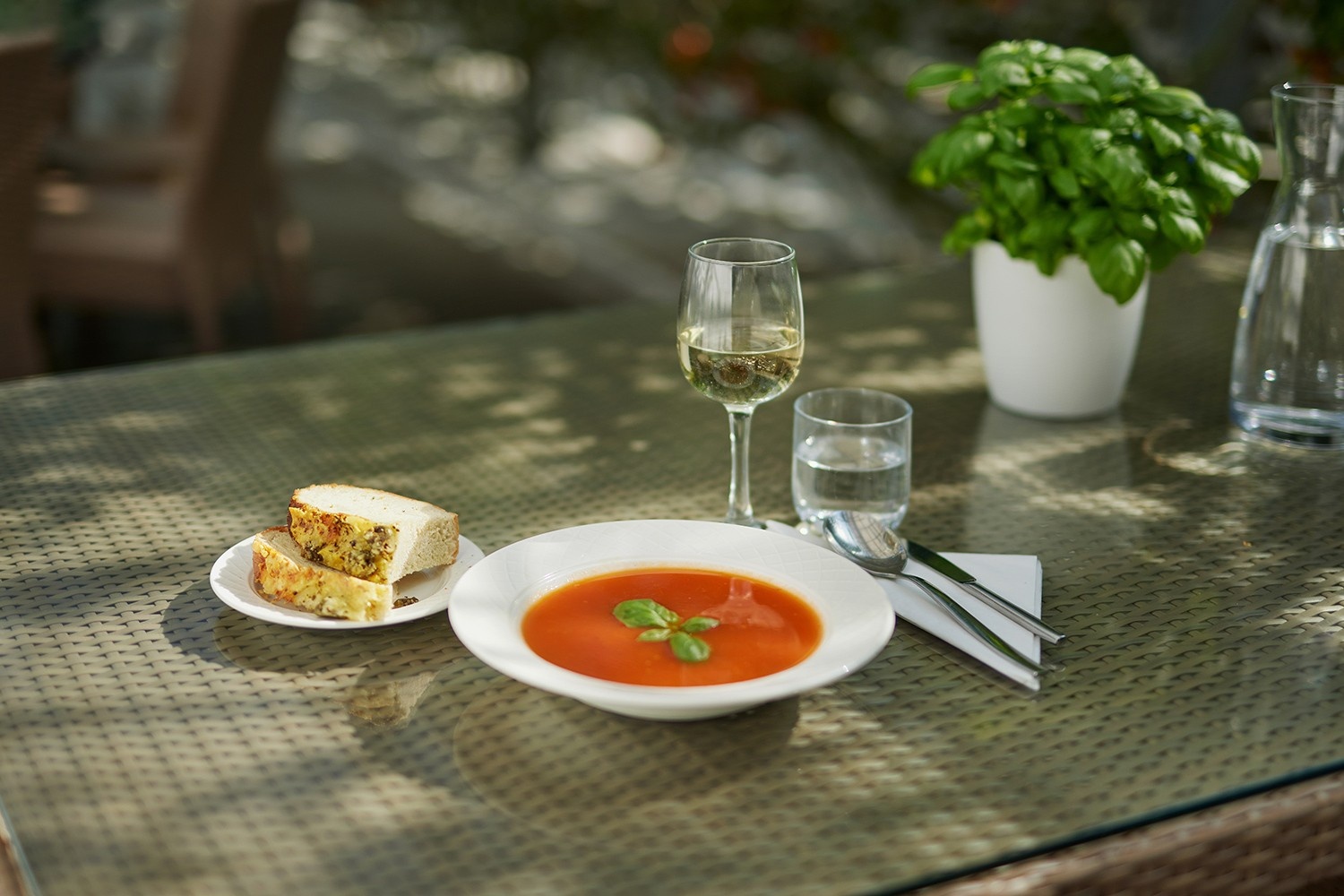
Meal shot. Courtesy of FIZ.
When a City Has to Import Its Food
Singapore’s food culture is often described in superlatives, but there’s more to the story than accolades.
With limited land and a reliance on imports, the food culture has long been shaped by trade routes and migration patterns. Hawker centers remain the backbone of daily eating, preserving dishes brought by Chinese, Malay, Indian, and Peranakan communities and passed down through generations. At the other end of the spectrum, modern kitchens are reexamining regional cuisines, local fisheries, and overlooked ingredients with new attention.
In recent years, a growing number of chefs have begun designing menus with waste, sourcing, and seasonality in mind, not because it’s fashionable, but because of cost. Imperfect produce, underused fish species, and whole-animal or whole-plant cooking offer practical advantages as much as ethical ones.
For visitors, this means eating in Singapore can be both deeply pleasurable and instructive.
Singapore’s bars mirror this mindset. The city is home to some of Asia’s most accomplished cocktail programs, but the most interesting ones now look beyond technique alone.
Some build menus around regional botanicals and Southeast Asian spirits. Others upcycle peels, pulp, and by-products into syrups, ferments, and infusions. A few treat the bar itself as a system, tracking waste and rethinking what gets thrown away.
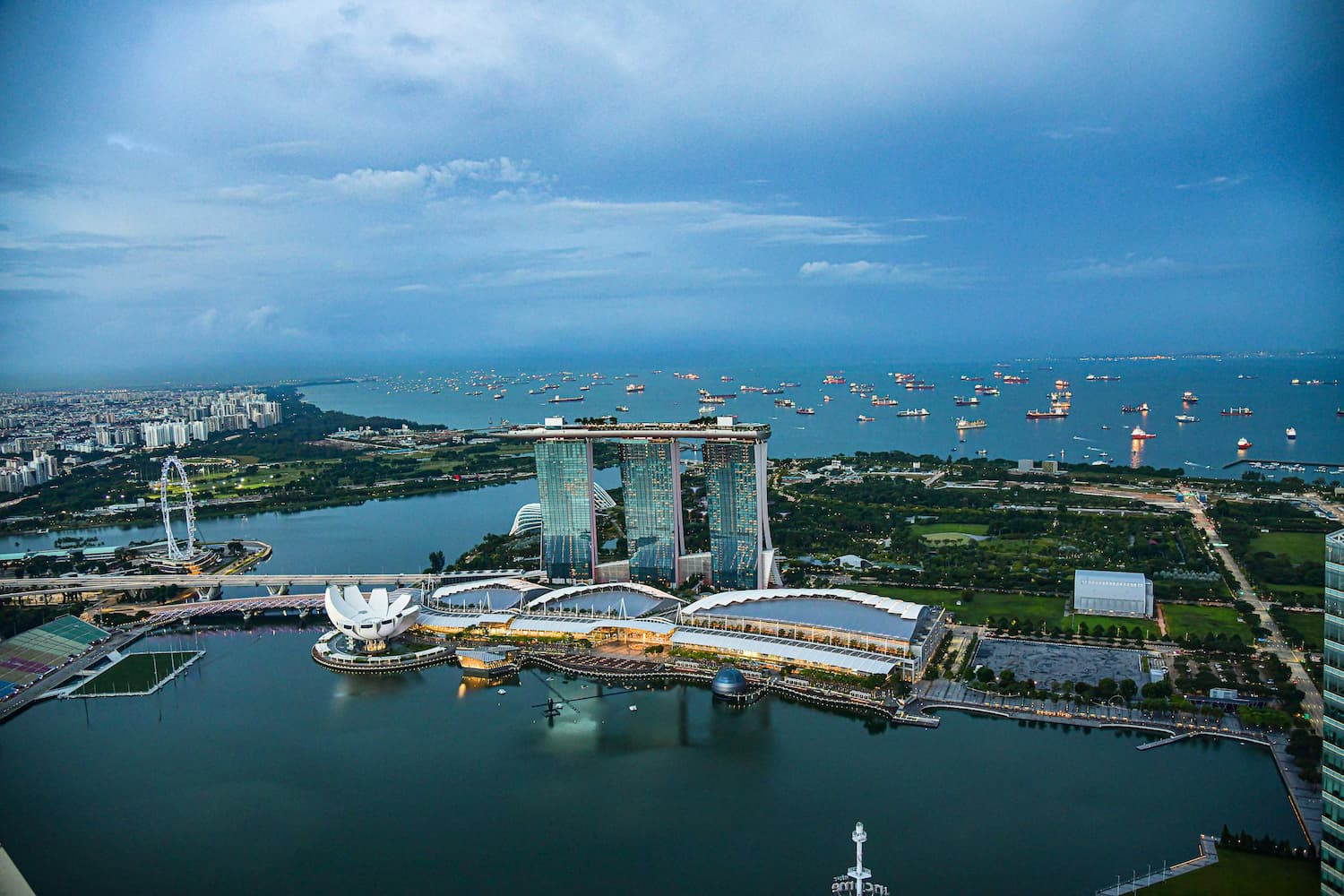
Aerial View of City Buildings. Courtesy of Ravish Masqood.
Why Singapore, Now
Globally, Singapore’s emissions remain small. Its population is modest. In truth, its footprint barely registers next to megacities elsewhere.
And yet, Singapore matters because it is attempting something many larger cities struggle to do: retrofit a high-consumption, high-density lifestyle to function within environmental limits. For travelers, that makes Singapore unusually relevant. You are not visiting a finished model or a cautionary tale. You are stepping into an ongoing experiment.
This guide is built to help you navigate the options. Not to present Singapore as flawless, but to highlight the people and businesses working to make city life better for everyone.
Get the Singapore City Guide.

Founder and CEO of Azure Road, Lauren Mowery is a longtime wine, food, and travel writer. Mowery continues to serve on Decanter Magazine’s 12-strong US editorial team. Prior to joining Decanter, she spent five years as the travel editor at Wine Enthusiast. Mowery has earned accolades for her writing and photography, having contributed travel, drinks, food, and sustainability content to publications like Food & Wine, Forbes, Afar, The Independent, Saveur, Hemispheres, U.S. News & World Report, SCUBA Diving, Plate, Chef & Restaurant, Hotels Above Par, AAA, Fodors.com, Lonely Planet, USA Today, Men’s Journal, and Time Out, among others.
Pursuing her Master of Wine certification, she has also been a regular wine and spirits writer for Tasting Panel, Somm Journal, VinePair, Punch, and SevenFifty Daily. Mowery is a graduate of the University of Virginia and Fordham Law School, and she completed two wine harvests in South Africa.
Follow her on Instagram @AzureRoad and TikTok @AzureRoad
North Stars: Community Support, Energy Efficiency, Water Management
More Stories
 CULINARY, The Bite
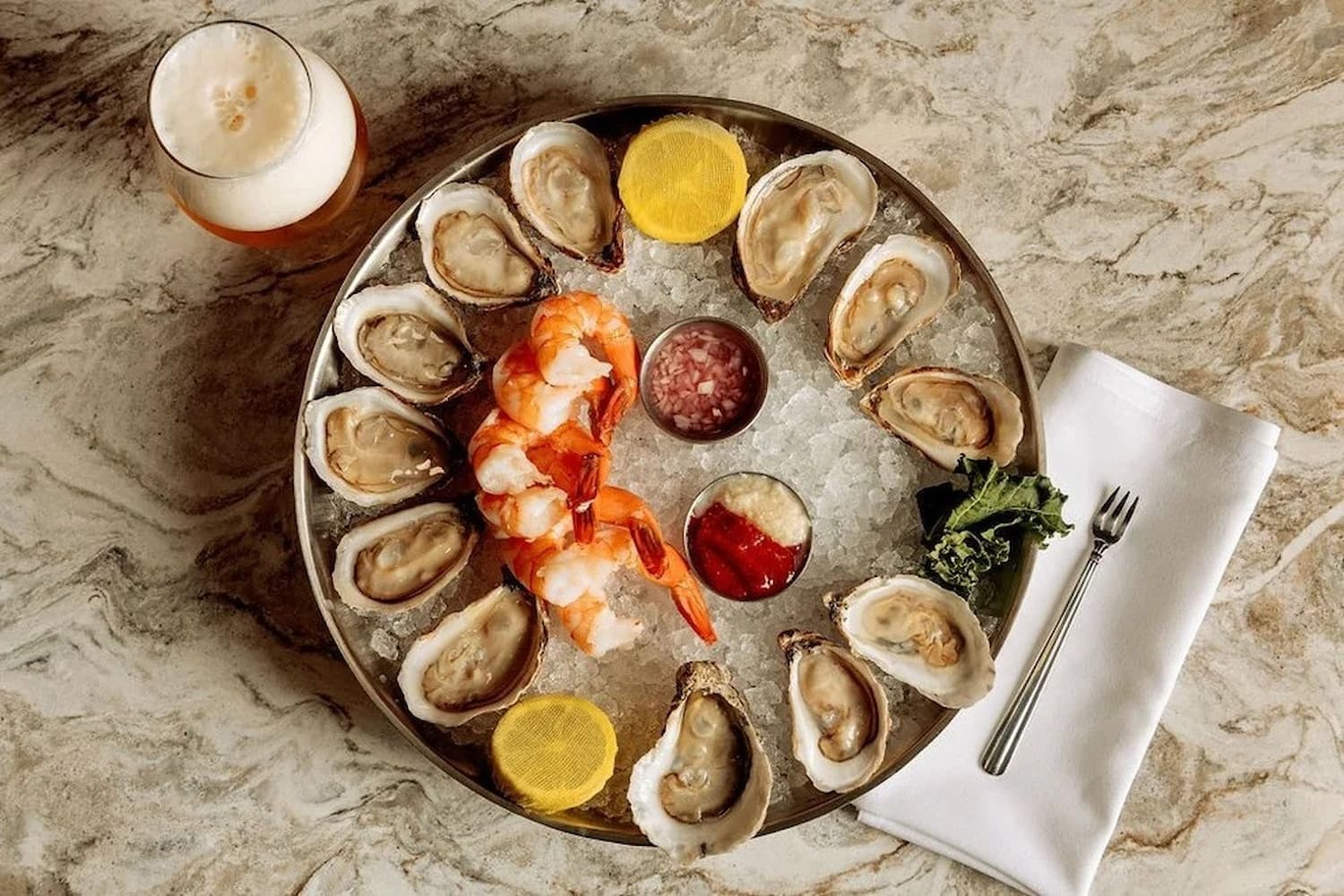
The Bite: Oysters at Chef Jasmine’s Urban Oyster Bar
 CULINARY, The Bite
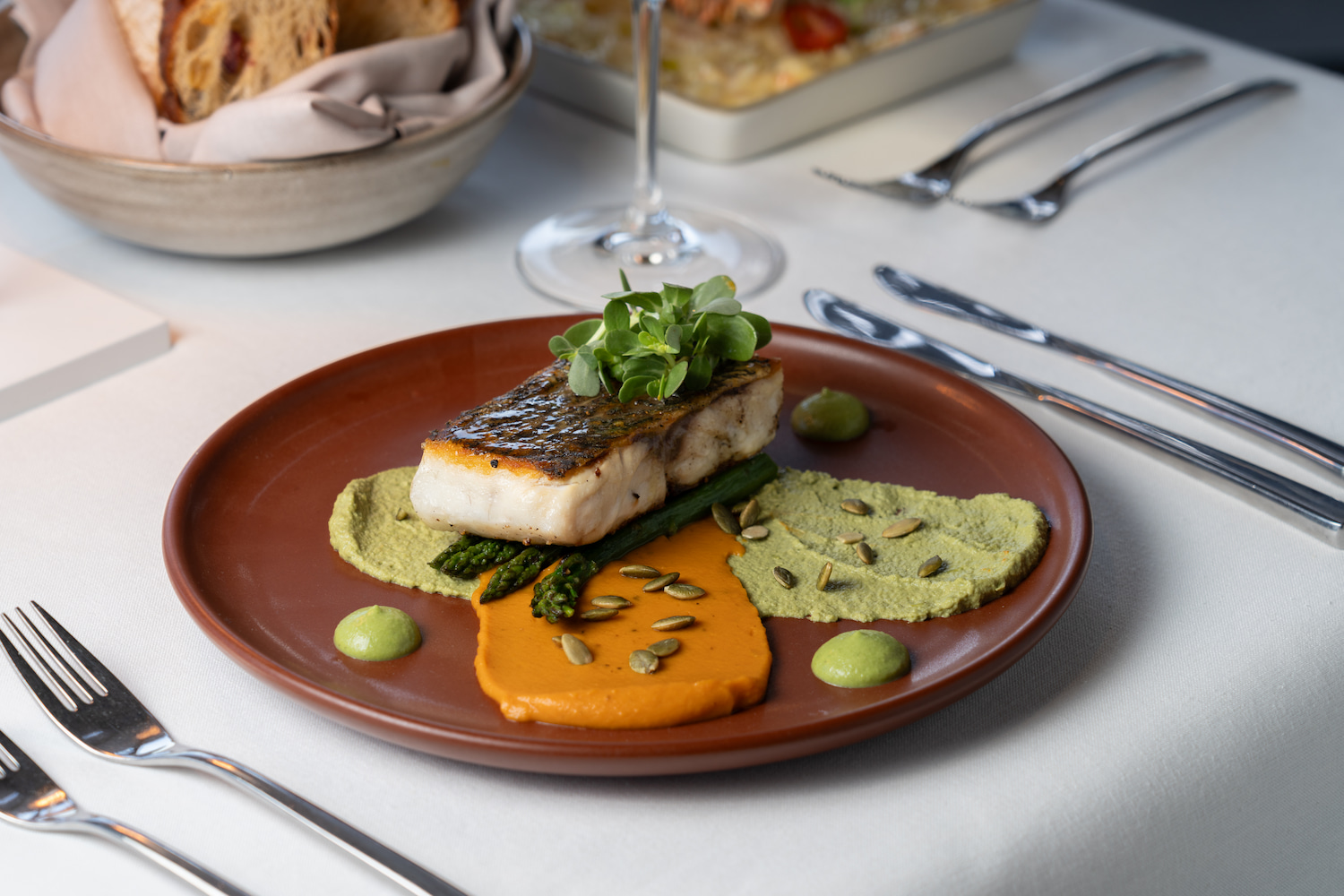
The Bite: Totoaba fish at The Cape in Baja California
 CULINARY, The Sip
The Sip: Turkish Coffee from the Turkish Coffee Lady
 DRINK
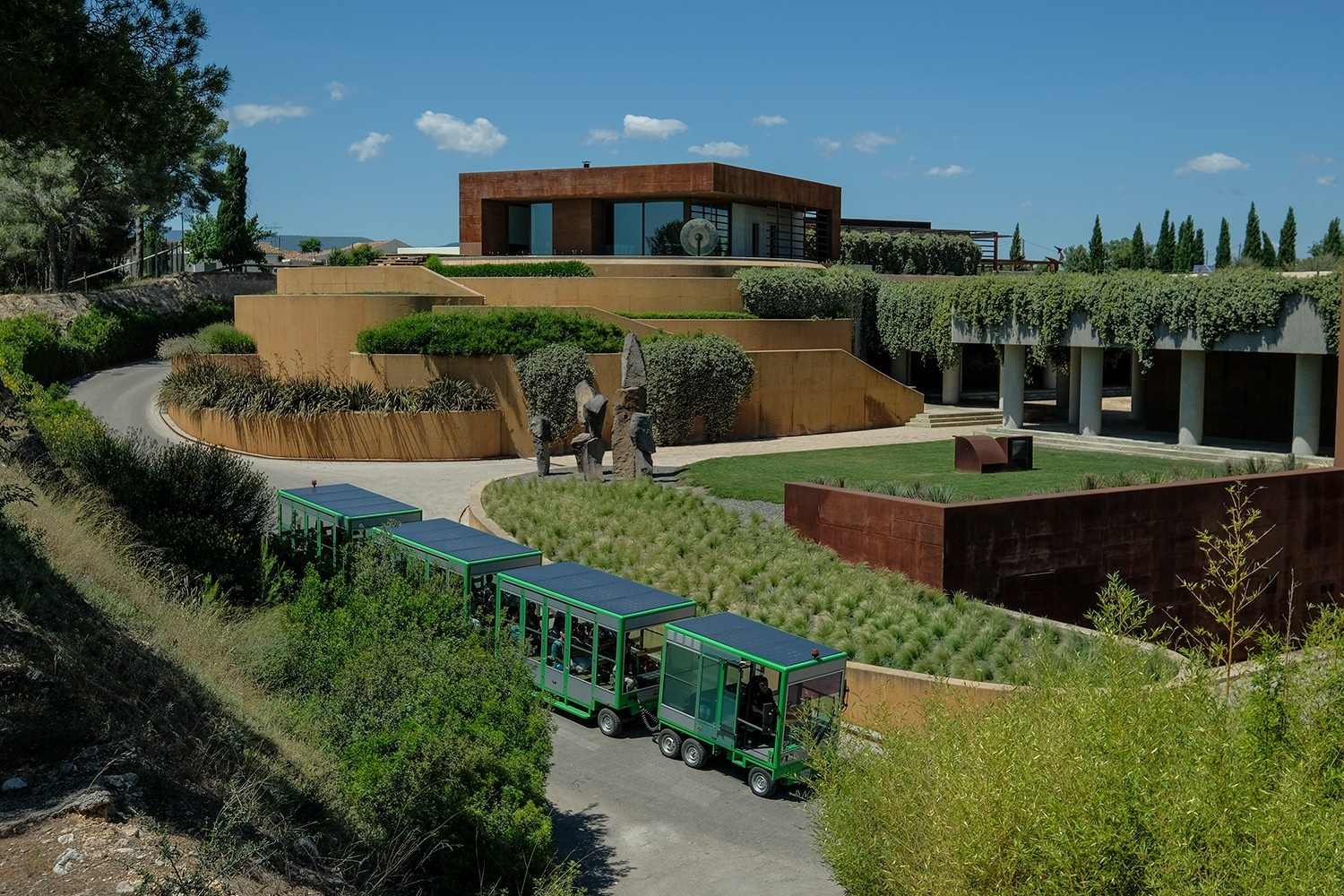
DRINKExploring Penedès, Spain’s Sparkling Wine Paradise
 CULINARY, The Bite
The Bite: Tomato Soup at Friðheimar, Iceland