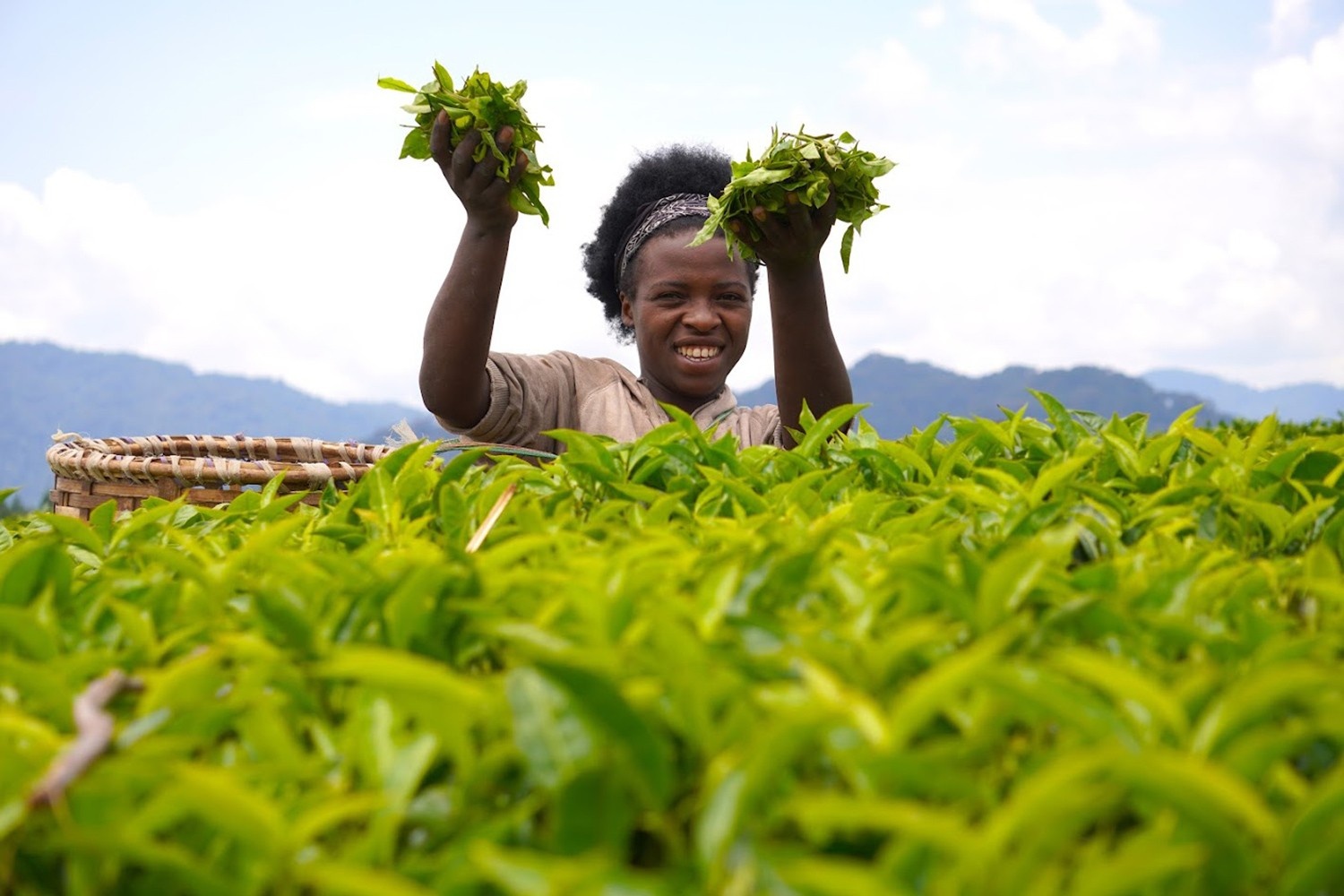
“As a child along with my father I hunted bushbucks and antelopes by laying snares. Today I am a protector of the same forest.”
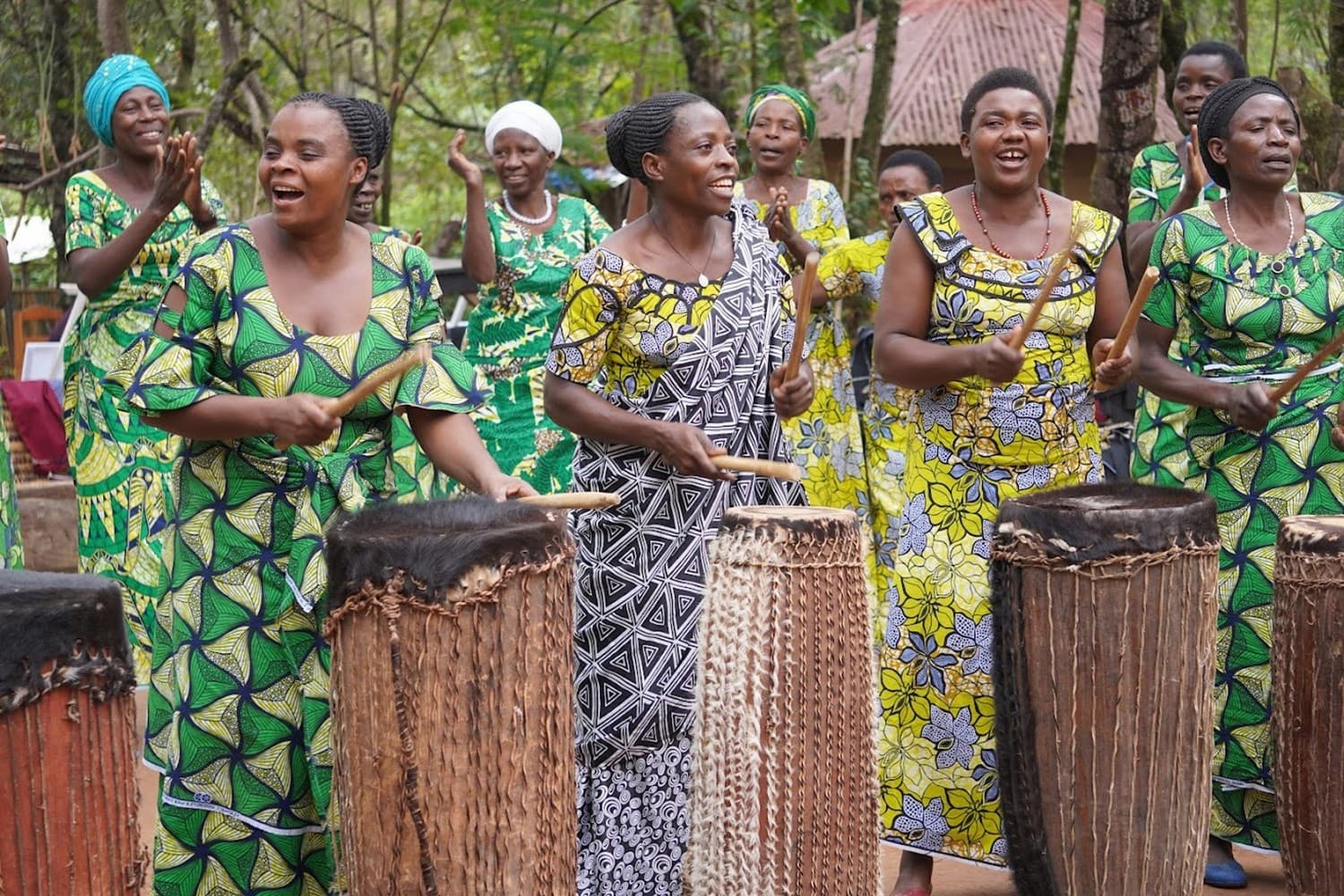
Musicians at Red Rocks Community Centre. Courtesy of Kalpana Sunder.
Most people come to Musanze for the gorillas. Known as the gateway to Volcanoes National Park, this town in northwestern Rwanda draws visitors hoping to catch glimpses of rare primates in dense rainforest. But instead of traipsing through the undergrowth, I’m on my knees, pressing back and forth on wet grass and mushy bananas to the beat of a drum.
I’m learning to make banana beer at Red Rocks Rwanda, an eco-tourism and social enterprise near the national park where women-led workshops, traditional meals, and overnight stays funnel visitor revenue into the community and give travelers something the gorillas never could: a way into everyday Rwandan life.
“Banana beer making is not just about the drink. It’s women coming together, bonding and then sharing whatever they have made,” says our guide Poreen Claudine. We peel the bananas – buried and smoked for three days to ripen – before crushing them with inshinge spear grass. Women sing as we work. After tasting the fresh, unfermented juice, we add crushed sorghum grains and put the mixture into mud pots, which are reburied to ferment.
“Leave it too long and it gets too strong,” Claudine warns. “A couple of days gives you about 15 percent alcohol.” But we don’t have to wait: we relax in the graffiti-painted restaurant, sipping banana beer and munching on roasted sweet potato and corn.
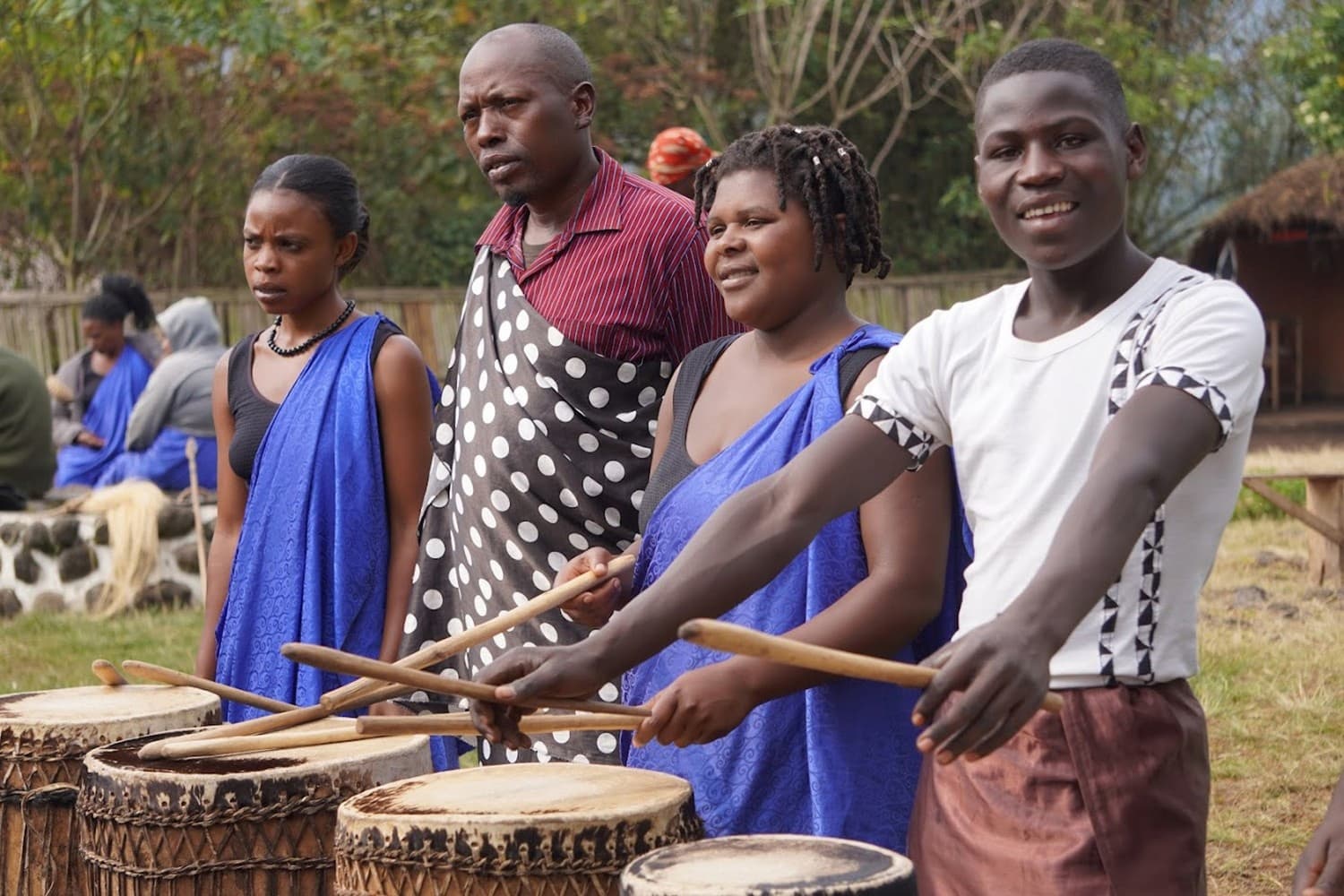
Rwandan music. Courtesy of Kalpana Sunder.
Rwanda Community Tourism
Like many popular safari destinations in Africa, Rwanda is mainly on the tourism map for its wildlife. Gorilla tourism is one of the country’s biggest economic drivers, bringing in millions of dollars and supporting untold jobs. But it also largely excludes nearby communities from benefiting from this economic boon. That’s where organizations like Red Rocks, and other enterprises I was able to visit on a recent trip, come into play.
Some of these projects are the result of decades of the country rebuilding in the wake of the 1994 Rwandan genocide. Along with people, landscapes and wildlife were brutalized as well. Many national parks were destroyed by fleeing refugees, who took over the land and farmed it. Poachers also killed animals with abandon. Recovery wasn’t just about rebuilding infrastructure, but also rebuilding trust.
In 2005, the government started a tourism revenue sharing scheme: a percentage of income from national parks was ploughed back into communities, from building roads and water projects to supporting artisan work. To prevent villagers from going onto protected lands and collecting wild honey, cooperative societies formed, training people to become beekeepers. Women left widowed by the genocide were able to find work and gain skills at places like Red Rocks.
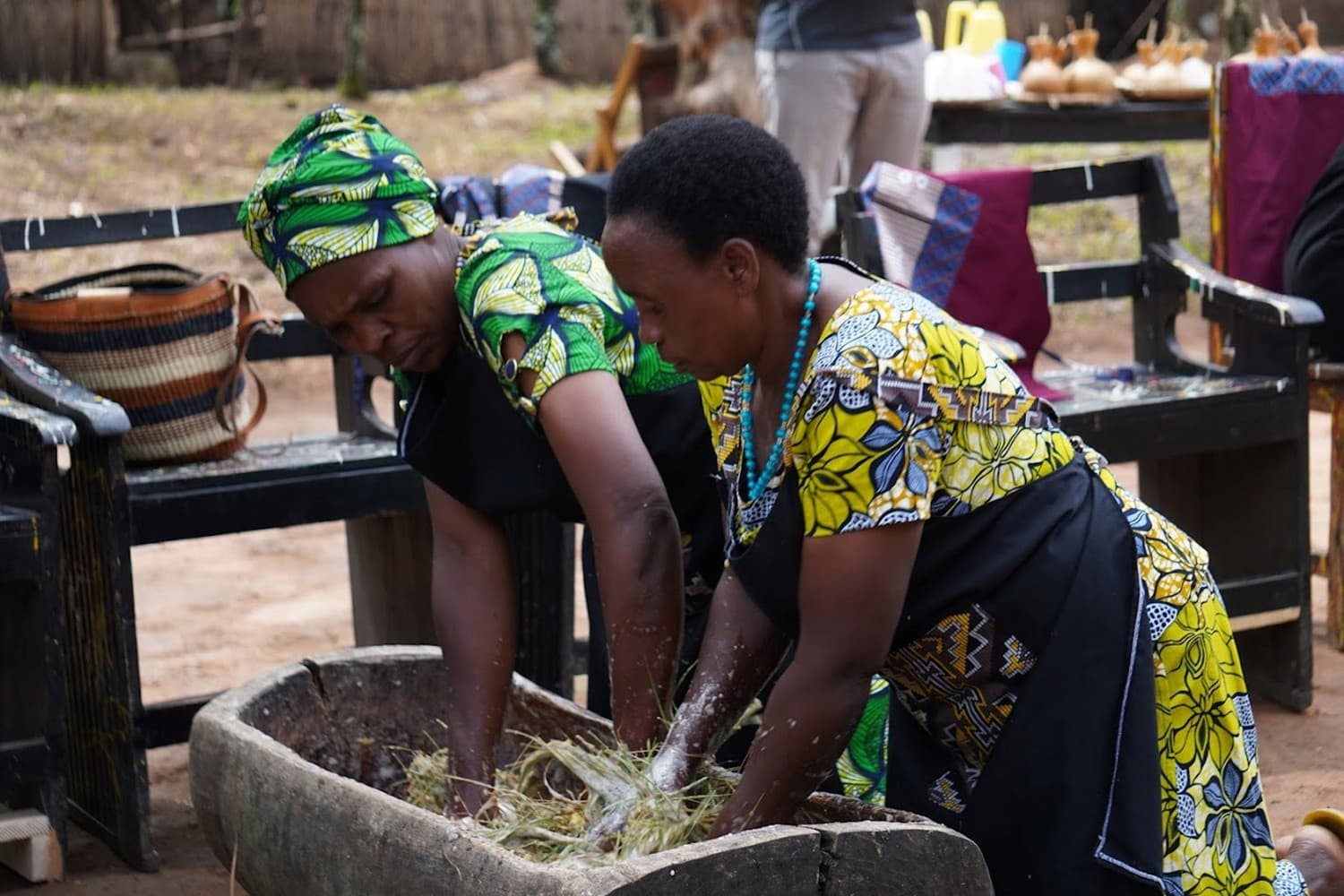
Making banana beer. Courtesy of Kalpana Sunder.
Nyungwe National Park Tea Experience
After Volcanoes, Nyungwe National Park is one of Rwanda’s most popular national parks. Set in the southwestern sector of the country close to the border with Burundi, this UNESCO World Heritage Site is home to one of Africa’s oldest rainforests, 13 species of primates including chimpanzees and colobus monkeys, and hundreds of bird species, making it one of central Africa’s most biodiverse and best-preserved ecosystems. But outside the park, the region is also home to vast fields and rolling hills of neon-green plants. These are not natural landscapes but man-made ones: farms and plantations growing fine tea.
Along with tourism, tea is one of Rwanda’s top economies and community tourism has reached the industry as well. Operating since 2023, Ivomo Tea Cooperative was created to support local workers and communities, but it also welcomes visitors to learn more about the industry and support the work through hands-on teamaking experiences. Ivomo’s 600 workers make it the largest employer in the area; the work supports a library, nursery, and electrical production for the village.
Led by Rick Masumbuko, a former national park guide, we get a literal taste of the cooperative’s work: in one of the tea gardens, we join young women pickers in their work walking through verdant rows, plucking the delicate leaves, pounding them up, and then brewing them into aromatic cups to sip and savor.
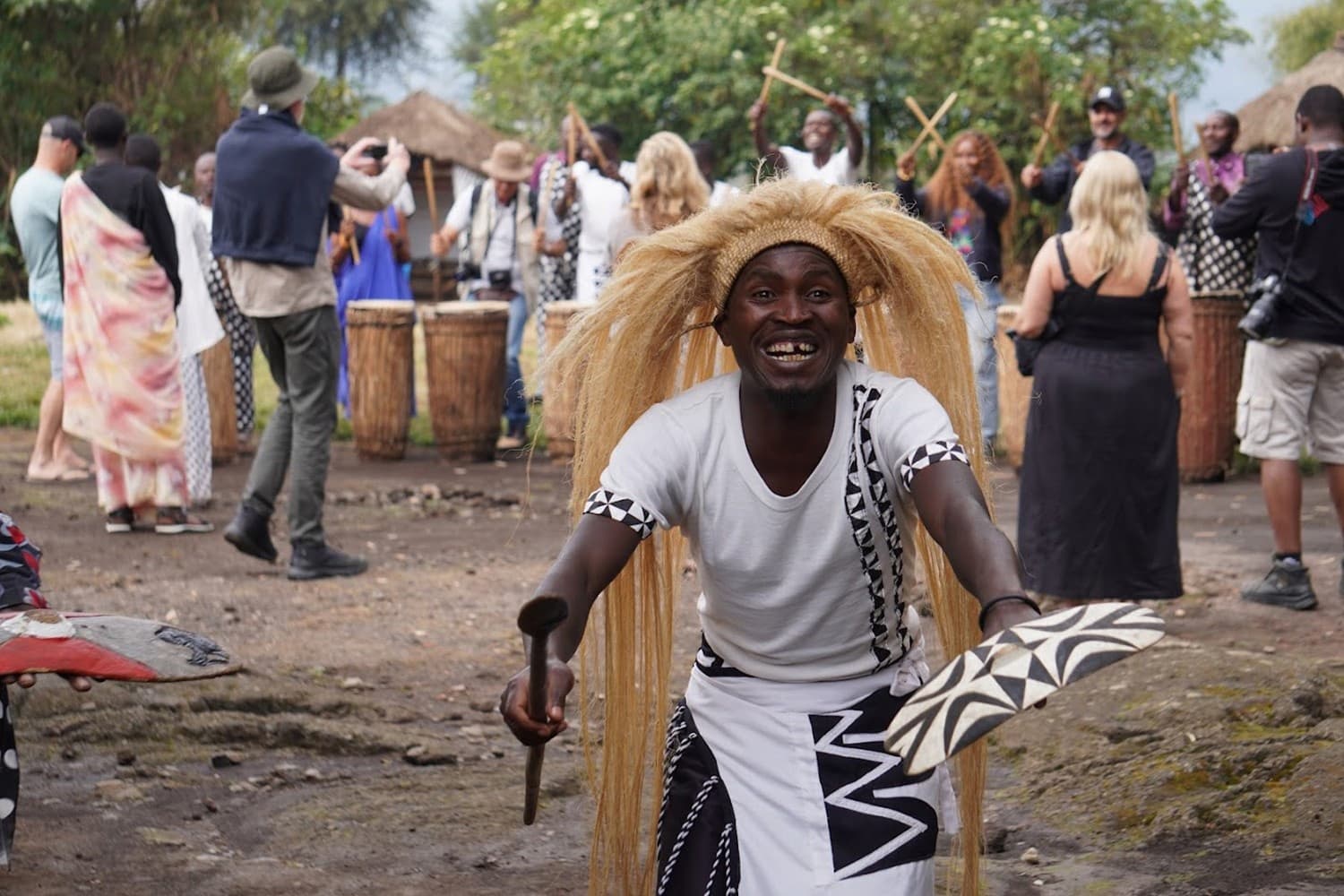
Gorilla Guardians Village. Courtesy of Kalpana Sunder.
From Poacher to Protector: Gorilla Guardians Village Rwanda
Barora Leonidas grins at me; his front teeth are missing. Around 80 years old, this short, affable man with an infectious smile seems an instantly likeable character. But for a long time, he worked in a much maligned profession: poaching. Leonidas operated as a poacher for 30 years, and the loss of his front teeth are a souvenir from his past life, knocked out when a buffalo kicked him.
Today he helps protect the wildlife he once trafficked as a worker in Gorilla Guardians Village. At this community near Volcanoes National Park, former poachers have been retrained as guides, using their past knowledge of animal movements and landscapes to escort tourists.
It was started by Edwin Sabuhoro, a former park ranger at Volcanoes. After witnessing the impacts of poaching and poverty on the welfare of animals and humans, he sought to create a solution with this village. Here, former poachers receive small parcels of land for farming and earn income through guiding and cultural demonstrations – an example of not just community tourism but conservation tourism: using ecological protection as a path to prosperity for people who previously had few economic options outside poaching.
We stroll around the complex, walking past rustic beehives of cow dung and bamboo. In one hut, we watch a traditional herbal healing ceremony. An ex-poacher called Leonard Gacungu plays a stringed inanga, rapping along to the music. There are archery displays, blacksmithing workshops, and traditional lion dances from Intore dancers.
After exploring the village, we had the chance to experience Gorilla Guardian’s responsible approach to gorilla trekking. Our ex-poacher guide Emmanuel Hararimana, one of the most sought-after guides in the park, shepherds us through the forest. For conservation purposes, no more than 96 permits are issued daily, limiting visitors to only an hour with the park’s 12 families of habituated gorillas. Trekking through the rainforest, hacking the thick undergrowth with a machete, we finally find the Kwitonda family. We spend our allotted hour watching the silverback thump his chest and baby gorillas play close to our feet. For our guide, it’s a full-circle moment.
“As a child along with my father, I hunted bushbucks and antelopes by laying snares,” Hararimana says. “Today I am a protector of the same forest. Many from my village have got jobs in tourism and conservation. And I am proud of that.”
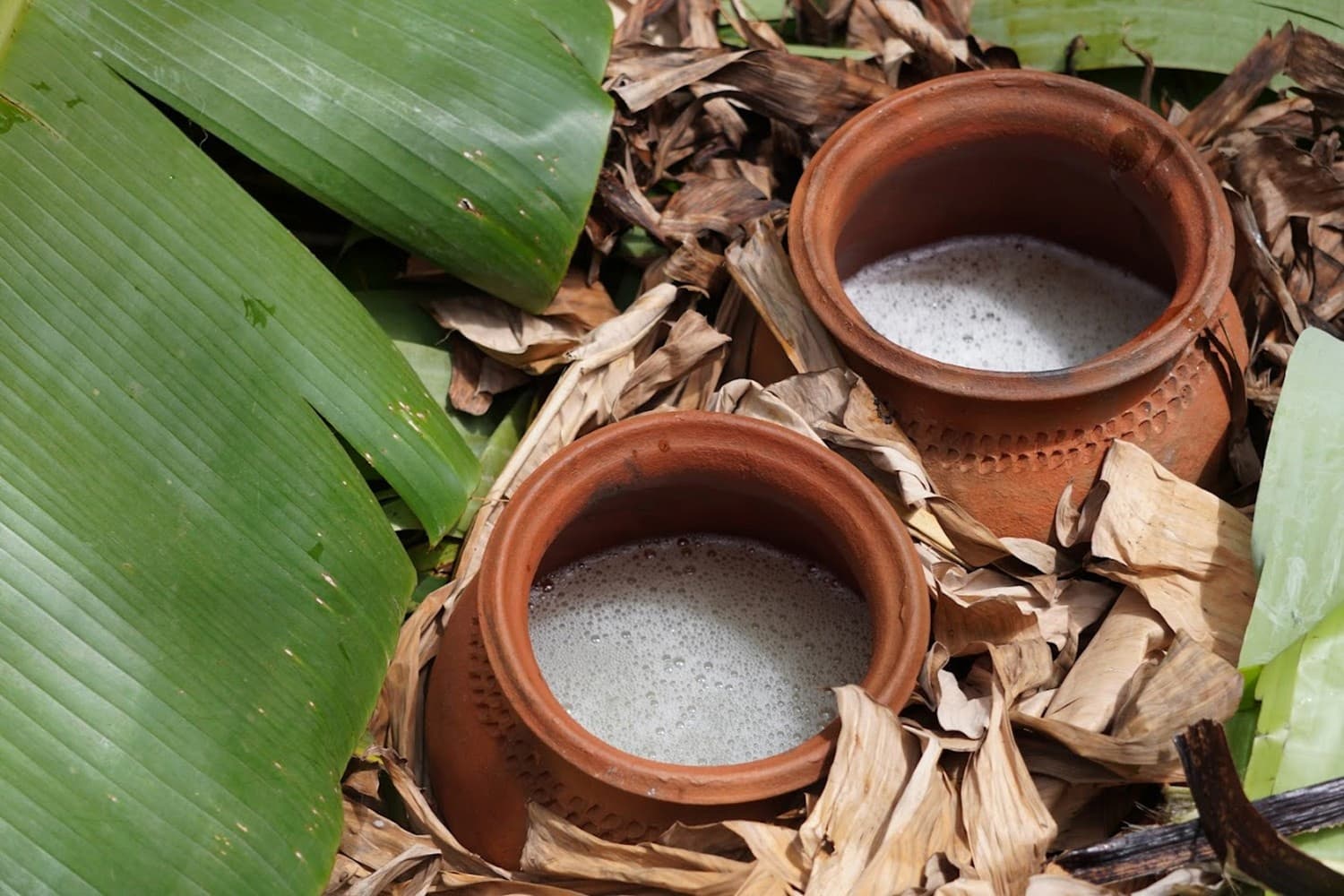
Fermenting banana beer. Courtesy of Kalpana Sunder..
How to Visit Volcanoes National Park
The best airport to fly into is Kigali International Airport, Rwanda’s largest airport and the main international gateway into the country. From Kigali, the Volcanoes National Park area is roughly a three-hour drive; renting a car or going with a local tour operator like Golden Rwanda Safaris or Hermosa Life Tours & Travel is the best option.
In Kigali, the contemporary Radisson Blu is one of the city’s best stays with dining, shopping, and a pool. Near Volcanoes, you can choose from resorts for all budgets, including One&Only Gorilla’s Nest and Virunga Inn Resort and Spa.
Kalpana Sunder is an independent journalist based in Chennai, India. In another lifetime she has worked as a company secretary dabbling in company law, and as a Japanese language interpreter and teacher.
She writes on travel, gender, development, conservation, environment, pop culture, food , art and architecture and has been published in leading national/ international newspapers/ magazines. She is also an amateur artist who sketches and paints en plein air as well as from travel photos. She does yoga and Zumba to stay active, loves gardening, cooking and interior décor, and is a part of a book club. She has travelled to over 75 countries and still has a long wish list of places to discover. You can find some of her work at kalpanasunder.com and follow her on instagram at @travelwithkalpana
North Stars: Community Support, Heritage Value, Wildlife Ecosystems
More Stories
 CULINARY, DRINK
Get to Know the Producers Behind the J.P. Bourgeois Portfolio
 CULINARY, DRINK
Where to Taste Wine in Willamette Valley
 DRINK
DRINKMeet the Distillery Making Vodka From Fog
 DRINK
DRINKSake’s Next Step: How Japan’s Rice Wine Is Evolving
 DRINK, HOME
The Buzz on InFizz: Breville’s Carbonator Elevates Sparkling Water