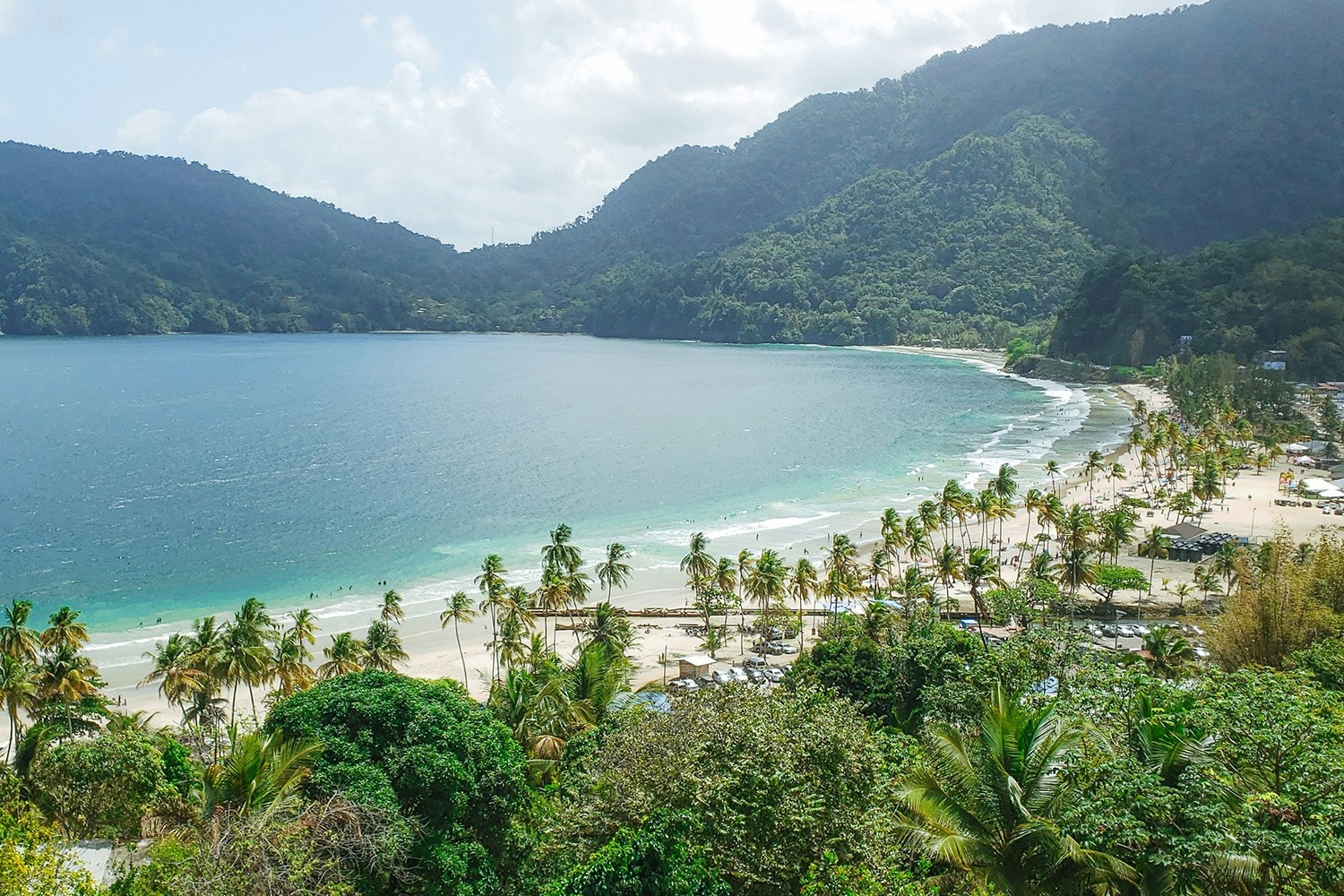
“Here, you are ‘behind God’s back,’ as the locals say. This is rural Trinidad.”
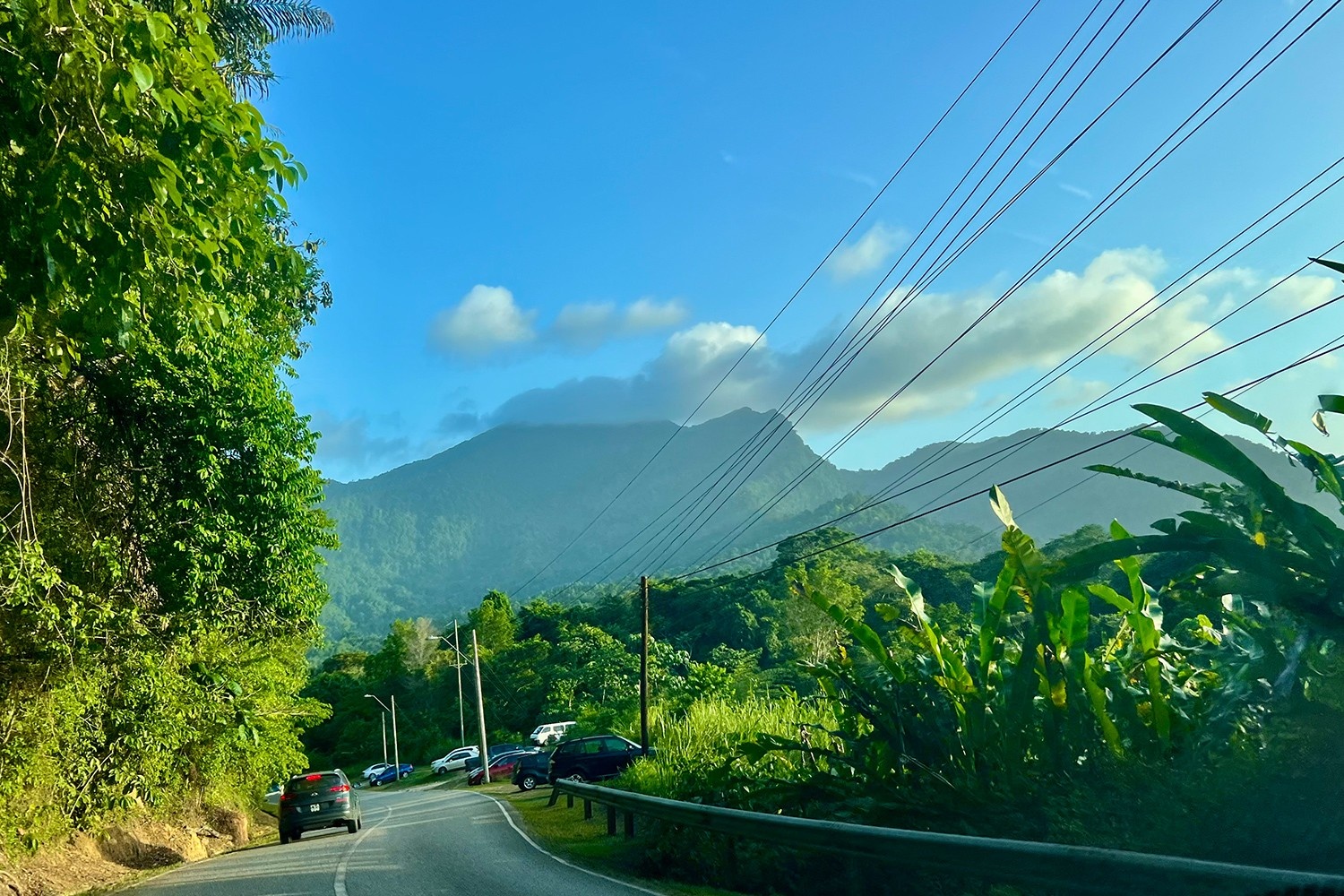
Driving along the North Coast Road. Courtesy of Kristine De Abreu.
Sitting at the southern edge of the Caribbean, Trinidad feels like the region’s last frontier — shaped as much by its proximity to Venezuela as by its island neighbors. While the beaches, Port of Spain, and Carnival draw most of the attention, the north remains largely undiscovered. Dense rainforests hide waterfalls and hummingbird sanctuaries, offshore islands hold leper colony ruins, and a legendary coastal road winds through it all.
Here’s how to spend five days exploring northern Trinidad.
Day 1: Chaguaramas and the Northwest Peninsula
Port of Spain is the island’s main point of entry. Head west from the capital to reach Chaguaramas, a town on the southern shores of the Northwest Peninsula that has lived many lives: indigenous settlement, Spanish plantation, British whaling station, American WWII naval base. Today, it’s a 14,500-acre outdoor adventure hub with hiking trails, swimming holes, caves, waterfalls, and even a plane crash site.
One of the region’s best trails, the Bamboo Cathedral, lies in the Tucker Valley. Families of boisterous red howler and capuchin monkeys swing overhead, caterwauling, as you hike through the 1.5-mile arched tree tunnel. Follow the trail uphill to the ruins of an American-made Cold War tracking station, where you can glimpse Venezuela from the panoramic summit.
Back down in the valley, cool off at the Arboretum eco-park’s bamboo-fringed spring-fed pool. If you’re hungry, sit down for an organic farm-to-table meal at U-Pick Farm. For accommodation, Crew’s Inn Hotel is minutes away or reserve an Airbnb or vacation rental.
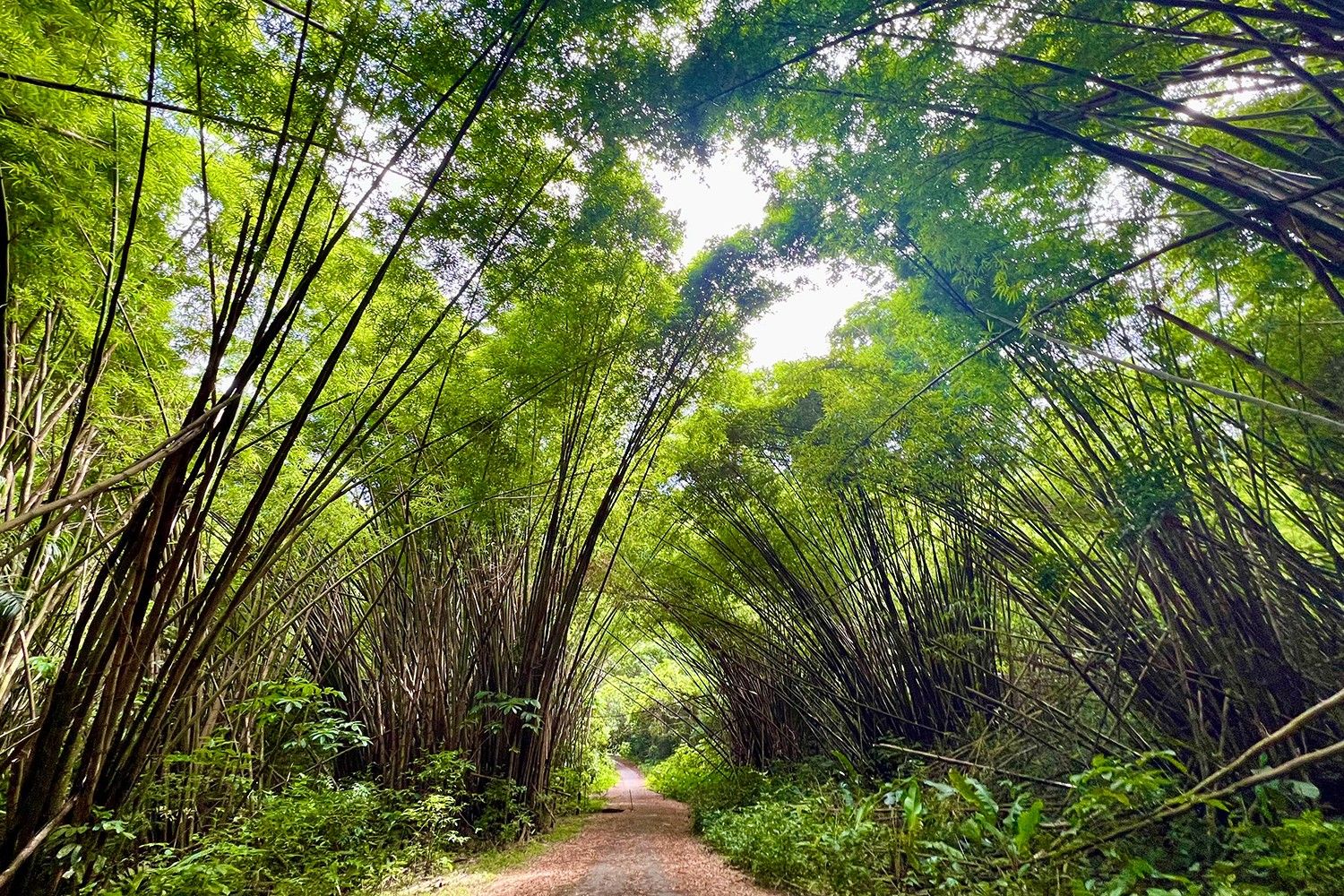
Bamboo Cathedral. Courtesy of Kristine De Abreu.
Day 2: Ruins and Monkeys Down D’ Islands (DDI)
The peninsula is northern Trinidad’s westernmost point; go any further, and you’ll hit Venezuela. But there’s an offshore area worth exploring, and to do so, you must enter the Dragon’s Mouth: a series of island-dotted channels so named for the teeth-like appearance of the rocky coastlines.
Going ‘Down d’ Islands,’ or heading out to these offshore islands, is a quintessential Trinidadian pastime. From Chaguaramas, it’s easy to charter a boat and head to one of the islands for a day trip. While sailing over, keep watch for dolphin pods.
Named for its red howler monkey population, Monos has stunning views of Scotland Bay, hikes to the Copperhole whaling station, and beachside relaxation. For subterranean adventures in grottoes and caves, visit Gasparee and its underground swimming holes. The farthest island, Chacachacare, was once a leper colony but now boasts atmospheric ruins like an old hospital and a lighthouse.
Those wanting to stay overnight will find private home rentals and rustic lodges on Monos and Gasparee.
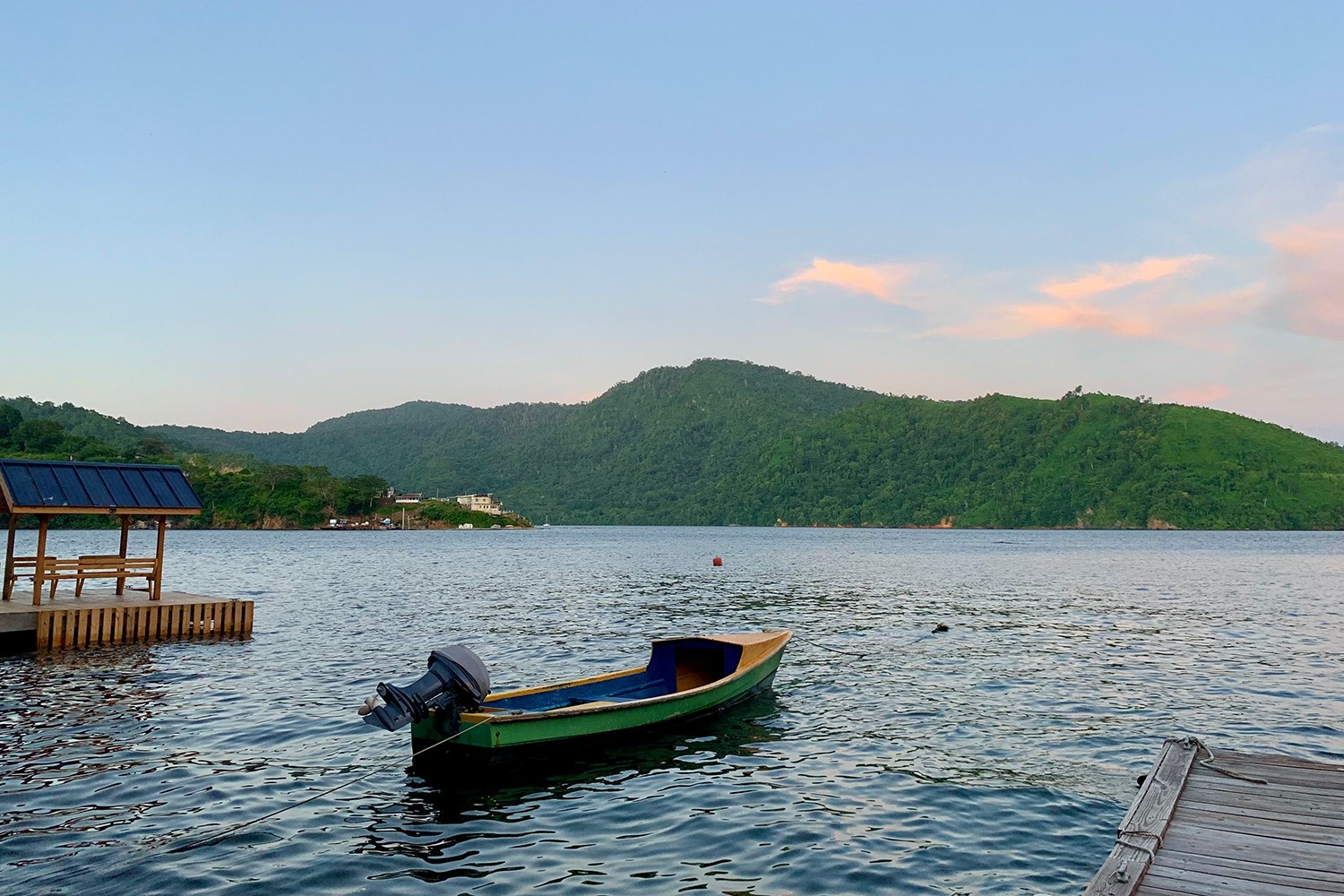
Monos Island. Courtesy of Kristine De Abreu.
Day 3: Mansions, Markets, and Dancing in Port of Spain
After exploring the northern islands, return to the main island for a day in Port of Spain. Start at one of the world’s largest roundabouts: the 260-acre Queen’s Park Savannah, home to hundreds of exotic tree species, plus coconut vendors, and a street food court.
For architecture buffs, head to the Magnificent Seven, a series of grand mansions featuring British, French, Indian, and Scottish design influences. During Carnival season, “the Savannah” is the heart of festivities, with “fetes,” steel pan competition, and masquerade events.
Then, venture beyond the city center to explore outlying neighborhoods. St. Clair and Maraval feature shopping, artisan markets, and upscale restaurants, while Woodbrook’s charming gingerbread-style houses hold art galleries and coffee shops. The Woodbrook area is a must-visit for food-focused travelers, with restaurant strips and open-air dining courts serving island and international fare.
Come evening, stay in Woodbrook or head to St. James for the nightlife scene; dance in clubs and sip at rum parlors until the wee hours, with late-night street food vendors waiting once you’re done. Accommodation ranges from Airbnbs and guesthouses to chain hotels.
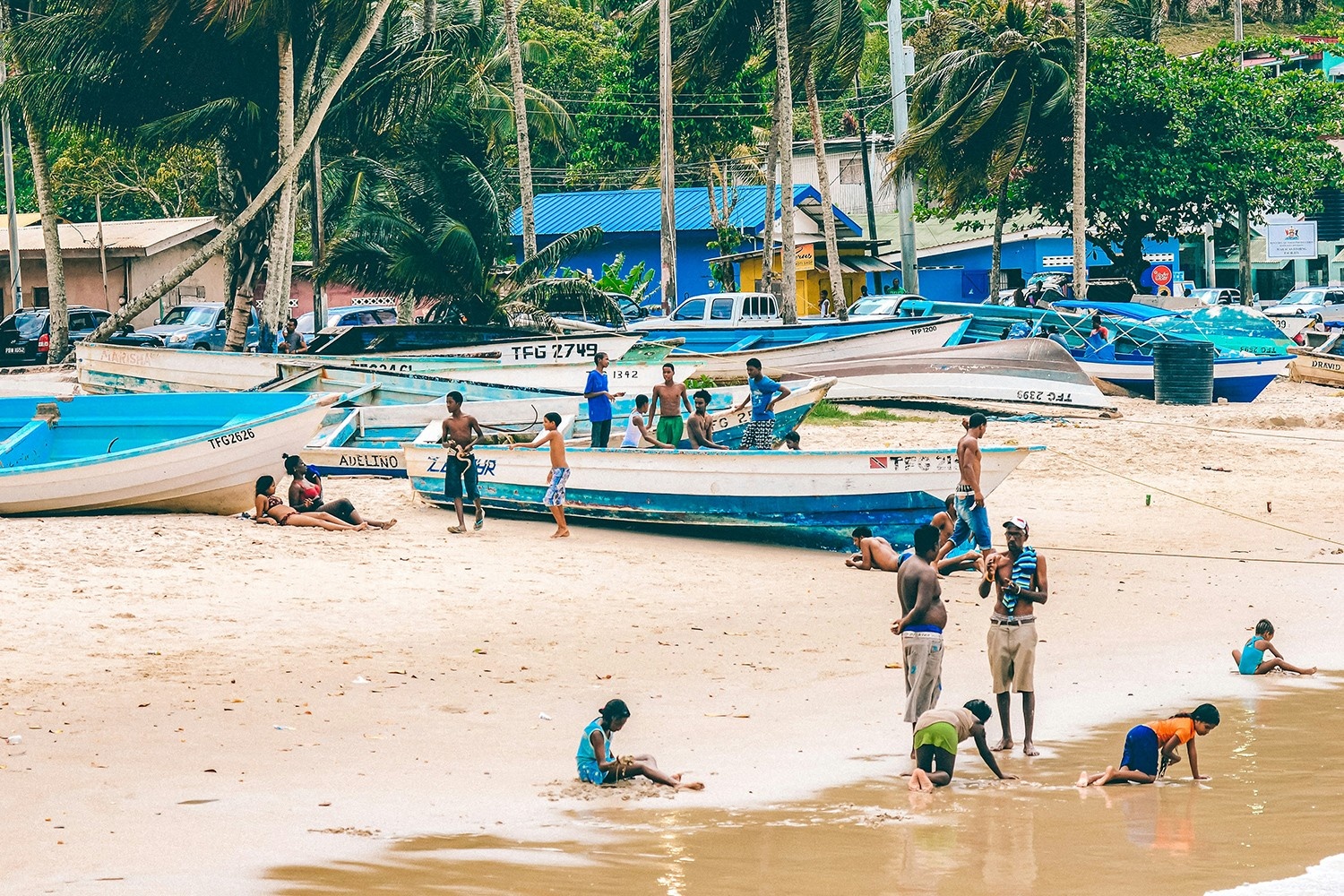
Fishing village in northern Trinidad. Courtesy of Omar Eagle (Unsplash).
Day 4: Northern Range Bird Sanctuaries
Thanks to its thick, untouched rainforests and proximity to the continent, northern Trinidad is a birdwatching haven; in fact, Trinidad and Tobago have the highest diversity of birdlife of any Caribbean island nation.
One of the biggest and best-known birding areas is just a short drive from Port of Spain: Caroni Bird Sanctuary. The 12,000-acre preserve is a nesting site for scarlet ibises, Trinidad’s and Tobago’s national bird, making it one of the best places to spot this ruby-colored creature on guided tours.
The island is home to nearly 20 species of hummingbirds, which you see up close at private estates like Yerette: Home of the Hummingbird. Owners Theo and Gloria Ferguson offer tours and home-cooked lunches. The Asa Wright Nature Centre is another hummingbird hot spot, as well as offering glimpses of oilbirds, honeycreepers, falcons, toucans, trogons, and motmots. For a real adventure, drive east to Bajnath Estate, a hummingbird sanctuary where you can take photography tours.
For the night, either head back into Port of Spain or snag a room at the Asa Wright Nature Centre’s solar-powered eco-lodge; the property sits on a revitalized agricultural plantation. Further south, Hacienda Jacana is another nice option, with wooden cottages tucked back in the woods and a shaded outdoor pool.
Day 5: Drive Trinidad’s North Coast Road
Spend the final day on the North Coast Road, a dramatic coastal route built by the U.S. Armed Forces during World War II. While well-maintained, drive slowly for great views around sharp curves. Watch for roadside vendors selling tamarind balls, sugarcakes, and preserved fruits.
For the full experience, start from Port of Spain and head north. Reaching the coast, drive until you reach Maracas Beach, a sandy half-moon crescent and sheltered bay. Grab a “bake” of fry bread stuffed with shark or kingfish at one of the generations-old seaside eateries before continuing on to other beaches like Tyrico Bay, Las Cuevas, and Blanchisseuse.
The North Coast Road ends at La Fillette. Here, you are “behind God’s back,” as the locals say; this is rural Trinidad. For the full loop back toward Port of Spain, follow Blanchisseuse Road through the thick of the island’s interior mountains and forests, with sightseeing stops at scenic lookouts and waterfalls.
As an alternate ending, continue east along country roads to visit remote fishing villages and isolated beaches. Depending on the season, you may see leatherback turtles.
If you want to spend the night nearby, eco-lodges like the North Deck, Mahogany Ridge, or Hotel Acajou offer comfortable rooms and on-site dining. With its open-air terrace overlooking the coast, North Deck is especially nice.
Kristine De Abreu is a travel writer from Trinidad and Tobago, specialising in travel, history, culture and science. Her work has appeared in Caribbean Beat, Caribbean Business and Travel, Deep Travel, Explorersweb and more. When she’s not writing, she can be found hiking, reading or setting off on spontaneous trips in search of oddities and mysteries.
North Stars: Community Support, Heritage Value, Wildlife Ecosystems
More Stories
 CULINARY, DRINK
Get to Know the Producers Behind the J.P. Bourgeois Portfolio
 CULINARY, DRINK
Where to Taste Wine in Willamette Valley
 DRINK
DRINKMeet the Distillery Making Vodka From Fog
 DRINK
DRINKSake’s Next Step: How Japan’s Rice Wine Is Evolving
 DRINK, HOME
The Buzz on InFizz: Breville’s Carbonator Elevates Sparkling Water