North Stars:

Energy Efficiency

Carbon Footprint

Community Support
“The ethical developers I’ve encountered here are always thinking beyond simply lowering their footprint.”
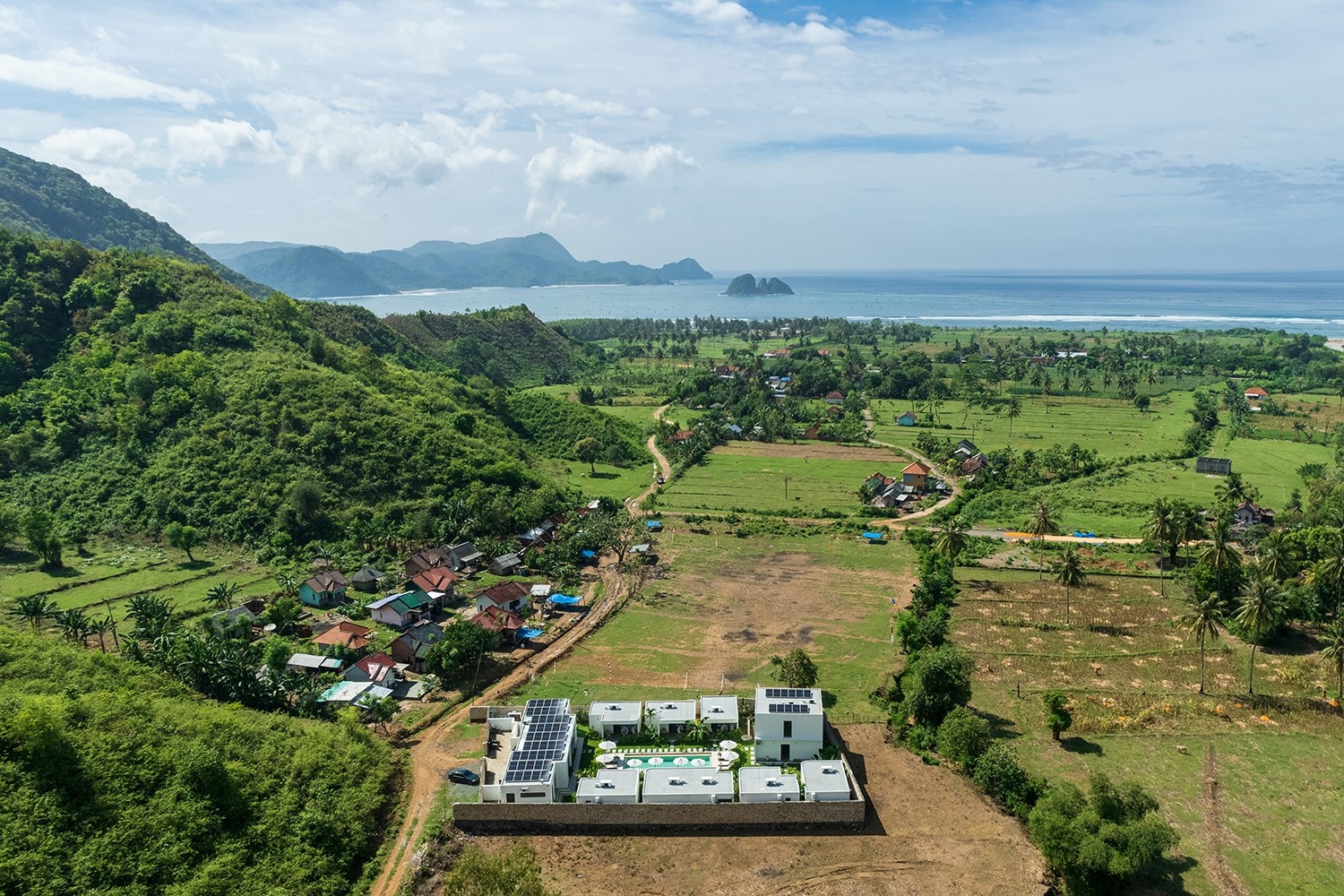
At sunrise in South Lombok, the surf breaks are still quiet. Only one or two boards can be seen bobbing in the waves, their occupants pausing to appreciate how the sun’s pinkish hues reflect on the water. At Xanadu Surf & Yoga Retreat, rows of solar panels start to pull power from these early beams of light as guests wander up from semi-buried rooms, cooled more by the soil than the buzz of ACs. Fresh water for post-surf showers is caught on the roof during rainy season downpours, filtered from an underground tank and cycled again and again before returning to the aquifer. This is what luxury looks like when designed, from the ground up, with respect for the island and its resources.
In the stillness of dawn, broken only by birdsong and the occasional trumpeting rooster, it hits me how different Lombok feels from my former home in Bali. There, traffic jams are a fact of life, green fields are increasingly paved over, and rivers run thick with plastic after storms. Here in Lombok, the only traffic jam I encounter is a herd of water buffalo ambling slowly across the road to sink into a cool mud bath under the mid-day sun.
When we first arrived here with our nine-month-old, my husband and I felt hopeful and wary, having already seen what unchecked development can do to a fragile island ecosystem. As Lombok is increasingly touted as the “next Bali,” with more and more people coming to visit or live, islanders are right to be concerned. Thankfully, our spirits have been buoyed by the handful of hotels and retreats that are demonstrating how achievable “green” luxury can be when infrastructure and ethics are built into the business models. What sets them apart is both visible and invisible, the latter justified more by deeply held values than marketing ploys.

One of the rooms at Xanadu. Courtesy of Xanadu Surf & Yoga.
Lombok’s Sustainable Stays
Somewhere Lombok, a cliff-side retreat overlooking sparkling Are Guling bay, is an example of this invisible work. Built in partnership with sustainability consultancy Eco Mantra, the resort was designed first for climate, then for aesthetics. Shading, building orientation, and roof insulation were used to cut peak heat gain by roughly a third, meaning less need for mechanical cooling. Solar panels are budgeted for the next building phase.
Like Xanadu, water comes from on-site wells and rain harvesting, then is treated in bio-septic systems, filtered via recharge wells, and returned to the ground. Around 70 percent of its land has been kept as softscape, planted only with hardy indigenous species that can survive Lombok’s long dry season without heavy irrigation. When lying by the pool, the design — shortlisted for this year’s AHEAD Awards — translates as effortless, clean and comfortable. Underneath, its fine-tuned system significantly shrinks the property’s footprint.
That same philosophy threads through equally earth-friendly places like Mana Eco Retreat and Amazing Lombok, two south Lombok resorts also powered almost entirely by solar, while prioritizing greener cuisine via locally sourced ingredients and, at Mana, an entirely vegan and vegetarian menu.
As these southern coast resorts tweak their consumption, Saifana Organic Farm in North Lombok reimagines it from the soil up. Built on a formerly degraded cashew orchard, the family-run retreat has spent years rebuilding topsoil to hold precious moisture through months-long droughts.
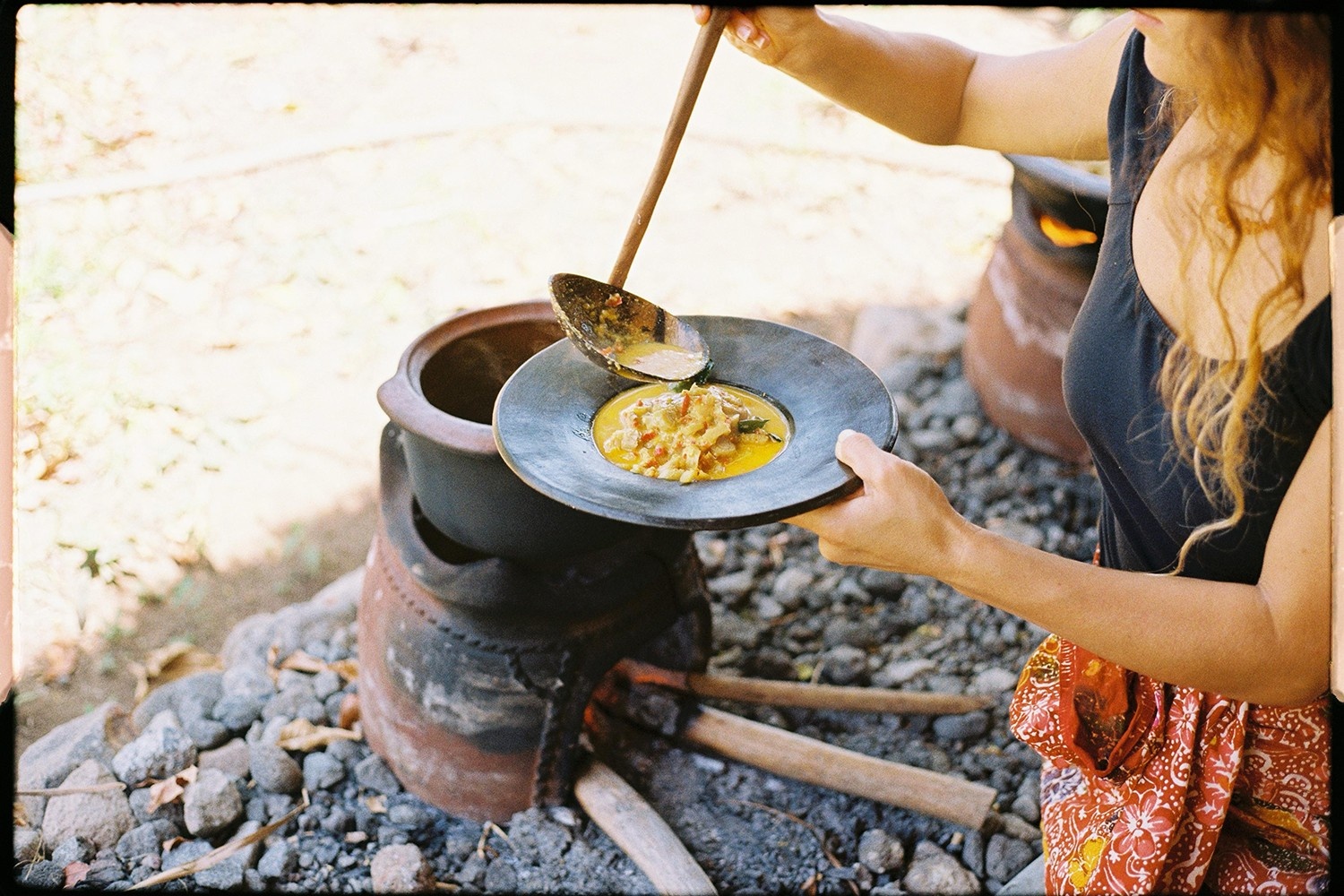
Dining at Saifana. Courtesy of Saifana.
Today, a food forest of mostly edible species fills the table to feed occupants of its five wooden and solar-powered bungalows. Saifana expands food sovereignty among locals through training on natural farming and shared community gardens. The team also runs weekly Trash Hero clean-ups and partners with the Tanah Inaq Foundation to train Lombok women in regenerative agriculture and product-making for added income.
Ecological Island Living
This kind of community-first thinking isn’t unique to Saifana. The ethical developers I’ve encountered here are always thinking beyond lowering their footprint, to uplifting their community, and ensuring the people who call this island home benefit from tourism versus being sidelined by it.
At Xanadu, more than 90 percent of the staff are Lombok locals, many rising through the ranks into management, while partnerships with women-led collectives, surf clubs, and youth organizations funnel resources back into Kuta’s villages. Somewhere Lombok works almost exclusively with Indonesian artisans and builders, and the sisters behind it spent years persuading suppliers to deliver goods without plastic, an effort that ultimately shifts habits beyond their property line. Among its many eco-conscious practices, Amazing Lombok Resort provides locals with drinkable filtered water that removes the need for imported bottles, and Mana supports groups like Keep Kuta Clean and Kuta Lombok Dogs while modeling everyday low-impact choices for guests.
Developer Andrew Jackson, who is currently building two plots of luxury villas here, keeps a close eye on waste and emissions. In addition to reducing single-use plastics on construction sites, he’s out to prove that developers can replicate his and other eco-examples without sacrificing luxury.
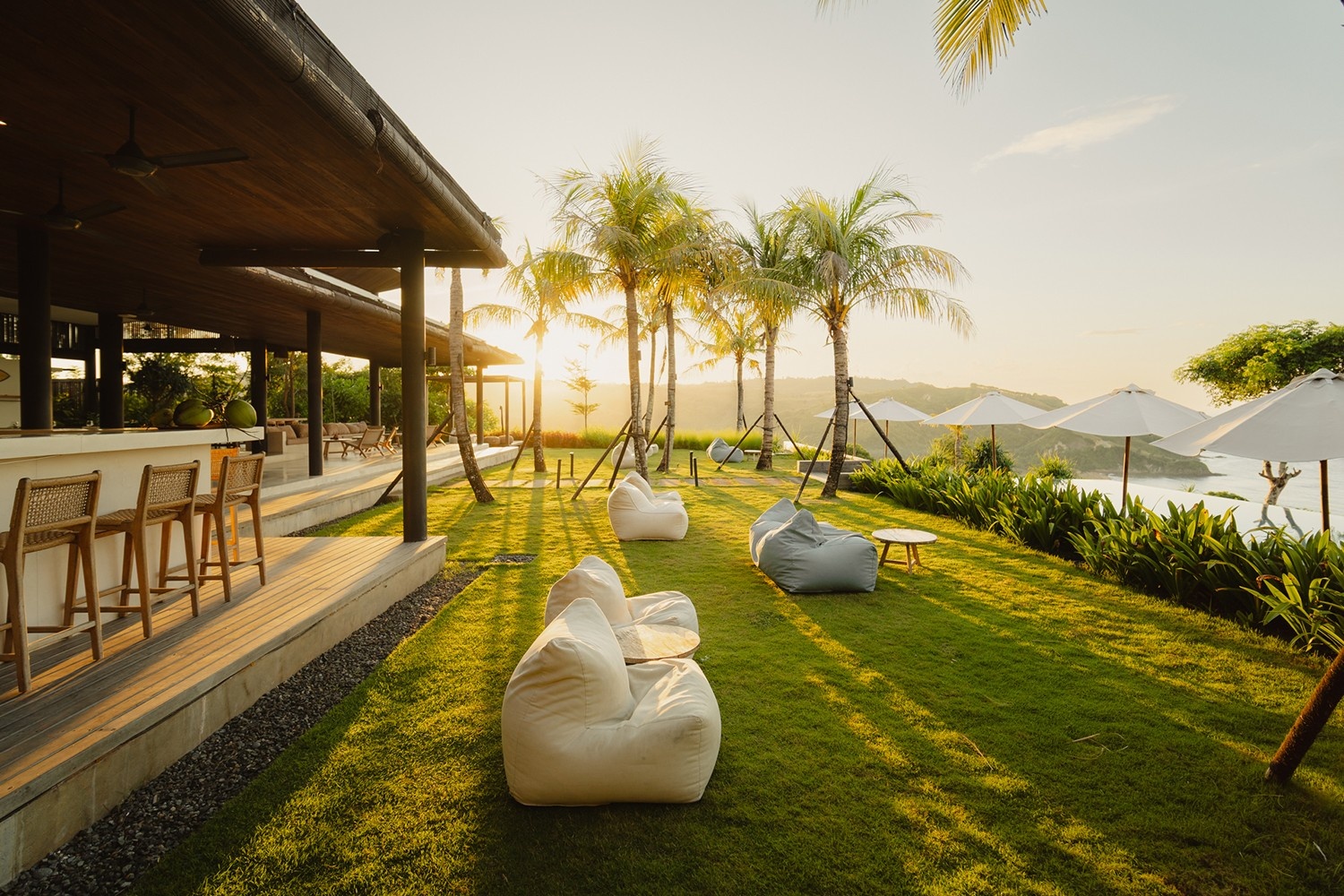
Exterior of Somewhere. Courtesy of Blake Hobson.
“Many new villas built by foreigners are these uninsulated cement boxes, totally at the mercy of AC. I believe in smart design and low-impact architecture as the cornerstone for reducing one’s footprint.” His equation is simple: solar power plus circular design equals conditions as comfortable as any five-star resort (sometimes more so, given the island’s frequent power outages).
Setting a Foundation for the Future. As someone building a life here, raising a child who will grow up on this island, I find that idea deeply comforting. Taken together, these hotels are reframing what “luxury” means in a place like Lombok.
Instead of diesel-powered air-con and bigger, grander buffets, indulgence looks like sleeping to the sound of crashing waves, in a well-ventilated room, powered by sunlight. It’s showering in water that will return safely to the earth, or eating food that hasn’t traveled farther than you have. It looks like art that makes you rethink waste, shops that trace every object back to its maker, and owners who stay long enough to care what happens outside their property line.
Lombok still has a chance to protect the magic so many come here seeking. And if this wave of thoughtful hospitality is any indication, that future is already taking shape.
Bonnie is a Bali-based freelance writer specializing in a more eco-conscious brand of luxury travel, design, style and wellbeing. Her bylines to-date include Azure Road, Elle UK, BBC Travel, Artful Living, Upscale Living, BLLNR, Well + Good, The New Zealand Herald and many others. For more from Bonnie, you can subscribe to her Substack or follow Bonnie on IG @eco.luxury.bon.
North Stars: Carbon Footprint, Community Support, Energy Efficiency
More Stories
 DRINK, PARTNERSHIP
Crafting Alto Adige’s Future: The Evolution of Cantina Colterenzio
 DRINK
DRINKSeven “Slow” Sparkling Wines for the Holidays
 DRINK, PARTNERSHIP
Why Loveblock Founder Erica Crawford Leads with Organic, Not Origin
 DRINK
DRINKOne Winery’s Answer to Napa’s Changing Wine Market
 DRINK, PARTNERSHIP
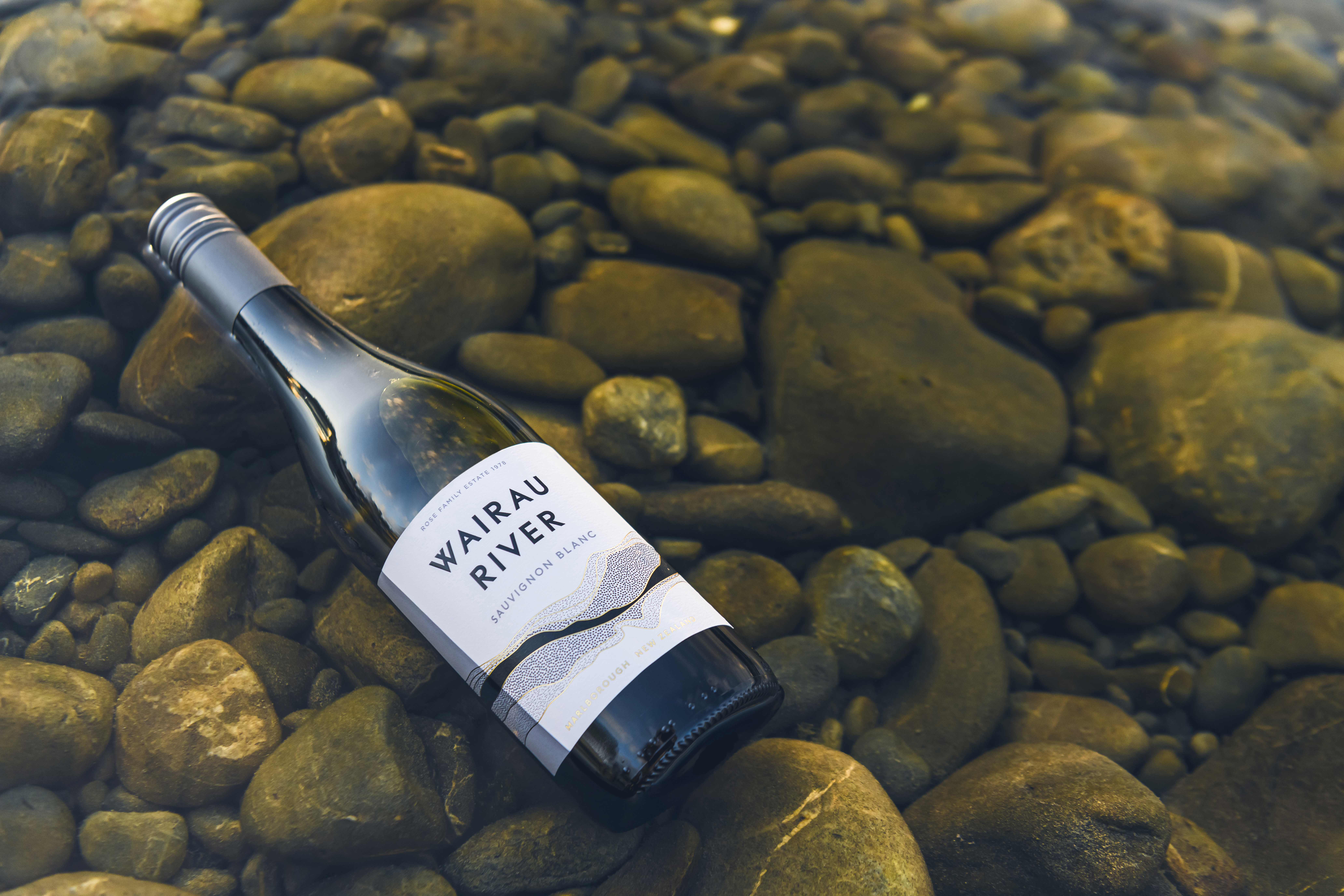
What Happens When the Same Team Makes Wine for 20 Years? Wairau River