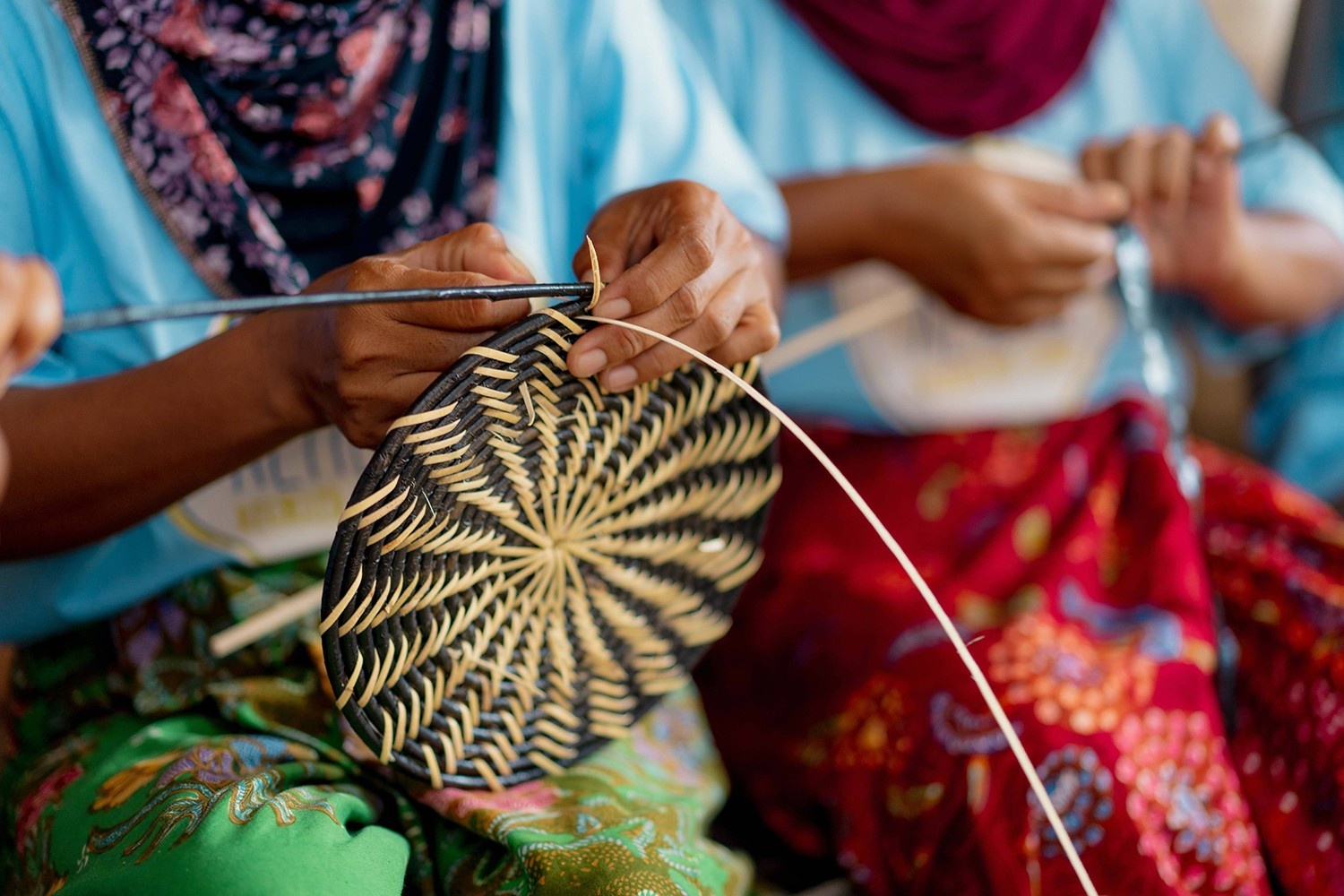
North Stars:

Community Support

Waste Management

Heritage Value
“Many people shaping its future are choosing a path defined by local knowledge, smaller footprints, and circular thinking.”
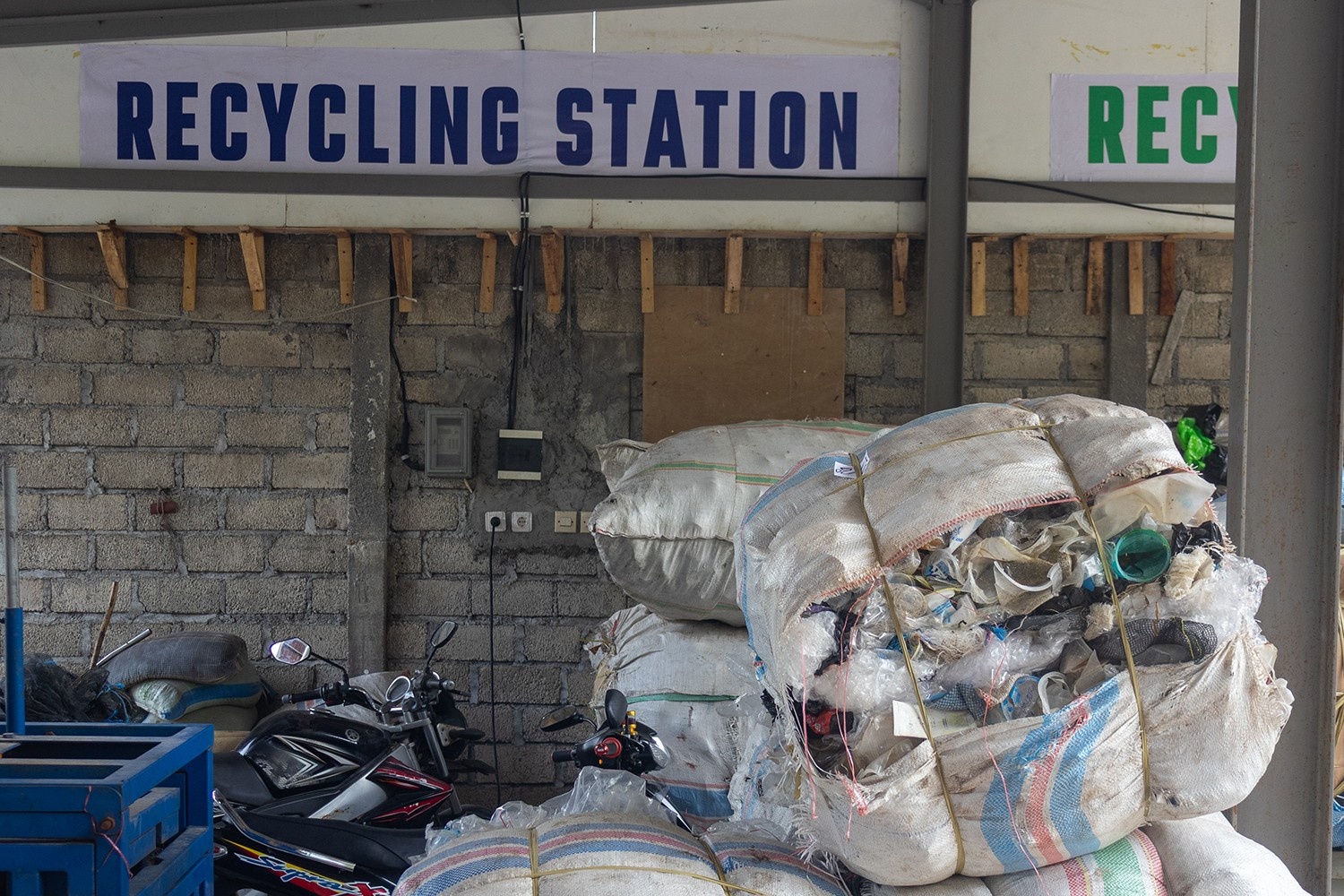
Inside Tom and Nadine's recycling center. Courtesy of Bonnie Pop.
On a dusty back road in Selong Belanak village, a surfer’s paradise on the southern coast of Lombok, a beeping truck backs up to an open-air concrete facility and unloads bulging bags of mixed trash.
As the bags are weighed, Swiss expat Nadine Herzog’s team is already sorting through the morning’s arrivals: plastic cups scraped of food, empty Bintang bottles, cardboard scraps, coconut husks. Recyclables are separated. Glass is fed into a crusher and turned into sand-like aggregate. Organic scraps go into the compost bin.
Everything that can’t be repurposed is incinerated — a less-than-ideal solution, but one that keeps waste out of waterways and away from the illegal burn pits common across the island.
Compared to Lombok’s green hills and clear waters, the view here is not as beautiful. But Nadine and her partner Tom’s work is what keeps those plastic-free beaches attractive to the growing number of travelers visiting Bali’s sister island. Their facility, the only one in Selong Belanak, shows what this small slice of South Lombok produces in a single day: trash that would otherwise be burned, piled in landfills, or swept to sea.
Looking around, it’s clear what’s at stake. Sitting right next door to Bali to the east, the slightly smaller island of Lombok is increasingly drawing bigger crowds seeking out the “undiscovered” aura many feel Bali has now lost due to overtourism and development.
In 2024, Lombok saw a nearly 40% jump in tourism, with over 81,000 travelers. Bali annually receives visitors in the millions, but the increase is impossible to ignore. Investors and developers are also eyeing the island more and more. Without more systems like Tom and Nadine’s, Lombok’s future might mirror the polluted Bali beaches many travelers are now trying to avoid.
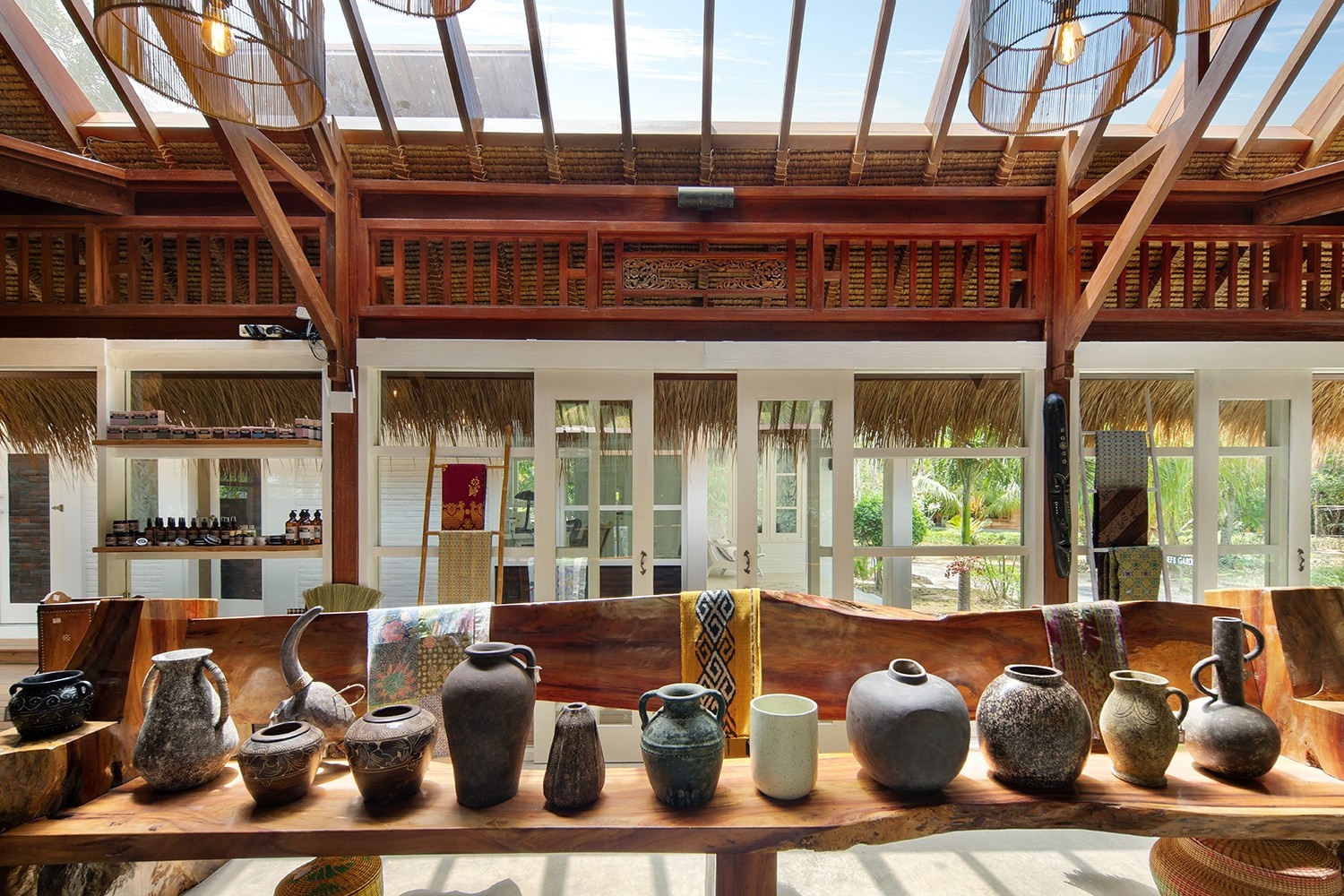
Local artisan wares of Sempiak Resort's gift shop. Courtesy of Bonnie Pop.
Looking Out for Lombok
Tom and Nadine didn’t intend to run a waste facility. In 2020, they gathered with a small group of neighbors to rethink what “doing their part” actually meant. Both realized simply collecting garbage wasn’t enough. So with the sudden abundance of time that came with the pandemic, they set about raising money, going door-to-door, to build a facility that now includes a sorting center, a compost area, and a small incinerator funded not by corporations or investors but by expat residents and boutique builders who want a cleaner, healthier village.
“The small hotels, the boutique places, and family-run restaurants… they’re the ones who showed up,” Nadine explains. “They’re the ones willing to pay for proper collection.” These are the business owners and entrepreneurs who actually live here, on-island, thus having more motivation to preserve their slice of paradise.
Across Lombok, locals and long-term residents echo that sentiment. Meaningful progress isn’t coming from glossy sustainability promises made by big international players, but from small-scale, community-rooted initiatives. And many of the most impactful ones here are led by women.
Female First
Spanish-born and Lombok-based architect and climate advocate Paula Huerta has spent a decade building Bambook Studio, known for its low-impact designs that prioritize solar power, local materials, efficient cooling, and minimal concrete. But her work stretches well beyond building villas and hotels.
In her 12 years living in Lombok, Paula has gotten her hands dirty organizing several community projects. She’s helped local schools develop waste education programs, co-founded a locally run Eco Flea Market, and built a Black Soldier Fly compost facility.
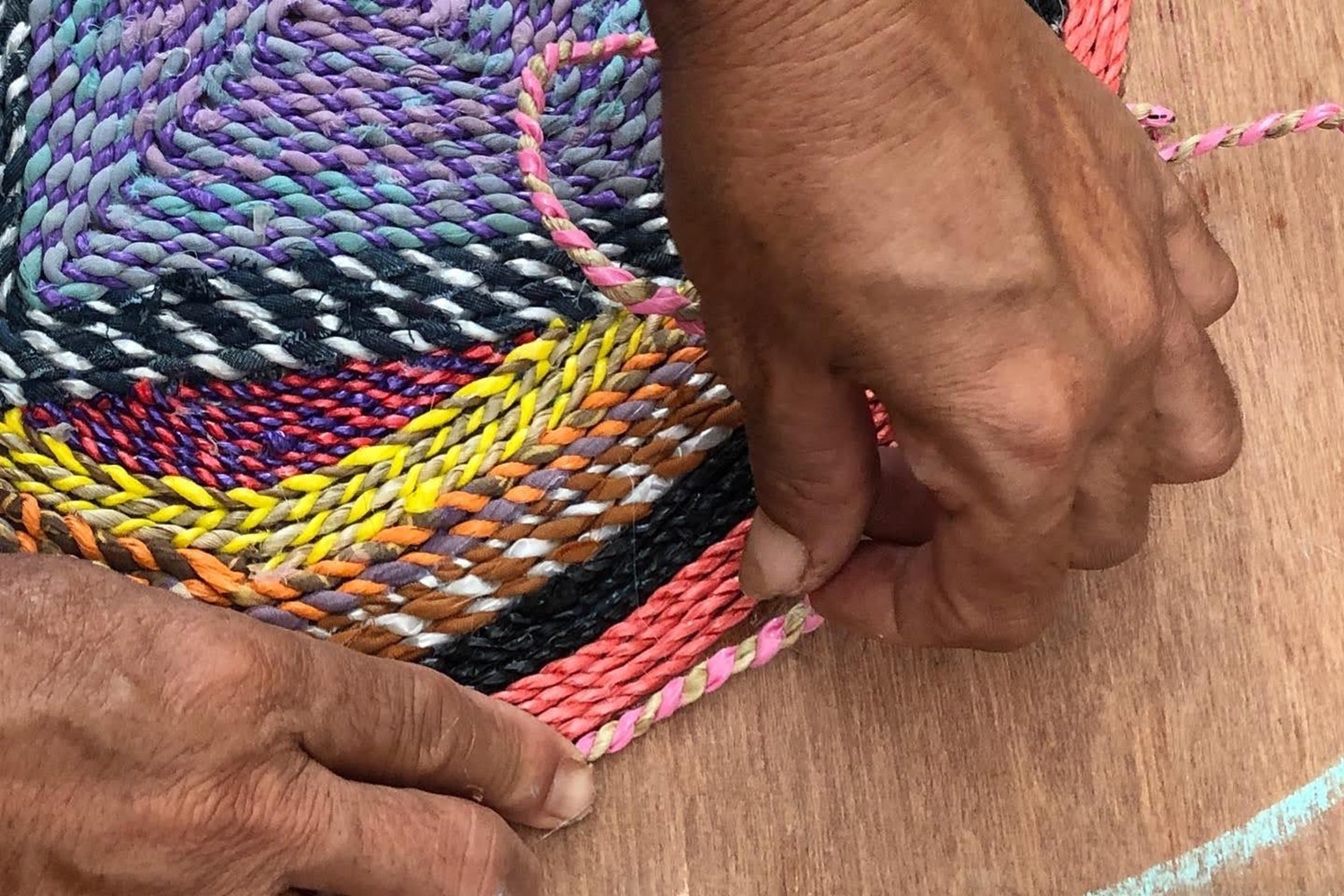
Artisans at work. Courtesy of Bonnie Pop.
“You can’t solve one layer without tackling all the layers,” Paula tells me, reflecting on years of effort that has resulted in some laudable wins and many, many frustrations. She understands the solutions here have to come from the private sector, but those people also have to understand every contributing factor to the waste and pollution problem, or the solutions go nowhere.
“You have these initiatives where a company builds blockers in the river to collect the plastic before it reaches the sea. And the cattle who cross the river say ‘nah, no we don’t want it’ and knock it over. And that’s it. The project dies.” Her example speaks to the need to meet Lombok’s community where they are, and she and several others are doing just that.
When she founded the Lombok Eco Flea Market in 2019, it was created to be a platform exclusively for eco-artisans. Run entirely by women, the market now has nearly 40 businesses under its umbrella and supports more than 500 people across the island.
Vendors must adhere to a set of principles — circularity, fair trade, low-impact production, local roots — before earning their “LEFM Stamp.” Markets pop up monthly across tourist hubs, pairing sales with workshops on composting, natural dyeing, and sustainable packaging. It is equal parts commerce and education, showing what eco-entrepreneurship looks like on the ground.
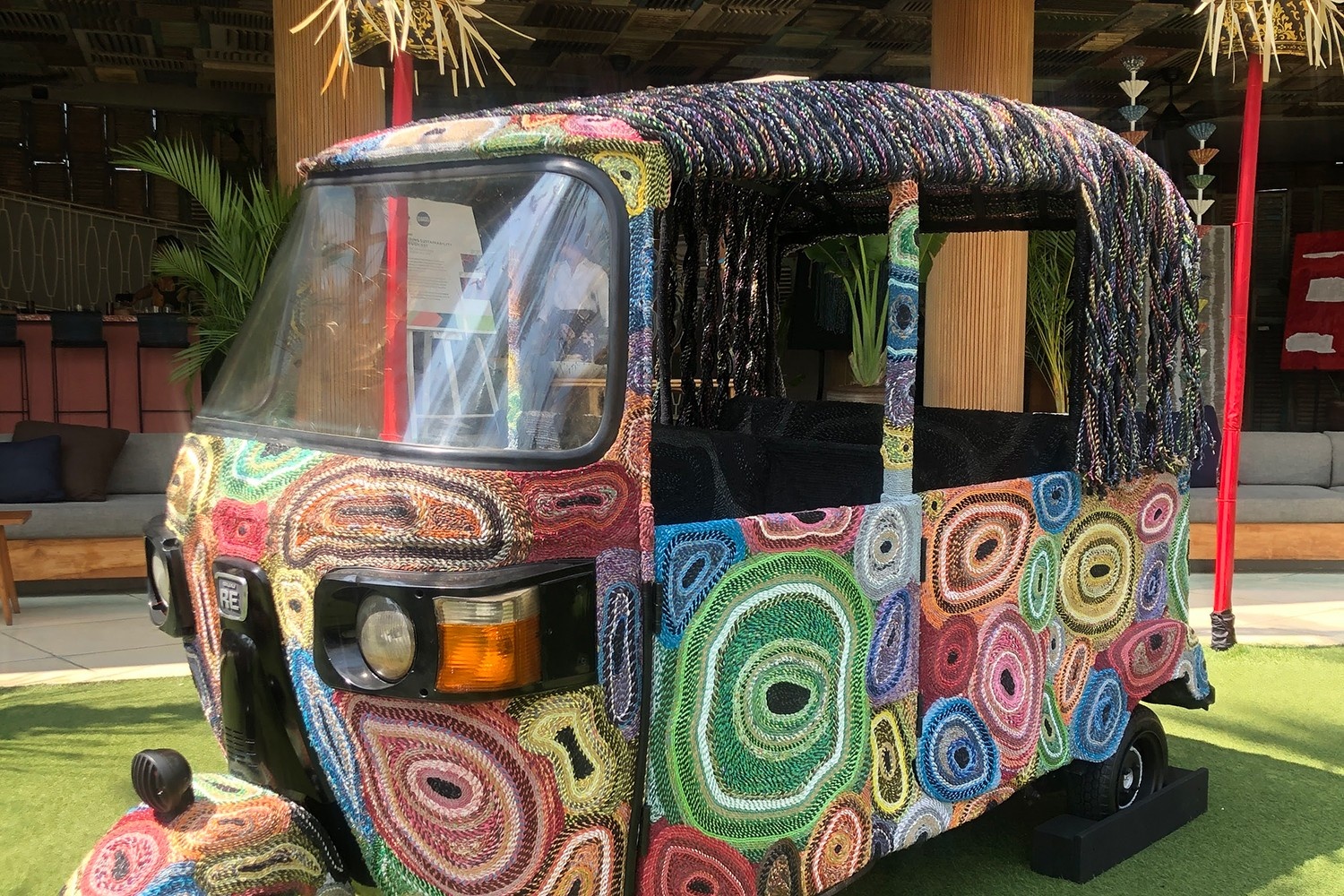
Plastic art at Plastik Kembali. Courtesy of Bonnie Pop.
Creating Change
From this network grew Ninē-Ninē, a women-led collective in Kuta that upcycles secondhand Bendang textiles into bags, garments, and homeware. Its founder, Lulu, wanted to create a community center where Sasak women can build skills, earn fair wages, and keep their weaving traditions alive. Visitors can work at the cafe or join workshops on coconut oil, sambal, coffee, or bamboo craft, learning directly from the women who hold these traditions.
Back in Selong Belanak, artist Elissa Gjertson transforms plastic waste into sculptural forms through her collective, Plastik Kembali. She began by melting and hand-pressing bowls from discarded plastic bags, then expanded into large-scale installations made from textile waste sourced from hotels and fashion companies.
Last December, she debuted an immersive coral-inspired art gallery at Sempiak Seaside Resort, another waste-conscious business in Lombok. Gjertson believes art can shift mindsets in a way facts alone cannot. “Until I was able to make an emotional link with people through art,” she says, “the message of waste management was dull at best and depressing at worst.” Her goal is simple but subversive: to make waste feel like possibility.
If there’s a common thread across all of these efforts, it’s this: no one is waiting for a master plan. Lombok may still be branded by outsiders as “the next Bali,” but many people shaping its future are choosing a path defined by local knowledge, smaller footprints, and circular thinking.
In Bahasa, kembali means “return,” and that word rises again and again in conversations across the island. A return to slow craft, to shared responsibility, to a pace of development that, hopefully, leaves more room for careful consideration. If Lombok can chart a different course from its more famous neighbor, it will be because of the people here who believe the island deserves a future all its own.

Bonnie is a Bali-based freelance writer specializing in a more eco-conscious brand of luxury travel, design, style and wellbeing. Her bylines to-date include Azure Road, Elle UK, BBC Travel, Artful Living, Upscale Living, BLLNR, Well + Good, The New Zealand Herald and many others. For more from Bonnie, you can subscribe to her Substack or follow Bonnie on IG @eco.luxury.bon.
North Stars: Community Support, Heritage Value, Waste Management