“The fetishization of certain attractions means everyone does the same trip.”
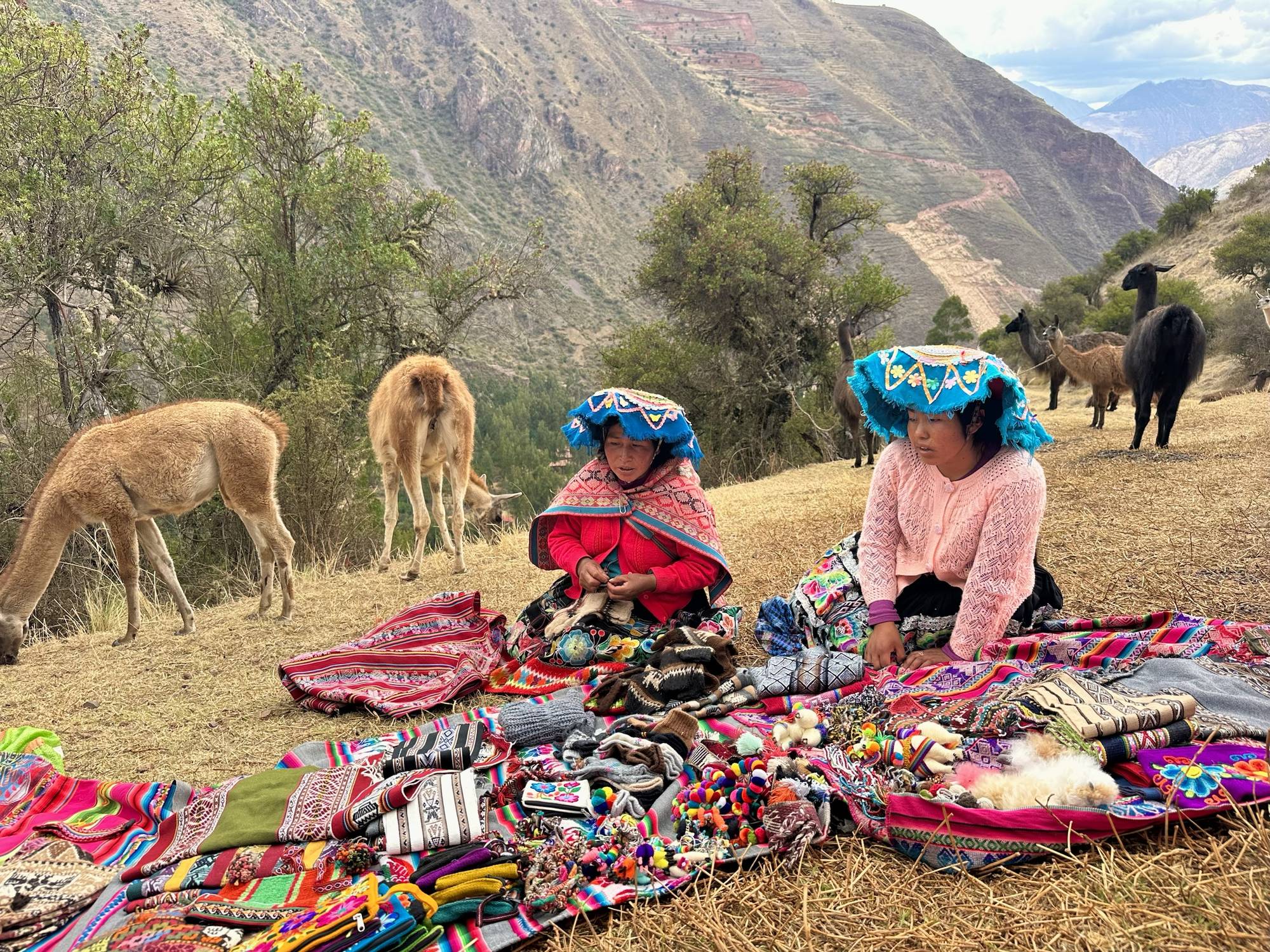
Artisans and their textiles on the trail. Courtesy of Lauren Mowery.
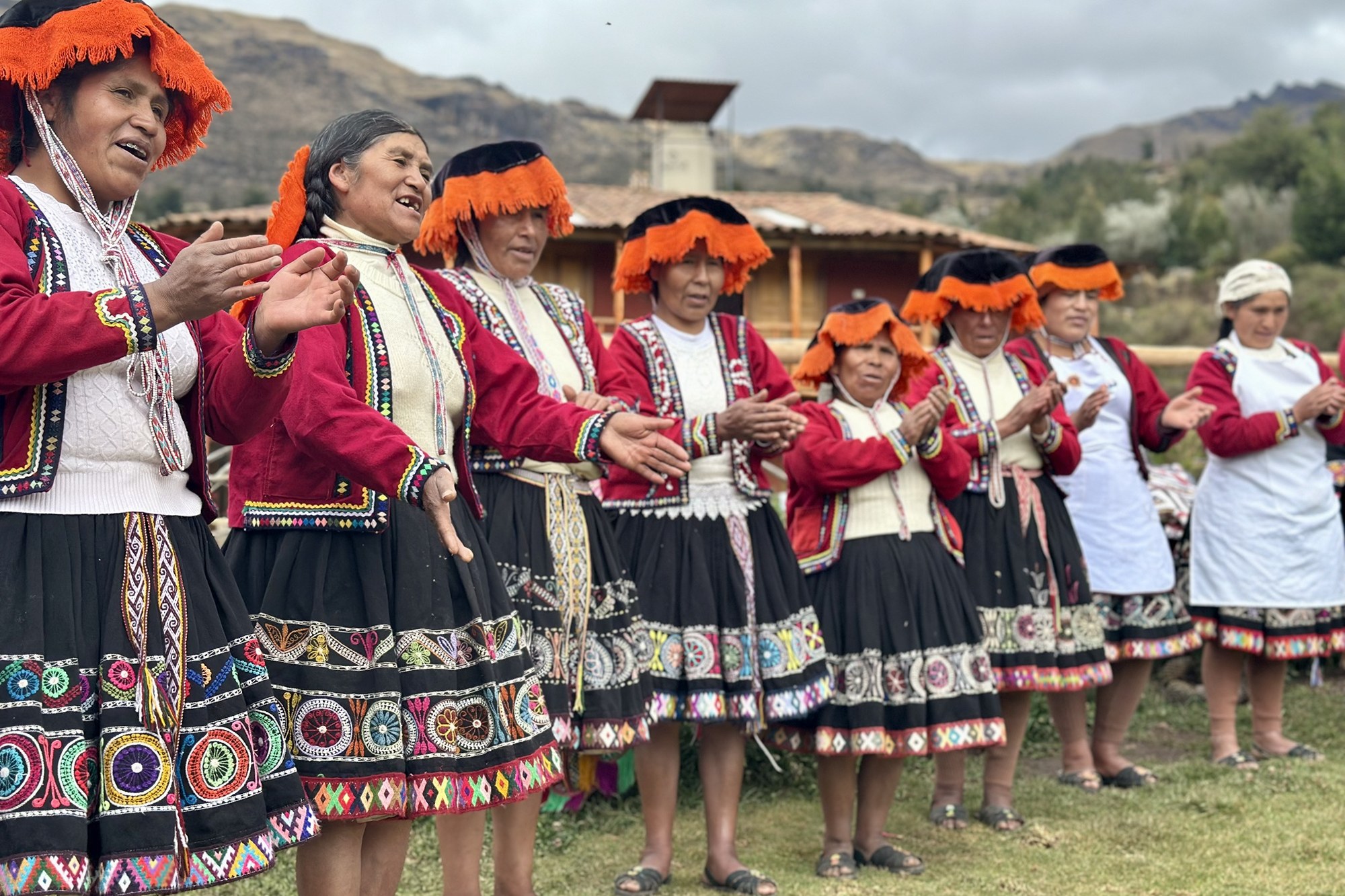
Walking through the wooden gate, an elderly woman took hold of my hand. She pulled me into a circle, along with other members of the community and our travel group, and encouraged us to dance and clap to the welcome song. The women wore colorful hats adorned in silky fringe, while over their shoulders sat stiff shawls hand stitched with intricate patterns and cinched over the chest. Voluminous skirts hugged their hips – a traditional outfit I’d soon find myself wearing throughout the day during a visit to the Amaru Community in Pisac, Peru.
The Quechua attire worn by the women, called traje típico, consists of the wide pleated skirt known as a pollera; the hand-woven triangular shawl called a manta; and other pieces like the montera or flat, wide-brimmed hat I strapped on in the flattering color of orange. This clothing, however, wasn’t always a source of pride for Andean communities. In fact, only recently, through the benefits of community tourism, have younger generations developed pride for their traditional dress. Many of these groups live in the Sacred Valley, adjacent to Peru’s most popular attraction, Machu Picchu. Yet, visits to Quechua villages and the booking of other community-led tourism experiences have a long way to catch up.
That’s because Peru has a Machu Picchu problem.
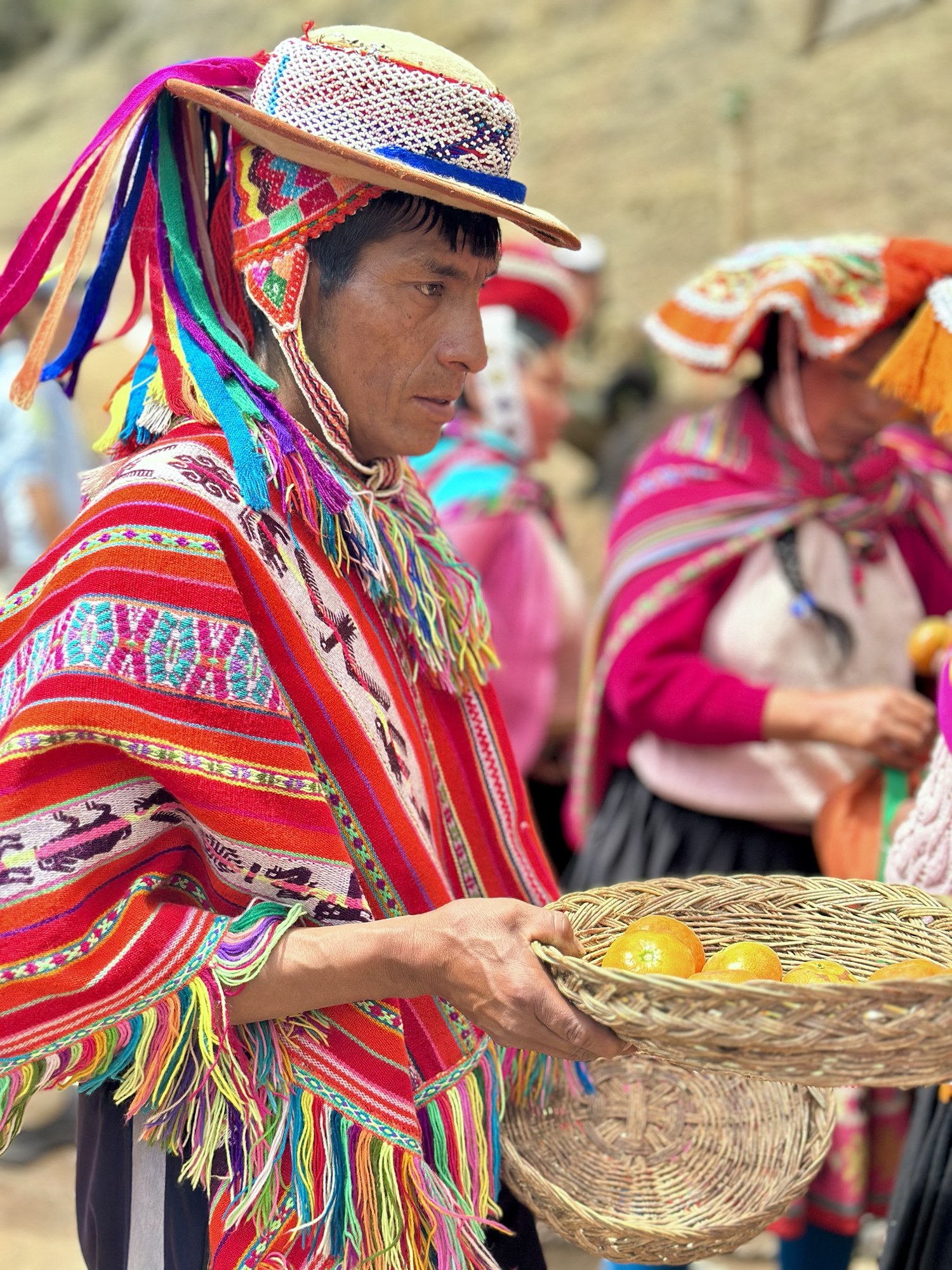
A Llama Pack host carries oranges. Courtesy of Lauren Mowery.
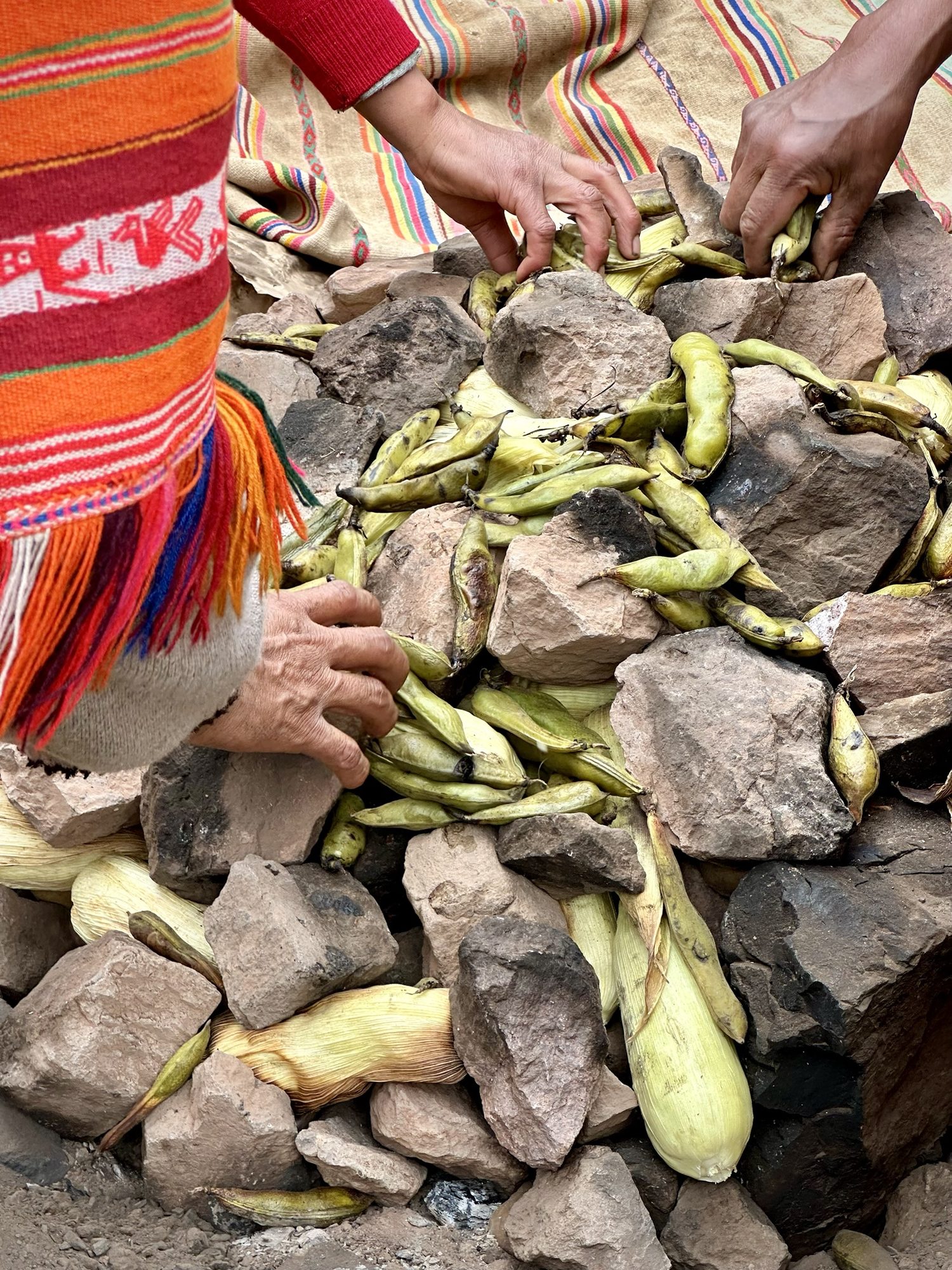
Corn and beans go into an earth oven. Courtesy of Lauren Mowery.
All Roads Lead to Machu Picchu
In 2024, the country’s leading tourism organization, PROMPERÚ surveyed U.S. visitors and found that 61% visited the Cusco region, home to the iconic Incan site. After that, the numbers dropped sharply: 8% visited Puno, which borders Lake Titicaca, and 8% reached Arequipa. Only 6% visited Loreto, in the Peruvian Amazon. The median stay in the country was nine nights, with 40% spending a week or less.
Community tourism accounted for a relatively small part of those trips. Just 22% of the surveyed U.S. visitors reported taking part in community tourism, and 10% participated in activities such as preparing food or making handicrafts with community members.
The pattern extends beyond Americans. In 2024, 54% of international visitors surveyed went to Cusco, compared with 17% for Ica and 14% each for Arequipa and Puno.
Those figures reflect a growing concern in countries all over the world with a single leading attraction. In the case of Peru, travelers spend a little time in Lima, head to Cusco and Machu Picchu, then head home or to another country in South America. Machu Picchu is treated like a bucket list visit rather than a key site in a larger, culturally and archaeologically rich region. An itinerary built around its most famous site concentrates tourism spending in a handful of places, leaving communities elsewhere with far fewer visitors.
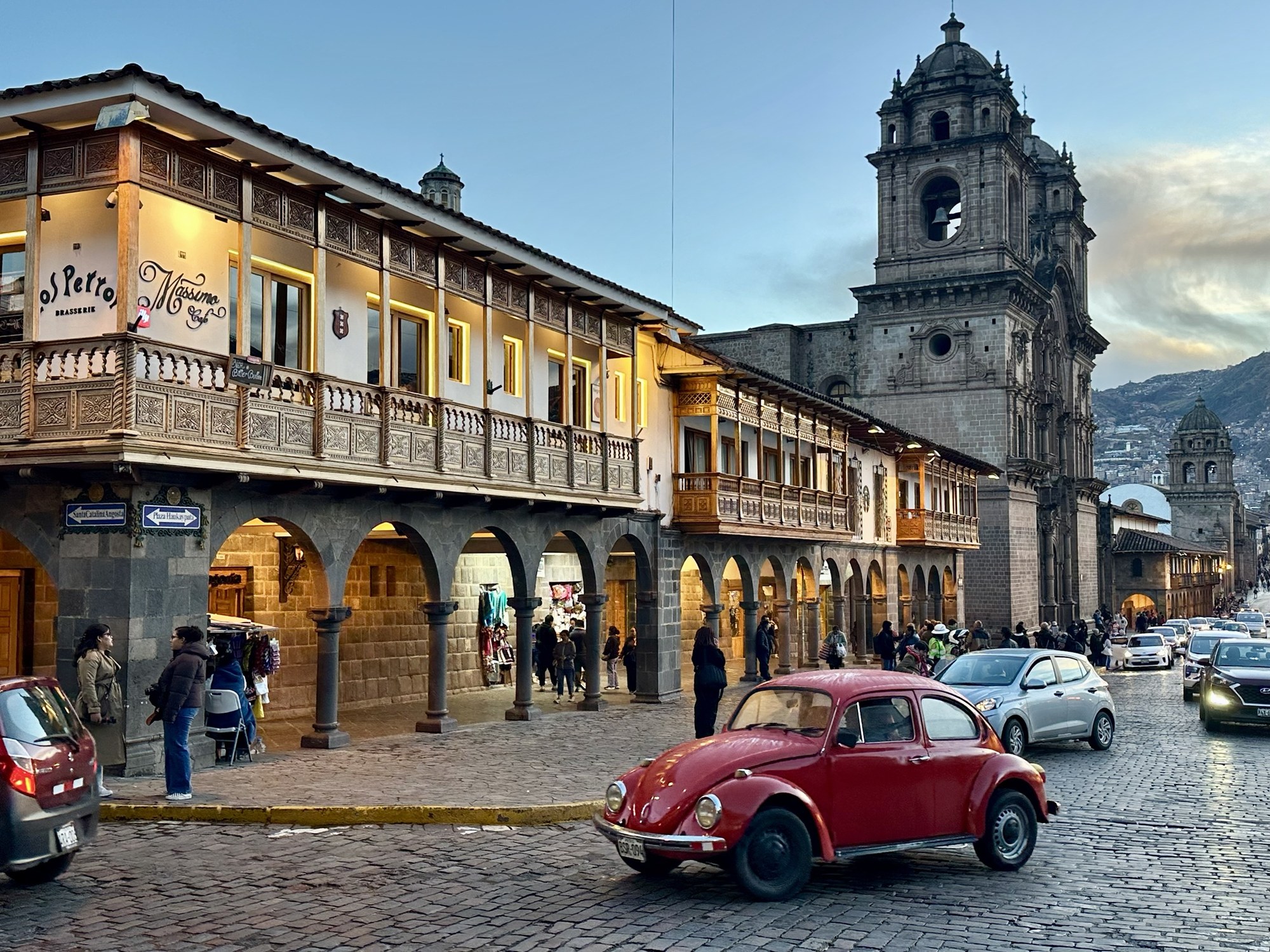
Cusco at dusk. Courtesy of Lauren Mowery.
Peru Twenty Years Ago
I first visited the Pacific coast country in my 20s on a backpacking adventure with my dad and sisters. Starting in Chile, we made our way from Santiago to San Pedro del Atacama, then crossed the volcano-dotted moonscape into the Uyuni salt flats. From Bolivia, we took a boat across Lake Titicaca, visited the Nasca Lines through Arequipa, then took another bus to Cusco. We hiked a multiday trail culminating in sunrise at Machu Picchu’s Sun Gate on my dad’s birthday. Back then, we had a guidebook, a little bit of high school Spanish, and locals and other travelers to lean on for tips. No advance reservations, just book as you go. That included the famous hidden city in the mountains. A trip like this today is impossible.
The fetishization of certain attractions means everyone does the same trip, creating chaos and competition for high-season reservations. It also deepens the chasm between travelers and locals. When everything is booked through an agency, tour operator, or the hotel, you never need to ask for help, talk to people along the route, or see people going about their day-to-day lives.
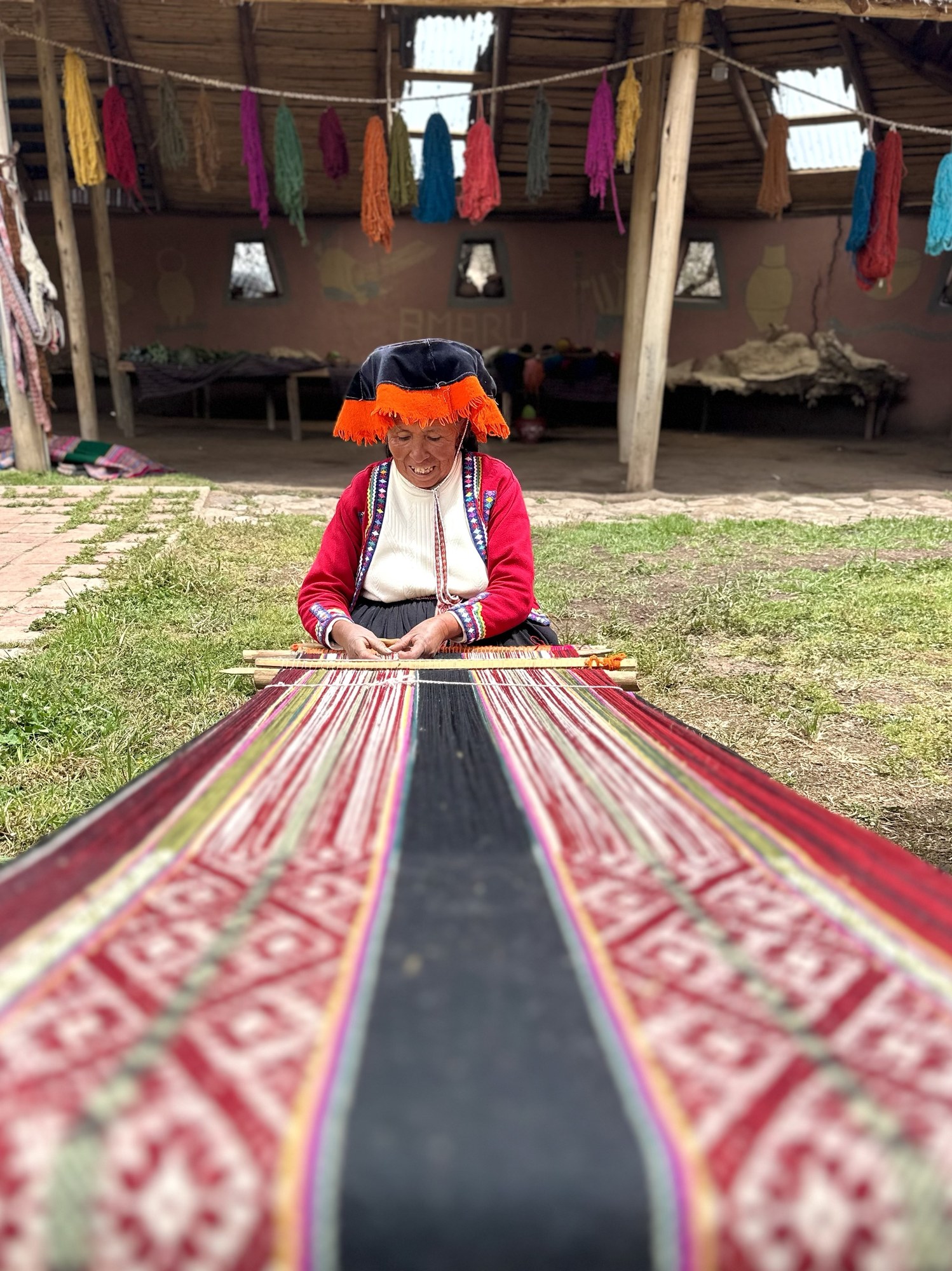
Weaving a long textile at Amaru. Courtesy of Lauren Mowery.
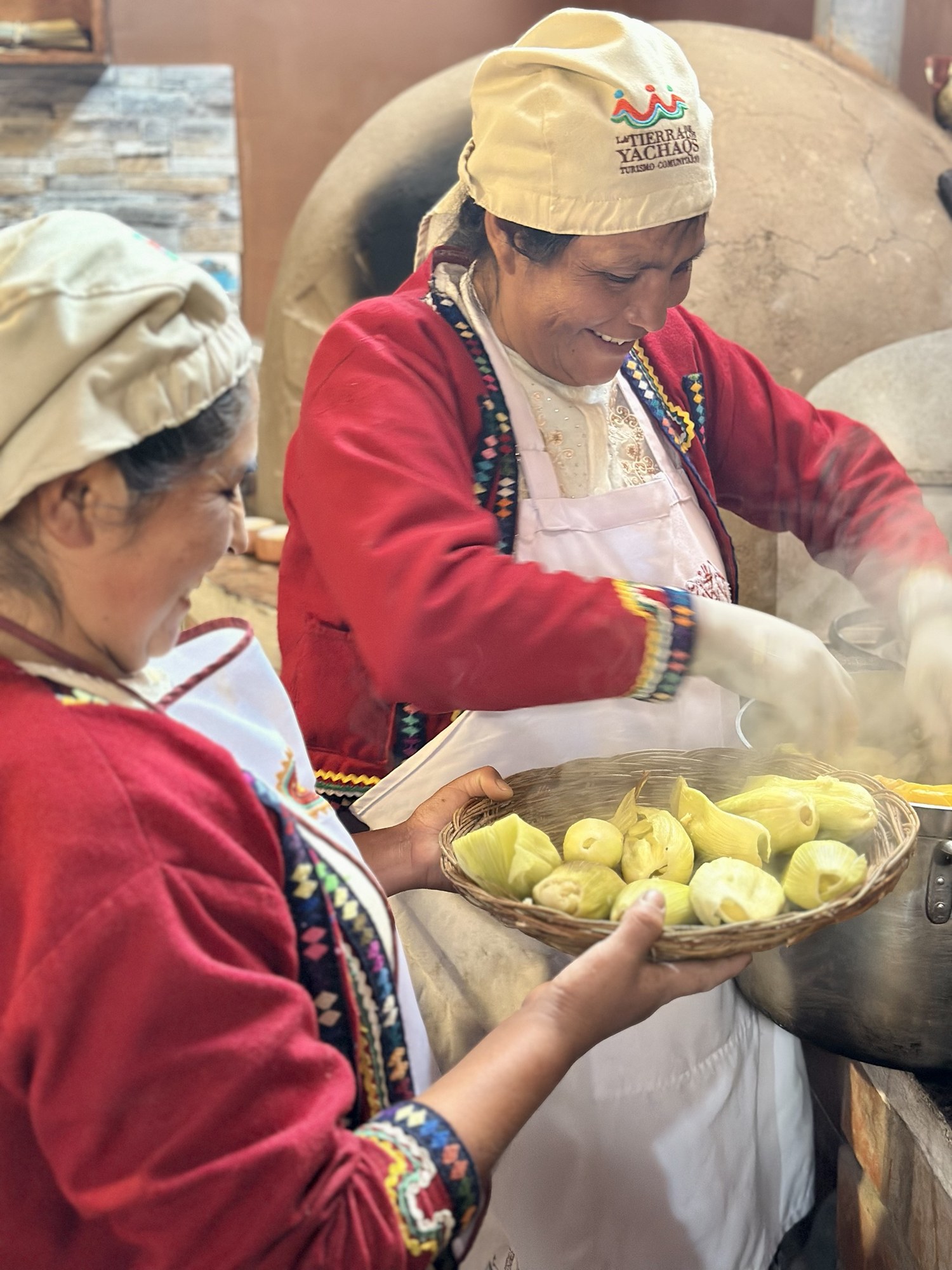
Steamed humitas fresh from the pot. Courtesy of Lauren Mowery.
How Community Tourism Changes Travel
Community-led tourism helps re-engage travelers with the people behind the places they visit, while money spent on the activity goes directly to the community rather than a third party. Residents decide on the experience they wish to offer, what elements of their lives and culture should be included, and what stories illustrate that point of view.
Experiences include cooking typical foods or learning about traditional crafts like weaving. Hosts are compensated for their time and knowledge, and visitors have a chance to ask questions, participate, and even shop for local crafts. Instead of buying a trinket from a street vendor or shop in town, you buy directly from the artisan.
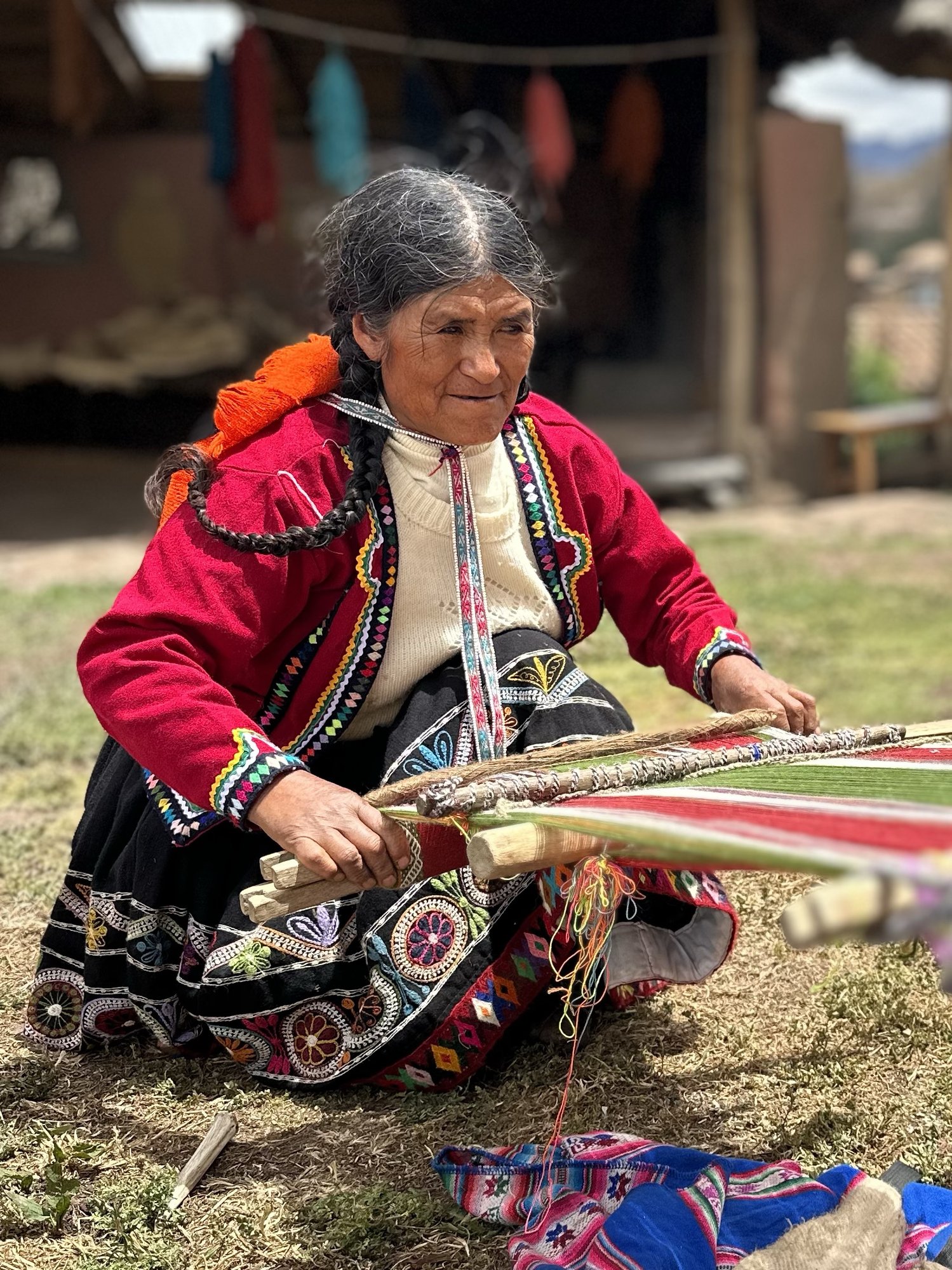
An Amaru weaver at her loom. Courtesy of Lauren Mowery.
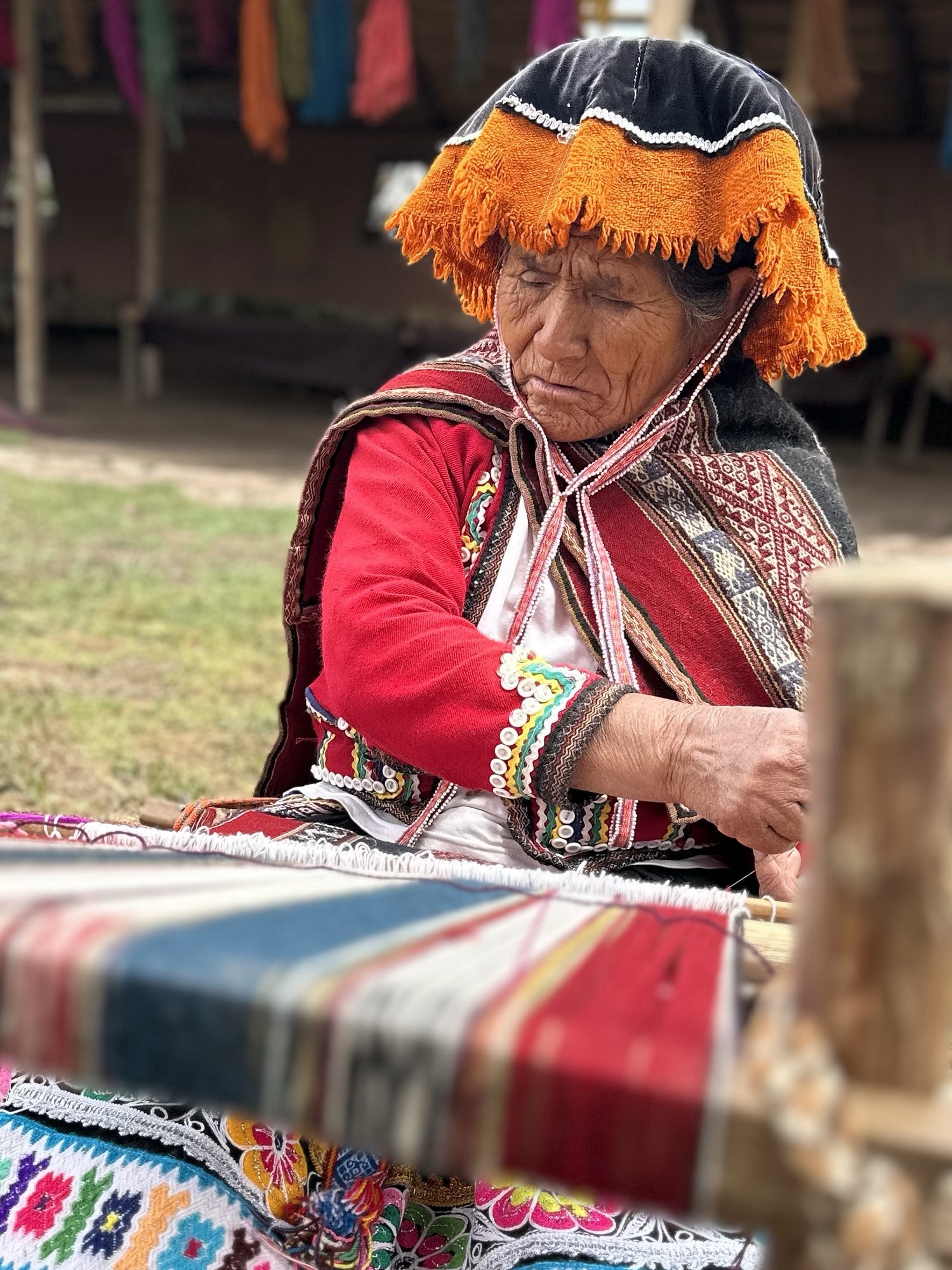
An elder weaver in her montera. Courtesy of Lauren Mowery.
What community tourism is not is charity or a performance, nor does a visit buy unrestricted access to someone’s life. Hosts set the boundaries and guests are meant to respect them. But the exchange goes both ways. The community members I met in Peru said they learn from their visitors, taking home new ideas and shifting mindsets.
Raquel Becerra of the Ricchary Association, a community-led organization based in the Sacred Valley, described how visitor fascination with the woven details of dresses, jackets, and skirts helped change attitudes toward traditional clothing. “Some residents, especially younger people, had felt embarrassed to wear it,” she says. “Many now take pride in their dress.”
An Amaru elder spins yarn. Courtesy of Lauren Mowery.
Weavers warp yarn together. Courtesy of Lauren Mowery.
Many of these villages sit far from cities and the major sights, places tour buses rarely reach. Community tourism creates opportunities to reach travelers and access the influx of visitors and commensurate spend. But the benefit goes beyond income. As cheap, mass-produced goods crowd out handmade pieces in heavily visited destinations, tourism helps locals keep their languages, crafts, and foods alive.
Enrique Cuno Quispe, of the Islas Chimu Community Tourism Association, points to cultural exchange as a two-way street. Visitors learn about Indigenous traditions and ways of life, while hosts gain new ideas. “We live on Lake Titicaca,” he says. “Hosting travelers helped introduce different perspectives on environmental conservation,” from managing waste and reducing litter to care for the lake and its surrounding environment, he adds.
Many highland communities also face climate pressures with limited resources to adapt. For a village below a shrinking glacier, the concerns are immediate: flooding from a glacial lake or an increasingly unreliable water supply for crops and livestock.
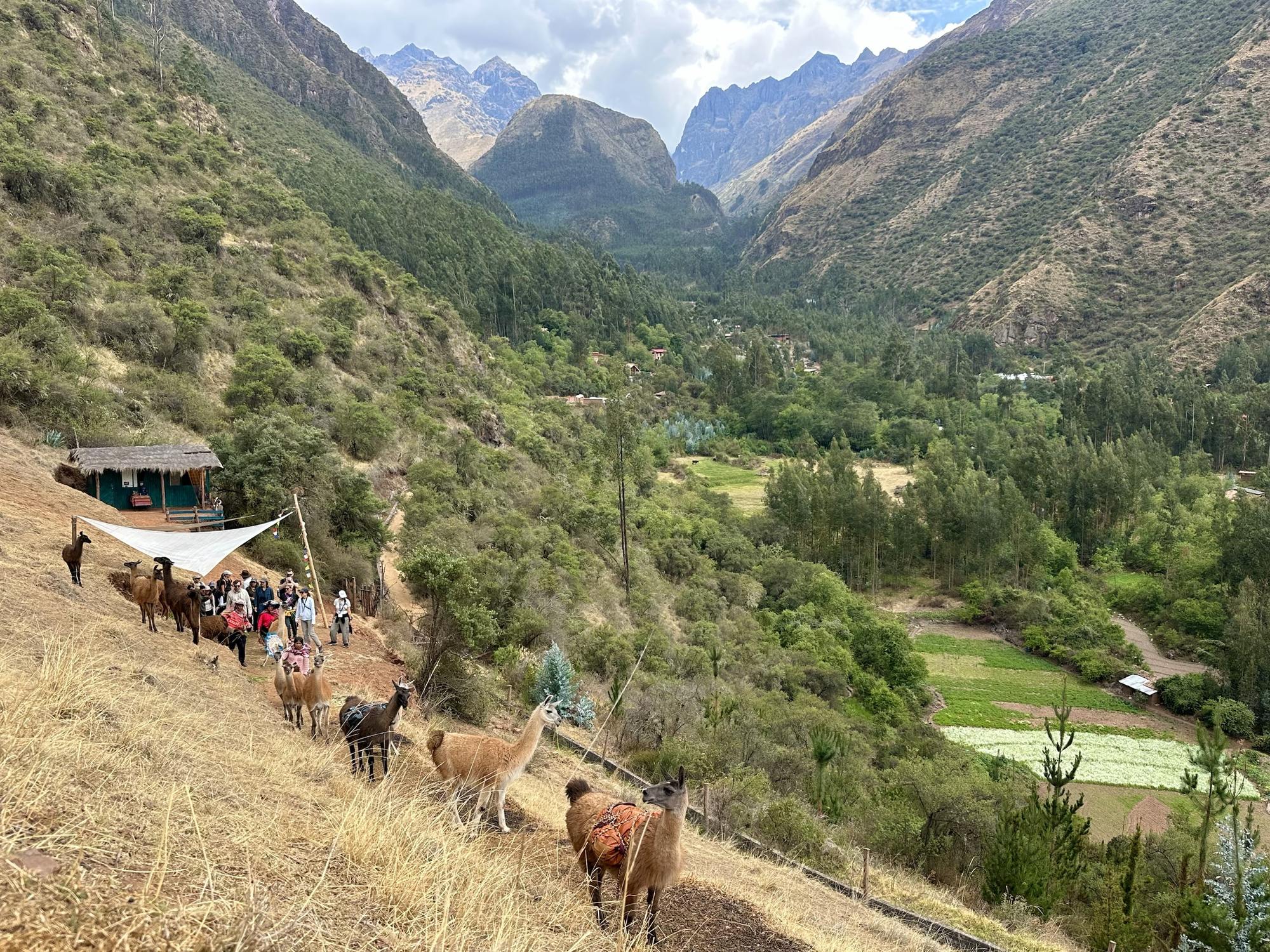
Llamas and trekkers above the Urubamba Valley. Courtesy of Lauren Mowery.
The Llama Pack Project, which I joined for a hike in the Sacred Valley, offers travelers multiday treks into the mountains with llama farmers and their animals. The larger initiative aims to return llamas to their ancestral role as pack animals on Andean trekking routes, connecting highland families with paid tourism opportunities while reducing reliance on animals introduced during colonialism.
Why llamas? First, they are native to the Andes. Their soft hooves do not damage mountain trails the way the harder hooves of mules and horses do. The latter became preferred workhorses because they carry more weight so families need fewer animals, but that trade-off comes with greater pressure on the fragile ecosystem. Llamas are adapted to high-altitude terrain, can graze without tearing up vegetation, and produce manure that farmers use as fertilizer.
The project supports breeding, veterinary care, and training for llama owners to help make llamas viable for commercial trekking. In mountain communities already facing glacier retreat and changing water supplies, that income does not solve the climate crisis. It can, however, help families respond to its immediate consequences.
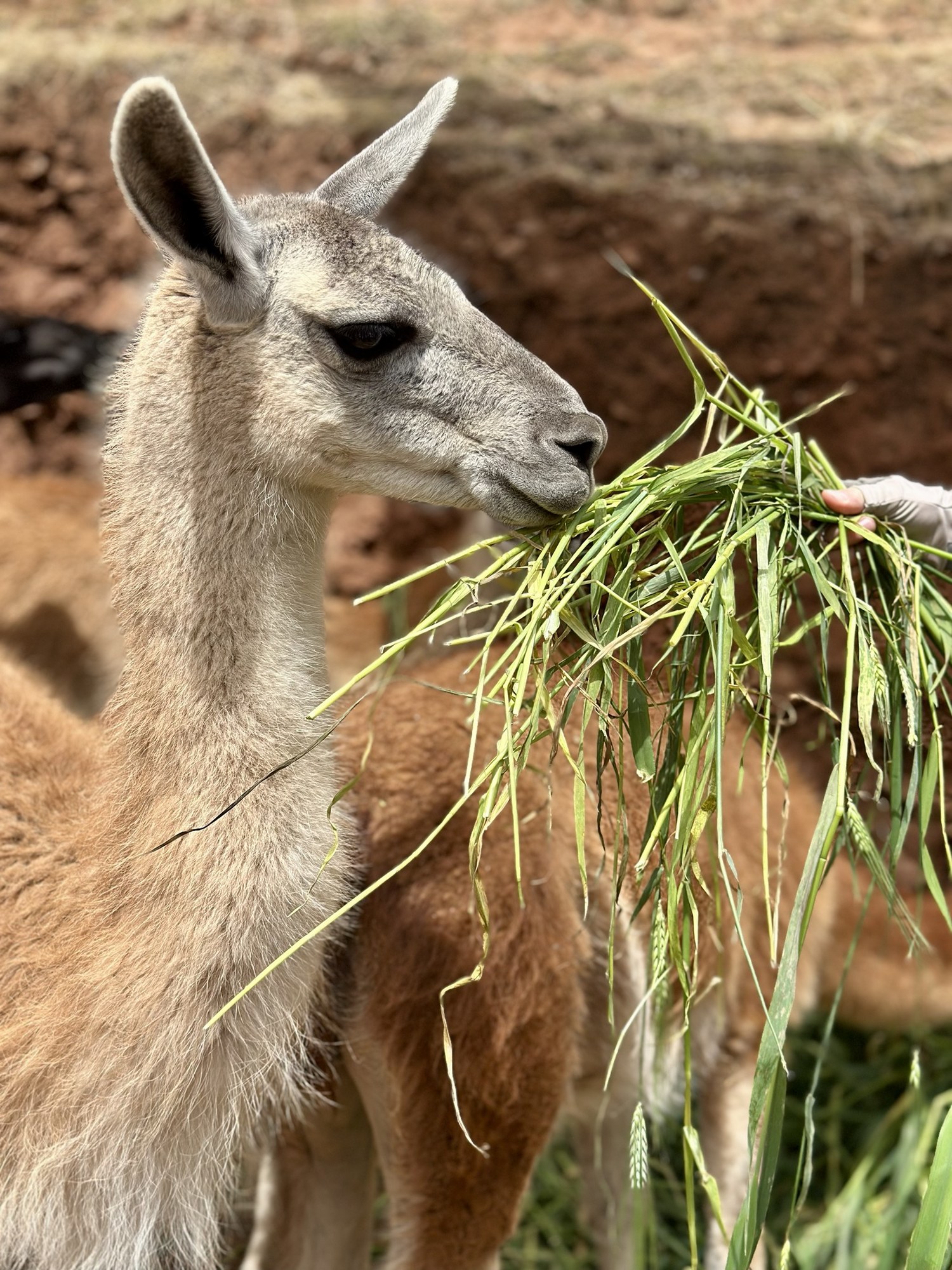
A llama takes a handful of fresh grass. Courtesy of Lauren Mowery.
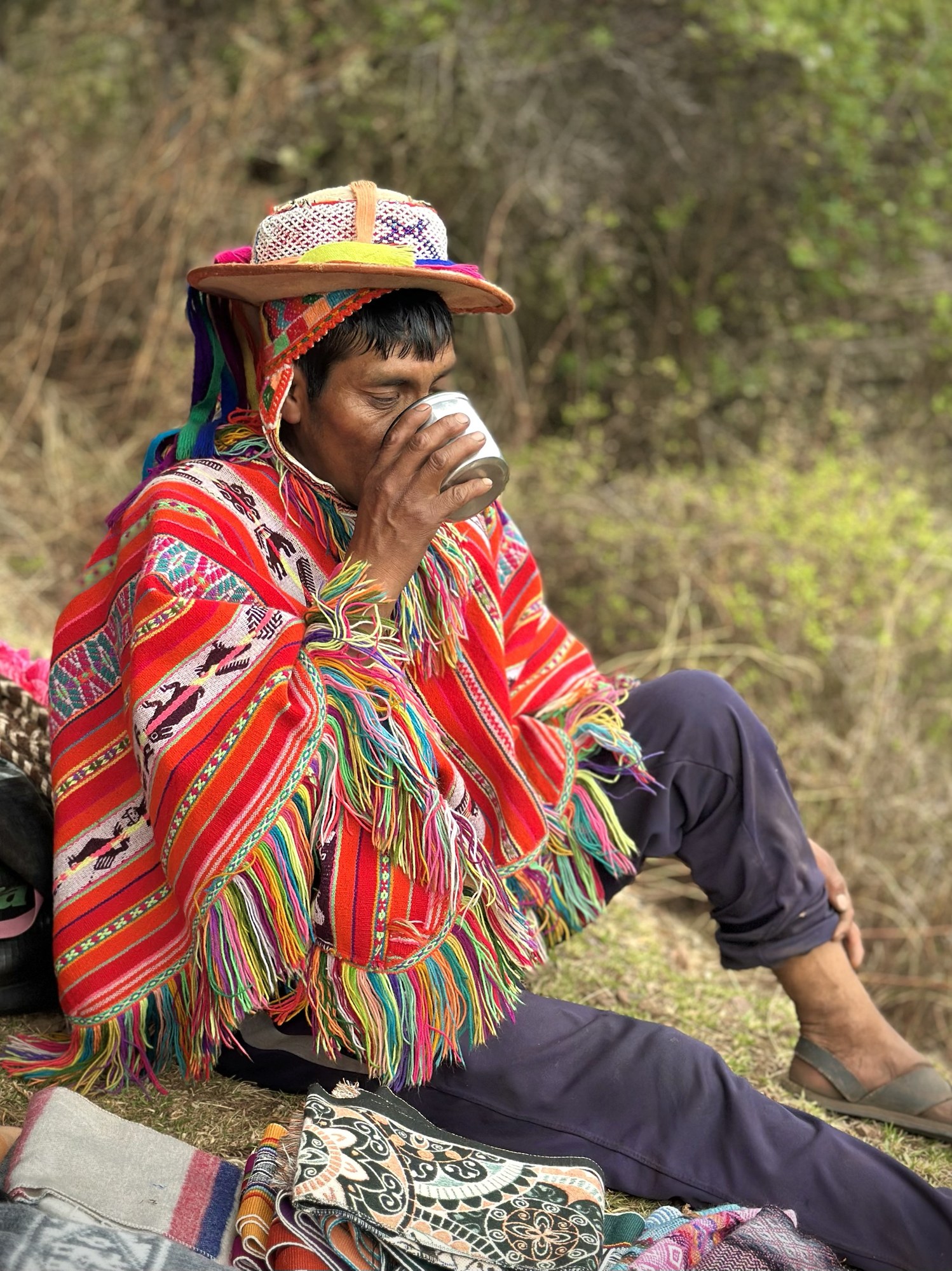
A Llama Pack host pauses for a drink. Courtesy of Lauren Mowery.
Shelling fava beans on the trail. Courtesy of Lauren Mowery.
Choclo, the Andes’ giant white corn. Courtesy of Lauren Mowery.
Community Up Close
Amaru is part of La Tierra de los Yachaqs, an association of eight Quechua communities around Pisac that organize tourism experiences focused on cultural traditions. Throughout the day, we watched the preparation of a pachamanca, a meal cooked in an earth oven with hot stones. We gathered in a circle in a field and experienced a blessing ceremony with an offering to Pachamama, or Mother Earth.
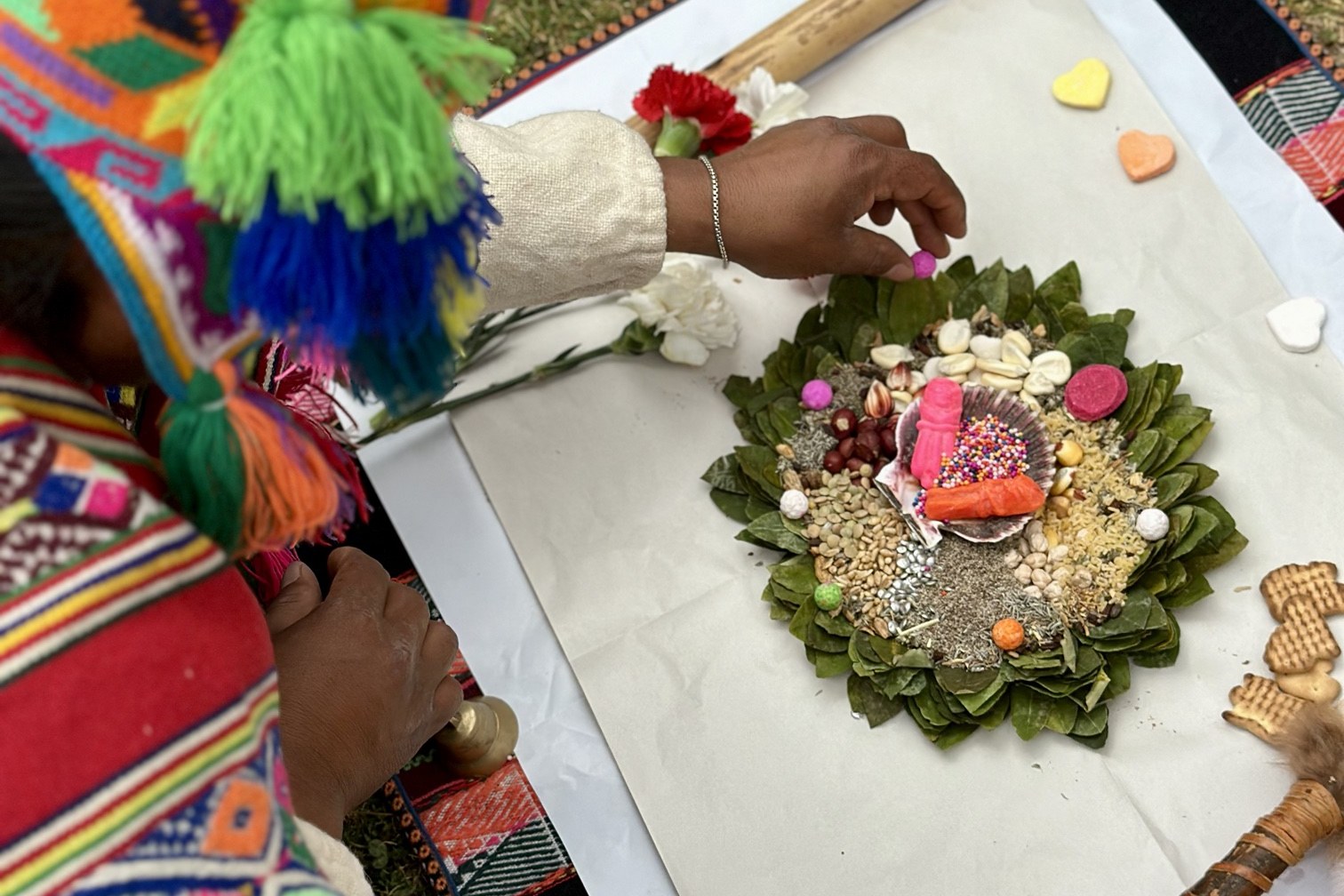
A shaman builds the Pachamama offering. Courtesy of Lauren Mowery.
Out in the courtyard, we watched women weavers set up their traditional looms, then demonstrate how they pull naturally dyed, hand-spun wool into typical patterns and motifs.
Perhaps there’s no better way to relate to other people, especially across language barriers, than cooking together. Food offers its own common language. Dressed like our hosts, we stood side by side in the kitchen, sharing prep duties from washing potatoes to dressing a skinned guinea pig.
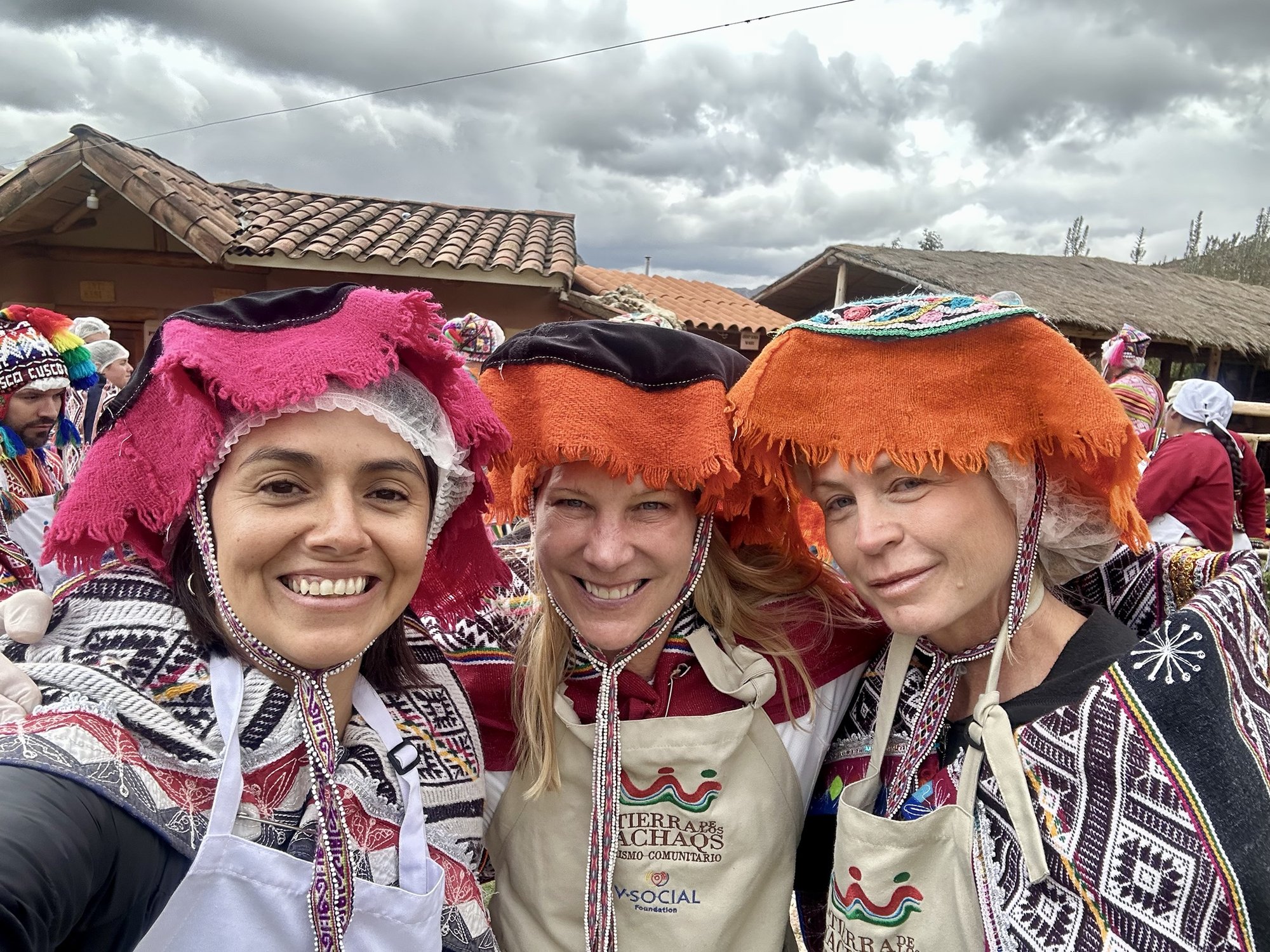
Dressed for the kitchen with fellow travelers. Courtesy of Lauren Mowery.
We laughed at the challenge of hand-peeling the thin hull, or pericarp, off choclo—giant corn—to make humitas, an Andean version of a tamale made with freshly grated corn, then stuffed and steamed in green husks. Four of us worked diligently on the bowl of kernels without making a meaningful dent, which brought endless laughter and delight from our host women.
By the time we sat down to eat, we had shared far more than a meal. And I never stepped foot on Machu Picchu.
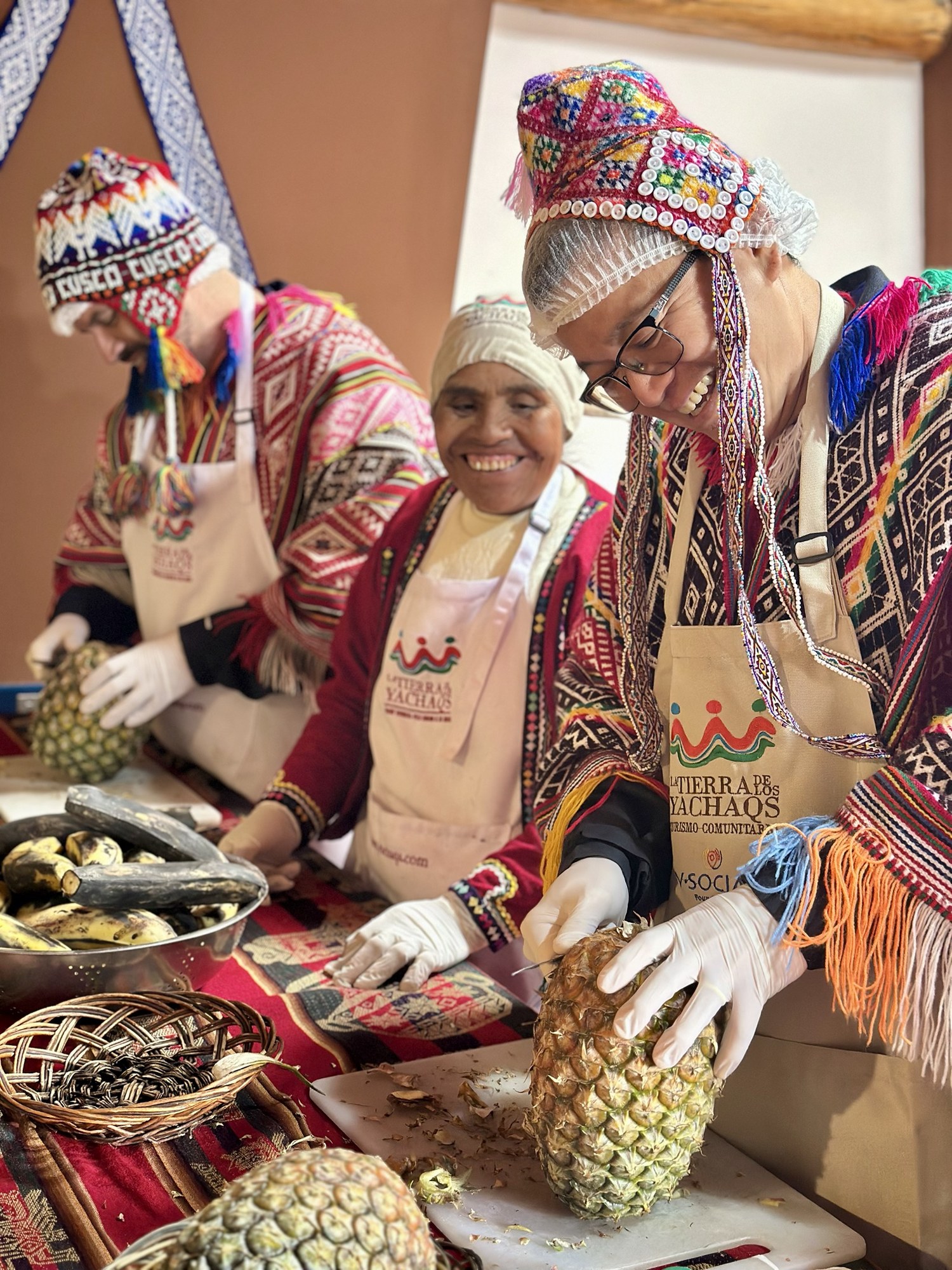
Cutting pineapple alongside our hosts. Courtesy of Lauren Mowery.
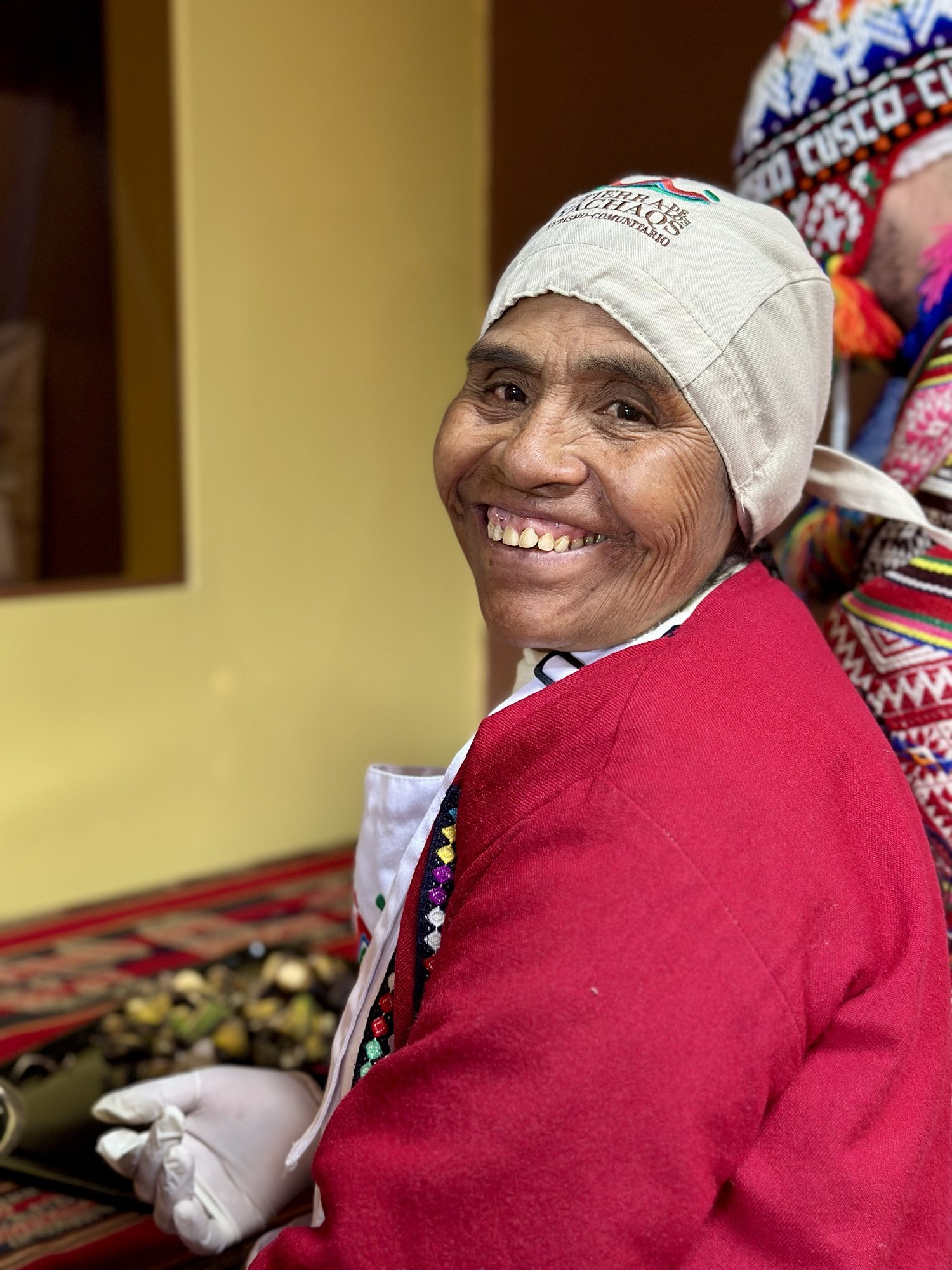
A host laughs in the kitchen. Courtesy of Lauren Mowery.

Founder and CEO of Azure Road, Lauren Mowery is a longtime wine, food, and travel writer. Mowery continues to serve on Decanter Magazine’s 12-strong US editorial team. Prior to joining Decanter, she spent five years as the travel editor at Wine Enthusiast. Mowery has earned accolades for her writing and photography, having contributed travel, drinks, food, and sustainability content to publications like Food & Wine, Forbes, Afar, The Independent, Saveur, Hemispheres, U.S. News & World Report, SCUBA Diving, Plate, Chef & Restaurant, Hotels Above Par, AAA, Fodors.com, Lonely Planet, USA Today, Men’s Journal, and Time Out, among others.
Pursuing her Master of Wine certification, she has also been a regular wine and spirits writer for Tasting Panel, Somm Journal, VinePair, Punch, and SevenFifty Daily. Mowery is a graduate of the University of Virginia and Fordham Law School, and she completed two wine harvests in South Africa.
Follow her on Instagram @AzureRoad and TikTok @AzureRoad