“The environment is not a backdrop to the architecture. It is part of the architecture.”

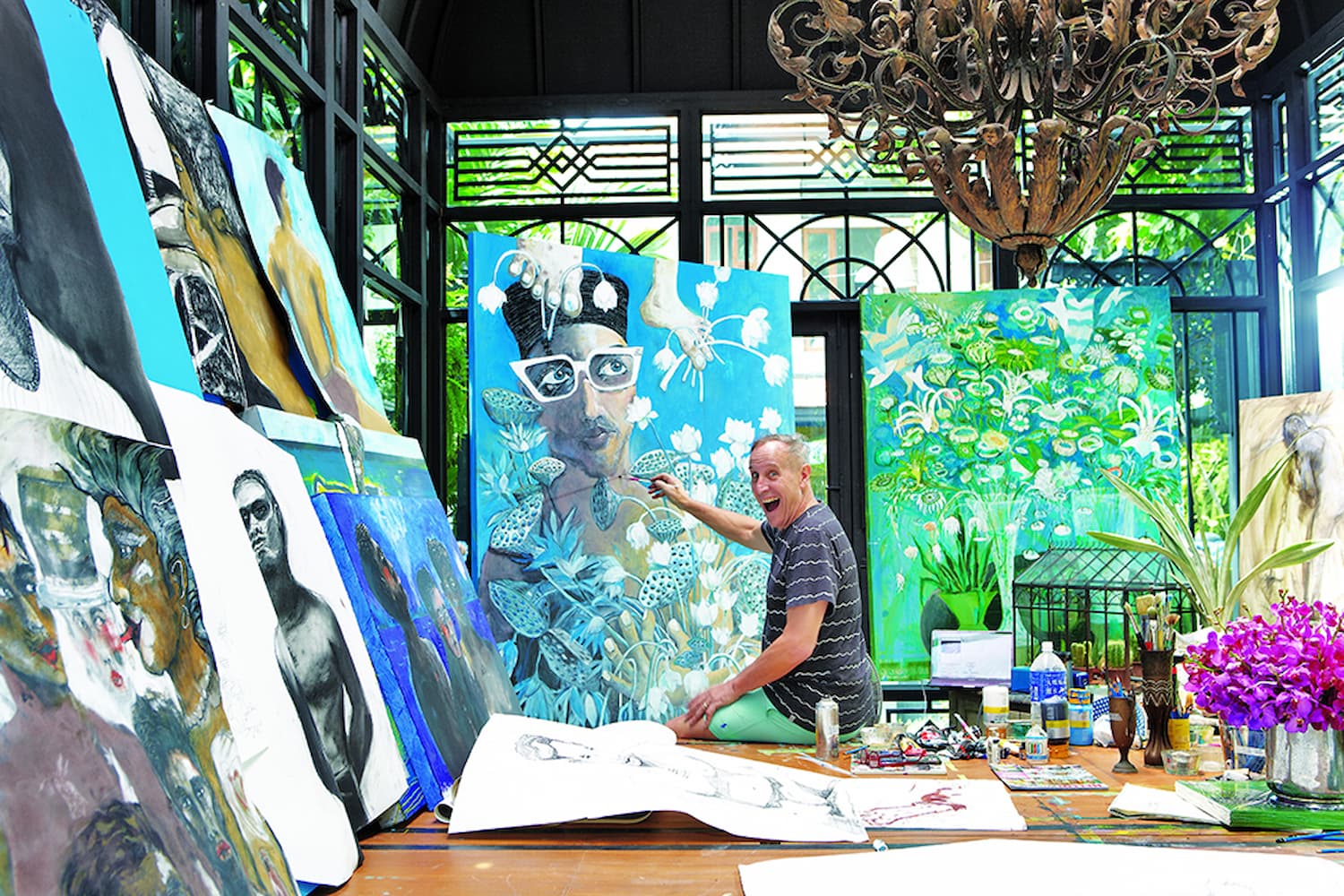
Local artisan at work. Courtesy of Capella Ubud
Bill Bensley has built a career resisting the corporate box formula of luxury hospitality. Since founding his Bangkok studio in 1989, he has designed hotels across more than 30 countries, often pairing theatrical interiors with an unusually light touch on the landscapes around them.
At Capella Ubud, that meant working around steep jungle topography. At Shinta Mani Wild in Cambodia, it meant building in remote rainforest with conservation at the project’s core. His maximalist aesthetic may grab attention, but much of the thinking behind his designs starts with a version of restraint.
Azure Road spoke with Bensley about how those ideas shape his work, from the objects he collects to the landscapes he protects.
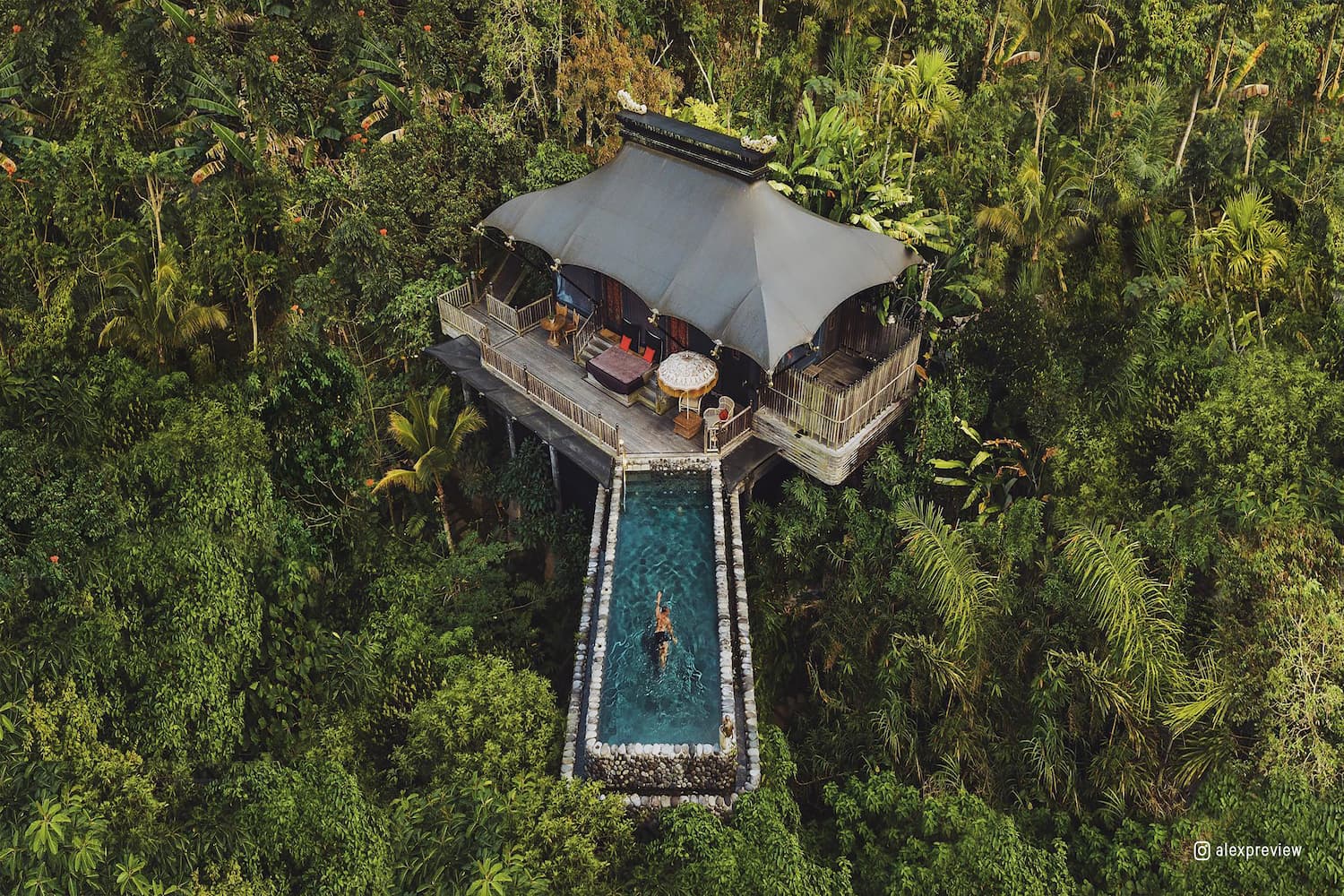
One of Capella Ubud's tented accommodations. Courtesy of Capella Ubud
How do you balance ambitious, high-drama design with preservation of the natural topography?
I have always believed that the most interesting buildings are the ones that know where they are. I don’t want to arrive with a bulldozer and tell the landscape what to do. I would much rather listen to it.
At Capella Ubud, that meant working with the extraordinary topography of the site rather than trying to flatten it. The tents and buildings are tucked into the existing landscape, between the trees and contours, so that the jungle remains very much the star of the show. In fact, there are moments when you can barely tell where the architecture ends and the forest begins.
You can create something theatrical without destroying the theatre in which it sits. For me, the trick is knowing when to shout and, more importantly, when not to.
That philosophy has followed me through many of my projects. I like to think that the architecture should feel as though it has been discovered rather than imposed. We work around mature trees, follow the natural contours, minimise unnecessary excavation and try to leave as light a footprint as possible.
The environment is not a backdrop to the architecture. It is part of the architecture. And when you get that relationship right, the result can be far more dramatic than anything you could manufacture yourself. Above all else, respect Mother Nature.
How much of your material sourcing comes from the local area versus elsewhere?
I am a bit of a magpie, so I have always loved the hunt for things. Antiques, fabrics, old photographs, local crafts, odd little objects that make you stop and wonder who on earth made them and why.
At Capella Ubud, we sourced as much as we could from Bali and Indonesia, particularly when it came to craftsmanship and materials. Bali has an extraordinary pool of artisans, and I would much rather work with someone who has spent 30 years perfecting a particular craft than bring in something mass-produced from somewhere else.
But I am not a purist about it. If I find something wonderful in India, Thailand, Morocco or a dusty antiques market somewhere else in the world, I am going to use it if it belongs in the story. My projects have always been a bit like theatrical sets; the characters may come from different places, but they all have to make sense together.
The local influence is important because it gives a project its soul. You can copy a Balinese roof or put a few local fabrics on the beds, but that doesn’t make a hotel Balinese. I want the local culture, craftsmanship, landscape and history to seep into the project much more deeply than that.
And sometimes the most interesting part is the conversation between the local and the foreign. That is where you get something unexpected, and hopefully, something that nobody else has done before.
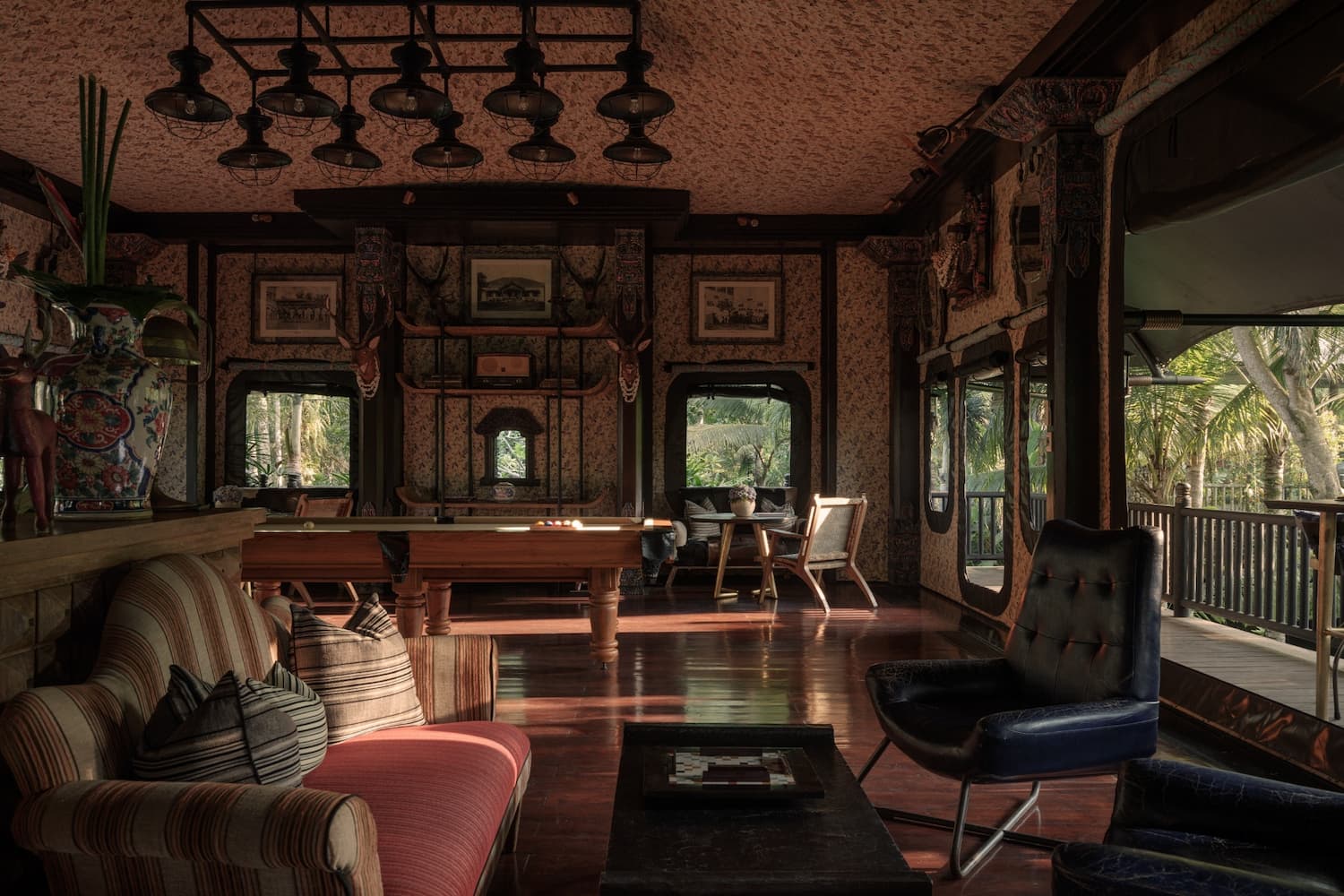
Inside one of Capella Ubud's antique-filled tents. Courtesy of Capella Ubud
When a client approaches you with a conventional idea, how do you encourage them to embrace something more radical?
I usually start by asking them why they want to build another hotel that looks like every other hotel. That tends to get the conversation going.
Of course, clients have practical concerns, and I understand that. They have budgets, operators, investors and guests to think about. But within those parameters, I believe there is always room to do something unexpected.
Capella Ubud was a good example. The brief was not simply to build a luxury resort in Bali. We wanted to create a world that guests could step into – something with a strong sense of place and a little theatre. So instead of designing a conventional collection of villas, we imagined an eccentric 19th-century explorer’s camp, complete with tents, antiques, theatrical details and a rather elaborate backstory.
My job is partly to convince the client that the thing they are initially nervous about may be the very thing that makes the project successful. I don’t ask them to be radical for the sake of being radical. I ask them to be brave enough to be memorable.
And frankly, if you’re investing in building a hotel, why not have a little fun with it? The world has quite enough beige hotels.
Can you describe a specific site constraint that changed a floor plan or design decision?
Absolutely. The entire site at Capella Ubud was essentially one enormous constraint, which is precisely what made it interesting. The land is steep, heavily wooded and full of mature trees, so the first rule was that we weren’t going to flatten the hill and start again. The architecture had to follow the land. That meant the layout became a series of smaller structures stepping down the contours rather than one large building sitting on a platform.
There were plenty of moments when we had to move a building, change its orientation or rethink a path simply because there was a beautiful old tree in the way. And the tree won. It should always win.
That approach also created some happy accidents. Instead of fighting the topography to make everything perfectly straight and convenient, we allowed the paths, tents and buildings to wander with the landscape. You get these unexpected views and little discoveries as you move through the camp.
So the constraint actually became part of the design. I often find that the things that initially look like problems are what give a project its character. If you remove every obstacle, you can end up with something perfectly efficient and completely uninteresting.

Architect Bill Bensley. Courtesy of Capella Ubud
Beyond the environment, how do you consider local employment and community impact within a project’s goals?
I have always felt that conservation cannot simply mean protecting the trees and counting how many plastic bottles you have eliminated. If the local community doesn’t benefit, then eventually the whole thing falls apart.
At Capella Ubud, we made a conscious effort to employ locally and to use local craftsmen wherever possible. That creates a much bigger ripple effect than simply buying a local product. You are supporting families, passing on skills and giving people a reason to value the landscape and culture around them.
I also think a hotel has a responsibility to become part of the local economy rather than operating as an island behind a very expensive gate. The people who live around the property should feel that its presence brings opportunities to their community.
This is particularly important in conservation projects. I have worked in places where the greatest threat to the environment is not some villainous developer, but simply people needing to make a living. If we can create decent jobs and alternative sources of income, then conservation becomes something people can participate in rather than something being imposed upon them.
Ultimately, I believe conservation works best when it is good for the forest, good for the wildlife and good for the people. You need all three. Otherwise, you are only protecting one piece of the puzzle.
What has been the most challenging project you have ever built, and what made it so difficult?
Probably Shinta Mani Wild. And not because it was particularly difficult to draw on a piece of paper.
We were building a luxury tented camp in the middle of the Cambodian rainforest, in a place where there was essentially no road, no infrastructure and very little inclination on the part of the jungle to cooperate with us.
Getting everything in was a logistical nightmare. We had to bring materials and equipment into an extremely remote site, and we were determined not to carve a great big road through the forest to make our lives easier. So, we built a temporary access route and carried much of the operation in from there.
Then there was the terrain. Waterfalls, enormous trees, steep hillsides, monsoon rains; nature was constantly reminding us who was really in charge.
But the greatest challenge was also the most important one: how do you build something in a pristine rainforest without destroying the very thing people have come to experience?
That meant changing the way we approached almost everything. We designed around the trees rather than cutting them down, kept the buildings relatively small and spread out, and made conservation part of the operating model rather than something added at the end.
It took a ridiculous amount of time, money and determination. But sometimes the difficult projects are the ones worth doing. Shinta Mani Wild is probably the project I’m most proud of because the constraints forced us to rethink how a hotel could exist in a place like that.
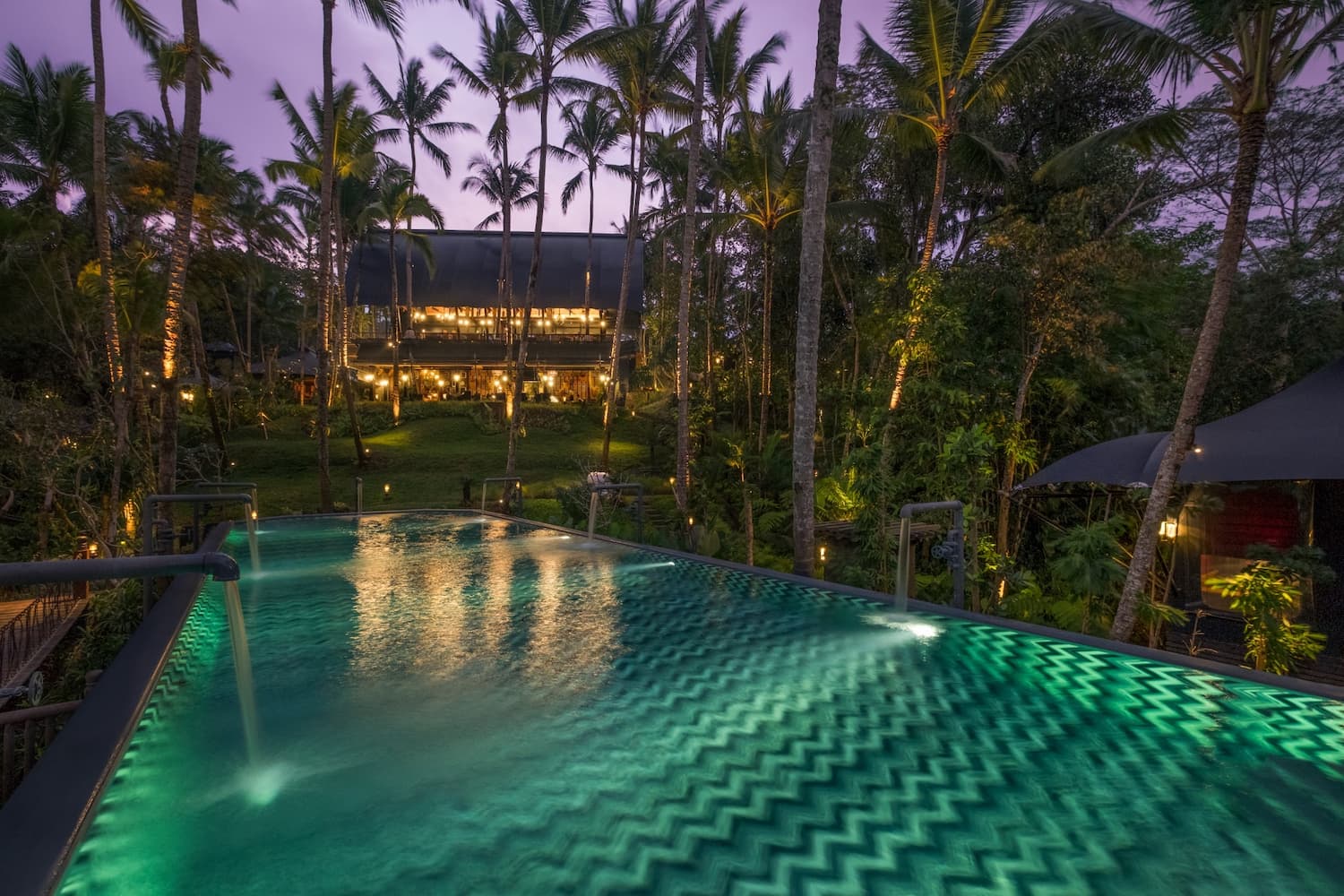
Capella Ubud's Cistern pool. Courtesy of Capella Ubud
When bringing together bold colors, textiles and antiques, do you acquire individual pieces first and find their place later, or do you envision the composition from the outset?
A bit of both, really. I rarely sit down with a completely finished picture in my head and then go looking for the pieces to fill it in. That would take all the fun out of it.
I am constantly collecting things. Fabrics, paintings, old furniture, ceramics, bits of architectural salvage; if something makes me smile or tells me a story, I will probably find a way to use it eventually. My studio has become something of a treasure chest over the years.
With a project like Capella Ubud, we had the broad story and the atmosphere in mind first. We knew we wanted the feeling of an eccentric colonial-era explorers’ camp, but the details evolved as we found things. One textile might suggest a colour for a room; an antique chair might lead us somewhere completely unexpected; a painting can change the mood of an entire space.
I like that process because it leaves room for accidents. If you design every last detail before you start looking, you can end up with something that is technically perfect but has no soul.
The trick, of course, is knowing when to stop. I am very good at finding things. I am considerably less good at throwing them away.
For me, the joy is in putting seemingly unrelated things together and discovering that, somehow, they belong together. It is a bit like making a very elaborate collage, except that people have to sleep in it.
Founder and CEO of Azure Road, Lauren Mowery is a longtime wine, food, and travel writer. Mowery continues to serve on Decanter Magazine’s 12-strong US editorial team. Prior to joining Decanter, she spent five years as the travel editor at Wine Enthusiast. Mowery has earned accolades for her writing and photography, having contributed travel, drinks, food, and sustainability content to publications like Food & Wine, Forbes, Afar, The Independent, Saveur, Hemispheres, U.S. News & World Report, SCUBA Diving, Plate, Chef & Restaurant, Hotels Above Par, AAA, Fodors.com, Lonely Planet, USA Today, Men’s Journal, and Time Out, among others.
Pursuing her Master of Wine certification, she has also been a regular wine and spirits writer for Tasting Panel, Somm Journal, VinePair, Punch, and SevenFifty Daily. Mowery is a graduate of the University of Virginia and Fordham Law School, and she completed two wine harvests in South Africa.
Follow her on Instagram @AzureRoad and TikTok @AzureRoad