“Nowadays, Paris is the only place in the world where the malletier field is still active.”
There was a time when packing for a journey meant thinking in trunks. Before the wheeled suitcase or carry-on, a traveler preparing for a long voyage would stuff their clothing and personal effects into a spacious trunk. These were closets in miniature, with drawers, hangers, shoe boxes, and lovely upholstery. Porters would load stacks of the things onto steam-powered trains and ships; hence the name, the steamer trunk.
The trunk belonged to a particular way of moving through the world: slower, heavier, and considerably less concerned about weight or overhead bin space. But also, more glamorous and leisurely.
Today, luggage is designed for almost the opposite purpose: to be light and portable. Petroleum-derived materials offered lighter alternatives to traditional wood. Mass production changed expectations around luggage. Instead of commissioning an object designed to last generations, travelers could now buy something standardized and easily replaceable. While some luxury houses like Louis Vuitton and Goyard still produce trunks, they’re now a more niche and expensive option. As the trunk disappeared from everyday travel, so did much of the knowledge required to make one. In Paris, however, one small school is trying to keep that craft from disappearing altogether.
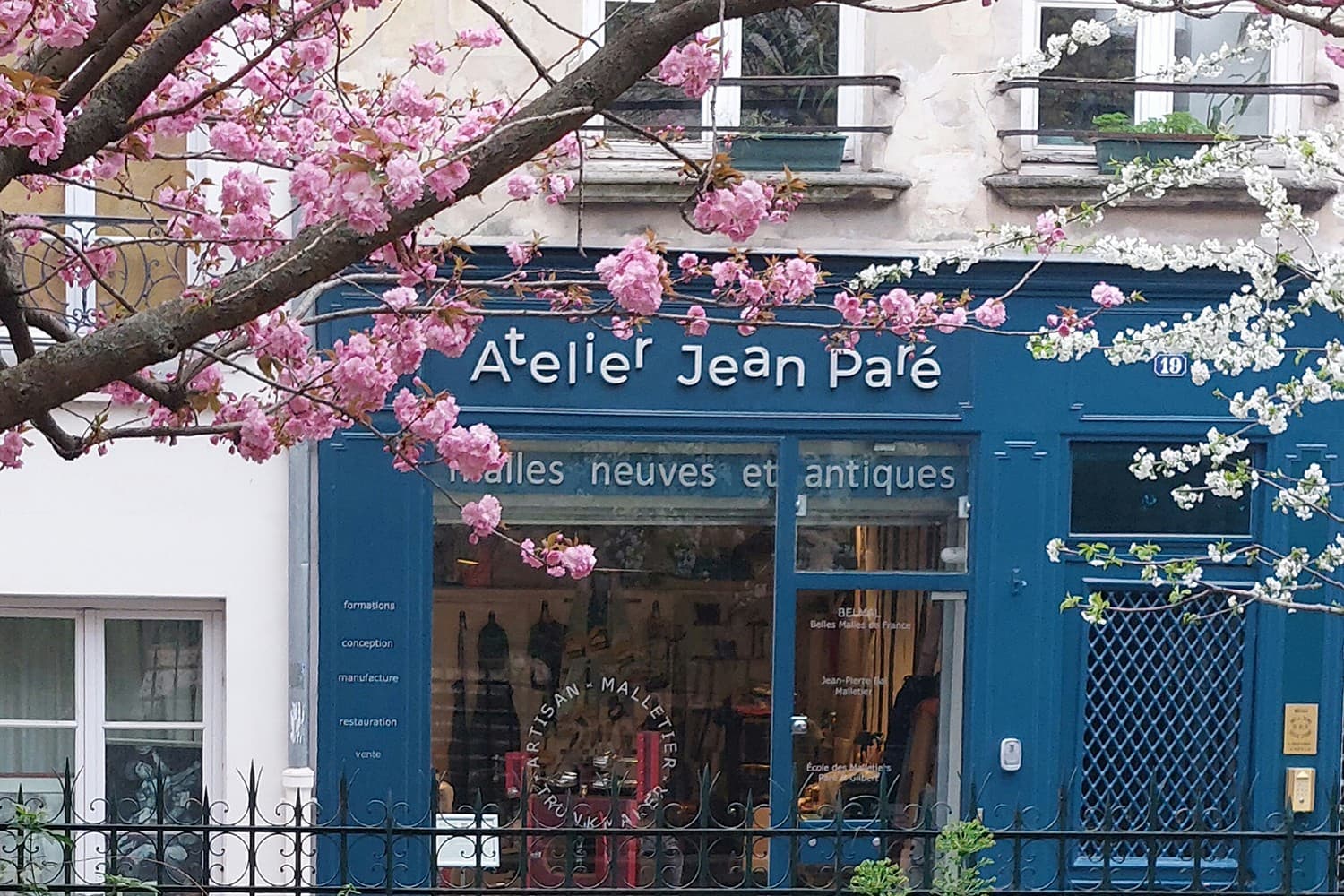
Outside the École Jean Paré. Courtesy of Nicole Mayer
Keeping the Craft of Trunkmaking Alive
On Rue de Bièvre, a narrow and historic street in the Latin Quarter, a collection of artisanal workshops and studios cluster together, forming an intimate community of makers and craftspeople. Behind one of its doors, the sounds of another era are still at work: wood being shaped, metal fitted, leather and fabric brought together by hand. This is the École Jean Paré, where master trunkmaker Jean-Pierre Bal is teaching a new generation the art of malleterie: making and restoring trunks.
“Nowadays, Paris is the only place in the world where the malletier field is still active,” says Bal.
Bal’s route into trunkmaking was hardly conventional. He spent much of his career in the corporate world before moving into higher education. But, thanks to his grandmother gifting him a Louis Vuitton trunk early in life, the world of trunkmaking was always in the background and eventually moved him to learn the craft: “I’m driven more by a true passion for that profession, and its savoir-faire, than by a truly conscious choice…” he says. Seeing a need to pass on his techniques and experience, he first launched a trunkmaking school in Belgium in 2018. Three years later, he brought the project to France.
Trunk Class Is in Session
The École Jean Paré takes its name from Jean Paré, a sixteenth-century Parisian trunkmaker. Five centuries after Jean Paré practiced in Paris, his name now belongs to a school whose purpose is to ensure the knowledge behind his craft can continue to be passed on. The school is even located close to Paré’s first workshop.
The school deliberately keeps its annual class size small, with just four to six students, which allows for more personalized instruction. Training lasts between 24 to 40 months; courses take place at the Paris workshop, while students based near the French-Belgian border can also attend sessions at the Belgian location. During training, students can focus on either designing and making new trunks or conserving and restoring antique pieces. Upon graduation, students leave with diplomas awarded by the Institut supérieur international de leadership, a French private higher-education institution.
Rather than preparing students for salaried positions within established luxury houses, the school trains them to establish their own businesses as independent artisans. Some combine trunkmaking with related crafts such as leatherworking or saddlery. Setting up a professional activity in the malletier field is a requirement: students must do so during their second year to qualify for their final examination and diploma. According to Bal, all graduates go on to work in the profession they have studied. Beyond the classroom, the school also operates its own trunk-making brand, through which clients can commission handmade pieces.
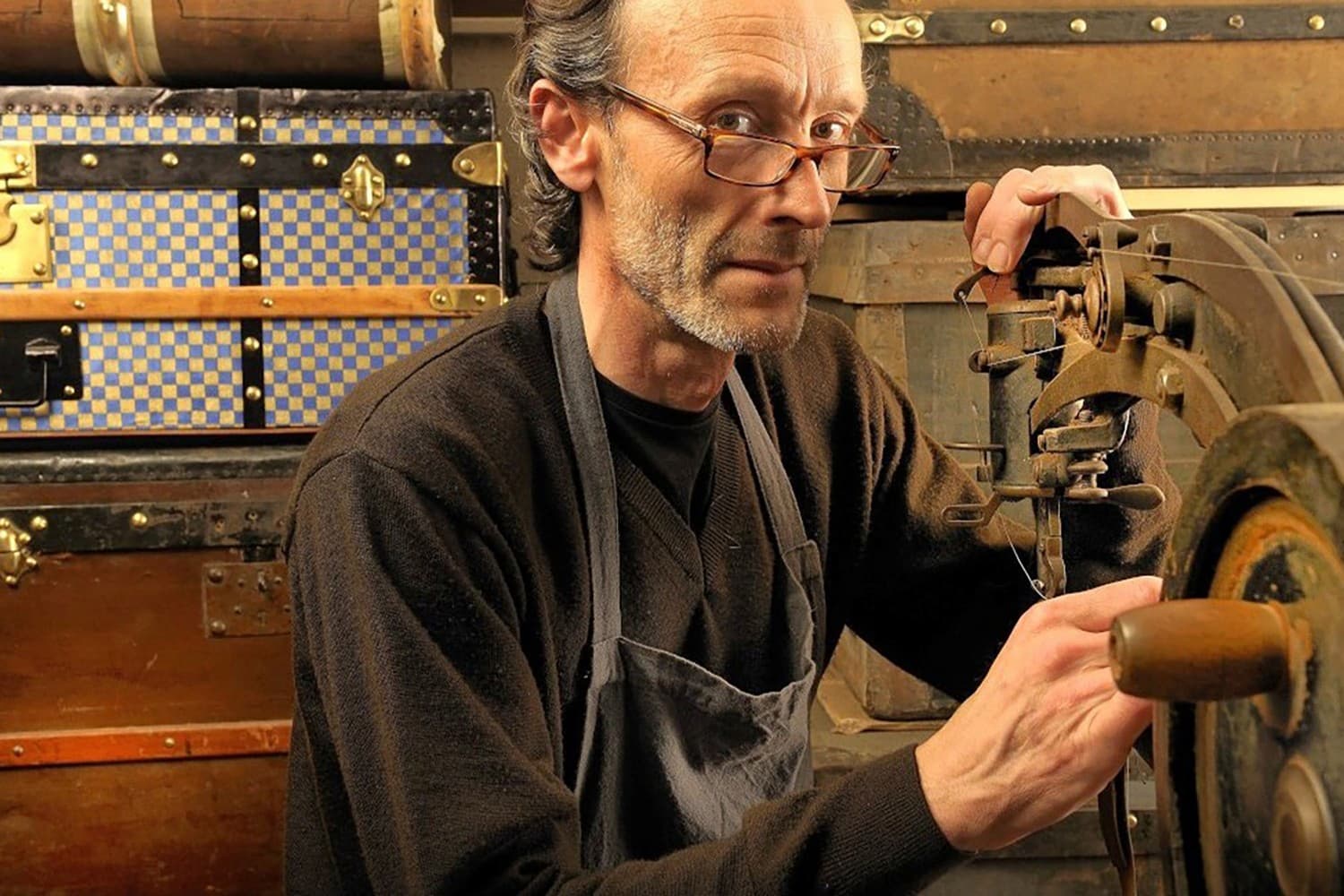
Jean-Pierre Bal at work. Courtesy of École Jean Paré
Transitioning the Trunk
If people no longer need trunks for everyday travel, what does it mean to preserve the craft of making them? While some may still use trunks for luggage, they are now more likely to find a place in the home, used for storage, or incorporated into an interior as a statement piece.
For Bal, their appeal ultimately lies with people who understand the value of handcraftsmanship. “There can be an emotional component too,” he says. “Handcrafting is an exclusive process, making the product that much more unique.” These are not standardized pieces selected from an online catalog, but objects designed and made to order, and high prices reflect that level of individualization.
Although trunkmaking remains rooted in traditional techniques, the craft is not entirely resistant to change. New ideas can also emerge from the workshop. One example is La Parisette, introduced in 2026: a contemporary take on the historic bougette, a small purse traditionally used to carry valuables. Made by hand from wood, leather, and textiles, the new design incorporates leftover materials from the atelier, giving workshop offcuts a second use.
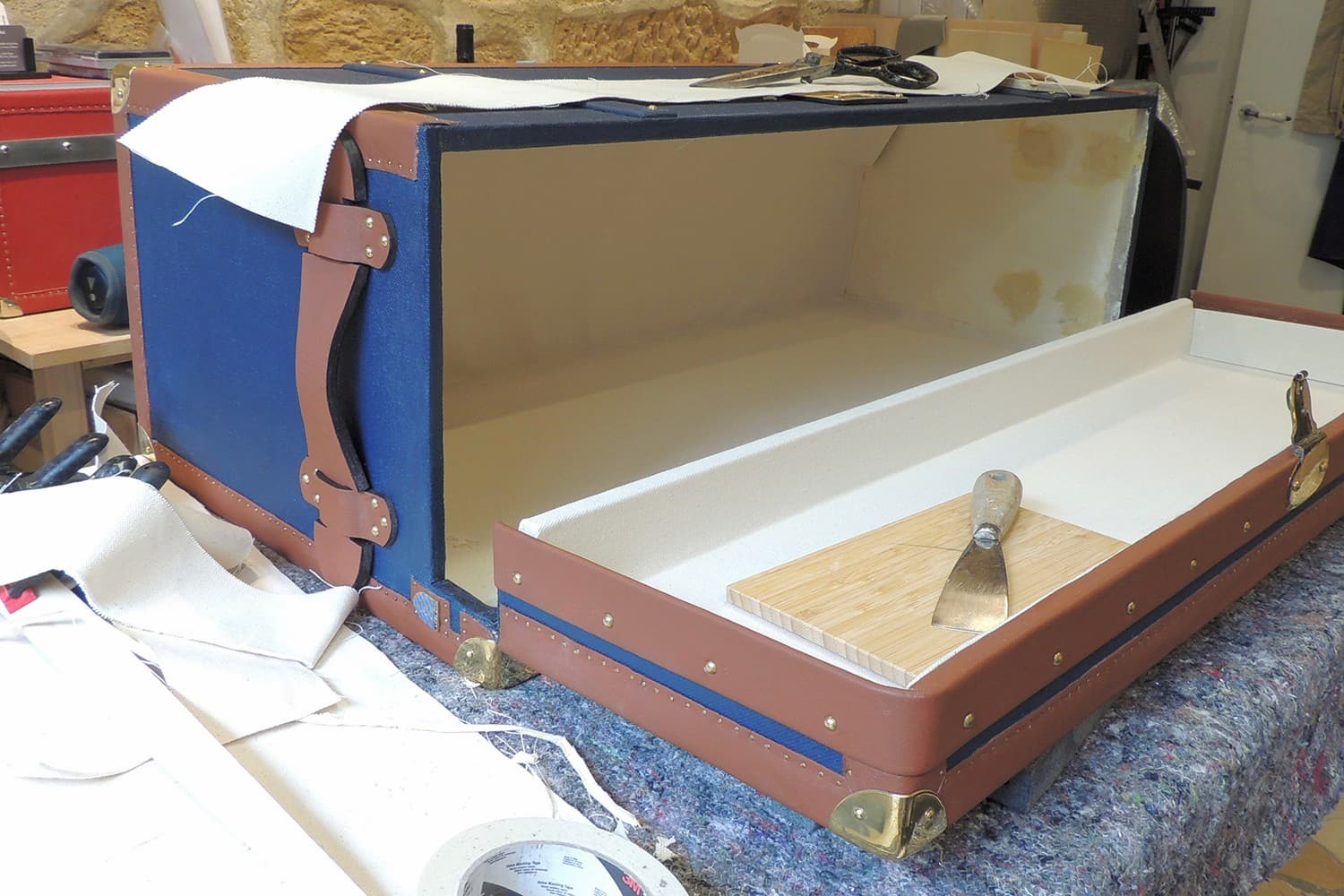
A behind-the-scenes look. Courtesy of Nicole Mayer
The Trunk After Travel
While the golden era of trunk travel may be over, the love affair lives on. Many luggage brands now produce modernized versions made to resemble the iconic trunks, but with roller wheels, lighter materials, and TSA-friendly locks. For those seeking the real, nostalgic deal, however, the École Jean Paré is one of the few places to look.
In the workshop on Rue de Bièvre, the future of trunkmaking looks much as it once did: a student bent over a workbench, fastening the final piece of hardware onto the trunk they spent months making. When the final lock clicks into place, the trunk is finished. Yet, there is no ship waiting outside and no railway porter preparing to carry it onto a platform. It is simply a beautifully made object, ready for a life that looks very different from the journeys its predecessors once made. Instead of traveling the world, it welcomes travelers home.

Nicole M. Mayer is an American writer and journalist based in Paris, where she covers fashion, art, design, and travel. Drawn to the stories behind the objects we wear, collect, and live with, her work explores craftsmanship, creative traditions, and the people shaping contemporary culture. With an interest in the intersections of design, history, and identity, she approaches her subjects through an observant, often personal lens. Follow her adventures on Instagram at @nicolem_mayer.
North Stars: Community Support, Heritage Value, Production and Consumption