“Mexico City isn’t short on plans but budgets and political cycles shape what gets done.“
When the skies over Mexico City blew open this year, the result wasn’t poetic. It was messy. Streets flooded, clogging drains and filling homes with water.
That scene became a headline in The New York Times when the city endured what officials described as its worst rainy season in at least 40 years. Flooding even reached the metro stations and the airport. Experts pointed to climate change, rapid urban growth, and aging infrastructure. They also pointed to the city’s gradual subsidence, driven in part by decades of groundwater extraction from the aquifer beneath it. The detail that made the story feel uncomfortably familiar was the presence of cooking waste and grease from the sidewalk economy.
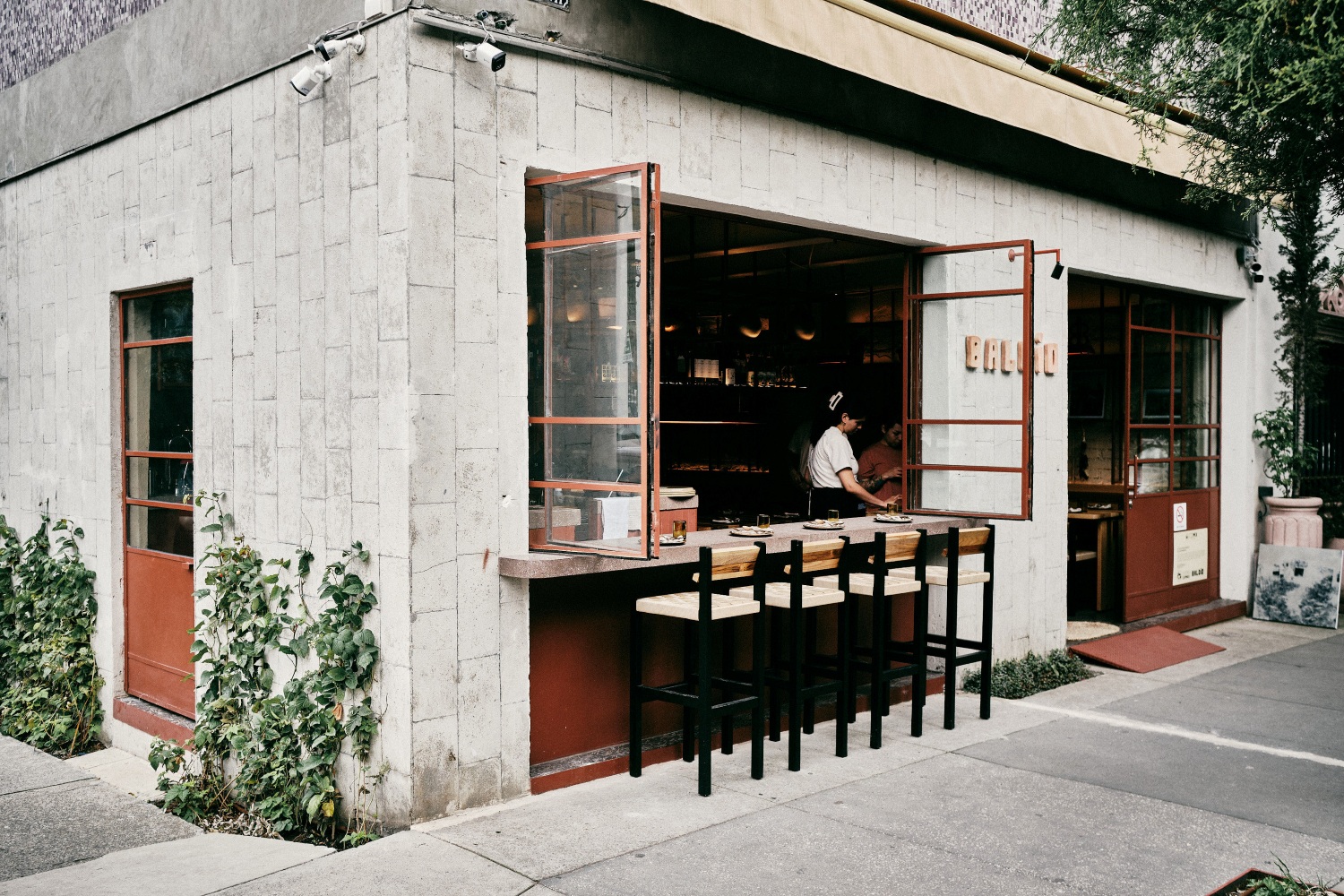
Baldio Restaurant. Courtesy of Baldio.
From Street Tacos to Storm Drains
Ricardo Munguía, who oversees hydraulic infrastructure for Mexico City’s water and sewer agency, told The New York Times he thinks of grease buildup in pipes like cholesterol in arteries. He estimated that four out of five standing pools of water are linked to trash and materials that never should have entered the drain pipes in the first place, and he singled out fat and cooking waste from restaurants, markets, taquerías, and street stalls as culprits.
Mexico City’s borough of Cuauhtémoc, which includes large swaths of the historic center, has started to address this problem. In a 2025 announcement about used cooking-oil collection, the borough noted that its drainage system dates back more than 50 years and is under far more strain than it was built for. One liter of oil can contaminate up to 40,000 liters of water, and keeping grease out of drains matters for both flooding and water quality.
This is not a “street food is bad” story. It’s a “systems are connected” story. Mexico City’s sidewalk economy feeds millions and keeps neighborhoods alive. It also produces waste streams that require collection, enforcement, and public buy-in to protect it. Flooding and trash, however, are just two examples of the challenging mechanics of a growing city. And that’s why our guide exists.
Mexico City is not a neat case study in urban virtue. It’s dense, beloved, uneven, and under pressure, with basic services strained in ways that vary by neighborhood. At the same time, it’s full of people building solutions that are practical, measurable, and often local in scale. Those projects matter, and travelers can choose whether their spending reinforces the city’s worst incentives or supports forward-thinking businesses.
Explore our Sustainable Mexico City City Guide.
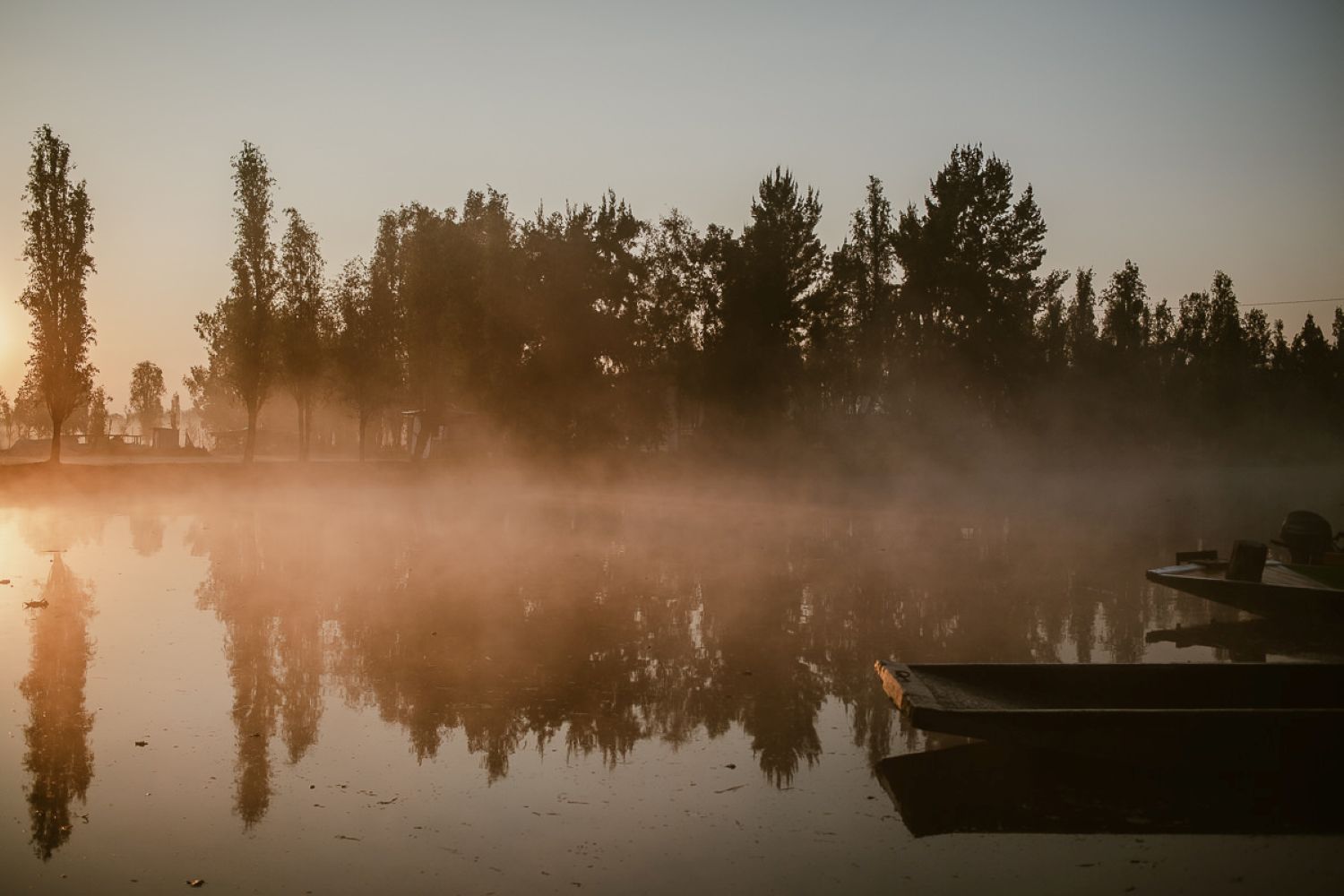
The city's chinampas at dawn. Courtesy of Arca Tierra.
How Mexico City Got Here
Mexico City’s origin story is often told with a tinge of romance: a city in a lake with canals and floating gardens. The more realistic version is that the capital was a feat of engineering from the start.
The Mexica founded Tenochtitlán on islands in Lake Texcoco, then expanded it with causeways and canals. They also built chinampas, a wetland farming system that turned shallow lake edges into productive farming plots. It wasn’t quaint. It was infrastructure, a food system, and a way of life designed around water, not in spite of it.
After the Spanish conquest, the city stayed in the basin, but its logic flipped. Flooding became a constant threat to a colonial capital built on European assumptions, and drainage became the dominant response. Over centuries, colonial and government leadership initiated massive hydraulic works to move water out of the basin to reveal more land for development. That helped the city expand, but it also changed the valley’s ecology and turned water into something the city tried to control rather than manage as part of the landscape.
Urban designers have been warning about the ecological consequences of unrestrained growth, mismanaged resources, and inadequate sanitation planning for decades. The details differ by era, but the pattern has remained. Mexico City’s challenges rarely stem from one issue. They’re usually interconnected.
Explore our Sustainable Mexico City City Guide.
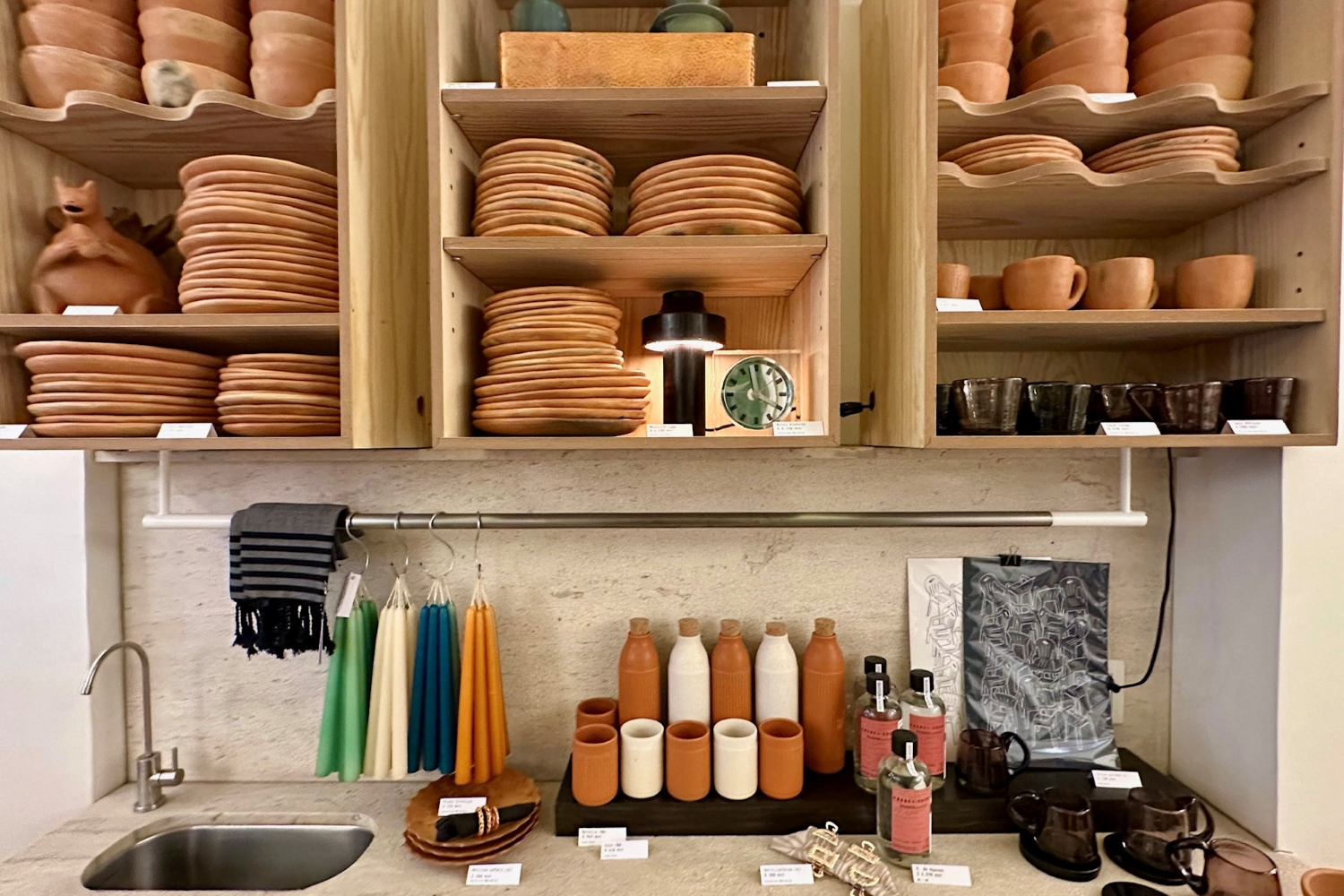
The city has beautiful shops fillled with local artisan products. Courtesy of Lauren Mowery.
City Stress Points
Mexico City sits on soft lakebed soils, and decades of groundwater extraction have compacted them. A 2021 study found that increasing degrees of subsidence (sinking) had climbed to about 20 inches per year in parts of the city, a localized upper-end figure that helps explain many of the city’s warped streets and cracked pipes.
At the same time, water for commercial and residential leaks is in transit, with widely cited estimates placing leakage around 40 percent. Add a persistent ozone problem, which has proven harder to tame than other pollutants, and a housing market where rising rents are pushing residents farther from jobs and transit, and the city’s stress points look less like individual issues and more like a set of pressures playing out across the megalopolis.
How People Are Building Solutions
Mexico City isn’t short on plans. Budgets and political cycles often shape decisions regarding funding, construction, and maintenance.
One area that has made tangible advancements in air quality and traffic congestion is transportation policy. Metrobús, the city’s bus rapid transit system, has operated since 2005, using dedicated lanes to move large numbers of people away from cars. The city’s Plan Verde (“Green Plan”) launched in 2007 and framed transportation as part of its environmental agenda, including programs like Hoy No Circula (driving restrictions based on license plates) and Muévete en Bici (open-streets cycling days).
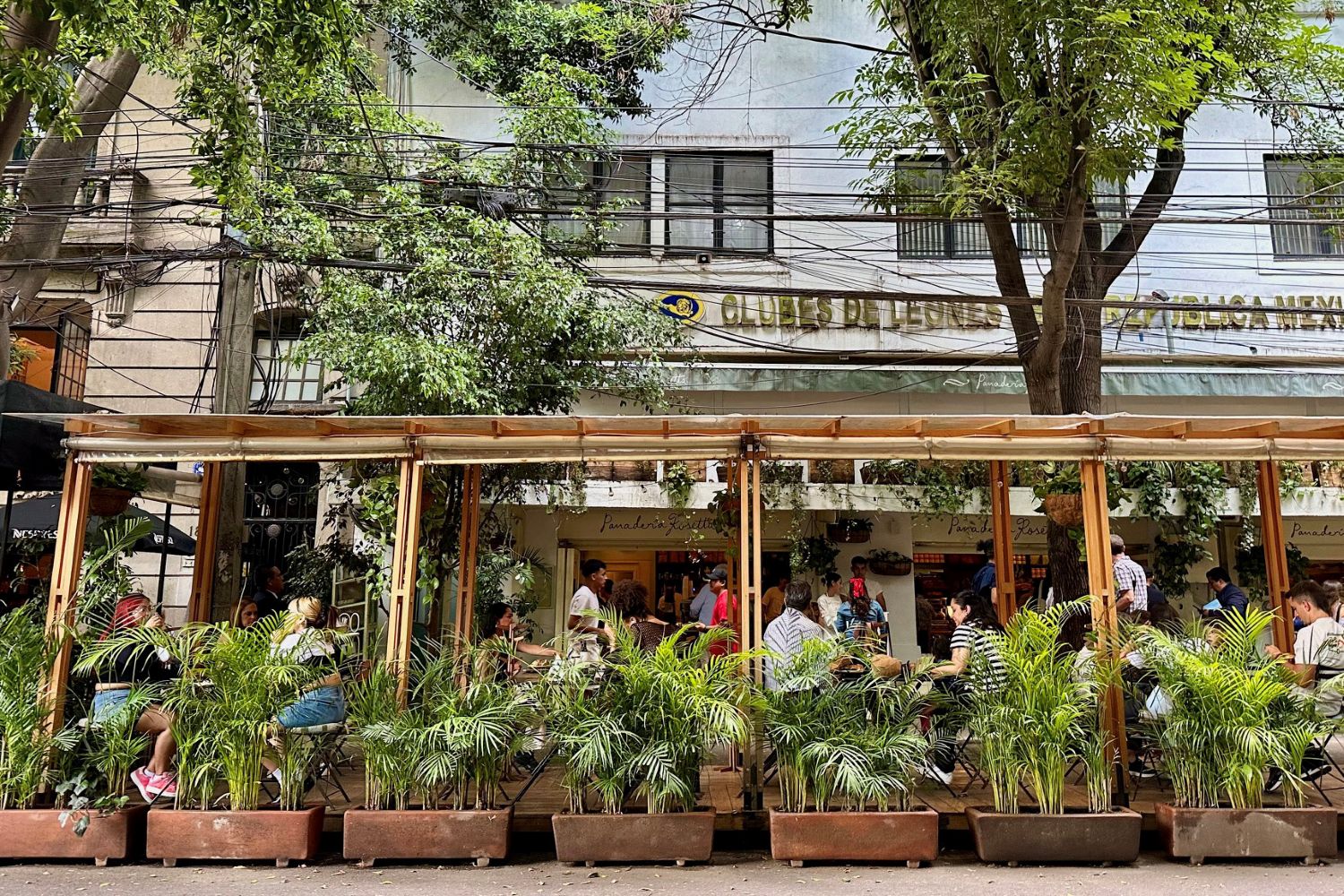
Plants are a common feature throughout the city. Courtesy of Lauren Mowery.
Bike share program ECOBICI launched in 2010 with 1,200 bikes and 85 stations, then expanded to thousands of bikes and hundreds of stations. For residents, it’s a short-trip alternative. For visitors, it’s a low-key, low-carbon way to move around town.
Parque Lineal Gran Canal offers an example of the city treating public spaces as infrastructure. The project converted an abandoned sewerage drain into a 1.8-kilometer linear park. It’s also a response to rising temperatures due to climate change, providing an estimated drop of 4–5°C in ambient temperature from shade and permeable ground to more than 100,000 residents living nearby.
PILARES, short for Puntos de Innovación, Libertad, Arte, Educación, and Saberes, invests in human capital. The program serves as a network of community centers offering free or low-cost programs, from tutoring and workshops to digital skills and exercise classes, with a focus on underserved neighborhoods.
The city has also shifted some of its water strategy toward capture and reuse. Cosecha de Lluvia, a rainwater-harvesting program launched in 2019, had installed tens of thousands of household systems by 2023. The program is not a comprehensive fix, but it reduces pressure at the household level and makes the rainy season more useful.
The city has also supported circular programs like Mercado de Trueque (“Barter Market”), where residents exchange sorted recyclables for goods, with the goal of diverting material from landfills.
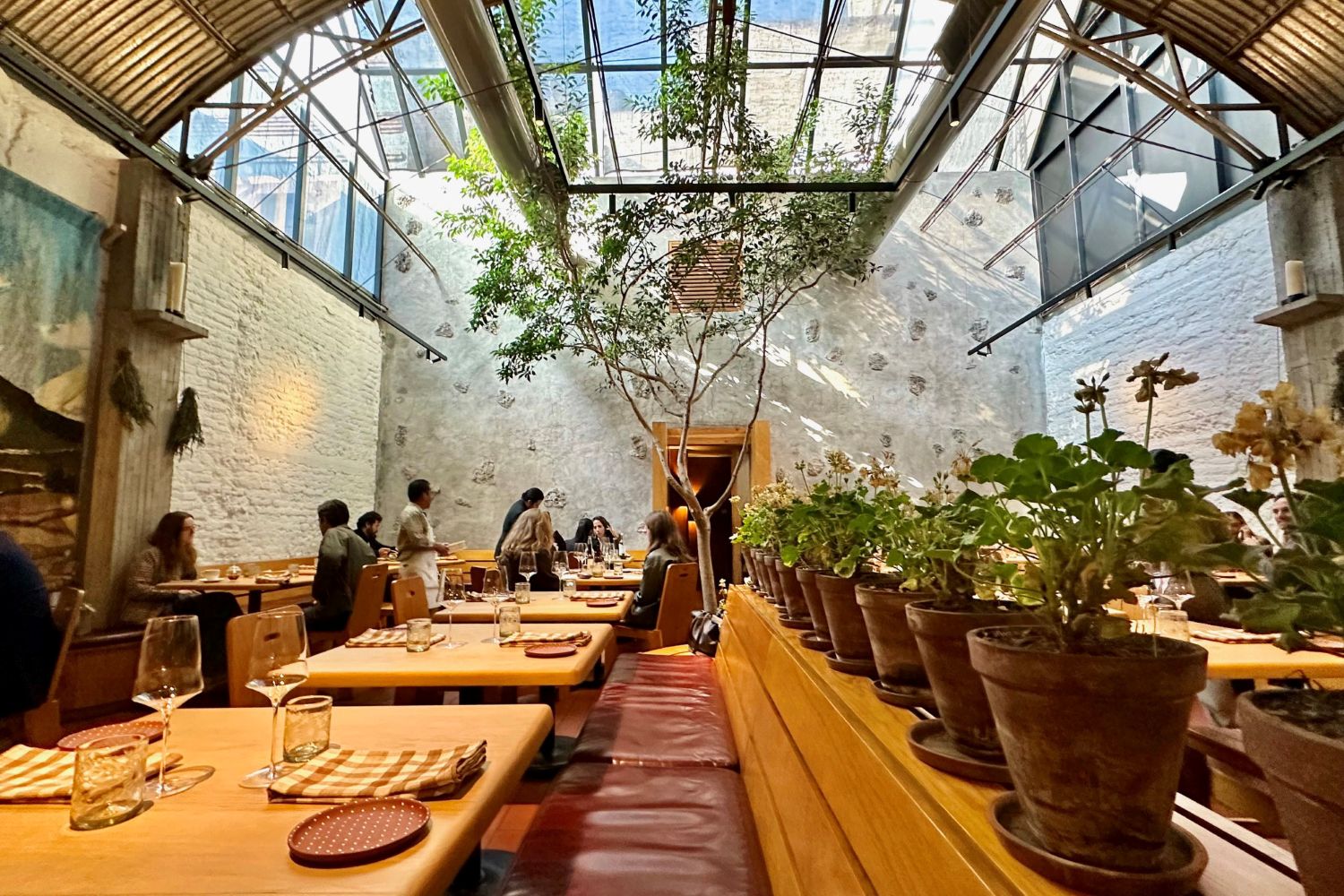
Maximo Bistro, one of many beautiful restaurants. Courtesy of Lauren Mowery.
The Visitor’s Point of View
Mexico City has become a magnet for visitors and remote workers, and not everyone is thrilled about it. In July 2025, protests in neighborhoods like Roma and Condesa targeted rising rents, short-term rentals, and what demonstrators described as “mass tourism,” in a backlash that reporters explicitly compared to the anger seen in places like Barcelona. Coverage in Le Monde described rent increases since 2020 as steep and framed the protests as part of a broader fight over who gets to live in the city center.
Visitors are not the sole cause of Mexico City’s housing and cost-of-living squeeze, and anyone claiming otherwise is selling a convenient villain. But visitor demand does change the math in the neighborhoods where tourists concentrate, and it can reward the parts of the local economy that extract value faster than build something lasting.
Traveling with care here doesn’t require guilt or giving up joy. Mexico City still delivers on taste, design, and fun at a level that feels unfair to other cities. The difference is being more deliberate about your choices and the projects and artisans you support with your spending.
Our guide prioritizes hotels and small guest houses over short-term rentals, builds days around walkable neighborhoods and public transit instead of cab rides, and highlights restaurants, bars, shops, and activities that can explain who they buy from and what your pesos support. That’s what our guide is for and we hope you enjoy using it.
Explore our Sustainable Mexico City City Guide.

Founder and CEO of Azure Road, Lauren Mowery is a longtime wine, food, and travel writer. Mowery continues to serve on Decanter Magazine’s 12-strong US editorial team. Prior to joining Decanter, she spent five years as the travel editor at Wine Enthusiast. Mowery has earned accolades for her writing and photography, having contributed travel, drinks, food, and sustainability content to publications like Food & Wine, Forbes, Afar, The Independent, Saveur, Hemispheres, U.S. News & World Report, SCUBA Diving, Plate, Chef & Restaurant, Hotels Above Par, AAA, Fodors.com, Lonely Planet, USA Today, Men’s Journal, and Time Out, among others.
Pursuing her Master of Wine certification, she has also been a regular wine and spirits writer for Tasting Panel, Somm Journal, VinePair, Punch, and SevenFifty Daily. Mowery is a graduate of the University of Virginia and Fordham Law School, and she completed two wine harvests in South Africa.
Follow her on Instagram @AzureRoad and TikTok @AzureRoad
North Stars: Climate Action, Heritage Value, Water Management