North Stars:

Community Support

Waste Management

Gender Equality
“What looked like an easygoing top had a complicated backstory.”
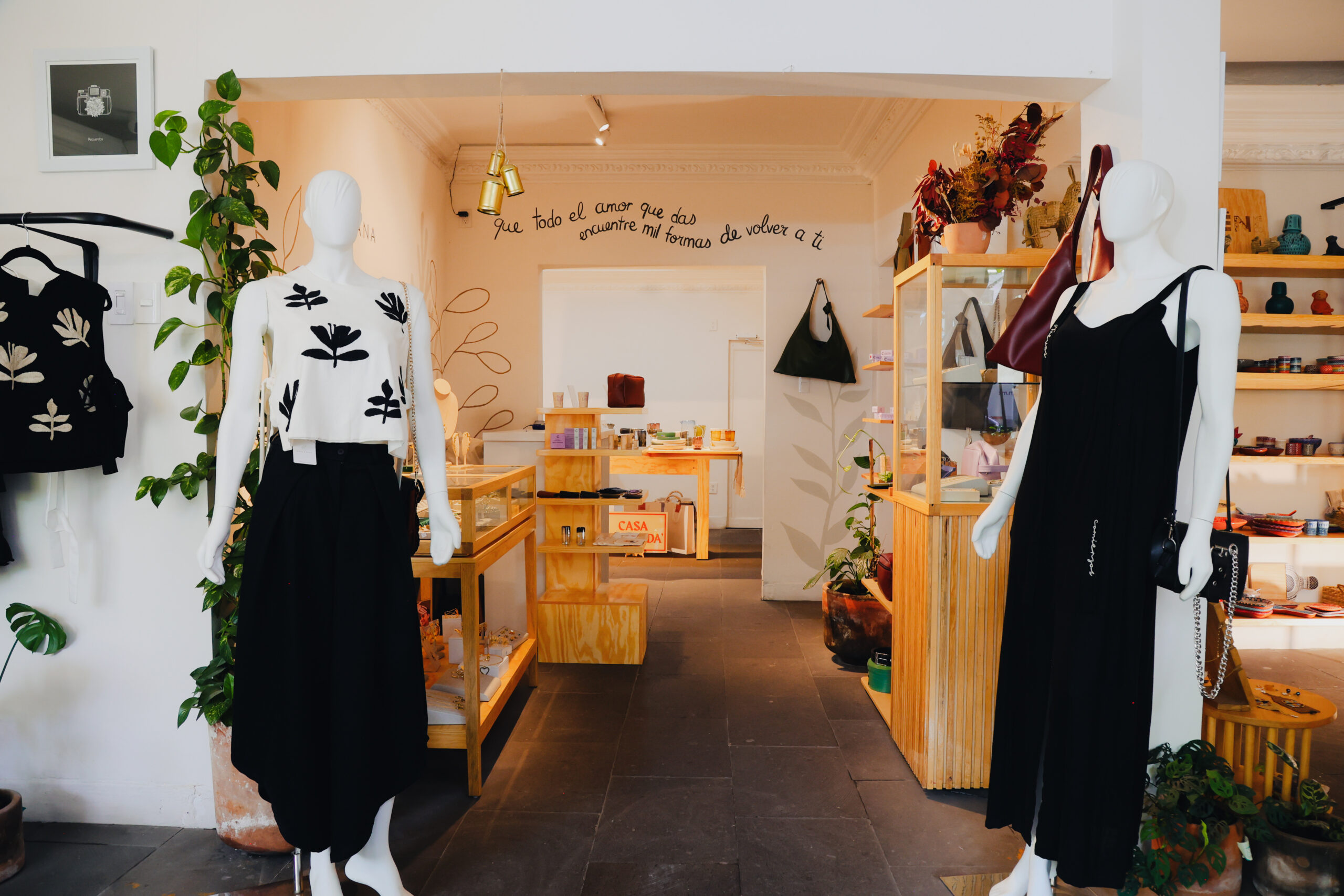
Dharana Movement store interior. Courtesy of Dharana Movement.
The Azure Road Take
I found Dharana Movement the way you find a lot of good shops in the Roma neighborhood of Mexico City: by not being in a hurry. Walking down Álvaro Obregón with coffee in hand, I noticed the small storefront and breezy basics showcased in the window. I stepped inside.
At first glance, Dharana Movement looks like a soft-spoken Mexico City lifestyle brand. Its racks and shelves feature flowy separates in natural fabrics and yoga clothes and accessories in a muted palette.
I glanced through the racks, finding what looked like a simple poncho. Black, of course, since I only travel with dark-colored clothing (less to wash on the road). In the dressing room, I pulled it over my head. Perfect. I spent all of 15 minutes glancing around, checking the fit, paying, and walking out – but not before snapping a photo of the brand name to look up later.
Later is when the story of the brand turned interesting.
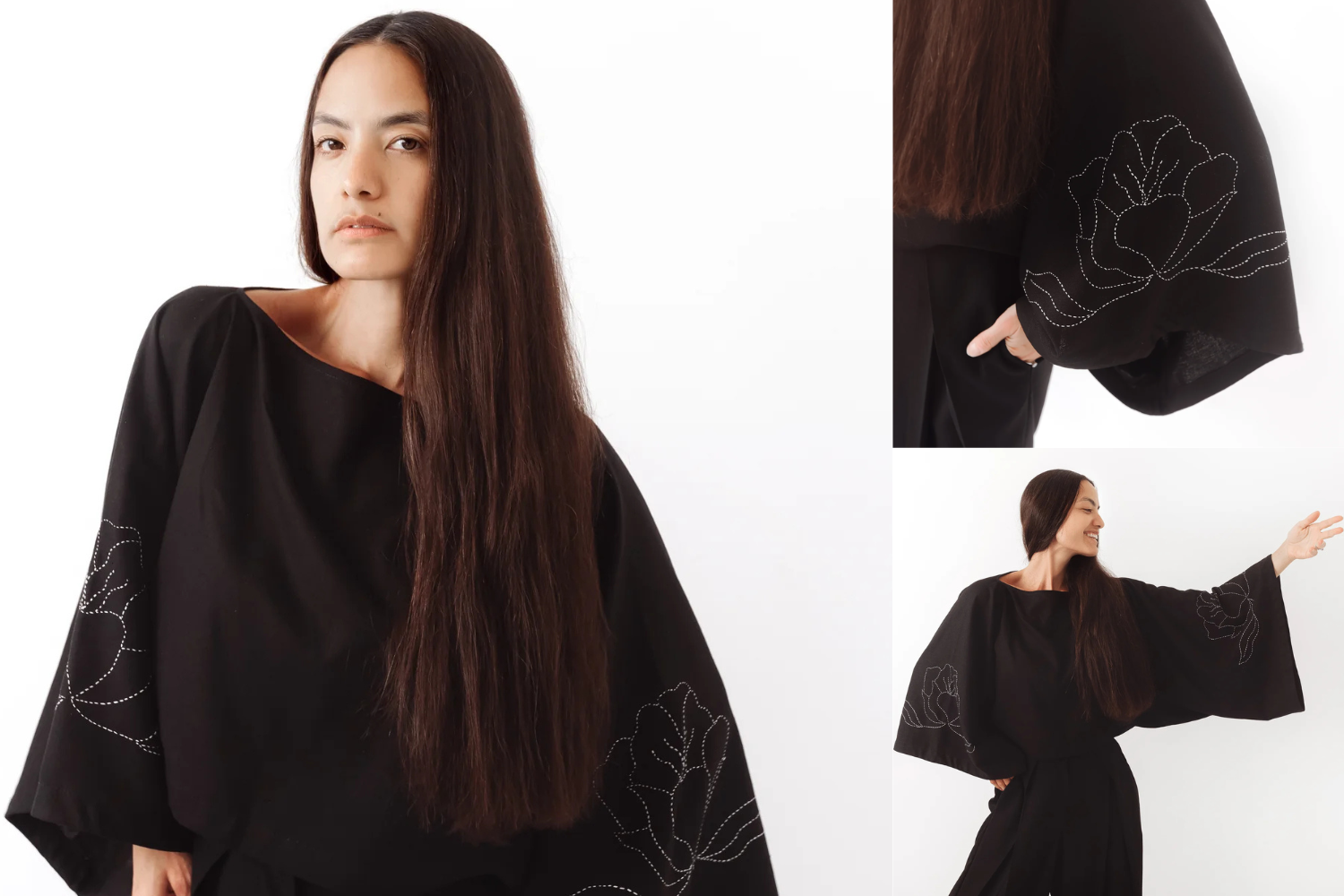
Dharana is a social enterprise, and every piece comes from a small workshop staffed by women rebuilding their lives after time in Mexico’s penitentiary system. What looked like an easygoing top had a complicated backstory. The Embroidered Air Blouse carries the calm of Dharana’s yoga roots and the community hands of its workshop.
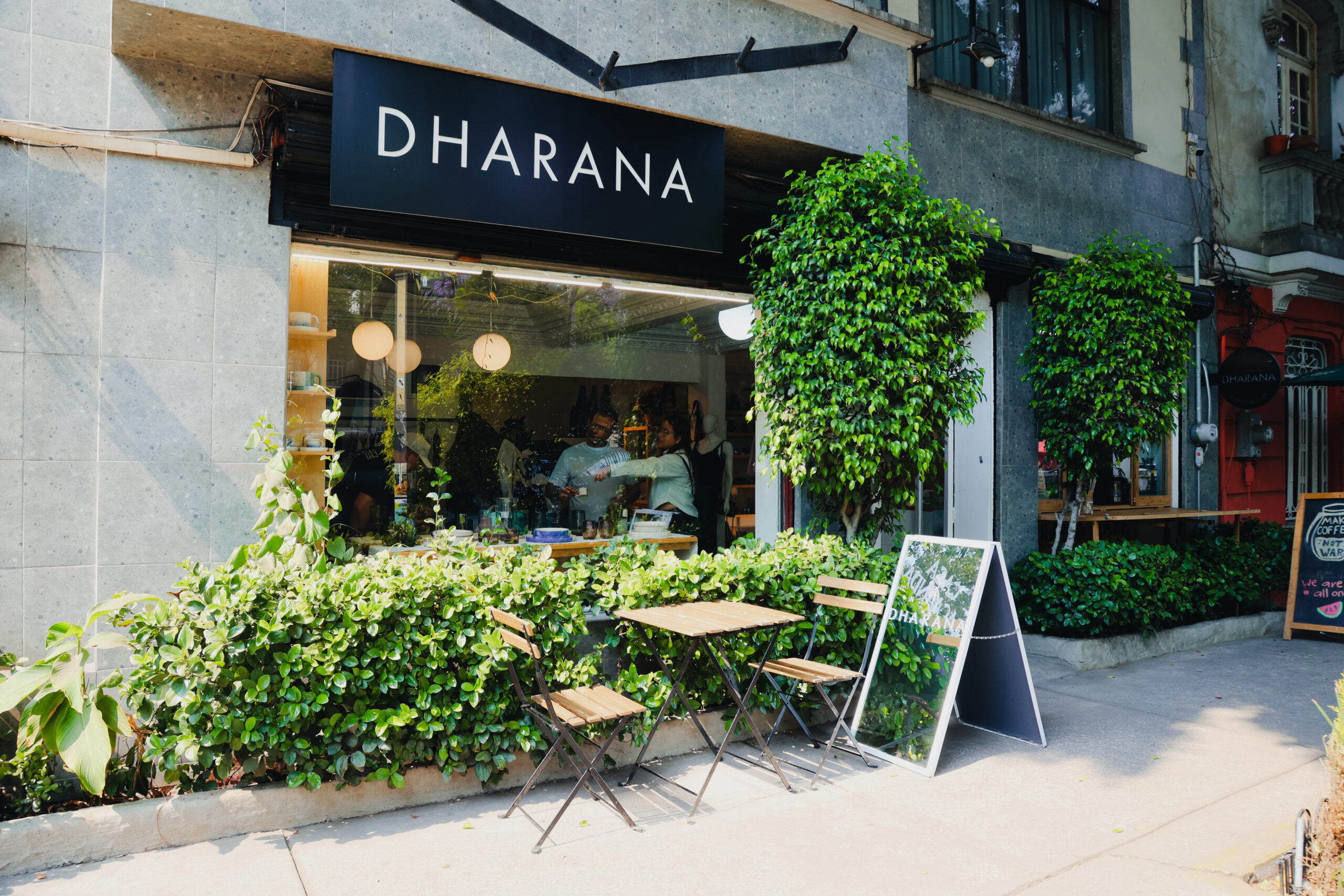
Dharana Movement storefront view. Courtesy of Dharana Movement.
Sustainability Chops
Dharana was founded in 2020 by Cinthia Zúñiga and Ximena Silva as a social enterprise, with an impact-driven mission built in from day one. The brand exists, in the founders’ words, “to create dignified pathways for the social reintegration of women who have experienced the penitentiary system.”
In practice, the company creates opportunities for women to rebuild their lives through the production of clothes and yoga-related apparel. The ethos, integrated into the business structure, covers fair pay, a predictable daily routine, ongoing skill development, and what they call “a supportive community that fosters confidence, stability, and a sense of belonging.”
From a Mexico City workshop, four women hold full-time positions handcrafting the clothes and embroidering individual pieces. Additionally, Dharana runs training programs for larger groups of up to twelve women at a time, who learn sewing, garment construction, and other skills. The approach stays deliberately small, meaning every piece can be traced back to a specific pair of hands in the city.
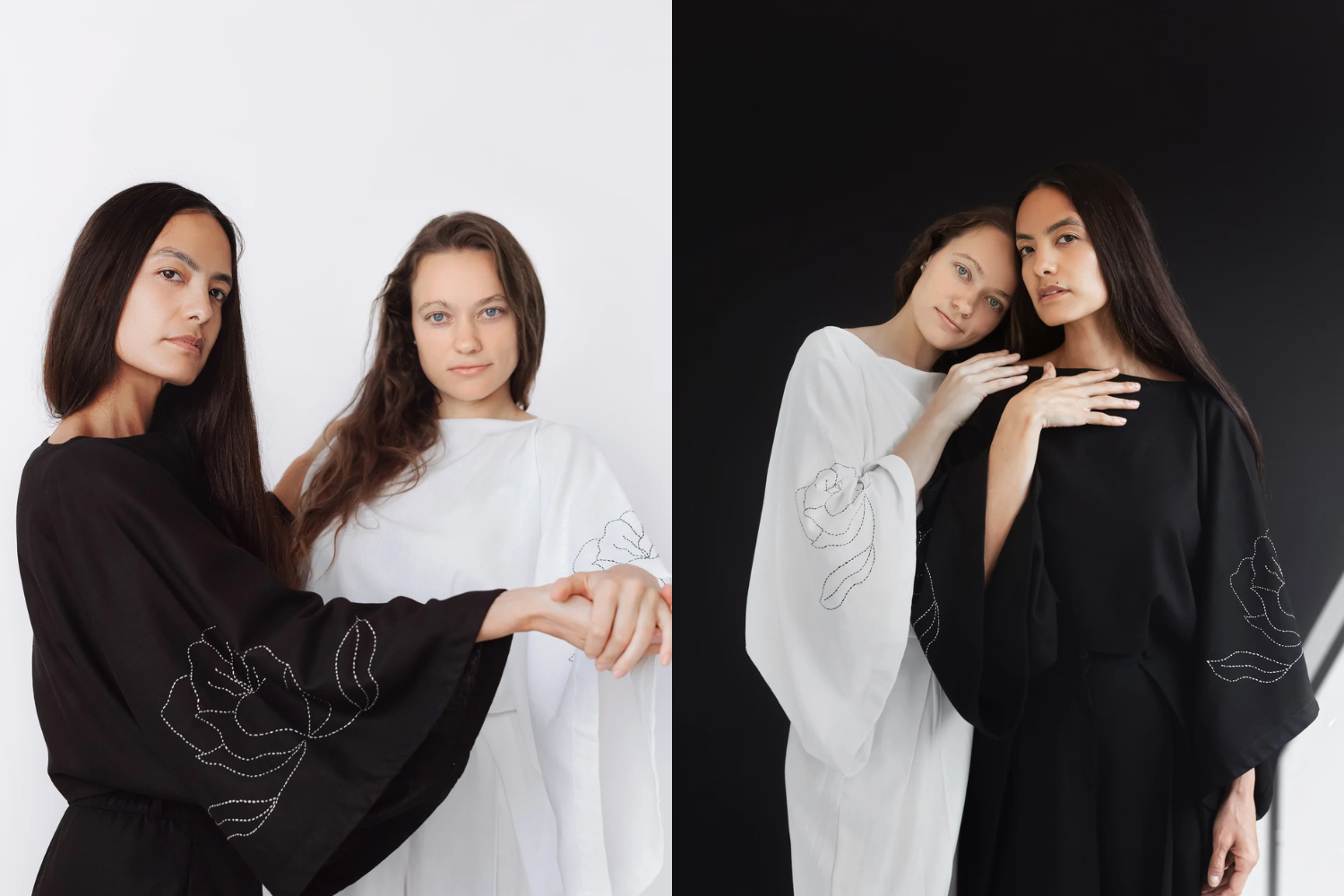
Embroidered Air Blouse. Courtesy of Dharana Movement.
The Look
The Embroidered Air Blouse has wide kimono-style sleeves, a soft boat neckline that falls over the shoulders, and a cut that drapes rather than fits. Depending on the size, it hits at the top of the hips or the bottom of the waist, but it reads large and flowy either way. It works with jeans or skirts, and layers over a tank top for warmth. Despite the name, I treat mine like a poncho.
It comes in two sizes, CH/M and M/G, and two colors, black and a natural ecru called crudo.
An abstract flower runs down each sleeve, sewn in a running stitch that shows up as white on the black blouse and black on the crudo. Every design comes from a different pair of hands, so no two match exactly. Dharana treats each release as a limited edition
The Embroidered Air Blouse currently retails for $1,980 MXN or $115 USD.
Origin Story
Zúñiga is a yogi “deeply connected to the philosophy and spirituality behind the practice,” but her path to founding Dharana ran through the legal system first. As a lawyer, she worked closely with women navigating deeply vulnerable situations — and what she witnessed shaped her outlook on the impact her company could make.
“I witnessed how systems that are meant to provide justice often fall short, especially for women who have already faced structural inequality,” she says. “I kept asking myself what justice really looks like beyond the legal framework, and what it means to create real second chances.”
That question became a mission. From the beginning, Dharana set out to offer work to women rebuilding their lives after time in the penitentiary system — a purpose that has stayed in place as the brand grew. “This work didn’t begin with a single moment,” Zúñiga says, “but with a growing awareness during my personal and professional path.”
She and cofounder Silva launched Dharana initially with yoga and meditation props, products designed to help others find inner peace and calm. The line has since expanded to include clothing. In five years, the team has grown beyond its two founders to include core staff, and Dharana now runs two stores in Mexico City — in Roma Norte and Coyoacán — with additional points of sale across Mexico.
Founder and CEO of Azure Road, Lauren Mowery is a longtime wine, food, and travel writer. Mowery continues to serve on Decanter Magazine’s 12-strong US editorial team. Prior to joining Decanter, she spent five years as the travel editor at Wine Enthusiast. Mowery has earned accolades for her writing and photography, having contributed travel, drinks, food, and sustainability content to publications like Food & Wine, Forbes, Afar, The Independent, Saveur, Hemispheres, U.S. News & World Report, SCUBA Diving, Plate, Chef & Restaurant, Hotels Above Par, AAA, Fodors.com, Lonely Planet, USA Today, Men’s Journal, and Time Out, among others.
Pursuing her Master of Wine certification, she has also been a regular wine and spirits writer for Tasting Panel, Somm Journal, VinePair, Punch, and SevenFifty Daily. Mowery is a graduate of the University of Virginia and Fordham Law School, and she completed two wine harvests in South Africa.
Follow her on Instagram @AzureRoad
North Stars: Community Support, Gender Equality, Waste Management