North Stars:

Heritage Value

Waste Management

Wildlife & Ecosystems
“The owners chose to protect what makes this property exceptional: its rice paddy.”
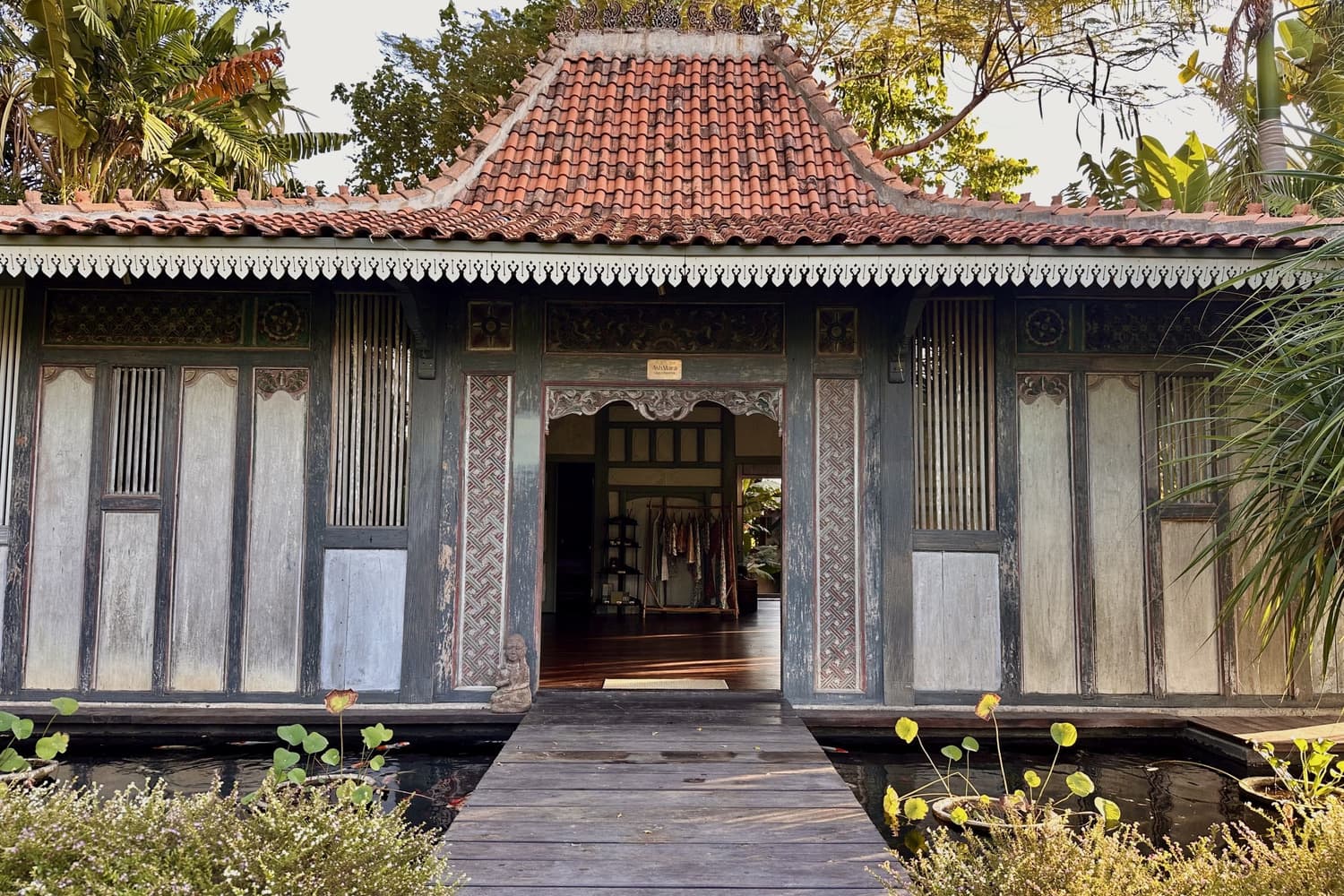
Entrance to the AshMara spa. Courtesy of Lauren Mowery
The Azure Road Take
The small carved wooden sign marking the entrance to Magia de Uma implies a preference to remain discreet. In one of Bali’s most developed areas near Canggu, guests seek respite from buzzing motorbikes. If you’re savvy enough to have found Magia de Uma, you’re the right audience. Italian owners Jacopo and Rosa Sertoli have turned their family home into a hotel of roughly a dozen rooms and bungalows, built from vintage Balinese doors, carvings, and old timber. On day one, the compound might feel small. By day three, you may never want to leave. Few people know about it, and those who do want to keep it that way.
Who It’s For
Couples and design-minded travelers who want a calm base between Canggu and Seminyak, and food lovers who’ll happily eat at the hotel for several nights. Skip it if you want to walk out the door to cafés and beach clubs.
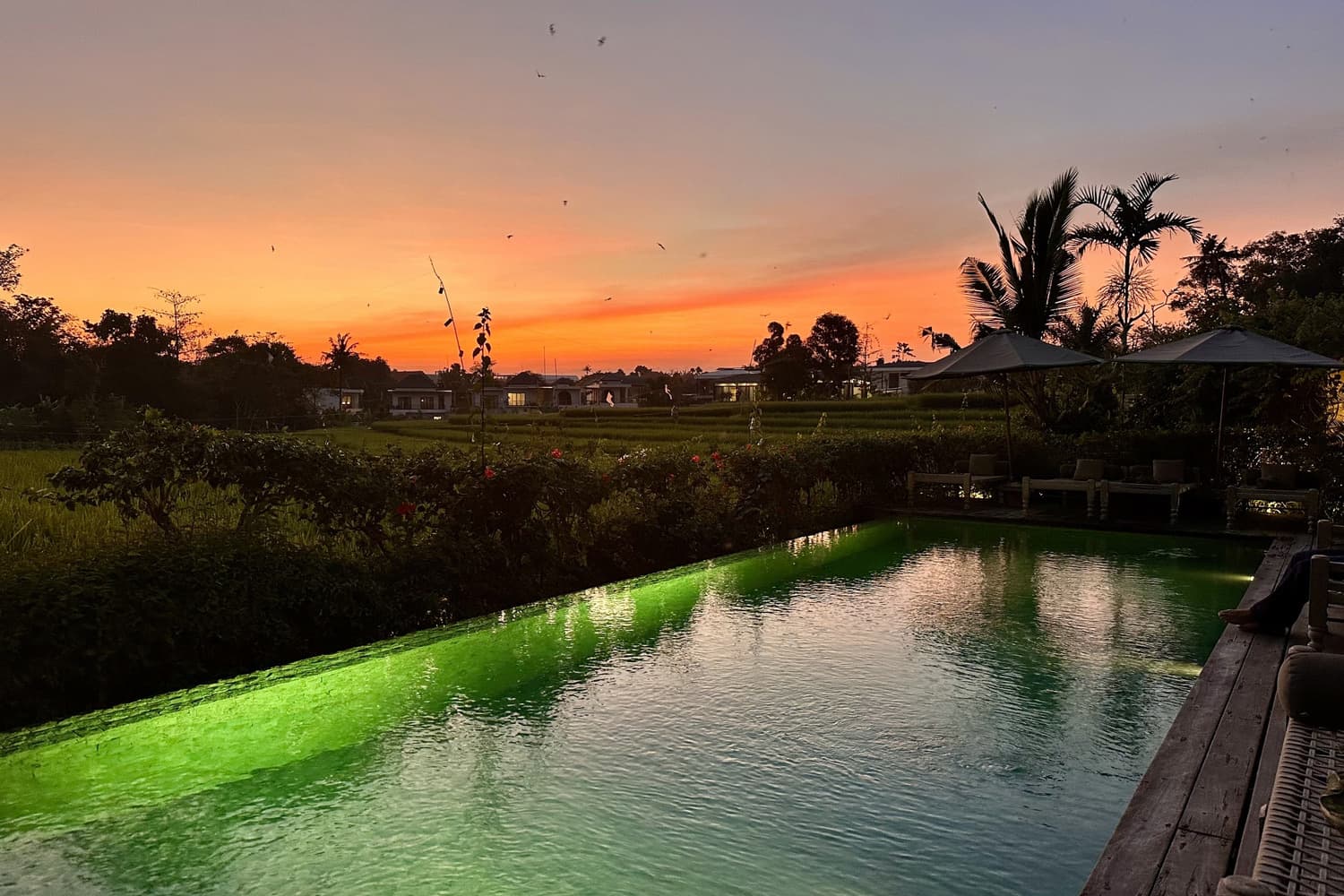
Sunset over the rice paddies and infinity pool. Courtesy of Lauren Mowery
Sustainability Chops
Unlike the plethora of new minimalist condos and villas springing up around Bali, the Sertolis, blessed with this piece of land in Umalas, decided on a different approach. They restored an existing family home and salvaged, antiqued, or commissioned Indonesian design for the remaining bungalows. For example, several guest villas feature intricate joglo facades, the carved wooden fronts of peaked-roof houses built for Central Java’s aristocracy. Garden Bungalows sit behind a 150-year-old joglo entrance. Doors and panels throughout show off traditional Indonesian woodcarving, and new construction relies on local timber and stone.
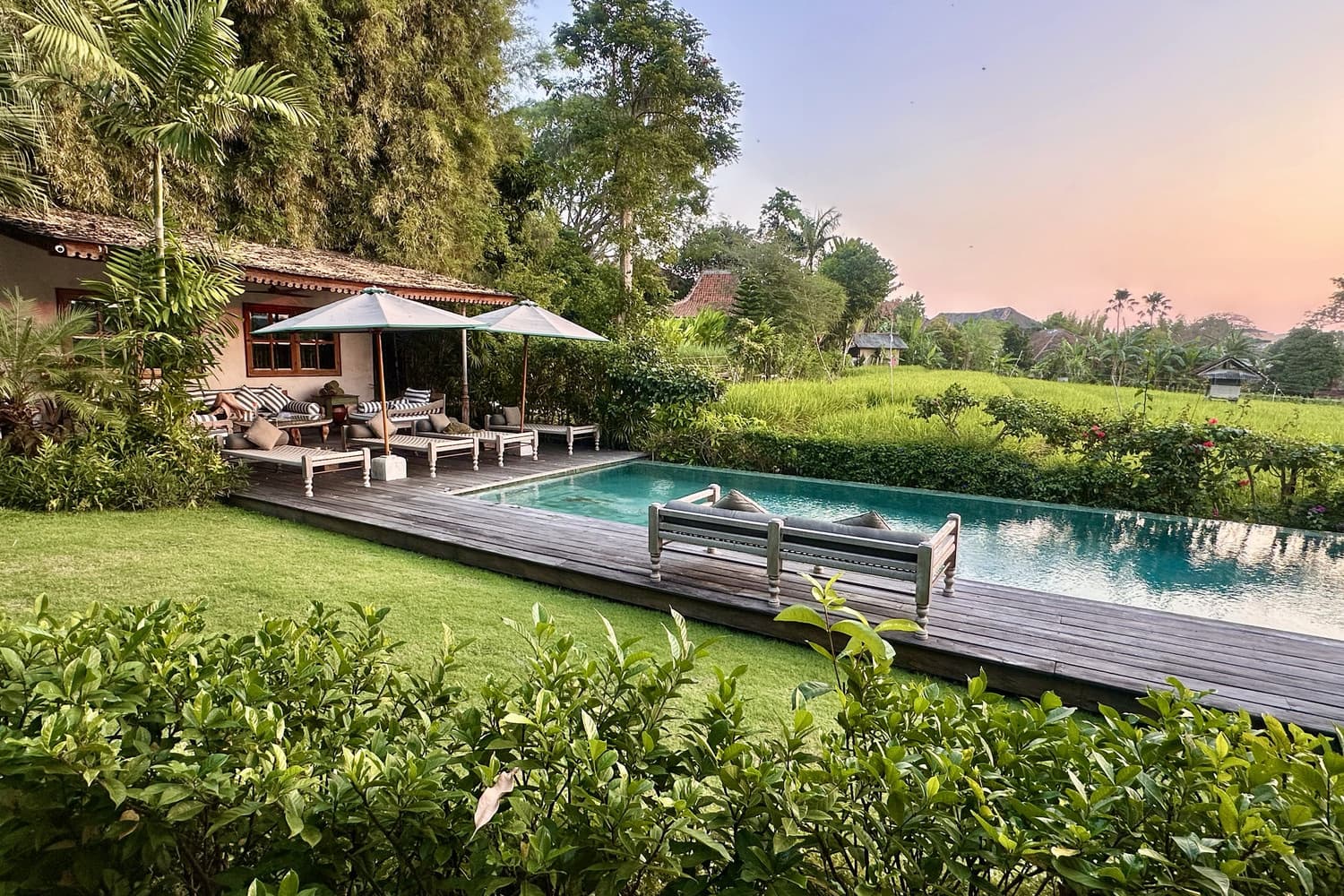
As tourism and residential development continue to erode rural Balinese life, creeping inland from Canggu, the owners chose to protect what makes this property exceptional: they kept the adjacent rice paddy in production and preserved the property’s trees. Farmers still work the field beside the pool, where bamboo poles strung with empty Bintang cans serve as homemade bird scarers.
The kitchen cooks white rice from the owners’ own field and pulls from a signposted chef’s vegetable garden and fruit trees on the grounds, filling gaps from local markets.
Beds come with organic latex mattresses from Heveya, which the company bills as biodegradable, and organic linens. Spa treatments use fresh ingredients instead of bottled product lines, and the hotel plants a tree for every booking. Staff hold daily ceremonies on property, and guests can join a workshop on metanding, the craft of preparing Balinese Hindu offerings.
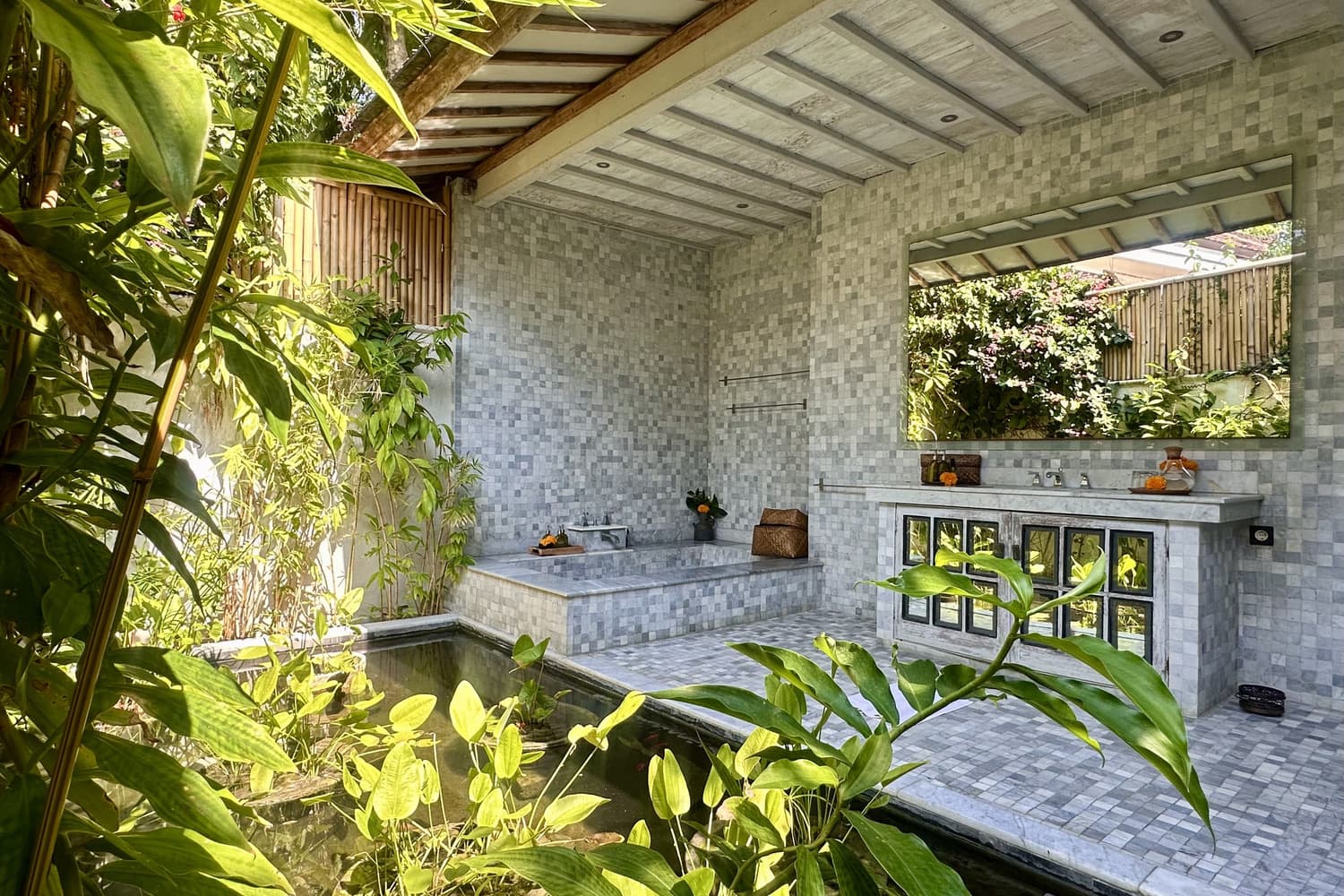
Inside Magia de Uma's open-air bathrooms. Courtesy of Lauren Mowery
Location
Magia de Uma sits in Umalas, inland from Canggu’s beach zone. During the day, the surrounding streets stay busy but turn quiet at night. Determined walkers (I was one) can reach Revolver Espresso in six to eight minutes. For everything else, call a Grab or Gojek; Canggu’s beaches and Seminyak’s shops sit a short ride away. Be warned: in this part of Bali, cars are at a disadvantage. If you’re comfortable riding on the back of a scooter, you’ll get farther faster. Just know that drivers rarely offer a helmet, though some apps suggest it’s an option you can choose. Regardless, buy travel insurance.
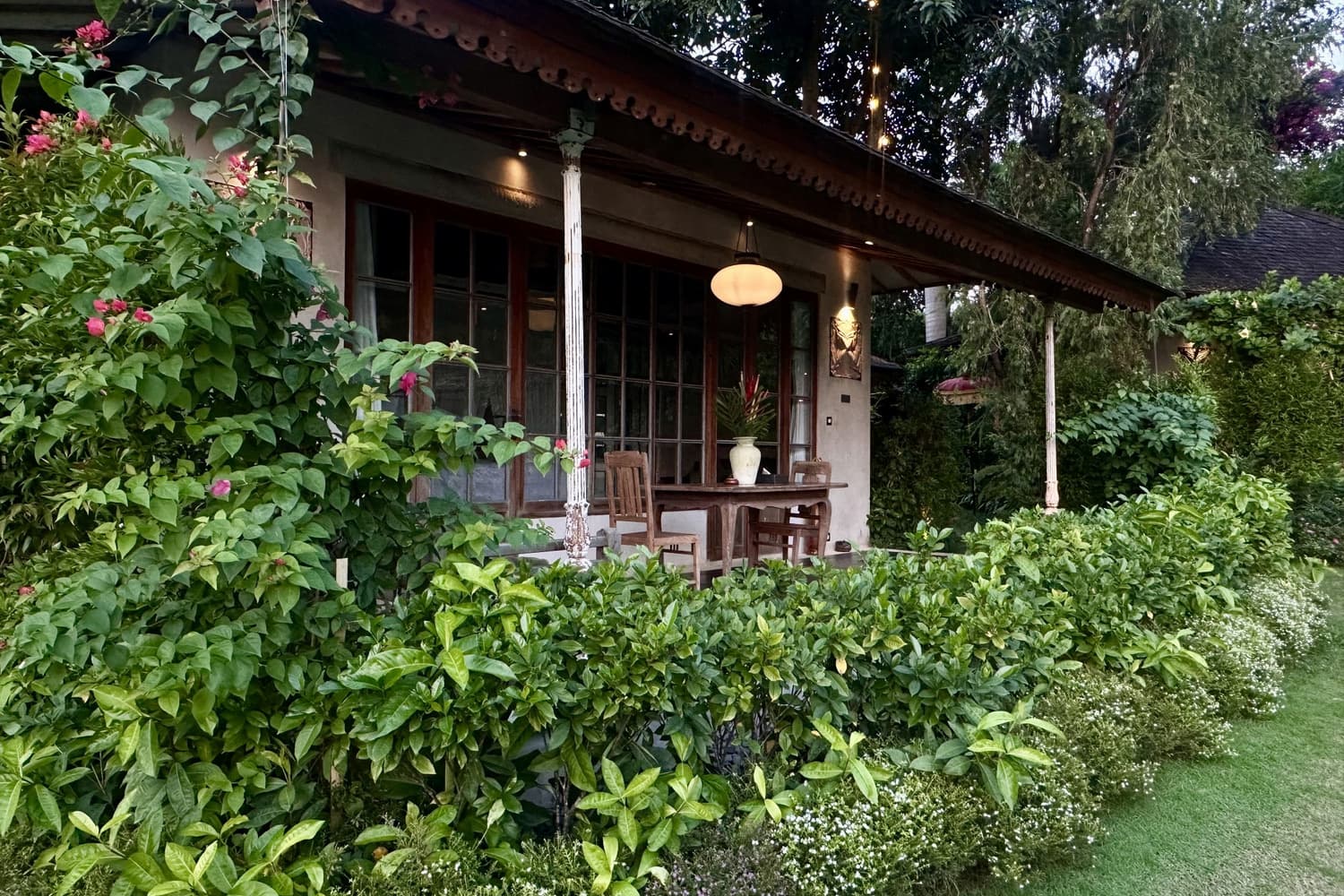
Greenery frames the porch of one of Magia de Uma's bungalows. Courtesy of Lauren Mowery
Rooms and Bungalows
Behind the carved sign, the property opens into a garden kept manicured, but only just. Birds of paradise, palms, and bamboo grow as tall as they please. If the humans disappeared, the flora would take over within a season.
From the outside, bungalows look like old family cottages, with carved trim along the eaves, white-painted cast-iron columns, and bougainvillea climbing the porches. Step inside and the clock rolls back several decades.
Dark timber rafters fan out from a vaulted ceiling. The four-poster bed floats under a canopy of mosquito netting, knotted at each post and spilling onto a glossy black floor. Draw it closed at night and the bed becomes a gauzy room of its own. Every chair, door, and lamp has lived a previous life, and together they leave you ensconced in a vintage version of Bali that’s getting harder to find along this stretch of coast.
Then there’s the bathroom.
I didn’t take measurements, but I spent enough time in Manhattan to eyeball a space the size of a city studio. Open to the sky and tiled in gray-and-white marble, the bathroom was large enough to accommodate a koi pond alongside the open-air shower, backed by a living wall of plants. A checkerboard-tiled basin sat beneath a huge mirror reflecting the clouds. Bathrooms like this remind you why Bali still enchants.
Food and Drink
Guests arrive through a narrow path into the communal heart of the hotel, where staff greet them with a traditional Balinese blessing. The space doubles as reception, bar, and restaurant.
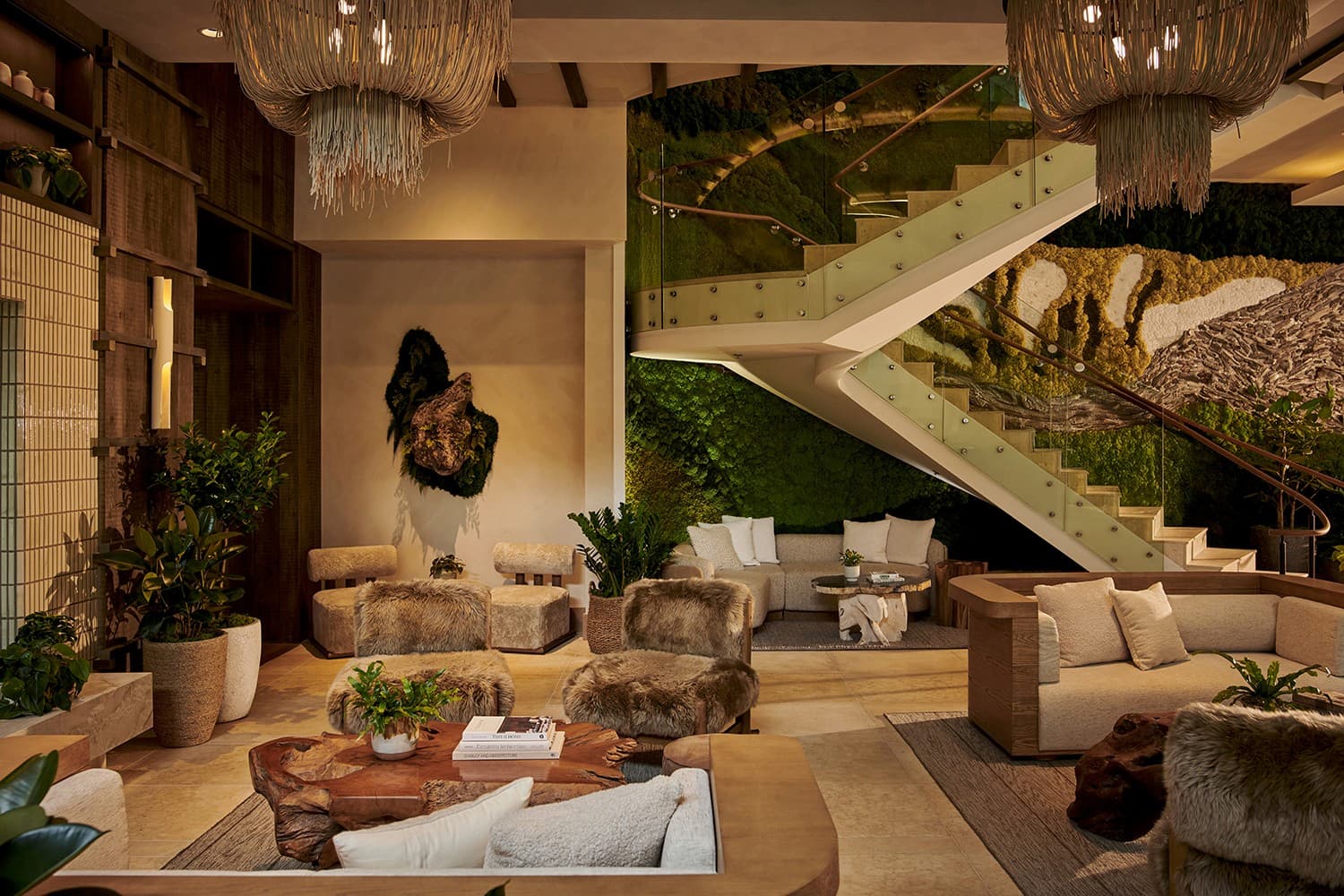
In the lounge, a black metal staircase with arched cutouts climbs one wall beside a large painting of a woman with an upsweep of raven hair pinned with pink blossoms and golden ornaments. Low wooden tables flank a deep sofa, a glass stand holds limes and oranges, and woven bamboo matting covers the floor with visual and literal texture. At the bar, steel I-beams, cast-iron stools, and a prismatic factory pendant give the room an industrial edge.
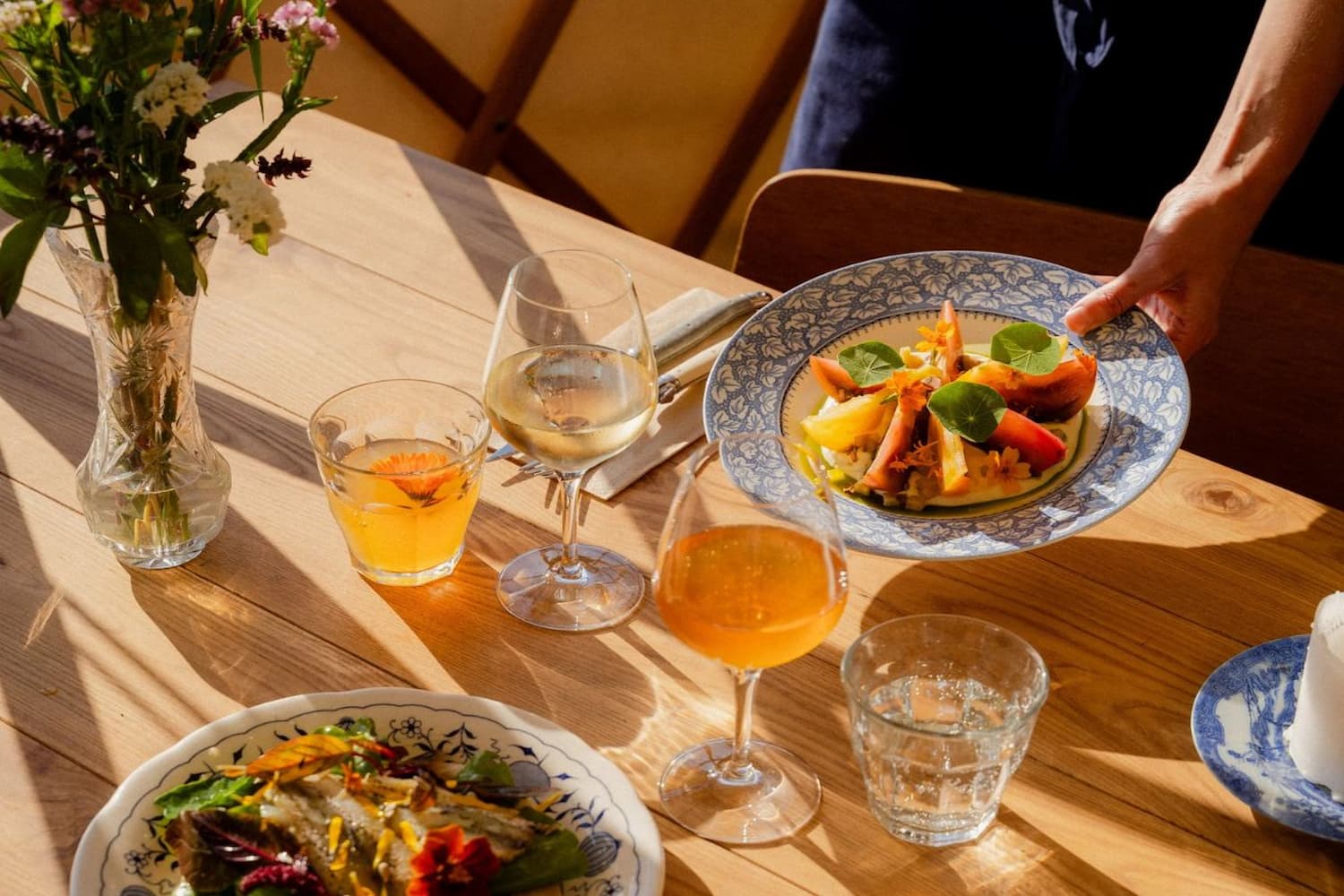
The airy dining room of Maharasa, the hotel’s only restaurant, opens to the gardens through two antique carved doors. Vintage factory lamps hang above dark-wood tables set with marigolds and woven rattan placemats. You’ll have breakfast, lunch, and dinner here, a feature that could feel limiting after a few days. Fortunately, the menu and the cooking can keep you captivated well beyond the matcha lattes and avocado toasts of nearby brunch factories. The kitchen pairs Indonesian staples with retro international dishes and a few Italian touches.
Over two days, I tried the beef rendang and duck, both exceptional and both huge. The duck arrives fried to a deep bronze crust on a banana leaf, scattered with red chili and fried shallots, alongside sambal matah, Bali’s raw shallot-and-chili relish.
Everything is à la carte, including breakfast. If you’re inclined to read all day by the pool, order lunch wherever you wish to eat on the premises. In addition to an international wine list, try the signature cocktails made with fresh local juices.
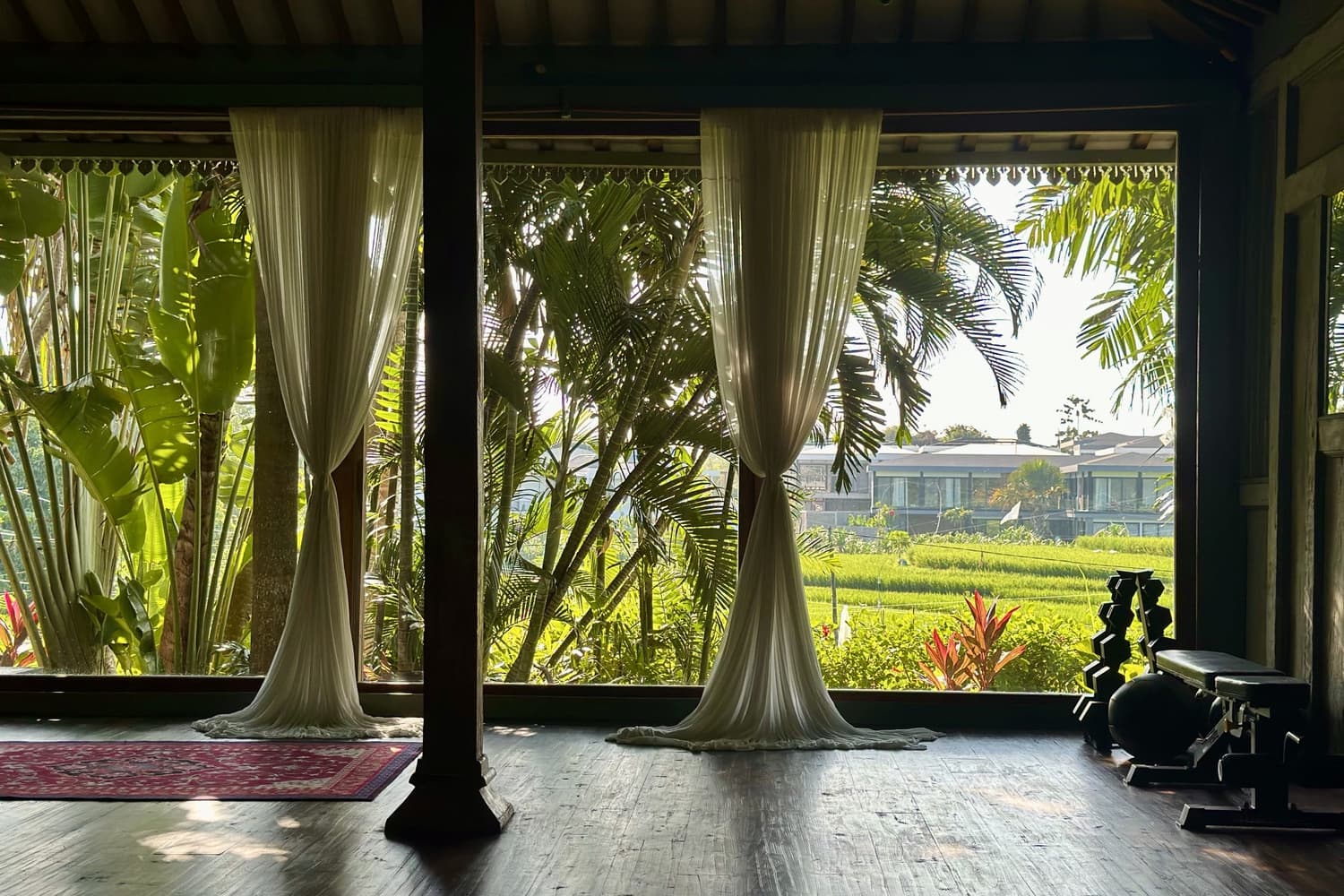
View from inside the yoga shala. Courtesy of Lauren Mowery
Wellness and Amenities
The spa occupies a joglo reached by a boardwalk over a lotus-filled koi pond. It’s small and lovely: a massage room, sauna and cold plunge, with a yoga shala overlooking the rice fields.
Treatments draw on Balinese tradition and focus on the body, from scrubs and wraps to traditional massage, using coconut, cucumber, aloe vera, and Indonesian spices. The hotel also offers complimentary sound healing, meditation in the on-site temple, and a monthly full moon ceremony.
Between sessions, claim a daybed on the teak deck of the main pool, which kisses the rice paddy’s hedge of hibiscus. From the bungalow porches, scalloped eaves and rust-streaked iron columns frame the same view. At dusk, the sky turns peach, then pink, with the pool reflecting the clouds and color. For longer visits, ask about creative programs like cooking classes, painting sessions, and Balinese dance lessons.
What to Know Before You Go
Seasons: Dry season runs roughly April through October. Check the date of Nyepi, usually in March, when the airport closes for 24 hours.
Getting there: Ngurah Rai International Airport (DPS) sits a deceiving nine miles away. Allow at least an hour, given the island’s heavy, predictably unpredictable traffic.
Mobility: There’s no wheelchair access, but during my stay, staff helped a guest on crutches get between her bungalow and the entrance.
Rates: From about $215 a night.
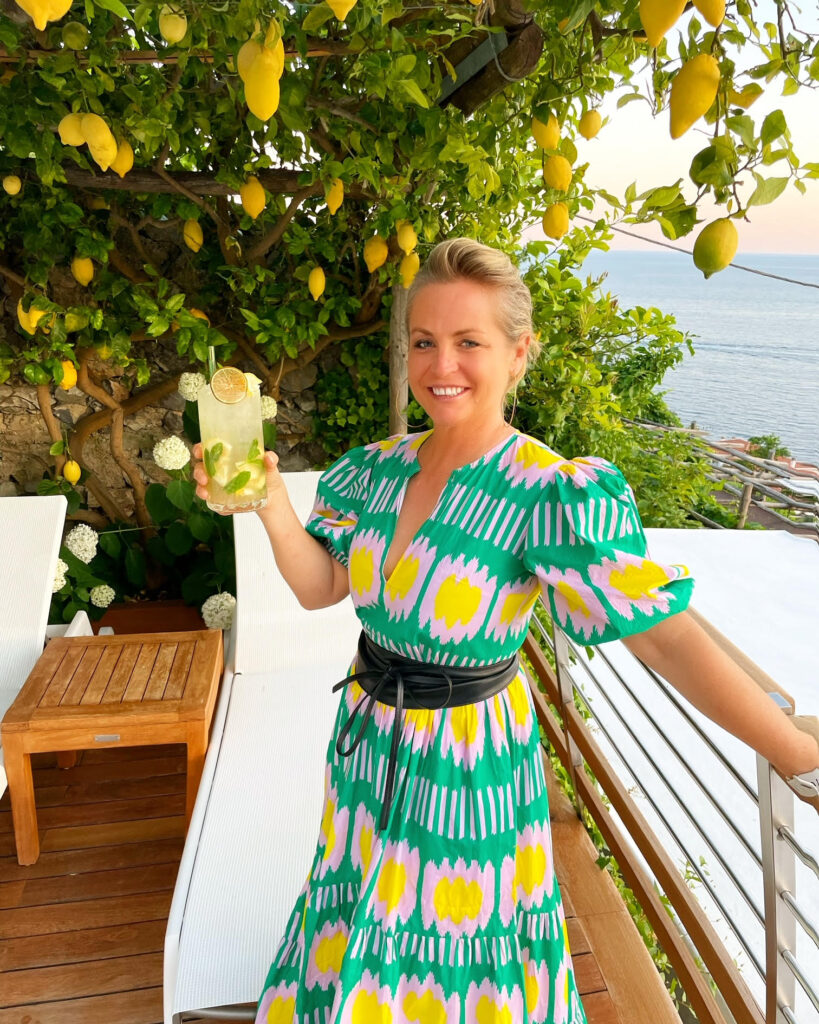
Founder and CEO of Azure Road, Lauren Mowery is a longtime wine, food, and travel writer. Mowery continues to serve on Decanter Magazine’s 12-strong US editorial team. Prior to joining Decanter, she spent five years as the travel editor at Wine Enthusiast. Mowery has earned accolades for her writing and photography, having contributed travel, drinks, food, and sustainability content to publications like Food & Wine, Forbes, Afar, The Independent, Saveur, Hemispheres, U.S. News & World Report, SCUBA Diving, Plate, Chef & Restaurant, Hotels Above Par, AAA, Fodors.com, Lonely Planet, USA Today, Men’s Journal, and Time Out, among others.
Pursuing her Master of Wine certification, she has also been a regular wine and spirits writer for Tasting Panel, Somm Journal, VinePair, Punch, and SevenFifty Daily. Mowery is a graduate of the University of Virginia and Fordham Law School, and she completed two wine harvests in South Africa.
Follow her on Instagram @AzureRoad and TikTok @AzureRoad