North Stars:

Heritage Value

Production & Consumption

Diversity & Inclusion
“Only 9% of plastic ever produced has been recycled, with single-use beverage bottles heavy contributors to waste streams.”
Carbonated beverages have been a global staple for more than a century. While soda consumption remains high, sparkling water has surged into an everyday habit for many households. Brands like LaCroix have marketed themselves to national prominence, with social media mentions rising by more than 20% year-over-year. Supermarkets are now rife with choices, not just plastic bottles in varying formats, but, increasingly, aluminum cans. These reflect the growing, and for many households, daily use of packaged sparkling beverages.
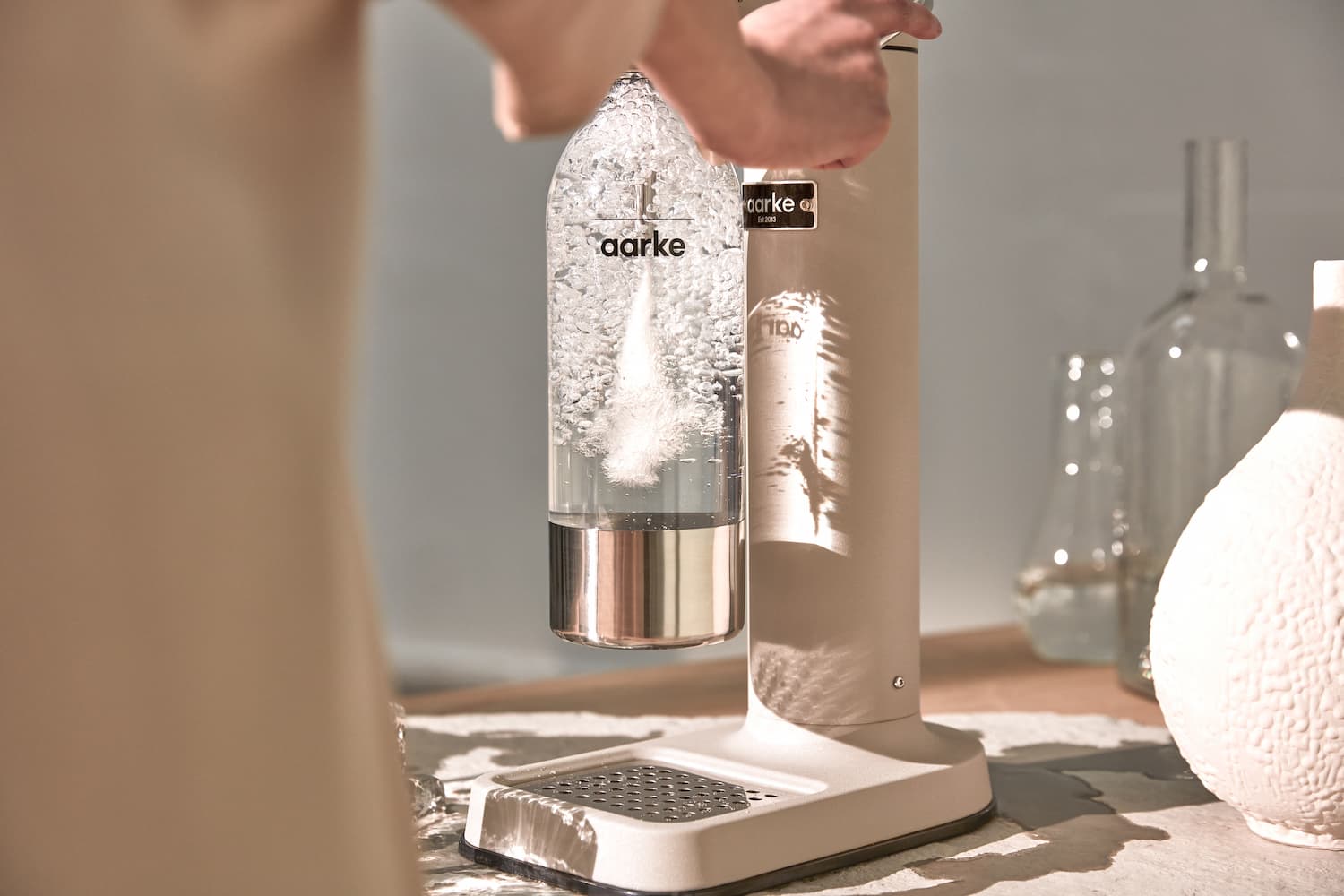
Aarke Sand Edition. Courtesy of Aarke.
How Sparkling Water Creates So Much Packaging Waste
According to the Container Recycling Institute, Americans use more than 100 billion aluminum beverage cans annually. While aluminum is recyclable, the EPA estimated that roughly 50% of cans end up in landfills, and plastic, despite also being recyclable, has an even greater likelihood of ending up in landfills.
The Natural Resources Defense Council reported that only 9% of plastic ever produced has been recycled, with single-use beverage bottles among the most common contributors to waste streams. It’s also a growing concern as Generation Z drinks more sparkling water than millennials, who in turn consume markedly more than older generations.
What Are Your Options for Making Sparkling Water at Home?
One way to stem this wave of packaged product waste is to embrace the home carbonator. The first mass-market home carbonator hit the U.S. back in 1955, but was relegated to a niche product for decades. Many early adopters ultimately reverted to weekly purchases of cans and bottles due to inconvenience, limited carbonation control, or inconsistency.
What started as a novelty, however, became increasingly marketed as a mainstream kitchen appliance. SodaStream marked a turning point, growing revenue by over 50% from 2000 to 2010, launching an IPO, and even buying a Super Bowl ad. Competitors like Cuisinart and Drinkmate took notice, and started making inroads.
Most prominently, Coca-Cola invested heavily in Keurig to launch the Kold, a countertop system to carbonate a variety of liquids beyond water, theoretically delivering freshly made Coke on demand. It was clunky, slow, and expensive ($370 retail for the machine and over $1 per glass served).
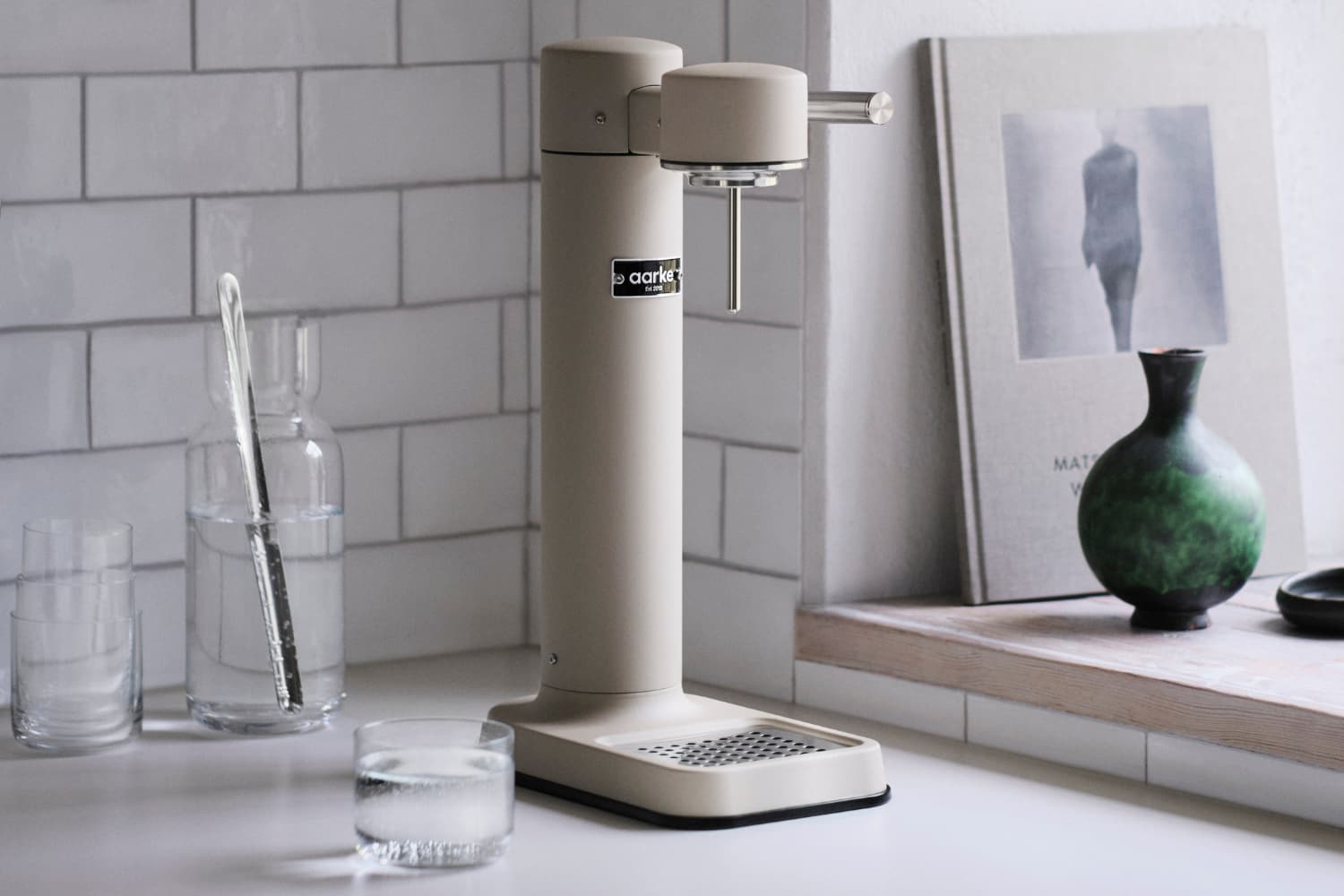
Aarke Sand Edition. Courtesy of Aarke.
These efforts coincided with broader shifts in consumer behavior: growing backlash at single-use bottles, healthier lifestyle habits less based on sugary drinks, and an embrace of design gadgets (such as air fryers, instant pots, power blenders, and coffee pod machines). The countertop soda maker market is projected to grow 5.6% annually through 2032, reaching over two billion USD.
In order to offer a true alternative to the convenient canned sparkling beverage, a soda maker must offer a clear cost advantage: produce high quality bubbles, at a reasonable compromise in convenience, in a minimal countertop footprint that requires no electricity.
The market opportunity is compelling. Sparkling water soda makers can pull market share from still bottled water, a category valued at approximately $364 billion globally, with U.S. per-capita consumption rising 3.5% annually over the past decade. Water, in aggregate, has already supplanted carbonated soft drinks as the largest packaged beverage category by volume, signaling a durable shift in consumer preference away from traditional sodas.
One of the keys to the best sparkling water is to use refrigerator-chilled water in your soda maker. Cold water allows carbon dioxide to dissolve much more readily, resulting in greater and longer-lasting carbonation. And the key to a countertop product remaining on the counter is for it to be easy to use, reliable, and visually appealing.
Aarke Carbonator 3 Review: Is It the Best Home Soda Maker?
Enter the Aarke Carbonator 3. Aarke, a Swedish design and engineering company, has been using aesthetic materials, primarily stainless steel, to offer beautiful versions of home-essential appliances, mostly focused on beverages, as affordable luxuries for consumers.
The Aarke Carbonator 3 is the third iteration of a 2016 launch, offered in six finishes—shiny metallic or matte coating—and priced at $250 for just the machine or $275 (we recommend) bundled with a standard (for soda makers) and easily exchanged 14.5 oz (60 liters) CO₂ cylinder and 1 L plastic bottle. It’s one of the most expensive soda makers on the market, but arguably the most aesthetic, which matters when permanently displayed alongside the toaster and coffee maker.
At just over five pounds with a cylinder installed, the Carbonator is hefty enough to resist accidental tipping, while its 16.5-inch height allows it to slide under the typical 18-inch clearance between countertops and upper cabinets. Besides being solidly built, it’s easy to use. Within 10 seconds, chilled water can be turned into 22 ounces of refreshing fizz.
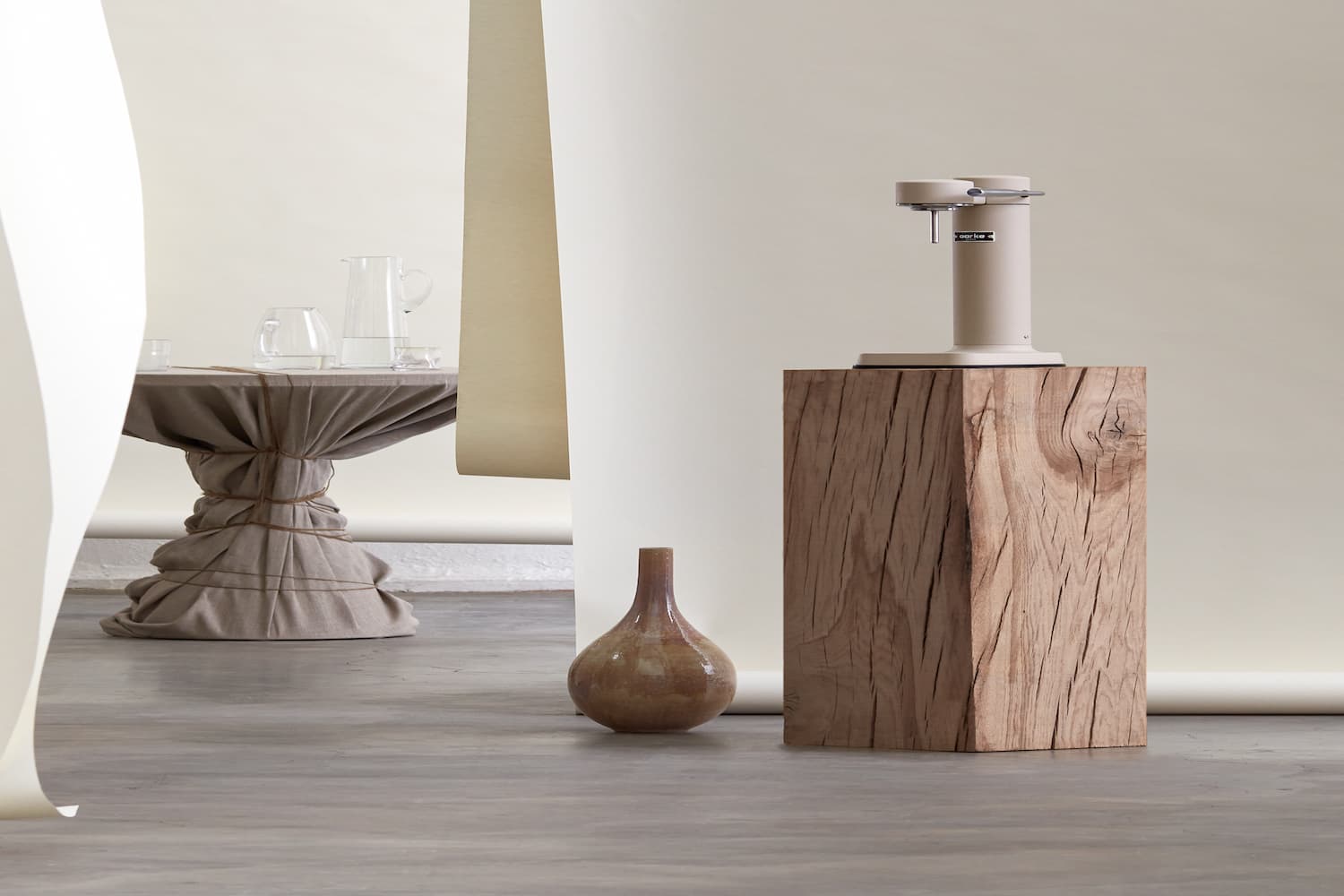
Aarke Sand Edition. Courtesy of Aarke.
Does a Home Soda Maker Really Save Money?
What about that $250 price of entry? The average U.S. consumer drinks approximately 45-50 liters of sparkling water annually, equating to roughly $112 to $125 at Walmart’s lowest price per volume. That puts the break-even point for that average consumer at less than 3 years, even against bulk purchases from membership-based warehouse stores. Over time, the total cost of ownership favors this countertop system over packaged sparkling water.
There are two drawbacks to the design, both common to countertop soda makers. The first is the need to flip the Carbonator on its side to load a standard 60L CO2 cylinder, though this should only be needed several times a year. The second is reliance on a reusable plastic bottle for carbonation. This is a practical trade-off. Using glass would require design changes to safeguard users, adding a hundred dollars, which Aarke does with their Carbonator Pro. The ultimate efficacy test, of course, is long-term durability. For that, you’ll have to wait several years, but Aarke’s use of stainless steel bodes well.
Are Home Soda Makers Better for the Environment?
Reducing the flow of cans and plastic bottles into landfills is the most obvious benefit, but not the only one. Transportation-related emissions drop significantly when water is carbonated at home. Per the MIT Carbon Footprint Calculator, transporting bottled water can generate up to 2,000 times more emissions than tap water, due to the combined effects of weight and transportation distance. Carbonating filtered tap water largely eliminates that factor.
Another benefit is the material used. Stainless steel, in addition to its durability, is fully recyclable at the end of its lifespan. CO2 cylinders are designed for repeated refilling rather than single-use disposal.
In total, the Carbonator 3 delivers a rarity: reduced environmental impact, significantly lower long-term costs, and minimal fuss, all in a design worthy of countertop display.
Aarke Carbonator 3, $250 (unit price, without CO2), $340 with refill service.

Founder and CEO of Azure Road, Lauren Mowery is a longtime wine, food, and travel writer. Mowery continues to serve on Decanter Magazine’s 12-strong US editorial team. Prior to joining Decanter, she spent five years as the travel editor at Wine Enthusiast. Mowery has earned accolades for her writing and photography, having contributed travel, drinks, food, and sustainability content to publications like Food & Wine, Forbes, Afar, The Independent, Saveur, Hemispheres, U.S. News & World Report, SCUBA Diving, Plate, Chef & Restaurant, Hotels Above Par, AAA, Fodors.com, Lonely Planet, USA Today, Men’s Journal, and Time Out, among others.
Pursuing her Master of Wine certification, she has also been a regular wine and spirits writer for Tasting Panel, Somm Journal, VinePair, Punch, and SevenFifty Daily. Mowery is a graduate of the University of Virginia and Fordham Law School, and she completed two wine harvests in South Africa.
Follow her on Instagram @AzureRoad and TikTok @AzureRoad
North Stars: Carbon Footprint, Energy Efficiency, Waste Management
More Stories
 HOME, LIFESTYLE
How to Make Your Home Ready for Climate Change
 HOME, LIFESTYLE
What Is the Right to Repair?
 HOME, LIFESTYLE
Living Lawns Are Disrupting Landscaping for the Better
 DRINK, HOME
The Buzz on InFizz: Breville’s Carbonator Elevates Sparkling Water
 HOME
HOMEWhy I Picked the Avocado Eco-Friendly Mattress