North Stars:

Production & Consumption

Community Support

Wildlife Ecosystems
“I had that rare sensation of being very far from the life I’d flown in from, yet strangely more awake to it.”
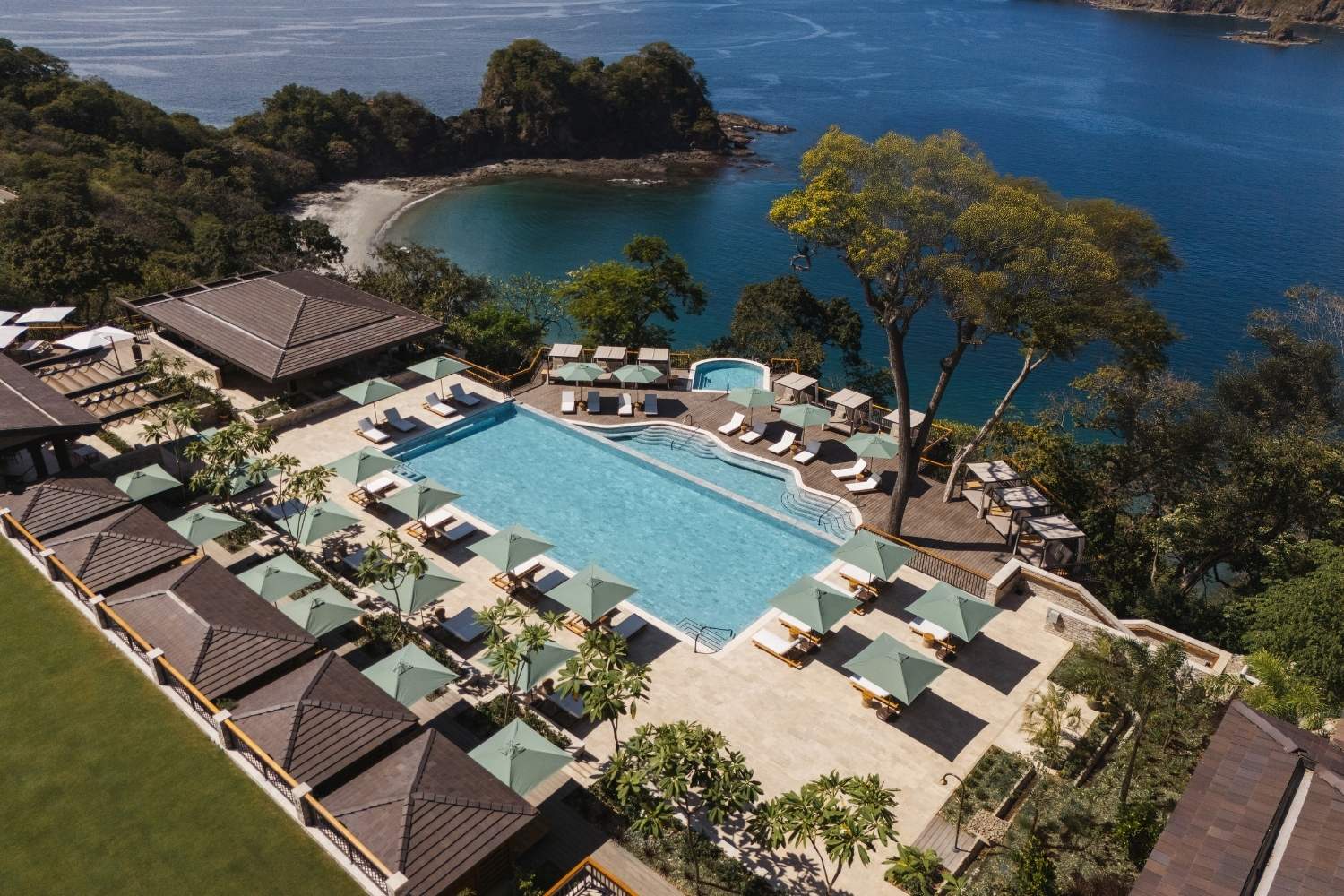
Aerial view of the pool. Courtesy of Nekajui, a Ritz-Carlton Reserve
The Azure Road Take
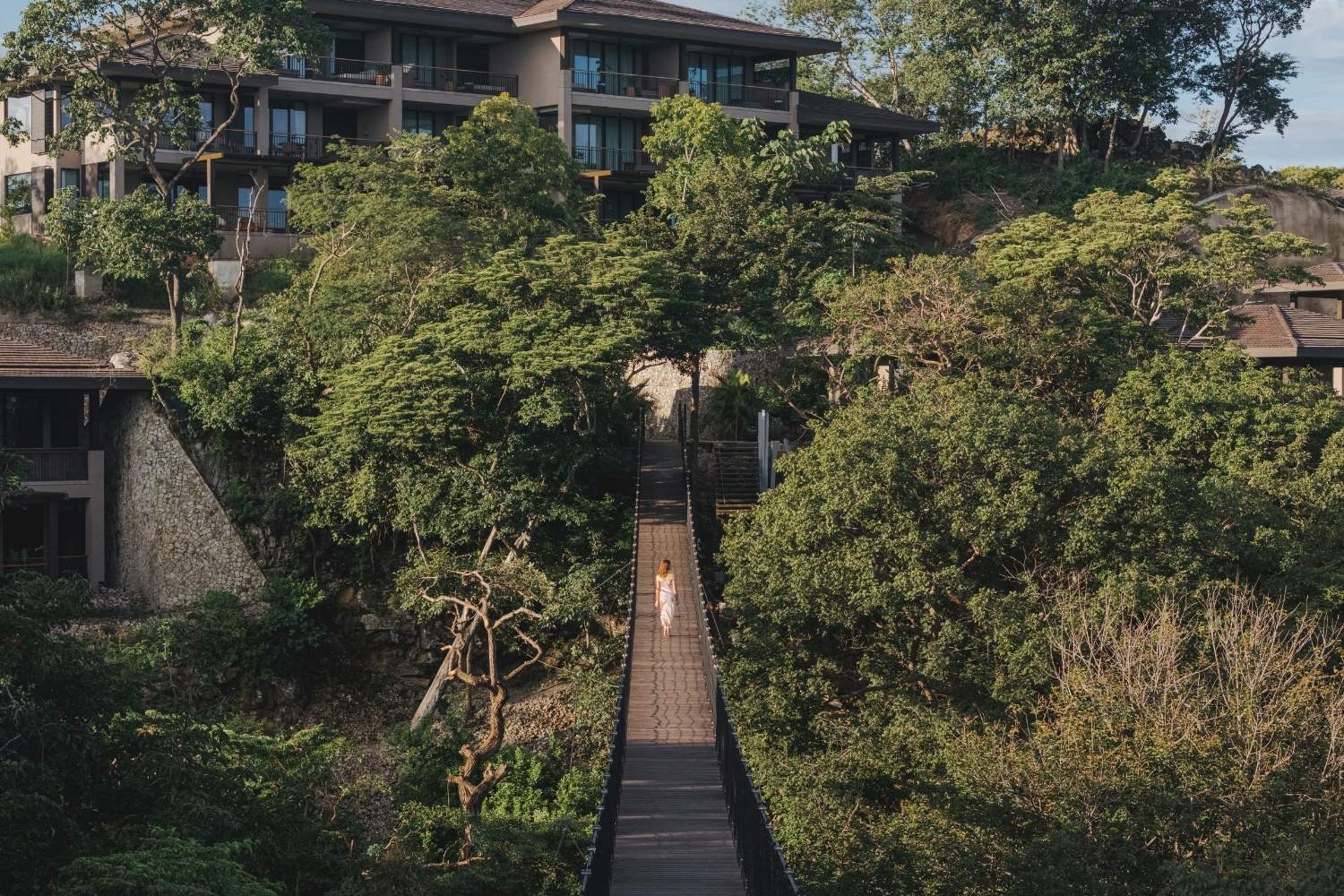
On my first night at Nekajui, I crossed the suspended bridge alone, barefoot in the robe from my room, following the glow of lanterns below. In the distance, the Pacific cut a dark band that merged into a sky crowded with stars. The hum of insects, a low, steady buzz, made it feel as if the peninsula itself were breathing. By the time I reached the far side, I had that rare sensation of being very far from the life I’d flown in from, yet strangely more awake to it.
Nekajui Peninsula Papagayo, a Ritz-Carlton Reserve, lives in that contrast. Located on the Papagayo Peninsula, it draws its name from a Chorotega word for “lush garden,” fitting for an ultra-luxury resort set in one of the most biodiverse corners of Costa Rica.
Nekajui offers unapologetically high-end living: private plunge pools, treetop tents, a funicular to an Iberian-inspired beach club. On arrival, I was assigned a manzu, a personal concierge named for the Chorotega word for “friend,” whose WhatsApp ping quietly replaces the front desk. At times, that level of luxury can seem incongruous with sustainability and conservation.
But the property has been shaped with a careful eye on how it was built and how it operates, given it sits on a peninsula where 70 percent of the land must remain protected and the surrounding Área de Conservación Guanacaste is recognized by UNESCO. The result is not a hardship version of responsibility, but a resort where food sourcing, waste management, and careful design are deliberately part of the brief. You feel the effort not in a plaque on a wall, but in the way your morning gallo pinto tastes of a specific place, how the art tells the story of Guanacaste, and how a walk back from a treatment in the trees delivers you into a forest that is being actively cared for, not just admired.
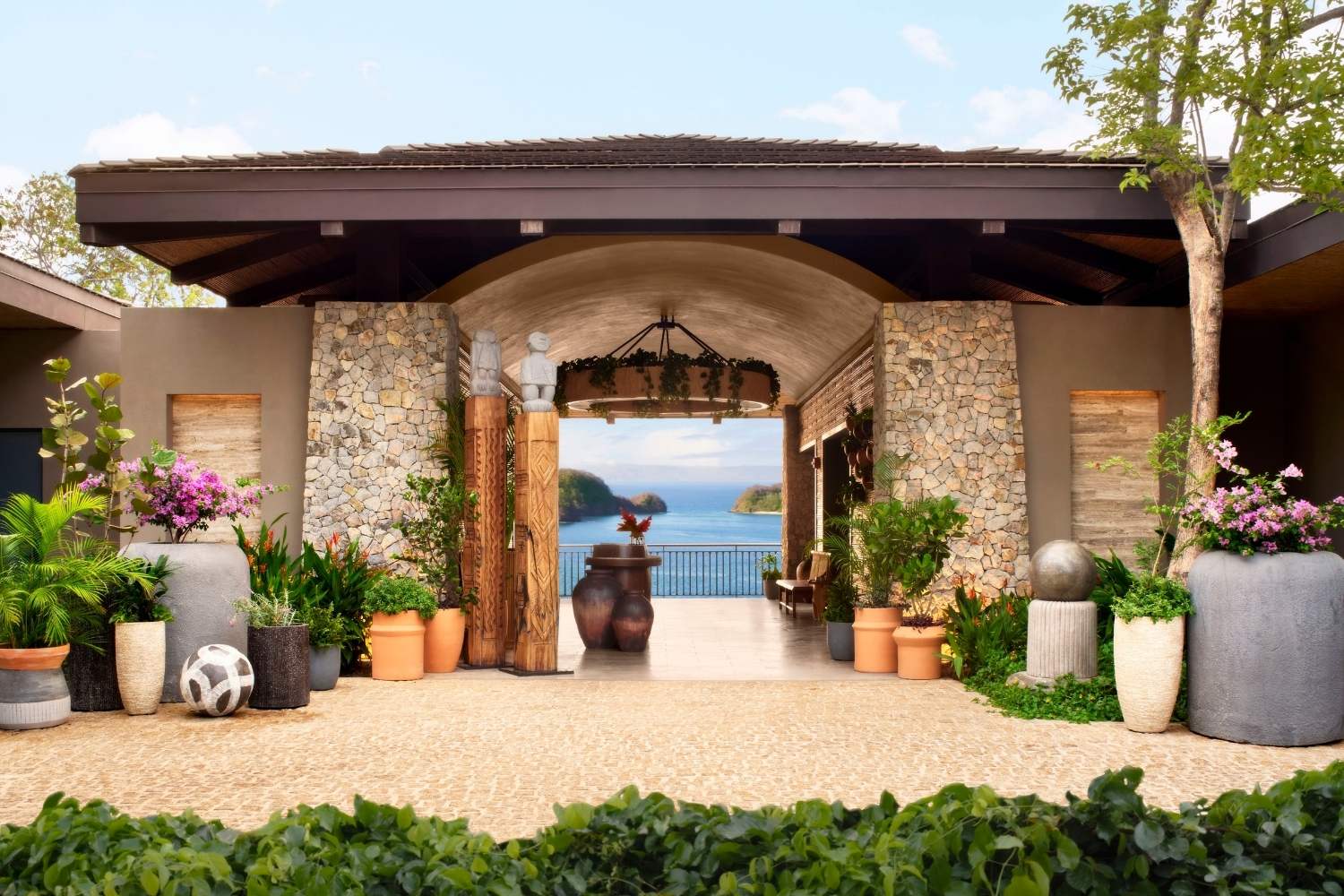
The casona entrance. Courtesy of Nekajui, a Ritz-Carlton Reserve
Sustainability Chops
With a name drawn from the Chorotega word for “lush garden” and a concierge called “friend,” Nekajui could have stopped at gestures. It doesn’t. The setting on Papagayo, where most of the land has to remain protected, means the resort has to think about how its presence fits into a larger living system rather than just dressing the part.
A lot of that work happened before guests ever checked in. When the hillside was terraced for rooms and paths, most of what teams carved out stayed on site instead of becoming construction waste. Those materials now show up as stone retaining walls, cladding, and even headboards. The buildings follow the contours of the land, so forest and ravines are threaded between suites and common areas instead of flattened into lawns. Walking to breakfast or the spa, you pass through original forest canopy, not a replanted approximation of one.
The food and beverage program follows the same logic around waste and reuse. Breakfast at Mirador trades an endless buffet for à la carte ordering, which dramatically cuts food waste while feeling just as indulgent. Across the restaurants, the kitchen leans on local produce and seafood and prepares nearly everything from scratch.
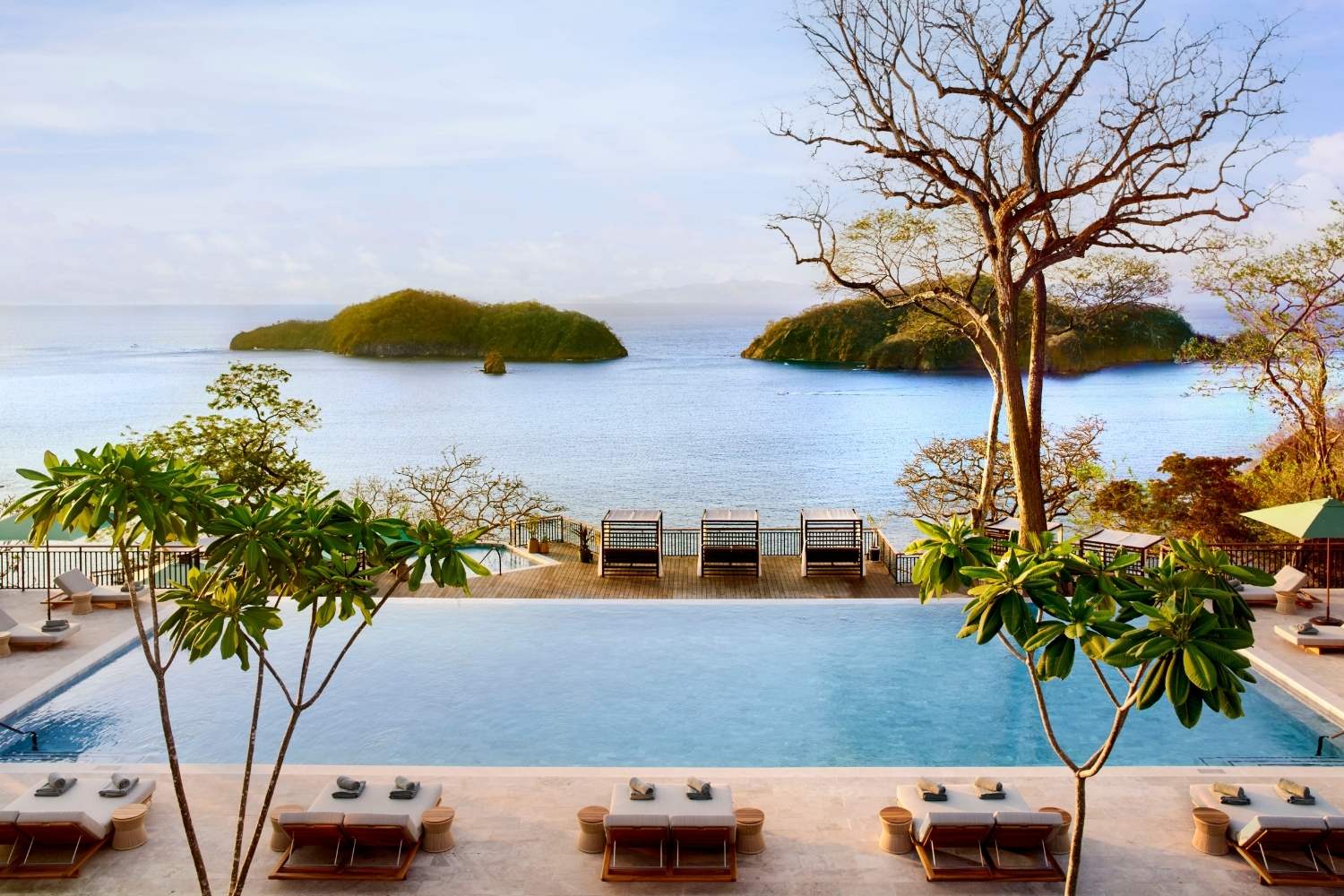
View from one of the pools. Courtesy of Nekajui, a Ritz-Carlton Reserve
The coffee and cocktail programs show this philosophy most clearly. At Café Rincón, beans from Costa Rican partner farms are roasted on site, and tastings are led by people who grow the beans. Behind the bar, a dedicated lab and small distillery work with whole fruits and botanicals, turning peels, seeds, and stems into infusions and syrups rather than binning them. The end result looks like a polished cocktail list, but the low-waste approach is built into every drink.
Nekajui also doesn’t pretend it exists in a bubble. It plugs into peninsula-wide efforts on land and sea, from coral restoration in nearby bays to wildlife monitoring and habitat restoration in the forest. One of the flagship projects, Culebra Reef Gardens, focuses on rebuilding coral structures just offshore. The resort and its developer also support Creciendo Juntos, a long-running community program that fosters education, health, and job training in neighboring towns. As a guest, you can engage a little or a lot, but the point is that the Indigenous names, local art, and stories on the walls are backed by ongoing work, not just aesthetics.
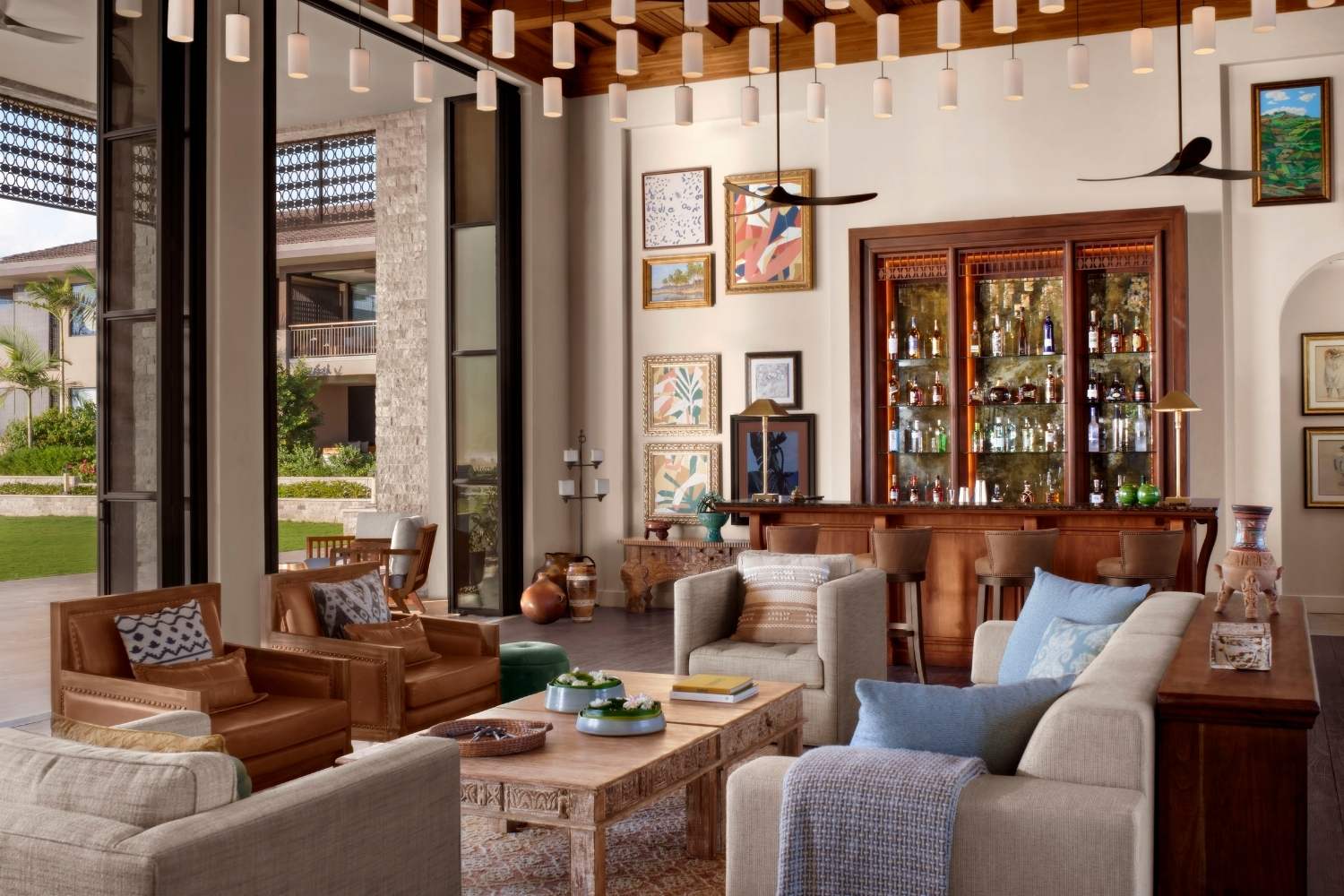
La Casona, acts as a bar and living room. Courtesy of Nekajui, a Ritz-Carlton Reserve
Who It’s For
Nekajui is for high-end travelers looking for a gentle immersion into nature without sacrificing thread count. It suits couples who are happy to let a day stretch from the pool to lunch to sunset cocktails without checking their phones. Families with older kids or teens will find plenty to do, from ziplining and surf lessons to wildlife walks and boat trips out into the gulf, but this is not a resort built around water slides and mascots. The energy leans more “well-traveled friend’s place on a protected coastline” than “big all-inclusive.” If you need loud nightlife and a dozen bars competing for your attention, you’ll probably be happier elsewhere.
Location
The Papagayo Peninsula curves into the Gulf like a series of green knuckles, each one ending in a small bay or headland. Getting to the hotel is straightforward: fly into Liberia’s Guanacaste Airport, meet your driver upon arrival, and settle in for the 45-minute ride to the resort. The property itself sits high above Bahía Huevos and Playa Pochote, so from most terraces you see treetops and open water, with boats slipping in and out of the coves far below.
Once you’re checked in, the scale shrinks. Electric buggies handle the steep slopes, whether you have mobility problems or simply want an easy ride. A funicular shuttles you down to Niri Beach Club, though you’re free to tackle the 200-stairs up and down for more NEAT in your day. A network of paths and stairways connects rooms, restaurants, and Spa & Wellness. If you want to see more of Papagayo, there are biking and walking routes that make it feel like one extended neighborhood, just with better wildlife.
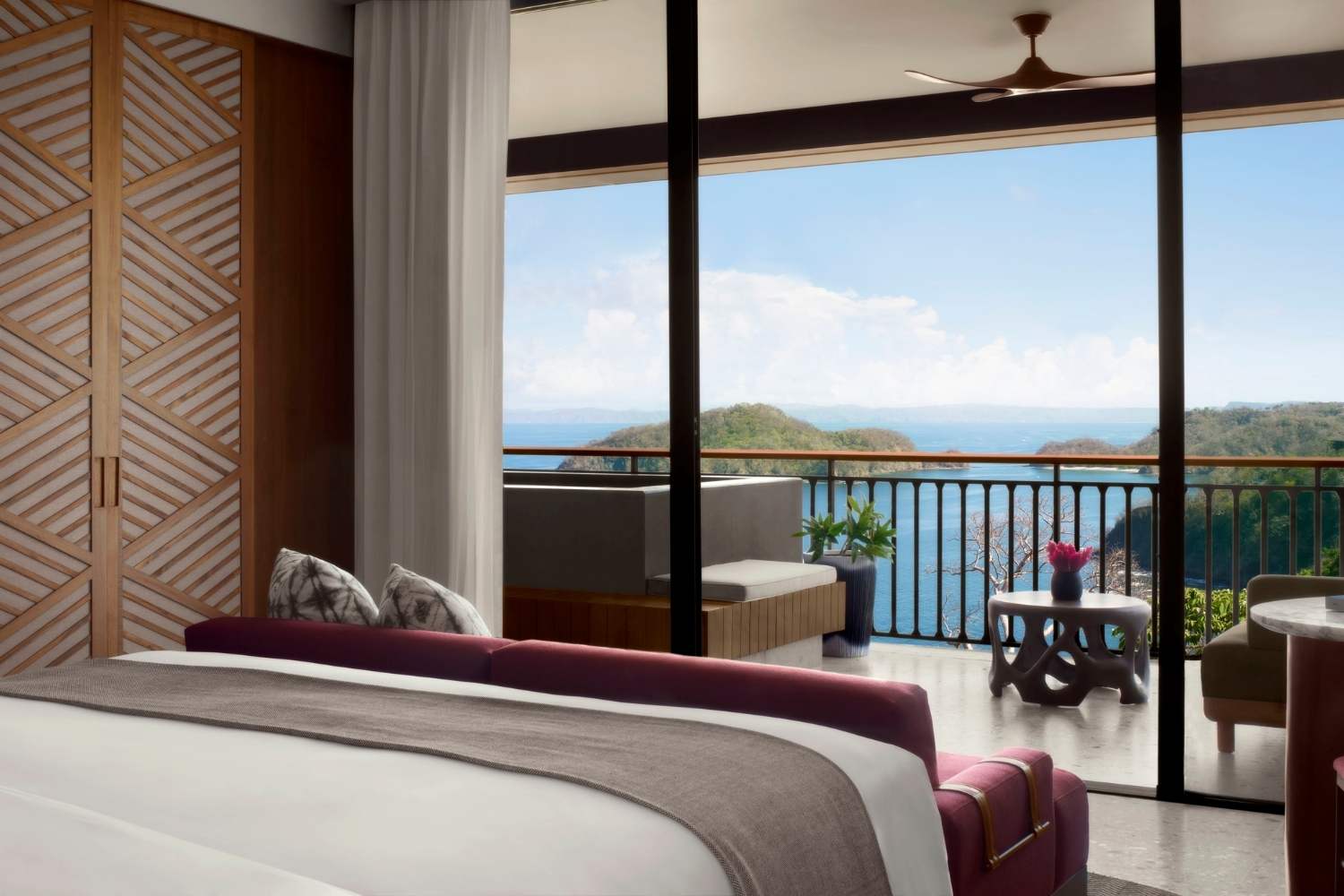
View from a bedroom suite. Courtesy of Nekajui, a Ritz-Carlton Reserve
Rooms and Suites
Nekajui has 107 ocean-facing accommodations in total: 77 guestrooms, 27 suites, three two-bedroom treetop tents, and one four-bedroom Grand Villa. All are oriented toward the water, so most views frame both forest and sea.
Guestrooms come with floor-to-ceiling glass, a generous bathroom, and a terrace or balcony; many include a plunge pool or outdoor shower. Suites add separate living areas and larger outdoor spaces, and the four-bedroom Grand Villa is set up as a standalone house with its own pool and wide views over the bay.
The three treetop tents sit higher in the canopy and combine canvas with solid construction. Each has two bedrooms, a shared living area, proper indoor bathrooms, a plunge pool, and a deck that looks out across the trees toward the water.
Across all categories, the design language is consistent: teak and other local woods, stone, carved panels that reference Chorotega patterns, caña brava on terrace ceilings, and handmade tile in the bathrooms. Multi-panel doors open wide so the rooms connect directly to their terraces rather than feeling closed off.
Every accommodation is paired with a manzu, the resort’s personal concierge, who manages restaurant bookings, transport, and activities directly, rather than through a traditional front desk.
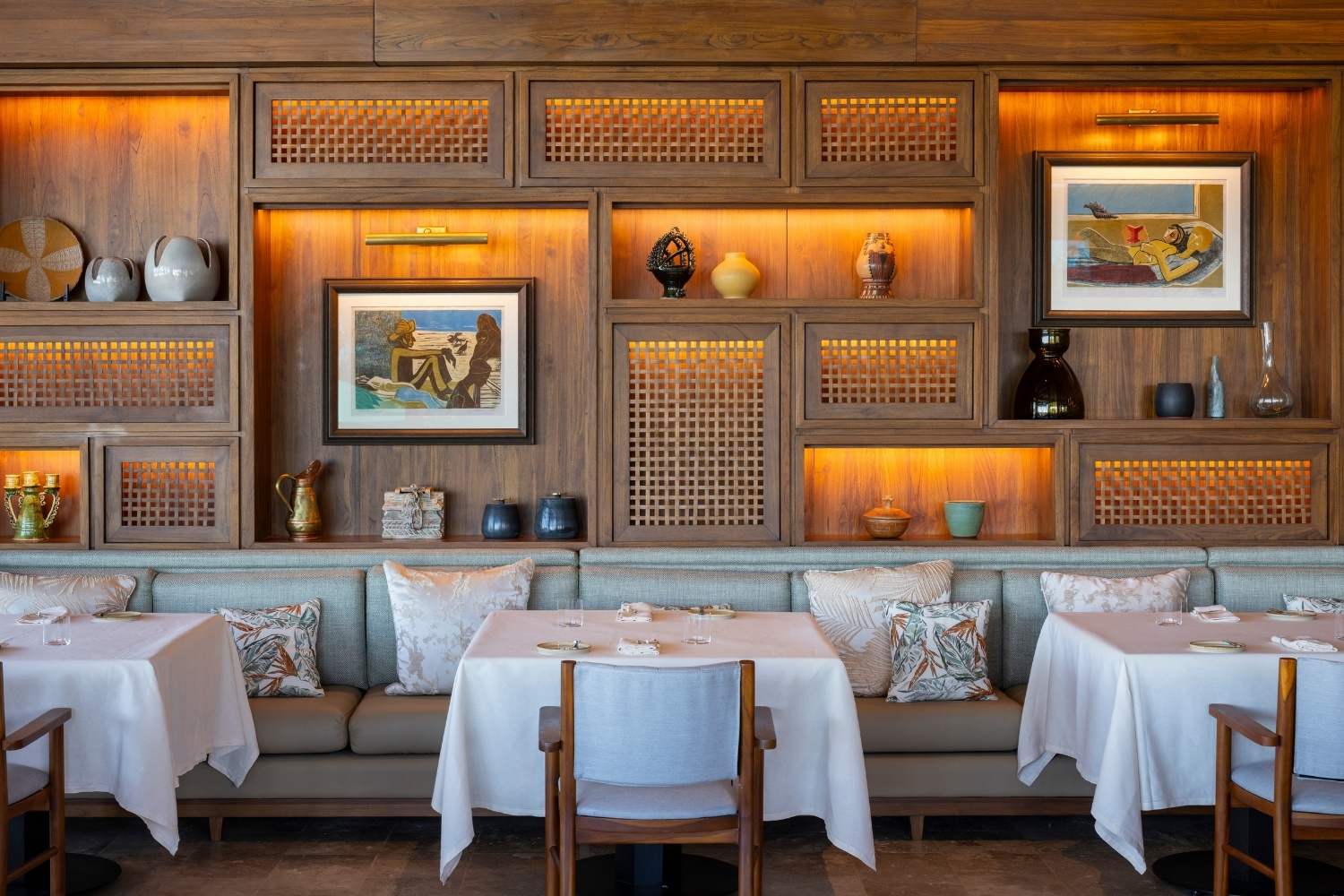
Interior of Puna Restaurant. Courtesy of Nekajui, a Ritz-Carlton Reserve
Food and Drink
Nekajui runs a tight constellation of restaurants and bars rather than a giant “something for everyone” spread. Executive Chef Lulu Elízaga steers the ship, and each outlet has a clear personality.
Puna, the flagship dining venue, sits at the center of it all. Peruvian chef Diego Muñoz, who made his name on modern coastal cooking, shaped the concept. The menu reads like Latin America on a shoreline: bright ceviches, fish and meats cooked over charcoal, vegetables with a point of view. Inside Puna, the six-seat counter concept called Paruro, offers an omakase-style sequence that riffs on Lima’s Chinatown, folding Asian flavors into Peruvian technique.
Down at Pochote Bay, Niri Beach Club straddles the line between restaurant and all-day hangout. You reach it by the beach funicular, then sit down to Iberian coastal food: wood-fired seafood, cocas, and grill-heavy plates meant to share. The wine list skews Spanish and Portuguese, with a strong showing of smaller, low-intervention producers, which gives the place more of a beach-town restaurant feel than a hotel outlet. For some, dining by lantern in the warm breeze of night, will feel more transporting than a repast inside the hotel’s interior.
Back up the hill, Mirador handles breakfast with a sea view. Instead of a buffet, staff bring curated trays and small plates to the table, then serves a la carte cooked dishes from the menu. Brisa, next to the infinity pool, serves both lunch and dinner with salads, grilled fish, and tasty desserts.
Café Rincón, a cafe for smoothies, breakfast bites, and coffee, demonstrates the hotel’s thoughtfully executed coffee and cacao program. The property sources beans from Costa Rican farmer who roasts them on-site for the extensive single origin coffe program. Take a class on Costa Rican coffee and brewing customs or grab an espresso, latte, and other milk-based drinks. Lighter dishes and pastries make it the natural stop between activities, or the place you duck into when the afternoon heat hits.
The bar program stitches everything together. Ámbar, an open-air cocktail bar suspended at canopy level, frames sunset over the bay with drinks built around regional fruits and botanicals. La Casona, just off the lobby, feels more like a living room with a serious backbar: herb-forward cocktails served with snacks and small plates, whether taken outside to sip by the firepit or enjoyed indoors. After dinner at Puna, step inside a speakeasy for another round of cocktails, though you’ll want an appointment to secure one of the few tables in the intimate space.
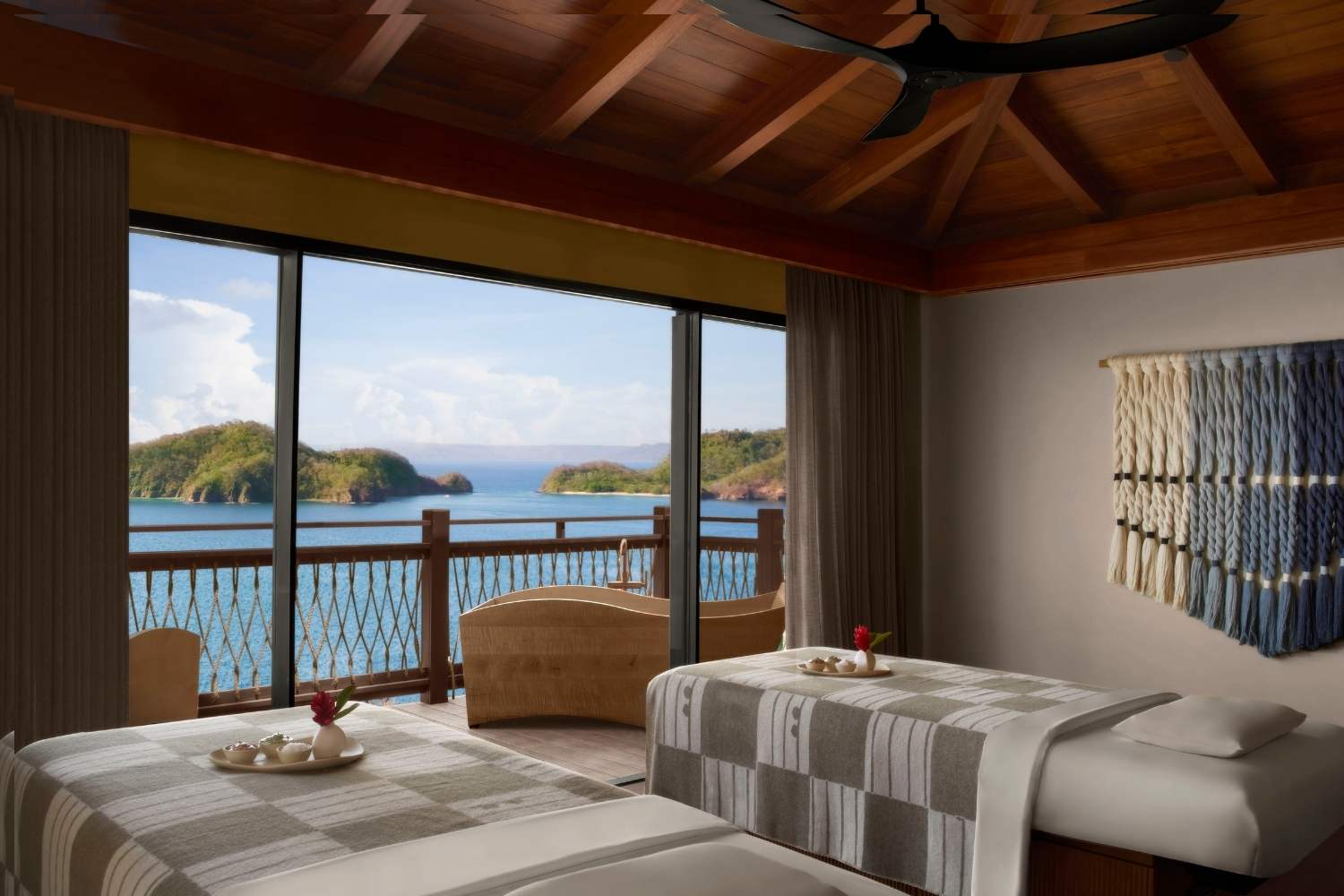
A treatment room at the spa. Courtesy of Nekajui, a Ritz-Carlton Reserve
Spa and Wellness
The Spa & Wellness center sits among the treetops with long views over Pochote Bay. Named for the Chorotega word for “water,” the 27,000-square-foot complex includes a large hydrotherapy pool, six ocean-facing treatment cabanas, two private spa suites in the main building, and saunas that frame the Pacific.
Guests arrive through an open-air pavilion built in traditional Bahareque style, with bamboo and wood frames packed with a mix of mud, straw, and sand. Furnishings made by local artisans give the entrance the feel of a refined rural structure rather than a conventional spa lobby.
Treatments use regional ingredients and Ayuna products from Spain, with options that range from sound-based sessions and earth-focused bodywork to classic massages and facials. Nearby, Naku House, named for the Chorotega word for “fire,” hosts movement practices including Primal Dance and Energy Rolling.
Pool and Amenities
Most of the resort’s daytime life gathers around the cliff-edge infinity pools near Brisa, with loungers lining the narrow beach below.
Beyond the property, Nekajui plugs into Peninsula Papagayo’s wider offerings. The Outpost at Palmares Preserve, a 250-acre protected area that encircles the resort, serves as the base for The Explorers program, with ziplining, aerial trekking, guided wildlife hikes, and canoe excursions through mangroves. SurfX coaches lead trips to nearby breaks such as Witch’s Rock and Ollie’s Point, and the peninsula adds windsurfing, paddleboarding, scuba, snorkeling, and sailing. Golfers have access to the private 18-hole Arnold Palmer Signature course, an Audubon Cooperative Sanctuary with ocean vistas on most holes and a clubhouse and racquet center within walking distance.
Other outdoor activities include tennis and pickleball on HAR-TRU courts at the Racquet Center, use of the MoveStrong outdoor “jungle gym” rigs at the forest edge, and walks or runs along the six-mile Papagayo Trail. A complimentary all-electric bike-share system makes it easy to move around the peninsula.
Papagayo Park, the newest addition to the peninsula, adds a community-focused layer above Prieta Bay, with additional tennis and pickleball courts, a lap pool, bocce courts, and fitness platforms among the trees. Because several hotels on the peninsula have residences, the park also includes a dog park and casual spots for a snack, such as Patio Social and the Cono Loco gelateria.
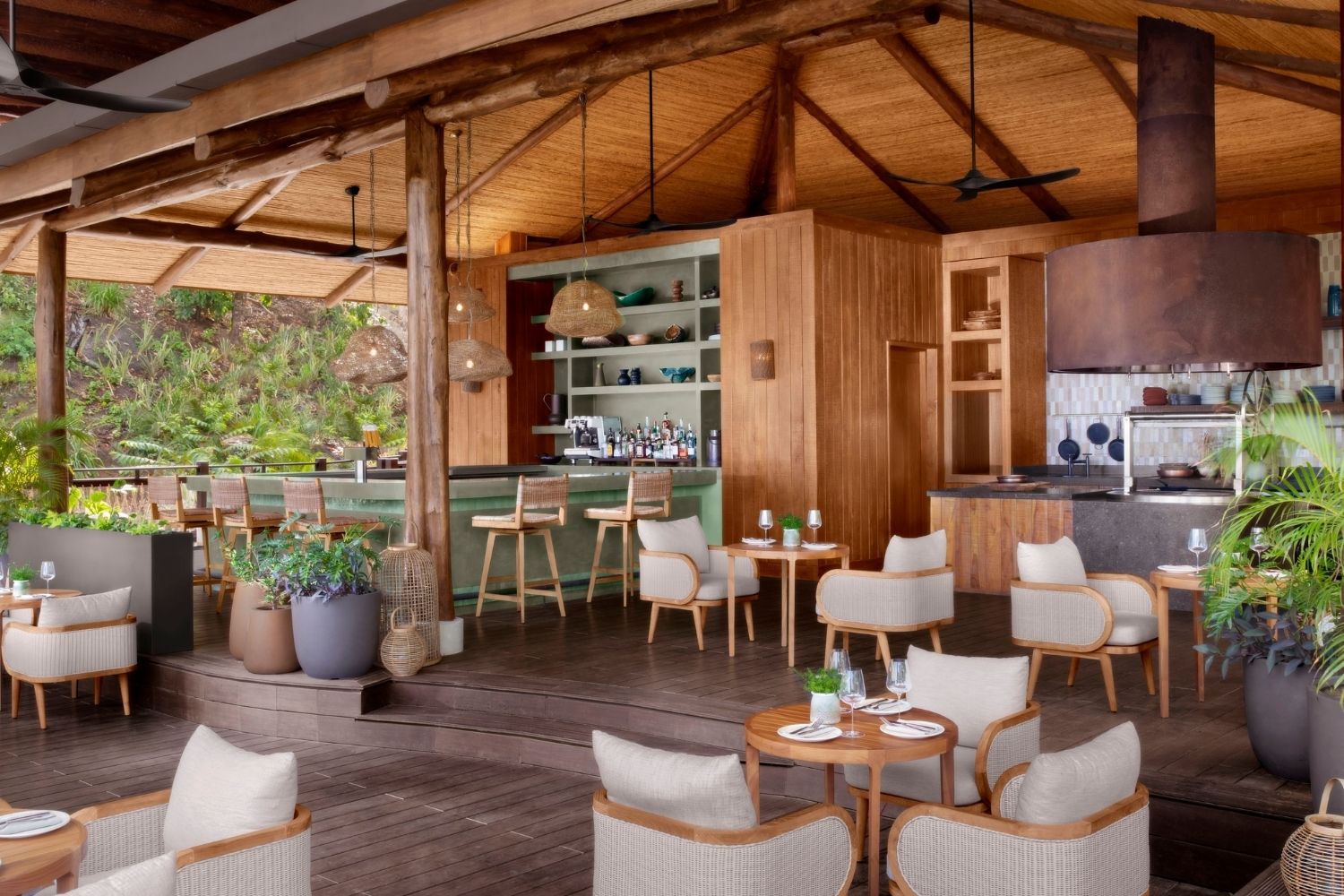
Niri Beach Restaurant. Courtesy of Nekajui, a Ritz-Carlton Reserve
What to Know Before You Go
Nekajui works as year-round destination, with hot, dry days from roughly December through April and greener, wetter weather the rest of the year. The heaviest rains usually occur in September and October. You’ll fly into Liberia’s Guanacaste Airport (LIR), then it’s about a 45-minute transfer to the peninsula, which the resort arranges. Once you’re there, you can move easily bewteen spaces on foot, with golf carts, or electric bikes. The hotel also arranges shuttles between other penisula properties, including Andaz Costa Rica and Four Seasons, whether for dining or spa appointments. A rental car only really makes sense if you plan to explore well beyond the peninsula on your own.
Rates generally start around $1,500–$2,400+ per night for entry-level rooms, often exceeding $2,500 during high season. Lower rates can fall to approximately $1,100 in September, while luxury suites and treetop tents can exceed $7,000 per night.
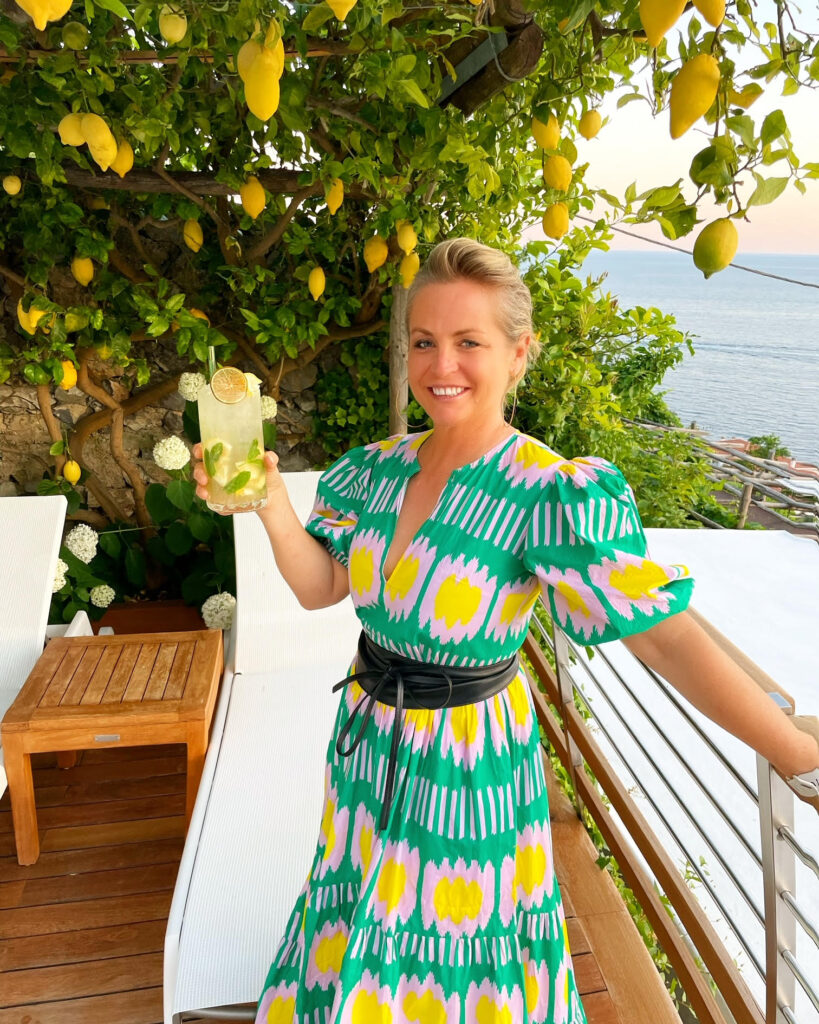
Founder and CEO of Azure Road, Lauren Mowery is a longtime wine, food, and travel writer. Mowery continues to serve on Decanter Magazine’s 12-strong US editorial team. Prior to joining Decanter, she spent five years as the travel editor at Wine Enthusiast. Mowery has earned accolades for her writing and photography, having contributed travel, drinks, food, and sustainability content to publications like Food & Wine, Forbes, Afar, The Independent, Saveur, Hemispheres, U.S. News & World Report, SCUBA Diving, Plate, Chef & Restaurant, Hotels Above Par, AAA, Fodors.com, Lonely Planet, USA Today, Men’s Journal, and Time Out, among others.
Pursuing her Master of Wine certification, she has also been a regular wine and spirits writer for Tasting Panel, Somm Journal, VinePair, Punch, and SevenFifty Daily. Mowery is a graduate of the University of Virginia and Fordham Law School, and she completed two wine harvests in South Africa.
Follow her on Instagram @AzureRoad and TikTok @AzureRoad
North Stars: Carbon Footprint, Energy Efficiency, Waste Management